
Before you choose
Separate the blonde appearance from the haircut
A pale buzz cut, a highlighted sweep and long golden waves use light color in very different ways. These references compare where the lighter strands sit, how much darker contrast remains and how the cut frames the face. Color names describe the photographs approximately; lighting can shift their appearance, and the images do not establish a formula or coloring method.
The hairstyle gallery
20 blonde hairstyles for men ideas to compare
Compare the visible length, shape, texture, and finish before choosing a salon reference.

Idea 01
Short Sandy Brush-Up With Close Sides
The sandy top stays short and lightly raised above close sides. Its restrained height gives the lighter shade a quieter appearance than the tall quiffs and strongly contrasting highlighted examples.
- Shape
- Short sandy top
- Detail
- Close side coverage
Small surface strands point backward from the forehead, leaving the hairline visible. The side remains close to the head, while the short beard adds a separate darker outline below the cheek.
Wearability note: Choose this for a compact silhouette rather than a dramatic color contrast. Compare the top height with a flatter crop if you want less lift, and keep the beard out of the haircut-length comparison.
Idea 02
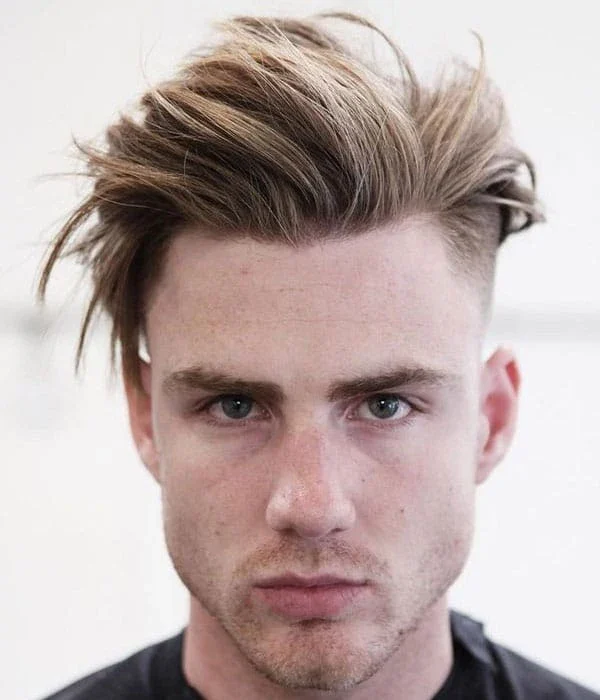
Pale Swept Front With Visible Root Contrast
The pale front lifts and sweeps sideways above darker roots. That contrast makes the direction of the longer strands prominent without requiring the entire head to look uniformly light.
- Shape
- Pale swept front
- Detail
- Darker visible roots
A few loose pieces sit beyond the main swept shape, softening the upper edge. The sides remain closely contained, so most of the length and lighter color appear across the top.
Wearability note: Compare the darker root area with the more uniform pale examples before choosing. The photograph is useful for placement and contrast, but it does not specify a color formula or the process used to reach that shade.

Idea 03
Light Front Lift Above Darker Short Hair
Light strands rise at the front while darker hair remains behind and along the side. The contrast concentrates attention above the forehead rather than spreading the lightest shade evenly throughout.
- Shape
- Light raised front
- Detail
- Dark short sides
The upper outline is broken into several lifted pieces, with more compact texture near the crown. The short side narrows the profile, and the beard forms a separate darker boundary below the cheek.
Wearability note: Choose the amount of light front coverage independently of the height. A lower version could retain a similar color placement, so show both the highlighted area and the shape you want to keep.
Choose your direction
Compare light placement
Look at pale overall coverage, light fronts and lighter lower lengths.
Choose a silhouette
Compare compact crops with taller sweeps, curls and longer hair.
Check darker contrast
Decide how visible you want roots and lower side shading to remain.
Idea 04
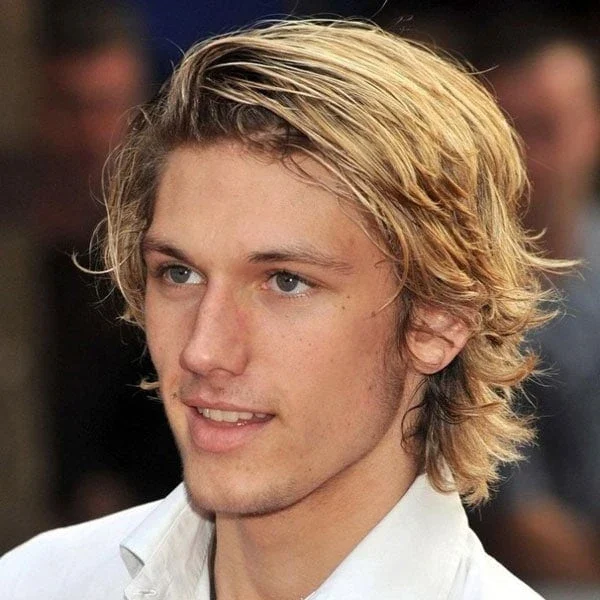
Golden Ear-Length Hair With Loose Ends
Golden hair falls near the ears with loose ends turning outward. The longer side coverage gives this a softer perimeter than the close fades and compact cropped examples.
- Shape
- Golden ear-length hair
- Detail
- Loose outward ends
The front opens to one side rather than forming a rigid part line. Slightly darker strands remain visible beneath the lighter surface, adding depth through the longer pieces around the face.
Wearability note: Compare where the sides finish before choosing this reference. Ear coverage and front direction will shape the result as much as the blonde appearance, especially if you usually prefer hair kept clear of the ears.
Idea 05
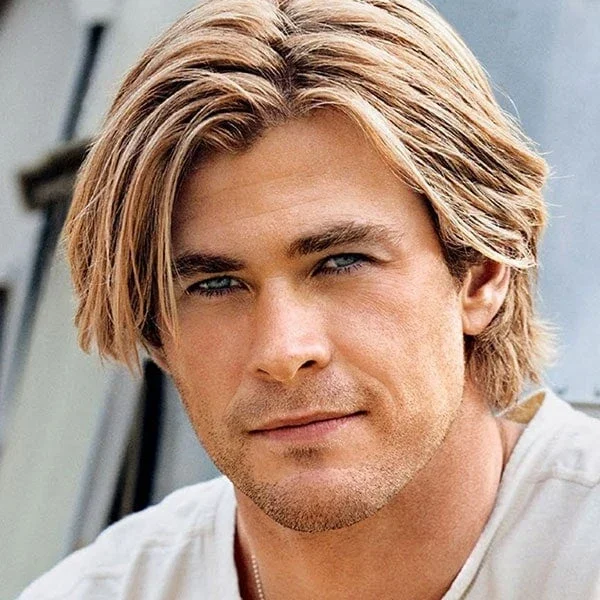
Center-Opening Blonde Length Around the Ears
The blonde front opens near the center and falls toward both sides. Ear-level length creates a broad frame around the face rather than a raised crest above the forehead.
- Shape
- Center-opening front
- Detail
- Blonde ear-level sides
The front strands separate into several larger pieces, and slightly darker areas remain underneath. The perimeter stays loose, with small ends turning away from the cheek instead of forming one blunt lower line.
Wearability note: Choose the front opening and side length together. A shorter version could show a similar shade while losing the wider frame, so keep an eye on the amount of coverage beside the ears.
Idea 06
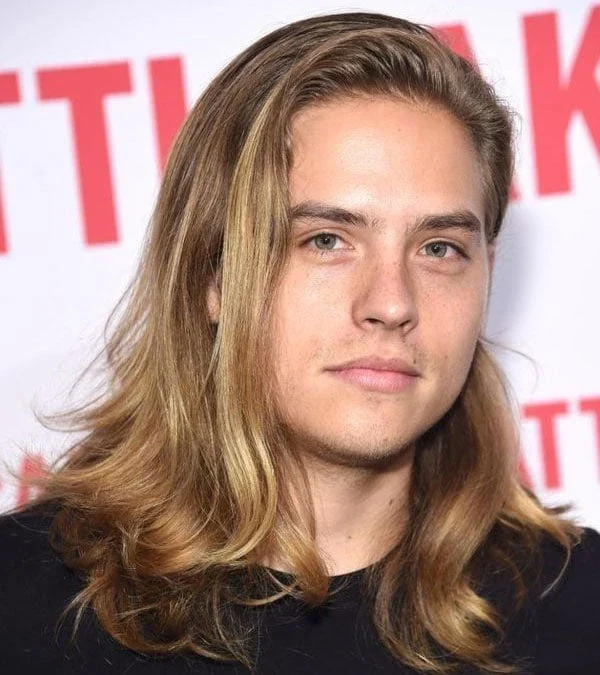
Long Golden Length With a Side Opening
Long golden length falls below the shoulders beside a side-opening front. The lighter strands continue through much of the lower hair, making the color visible well beyond the crown.
- Shape
- Long golden length
- Detail
- Side-opening front
The front stays mostly away from the central face, while the ends curve softly at different points. The sides retain substantial length instead of being tucked into a narrow close-sided shape.
Wearability note: Use this to compare longer blonde coverage rather than only the shade near the face. If you prefer less lower width, add a gathered or shorter reference before deciding on the length you want to retain.
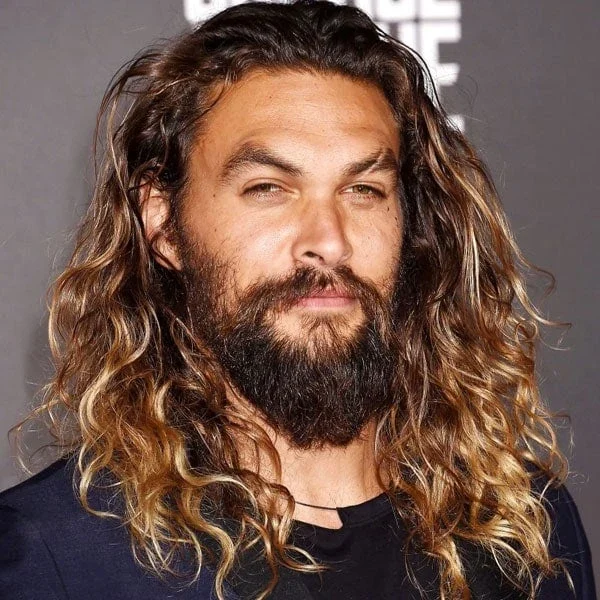
Idea 07
Long Waves With Golden Lower Strands
Golden strands become more prominent through the lower waves while the roots remain darker. The long shape spreads beside the face and shoulders instead of concentrating the lighter appearance only at the front.
- Shape
- Long loose waves
- Detail
- Golden lower strands
The waves vary in size, with several narrow pieces curling away from the main lengths. A fuller beard adds another dark shape near the center, increasing the contrast with the lighter ends around it.
Wearability note: Choose this for a darker-root and lighter-length comparison. The photograph does not establish the coloring technique, so discuss placement and the amount of contrast without assuming a specific service from the image alone.
Idea 08
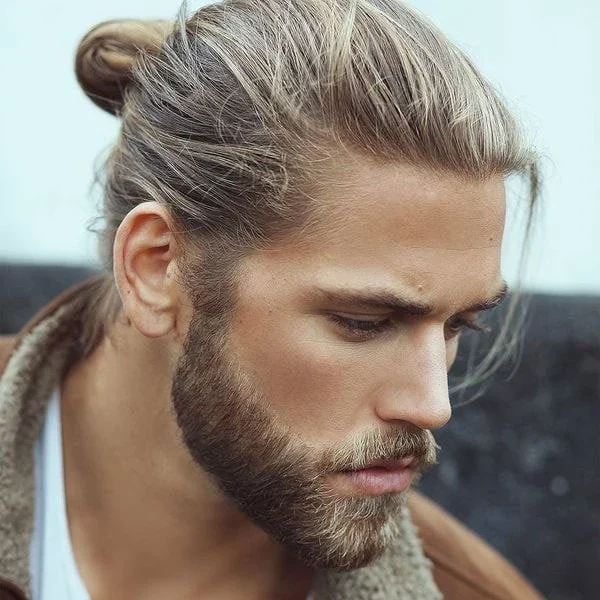
Light Backward Sweep Gathered Into a Bun
Light hair sweeps backward into a small rear bun. The open forehead keeps the direction clear, while the gathered length creates a more contained outline than the loose shoulder-length examples.
- Shape
- Light backward sweep
- Detail
- Small rear bun
Individual lighter strands remain visible through the sweep, with a few fine pieces sitting outside the main shape. The bun is partly seen behind the crown rather than positioned high above the head.
Wearability note: Compare the bun placement with the amount of loose length you want to keep. The pale appearance and the gathered arrangement are separate choices, and a rear view would help specify the bundle more fully.
Idea 09
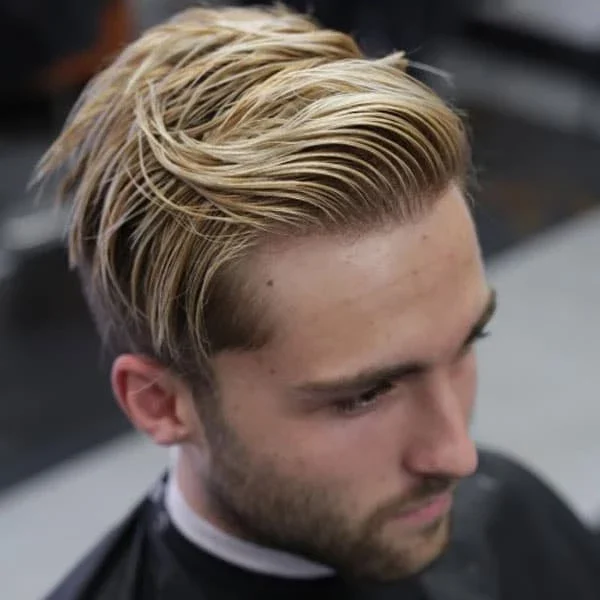
Golden Combed Sweep With Darker Underlayers
Golden strands run across a darker base in a combed sweep. The alternating light and dark lines make the direction visible even though the top is not extremely tall.
- Shape
- Golden combed sweep
- Detail
- Darker underlayers
The front curves to one side, and the shorter side keeps the lower outline narrow. Several longer pieces remain distinct across the upper head rather than merging into a completely uniform light surface.
Wearability note: Choose how much dark contrast you want beneath the lighter strands. A more evenly pale version would emphasize the haircut differently, so bring a separate shape reference if this color pattern is your main attraction.
Idea 10
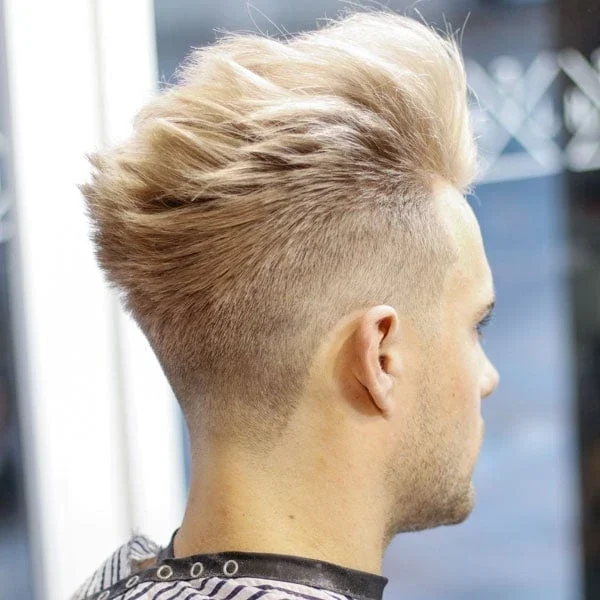
Light Lift Seen From the Rear Side
The light top rises above a short rear side. This angle emphasizes the division between retained upper length and the closer lower coverage rather than the front hairline.
- Shape
- Light lifted top
- Detail
- Short rear-side coverage
Separate strands fan backward near the crown, giving the upper edge a soft broken outline. The lower side remains close around the ear, with a gradual shaded connection beneath the lighter top.
Wearability note: Save the rear-side view if the back connection matters to you. Add a level front photo for height, since the angled perspective does not fully explain how far the front should rise above the forehead.
Idea 11
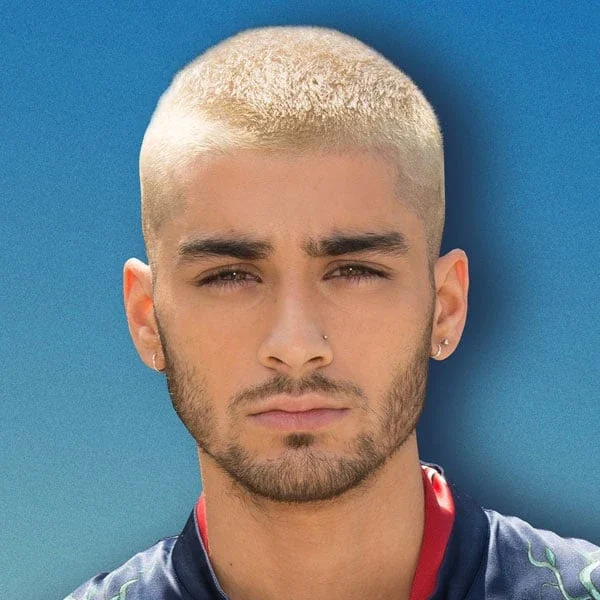
Pale Buzz Cut With an Even Upper Surface
The pale buzz cut stays close to the head with an even upper surface. There is little fringe or lift, so the light shade becomes more prominent than the direction of individual strands.
- Shape
- Pale very short top
- Detail
- Even upper outline
The lower side remains short, and the front edge is visible without long pieces falling over it. The darker brows and short beard add contrast below the pale upper hair.
Wearability note: Compare the close overall length with a slightly longer crop before choosing. A similar pale appearance on longer hair would show more texture and movement, so color alone will not explain this compact result.
Idea 12
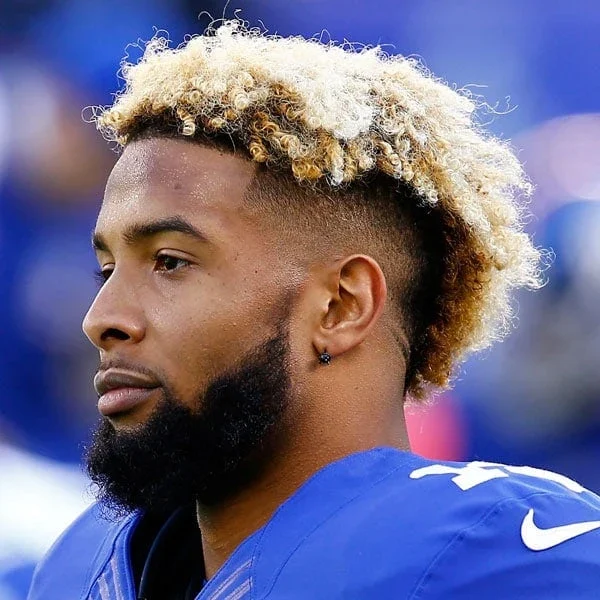
Pale Coiled Ridge With Darker Sides
Pale coils form a raised upper ridge above darker sides. The lightest pieces sit along the crest, creating a clear contrast with the retained dark hair beneath them.
- Shape
- Pale upper coils
- Detail
- Darker side coverage
The curls keep an irregular outline from front to back rather than forming a smooth rounded quiff. A full beard supplies substantial dark volume below the cheek, balancing the lighter upper section.
Wearability note: Choose the color placement and the coiled shape separately. If you like the pale crest but want a different side width, bring another profile so the haircut is not inferred entirely from the color contrast.
Idea 13
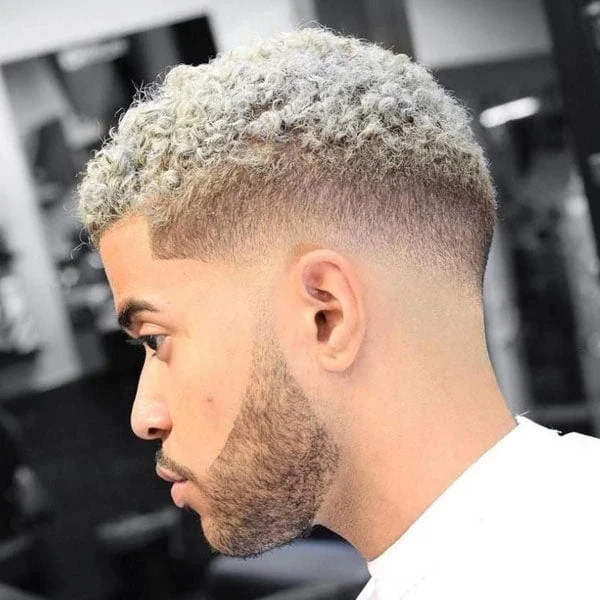
Pale Compact Curls With a Close Fade
Compact pale curls sit above a closely faded side. Their small repeated bends add texture without a long hanging fringe or substantial upper height.
- Shape
- Pale compact curls
- Detail
- Close side fade
The squared front corner provides a precise boundary against the softer curled surface. Darker roots and shorter side shading keep the pale section distinct without making every part of the head appear equally light.
Wearability note: Use this to compare a short curly outline with the longer pale sweeps. Discuss the upper length independently of the shade, because a longer curl section would create a fuller silhouette even with similar color placement.
Idea 14
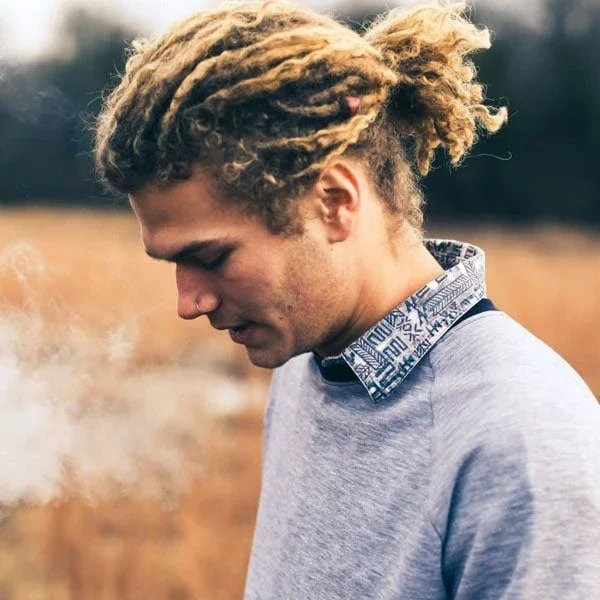
Light-Ended Locs Gathered Behind the Crown
Light-ended locs gather behind the crown while darker roots remain visible. The gathered arrangement keeps the front relatively open and makes the lighter ends prominent around the rear bundle.
- Shape
- Light-ended locs
- Detail
- Rear gathered shape
The side retains some coverage instead of showing a completely exposed panel. Individual locs remain distinct along the upper section, with the length directed backward toward the gathered shape.
Wearability note: Choose this for the contrast between darker roots and lighter ends on locs. The arrangement is separate from the color choice, and a rear view would better explain the exact amount of length retained in the bundle.
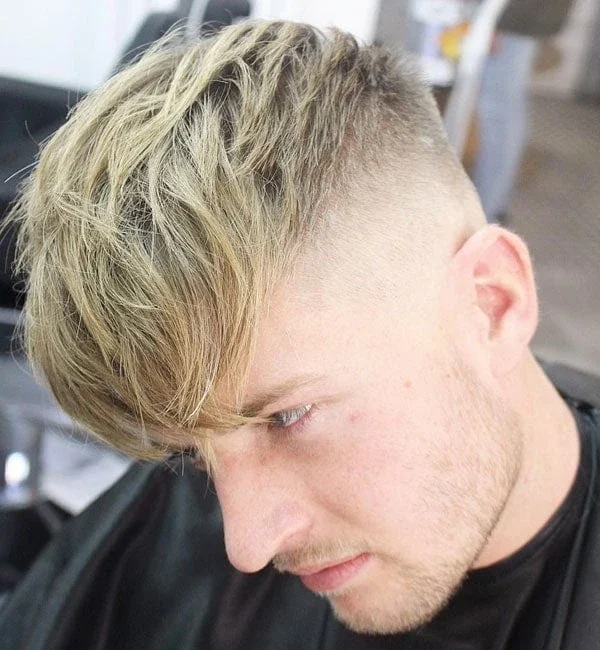
Idea 15
Pale Side Fringe Over a Close Undercut
The pale fringe sweeps across one side above a close undercut. Darker roots remain visible through the longer pieces, emphasizing the difference between upper length and the exposed side.
- Shape
- Long pale side fringe
- Detail
- Close undercut side
The downward angle shows the fringe covering part of the forehead rather than lifting into a tall crest. The longer strands overlap in loose sections, while the short side stays narrow near the ear.
Wearability note: Compare how much eye and brow coverage you want before choosing this shape. A shorter fringe could retain similar light color and side contrast while creating a much more open front view.
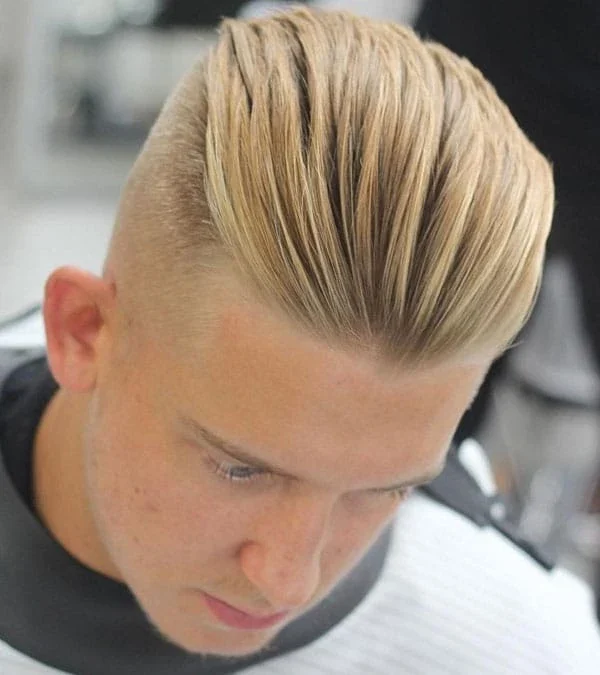
Idea 16
Golden Backward Sweep With Exposed Sides
Golden strands sweep backward above closely exposed sides. The darker roots create fine lines through the upper hair, making its direction clear from the elevated angle.
- Shape
- Golden backward sweep
- Detail
- Close exposed sides
The front stays away from the face, and the longer top extends across the head in one broad section. The side is much shorter below that retained length rather than merging into equally long ear coverage.
Wearability note: Use the overhead view for color distribution and upper direction. Bring a profile too if front height matters, since this downward angle can make the sweep look flatter than it would from eye level.
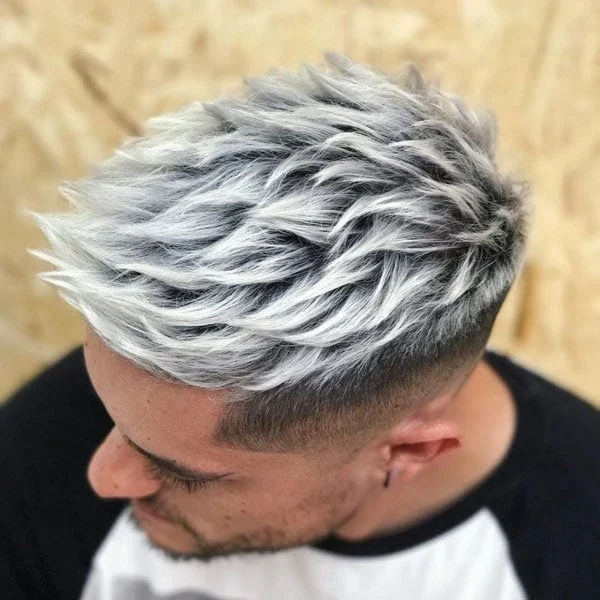
Idea 17
Pale Broken Texture Above Darker Roots
Pale pieces spread across the top above darker roots. The broken surface adds movement, while the darker base prevents the upper hair from reading as one flat block of light color.
- Shape
- Pale broken texture
- Detail
- Darker root band
The overhead side view shows several strands crossing diagonally rather than following a rigid part. The shorter side narrows toward the ear, leaving the lighter texture concentrated in the upper section.
Wearability note: Choose the amount of root contrast as well as the pale appearance. If the textured haircut is the main goal, compare it with an uncolored example so lighting and color do not become the whole brief.
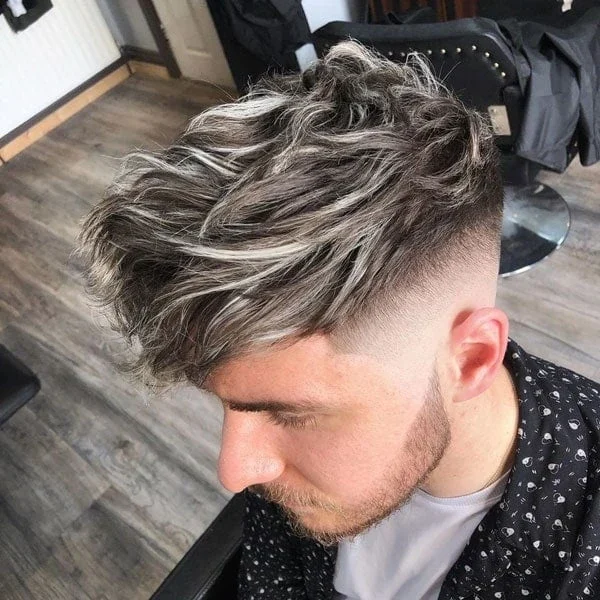
Idea 18
Soft Light Streaks Through a Side Sweep
Soft light streaks run through a loose side sweep. The darker base stays clearly visible between them, producing a subtler blonde effect than the uniformly pale crops.
- Shape
- Soft light streaks
- Detail
- Loose side sweep
The front pieces move diagonally across the forehead, with several ends separating along the upper edge. The side remains closer around the ear, containing the width beneath the longer highlighted section.
Wearability note: Compare this softer contrast with the bolder light-front examples. The photograph is useful for discussing placement and movement, but it does not establish whether those streaks came from a particular coloring method.
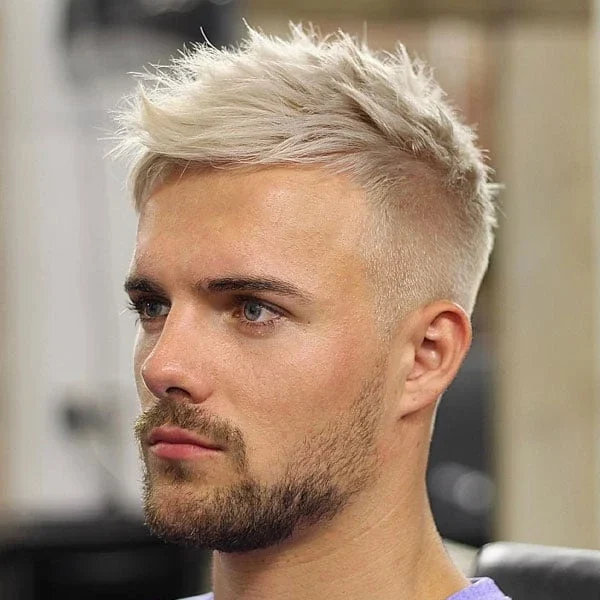
Idea 19
Short Pale Texture With a Low Front Lift
The pale top stays short with a low front lift. Small separated pieces break the upper outline without forming the long points or substantial crest seen in taller versions.
- Shape
- Short pale texture
- Detail
- Low lifted front
The side is close around the ear, while a slightly darker area remains near the lower edge of the top. A short beard adds contrast below the face without increasing the haircut height.
Wearability note: Choose this for a restrained pale textured shape. Compare the front reach with a forward crop if you prefer more forehead coverage, because the color can remain similar while the direction changes substantially.
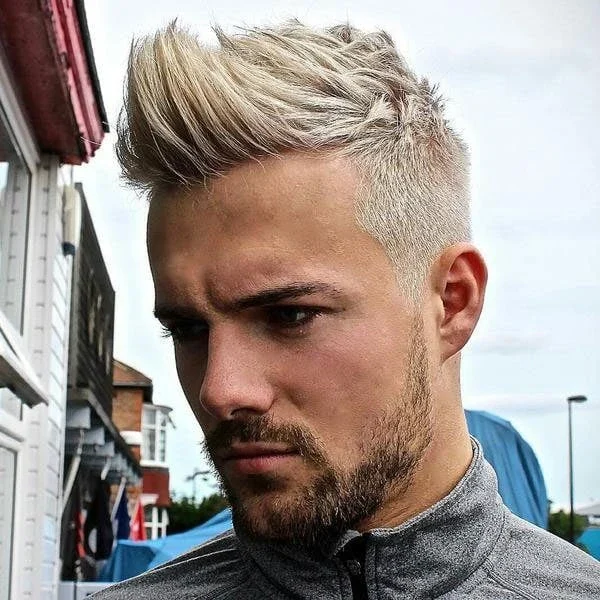
Idea 20
Pale Quiff With a Defined Temple Corner
A pale quiff rises above a closely cut side and defined temple corner. Its height gives the light shade a more prominent upper silhouette than the compact textured crops.
- Shape
- Pale raised quiff
- Detail
- Defined temple corner
Separate front strands angle upward and back rather than falling over the forehead. The lower side remains narrow, while darker roots add small areas of contrast beneath the pale surface.
Wearability note: Compare the front height with a lower brush-up before choosing this profile. The outdoor light makes the pale strands bright, so discuss the desired shade separately from the amount of lift and side exposure.
Save color and shape references together
The same lighter shade can appear very different on a close crop and a longer textured top. Keep a reference for the cut as well as one for color placement so those two choices remain clear.
Use photographs to discuss approximate contrast and coverage with a colorist. The lighting, finish and darker surrounding hair can all affect how pale a strand appears in an individual image.

About the author
Bella Ross
Bella Ross is the hairstyle editor behind Latest Easy Hairstyles. She curates practical haircut, braid, color, and styling ideas with a focus on looks that are easy to browse, realistic to recreate, and useful for everyday hair decisions.