
Before you choose
Compare curl placement, not only curl size
These photographs show different ways to arrange a curly outline, from compact crops to fuller fringes and longer rear sections. Some have close sides; others retain more connected coverage. The pictures do not establish whether a curl pattern is natural or chemically created. Use them to compare visible shape, then discuss how that shape fits your own texture.
The hairstyle gallery
19 curly hairstyles for men ideas to compare
Compare the visible length, shape, texture, and finish before choosing a salon reference.
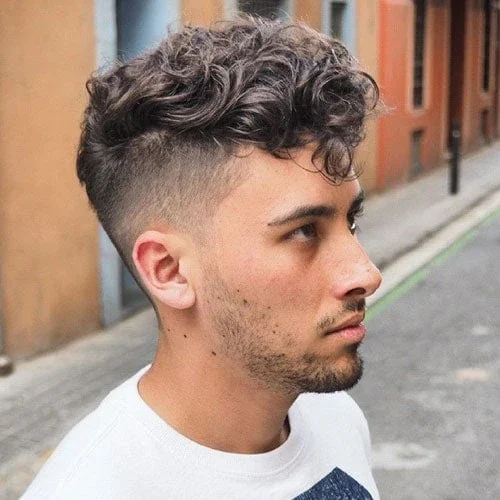
Idea 01
Loose Front Curls With Short Sides
Loose curls gather above the forehead while the sides stay short. A few ends turn forward, giving the front a softer edge than a straight or tightly clipped fringe.
- Shape
- Loose front curls
- Detail
- Short side coverage
The upper section has visible space between the larger bends. The side remains narrow around the ear, so most of the apparent volume comes from the curls rather than equal fullness all around the head.
Wearability note: Compare how far you want the front curls to fall. Keeping them above the brows produces a different outline from a longer fringe, even when the side length and upper curl pattern look similar.
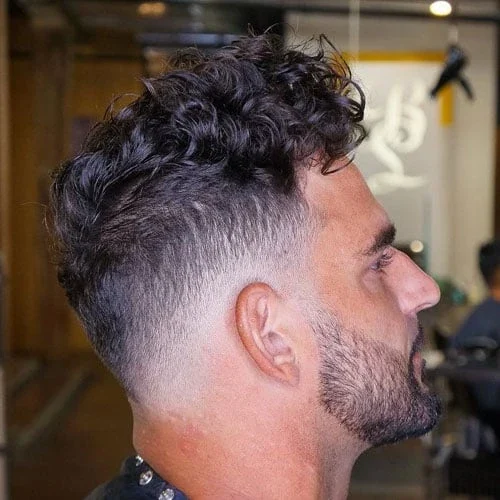
Idea 02
Raised Curls Continuing Toward the Back
The curls rise above the upper head and continue toward the back. The shorter side keeps the profile narrow without removing all the retained rear texture.
- Shape
- Raised upper curls
- Detail
- Retained rear texture
From this angle, the upper ends point upward and backward rather than settling into a low fringe. The beard adds a separate lower outline, while the curls remain the tallest part of the portrait.
Wearability note: Use the profile to compare height with rear length. Reducing one will not necessarily reduce the other, so decide whether you prefer a smaller raised top, a shorter back or both.
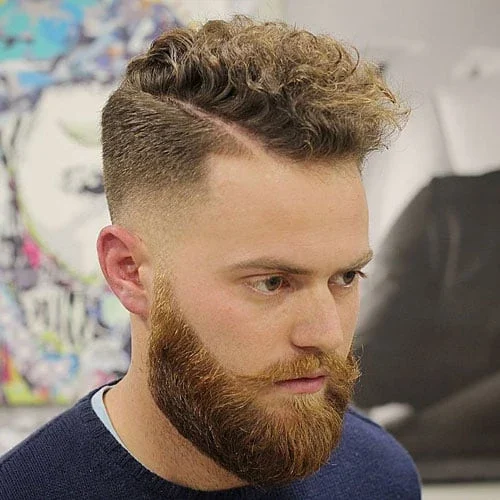
Idea 03
Short Ginger Curls With a Defined Part
A visible side part gives the short ginger curls a clear direction. The upper pieces remain textured, but the division makes the outline more organized than an unparted curly crop.
- Shape
- Short ginger curls
- Detail
- Visible side part
The close side contrasts with the fuller front, and a few small curls rise near the part. The beard contributes a larger lower shape without changing the compact length above.
Wearability note: Choose the part independently of the beard and color. The useful comparison is how a defined division controls the upper shape, especially if you are deciding between a directed front and curls falling more freely.
Choose your direction
Choose the front
Compare open foreheads, short curl edges and longer forward fringes.
Choose the width
Look at close sides beside connected rounded coverage.
Choose the back
Compare compact napes with fuller rounded or extended rear sections.
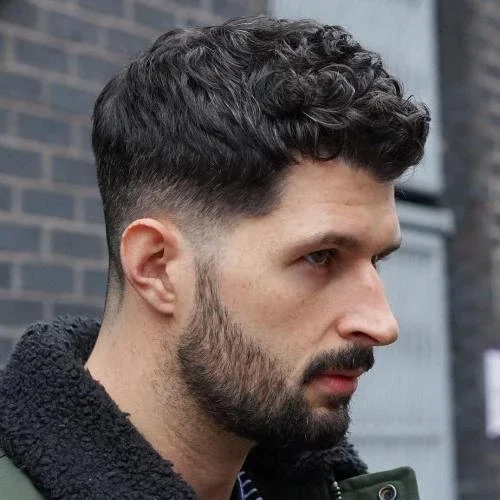
Idea 04
Compact Dark Curls With a Small Front Lift
The curls stay compact with a small lift at the front. The sides are shortened, but the upper shape remains softly connected rather than sitting over a broad exposed panel.
- Shape
- Compact upper curls
- Detail
- Small raised front
Small bends give the surface texture without a long fringe covering the forehead. The profile is narrower and lower than the fuller rounded styles later in the gallery.
Wearability note: Choose this when you want visible curl movement in a smaller outline. Point to the front height and side connection separately, because either can be changed without turning the top into a much longer style.
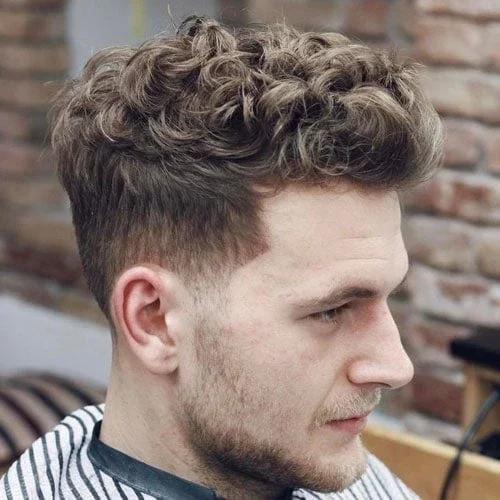
Idea 05
Soft Brown Curls With a Rounded Front
Soft curls create a rounded front with a few ends lifting away from the forehead. The upper hair looks fuller than the shortened side without becoming a tall narrow ridge.
- Shape
- Soft rounded curls
- Detail
- Short side connection
The larger bends overlap across the top, and the temple edge is defined. The front stays open enough to show the forehead rather than forming a continuous hanging curtain.
Wearability note: Compare the front opening with the longer fringes in the gallery. If you want curls off the brows, show that boundary explicitly instead of relying only on the overall roundness of the top.
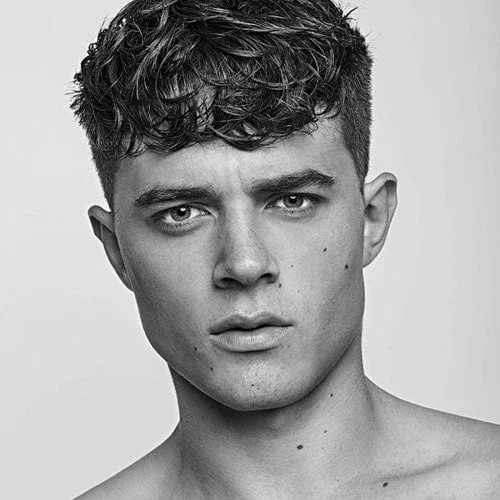
Idea 06
Short Defined Curls With a Forward Fringe
Short defined curls bend toward the forehead in several separate pieces. The front edge is irregular, keeping the fringe softer than a straight clipped line.
- Shape
- Short defined curls
- Detail
- Forward fringe pieces
The upper outline remains compact around the crown, while the sides stay closer to the head. The monochrome portrait emphasizes curl separation rather than giving reliable color information.
Wearability note: Use this for the compact front shape and the amount of forehead coverage. Compare it with your own curl pattern, because the photograph shows one finished arrangement rather than a promise of identical curl size.
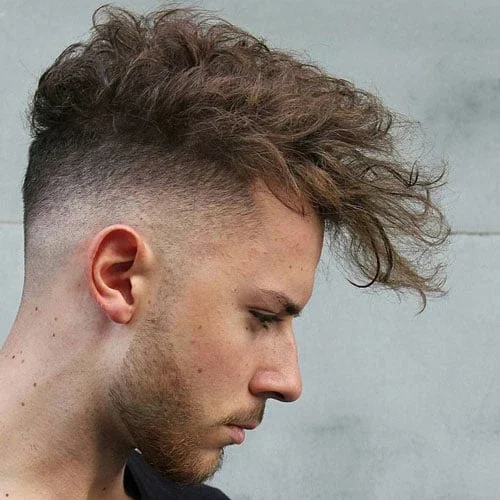
Idea 07
Longer Loose Curls With Forward Ends
Longer loose curls lean forward over the close side. Several ends extend beyond the main upper outline, giving this version more movement than the compact crops.
- Shape
- Long loose upper curls
- Detail
- Short side contrast
The profile shows both the raised crown and the longer front pieces. The side remains narrow, which makes those irregular upper ends appear more prominent.
Wearability note: Compare the longest front pieces with the crown height before choosing. You may prefer the loose surface without wanting the same forward reach, and shortening the fringe would change that part of the silhouette independently.
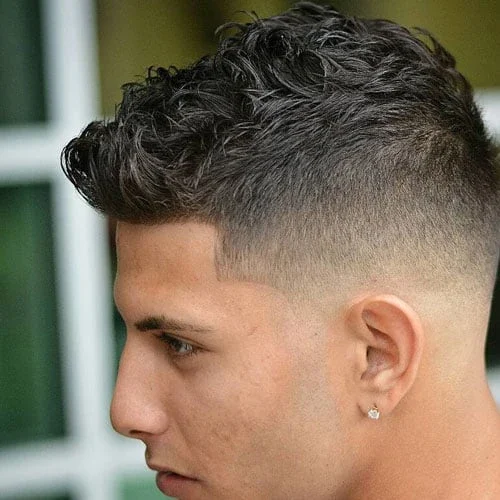
Idea 08
Small Curls With a Neat Temple
Small curls keep the upper surface textured while the temple stays neatly outlined. The front has only modest lift, making the overall shape more contained than the longer curly fringes.
- Shape
- Small upper curls
- Detail
- Neat temple edge
The short side blends upward into the fuller hair rather than ending in a wide overhang. A few front pieces bend toward the forehead without covering much of it.
Wearability note: This is useful for choosing a smaller curl outline with a defined edge. Discuss how much softness you want at the temple separately from the upper length, since a sharper corner changes the impression of an otherwise similar top.
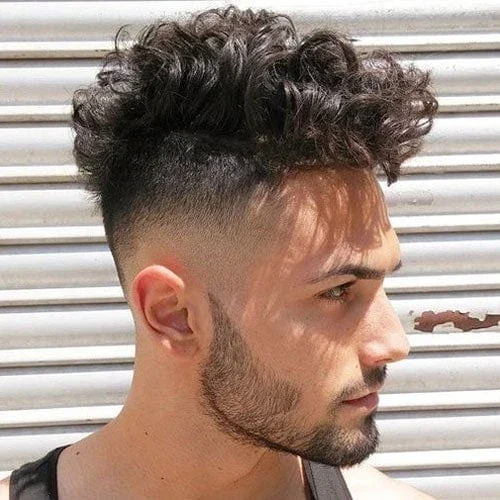
Idea 09
Full Raised Curls With a Short Lower Side
The curls form a high, full upper shape above a shorter side. Daylight makes the larger bends and the gaps between them easy to distinguish.
- Shape
- Full raised curls
- Detail
- Short lower side
The front is lifted rather than hanging low across the forehead. The shorter lower area reduces width around the ear, leaving the curls as the main source of height and breadth.
Wearability note: Compare the actual upper height with the smaller crops before choosing this volume. A photo taken from the side is particularly useful here because a front view can make the retained side width harder to judge.
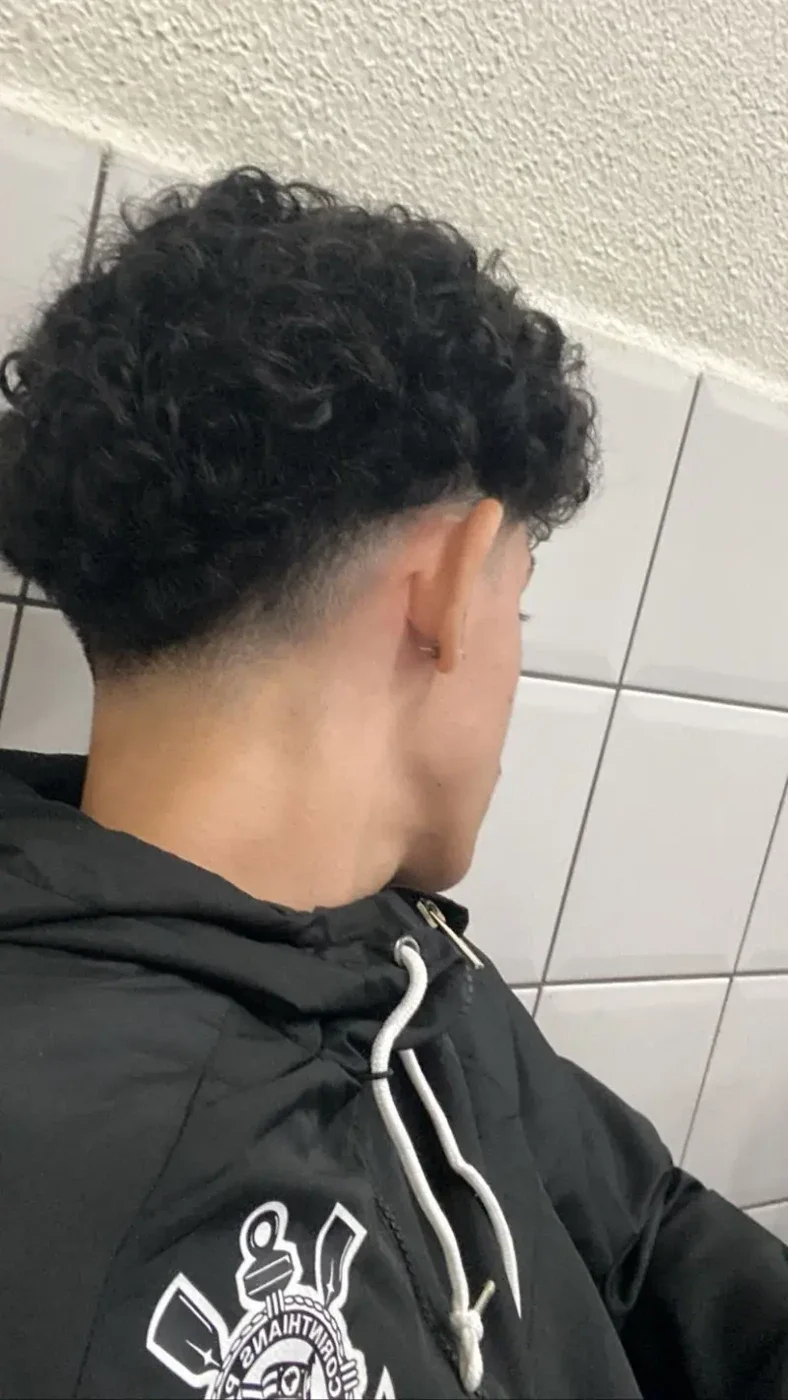
Idea 10
Rounded Rear Curls With a Short Nape
The rear view shows a rounded curl shape above a shorter nape. The upper hair retains width instead of narrowing into a long central tail.
- Shape
- Rounded rear curl shape
- Detail
- Short nape coverage
Several curls sit beyond the head outline near the crown, while the lower coverage is close around the ear and neck. This makes the transition in both length and fullness visible from behind.
Wearability note: Keep the rear angle if a rounded back is part of your goal. Pair it with a front reference for fringe length, since a similar rear silhouette can sit behind either an open forehead or a longer curly fringe.
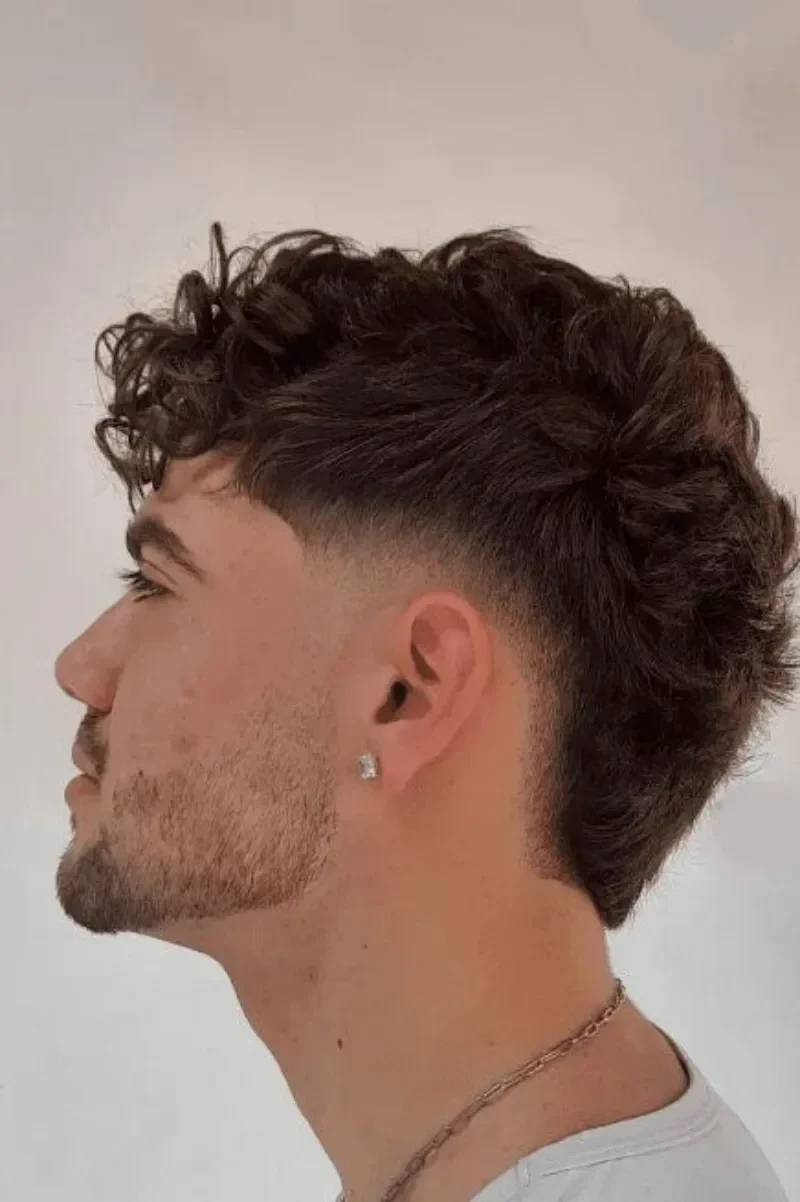
Idea 11
Curly Top With an Extended Rear Section
The upper curls continue into an extended rear section. A short side creates separation beside the ear, making the longer back a noticeable part of the profile.
- Shape
- Curly upper texture
- Detail
- Extended rear length
The curls have loose irregular ends rather than a clipped rounded boundary at the nape. The front stays comparatively compact, so the retained rear length changes the balance of the cut.
Wearability note: Choose this for the extended back only if that is a feature you want to keep. A shorter nape could retain the curly top while producing a more compact outline, so compare both before deciding.
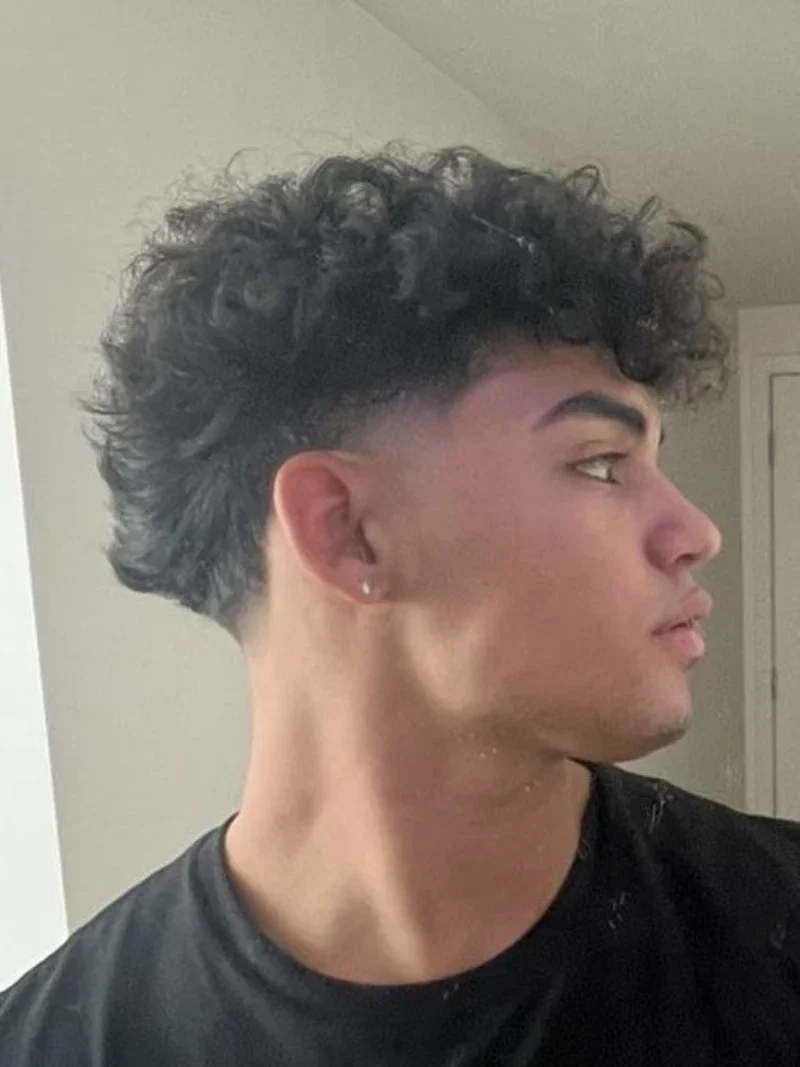
Idea 12
Full Curly Fringe With Rear Fullness
The curly fringe extends forward while the back retains a fuller outline. A shorter area near the ear provides contrast without removing the longer rear shape.
- Shape
- Full curly fringe
- Detail
- Retained rear fullness
The side view shows curls above and behind the head rather than only at the front. Their irregular ends create a softer boundary than the sharply edged crops.
Wearability note: Compare the rear fullness with the amount of fringe you want. This photograph shows both together, but you can prefer an open forehead while still retaining the same fuller back, or shorten the rear while keeping a forward fringe.
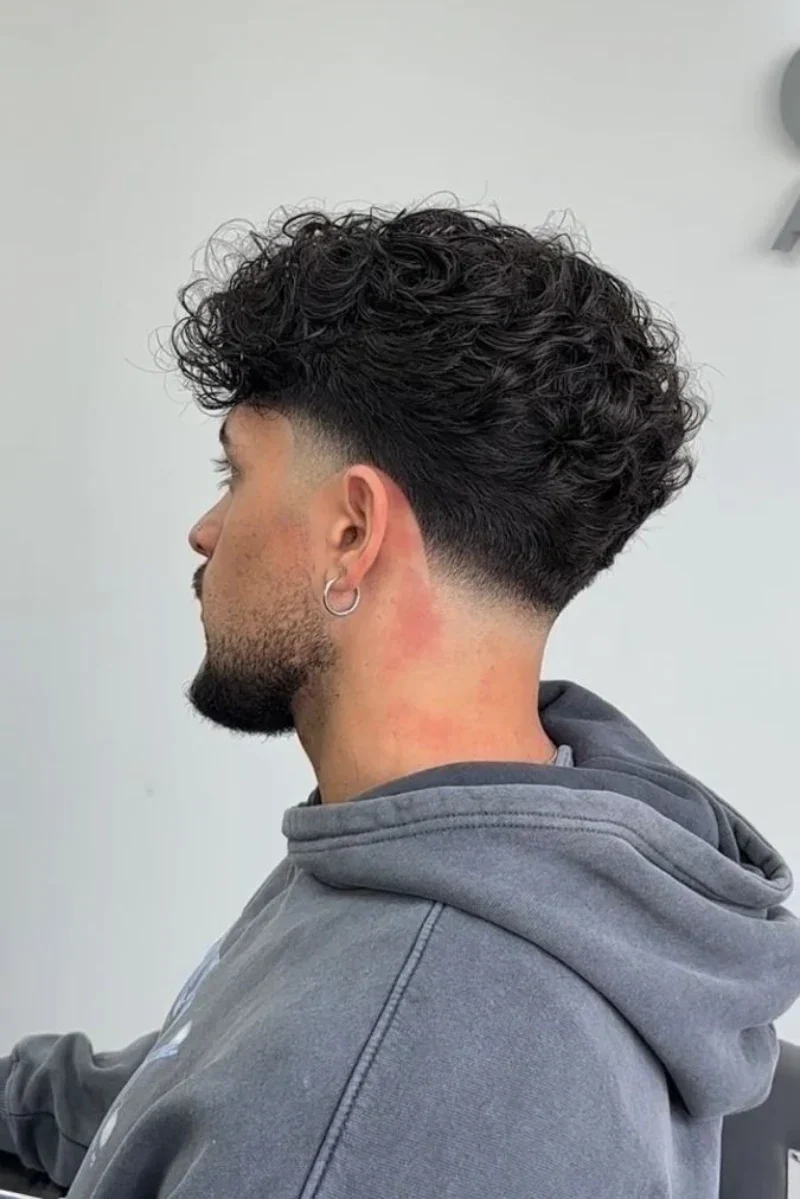
Idea 13
Rounded Black Curls With a Soft Lower Edge
The black curls create a rounded upper and rear shape. The shorter lower edge keeps the neck clearer while preserving more fullness than a broadly exposed fade.
- Shape
- Rounded black curls
- Detail
- Soft lower edge
From behind the side, the curls remain connected around the crown instead of forming one narrow ridge. The beard is a separate shape below the cheek and jaw.
Wearability note: Use this angle when you want to explain connected rear fullness. A front photo alone might hide it, especially if the fringe is shorter than the rounded section retained at the back.
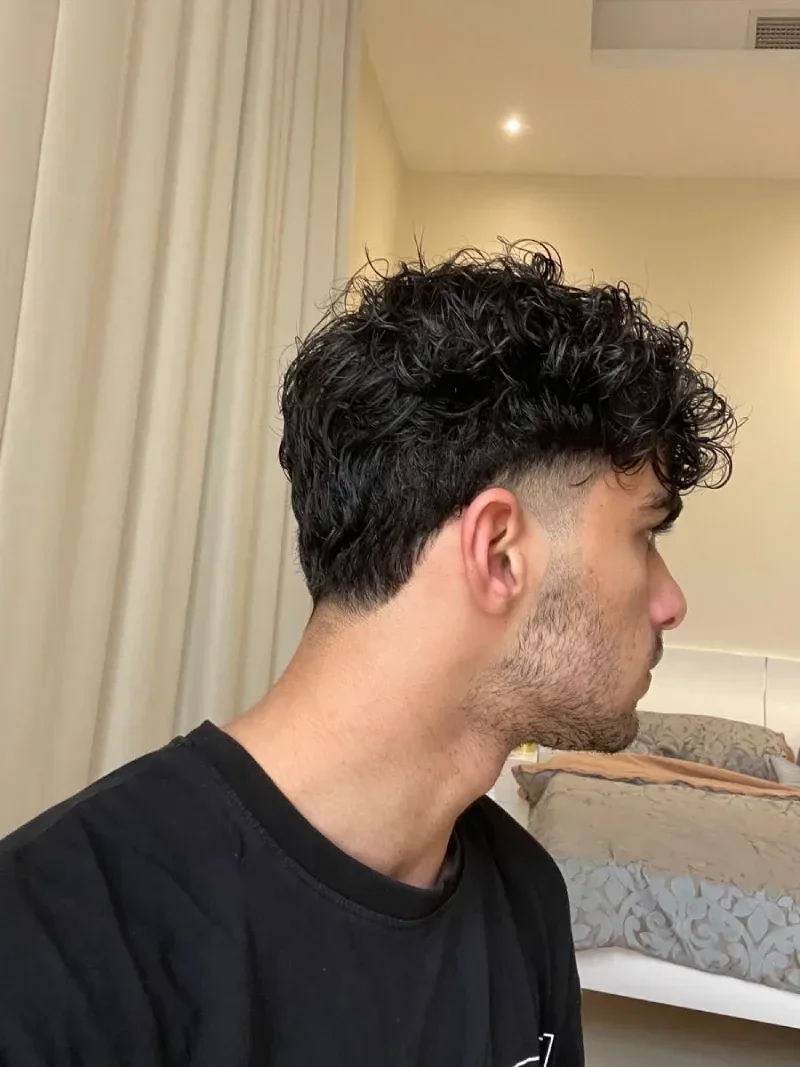
Idea 14
Short Loose Curls With Connected Sides
Short loose curls sit above sides that retain visible hair. The outline feels more continuous than the examples where the upper curls hang over a nearly bare panel.
- Shape
- Short loose curls
- Detail
- Connected side coverage
The rear-side view shows the curl texture spreading across the crown and back. The lower edge is shorter but still shaded, creating a softer connection toward the nape.
Wearability note: Choose this if you prefer retained coverage around the ear and back. The photograph helps explain that connection, while another front angle can establish whether you want curls directed forward or kept off the forehead.
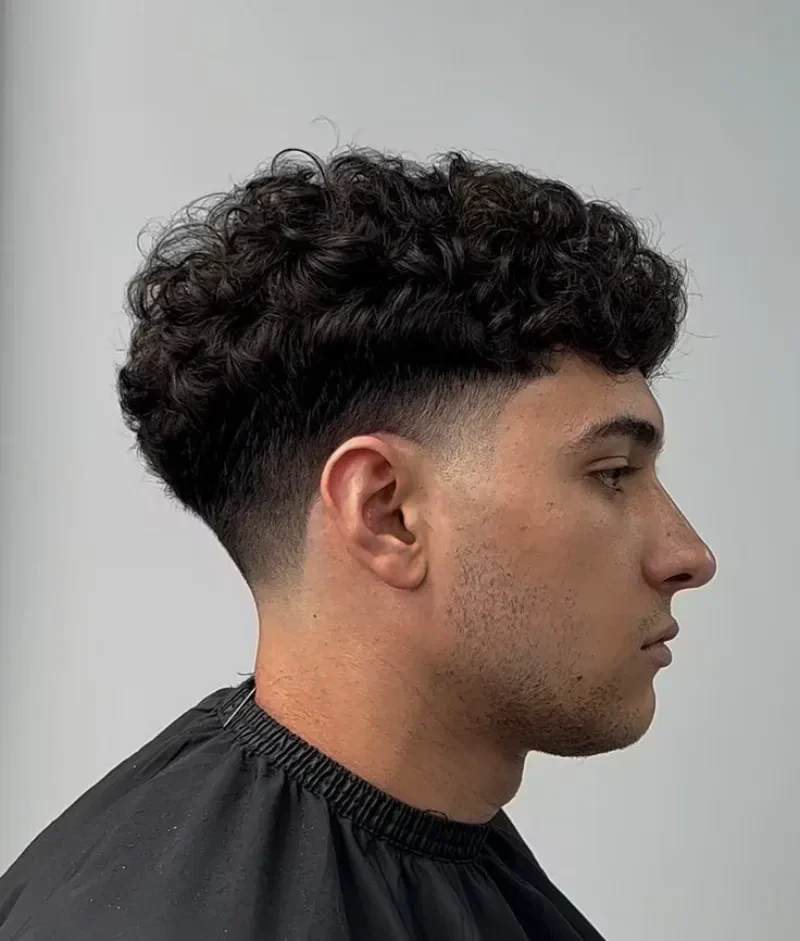
Idea 15
Compact Rounded Curls With a Short Fringe
The curls form a compact rounded cap with short front coverage. The lower side is shortened without taking the entire upper section into a very narrow strip.
- Shape
- Compact rounded curls
- Detail
- Short front coverage
The side portrait shows individual curl bends along the top and a gentle rear curve. The front pieces stay near the hairline rather than reaching far down toward the brows.
Wearability note: Compare this with the fuller fringes if you want less forehead coverage. The small rounded outline is a separate choice from the precise curl definition, which will depend on your own hair and finished arrangement.
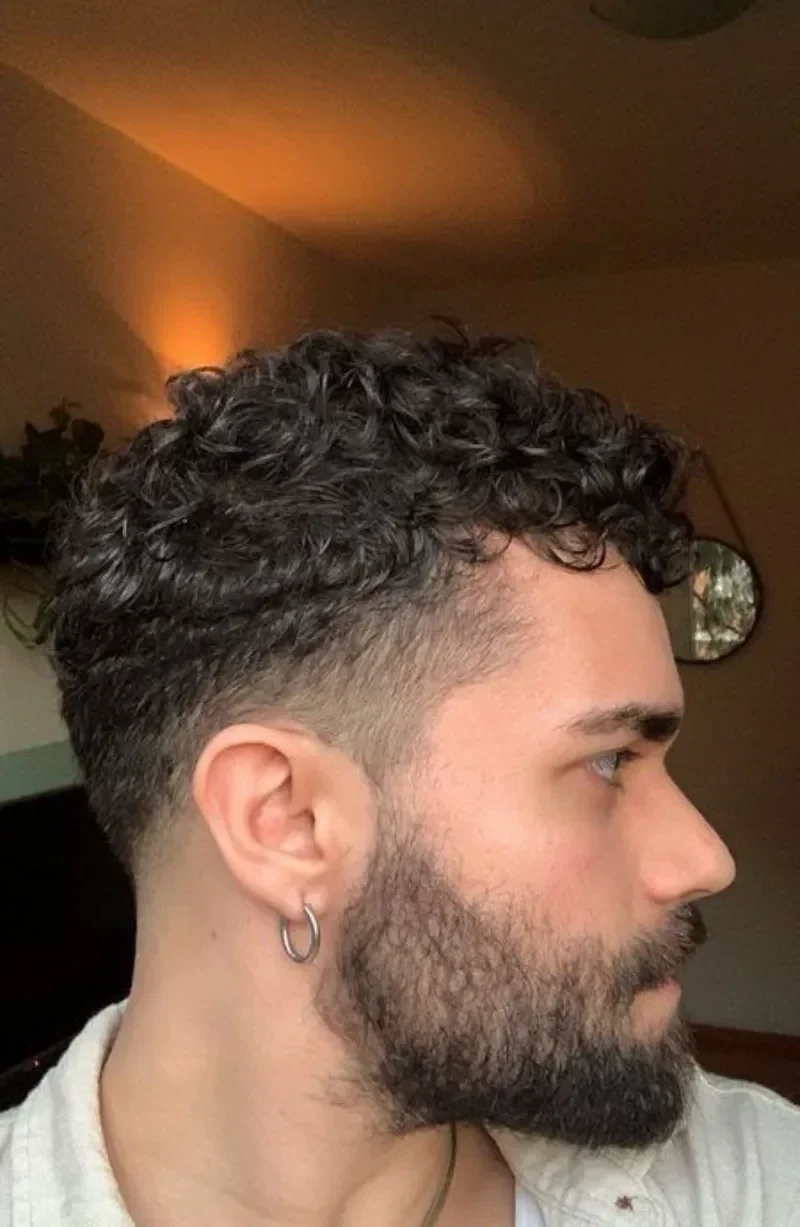
Idea 16
Close Curls With a Fuller Beard
The curls stay close to the upper head while the sides retain shading. This makes a smaller haircut outline than the longer fringes, even though the full beard adds lower volume.
- Shape
- Close upper curls
- Detail
- Retained side shading
The profile shows a modest front bend and no long pieces hanging toward the face. The upper texture remains visible through several small overlapping curls.
Wearability note: Compare the haircut separately from the beard before judging its size. If you want a compact curly top, this reference can be useful even with different facial hair, provided the upper length and side coverage are explained clearly.
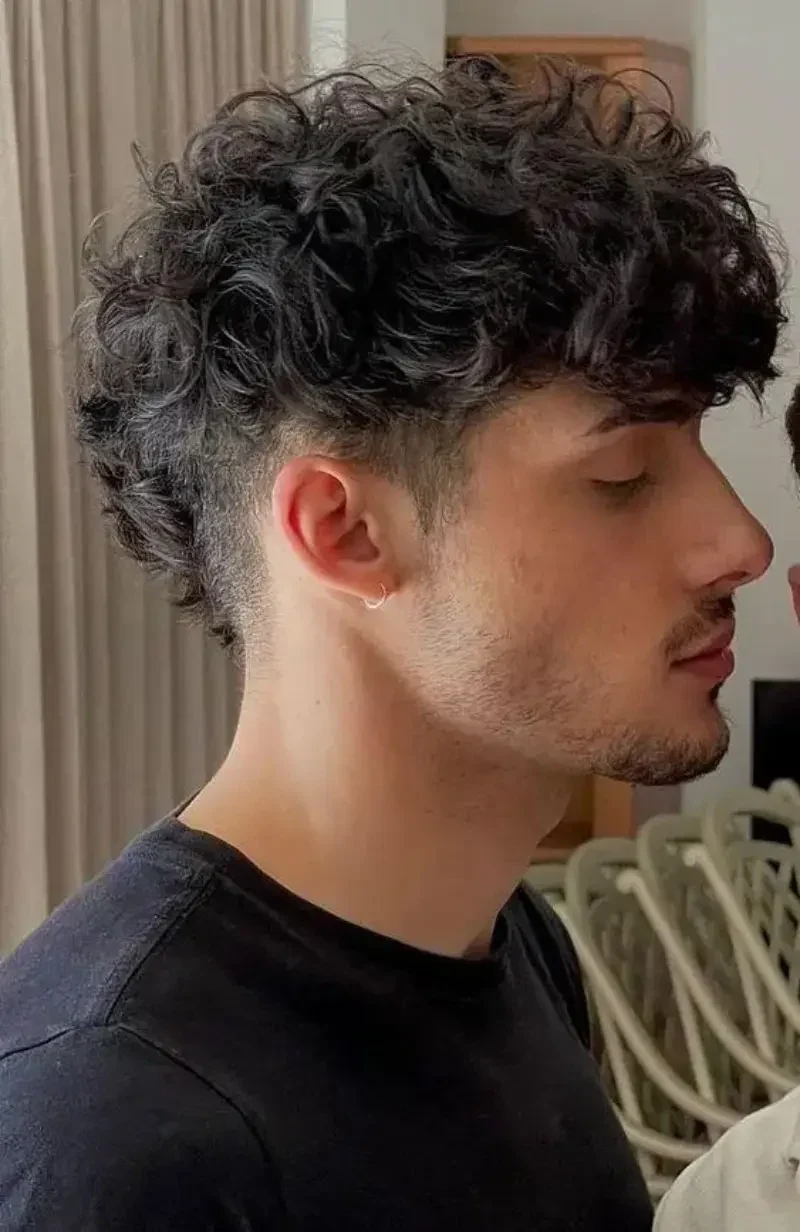
Idea 17
Soft Curly Top With a Longer Rounded Back
Soft curls continue into a longer rounded back. The shorter area around the ear creates a visible opening while leaving the upper and rear texture connected.
- Shape
- Soft upper curls
- Detail
- Longer rounded rear
The front curls bend toward the forehead, but the rear extension gives the profile additional length. The lower outline stays irregular rather than ending in a blunt straight line.
Wearability note: Choose the rear extension deliberately if it is the part you like. A shorter back would create a different balance, even if the fringe and upper curl length stayed the same.
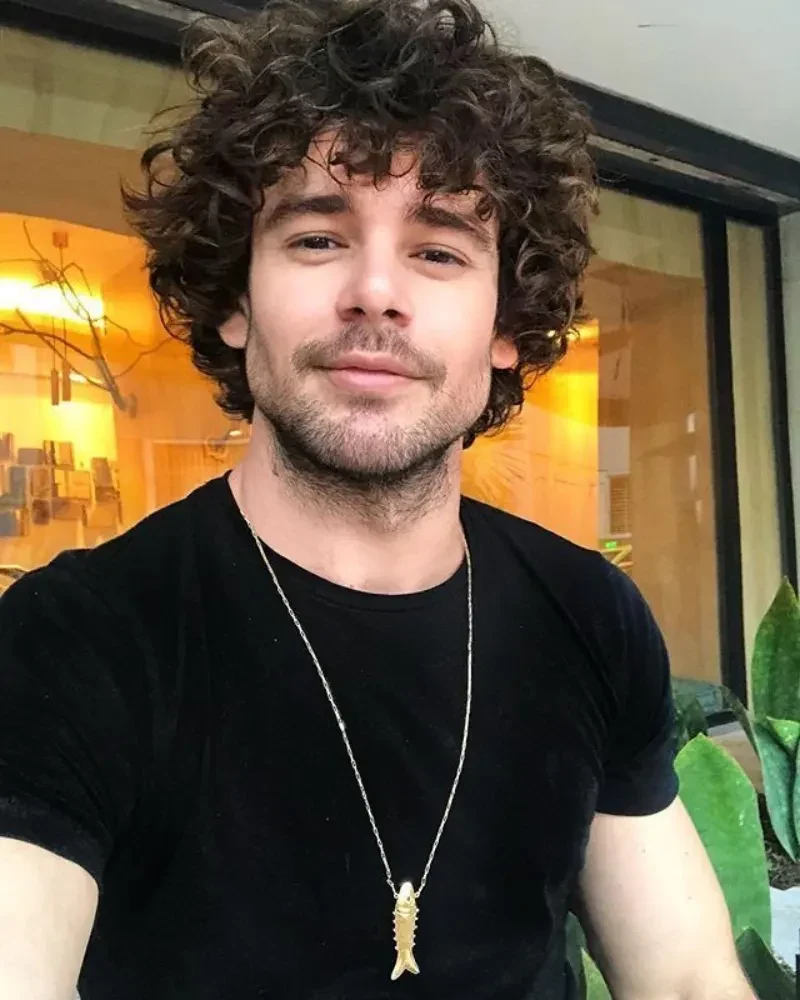
Idea 18
Full Loose Curls Around an Open Face
Loose curls create fullness around the upper head and sides. A few front pieces fall toward the forehead, but the face remains more open than in the longer hanging fringes.
- Shape
- Full loose curl shape
- Detail
- Open face framing
The curls have irregular bends and small flyaways rather than one uniformly arranged surface. Their width around the temples gives this version a fuller outline than the close-sided cuts.
Wearability note: Compare the side fullness if you want a curl shape without a close fade. The softer outline depends on retained width as well as upper length, so both should be part of the haircut discussion.
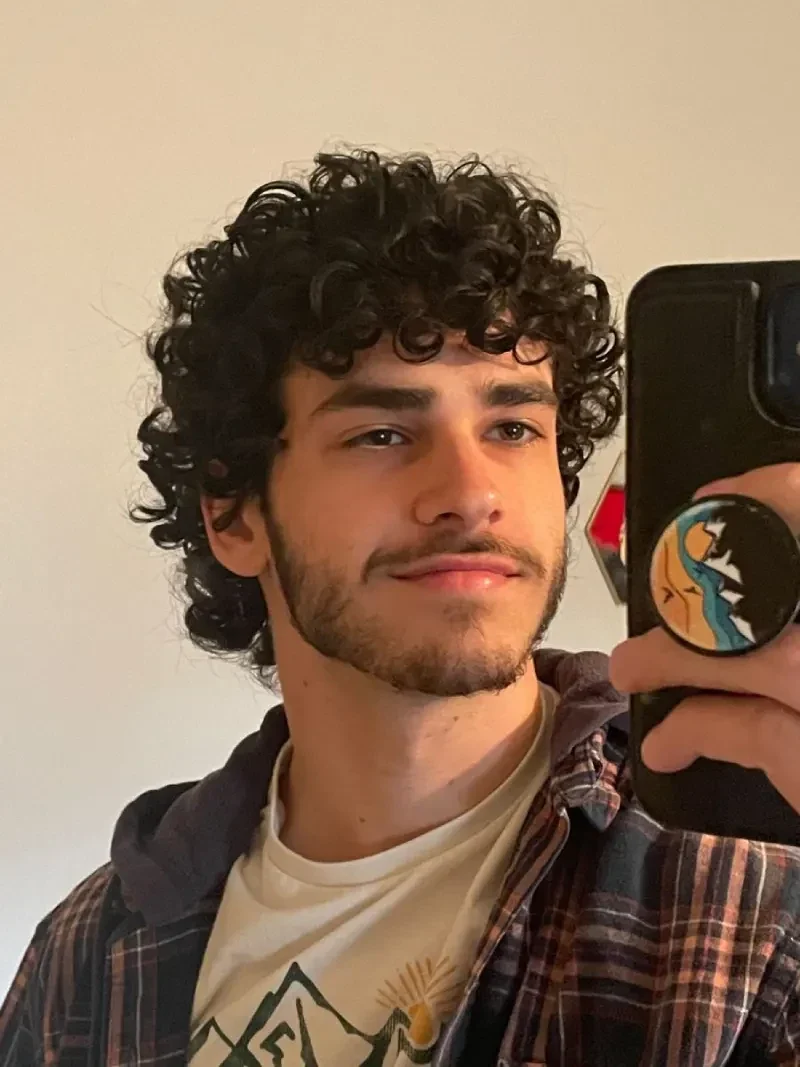
Idea 19
Defined Ringlets With Rounded Side Coverage
Defined ringlets curl forward near the forehead while the sides remain rounded. The shape keeps visible texture around the face instead of concentrating all the length in a narrow upper strip.
- Shape
- Defined front ringlets
- Detail
- Rounded side coverage
Several front curls sit separately, creating small openings rather than a straight fringe edge. The lower sides retain hair, and the overall outline is softer than the sharply faded examples.
Wearability note: Use this to compare curl separation and side coverage together. The mirror portrait shows the finished front well, but a rear angle would still help explain how much length you want to keep at the nape.
Use more than one angle for a curly cut
A front portrait can show curl separation and forehead coverage while hiding substantial rear length. Pair it with a profile or rear view when the back shape is important to your choice.
Compare the broad outline before focusing on one perfectly placed ringlet. Your texture and the finished arrangement will affect curl size, while the decisions about retained side coverage, fringe length and rear extension still need to be clear.

About the author
Bella Ross
Bella Ross is the hairstyle editor behind Latest Easy Hairstyles. She curates practical haircut, braid, color, and styling ideas with a focus on looks that are easy to browse, realistic to recreate, and useful for everyday hair decisions.