
Before you choose
Choose the front height and the rear length
Backward direction can be worn close to the head or with a raised front. This gallery compares both, alongside connected sides, stronger shaved-side contrasts and different amounts of retained rear length. A glossy photograph shows one surface finish; it does not mean the same haircut must always be worn with that level of shine.
The hairstyle gallery
19 slicked back hair ideas to compare
Compare the visible length, shape, texture, and finish before choosing a salon reference.
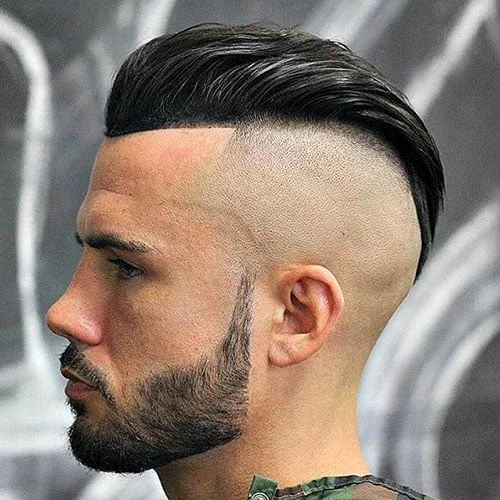
Idea 01
Flat Black Sweep With Exposed Sides
The upper hair lies close and moves directly backward. Broadly exposed sides create contrast without adding the rounded front height of a pompadour.
- Shape
- Flat backward sweep
- Detail
- Broad exposed side
The profile shows a smooth continuous upper surface with the longer ends extending toward the back. The beard remains full below, separated from the upper section by the close area around the ear.
Wearability note: Choose the low front profile if height is your main concern. The retained length still needs room at the back, so compare that rear extension before assuming a flat top means an equally compact haircut everywhere.
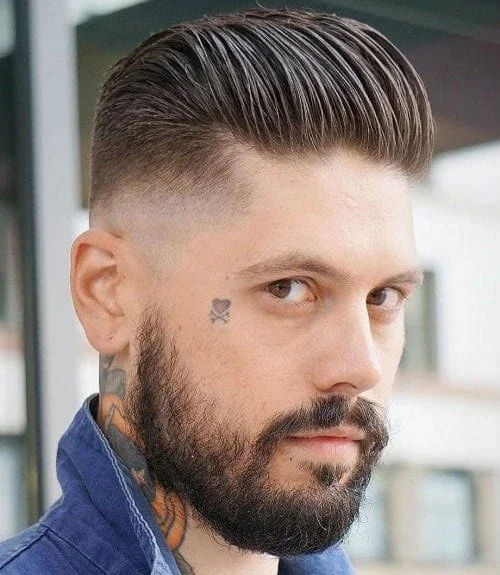
Idea 02
Combed Brown Sweep With a Fuller Beard
Combed ridges carry the brown hair backward from a gently raised front. The sides retain some shading instead of forming a completely bare panel.
- Shape
- Combed backward ridges
- Detail
- Retained upper-side shading
The upper outline is rounded but relatively controlled, with no long fringe dropping over the forehead. The fuller beard adds lower volume, making the portrait appear heavier than the haircut alone.
Wearability note: Compare the sweep independently of the beard. This reference is useful for moderate front lift and visible comb direction, while a shorter beard would change the overall balance without changing the upper hairstyle.
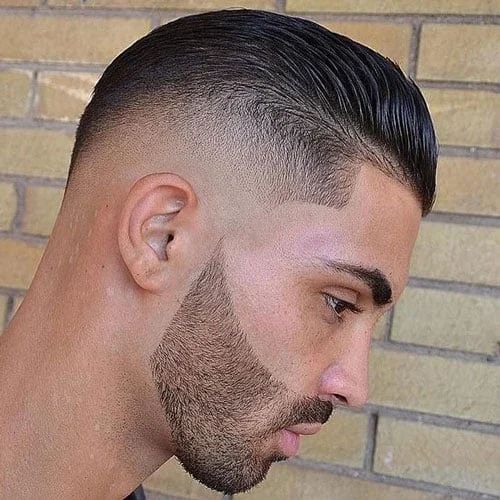
Idea 03
Low Glossy Sweep With a Close Temple
The glossy upper hair lies low as it sweeps backward. A close temple blend keeps the side narrow beneath that smooth direction.
- Shape
- Low glossy sweep
- Detail
- Close temple blend
The front has little vertical lift compared with the taller styles nearby. Fine ridges run back through the top, while the shaped beard creates a separate angular outline below the cheek.
Wearability note: Use this when you prefer a flatter finish over a high crest. The visible gloss is one styling finish, so discuss the low silhouette separately if you want a less shiny surface in your own version.
Choose your direction
Choose front lift
Compare low flat sweeps with rounded or more elevated fronts.
Check rear length
Look at compact crowns, longer overhangs and shaped lower ends.
Choose the side connection
Compare softly connected coverage with broadly exposed sides.
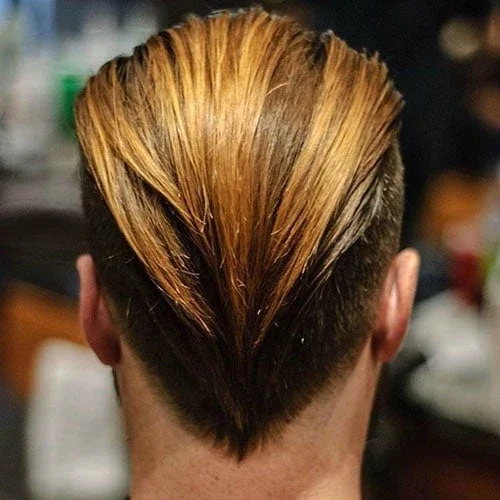
Idea 04
Golden Rear Sweep With a Pointed Nape
The rear view shows golden upper strands converging toward a pointed lower section. The color makes their backward direction especially clear against the darker hair beneath.
- Shape
- Golden backward strands
- Detail
- Pointed retained rear
The side length is shorter, but the back retains more hair than the closely shaved napes elsewhere. The longer section narrows as it approaches the lower rear edge.
Wearability note: Keep this view if you want to preserve a shaped back rather than a bare nape. Pair it with a front photo for the amount of lift, because the rear point does not specify the front height.
Idea 05
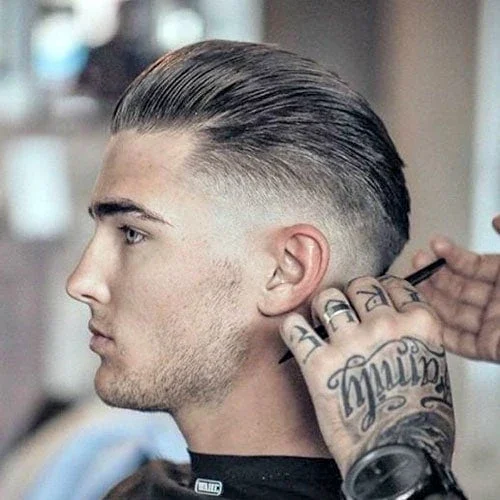
Close Backward Sweep in a Barber Chair
The top is directed backward close to the head. The side stays short and shaded, giving the hairstyle a controlled profile without a large overhanging upper section.
- Shape
- Close backward direction
- Detail
- Short shaded side
From this side angle, the upper hair follows the curve of the head toward the crown. The temple edge remains visible, and the lower side becomes lighter near the ear.
Wearability note: This is useful for choosing a smaller slicked-back outline. Add a rear angle to settle the nape, since the barber-chair profile shows the direction well but leaves the back boundary partly hidden.
Idea 06
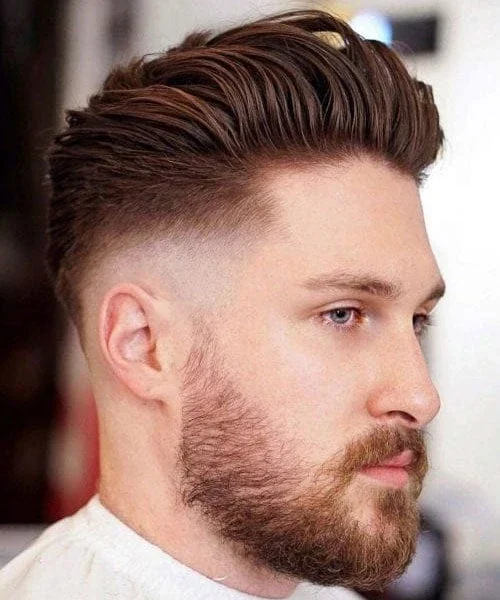
Warm Brown Sweep With a Rounded Front
The warm brown front rises gently before turning backward. Its rounded arc gives more lift than the flat sweeps without reaching the height of the tallest crests.
- Shape
- Rounded warm-brown front
- Detail
- Short side transition
The upper strands are separated enough to show direction, while the side stays short beneath them. The beard has a defined cheek edge but remains visually separate from the upper sweep.
Wearability note: Compare the front curve with a level side view before choosing the height. That curve contributes more to the silhouette than the beard, so it is worth identifying exactly where you want the lift to begin.
Idea 07
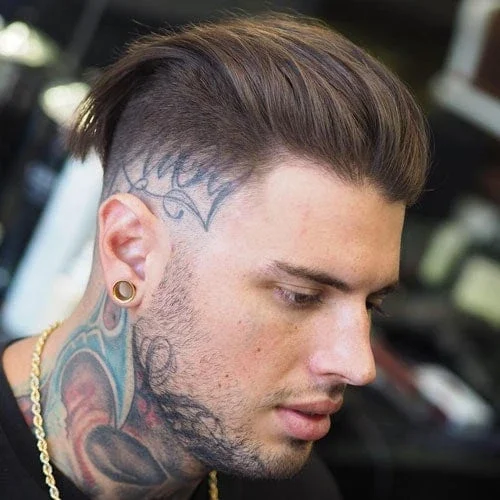
Long Loose Sweep Over a Close Side
The longer upper section sweeps back loosely rather than lying in tight parallel ridges. Its ends extend beyond the close side, creating a softer overhang.
- Shape
- Long loose upper sweep
- Detail
- Closely cut side
The front has visible lift and several strands bend outward near the crown. The short side makes the retained length stand out, especially where the upper section separates from the temple.
Wearability note: Choose the amount of overhang as well as the front height. The longer ends are part of this outline, so a shorter upper section would not look identical even if it were directed backward in the same way.
Idea 08
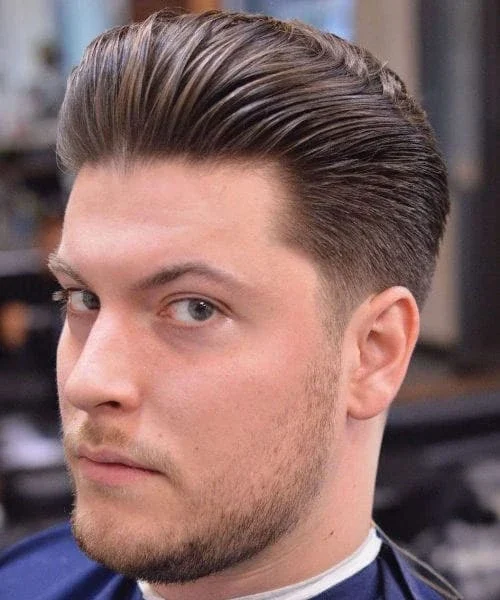
Compact Brown Sweep With a Soft Connection
The brown upper hair sweeps backward in fine ridges without forming a very tall crest. The short sides remain softly connected rather than ending at a dramatic shaved boundary.
- Shape
- Compact backward sweep
- Detail
- Softly connected sides
The front edge is open, with no fringe resting across the forehead. The upper outline stays rounded toward the crown, giving the hairstyle a relatively continuous profile.
Wearability note: Choose this when you like backward direction with less separation at the sides. A side photograph can help confirm the connection, especially if you want to avoid the more strongly disconnected versions elsewhere in the gallery.
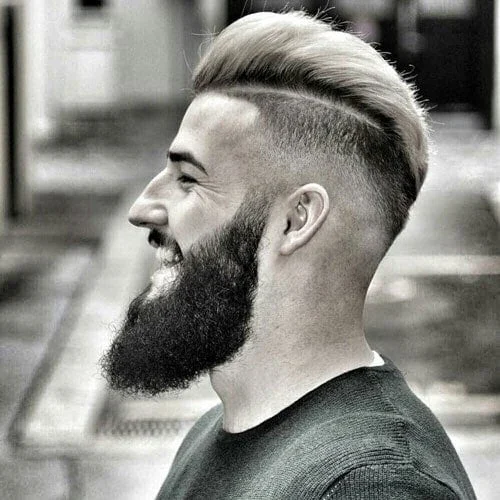
Idea 09
Pale Upper Sweep With a Dark Beard
The pale upper section sweeps back above a closely cut side. The dark beard creates a second strong shape below, emphasizing the contrast in the monochrome portrait.
- Shape
- Pale backward top
- Detail
- Dark side contrast
The top has a modest raised front and longer ends toward the back. The short side leaves the upper length visually separate without hiding the ear.
Wearability note: Use this for the profile and retained length rather than an exact shade. The black-and-white treatment changes the color information, while the front lift and rear extension remain clear features to compare.
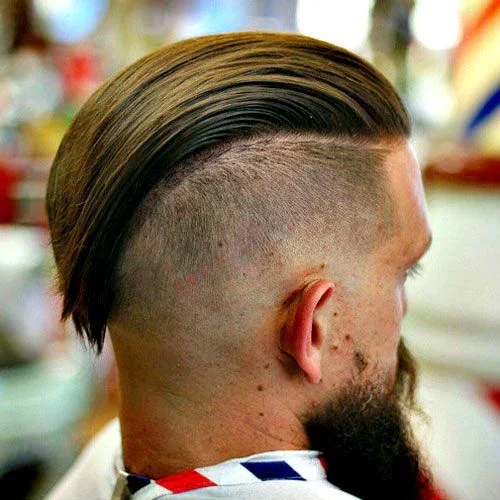
Idea 10
Long Brown Ends Over a Shaved Side
The longer upper hair extends well toward the back above a closely shaved side. The retained ends create a more pronounced rear overhang than the compact sweeps.
- Shape
- Long backward ends
- Detail
- Shaved lower side
The rear-side view reveals a strong separation between long upper strands and exposed lower coverage. The surface is smooth enough for the direction of individual longer pieces to remain visible.
Wearability note: Keep this angle if retained rear length is your priority. The longer ends will shape the back differently from a cropped crown, so explain that choice separately from how closely the side should be shaved.
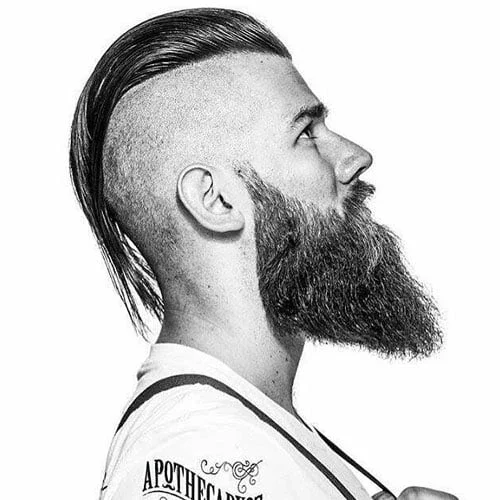
Idea 11
Long Flat Sweep With a Bare Side
The long upper section lies flat and continues down behind the head. The bare side creates a pronounced division beneath it, while the beard adds length below the jaw.
- Shape
- Long flat upper section
- Detail
- Bare side exposure
Unlike the rounded lifted fronts, this version keeps most of its upper movement backward and downward. The profile makes the retained rear length a major part of the silhouette.
Wearability note: Compare this with a shorter rear sweep before choosing. The flat front does not make the whole style short, and the extended back needs to be part of the brief rather than an unexpected result.
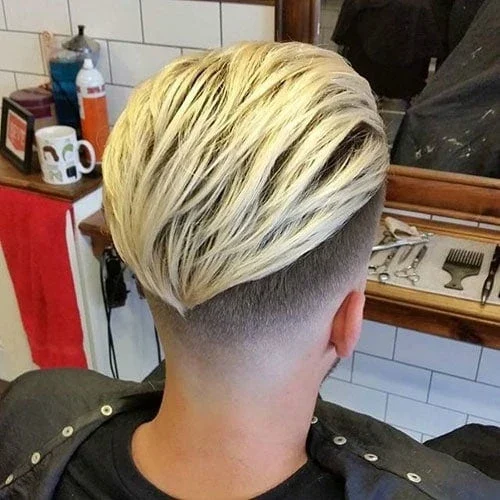
Idea 12
Pale Separated Length From the Rear
Pale separated strands sweep toward the rear above a closely faded nape. The top retains enough length for individual sections to overlap rather than form one clipped surface.
- Shape
- Pale separated strands
- Detail
- Close lower nape
The rear view shows the lighter hair covering part of the darker upper back. Below that overlap, the nape becomes much shorter, creating a clear contrast in both length and shade.
Wearability note: Save this angle when choosing how far the longer upper hair should reach. The pale color helps reveal the arrangement, but the retained length and lower coverage are the details that define the rear shape.
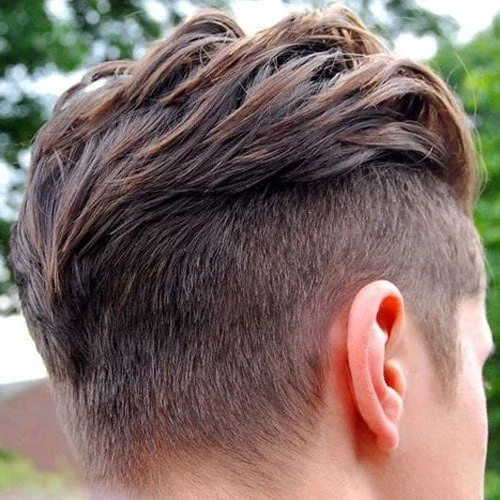
Idea 13
Soft Rear Waves With Retained Coverage
Soft waves continue backward over a rear section that retains visible hair. This gives a gentler outline than the versions with a broad exposed nape.
- Shape
- Soft backward waves
- Detail
- Retained lower coverage
The upper strands bend and separate naturally along the back of the head. The shorter lower section narrows toward the neck without creating an abrupt high shaved boundary.
Wearability note: Choose this if you want backward direction with more rear coverage. It is a useful comparison against the exposed-side styles, especially when you prefer the long upper section to blend into the back more softly.
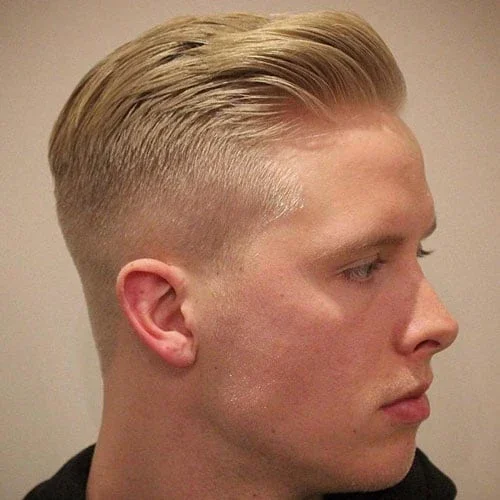
Idea 14
Low Blonde Sweep With Short Sides
The blonde top sweeps backward with little front height. The side remains short and shaded, producing a compact outline without an especially sharp disconnected edge.
- Shape
- Low blonde upper sweep
- Detail
- Short shaded sides
Fine strands follow the same general direction from the forehead toward the crown. The ear is clear, while the longer upper section stays relatively close to the head.
Wearability note: This is useful for comparing a lower-volume finish with the taller sweeps. The short side and low front are separate choices, so point to both if you want the same restrained overall scale.
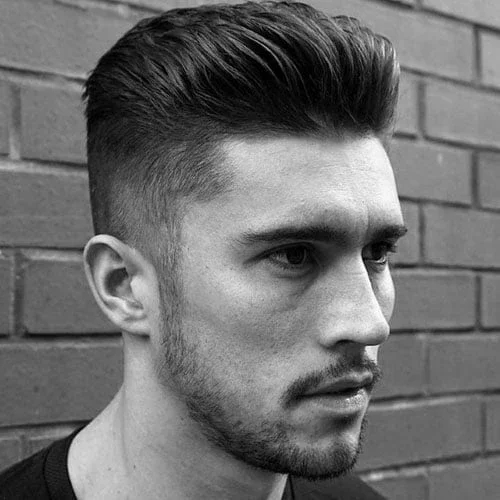
Idea 15
Raised Dark Sweep With Soft Upper Texture
The dark front rises before bending backward, giving this version more height than a flat slick. Small upper separations keep the surface from looking completely rigid.
- Shape
- Raised backward front
- Detail
- Soft upper texture
The short side connects beneath the fuller top rather than disappearing into a broad bare panel. The front-side view makes the raised arc more visible than the rear length.
Wearability note: Choose the height first if that arc is the feature you like. A rear photograph would still help explain the back, while the monochrome image should be treated as a shape reference rather than an exact color example.
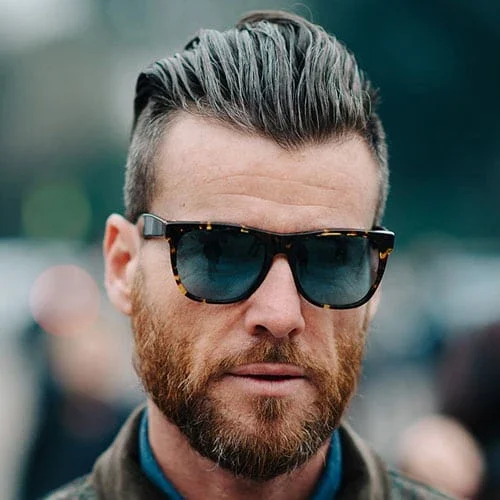
Idea 16
Gray Sweep With Defined Backward Ridges
Defined gray ridges carry the upper hair backward from the open front hairline. The arrangement gives the top structure without a hanging fringe.
- Shape
- Gray backward ridges
- Detail
- Open front hairline
The front portrait shows the direction clearly, though the glasses and beard contribute strongly to the overall appearance. The side length is less visible than the upper sweep.
Wearability note: Use this for the backward ridges and front height, then add a side reference for the cut beneath them. Keeping those choices separate is more useful than copying the entire portrait as one fixed hairstyle.
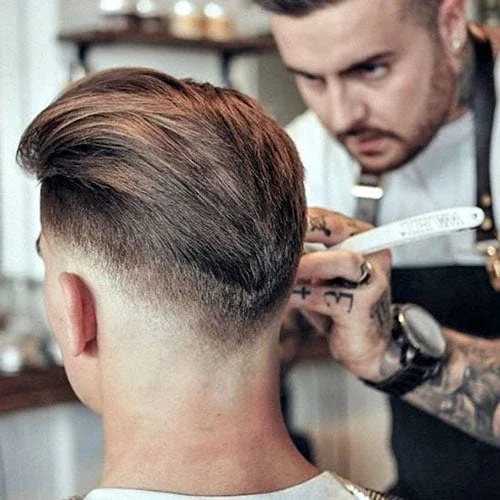
Idea 17
Rounded Rear Sweep With a Close Nape
The rounded upper sweep continues toward the back above a closely cut nape. The rear view shows how the longer strands meet the shorter lower section.
- Shape
- Rounded rear sweep
- Detail
- Close nape transition
The upper hair has a smooth curved surface with slight separation along the crown. The fade beneath it removes lower bulk, leaving the retained top as the fuller part of the back.
Wearability note: Keep this angle if the rear connection matters to you. Pair it with a front reference for lift, because a neatly rounded back can sit behind either a low slick or a much taller front.
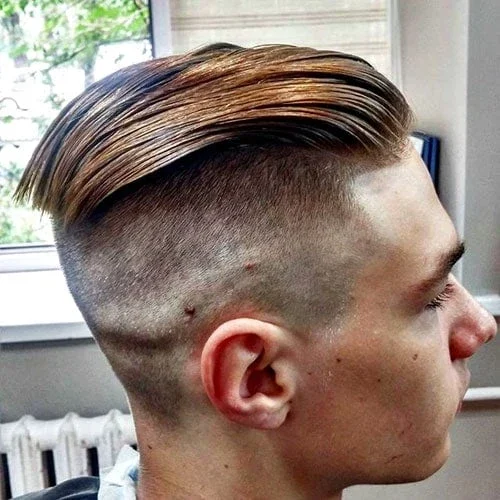
Idea 18
Copper Backward Sweep With a Close Side
Copper-toned strands sweep backward above a closely cut side. The longer ends extend beyond the short lower hair, creating a clearly separated upper section.
- Shape
- Copper-toned long sweep
- Detail
- Close side separation
The profile shows a smooth front-to-back direction with visible ridges along the surface. The color adds contrast, but the difference in length would remain visible in a single shade.
Wearability note: Choose the retained upper length before deciding on the color. This reference is especially useful for the amount of overhang, while the side finish can be made softer if you prefer less separation.
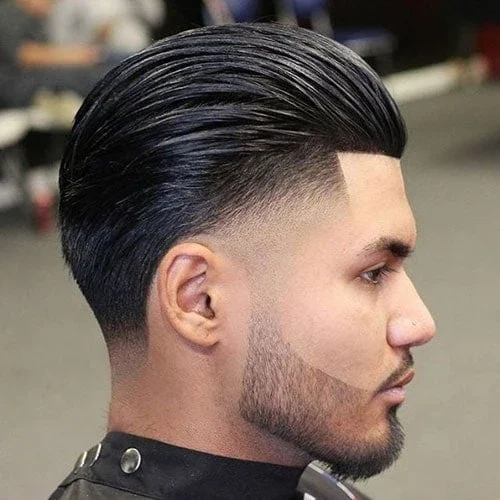
Idea 19
Black Sweep With a Gradual Lower Connection
The black upper hair sweeps backward over sides that retain some length. The lower connection is gradual, giving the back a more continuous shape than the shaved-side examples.
- Shape
- Smooth black sweep
- Detail
- Gradual lower connection
Fine ridges follow the curve of the head from the front toward the rear. The temple edge is defined, but the longer top does not appear to sit over a completely bare panel.
Wearability note: Choose this when you want a smooth backward finish with more connected coverage. Bring the profile to explain that lower transition, and compare the front height separately against a flatter or more raised example.
Separate the cut from the photographed finish
The same backward direction can look glossy and tightly ridged or softer with separated strands. Choose the silhouette first, then discuss how your usual texture changes the finished surface.
Show the rear length if it is important to you. A frontal sweep does not establish whether the longer hair ends near the crown, overlaps the shorter back or extends farther toward the nape.

About the author
Bella Ross
Bella Ross is the hairstyle editor behind Latest Easy Hairstyles. She curates practical haircut, braid, color, and styling ideas with a focus on looks that are easy to browse, realistic to recreate, and useful for everyday hair decisions.