Before you choose
Choose the direction before the extra details
Loc length is only part of the choice. The same length can fall forward, sweep behind the face or gather near the crown. These photographs compare those arrangements alongside close fades, softer side coverage and several braided sections. Color, shaved designs and beads are optional accents; use the visible direction and silhouette to explain the hairstyle first.
The hairstyle gallery
20 dreadlock styles for men ideas to compare
Compare the visible length, shape, texture, and finish before choosing a salon reference.
Idea 01
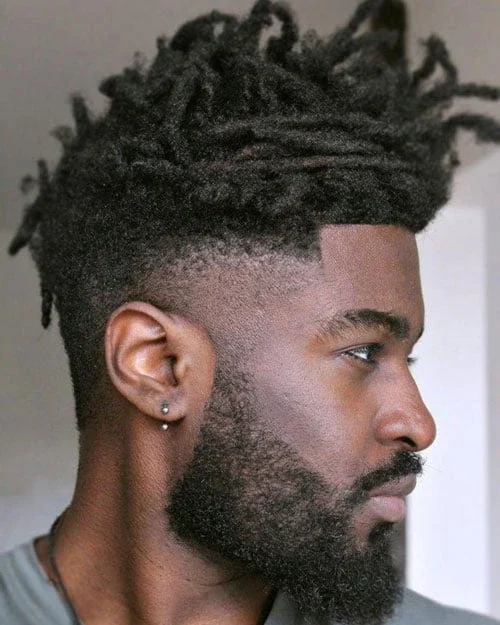
Short Locs With a Raised Side Sweep
Short locs lift across the top above a shaded lower side. Their different directions create an irregular upper edge while the squared temple gives the front a precise boundary.
- Shape
- Short swept locs
- Detail
- Shaded lower side
The locs stay well above the shoulders, and several ends turn upward near the crown. The beard adds a separate darker shape below the cheek rather than extending the hairstyle itself.
Wearability note: Choose this for a compact raised outline. Compare the upper direction with a forward-hanging version before deciding, because similar loc length can frame the forehead very differently.
Idea 02
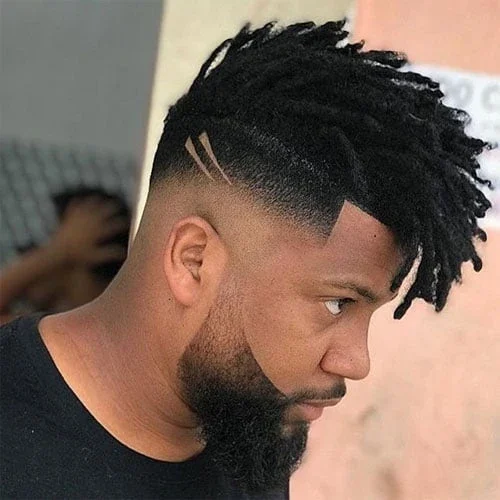
Forward Locs With Two Side Strokes
The upper locs fall forward beside a closely faded side. Two pale strokes add a graphic accent behind the temple, but the main shape comes from the retained front length.
- Shape
- Forward upper locs
- Detail
- Two shaved side strokes
Several ends hang toward the forehead while the back of the top remains raised. The beard continues below a defined cheek line, balancing the forward weight without changing the close side.
Wearability note: Decide whether the shaved strokes belong in your version. The same forward arrangement can be discussed with a plain fade, so keep the loc direction and decorative details as separate choices.
Idea 03
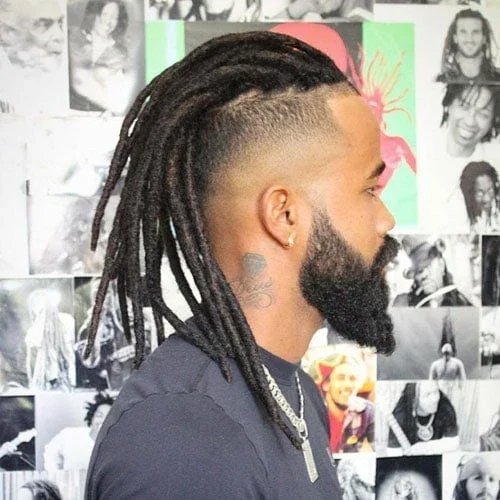
Long Locs Swept Away From the Face
Long locs sweep behind the face and hang past the shoulder line. The closely cut side removes width around the ear while leaving the length concentrated at the top and back.
- Shape
- Long rear-hanging locs
- Detail
- Close exposed side
The profile shows individual locs trailing downward rather than gathered into one tight-looking bundle. The front remains open, so the face is framed by the beard instead of a hanging loc fringe.
Wearability note: Keep the rear length in mind if this profile appeals to you. A front-only reference would miss how far the locs extend behind the neck and how much coverage is removed around the ear.
Choose your direction
Choose front coverage
Compare open foreheads, side-falling sections and forward locs.
Compare gathered placement
Look at upright ponytails, high buns and lower rear bundles.
Check the lower outline
Decide how much length and side coverage should remain.
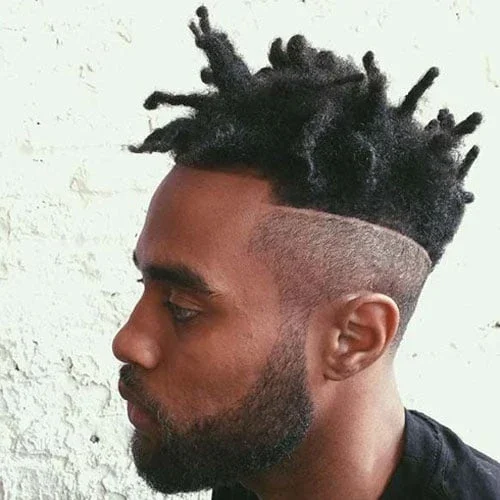
Idea 04
Short Upright Locs Above an Exposed Side
Short locs point upward above a strongly exposed side. A dark boundary remains beneath the top, making the upper section appear compact and distinctly separated from the lower coverage.
- Shape
- Short upright locs
- Detail
- High exposed side
The individual ends are irregular rather than aligned in one smooth ridge. The front corner is squared, while the beard adds another defined edge below the cheek and jaw.
Wearability note: Compare the amount of side exposure with a softer shaded example. Keeping similar short locs above more side coverage would produce a less detached outline without needing substantially more upper length.
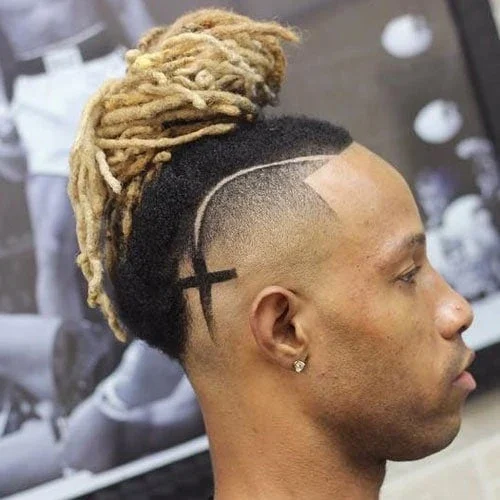
Idea 05
Light Loc Bun Above a Curved Side Line
A light loc bun gathers the length high above a closely cut side. The pale curved line and darker cross design create a prominent graphic panel beneath it.
- Shape
- Light raised loc bun
- Detail
- Curved side line
Several lighter ends spill beyond the gathered shape rather than disappearing into a smooth knot. A dark upper band remains between the bun and the exposed lower side, adding another layer of contrast.
Wearability note: Choose the bun placement independently of the side design. If you prefer a quieter finish, bring a plain-side reference too while keeping this photo for the amount of gathered height you like.
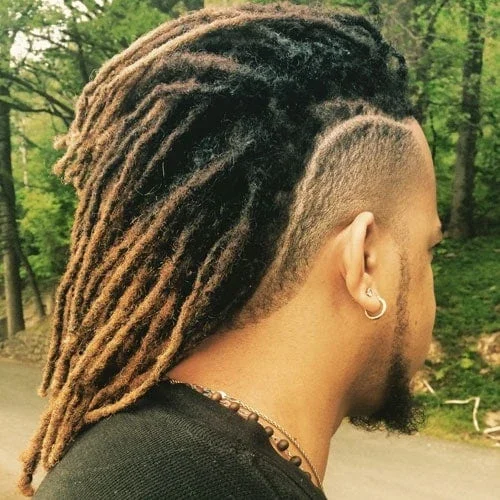
Idea 06
Loose Long Locs With a Curved Side Opening
Loose locs hang toward the back above a curved side opening. Lighter strands break up the darker length, while the closely cut side leaves the ear area relatively clear.
- Shape
- Loose long locs
- Detail
- Curved exposed side
The rear-side view shows the locs extending beyond the nape rather than ending in a compact crown shape. The part of the upper section nearest the face stays directed backward.
Wearability note: Use this angle to explain both the retained length and the side opening. The lighter color is optional; the longer rear outline would remain the main shape even with a more uniform shade.
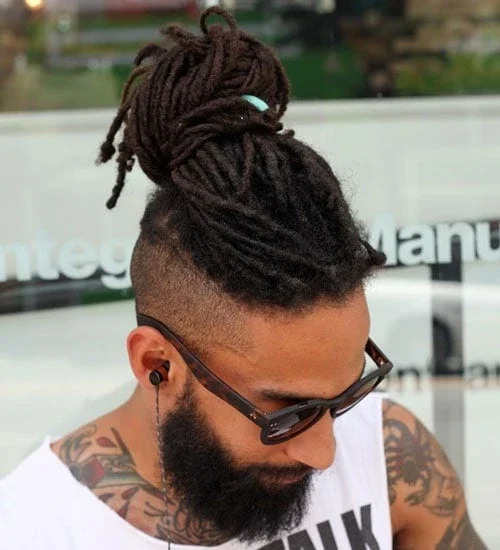
Idea 07
High Loc Bun With Loose Ends
The locs gather into a high bun with loose ends projecting above it. Shorter side coverage keeps most of the visible volume near the crown rather than around the ears.
- Shape
- High gathered locs
- Detail
- Loose upper ends
The downward angle reveals the direction of the gathered sections and the height of the bundle. The front hairline stays visible, while the sunglasses partly conceal the face below it.
Wearability note: Compare this high placement with a lower gathered style before choosing. The bundle position changes the profile even when the loc length stays similar, and the photo does not establish how tightly it is secured.

Idea 08
Side-Falling Locs With an Open Temple
The upper locs fall to one side, leaving the opposite temple open. The asymmetry frames the forehead without creating an evenly hanging fringe across the entire front.
- Shape
- Side-falling upper locs
- Detail
- Open visible temple
The length remains near the upper face instead of reaching the shoulders. The round glasses are visible below the falling pieces, making the amount of space around the eyes a useful detail to compare.
Wearability note: Choose how close you want the front pieces to sit to your glasses or brows. A slightly shorter or differently directed section could change that relationship while retaining the same overall loc length.
Idea 09
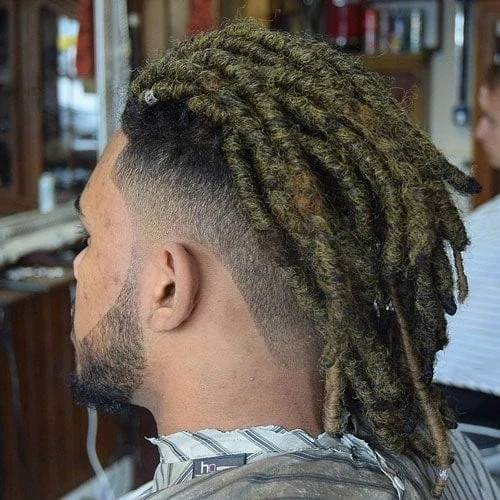
Rear-Hanging Locs With Shaded Sides
The locs hang toward the nape while the side stays softly shaded. Their downward direction creates a longer rear outline than the upright and crown-bun examples.
- Shape
- Rear-hanging locs
- Detail
- Soft side shading
The side-rear view shows individual ends separating along the back. A closer lower section around the ear reduces width, but enough darker coverage remains above it to keep the transition relatively connected.
Wearability note: Save this view if the lower rear length is important to you. Pair it with a front photo for forehead coverage, because the back direction here does not fully establish how the front pieces should sit.
Idea 10
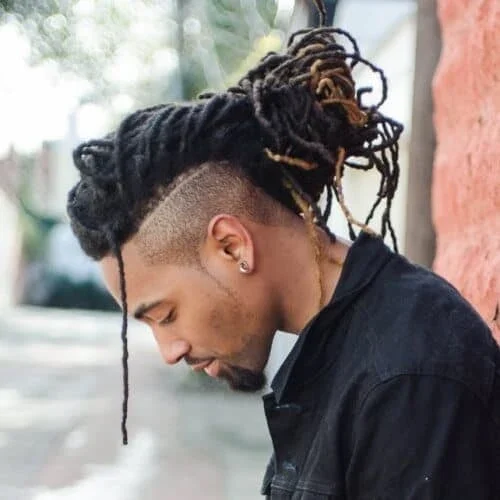
High Gathered Locs With a Loose Front Piece
A high rear bundle gathers most of the locs away from the face. One loose front piece hangs separately, introducing an asymmetric detail beside the closely cut side.
- Shape
- High rear bundle
- Detail
- Single loose front loc
The downward profile makes the exposed temple and bundle height visible together. Several ends remain loose at the back of the gathered shape rather than forming a completely enclosed knot.
Wearability note: Decide whether the single front piece is part of your goal or an incidental detail. The hairstyle can be discussed as an open-face gathered arrangement without requiring that same loose section.
Idea 11
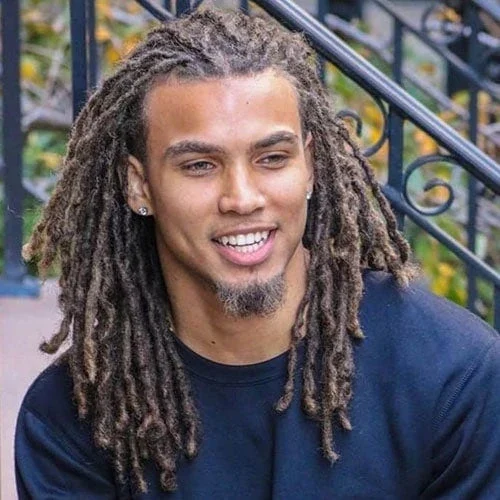
Long Locs With Shoulder-Level Fullness
Long locs spread around the shoulders while the central face remains open. The fuller lower outline contrasts with the closer sides and raised upper bundles elsewhere in the gallery.
- Shape
- Long loose locs
- Detail
- Shoulder-level coverage
Several locs sit at slightly different lengths around the front, creating an irregular perimeter. The upper hair does not rely on a large exposed side panel to give the style definition.
Wearability note: Compare the width at shoulder level as well as the length near the face. If you prefer less lower fullness, bring a gathered reference too rather than expecting the same loose arrangement to sit narrowly.
Idea 12
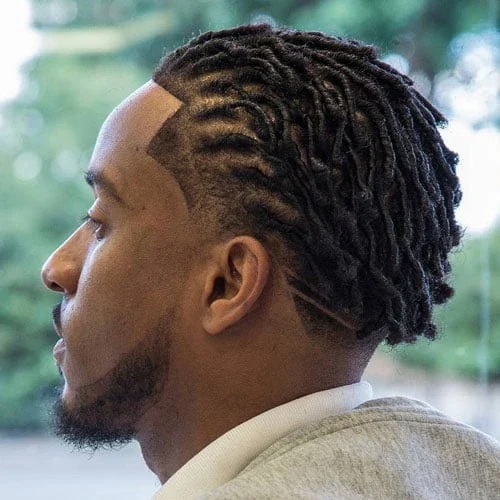
Short Swept Locs With Visible Root Sections
Short locs sweep away from the forehead, revealing their root sections along the side. The upper shape stays close enough to the head to look more contained than the upright examples.
- Shape
- Short swept locs
- Detail
- Visible root sections
The loc ends gather toward the rear rather than hanging over the eyes. The side remains shaded near the temple, and the visible section pattern adds detail without a large shaved decorative panel.
Wearability note: Use this for the direction and compact length rather than treating the section pattern as a universal requirement. Discuss which arrangement suits your existing locs before choosing the exact exposed parting detail.
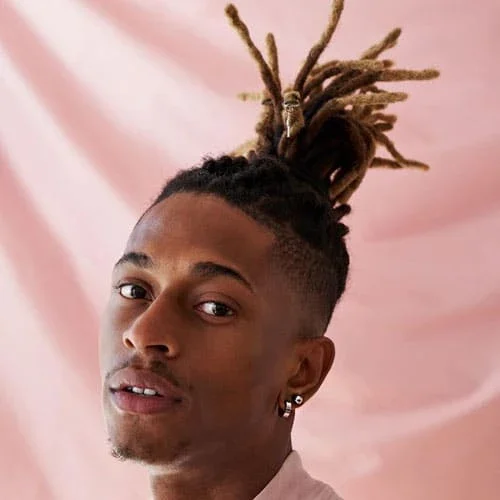
Idea 13
Upright Loc Ponytail With Light Ends
The locs gather into an upright ponytail with lighter ends projecting outward. The open forehead and close side put most of the visible height above the crown.
- Shape
- Upright gathered locs
- Detail
- Lighter projecting ends
The gathered section forms a narrow base before the ends spread. The lighter tips emphasize the outward direction, but the high placement would remain visible without that color contrast.
Wearability note: Compare the gathered height with a lower rear bundle if you want a smaller profile. The photo shows the finished placement, not the fastening tension or how comfortably that position would suit your own locs.
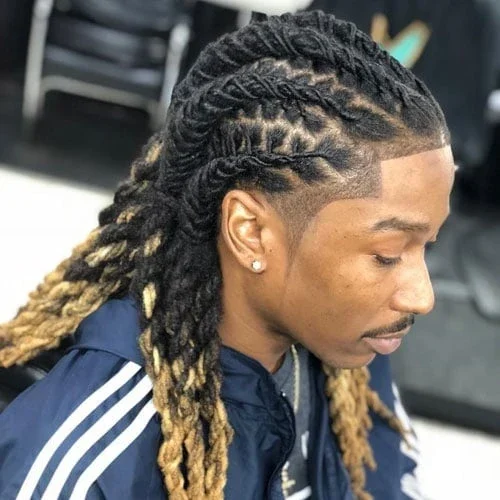
Idea 14
Braided Loc Sections With Light Hanging Ends
The upper loc sections are braided back while lighter ends hang freely below. The close temple creates a clear front edge, with the braided pattern visible along the upper side.
- Shape
- Braided upper sections
- Detail
- Light hanging ends
The downward angle shows how the sections travel toward the rear before releasing into individual ends. The lower length extends beyond the neck rather than staying contained in a crown bun.
Wearability note: Choose the braid direction and hanging length separately. Bring this rear-side angle when discussing the arrangement, since a front photo alone would hide much of the pattern and the amount of free length.
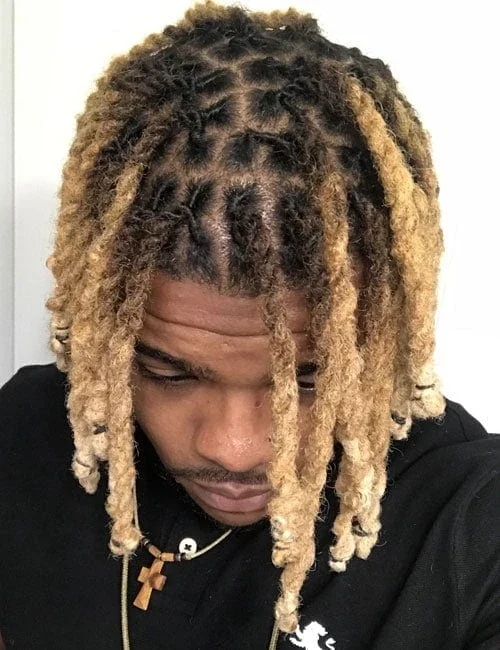
Idea 15
Light Locs With Clearly Divided Roots
Light locs hang forward from clearly divided darker roots. Their separation gives the top a visible pattern, while small metallic accents add detail along several of the lighter lengths.
- Shape
- Light hanging locs
- Detail
- Clearly divided roots
The downward view shows the root sections more clearly than the overall rear outline. Individual locs reach toward the face at different points rather than forming one uniform horizontal fringe.
Wearability note: Keep the sectioning view if that organized upper pattern appeals to you. The color and accents are additional choices; discuss the existing loc structure before assuming the same divisions can simply be copied.
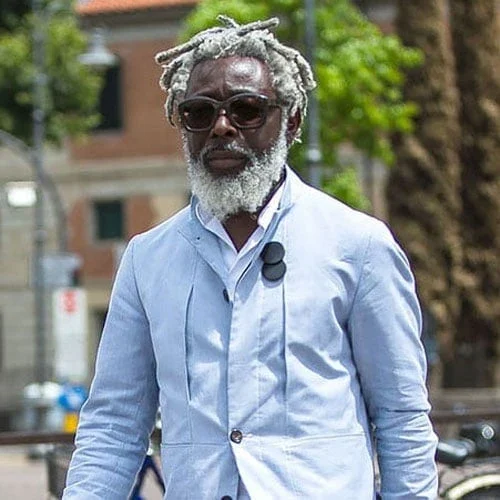
Idea 16
Gray Locs With a Short Open-Face Outline
Short gray locs sit away from the face, leaving an open central outline. Their compact length creates texture above the forehead without a long hanging fringe or shoulder-level spread.
- Shape
- Short gray locs
- Detail
- Open-face arrangement
The outdoor portrait includes a full gray beard and sunglasses, so the lower face carries additional visual weight. The locs themselves remain relatively short and irregular around the crown.
Wearability note: Use this for the compact open-face arrangement rather than copying the whole portrait. The beard changes the overall balance, and a closer rear photo would still be useful for specifying nape coverage.
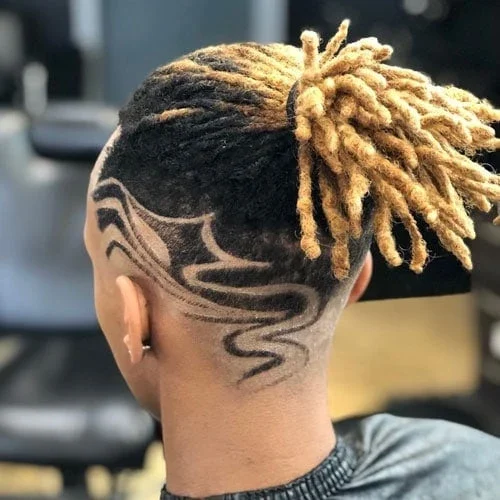
Idea 17
Light Rear Ponytail With a Shaved Design
The locs gather into a rear ponytail above a large shaved design. Light ends fan outward from the tie, while the exposed lower back makes the pattern highly visible.
- Shape
- Light rear ponytail
- Detail
- Large shaved rear design
The rear angle shows a strong separation between gathered upper length and the closely cut area below it. The curved design occupies much of the lower panel instead of functioning as a small side accent.
Wearability note: Choose the gathered placement before deciding on the design. A plain lower back could preserve the ponytail silhouette, so keep a simple alternative alongside this reference if the hair arrangement is your main interest.
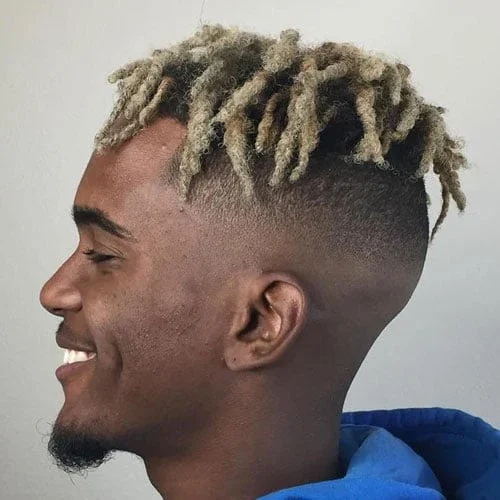
Idea 18
Short Light Locs With a Soft Side Blend
Short light locs fall in separate pieces above a softly blended side. Darker roots add contrast beneath the lighter ends, while the upper length remains compact around the crown.
- Shape
- Short light locs
- Detail
- Soft side blend
The profile shows the front pieces leaning forward without reaching far over the face. The lower side becomes gradually shorter around the ear, avoiding a prominent shaved line beneath the locs.
Wearability note: Compare this softer connection with the highly exposed examples. The same short upper length could look more detached with a sharper side boundary, so the blend is worth choosing independently of the light color.
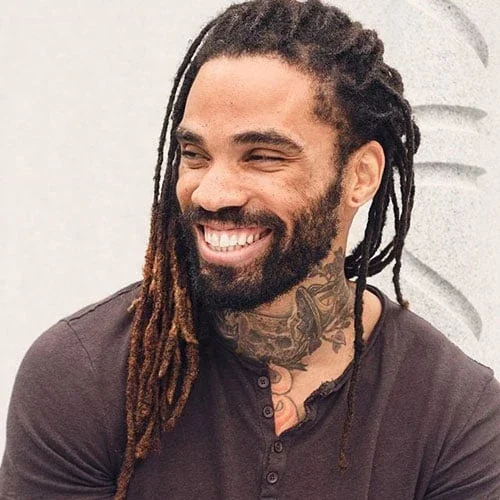
Idea 19
Long Locs Swept Behind One Side
Long locs sweep behind one side, leaving the forehead open. Their hanging ends retain visible length near the shoulder while keeping most of the front free of a loc fringe.
- Shape
- Long side-swept locs
- Detail
- Open opposite side
The angled portrait shows an asymmetric arrangement rather than a centered fall on both sides. Some lighter ends are visible lower down, but the upper shape stays predominantly dark and close to the head.
Wearability note: Choose the open-face direction if you like length without constant front coverage. Add a rear view to explain how much loose length should remain behind the shoulder, since this portrait only shows one side clearly.
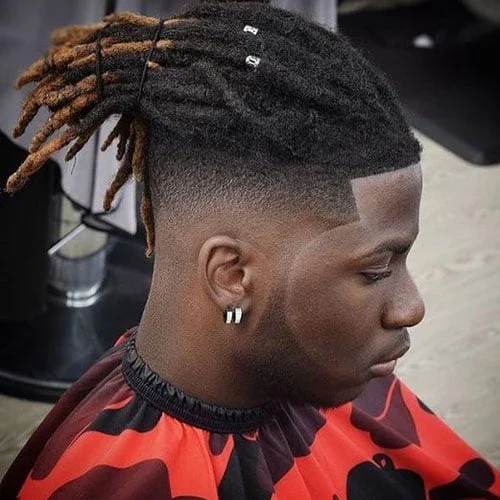
Idea 20
Short Rear Ponytail With Light Ends
A short rear ponytail gathers the locs away from the forehead. Lighter ends project behind the crown, while the close shaded side keeps the ear area narrow.
- Shape
- Short rear ponytail
- Detail
- Light projecting ends
The upper locs lie backward toward the tie rather than standing upright across the whole top. Small metallic accents add points of detail, and the squared temple forms a precise front boundary.
Wearability note: Compare this compact rear placement with the taller bun examples if you prefer less height. The length needed to gather comfortably depends on your own locs; the photograph only establishes the finished direction and outline.
Keep the loc arrangement clear
A shaved design or lightened ends can dominate a photograph. Point out the loc direction and retained length first, then decide whether those additional details belong in your own version.
Front, side and rear references answer different questions. Use them together to explain the amount of face coverage and where a gathered style should sit, without assuming the photograph reveals the tension or method used.

About the author
Bella Ross
Bella Ross is the hairstyle editor behind Latest Easy Hairstyles. She curates practical haircut, braid, color, and styling ideas with a focus on looks that are easy to browse, realistic to recreate, and useful for everyday hair decisions.