
Before you choose
Compare the shape, not a single hair type
Asian hairstyles for men covers many different lengths and textures. This gallery compares compact crops, side-parted sweeps, raised fronts and longer gathered or loose hair. The photographs are haircut references, not evidence of an individual’s identity or a shared hair type. Focus on the outline, fringe direction and side coverage you would like to discuss.
The hairstyle gallery
19 Asian hairstyles for men ideas to compare
Compare the visible length, shape, texture, and finish before choosing a salon reference.
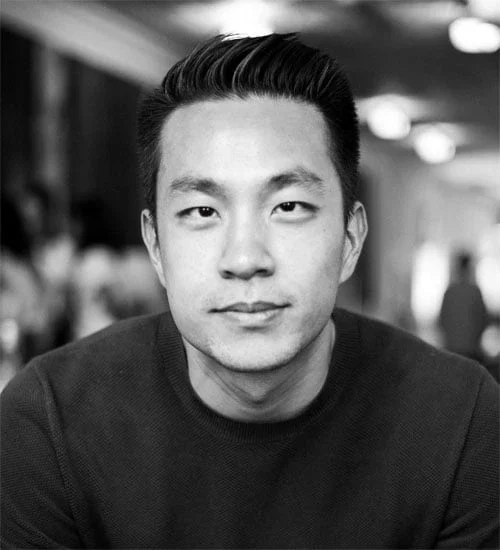
Idea 01
Backward Lift With Connected Sides
The black front lifts backward without falling across the forehead. Short sides connect beneath the upper length, keeping the silhouette narrower around the temples than at the raised front.
- Shape
- Backward front lift
- Detail
- Connected short sides
The monochrome photograph makes direction and outline easier to compare than color. Several strands separate above the forehead rather than forming a completely flat, uninterrupted surface across the top.
Wearability note: Choose this reference for the open front and moderate side coverage. Add a rear view when discussing the nape, since the portrait does not establish the exact length behind the head.
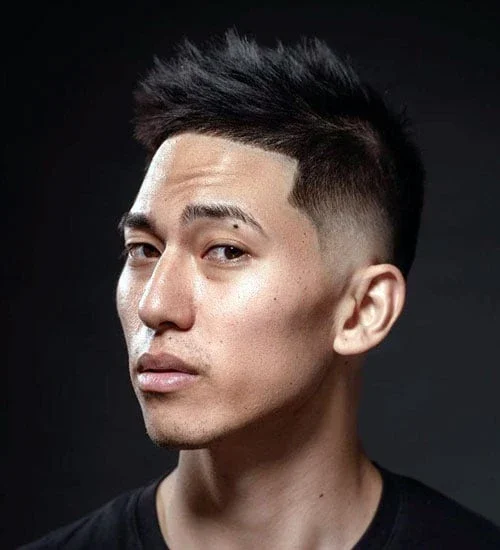
Idea 02
Broken Quiff Above a High Close Fade
Short separated points rise at the front above a high close fade. The darker upper section stands apart from the exposed side, making the contrast a prominent part of this profile.
- Shape
- Broken front texture
- Detail
- High close fade
The front edge is irregular rather than combed into a single smooth roll. The close section reaches high beside the temple, leaving much less side coverage than the connected sweeps elsewhere in the gallery.
Wearability note: Compare both the front height and where the fade starts. A similar short quiff with a lower transition would retain more dark coverage and create a different balance around the ear.

Idea 03
Soft Raised Front With Short Sides
The front rises softly above short connected sides. Its rounded, slightly irregular edge creates a more relaxed outline than a rigid combed crest or a sharply squared crop.
- Shape
- Soft front lift
- Detail
- Short connected sides
The outdoor view shows small strands moving away from the main shape. The forehead remains open, while the side length keeps some coverage beside the temple rather than exposing a broad pale panel.
Wearability note: Use the modest lift as the main reference if a compact shape appeals to you. The outdoor lighting changes the shine, so compare the haircut outline independently of the brightness in this portrait.
Choose your direction
Compare front direction
Look at forward points, side sweeps and open backward lifts.
Choose side coverage
Compare connected sides with more exposed fades.
Check retained length
Use loose and gathered references to compare longer options.
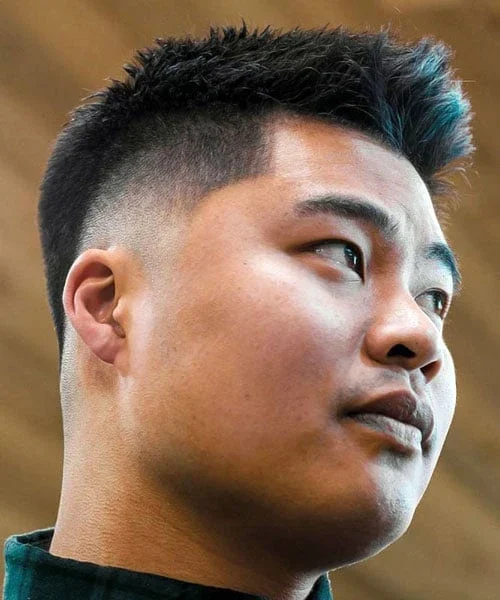
Idea 04
Short Spikes With Teal Front Tips
Small teal accents appear at the tips of the short raised front. The darker base and closely cut sides make those few colored points stand out without carrying the accent across the entire head.
- Shape
- Short raised spikes
- Detail
- Teal front accents
The low viewing angle emphasizes the lift above the forehead. The side remains much shorter than the top, so the silhouette depends on both the raised points and the exposed area beneath them.
Wearability note: Separate the color choice from the short spiky shape. A neutral version could keep the same outline, while a longer top would create a noticeably different amount of height and movement.
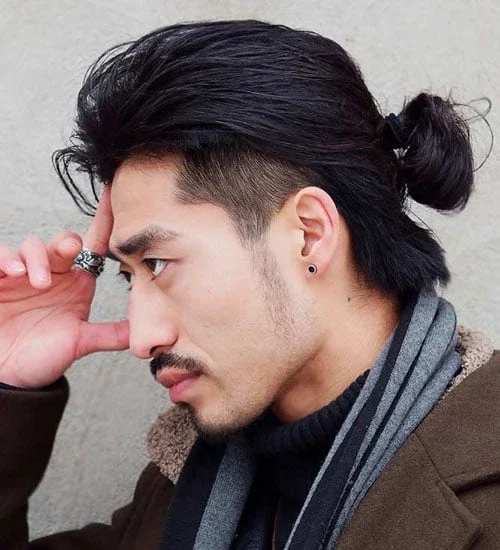
Idea 05
Gathered Top With an Exposed Short Side
Longer black hair gathers behind the crown while the visible side stays short. A few loose upper strands break away from the gathered section, leaving movement near the front.
- Shape
- Gathered upper length
- Detail
- Short exposed side
The profile makes the separation between retained upper length and close side coverage clear. The knot sits behind the highest point of the head rather than directly above the forehead.
Wearability note: Compare this with loose longer hair if keeping the side narrow is your priority. The gathered arrangement requires retained upper length; the close side alone would not explain the finished silhouette.
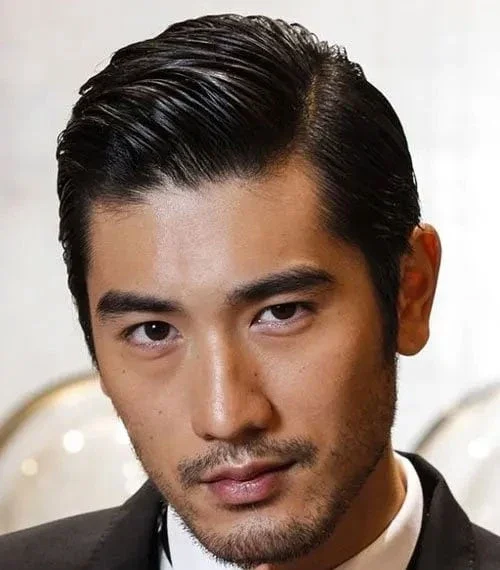
Idea 06
Side-Parted Sweep With a Gentle Front Rise
A side opening directs the black top across the head with a gentle rise at the front. The forehead stays visible beneath a smooth, controlled upper edge.
- Shape
- Defined side opening
- Detail
- Gentle front rise
The lower sides retain enough coverage to connect with the longer top. Unlike a high exposed fade, the darker side gives the sweep a relatively continuous base around the temple.
Wearability note: Choose this for the part position and restrained height together. If the side connection matters to you, include this angle rather than relying on a front view that could conceal a much shorter side.
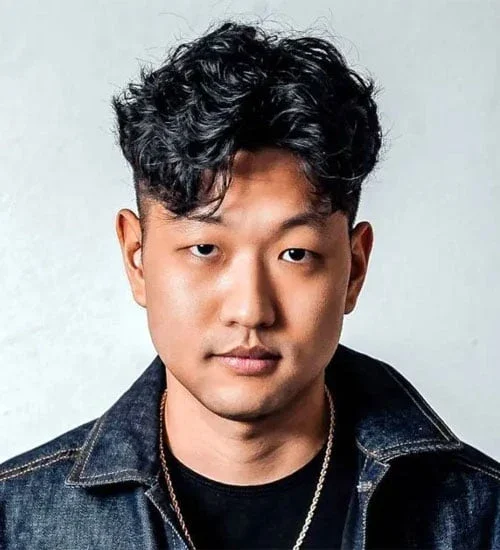
Idea 07
Loose Dark Bends Above Shorter Sides
Loose dark bends lift and separate above the forehead. The upper outline has several rounded changes in direction rather than the straighter points seen in the spiky references.
- Shape
- Loose upper bends
- Detail
- Shorter side coverage
Shorter sides reduce the width beneath the moving top. The front remains open between the separated pieces, letting the bends contribute height without turning into a solid curtain across the forehead.
Wearability note: Use this photograph to explain the loose shape you want to compare. It does not establish whether the bends are natural or styled, so discuss that distinction separately from the visible haircut proportions.
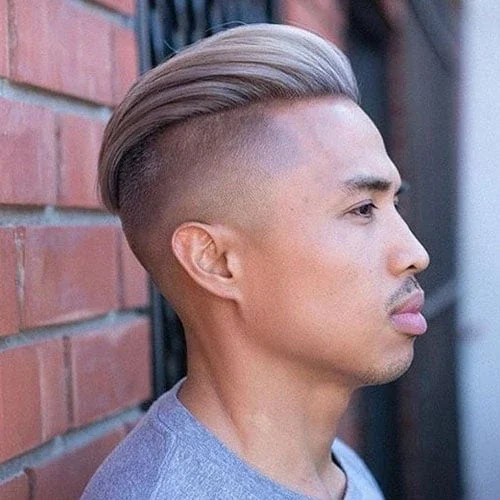
Idea 08
Silver Backward Sweep Over a Close Side
Silver upper hair sweeps backward over a closely cut side. The longer strands extend toward the back instead of rising into a short, compact front crest.
- Shape
- Long silver sweep
- Detail
- Closely cut side
The side profile reveals the substantial difference between the retained upper length and the short area near the ear. The silver appearance also increases the visible separation from the darker lower hair.
Wearability note: Compare the length and direction before choosing the color. A darker version could preserve the same sweep, while shortening the upper section would reduce the trailing movement visible behind the crown.
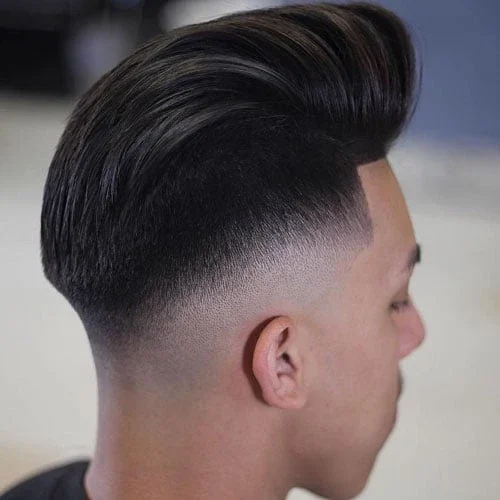
Idea 09
Rounded Black Quiff With a Close Nape
The black top curves backward in a rounded sweep, while the lower nape stays close. This rear-side angle shows how the longer upper section narrows toward the back.
- Shape
- Rounded upper sweep
- Detail
- Close lower nape
The side transition is gradual rather than a sharp horizontal shelf. The upper surface remains relatively smooth, with the greatest lift concentrated farther forward than the visible lower back.
Wearability note: Use this angle alongside a frontal photograph if the front shape is important. Its strongest information is the rear connection and nape coverage, which can be hard to judge from a face-on portrait.
Idea 10
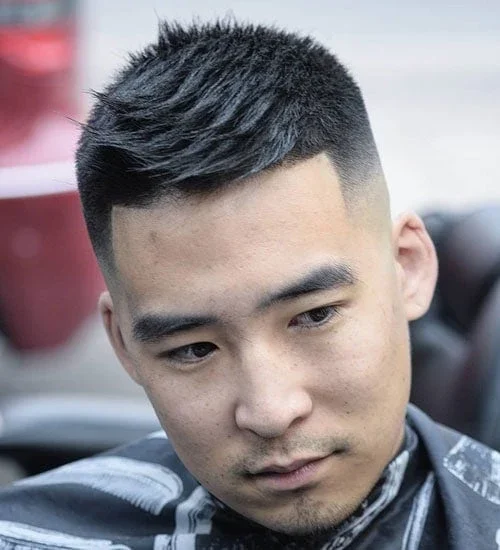
Short Sideways Spikes With a Sharp Temple
Short dark points move sideways across the front above a close faded side. The temple edge is distinctly defined, adding a crisp lower boundary beneath the broken upper texture.
- Shape
- Sideways front points
- Detail
- Defined temple edge
The top stays compact rather than forming a tall crest. The side is much lighter near the ear, with the darker transition following the head beneath the short raised strands.
Wearability note: Choose the small directional points if you want texture without a large upper profile. Compare the temple edge separately with a softer boundary, because that detail changes the finish even at similar lengths.
Idea 11
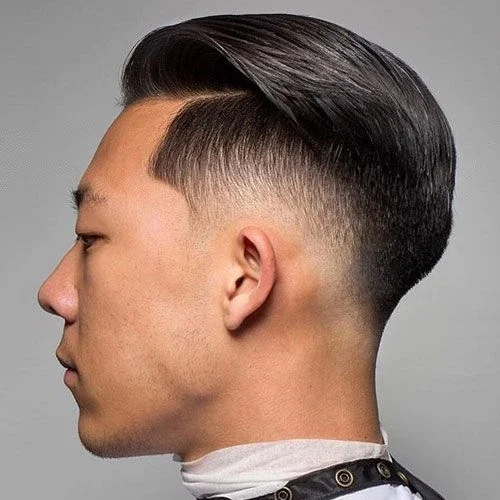
Rounded Side Sweep With a Defined Opening
The longer black top rounds across the head from a visible side opening. Its smooth upper curve contrasts with the short coverage underneath, making the sweep the focus of the profile.
- Shape
- Rounded side sweep
- Detail
- Visible upper opening
The front carries more length than a short crop and bends backward rather than hanging over the eyebrow. The side remains contained near the ear without matching the upper section in length.
Wearability note: Compare the curve and the part position when selecting a reference. If you prefer less front volume, a shorter sweep could retain a similar direction while changing the rounded outline shown here.
Idea 12
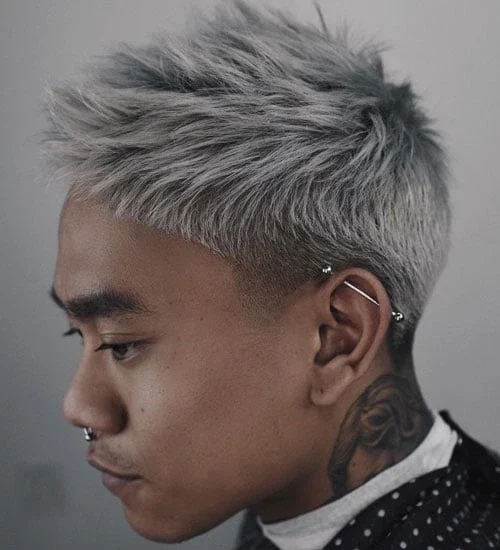
Pale Short Texture With Closely Cut Sides
Pale short points create a broken upper outline above closely cut sides. The light appearance makes individual strands easy to see, while the overall top remains relatively compact.
- Shape
- Pale broken texture
- Detail
- Closely cut sides
The forehead is open beneath the irregular front edge. The side sits much closer to the head than the upper texture, so the contrast comes from length as well as the photographed color.
Wearability note: Choose the short shape independently of the pale shade if the texture is what interests you. A darker version would show a different tonal contrast while keeping comparable front height and side coverage.
Idea 13
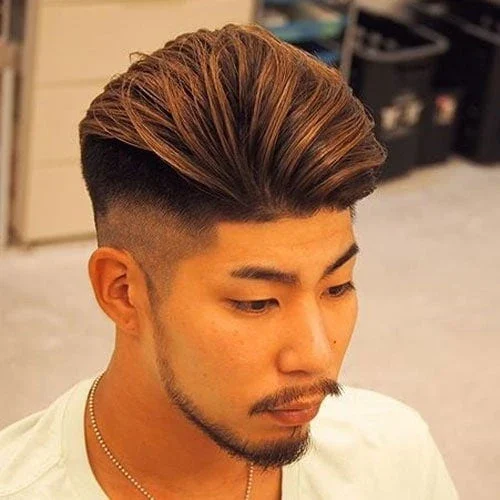
Copper Front Crest With Darker Roots
Copper-colored strands rise into a tall front crest above darker roots. The upper shape fans backward, producing a much higher profile than the compact textured cuts.
- Shape
- Tall copper crest
- Detail
- Darker lower roots
The closely cut side exposes the area beside the temple and ear. The brighter upper color draws attention to the retained front length, while the lower crown sits behind the tallest section.
Wearability note: Compare the height in profile before choosing a similar crest. If you like the color but prefer a lower outline, bring a shorter reference so the two decisions remain separate in the consultation.
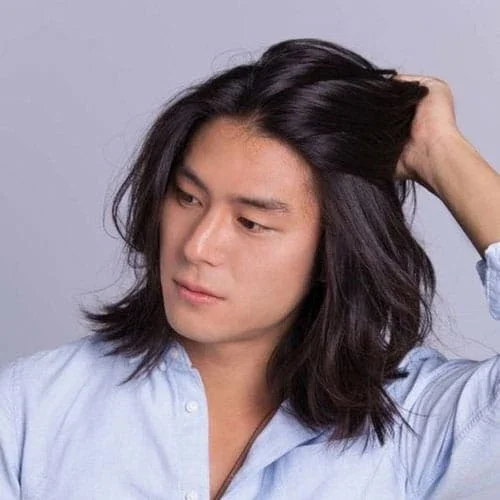
Idea 14
Shoulder-Length Black Hair With an Open Front
Loose black hair reaches toward the shoulders with an opening at the front. The longer ends turn outward at the sides, giving this reference a different perimeter from the close barbered cuts.
- Shape
- Shoulder-length ends
- Detail
- Loose front opening
A hand lifts part of the upper hair, so the crown position reflects that moment rather than a fixed haircut shape. The visible lower lengths remain useful for comparing ear coverage and the shoulder-level outline.
Wearability note: Choose this for retained length and a loose front opening. Add an unobstructed view if the exact crown shape matters, since the hand-held section changes how the upper hair sits in this photograph.
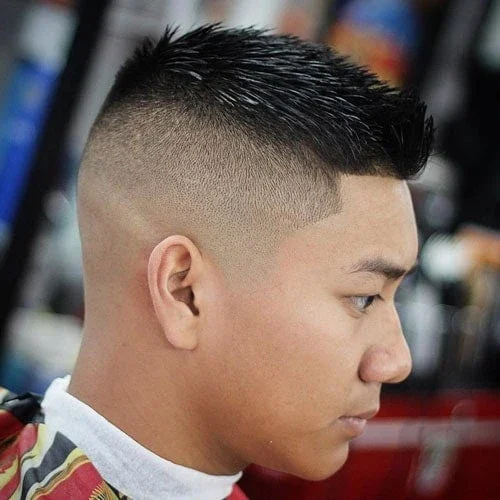
Idea 15
Compact Pointed Top Above a High Fade
Small dark points give the compact top a broken surface above a high close fade. The front projects only a little, keeping the upper silhouette lower than the taller quiffs.
- Shape
- Compact upper points
- Detail
- High close fade
The exposed side reaches high beside the temple. A defined front corner reinforces the contrast between the short upper section and the much closer hair near the ear.
Wearability note: Use the low top and high transition together as the reference. Retaining more dark hair at the side would change the balance, even if the upper points remained close to the same length.
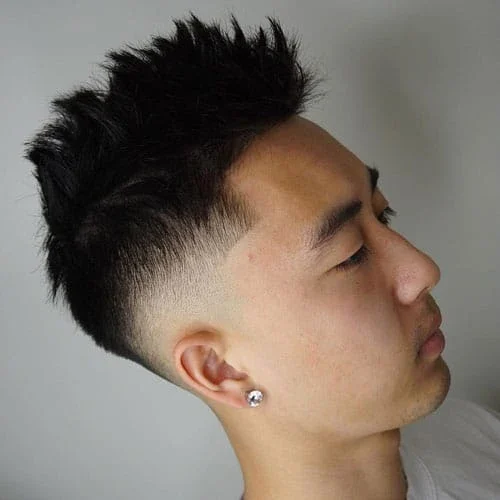
Idea 16
Tall Broken Spikes With a Broad Side Fade
Longer black spikes rise in separate directions above a broad close side. The tallest strands sit near the front, producing an uneven upper edge rather than a smooth rounded roll.
- Shape
- Tall broken spikes
- Detail
- Broad close side
The forehead stays open below the raised points. The short side removes most of the width near the ear, making the upper section look more distinct in this side profile.
Wearability note: Compare the height with a shorter textured top before choosing. The broken surface and the amount of lift are separate features; you may prefer similar separation with less retained front length.
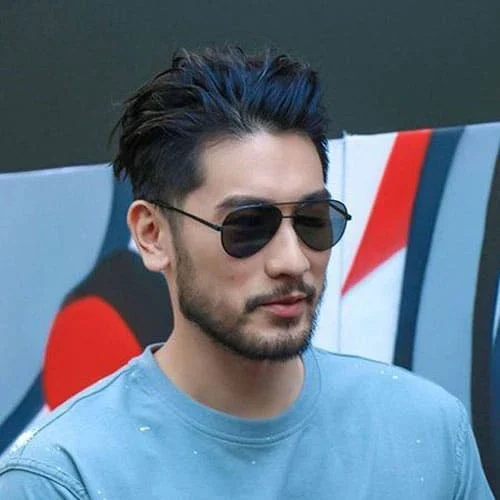
Idea 17
Loose Backward Quiff With Shorter Sides
The dark front lifts backward in a loose quiff above shorter sides. Individual strands interrupt the top edge instead of forming one sharply combed surface across the crown.
- Shape
- Loose backward lift
- Detail
- Shorter connected sides
The outdoor photograph and sunglasses partly conceal the upper face, but the front height remains clear. The side coverage is visibly shorter than the raised top without becoming the main focus of the portrait.
Wearability note: Choose this for the relaxed front direction and moderate height. A clear side or rear photograph would help establish the lower transition, which is less visible in this outdoor angle.
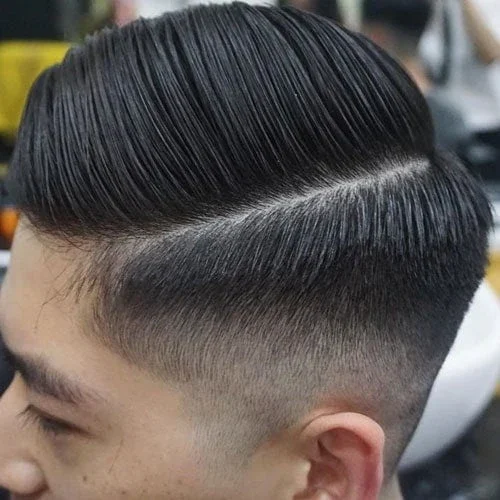
Idea 18
Comb-Lined Sweep With a Defined Side Part
Fine comb lines follow the black top across a defined side part. The upper sweep has a rounded front edge, while the closely cut side creates a clear boundary below it.
- Shape
- Visible comb lines
- Detail
- Defined side part
The overhead angle reveals the direction across the crown more clearly than the face or nape. The part remains a prominent visual feature rather than blending invisibly into the darker upper section.
Wearability note: Use this angle to discuss the part placement and combed direction. Pair it with a side reference if you need to explain the front height, since an overhead view can understate that dimension.
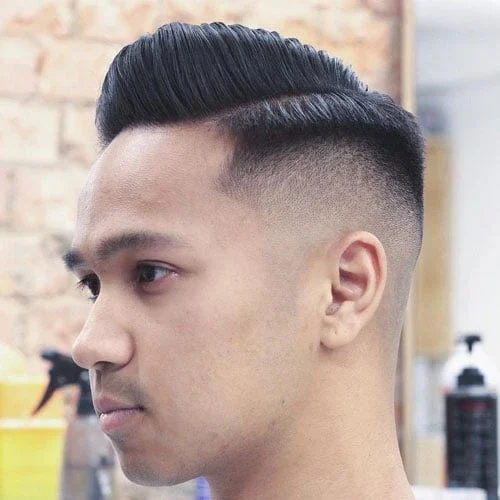
Idea 19
Tall Dark Ridge Above a Close Side
A tall dark ridge lifts above a closely cut side, with a defined opening separating the upper direction. The front rises substantially higher than the crown behind it.
- Shape
- Tall front ridge
- Detail
- Close side separation
The side profile makes the contrast in retained length especially clear. The upper surface is controlled but not completely flat, with smaller strands breaking the outer edge of the elevated front.
Wearability note: Compare the profile with a lower sweep if you like the direction but want less height. The strong side contrast can remain even when the front is shortened, so specify both proportions separately.
Bring the angles that explain your choice
Point out the front direction and the amount of hair you want around the ears. A front portrait may conceal a close side, while an overhead view can make a tall quiff appear lower.
Use a second reference where the photograph leaves a detail hidden. The visible shape is useful; assumptions about density, chemical treatments or identity are not needed to describe it.

About the author
Bella Ross
Bella Ross is the hairstyle editor behind Latest Easy Hairstyles. She curates practical haircut, braid, color, and styling ideas with a focus on looks that are easy to browse, realistic to recreate, and useful for everyday hair decisions.