
Before you choose
Use the ear and temple as comparison points
Mid fade is a placement description, and the exact height can vary with head shape and the chosen blend. These photographs focus on transitions around the middle side beneath longer upper hair. Compare the exposed area near the ear, the darker hair above it and the path toward the back; the rear-only image is a companion angle rather than a complete side-placement reference.
The hairstyle gallery
15 mid fade haircuts ideas to compare
Compare the visible length, shape, texture, and finish before choosing a salon reference.
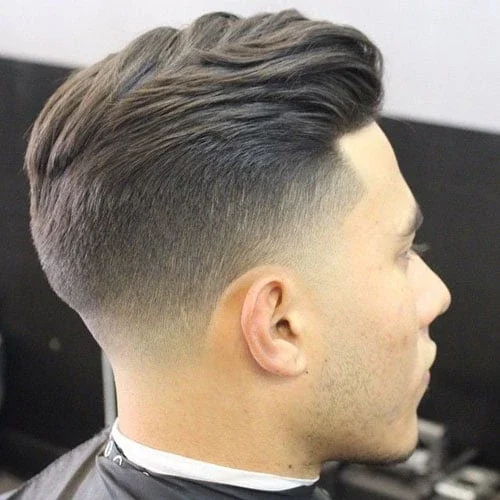
Idea 01
Loose Sweep With a Broad Middle Blend
The longer top sweeps back loosely while the side changes shade across a broad band. The fade leaves darker upper-side hair rather than taking the shortest finish all the way to the top.
- Shape
- Loose swept top
- Detail
- Broad side transition
The side portrait shows a light opening around the ear and more coverage toward the crown. Individual strands remain visible through the upper sweep, keeping its surface softer than a tightly combed finish.
Wearability note: Point to the width of the transition when discussing this cut. Two fades can start at a similar height but look different if one moves rapidly to skin and the other retains a wider shaded area.
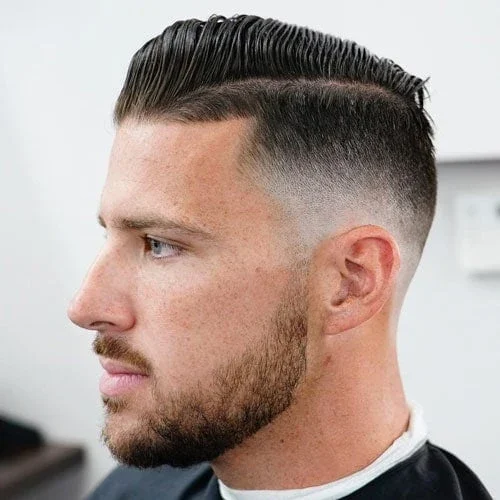
Idea 02
Combed Part With an Open Ear Area
A defined part organizes the top into a smooth swept section. The fade sits beneath a darker upper-side strip, opening into a lighter finish around the ear.
- Shape
- Defined combed part
- Detail
- Light lower side
The front rises modestly before the combed ridges run backward. At the temple, the side edge is crisp, while the beard starts below the shorter area and adds a separate darker outline.
Wearability note: Use the part and fade as two distinct references. You can choose a less pronounced part without moving the fade, and a beard connection should be discussed separately from the amount of hair retained above the ear.
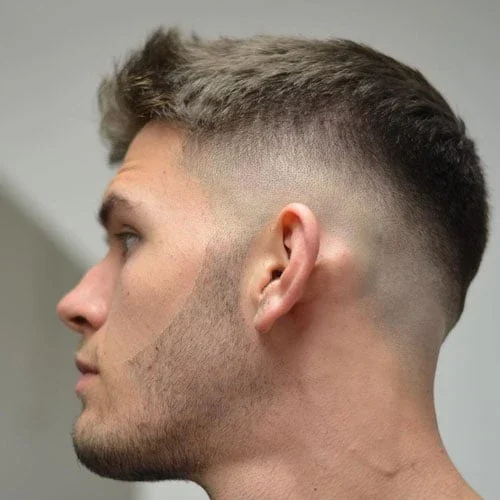
Idea 03
Soft Front Lift With a Bare Lower Side
A small raised front keeps the upper shape modest while the fade clears the lower side. Darker hair remains over the ear before the transition lightens toward the skin.
- Shape
- Small front lift
- Detail
- Bare lower side
The side view reveals a gradual arc toward the back rather than a completely horizontal shaved edge. The short beard is separate from the upper blend, giving the jaw a defined outline without changing the top height.
Wearability note: Compare this profile with the taller quiffs if you want less height. The useful distinction is the compact front above the middle-side transition, not an assumed clipper number that the photograph cannot confirm.
Choose your direction
Compare side coverage
Notice how much darker hair remains above the ear.
Choose a top outline
Compare low sweeps, loose waves, compact quiffs and taller fronts.
Check the back
Use a rear angle to explain nape coverage and the route of the blend.
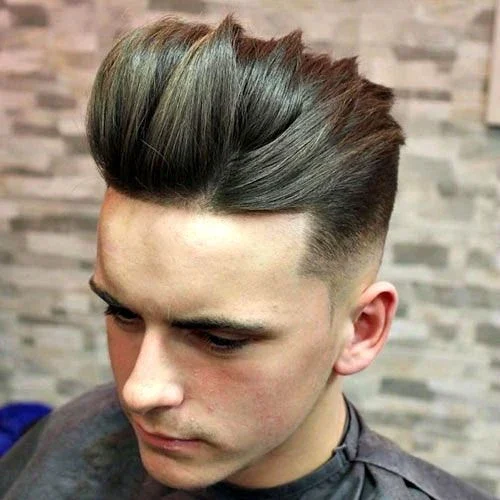
Idea 04
Tall Separated Front With Shaded Sides
The front rises into several large separated sections, making it much taller than the side. The fade removes lower width while retaining a darker area immediately beneath that lifted top.
- Shape
- Tall separated crest
- Detail
- Retained upper-side shade
The front angle shows the hair moving upward before bending back. The sides stay narrow, so the upper crest dominates the silhouette instead of the cut becoming equally full around the temples.
Wearability note: Save a side angle too if this height appeals to you. This portrait explains the front shape well, but the exact path of the fade behind the ear needs another view before it can be copied accurately.
Idea 05
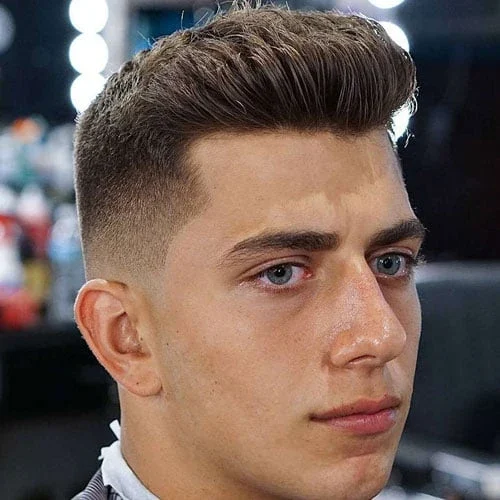
Rounded Quiff With a Curving Side Blend
The quiff forms a rounded raised edge at the front rather than sharp individual spikes. A curved transition below it keeps the side narrower while retaining hair near the upper corner.
- Shape
- Rounded raised quiff
- Detail
- Curving temple blend
The front-side angle shows small strands following the larger sweep. The lightest area sits around the ear, with the darker side band rising toward the retained top.
Wearability note: Choose the front height independently of how pale the lower side should be. The same rounded quiff can sit above a softer or closer fade, and this view is especially useful for explaining the curve at the temple.
Idea 06
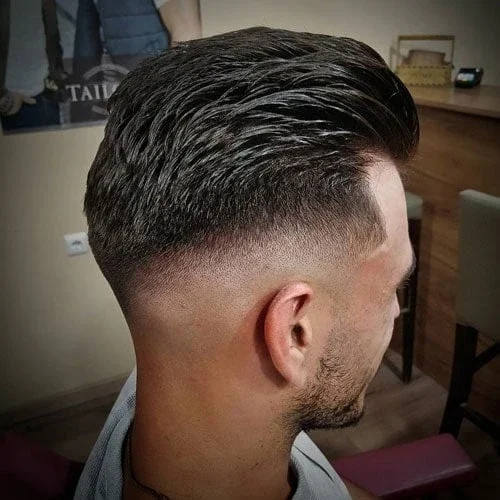
Textured Sweep Seen From Behind
The rear-side angle shows how the darker upper hair meets the lighter lower side. The top sweeps backward in distinct strands rather than lying as one smooth sheet.
- Shape
- Swept upper texture
- Detail
- Rear-side transition
A strip of darker hair stays between the upper sweep and the shorter area around the ear. The nape is more exposed below, making the route of the blend easier to compare than in a front portrait.
Wearability note: Use this view when you want to explain the back connection. Pair it with a front reference for height and parting, because the rear angle cannot show how much fringe you want left over the forehead.
Idea 07
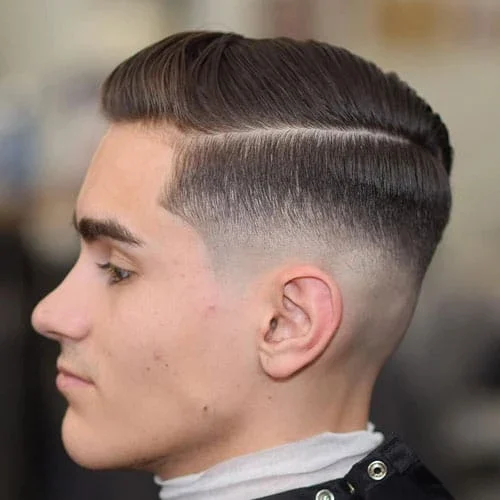
Neat Side Part With a Squared Corner
A narrow part divides the smooth top from the neatly combed side. The squared temple gives a precise front corner above the lighter fade around the ear.
- Shape
- Narrow side part
- Detail
- Squared temple corner
The retained side hair forms a darker panel directly below the part. Its lower edge softens through the transition, while the front sweep stays relatively close to the head.
Wearability note: Compare the corner and part width with softer examples before choosing. Those details create much of the formal appearance here, even though the fade height can be similar to a looser textured cut.
Idea 08
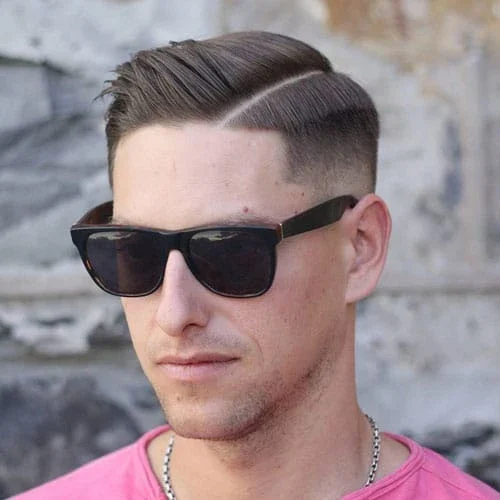
Low Comb-Over With a Clear Diagonal Part
The top stays comparatively low beside a clear diagonal part. The side beneath it gradually lightens, giving a close outline without requiring a tall crest at the front.
- Shape
- Low combed sweep
- Detail
- Diagonal visible part
The longer strands lie in an orderly direction across the upper head. The sunglasses hide some of the front corner, but the part and the shaded side transition remain easy to see.
Wearability note: Treat this as a reference for the low upper shape and parting. Add an unobstructed temple photograph if the exact hairline corner matters, rather than asking a barber to infer it from behind the glasses.
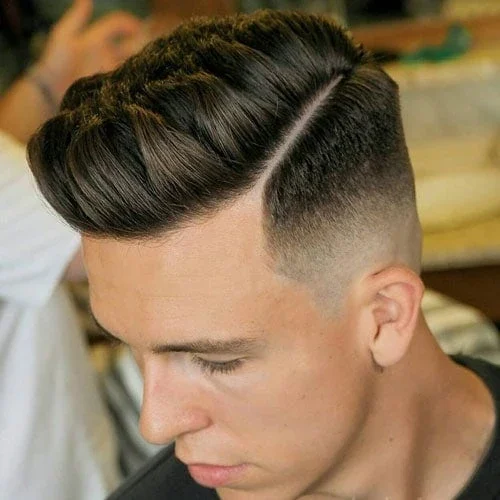
Idea 09
Full Front Sweep Above a Defined Part
A full front sweep curves away from a clearly visible part. Beneath the part, the side retains a darker upper strip before blending into the shorter area near the ear.
- Shape
- Full front sweep
- Detail
- Defined side division
The elevated front has more volume than the low comb-over beside it. The top also rounds backward, giving the shape a continuous arc instead of a line of separate spikes.
Wearability note: Use the part to explain direction and the profile to explain height. They are separate choices, and reducing the front volume would create a quieter silhouette without necessarily changing the middle-side fade placement.
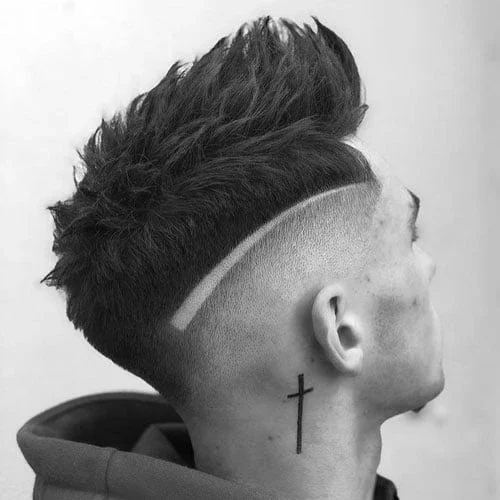
Idea 10
Raised Texture With a Long Shaved Line
A long pale line separates the raised top from the closer side. The hair above it has irregular lifted ends, making the upper outline less uniform than a combed pompadour.
- Shape
- Lifted broken texture
- Detail
- Long shaved side line
The rear-side view exposes both the shaved line and the lighter area around the ear. The longer top continues toward the back, while the nape stays comparatively close.
Wearability note: Decide whether you want the line or simply the surrounding fade shape. A plain blend can keep the same upper texture, and a matching side view without decoration helps make that choice easier to judge.
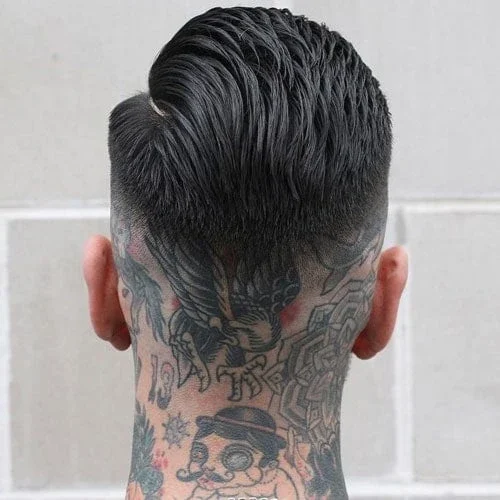
Idea 11
Rear Sweep With a Close Nape
The rear view shows the retained top narrowing toward a close lower nape. It adds information that the front portraits cannot provide about how much hair remains at the back.
- Shape
- Swept-back top
- Detail
- Close lower nape
Longer ridges run backward through the crown, while the lower area is closely exposed. The tattooed skin makes the lower boundary visible, but the precise side height still needs a profile view.
Wearability note: Use this as the back half of a two-angle reference rather than as a complete fade specification. Pair it with your preferred mid-side photograph so the barber can compare the nape coverage with the transition above the ear.
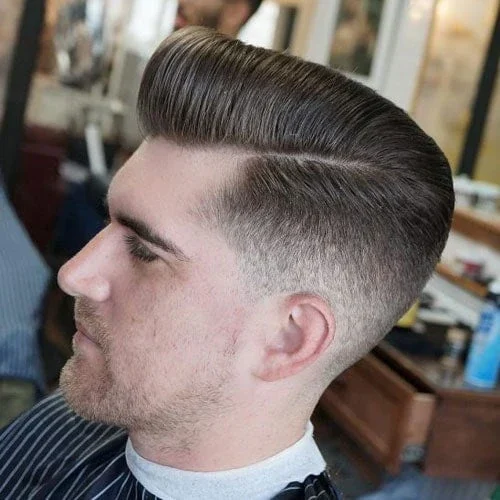
Idea 12
Smooth Pompadour With a Broad Side Blend
The front rises smoothly before curving back toward the crown. Below the part, the broad shaded side gives a gentler transition than the examples with a large exposed panel.
- Shape
- Smooth raised front
- Detail
- Broad shaded side
Fine combed ridges follow the same direction through the upper hair. The lower side becomes lighter around the ear, but the darker upper section remains visibly connected to the top.
Wearability note: Compare this with the sharper separated sweeps if you want a more continuous outline. Show how much side shading you like, because asking only for a mid fade does not specify that softer connection.
Idea 13
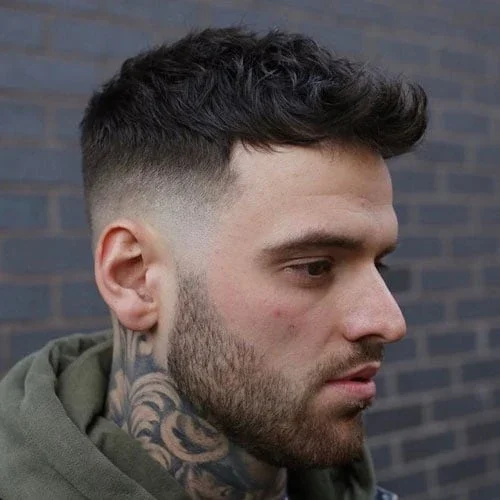
Short Loose Quiff With a Close Side
The front has a small loose wave instead of a large sculpted crest. A close side keeps the overall cut compact, with darker hair retained beneath the upper texture.
- Shape
- Short loose front
- Detail
- Compact side blend
The temple is squared, and the lightest area sits near the ear. The beard adds a separate lower outline, while a few upper pieces lift irregularly rather than following combed ridges.
Wearability note: Choose this if you like a little front movement without the height of the pompadours. The photo helps explain that smaller silhouette, while a rear angle would still be needed to settle the nape shape.
Idea 14
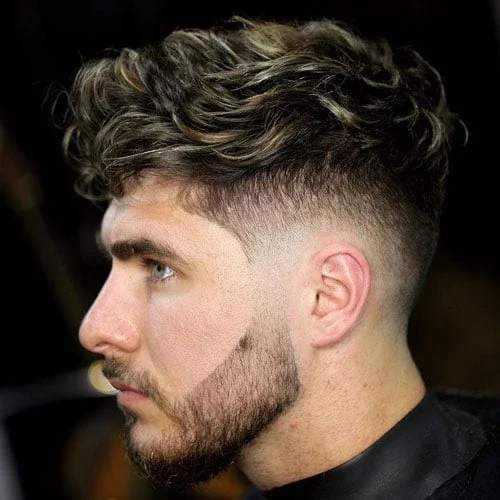
Loose Waves Above a Soft Mid Fade
Loose waves keep fullness across the top while the side stays much closer. The transition remains softly shaded instead of creating a single hard boundary beneath the upper hair.
- Shape
- Loose wavy top
- Detail
- Soft side connection
The wave tips bend in different directions, giving the front an uneven edge. Around the ear, the lighter finish reduces width, while the beard is shaped into a separate narrow line below.
Wearability note: Compare the amount of upper-side fullness with the more disconnected styles. This reference is useful when you want the fade to support a wavy top without making the longer section appear completely detached.
Idea 15
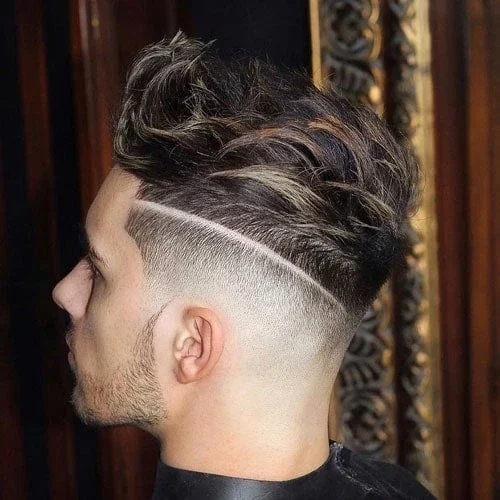
Highlighted Texture With a Curved Side Line
Highlighted tips add definition to the lifted upper texture. A curved pale line runs along the side, drawing attention to the separation between the longer hair and the closer lower area.
- Shape
- Highlighted raised texture
- Detail
- Curved shaved accent
The rear-side angle shows the top continuing backward with broken ends. Below the decorative line, the hair becomes progressively shorter toward the ear and lower nape.
Wearability note: Separate the color, shaved line and fade when discussing this photograph. You may want the same transition without either accent, and a plain reference alongside it can prevent those optional details from becoming the whole brief.
Specify placement and contrast separately
Point to the area where you want the darker hair to begin changing length. Then compare how quickly that transition becomes shorter. These choices affect the visible contrast even when two cuts are both described as mid fades.
A visible part, shaved line or raised front can attract more attention than the fade itself. Keep those optional details separate in your reference photos so the underlying side placement stays clear.

About the author
Bella Ross
Bella Ross is the hairstyle editor behind Latest Easy Hairstyles. She curates practical haircut, braid, color, and styling ideas with a focus on looks that are easy to browse, realistic to recreate, and useful for everyday hair decisions.