
Before you choose
Compare the upper boundary as well as the fade
These undercut fade references pair retained upper length with much shorter lower sides. Some show a pronounced shelf or a defined part; others soften that boundary with a little shading. The useful comparison is how far the top extends beyond the short side, not simply how pale the area around the ear looks. Keep front height, side exposure and rear coverage as separate choices.
The hairstyle gallery
15 undercut fade ideas to compare
Compare the visible length, shape, texture, and finish before choosing a salon reference.
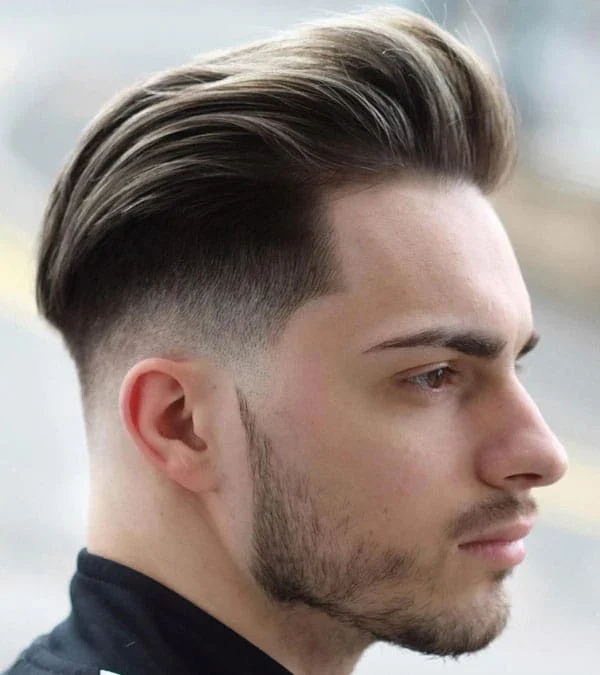
Idea 01
Swept Length Above a Dark Side Shelf
The long top sweeps across a dark shelf above the faded side. That visible ledge gives the upper hair a more separate outline than a fully connected short cut.
- Shape
- Long swept top
- Detail
- Dark upper-side shelf
The front rises gently, then travels backward rather than hanging toward the forehead. Shorter shading around the ear keeps the lower profile close while some darker side coverage remains beneath the sweep.
Wearability note: Choose the retained side shelf as deliberately as the front length. If you prefer a softer connection, bring a second reference with less overhang so the contrast you want is clear.
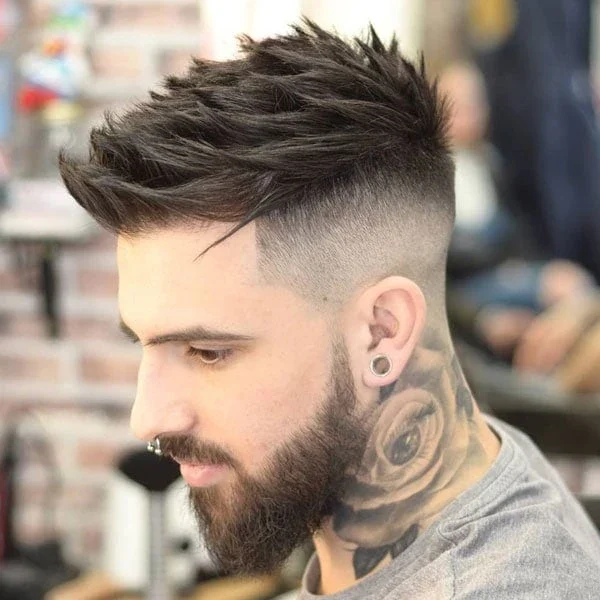
Idea 02
Broken Spikes With a Close Lower Side
Broken points lift away from the longer top while the lower side stays close. The uneven upper outline makes this a more textured alternative to the smooth swept examples.
- Shape
- Broken pointed top
- Detail
- Close lower side
A longer front point projects forward, with smaller pieces rising behind it. The side becomes darker beneath the top edge before fading lighter toward the ear, so the upper section keeps a visible boundary.
Wearability note: Compare the front reach with the tallest point before choosing this shape. A shorter front would change its profile even if the side exposure stayed the same; the beard is a separate choice.
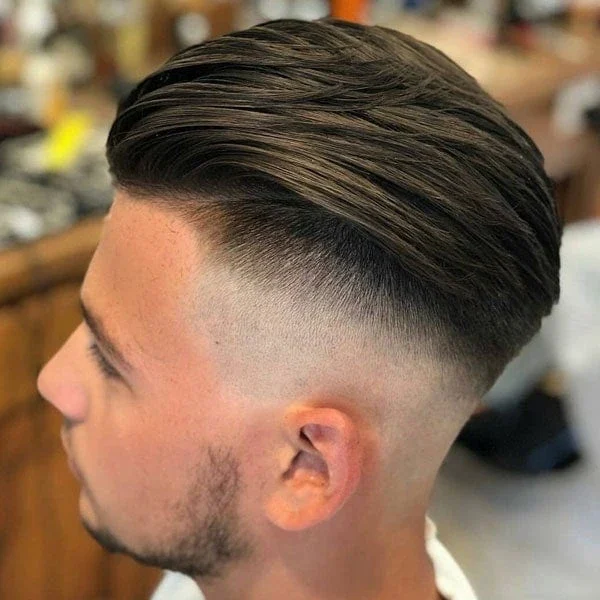
Idea 03
Long Backward Sweep With Low Exposure
The top flows backward in broad strands above a darker upper side. Most of the exposed area sits lower around the ear, giving the longer hair a substantial base.
- Shape
- Long backward sweep
- Detail
- Pale lower ear area
The angled overhead view shows how much length crosses the side boundary. The hair lies in an extended sweep rather than standing in a narrow upright ridge, while the lower fade reduces bulk at the edge.
Wearability note: This reference helps explain the overhang and side contrast together. Add a front view if forehead height matters to you, because this elevated angle makes the front rise harder to judge.
Choose your direction
Check the upper edge
Compare visible overhang, dark shelves and defined side divisions.
Choose the top shape
Look at flat sweeps, rounded quiffs and broken textured fronts.
Compare lower exposure
Decide how much shading you want beneath the retained length.
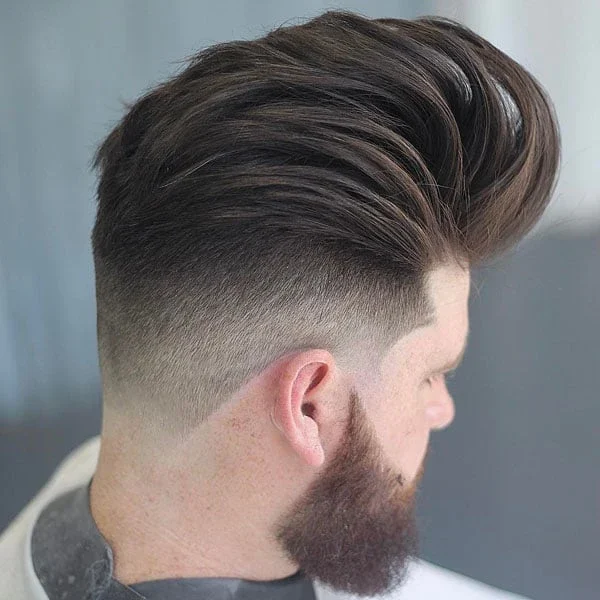
Idea 04
Tall Quiff With a Rear Side Shelf
A tall curved front sits above a broad shelf of darker hair. Below it, the rear side becomes lighter toward the nape, leaving a clear difference between upper length and lower exposure.
- Shape
- Tall curved front
- Detail
- Rear side shelf
The rearward angle shows the upper hair extending beyond the shorter section. Its ridge is rounded rather than pointed, and the lower back is kept close instead of carrying the same length downward.
Wearability note: Use this angle to discuss rear coverage, then pair it with a front reference. The height and backward reach both influence the shape, so choosing only the pale fade would miss the main feature.
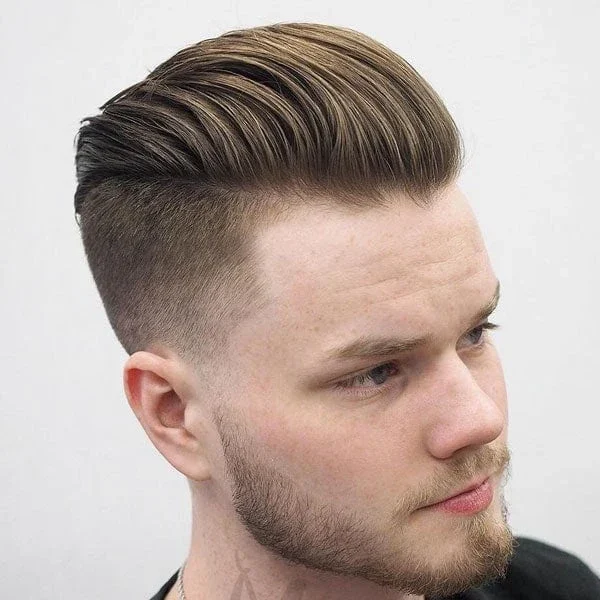
Idea 05
Defined Backward Ridges With a Shaded Side
Defined ridges run backward from the raised front. A shaded side keeps the lower outline contained without creating the completely exposed panel seen in some of the sharper versions.
- Shape
- Defined backward ridges
- Detail
- Shaded lower side
The upper edge has a slight overhang above the shorter side, and lighter strands emphasize its direction. The front is lifted but remains part of one broad sweep rather than separating into individual spikes.
Wearability note: Choose this for its controlled direction and retained shading. The lighter color makes the ridges easier to see in the photo, but the length contrast can be discussed independently of that color.
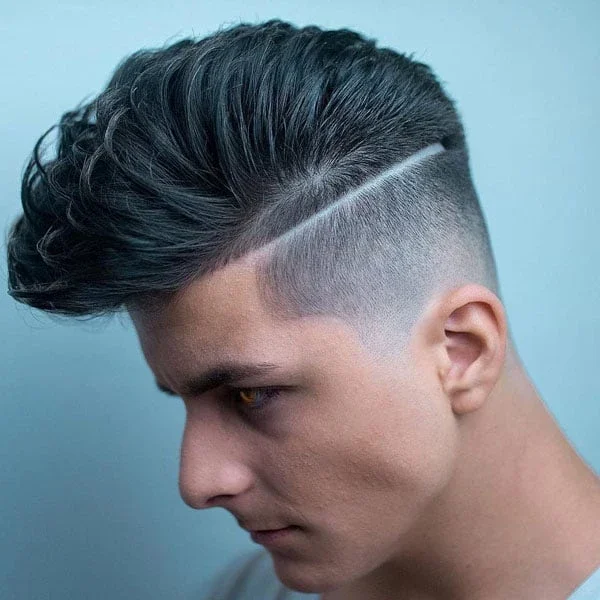
Idea 06
Waved Top Beside a Fine Pale Part
A fine pale part outlines one edge of the waved top. The side beneath it is closely faded, making the retained upper length read as a separate section.
- Shape
- Waved swept top
- Detail
- Fine pale side part
Large bends travel away from the forehead instead of forming a flat combed surface. The visible crown swirl and curved strands keep some softness above the precise boundary, while the lower side stays narrow.
Wearability note: Decide whether the pale part belongs in your version. It reinforces the separation, but a less defined boundary could preserve the same upper length with a quieter finish around the side.
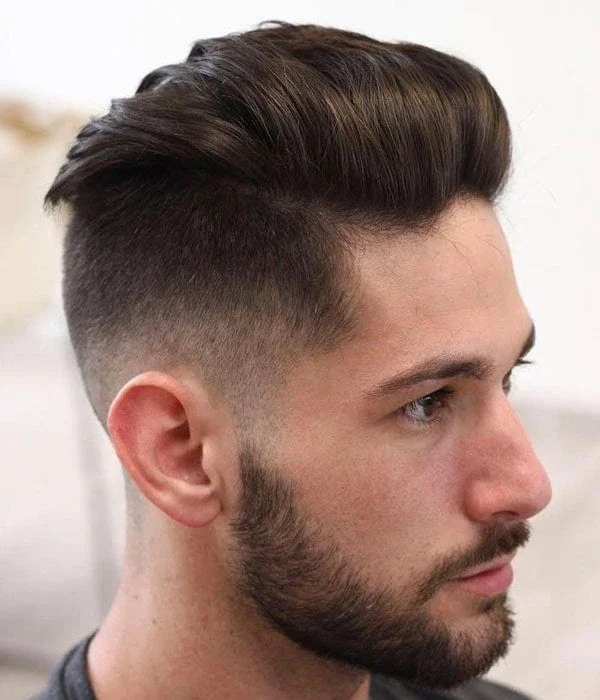
Idea 07
Rounded Front With a Dark Upper Edge
The rounded front rises above a dark upper-side edge. A lighter lower fade makes that boundary stand out, while the top curves backward in one broad shape.
- Shape
- Rounded lifted front
- Detail
- Dark upper-side edge
The front does not break into loose spikes; its surface stays relatively continuous. Shorter hair remains beneath the upper length before the side becomes pale closer to the ear, creating several visible levels of contrast.
Wearability note: Compare the rounded height with a lower swept example before settling on this reference. Keeping similar side exposure would not produce the same profile if the front were left flatter or much shorter.
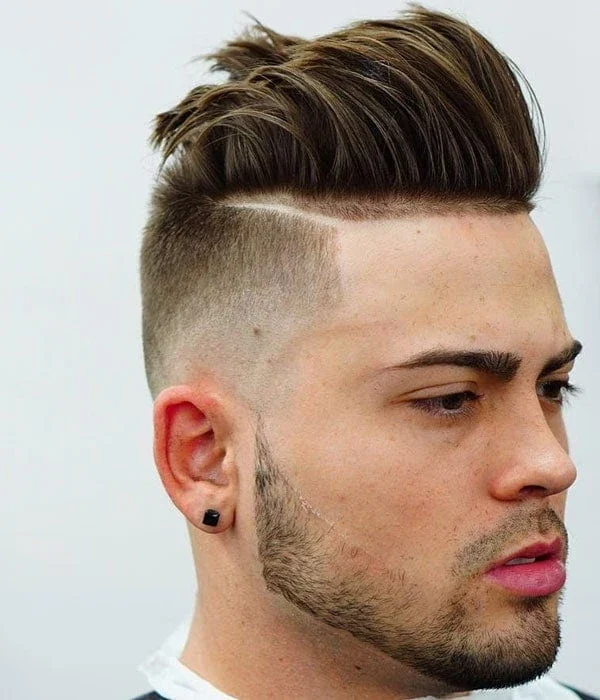
Idea 08
Broken Quiff Above a Sharp Side Division
The quiff lifts in separated pieces above a sharp side division. The close lower side makes the longer top conspicuous, while a small forward piece loosens the front edge.
- Shape
- Broken lifted quiff
- Detail
- Sharp side division
The upper outline is irregular rather than smoothly rounded. A pale line follows the boundary beneath it, and the short side stays narrow around the ear, leaving most of the visible texture concentrated above.
Wearability note: Choose the broken finish and the side line separately. A softer boundary would make this look less graphic, while keeping the same front reach would still preserve its more relaxed upper outline.
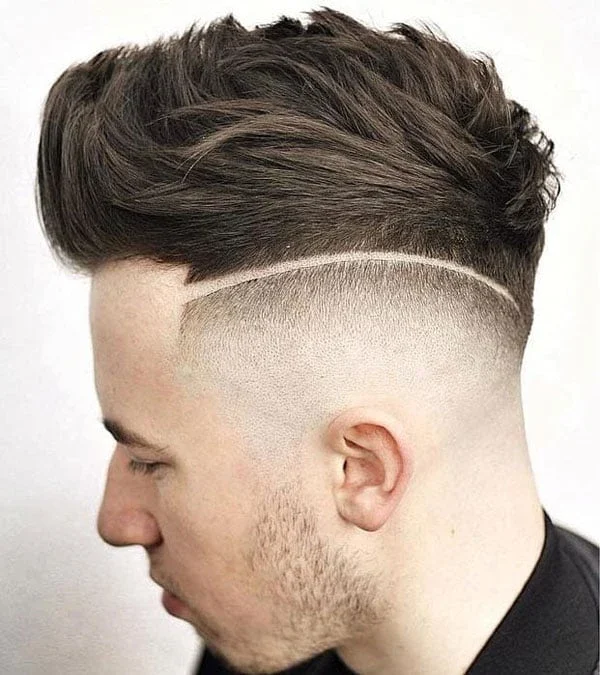
Idea 09
Textured Sweep With a Curved Pale Boundary
A curved pale boundary traces the lower edge of the textured top. The hair above it rises in broad bends, while the side below it is kept very close.
- Shape
- Textured swept top
- Detail
- Curved pale boundary
The side view shows the sweep lifting at the front and settling toward the back. Its uneven surface contrasts with the clean line beneath, so both the texture and the division contribute to the finished appearance.
Wearability note: Use the curved boundary as an optional accent rather than the entire haircut brief. Specify the upper length and how far it should overhang too, especially if you would prefer a plain side without the line.
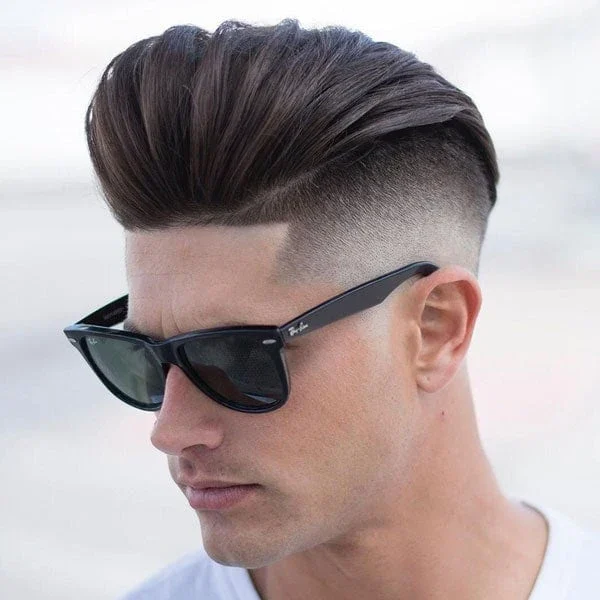
Idea 10
Broad Dark Quiff With Close Sides
A broad dark quiff carries most of the height above closely shaded sides. The longer upper edge projects beyond the short section, creating a distinctly separate upper silhouette.
- Shape
- Broad raised quiff
- Detail
- Close shaded sides
The front curves upward and backward rather than falling forward. The sunglasses partly obscure the face, but the outline above the temple and the short side remain clear enough to compare the length contrast.
Wearability note: Choose this photo for the upper width and rise. A rear reference is still useful for the nape, and removing the sunglasses from the overall look would not change those haircut proportions.
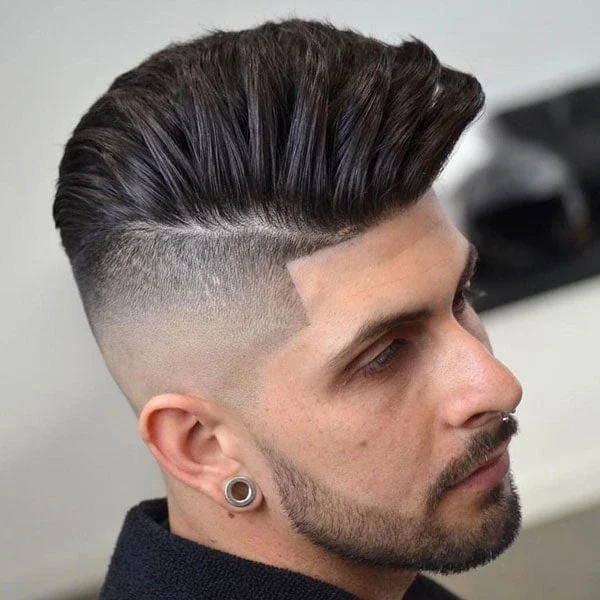
Idea 11
Glossy Tall Sweep With a Narrow Side
The tall top sweeps backward from a broad raised front. The narrow close side creates a strong visual break beneath the longer upper hair, emphasizing the height rather than adding width near the ear.
- Shape
- Tall glossy sweep
- Detail
- Narrow exposed side
Fine surface lines run through the glossy top, and the upper edge remains full along the side. The beard sits below a separate cheek outline, so its shape should not be confused with the haircut boundary.
Wearability note: Compare the amount of lift with a lower version before choosing. The shine shown here is a finish in the photograph, whereas the length, overhang and side exposure are the more useful structural details.
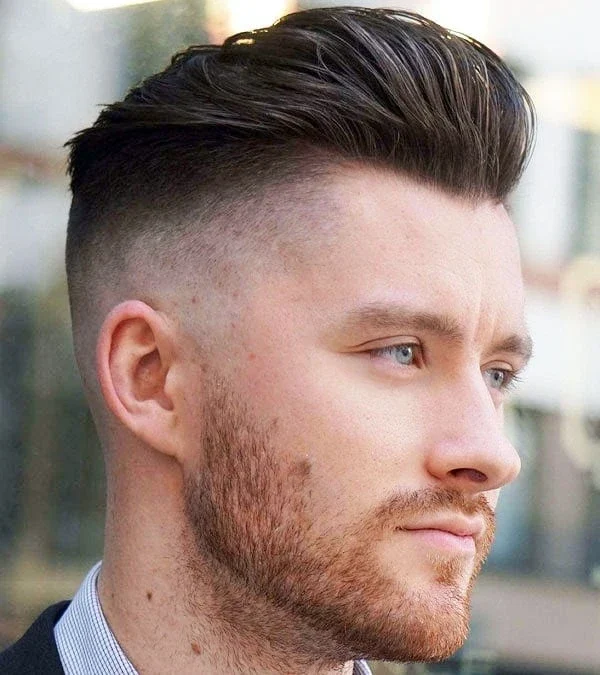
Idea 12
Ginger Quiff Above a Close Shaded Side
The ginger front curves upward above a close shaded side. Its retained upper edge gives the longer top a distinct outline without relying on a shaved part to mark the division.
- Shape
- Ginger lifted quiff
- Detail
- Close shaded side
The quiff has a broad front and travels back in visible strands. Shorter shading around the ear narrows the profile, while the upper hair keeps enough length to project beyond that closer side.
Wearability note: Compare the height with a lower backward sweep if you prefer less lift. The ginger color makes the transition especially visible here, but the upper length and side contrast can be chosen independently.
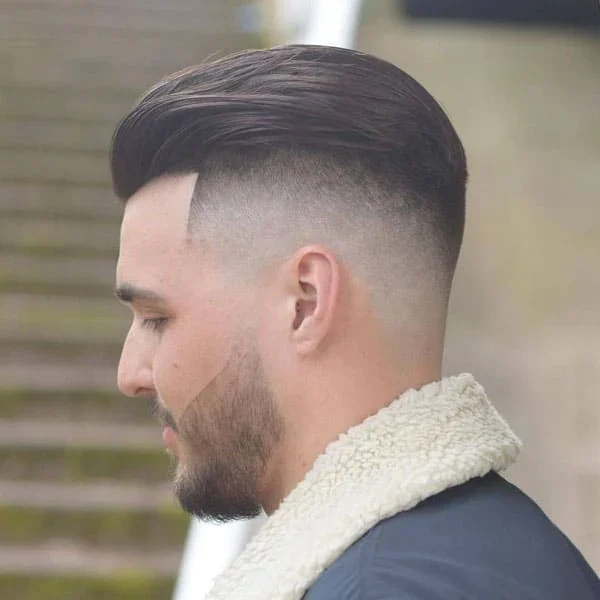
Idea 13
Flat Backward Sweep With a Close Temple
The top travels backward in a relatively flat sweep above a close temple. Its dark edge remains distinct from the much shorter side, giving the profile contrast without a tall front ridge.
- Shape
- Flat backward sweep
- Detail
- Close temple fade
The upper length appears to sit over the short section rather than merge evenly into it. The low side becomes pale around the ear, while the front edge stays controlled and squared from this angle.
Wearability note: Compare this lower profile with the quiff examples if you dislike substantial height. Keep a rear view alongside it when discussing the cut, since the jacket collar hides part of the lowest back edge.
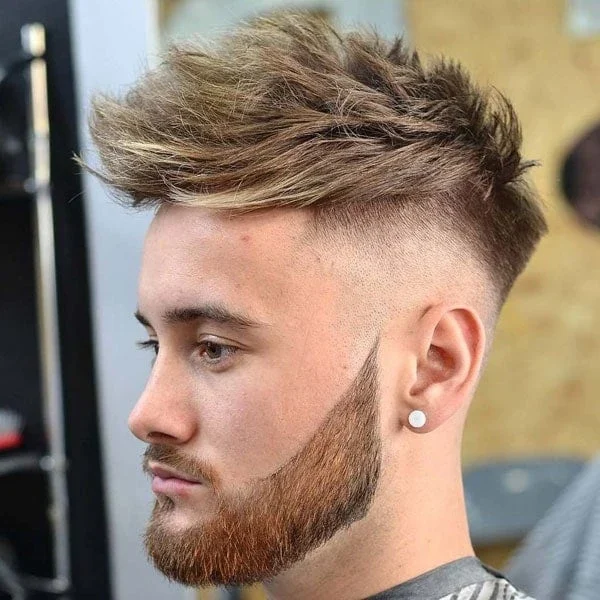
Idea 14
Loose Highlighted Lift Above a Close Side
Loose highlighted strands lift above a closely faded side. The upper edge is visibly uneven, making this a softer textured version of the longer-top and shorter-side contrast.
- Shape
- Loose highlighted top
- Detail
- Close lower-side fade
A few front pieces reach outward while smaller strands break the crown outline. The side keeps darker shading just beneath the top before becoming lighter lower down, and the beard creates another strong outline below.
Wearability note: Choose the loose finish for its movement rather than expecting every strand to stay fixed. Compare the front projection with your preferred profile, and treat the highlighted color and beard outline as additional decisions.
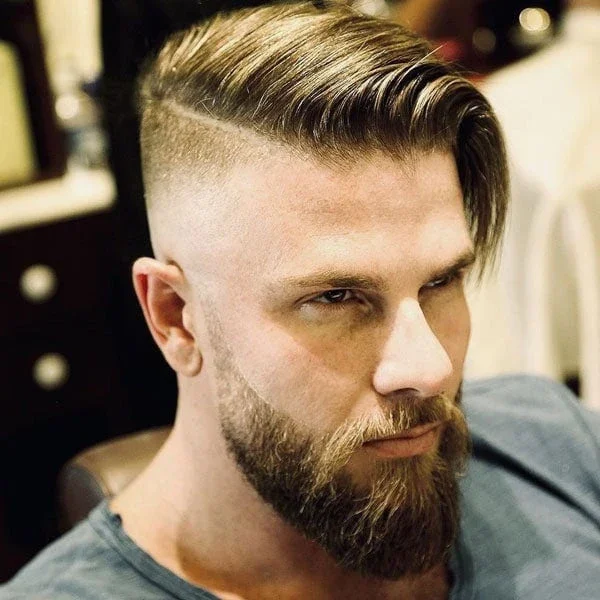
Idea 15
Combed Ridges Above an Exposed Upper Side
Combed ridges rise over a strongly exposed side. The darker upper hair remains visibly separate, with most of the lower width removed beneath its edge.
- Shape
- Combed raised ridges
- Detail
- Exposed upper side
The front curves upward before the strands travel back. A pale transition runs above the ear, and the full beard adds a much heavier shape below the cheek than the short side itself provides.
Wearability note: Use this reference to explain strong upper-to-side contrast. If you prefer a lighter overall silhouette, compare it with a shorter beard example while keeping the haircut height and side exposure as separate choices.
Bring the boundary into the conversation
A tall front alone does not explain an undercut. Point out the longer upper edge and how it sits above the short side, then show where you want the lower transition to become closer.
A shaved part, a highlighted finish or a full beard can make a photograph more dramatic. Keep those choices separate from the upper length and fade so the reference communicates the shape you actually want.

About the author
Bella Ross
Bella Ross is the hairstyle editor behind Latest Easy Hairstyles. She curates practical haircut, braid, color, and styling ideas with a focus on looks that are easy to browse, realistic to recreate, and useful for everyday hair decisions.