
Before you choose
Choose the side blend before the top finish
Look at where the side becomes shortest and how much coverage remains above the ear. Then compare the top you want to pair with it. Some examples include shaved lines or symbols; those are optional details within the side, not requirements for the fade itself.
The hairstyle gallery
18 fade haircuts for men ideas to compare
Compare the visible length, shape, texture, and finish before choosing a salon reference.
Idea 01
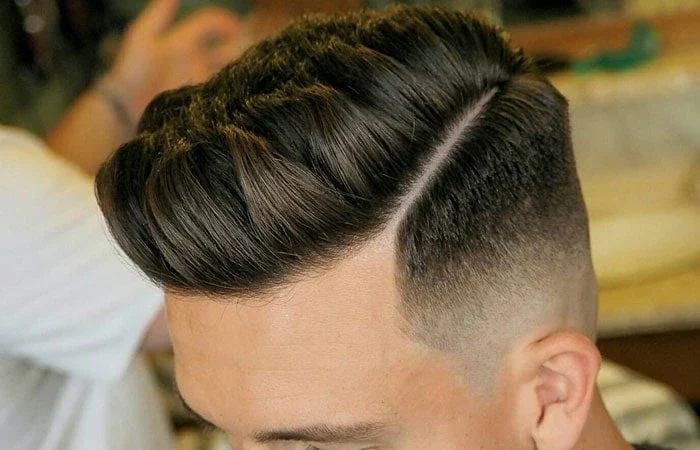
Side-Part Sweep With a Close Fade
A defined side part separates the swept top from the shorter side. The fade becomes lighter toward the ear, leaving a darker band beneath the longer upper hair.
- Shape
- Side-part sweep
- Detail
- Close fade
The overhead angle shows the part and direction clearly, but only part of the lower side is visible. The top is smooth and rounded rather than broken into loose spikes.
Wearability note: Use this to compare a tidy parted top with a close side. Pair it with a lower side view if you want to specify exactly where the shortest area should begin.
Idea 02
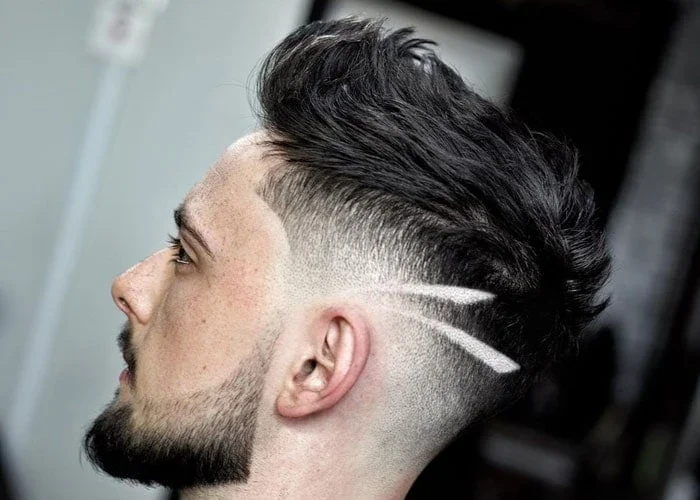
Tall Sweep With Twin Side Lines
A tall swept top sits above a close fade, with two shaved lines cutting across the side. The upper hair moves backward and continues behind the crown.
- Shape
- Tall swept top
- Detail
- Twin shaved lines
The ear area is closely exposed, while a darker section remains above the fade. The lines are decorative details within that side, rather than the fade itself.
Wearability note: Compare the basic blend separately from the twin accents. If the lines are part of your choice, include their upkeep; a plain faded side can support a similar upper shape.
Idea 03
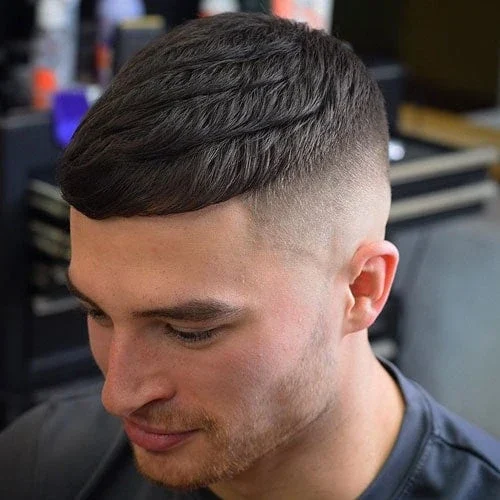
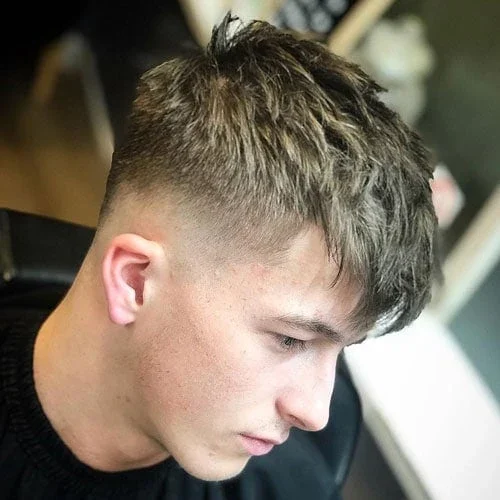
Low Fringe With a High Fade
A compact forward top sits above a high close fade. The fringe stays short, forming a low rounded edge at the front instead of lifting into a quiff.
- Shape
- Compact forward top
- Detail
- High fade
The lighter side creates a clear boundary beneath the darker upper section. This angle shows how a fade can accompany a fairly low top rather than requiring added height.
Wearability note: Choose the front direction and fade height independently. Compare a lower blend if you like the crop but would prefer more visible hair around the temple and upper ear.
Choose your direction
Retain more coverage
Compare low blends beneath short curls and soft waves.
Expose more side
Look at higher close fades and longer tops.
Choose the upper shape
Compare forward crops, parted sweeps, quiffs and gathered length.
Idea 04
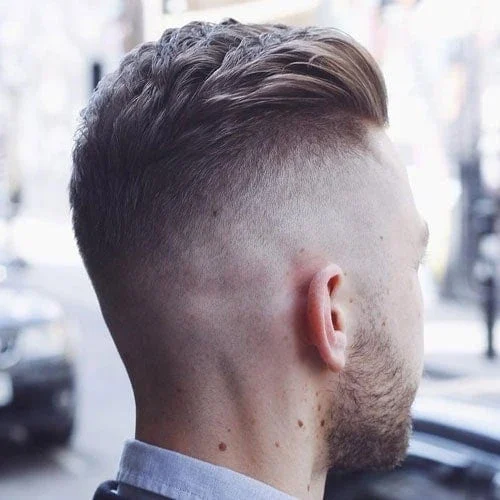
Swept Top With an Exposed Side
The high fade exposes much of the side beneath a longer swept top. The hair at the crown remains darker, then narrows into a very close lower back.
- Shape
- Long swept top
- Detail
- High close side
This rear three-quarter view makes the placement easier to judge than a front portrait. The upper hair lies backward with a small amount of loose texture.
Wearability note: Save this if you want to explain how high the close area should reach. Compare it with a lower taper before choosing, since the same swept top can work with very different amounts of side coverage.
Idea 05
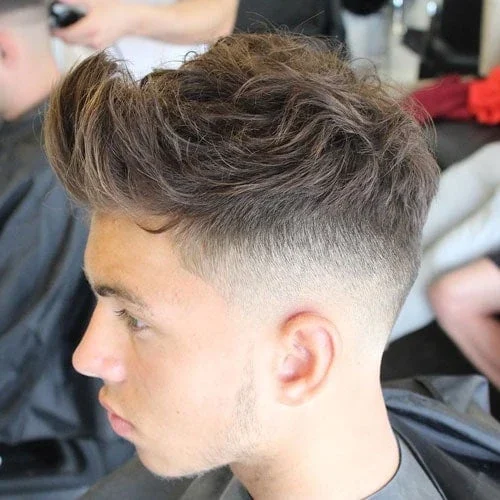
Loose Quiff With a Soft Fade
A loose wavy quiff adds height above a softly faded side. The front bends upward in broad pieces, while the area near the ear becomes closely shortened.
- Shape
- Loose wavy quiff
- Detail
- Soft side fade
The transition is gradual rather than divided by a shaved part. Upper movement and lower neatness create two different textures within the same cut.
Wearability note: Choose how much quiff height you want separately from the fade. If you mainly like the soft side blend, compare it with a flatter top that may better match your everyday preference.
Idea 06
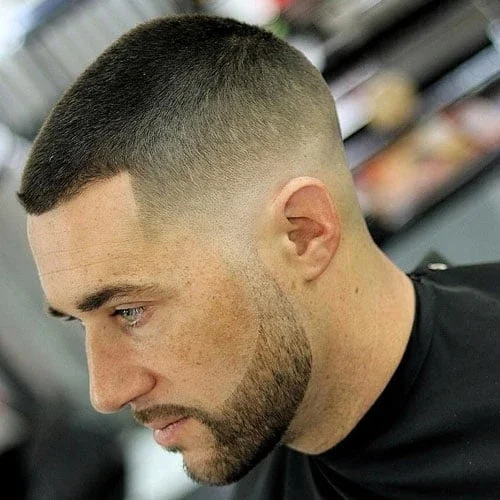
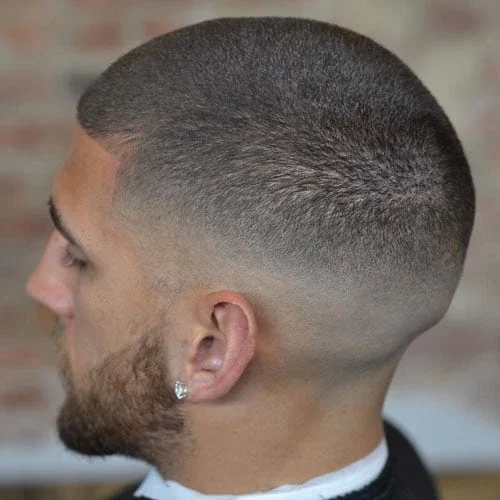
Short Buzz With a Close Fade
A short buzz meets a close fade around the temple and ear. The compact top keeps the silhouette low, so the gradual change in side length becomes the main feature.
- Shape
- Short buzz top
- Detail
- Close side fade
The front corner is defined, with no longer fringe falling forward. The beard has a separate edge below the temple, adding another boundary to the portrait.
Wearability note: Compare the height of the blend with the fuller-sided buzzes elsewhere. Keeping the top short and maintaining a crisp side fade are different upkeep choices, even when both appear in the same photograph.
Idea 07
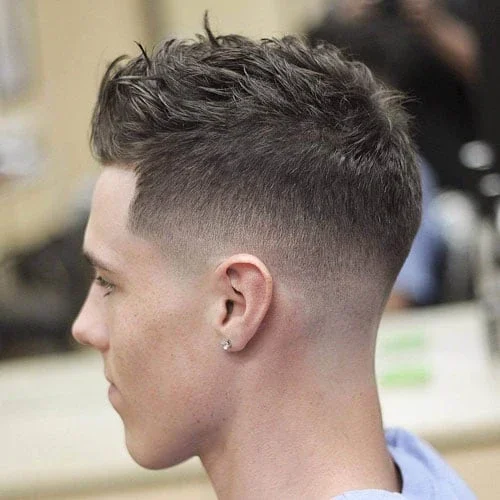
Short Raised Texture With a Fade
Short upper pieces lift lightly away from the forehead. The side fades gradually toward the ear, supporting the top without a broad disconnected overhang.
- Shape
- Short raised texture
- Detail
- Gradual side fade
The crown retains some visible fullness and the nape narrows neatly. The side profile makes the difference between the short textured top and the closer lower outline clear.
Wearability note: This is useful if you want a compact cut with a little front movement. Compare the fade placement with a softer taper, then choose the upper length that fits your preferred amount of height.
Idea 08
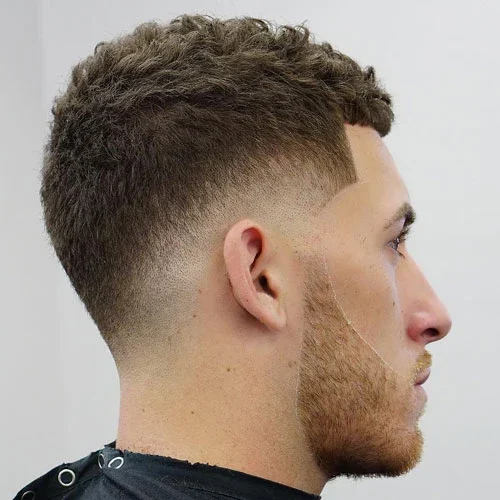
Small Curls With a Low Blend
Small curls retain fullness above a low side blend. The shortest area sits around the lower ear and nape rather than exposing a large high panel.
- Shape
- Short curly top
- Detail
- Low side blend
The rear three-quarter angle shows a rounded crown and a softly narrowed back. The top stays textured without a long fringe or high sculpted crest.
Wearability note: Compare this lower blend if you want to keep more coverage around the upper sides. The dry curl outline matters too, so choose references that resemble the fullness you want to retain.
Idea 09
Close Buzz From the Back
A close buzz follows the head through the crown, with a rounded fade becoming lighter toward the nape. The upper surface remains compact and nearly even.
- Shape
- Close buzz
- Detail
- Rounded lower fade
The back angle shows the blend curving around the head instead of reading as a straight horizontal band. There is little upper length to distract from the transition.
Wearability note: Use this alongside a front reference when discussing a short faded cut. It clarifies the back placement, while your own crown pattern will influence how an equally short top appears.
Idea 10
Long Fringe Over a Close Side
A long textured fringe falls diagonally over the front while the side stays close. The upper pieces have visible separation, creating movement above the neat lower outline.
- Shape
- Long loose fringe
- Detail
- Close side fade
The side fade leaves the ear exposed without removing the long top. This gives a more disconnected impression than the shorter crops with a gradual upper connection.
Wearability note: Compare eye clearance as well as the side blend before choosing. You may like this fade while preferring a shorter fringe, so explain those two preferences separately.
Idea 11
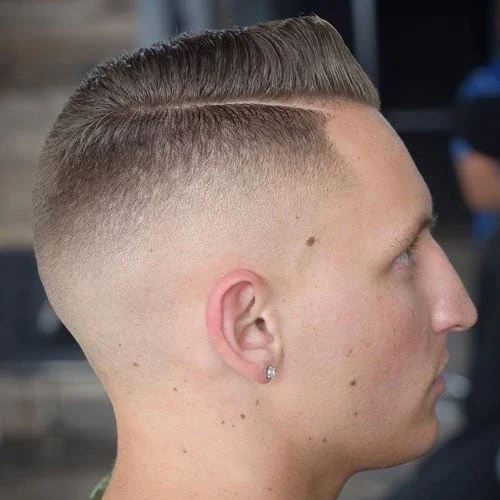
Neat Part With a Close Blend
A neat part gives the smooth top a clear direction. The side fades close around the ear, with a gradual darker area connecting toward the longer hair.
- Shape
- Neat side part
- Detail
- Close side blend
The top remains relatively low and controlled instead of forming a tall pompadour. This profile is useful for comparing part placement with the amount of exposed side.
Wearability note: Save this if you prefer a tidy parted finish. Decide how close you want the lower side and how much upper length you want to arrange, since the two do not need to be copied together.
Idea 12
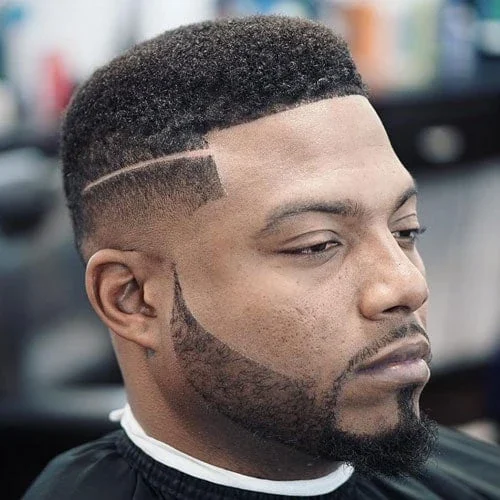
Rounded Top With a Side Accent
A rounded textured top sits above a close side fade. A narrow shaved line adds a small accent just below the fuller upper section.
- Shape
- Rounded textured top
- Detail
- Single shaved accent
The forehead edge is defined, while the upper surface retains fine curls. The beard is separately outlined and creates a second strong shape beneath the faded temple.
Wearability note: Compare the top fullness with the shorter curly examples. Choose the line only if you want to maintain that extra detail; the rounded top and fade can also be discussed without it.
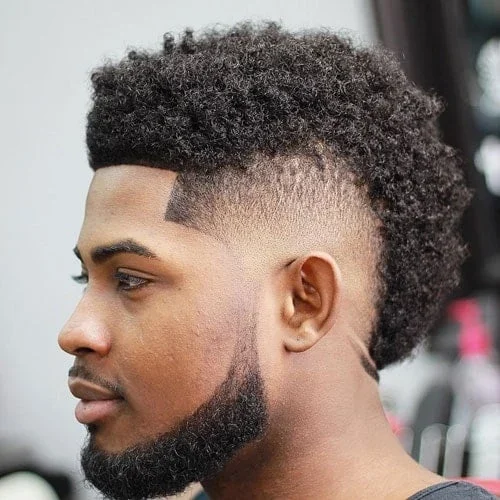
Idea 13
Curly Strip With a Close Side
Full curls continue from the top toward the back, while the side fades close around the ear. The retained rear length gives the cut a mohawk-like profile.
- Shape
- Full curly top and back
- Detail
- Close faded side
The forehead edge is defined and the upper outline stays rounded. This side view makes the contrast between the fuller central length and lighter side easy to compare.
Wearability note: Use this if you want a fade with more back length than a conventional short crop. Bring a rear reference as well to clarify the width and the way the lower curls should finish.
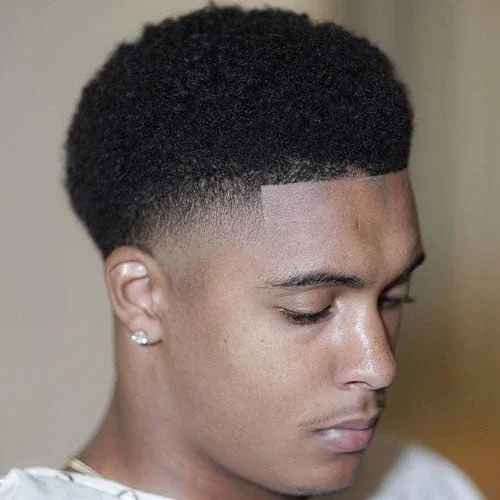
Idea 14
Rounded High Top With a Low Fade
A rounded high top retains substantial fullness above a low fade. The short area is concentrated near the temple and ear rather than extending high into the upper shape.
- Shape
- Rounded high top
- Detail
- Low fade
The defined front corner gives the perimeter a clear edge. Fine texture remains across the rounded top, creating contrast with the closely blended lower side.
Wearability note: Compare the height and width you want to retain before choosing the fade placement. A lower blend can preserve more upper-side coverage, but the exact outline still depends on the fullness of your own hair.
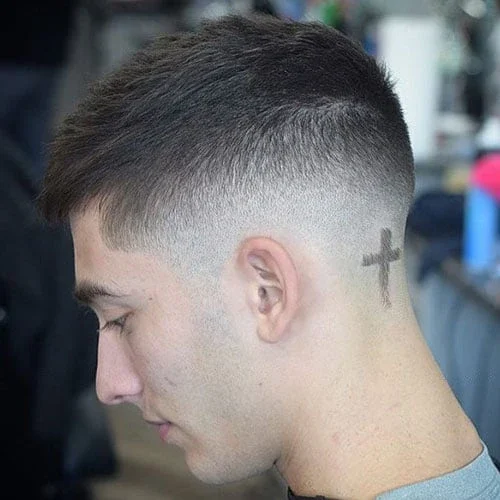
Idea 15
Forward Crop With a Rear Cross Accent
A short forward crop sits above a close fade. A small cross-shaped shaved accent appears behind the ear, adding a separate detail to the lower side.
- Shape
- Forward crop
- Detail
- Rear shaved accent
The front stays compact and softly textured rather than raised. The side angle shows both the blend and the placement of the accent near the back.
Wearability note: Choose the haircut shape separately from the symbol. If you mainly like the short top and fade, a plain side gives a simpler version without committing to a design or its upkeep.
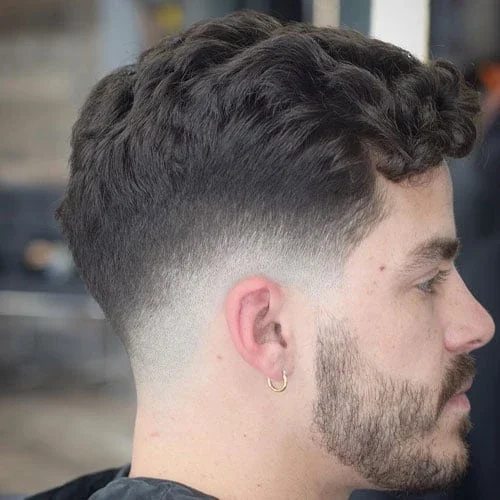
Idea 16
Soft Waves With a Low Close Side
Soft waves retain fullness through the upper head while the lower side fades close. The front bends loosely rather than forming a rigid quiff or blunt fringe.
- Shape
- Soft upper waves
- Detail
- Low close fade
The side transition leaves a darker band above the ear before narrowing toward the nape. This makes the contrast gentler than the high exposed-side examples.
Wearability note: Compare this if you want to keep upper-side coverage with a tidy lower outline. The waves are part of the finished appearance, so use your own texture when choosing the amount of length to retain.
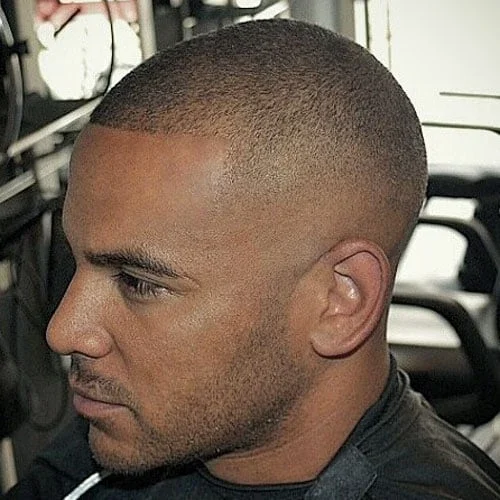
Idea 17
Very Close Top With a Soft Fade
A very close top keeps the upper outline low and even. The lower side fades gradually around the ear rather than meeting the top at a hard disconnected boundary.
- Shape
- Very close top
- Detail
- Soft lower fade
The front edge follows a compact line, with no longer pieces to sweep or lift. This profile makes the subtle change in side coverage easier to compare.
Wearability note: Choose this for a short, restrained outline if the larger quiffs feel excessive. Compare how close you want the top and how fresh you want the side blend to remain between trims.
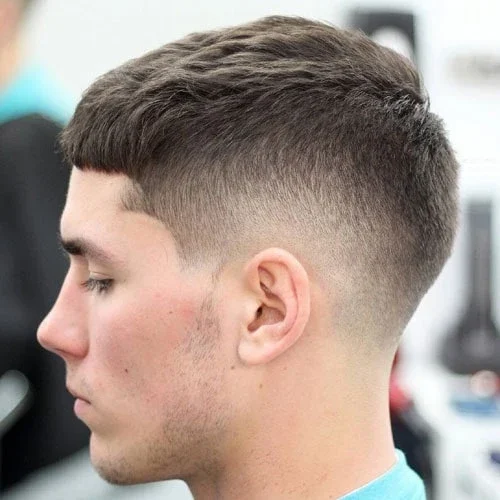
Idea 18
Short Fringe With a Soft Taper Fade
A small forward fringe gives this cut a low front edge. The side narrows softly around the ear, retaining more visible upper-side hair than a high skin fade.
- Shape
- Short forward fringe
- Detail
- Soft taper fade
The upper surface has fine texture rather than a smooth part or tall crest. The rear side stays rounded before becoming shorter near the lower outline.
Wearability note: Compare this softer transition with the more exposed sides in the gallery. It is useful if you want a short fringe and gradual narrowing without making the fade the strongest feature of the cut.
Explain the side and the top separately
A precise side profile is useful even when you prefer a different upper style. Point out the blend height and coverage you like, then use another reference for the fringe or top length.
Consider the freshly edged appearance alongside your trim preference. A fade, defined hairline and shaved accent each become softer as hair grows, even if the top needs little daily arrangement.

About the author
Bella Ross
Bella Ross is the hairstyle editor behind Latest Easy Hairstyles. She curates practical haircut, braid, color, and styling ideas with a focus on looks that are easy to browse, realistic to recreate, and useful for everyday hair decisions.