
Before you choose
Look beyond a messy finish
The useful details in a shag are the fringe length, the layers around the ears and the shape at the nape. This gallery compares those features across straighter hair, waves and curls, including a few disconnected versions. The photographs show finished styling, so separate the cut outline from temporary lift or wind movement.
The hairstyle gallery
15 shaggy hairstyles for men ideas to compare
Compare the visible length, shape, texture, and finish before choosing a salon reference.
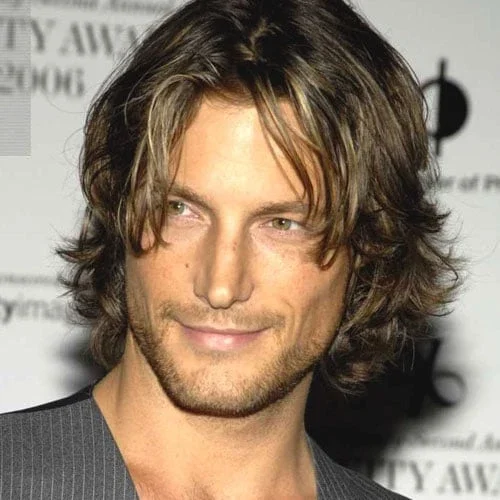
Idea 01
Center-Parted Shag With Flipped Ends
A center opening divides the front into two long pieces, while the ends turn outward around the ears. The shape keeps more length at the sides than a cropped textured top.
- Shape
- Center opening
- Detail
- Flipped side ends
Shorter pieces interrupt the surface above the longer outline. The result looks layered without a rigid straight edge along the bottom.
Wearability note: Compare the cheek-length front pieces with the ear coverage before choosing this shape. The flipped ends are part of the finished styling, so discuss the underlying length separately.
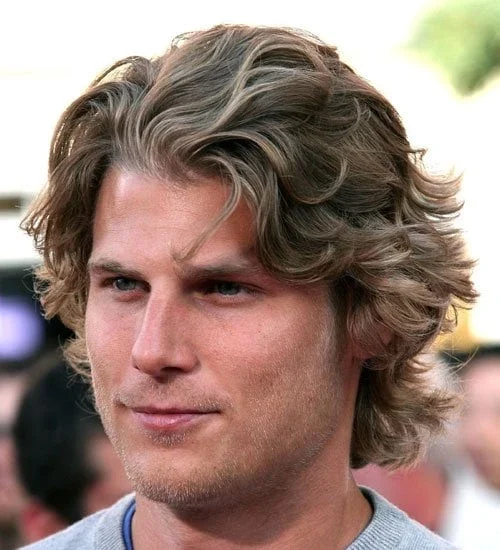
Idea 02
Open Front With Broad Wavy Layers
Broad waves lift away from the forehead and move outward at the sides. The open front gives this shag a different feel from the brow-covering fringes elsewhere in the gallery.
- Shape
- Open front
- Detail
- Broad side waves
The lower ends extend around the ears and nape, creating a soft layered outline. The widest point sits beside the upper face rather than at a very tall crest.
Wearability note: Choose this for its open front and visible side movement. Compare how much width you want around the ears before deciding that medium length alone describes the look.
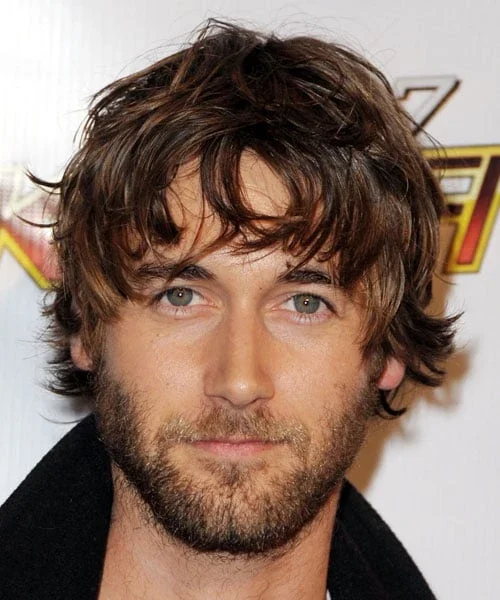
Idea 03
Tousled Fringe With Outward Side Ends
Separated fringe pieces fall across the forehead, with a small opening between them. Outward side ends continue the broken outline around the ears.
- Shape
- Separated fringe
- Detail
- Outward side ends
The top has lift without a smooth combed ridge. Its irregular surface works with the fringe rather than contrasting with a sharply clipped side.
Wearability note: Use this reference if you like a fuller outline around the face. Check where the longest fringe pieces sit near the eyes, since that small length choice changes everyday comfort.
Choose your direction
Choose the fringe
Compare short, side-swept and center-opening fronts.
Check the sides
Decide between ear coverage and an exposed close cut.
Keep the back in view
Compare compact napes with longer flipped ends.
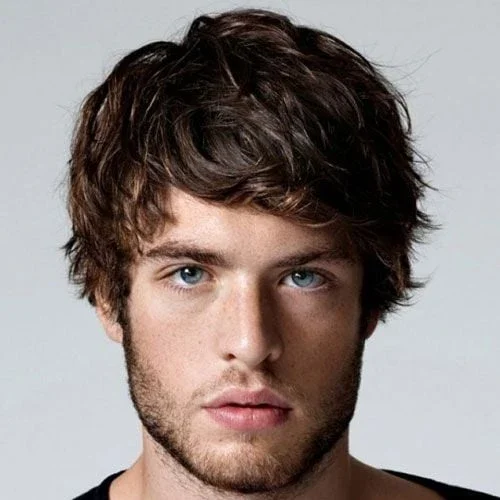
Idea 04
Short Rounded Shag With a Side Fringe
This shorter shag keeps a rounded outline with a fringe moving to one side. Small uneven ends soften the edge beside the temples and ears.
- Shape
- Rounded outline
- Detail
- Side-directed fringe
The crown stays full enough to connect with the sides. There is no exposed high fade, so the overall shape feels more continuous than the disconnected examples.
Wearability note: Choose this if you want a compact version of the layered look. Compare the side coverage and the front direction together instead of asking only for a short top.
Idea 05
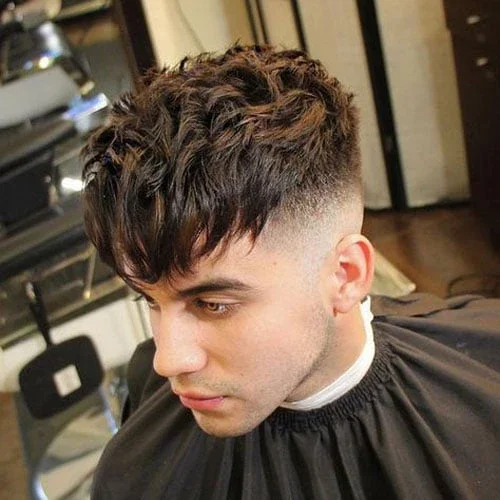
Choppy Dark Top Above a Close Fade
A choppy dark top falls forward above a closely faded side. The longer upper sections create a ragged fringe while the exposed temple makes the shape look strongly disconnected.
- Shape
- Choppy long top
- Detail
- Close side fade
The top remains visibly fuller than the lower sides. Small turns in the surface stop the longer section from reading as one smooth heavy panel.
Wearability note: Choose this for shaggy texture concentrated on top rather than an all-over shag. Be clear about the high side contrast, since keeping longer sides would create a substantially different outline.

Idea 06
Long Pale Fringe With Short Sides
A long pale fringe falls diagonally across the forehead, contrasting with much shorter sides. Fine separated ends make the front edge look wispy rather than blunt.
- Shape
- Long diagonal fringe
- Detail
- Short sides
The top has visible lift behind the fringe. Most of the length stays above the temples, leaving the ear area much more open than in a classic medium shag.
Wearability note: Consider the eye-level fringe before choosing this reference. It offers a shaggy front with a narrow side outline, so both of those features deserve attention in the consultation.
Idea 07
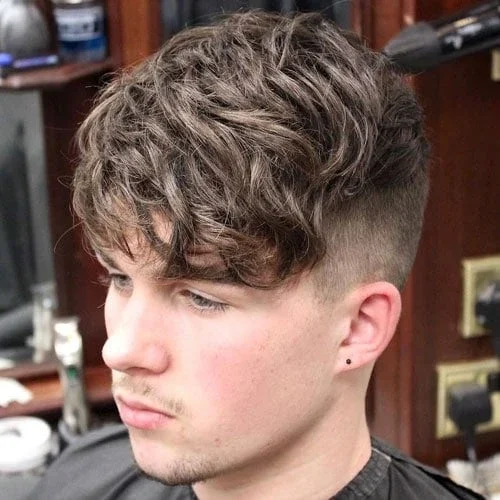
Wavy Fringe With an Undercut
A full wavy fringe curves forward over closely cut sides. The longer top forms a rounded cap of movement rather than a straight shelf.
- Shape
- Wavy forward fringe
- Detail
- Short undercut sides
The photograph shows distinct bends through the fringe and crown. The exposed side below the longer hair makes the change in length particularly clear.
Wearability note: Choose this if you want the waves to stay prominent above a narrow side profile. Compare the amount of forehead coverage with shorter fringes before deciding on the finished front length.
Idea 08
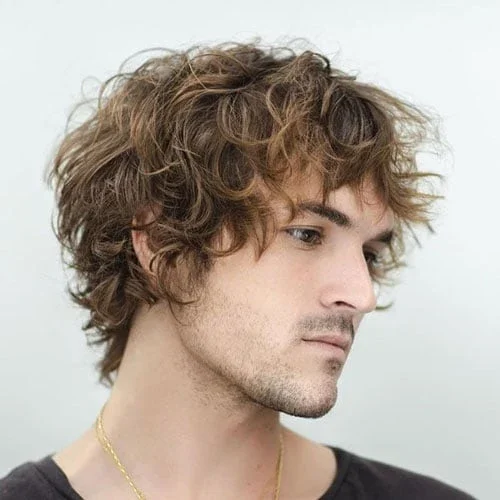
Loose Curls With Ear-Length Sides
Loose curls create a broken fringe and a soft outline around the ears. The sides stay long enough to connect with the top instead of ending in a close fade.
- Shape
- Loose curl fringe
- Detail
- Ear-length sides
Individual curls turn in different directions, adding movement around the forehead and nape. The overall shape is rounded but its edge remains irregular.
Wearability note: Use this as a length and outline reference if your hair has comparable movement. A curl pattern cannot be transferred by a haircut alone, so discuss your own texture alongside the photograph.

Idea 09
Compact Curly Shag With an Open Brow
Short curls form an uneven fringe above the eyebrows, keeping the front relatively open. The sides stay compact while retaining a softer edge than an exposed skin fade.
- Shape
- Short curly fringe
- Detail
- Compact side outline
The curl clusters add height through the top without becoming a very tall shape. The shorter perimeter keeps the silhouette close around the face.
Wearability note: Choose this when you like curl definition but prefer less forehead coverage. Compare the side length with the fuller curly examples, since the same front length can sit within a wider or narrower outline.
Idea 10
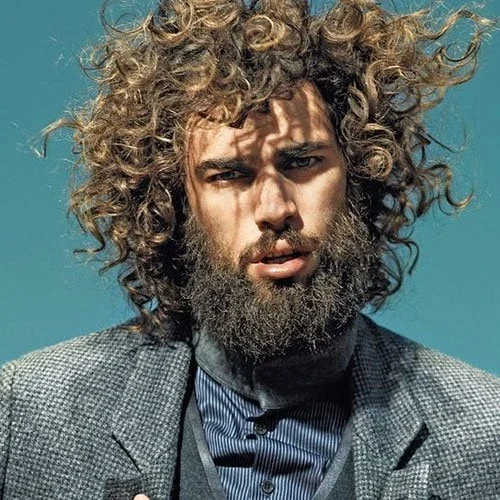
Long Curls With a Wide Moving Outline
Long curls spread around the forehead and sides, creating the widest outline in this group. Lighter ends make the individual turns especially visible in the outdoor light.
- Shape
- Long loose curls
- Detail
- Wide layered outline
The hair is visibly moving in the photograph. That movement exaggerates the height and separation, so the image is more useful for curl length than for a precise resting silhouette.
Wearability note: Choose the longer layered direction if you enjoy volume around the face. Ask to compare a still side view too, particularly if the width is your main concern.
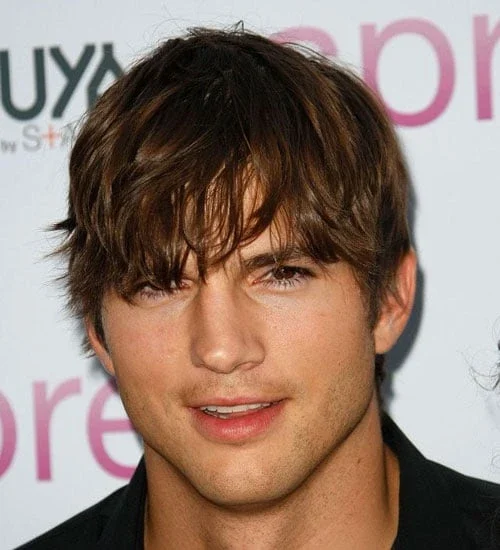
Idea 11
Straight Shag With a Long Dark Fringe
A long dark fringe breaks into separate pieces across the forehead. The straighter surface makes the front length especially noticeable against the softer side coverage.
- Shape
- Long straight fringe
- Detail
- Soft side coverage
The top sits lower than the wavy lifted examples. The uneven front edge provides much of the texture even without large curls or a pronounced quiff.
Wearability note: Choose this if you prefer a lower silhouette and a longer fringe. Check where the ends sit over the eyes, and compare that with the shorter, more open front options.
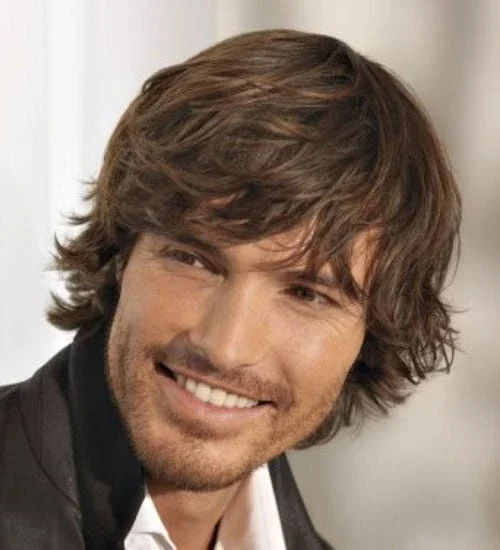
Idea 12
Sweeping Layers With Flipped Ear Ends
A sweeping fringe joins longer layers around the ears, where the ends turn outward. The side movement keeps this rounded shape from looking like a blunt cap.
- Shape
- Swept fringe
- Detail
- Flipped ear-length ends
The top lies in broad overlapping sections rather than small tight curls. Its length connects naturally with the sides, giving the outline a continuous flow.
Wearability note: Choose this for the combination of forehead coverage and fuller sides. Discuss how much of the ear you want covered, since shortening that area will change the character of the cut.
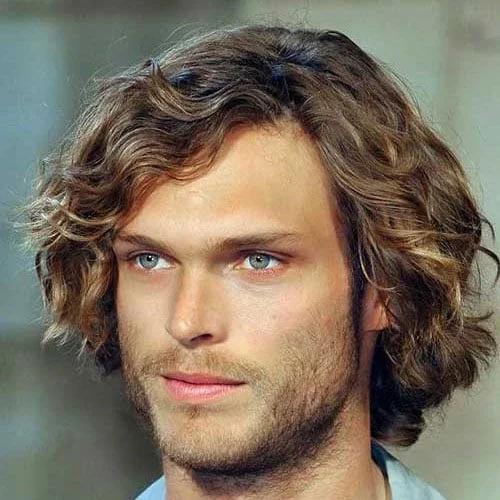
Idea 13
Side-Parted Waves With a Longer Nape
A loose side part opens the forehead while the waves continue around the ears and nape. The longer lower outline distinguishes this from the cropped textured shapes.
- Shape
- Loose side part
- Detail
- Longer wavy nape
The waves form broad bends rather than a tight curly fringe. Their direction creates a side sweep without making the surface look rigidly combed.
Wearability note: Choose this if you want a shaggy outline with less hair falling directly over the eyes. A rear reference will help explain how much nape length you want to retain.
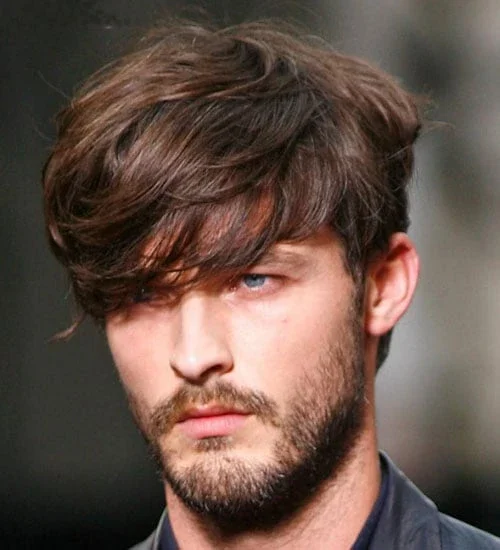
Idea 14
Heavy Side Fringe With a Shorter Ear Area
A heavy side fringe crosses the forehead and partially covers one eye. The shorter area around the visible ear makes the longer front section stand out.
- Shape
- Long side fringe
- Detail
- Shorter ear area
The upper hair lies in broad layers with a broken edge. This creates a more directional shape than the center-opening shags with equal length on both sides.
Wearability note: Choose the asymmetry only if you enjoy that level of face coverage. Compare where the fringe ends when it falls forward, since the swept position in a portrait may not be its only position.
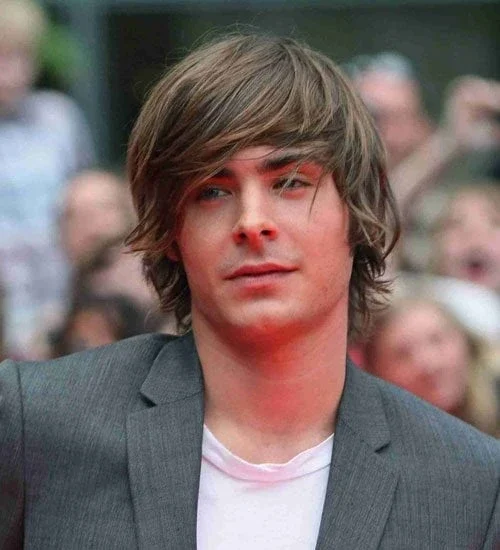
Idea 15
Long Swept Fringe With a Soft Nape
A long swept fringe blends into soft layers around the ears and nape. The side outline stays full, giving the front sweep a longer frame than the undercut versions.
- Shape
- Swept long fringe
- Detail
- Soft longer nape
The ends separate gently along the lower edge. The overall shape is smoother than the curlier shags, but the layered outline still avoids a blunt bottom line.
Wearability note: Choose this if retaining side and back length matters to you. Keep the nape visible in your reference, because a tight portrait crop could make this look much shorter than it is.
Name the lengths you want to keep
A tousled finish can appear on many different cuts. Point out the fringe, ear coverage and nape length rather than relying on the word messy to explain a shag.
For a curlier reference, discuss your own curl pattern as well as the outline. The same measured length can sit differently depending on how the hair bends and where it naturally falls.

About the author
Bella Ross
Bella Ross is the hairstyle editor behind Latest Easy Hairstyles. She curates practical haircut, braid, color, and styling ideas with a focus on looks that are easy to browse, realistic to recreate, and useful for everyday hair decisions.