
Before you choose
Decide how much length to leave loose
Start with the length around your ears, neck and shoulders. Then compare open foreheads, side sweeps and gathered fronts. These references include all-over long hair and longer tops with close sides; they offer different amounts of coverage even when both can be tied back.
The hairstyle gallery
18 long hairstyles for men ideas to compare
Compare the visible length, shape, texture, and finish before choosing a salon reference.
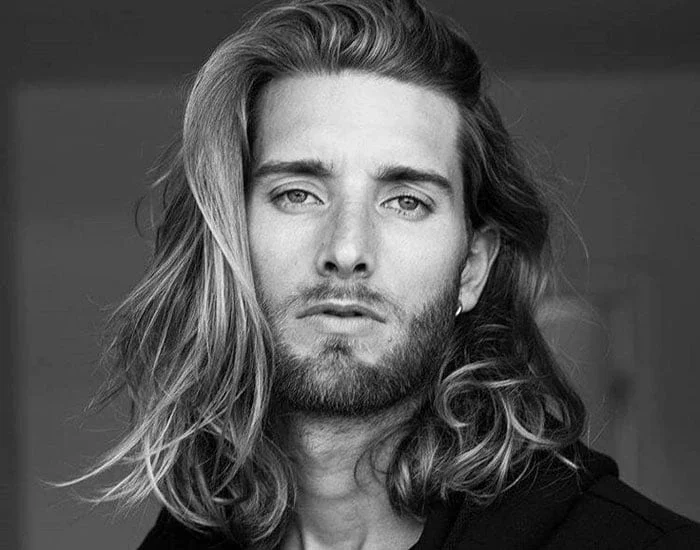
Idea 01
Shoulder-Length Waves With a Side Sweep
A broad side sweep gives these shoulder-length waves an open front. Most of the movement sits below the ears, where the ends curve outward around the neck.
- Shape
- Shoulder length
- Detail
- Side sweep
One side falls closer to the cheek while the other opens back from the forehead. The lower outline stays loose rather than forming a sharply even bob edge.
Wearability note: Compare the front sweep with how you want to wear your hair during the day. If it falls forward often, enough length for an ear tuck may be more useful than matching the photographed volume.
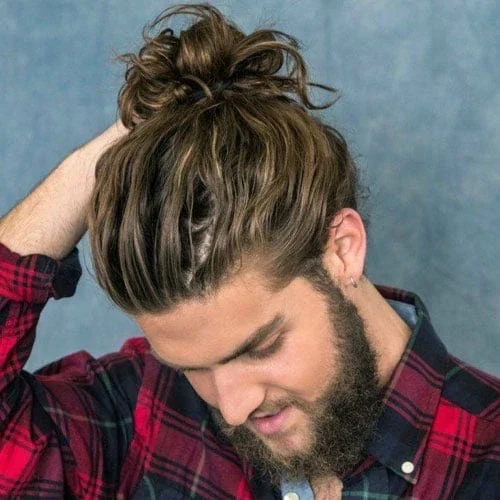
Idea 02
Loose High Bun
A loose high bun gathers the long hair above the back of the head. The sides sweep away from the face, while the upper loops keep the finish relaxed.
- Shape
- High bun
- Detail
- Loose loops
Lighter strands run through the gathered section and show its direction. The bun is irregular rather than tightly rolled, with a few ends visible around the top.
Wearability note: Choose the gathering height around comfort as well as appearance. A lower position can feel different against a seat back, while this higher version leaves more of the nape clear.
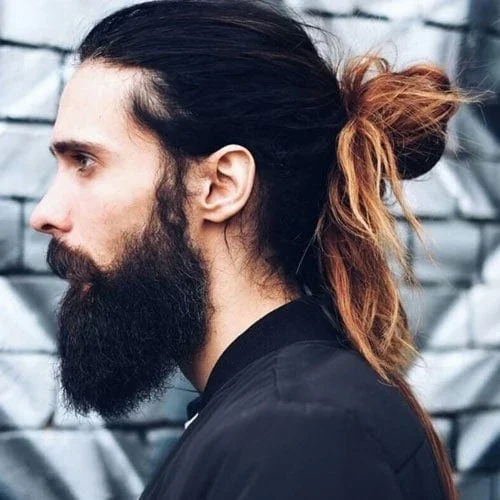
Idea 03
Dark Bun With Copper Ends
Copper-colored ends add contrast to this dark tied-back look. The hair is gathered behind the head, leaving the forehead, ears and sides largely open.
- Shape
- Mid-height bun
- Detail
- Copper ends
The bun sits around the middle of the back rather than directly on top. Loose colored ends extend downward, creating a less contained finish than a compact tucked knot.
Wearability note: The tied shape works independently of the color or beard. Decide whether you want visible ends or a more contained bun, especially if loose pieces against your collar would bother you.
Choose your direction
Keep it loose
Compare shoulder-length waves, straight layers and longer locs.
Open the front
Look at half-up ties and low gathered shapes.
Contain the length
Compare compact buns with looser high gathers.
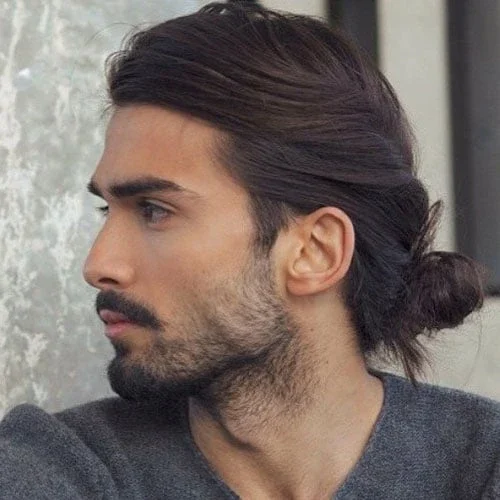
Idea 04
Low Bun With a Soft Front Sweep
A soft front sweep gives this low bun more lift than a completely flat tied-back style. The length is gathered near the nape, keeping the profile compact.
- Shape
- Low bun
- Detail
- Swept front
The sides pass over and behind the ears before joining the bun. The top remains full enough to show direction, rather than being pressed tightly against the scalp.
Wearability note: Check whether your front layers reach the tie comfortably. If shorter sections fall loose, they may need an ear tuck or a more relaxed arrangement than the smooth profile shown here.
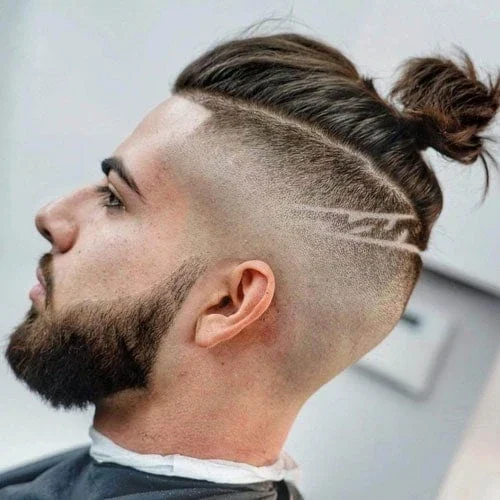
Idea 05
Undercut With a Small Bun
A close undercut creates strong contrast beneath this small bun. The longer top is swept backward, leaving a clear border between the gathered hair and cropped side.
- Shape
- Close undercut
- Detail
- Small bun
Shaved line details sit behind the ear. They add a separate decorative element to the cut, while the upper length forms a compact knot at the back.
Wearability note: Choose the undercut boundary before the line detail. The shaved design is optional, and the amount of side hair removed will matter more to the everyday outline as the cut grows.
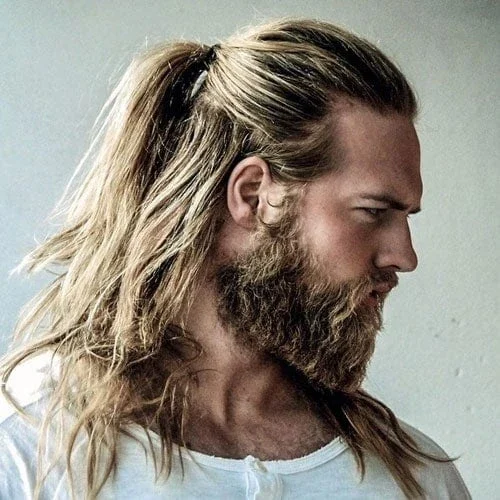
Idea 06
Half-Up Tie With Loose Long Waves
A half-up tie opens the front while leaving the longer waves visible. The lower lengths still fall around the shoulders, giving the look a fuller outline than a complete bun.
- Shape
- Half-up tie
- Detail
- Loose lengths
The upper sides sweep back above the ears. Loose ends move away from the neck, with lighter strands making the wave pattern easy to see.
Wearability note: Choose this if you want some hair away from the face without gathering every section. It will not provide the same neck clearance as a full tie, particularly with longer lower layers.
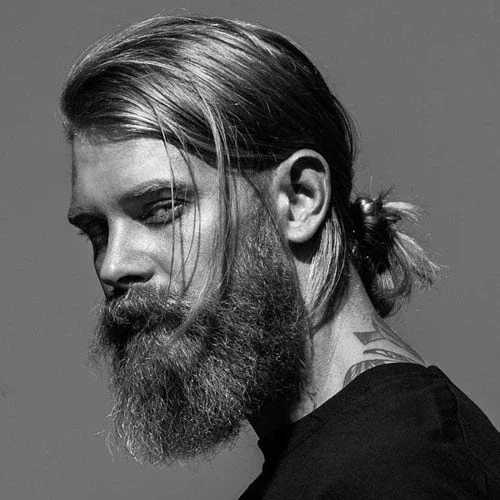
Idea 07
Low Tie With Loose Front Pieces
A low tie keeps most of the length behind the head while narrow front pieces remain loose. The side profile stays close, with the ear visible beneath the swept-back hair.
- Shape
- Low tie
- Detail
- Loose front pieces
The gathered ends form a small irregular tail near the nape. The loose front strands extend beside the cheek, softening the otherwise direct backward sweep.
Wearability note: Compare the loose pieces with your normal routine. If you need an unobstructed front for work or activity, you may prefer those sections long enough to join the tie.
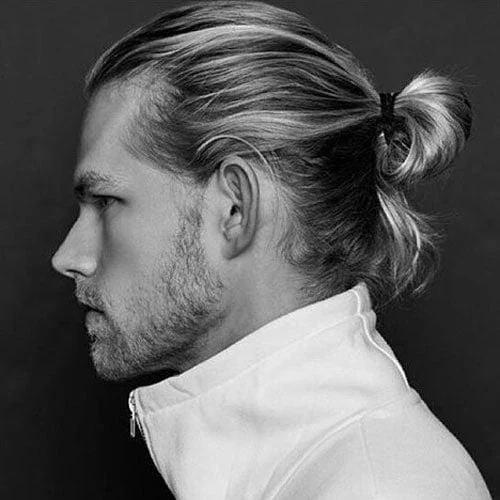
Idea 08
Smooth Compact Bun
A compact bun gives this tied-back look a clean profile. The top and sides follow the head closely, with the gathered length placed behind the upper nape.
- Shape
- Compact bun
- Detail
- Smooth sides
The ear stays open, and the bun has a rounded loop with a few short ends beneath it. There is less height at the front than in the lifted-sweep examples.
Wearability note: Use this profile to compare a smooth tie with a looser bun. Choose a comfortable hold rather than trying to flatten every strand into exactly the same position.
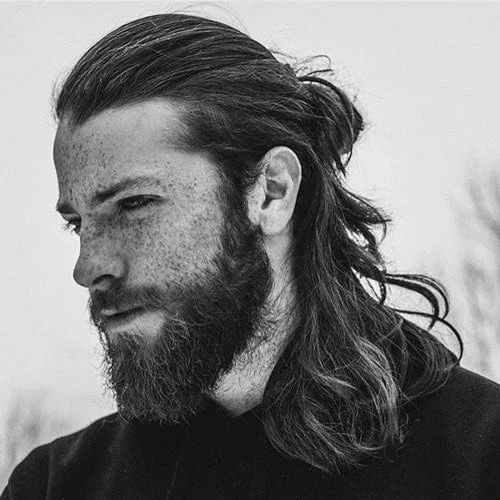
Idea 09
Half-Up Knot With a Loose Back
A half-up knot gathers the upper hair while leaving a long section at the back. The forehead and ear stay open, but the lower outline still has the movement of loose hair.
- Shape
- Half-up knot
- Detail
- Loose back length
The knot sits behind the crown. Below it, the longer pieces bend outward near the neck, creating a clear contrast between the smooth top and looser bottom.
Wearability note: Compare the lower length with your collar before choosing this arrangement. A half-up can keep hair out of the face without containing the pieces that rest against the neck.
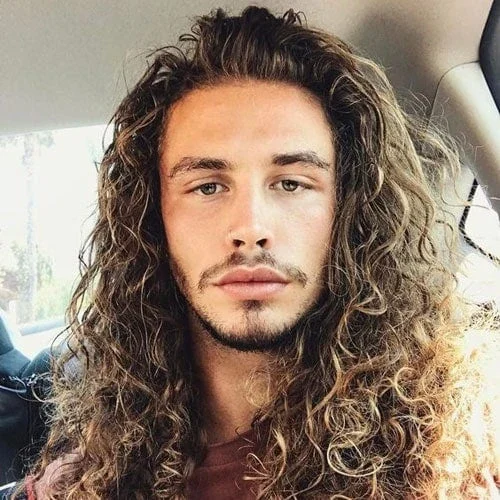
Idea 10
Long Curls With an Open Forehead
Long curls create a full frame around the shoulders while the forehead stays open. The front is swept upward and back, keeping the curl volume mostly beside and below the face.
- Shape
- Long curls
- Detail
- Open forehead
Lighter ends separate the lower ringlets from the deeper crown. The outline is irregular and airy rather than a smooth, evenly rounded shape.
Wearability note: Judge the length when the curls are dry and settled. Your own curl size will affect how much hair reaches the shoulders and how easily the front can remain open.
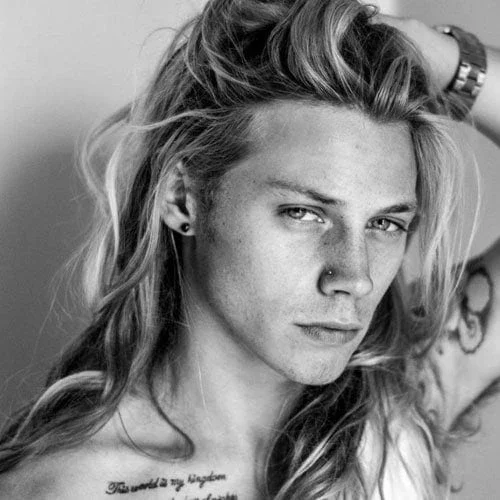
Idea 11
Long Hair With a Lifted Sweep
A lifted front gives this long loose hairstyle height without gathering the back. The lengths fall around the shoulders, with a gentle bend rather than tight curls.
- Shape
- Long lengths
- Detail
- Lifted front
One side is moved behind the ear while the opposite side remains fuller. The contrast makes the front feel open even though plenty of hair stays loose.
Wearability note: Consider whether that lift is part of the finish you enjoy wearing. If your hair normally lies flatter, use the overall length as a reference while choosing a more relaxed front arrangement.
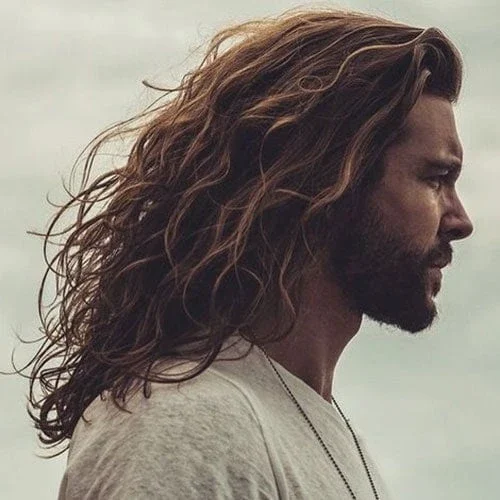
Idea 12
Long Waves in Profile
The profile makes the length behind the shoulders clear. Loose waves run through the back, while the front is moved away from the face without a visible tie.
- Shape
- Long waves
- Detail
- Backward sweep
The upper hair has a little lift and the ends separate into narrow points. Most of the fullness sits behind the ear rather than directly beside the cheek.
Wearability note: Save a side view when discussing how much back length you want to keep. A front portrait can hide long hair behind the shoulders and make the same cut appear much shorter.
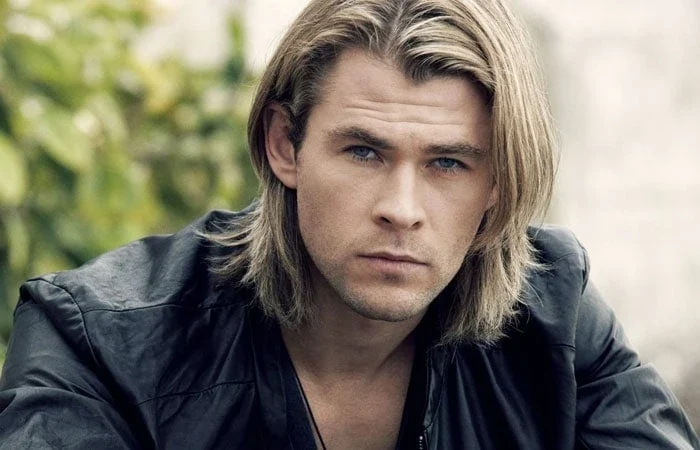
Idea 13
Straight Shoulder-Skimming Layers
Straight shoulder-skimming layers give this long style a relatively narrow outline. A side part opens one temple while the opposite front section falls closer to the cheek.
- Shape
- Shoulder-skimming layers
- Detail
- Side part
The ends separate lightly around the neck rather than curling into a rounded edge. The upper hair remains smooth, leaving most of the movement near the bottom.
Wearability note: Compare the front length with how often you want to tuck or tie it. Keeping long sides can offer flexibility, but pieces at cheek level may still fall forward when you look down.
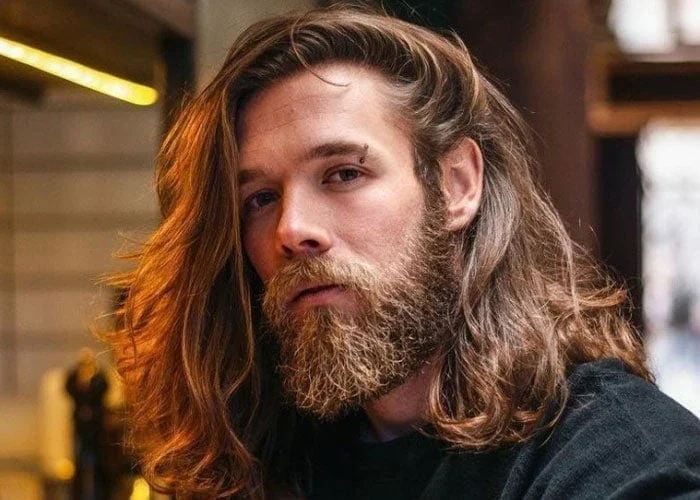
Idea 14
Loose Waves With a Full Side Sweep
A full side sweep gives these long waves a relaxed asymmetry. One side opens around the ear, while the other falls forward in a broader section beside the face.
- Shape
- Long loose waves
- Detail
- Full side sweep
The lower lengths curve around the neck and shoulders. The ends are softly separated, keeping the outline loose rather than making a strong blunt line.
Wearability note: Use this reference to discuss where you want the volume to sit. A more balanced part would change the front shape even if you kept the same back length and wave.
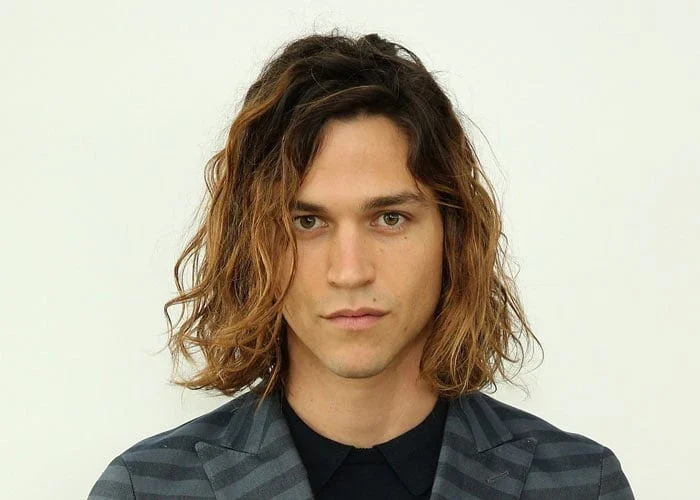
Idea 15
Neck-Length Waves With Light Ends
Lighter ends show the movement in this neck-length style. The front falls loosely from an off-center opening, creating a softer outline than a smooth pushed-back arrangement.
- Shape
- Neck-length waves
- Detail
- Lighter ends
The sides cover much of the ears, and the lower waves turn outward near the collar. Darker upper hair keeps the crown quieter than the highlighted ends.
Wearability note: This is a useful shorter-end reference within long men’s hair. Check whether the side pieces reach behind the ears comfortably if an occasional tuck matters to your routine.
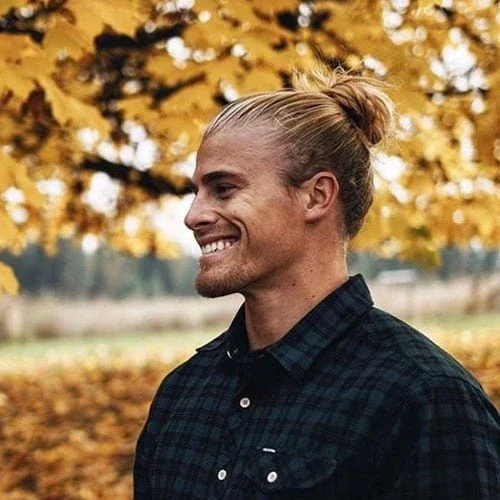
Idea 16
Small Bun With an Open Nape
A small bun gathers the long lengths away from the neck. The sides sweep backward in a close outline, leaving the ears and forehead visible.
- Shape
- Small bun
- Detail
- Open nape
The bun sits behind the crown rather than at the very top. A few fine loose pieces soften the surface without changing the compact gathered silhouette.
Wearability note: Choose the position around how you actually wear hats, collars and seat belts. A small bun can be moved to a more comfortable height without needing to copy this exact placement.
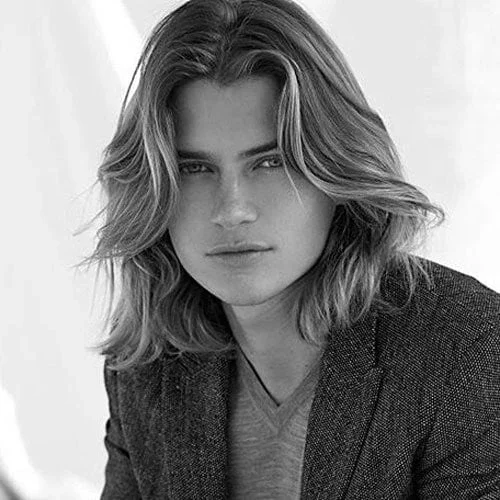
Idea 17
Long Layers With a Center Opening
A center opening creates a balanced front in this long layered cut. The shorter pieces curve outward near the cheeks, while the back and sides extend toward the shoulders.
- Shape
- Long layers
- Detail
- Center opening
The outline is smooth with softly separated ends rather than tightly curled. The front framing adds width near the face without a short fringe across the forehead.
Wearability note: Compare the shortest front piece with your preferred ear tuck or tie. Face framing can be attractive worn loose but may not join a ponytail as easily as the longer back.
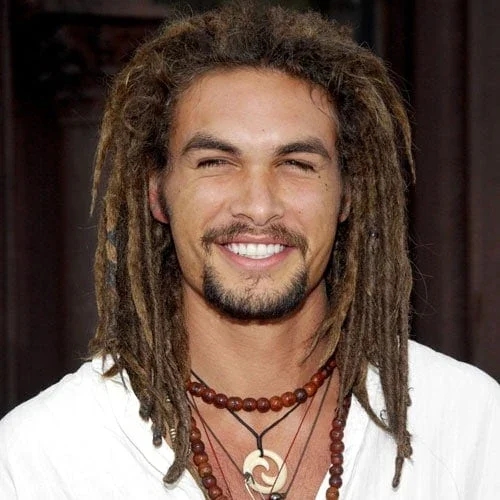
Idea 18
Long Locs With a Loose Front
Long locs create a distinct separated outline around the shoulders. The upper section has a loose lift, leaving the forehead visible while the lengths frame both sides of the face.
- Shape
- Long locs
- Detail
- Loose front
The locs vary in thickness and finish at different levels. The lower shape remains free rather than gathered into a bun or ponytail.
Wearability note: Choose this as a reference for loc length and how much hair you want near the face. Locs have their own care and shaping considerations, so discuss them separately from the loose-wave haircuts in this gallery.
Bring a view of the back
A front portrait can hide the true lower length. A side or rear view helps explain whether you want hair at the collar, on the shoulders or gathered above the nape.
Separate the beard and color from the haircut when choosing a reference. You can like a loose wave, long layer or bun without needing to copy every detail of the portrait.

About the author
Bella Ross
Bella Ross is the hairstyle editor behind Latest Easy Hairstyles. She curates practical haircut, braid, color, and styling ideas with a focus on looks that are easy to browse, realistic to recreate, and useful for everyday hair decisions.