
Before you choose
Choose all-over length or a longer top
A curtain cut and a quiff can both use medium upper length while looking very different at the sides. First choose the coverage you want around the ears and nape, then compare forward fringes, open parts and back sweeps. The gallery identifies those visible differences rather than assigning exact inches from photographs.
The hairstyle gallery
18 medium length hairstyles for men ideas to compare
Compare the visible length, shape, texture, and finish before choosing a salon reference.
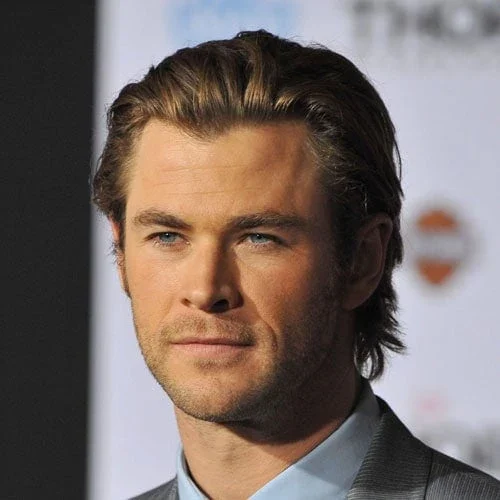
Idea 01
Soft Brushed-Back Layers
Soft brushed-back layers keep this medium-length style open at the forehead. The sides retain enough length to lie behind the ears, giving it a fuller outline than a faded cut.
- Shape
- All-over medium length
- Detail
- Brushed back
The top has a little lift without a sharply sculpted quiff. The back extends toward the collar in separated ends rather than a close tapered edge.
Wearability note: Compare the ear and nape coverage with your own comfort. If those areas feel too full, a shorter outline could keep the relaxed top while reducing the lower length.

Idea 02
Loose Back Sweep With Full Sides
A loose back sweep gives this style movement without a defined hard part. The sides stay relatively long, covering part of the ear before turning toward the neck.
- Shape
- Full sides
- Detail
- Loose back sweep
The top separates into broad pieces, and a few strands remain loose near the temples. The lower outline has a slight outward bend rather than a clipped finish.
Wearability note: This is useful if you want some ear coverage and a relaxed front. Check whether your hair stays back comfortably or tends to fall forward when it reaches this length.
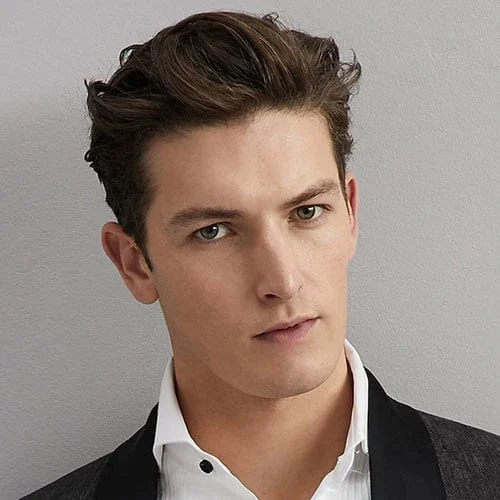
Idea 03
Rounded Quiff With Soft Sides
A rounded quiff concentrates the height at the front. The sides are shorter, but their soft transition keeps the shape less contrasted than the skin-faded examples.
- Shape
- Rounded quiff
- Detail
- Soft sides
The upper hair sweeps backward in a broad curve with visible separation. The forehead remains open, and the overall width stays controlled above the ears.
Wearability note: Choose the front height around the finish you enjoy wearing. If you usually leave the hair flatter, ask how the same length looks without the pronounced upward curve.
Choose your direction
Keep softer sides
Compare ear-length layers and neck-length flow.
Show more contrast
Look at longer tops with close fades and undercuts.
Choose the front
Compare curtains, diagonal fringes and raised open-forehead shapes.
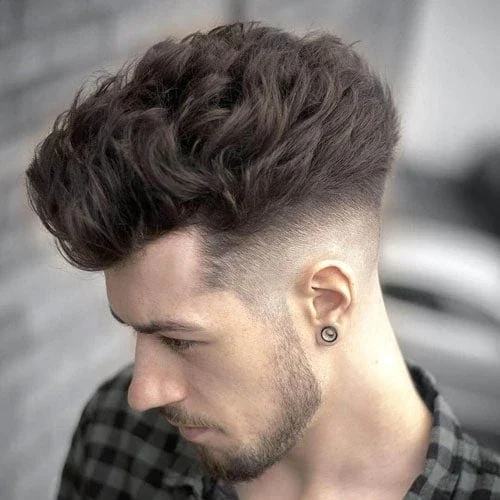
Idea 04
Textured Quiff Over a Close Fade
A textured quiff creates a broad, lifted top above very close sides. The contrast makes the upper length the main feature even though the overall haircut is compact.
- Shape
- Textured quiff
- Detail
- Close fade
The front rises and bends backward in separated pieces. The side fades down toward bare skin near the ear, leaving a clear change in weight beneath the fuller top.
Wearability note: Decide on top length and fade height separately. The photographed lift is a styled finish, while the amount of side coverage removed will remain visible even when the top lies flatter.
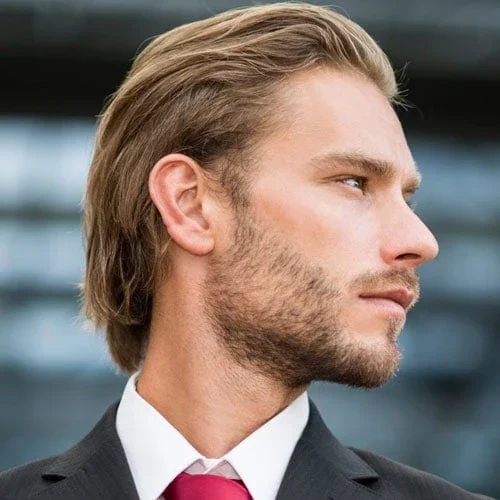
Idea 05
Medium Layers Tucked Behind the Ear
An ear tuck keeps the front open while preserving an all-over medium length. The back remains longer at the nape, giving the profile more coverage than a short tapered haircut.
- Shape
- Medium layers
- Detail
- Ear tuck
The top curves backward with soft separation rather than standing in a tall quiff. Fine lighter strands show the direction of the sweep through the side.
Wearability note: Check whether your shortest front sections reach behind the ear. That small detail can determine whether this shape feels easy to wear or needs repeated moving away from the face.
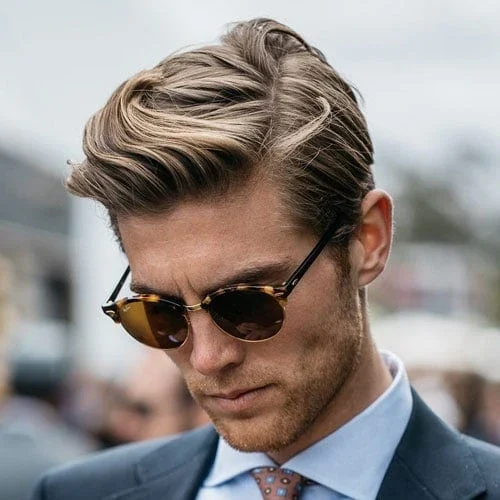
Idea 06
Side-Parted Wave With a Full Front
A clear side part gives this full front wave a defined direction. The medium-length top rises above the forehead and then sweeps across, keeping the front open.
- Shape
- Side part
- Detail
- Full front wave
The opposite side lies closer to the head. Broad ridges through the top create a more arranged finish than the loose fringe examples in this gallery.
Wearability note: Consider whether you want to keep that visible part every day. A softer opening could preserve the same upper length while making the final shape feel less precise.
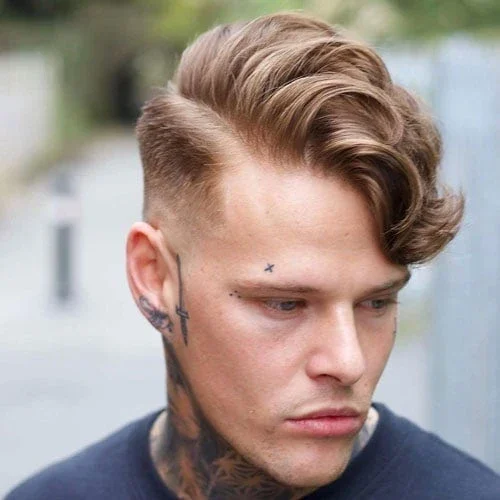
Idea 07
Long Swept Top With a Close Side
A long diagonal sweep creates a broad curve across the top. The close side underneath keeps the outline narrow around the temple and ear.
- Shape
- Long swept top
- Detail
- Close side
The front bends outward before joining the longer upper section. A defined part separates the smooth short side from the more voluminous swept hair.
Wearability note: Save the side angle if this contrast is what you want. Ask how the long front will fall when it is not lifted, especially if you prefer a less arranged everyday finish.
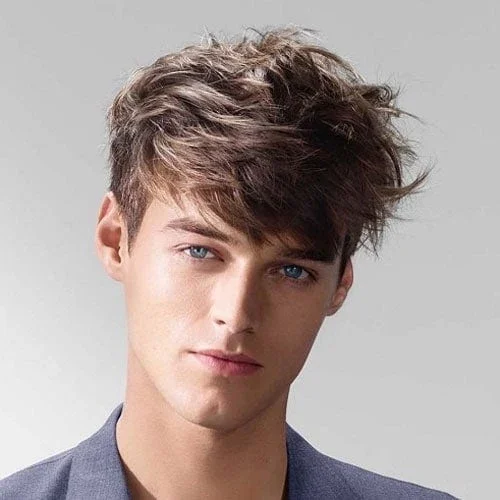
Idea 08
Tousled Top With a Diagonal Fringe
A diagonal fringe brings this medium top forward rather than away from the forehead. The tousled surface gives the upper hair a loose, broken outline.
- Shape
- Tousled top
- Detail
- Diagonal fringe
The sides remain shorter and quieter, so the main movement sits across the crown and front. Some pieces lift while others fall toward the eyebrow.
Wearability note: Choose how much forehead coverage you want before the texture. A shorter or more open fringe could retain the relaxed top while keeping hair farther from the eyes.
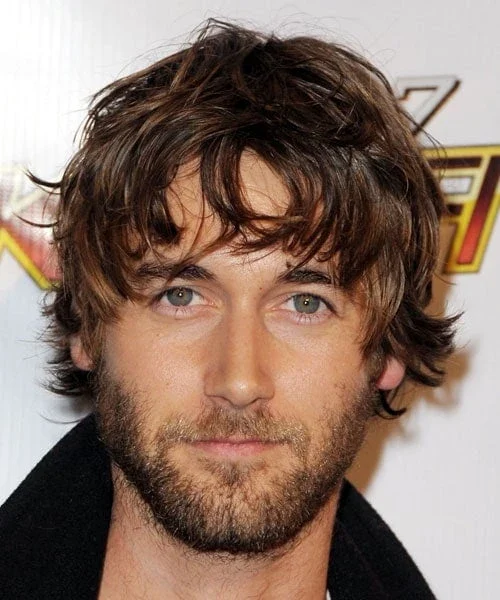
Idea 09
Wavy Medium Cut With a Loose Fringe
A loose fringe gives this wavy medium cut a relaxed front. The sides keep enough length to turn around the ears, creating a softer outline than a close fade.
- Shape
- Wavy medium cut
- Detail
- Loose fringe
Small waves separate through the crown and forehead. The lower side pieces flick outward slightly instead of following a sharply clipped edge.
Wearability note: Work with where your own waves settle when choosing the fringe length. A photo can show the desired coverage, but the dry bend will influence whether the front stays above the eyes.
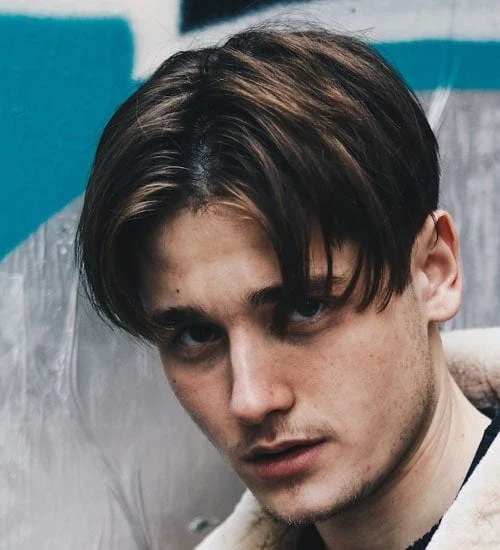
Idea 10
Center-Parted Curtains
A center opening divides this curtain fringe into two long front sections. The sides are shorter, so most of the length stays across the top and around the forehead.
- Shape
- Center part
- Detail
- Curtain fringe
The front curves inward and downward near the eyes. Fine lighter pieces make the direction of the hair visible without changing the simple parted shape.
Wearability note: Check the front length with your normal posture. Curtains that sit comfortably in a portrait may fall farther forward when you read, work or look down.
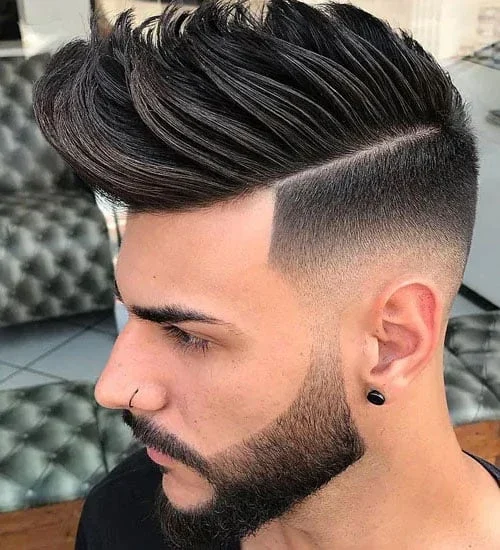
Idea 11
Sharp Side Part With a Long Top
A sharp side part divides the long top from the close side. The upper hair sweeps across in a smooth, lifted panel, giving the style a more precise finish.
- Shape
- Sharp side part
- Detail
- Long top
The fade becomes very close around the temple and ear. Fine surface lines follow the combed direction, while the front stays open above the forehead.
Wearability note: Choose the part definition and fade contrast together. If you prefer a softer look between appointments, ask to compare a less sharply separated version with the same amount of top length.
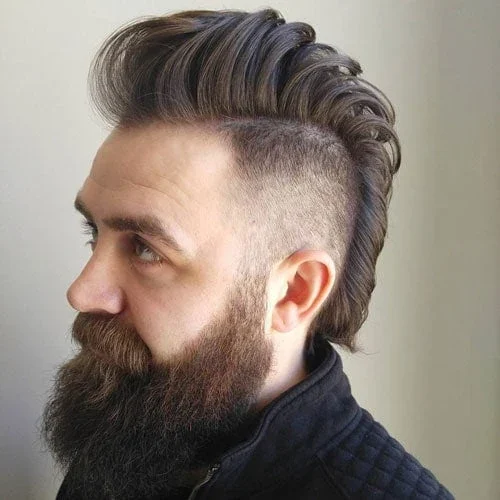
Idea 12
Raised Center With Clipped Sides
A raised central section gives this haircut height from front to back. The clipped sides make the upper length stand out, while a little extra hair remains at the rear.
- Shape
- Raised center
- Detail
- Clipped sides
The top bends backward in broad pieces instead of forming a narrow pointed ridge. The side transition is pronounced, leaving the ear and temple open.
Wearability note: Consider the whole profile rather than the front alone. The longer back is part of this shape, so decide whether you want to retain that detail or keep the nape more compact.
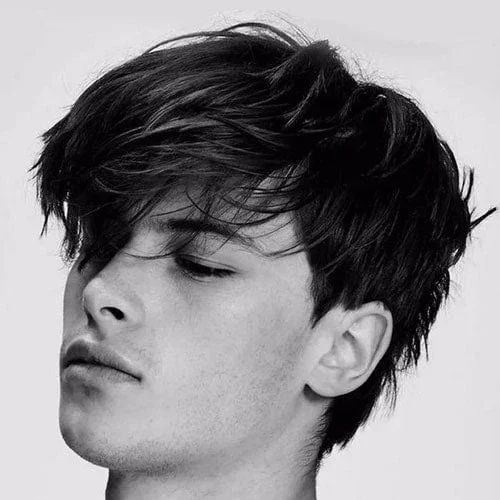
Idea 13
Long Side Fringe With Broken Texture
A long side fringe makes the front the focal point of this medium top. The broken texture leaves space between the strands rather than creating a solid smooth curtain.
- Shape
- Long side fringe
- Detail
- Broken texture
The side sits closer around the ear, while the upper pieces fall diagonally across the forehead. The crown has light irregular lift without a tall, sculpted shape.
Wearability note: Choose the eye-level coverage around your everyday needs. If you prefer a clear front, a shorter fringe could keep the textured crown without the same amount of hair falling forward.
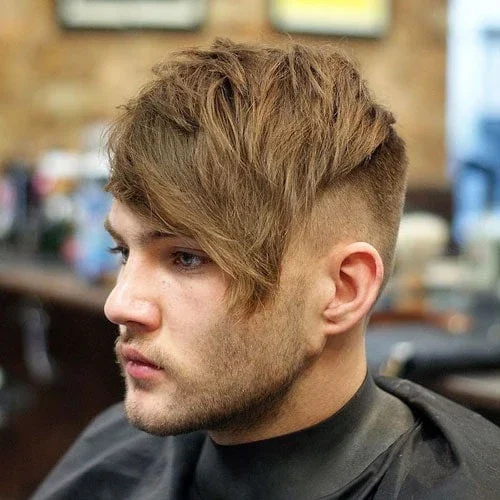
Idea 14
Long Diagonal Fringe With an Undercut
A long diagonal fringe creates strong asymmetry over this close undercut. The upper hair has a soft, textured surface, while the side remains compact and clearly separated.
- Shape
- Diagonal fringe
- Detail
- Undercut
The front reaches toward the cheek, making it much longer than the hair above the ear. The crown stays lifted rather than lying completely flat.
Wearability note: Compare how the fringe falls when your head moves. This much front length can be a deliberate style choice, but an ear tuck or shorter version may fit better if it gets in the way.
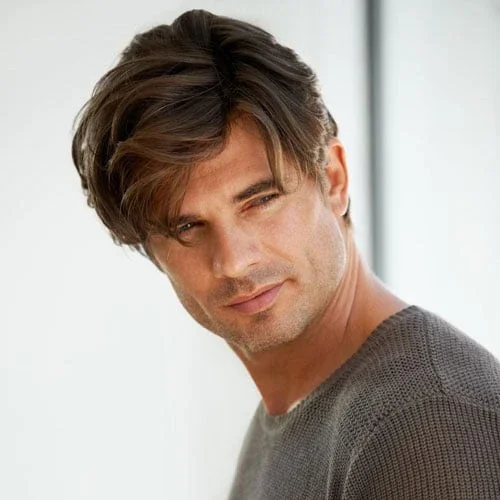
Idea 15
Loose Side Sweep With a Soft Outline
A loose side sweep gives this medium cut a softer outline than the precise parted examples. The front drops diagonally, leaving some hair near the eyebrow.
- Shape
- Loose side sweep
- Detail
- Soft outline
The upper sections overlap in broad pieces, with the sides keeping a little fullness. There is no obvious skin fade or sharply carved part line.
Wearability note: Use this reference if you prefer movement without a very structured finish. Ask to see how the front rests naturally, since the direction of your hair will affect the sweep.
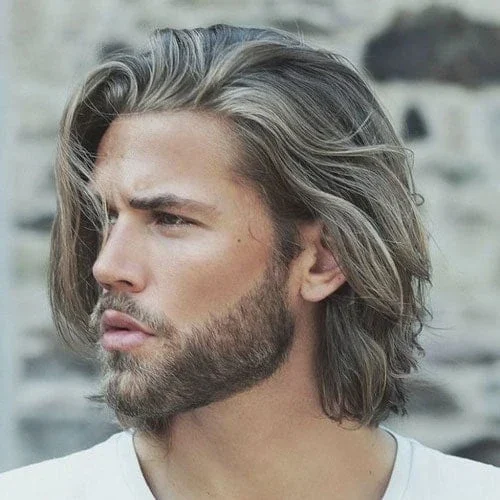
Idea 16
Layered Neck-Length Flow
Neck-length layers give this style a fuller outline around the ears and back. The front opens away from the forehead, creating a loose flow rather than a defined fringe.
- Shape
- Neck-length layers
- Detail
- Open side
The ends turn outward near the neck, and the crown remains softly lifted. The side pieces are long enough to pass behind the ear without a close clipped border.
Wearability note: Compare the nape coverage with the longer men’s hairstyles gallery. This sits near the longer end of medium length, so choose the lower stopping point around your collar and comfort.
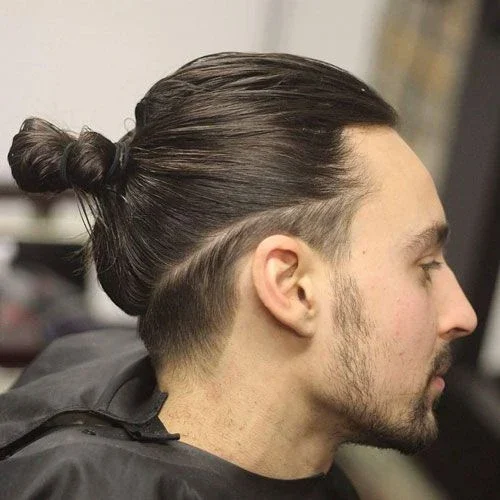
Idea 17
Small Bun With a Tapered Outline
A small bun gathers the longer top while the lower outline stays tapered. This gives a tied-back option without keeping equally long hair around the ears and nape.
- Shape
- Small bun
- Detail
- Tapered outline
The side hair angles backward toward the tie, and the bun forms a compact loop behind the head. The lower nape is much shorter than the upper section.
Wearability note: Check whether your front length can reach the gathering point comfortably. The bun depends on enough upper length, so discuss that separately from how short you want the lower outline.
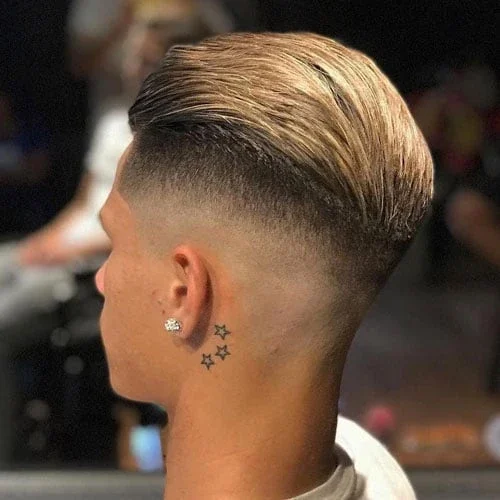
Idea 18
Smooth Swept Top With a Deep Side Contrast
A smooth backward sweep exposes the length through the top while the close sides keep the profile narrow. The contrast is especially clear from behind the ear.
- Shape
- Swept top
- Detail
- Close sides
The upper hair overlaps in longer sections toward the back. The fade removes most of the side bulk, leaving the ear and lower nape open.
Wearability note: Choose the transition height with the relaxed version of the cut in mind. Even if you wear the top flatter than this, the close side will still create a strong border underneath.
Compare the outline before the finish
Decide whether you like the underlying length or the way it has been arranged for the photo. A smooth side sweep and a loose fringe can use similar upper length while creating different amounts of height.
Bring more than one angle when the back matters. A front portrait alone may not show whether the cut stops above the neck or continues into longer layers.

About the author
Bella Ross
Bella Ross is the hairstyle editor behind Latest Easy Hairstyles. She curates practical haircut, braid, color, and styling ideas with a focus on looks that are easy to browse, realistic to recreate, and useful for everyday hair decisions.