
Before you choose
Decide how much lightness you want
Some of these looks keep a noticeable darker base; others carry pale blonde almost to the scalp. Save the contrast you want as well as the tone. A photograph cannot tell you what lightening your own hair can safely support.
The hairstyle gallery
Platinum tones in different shapes
Compare the lightest sections first, then the root contrast and how much of the hairstyle is actually pale blonde.
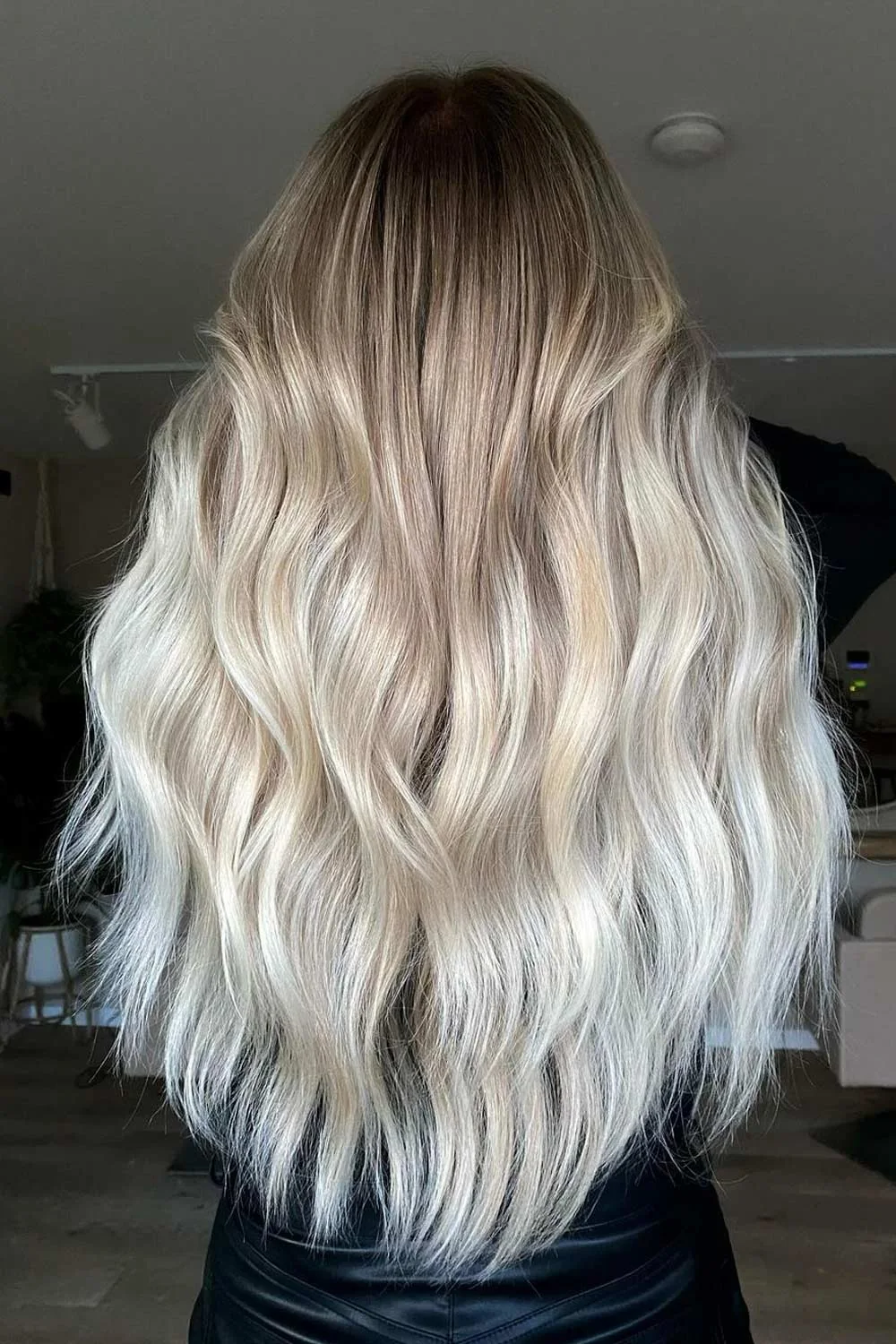
Idea 01
Rooted Platinum Waves
The darker crown is a deliberate part of this look, not something to overlook when saving the bright ends. Pale lengths begin gradually, giving the long waves a shaded upper section.
- Placement
- Darker roots
- Texture
- Loose waves
Wide bends separate the blonde into distinct ribbons while the ends remain light and softly irregular. From behind, the color transition is easier to read than any face-framing detail, which this angle does not show.
Wearability note: Choose this reference for root contrast and length together. Ask what degree of lightness is realistic on your current hair before committing to the nearly white ends; the photographed waves will also need their own styling time.
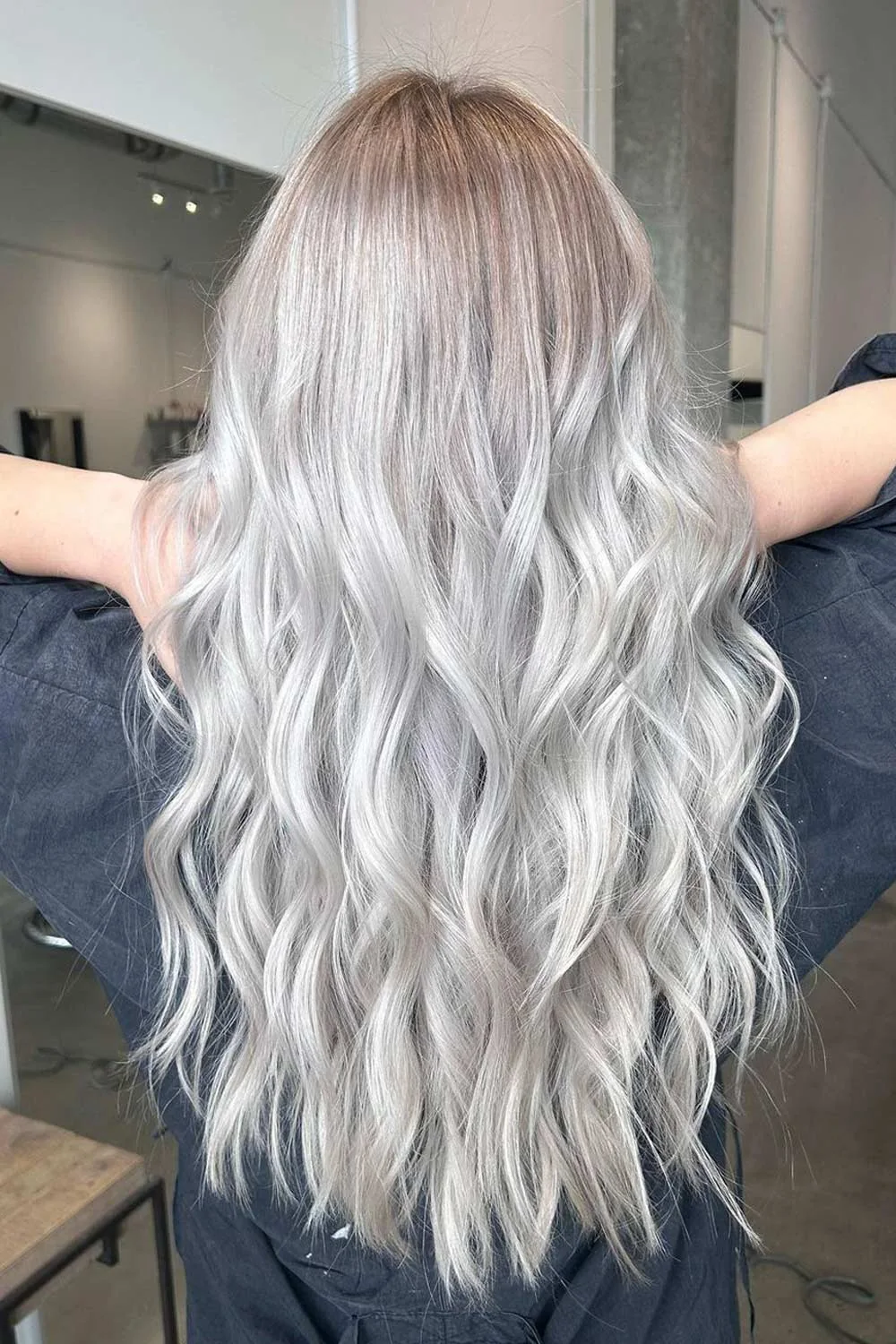
Idea 02
Long Silver-Blonde Waves
This version carries a cool silver impression through most of the visible length. The root is shaded without becoming a large dark block, so the upper transition stays much quieter than the flowing waves.
- Tone
- Silver blonde
- Length
- Long
Long curved sections overlap across the back and spread toward the ends. The reflective ridges look almost white, while the spaces between them retain a cooler gray cast that gives the pale color some definition.
Wearability note: Save the shaded areas as well as the brightest ribbons if this is your preferred tone. A very cool finish can look different in warm indoor light, so discuss the reference under more than one lighting condition.
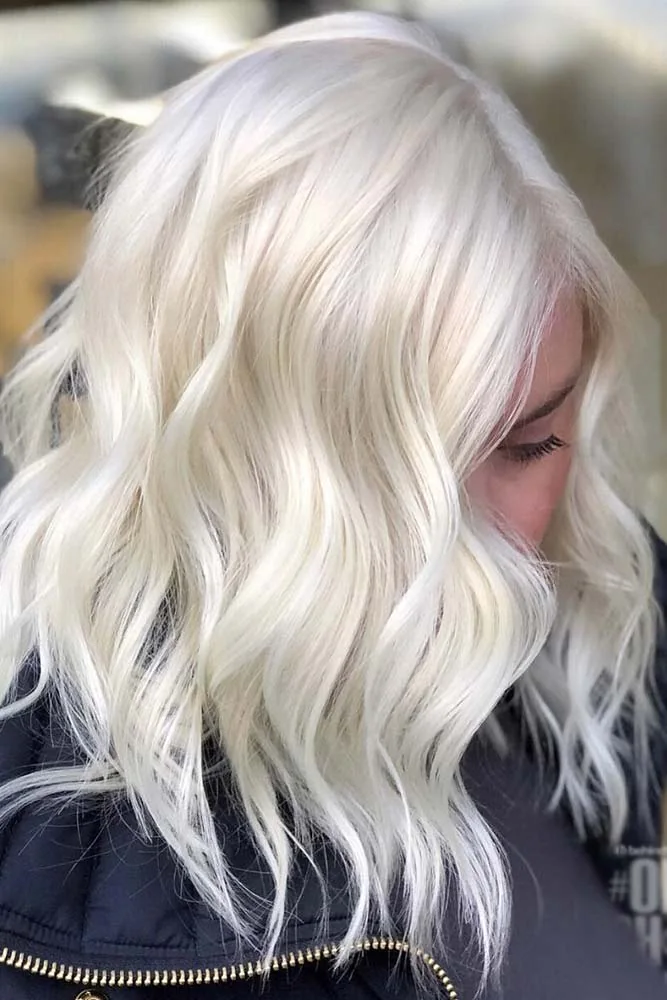
Idea 03
Creamy Platinum Wavy Lob
A shorter, loosely waved shape gives the pale blonde a less formal feel. The color is creamy rather than strongly blue-toned, and the face-side opening lets the lightness sit close to the skin.
- Length
- Shoulder level
- Tone
- Creamy platinum
The ends finish around the shoulders with small separated bends instead of a sharp straight edge. Texture is concentrated through the sides, while the top stays relatively calm, avoiding a uniformly puffed silhouette across the whole cut.
Wearability note: If you wear your hair straight most days, compare the underlying length rather than expecting these bends automatically. Keep the creamy tone and the shoulder-level perimeter as separate discussion points when you take the photo to a stylist.
Choose your direction
Want softer roots?
Compare the longer rooted waves and the softly blended straight lob before choosing an all-over pale finish.
Prefer a clear outline?
The pale straight bobs make the perimeter easier to judge than the curled examples.
Like an icy impression?
Save a photo showing both pale lengths and the cooler shaded sections, not just a bright reflection.
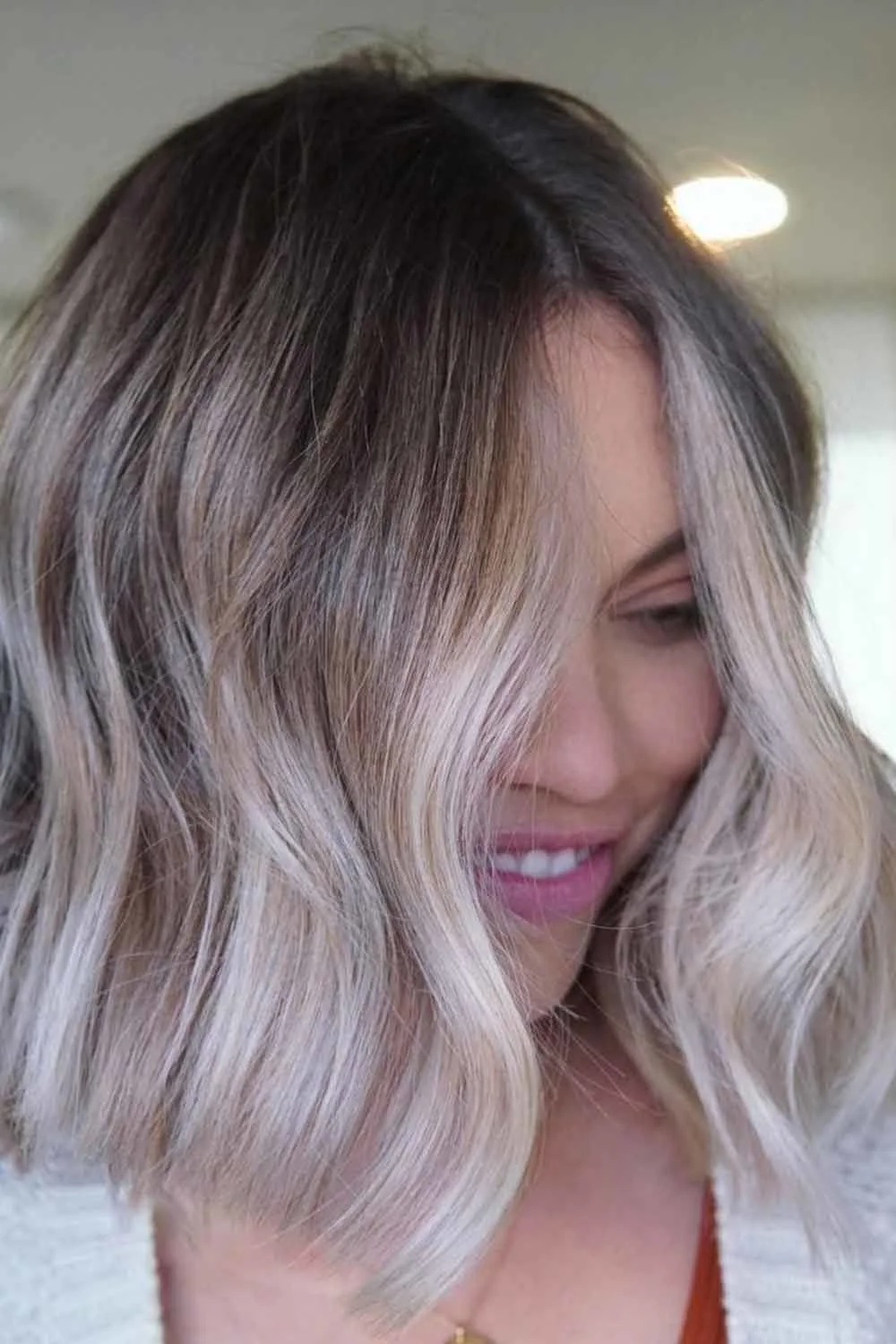
Idea 04
Pale Front With Dark Roots
Here the front lightness does much of the work. Pale blonde sections frame the face while the upper hair remains noticeably deeper, creating a bright opening without an all-over white appearance at the scalp.
- Placement
- Bright front
- Roots
- Dark contrast
The large waves fold away from the face and expose the contrast between the darker crown and light sides. The ends are loosely separated, so this is a soft, dimensional finish rather than a dense, uniform sheet.
Wearability note: This is worth saving when face-side brightness matters more than a completely pale root. Tell your colorist which front pieces you want to stay light, and compare that preference with how you normally part your hair.
Idea 05
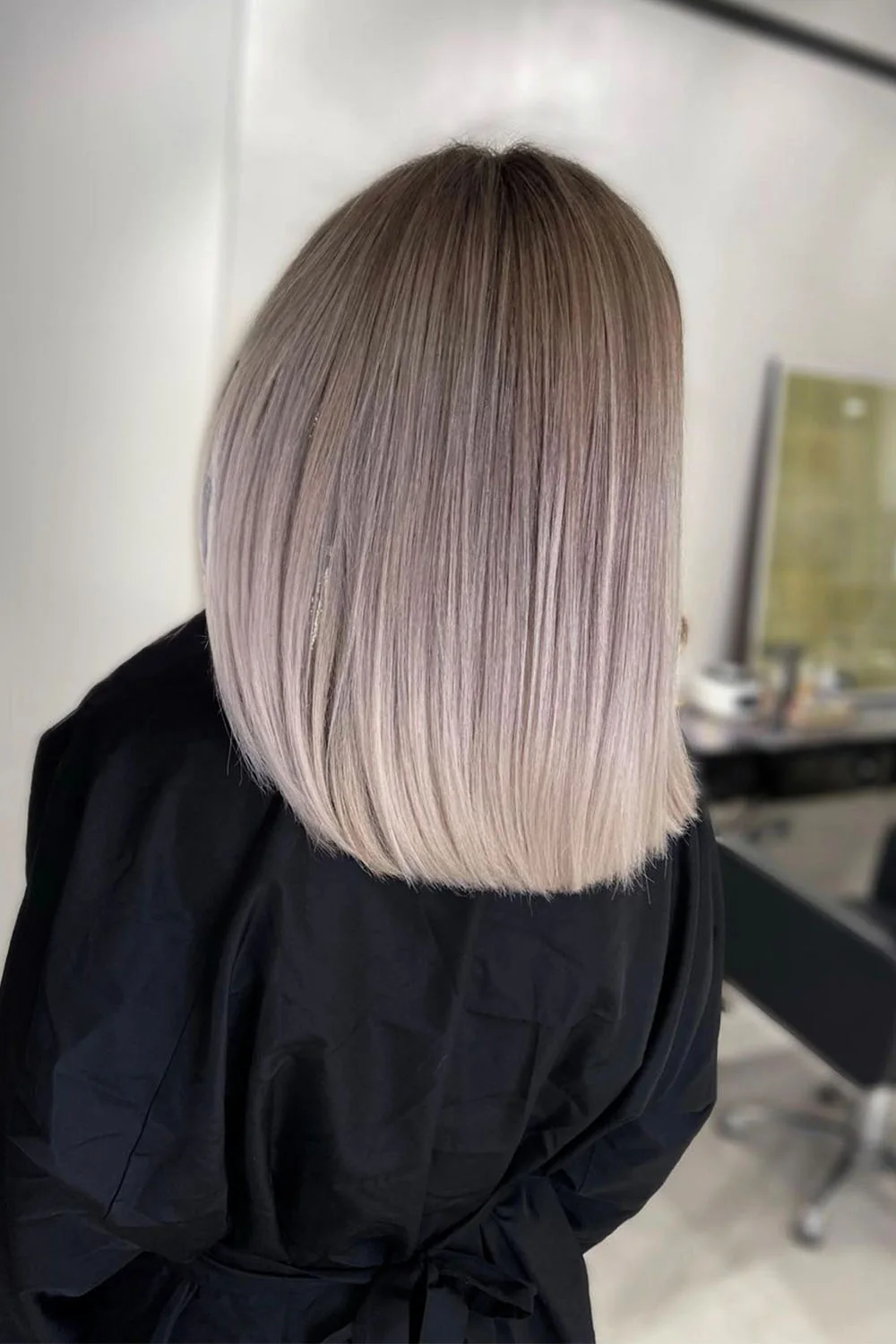
Straight Rooted Platinum Lob
The straight finish makes the color blend easy to see without curls disguising the transition. Light blonde extends down a compact lob while the darker upper area fades into it rather than ending abruptly.
- Shape
- Straight lob
- Placement
- Blended roots
A nearly level perimeter keeps the bottom looking substantial. Fine vertical variations in the pale section add detail, but the outline remains simple, with very little visible outward movement or layering through the back.
Wearability note: Choose this photo if you want a neat everyday outline alongside pale color. Confirm the desired length when your hair is dry and uncurled, since even a small change at the shoulders can alter how the ends sit.
Idea 06
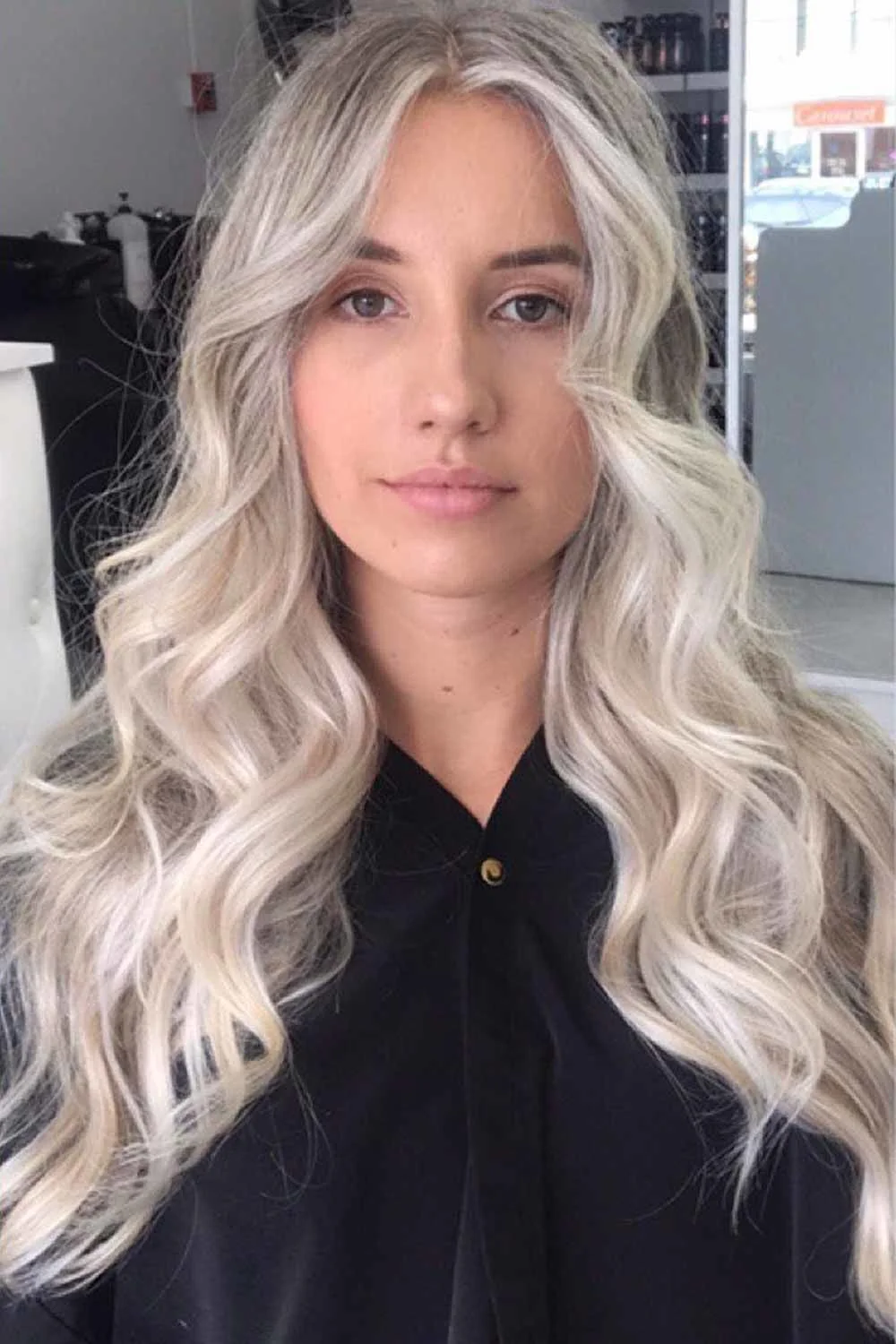
Light Blonde Spiral Waves
Lightness sits throughout the long sides, while a modest darker root keeps the part visible. The pale curls give a bright impression around the face without hiding the deeper color along the top.
- Length
- Long
- Finish
- Defined curls
The waves are more defined here than in the loose back-view examples, with several rounded spirals falling forward. That shape creates apparent width through the lower sides, so the fullness belongs partly to styling rather than color alone.
Wearability note: Use the photo to decide whether you want long pale sections near your face, not as proof that color adds density. If you prefer a less arranged finish, request the same placement with a looser wave reference alongside it.
Idea 07
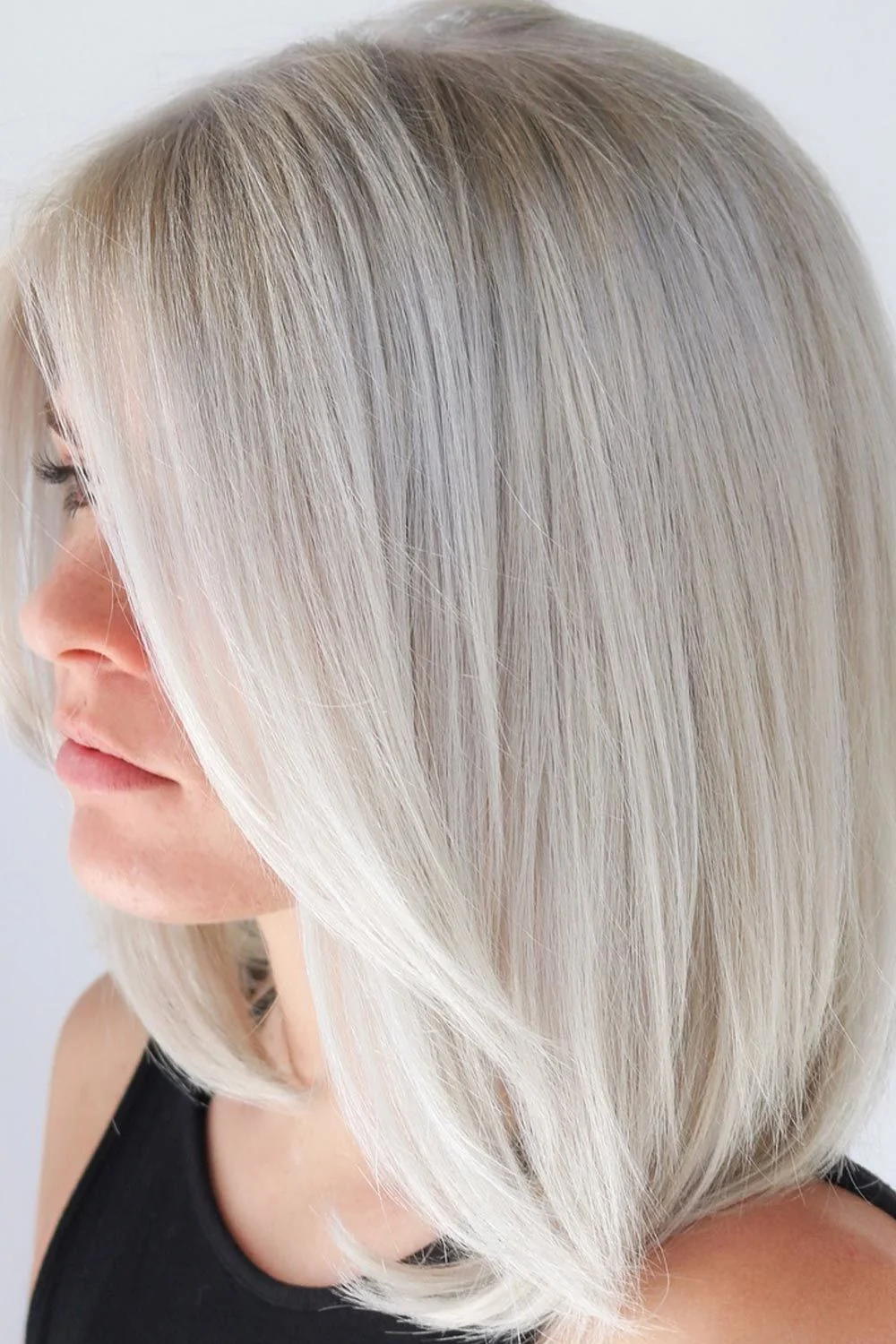
Smooth White-Blonde Bob
This pale bob puts the color beside a clean perimeter. The white-blonde impression is strongest through the front, where a smooth panel falls past the cheek and keeps the face frame uninterrupted by short fringe.
- Shape
- Smooth bob
- Front
- Long face frame
The side view shows the ends turning slightly inward rather than hanging rigidly flat. Subtle darker strands near the upper hair add depth, but the visible surface remains very light and evenly arranged through the lower section.
Wearability note: The inward curve is a finish to discuss separately from the cut. Save this when you want a compact pale bob, and show a straight view too if you need the stylist to judge the precise front-to-back length.
Idea 08
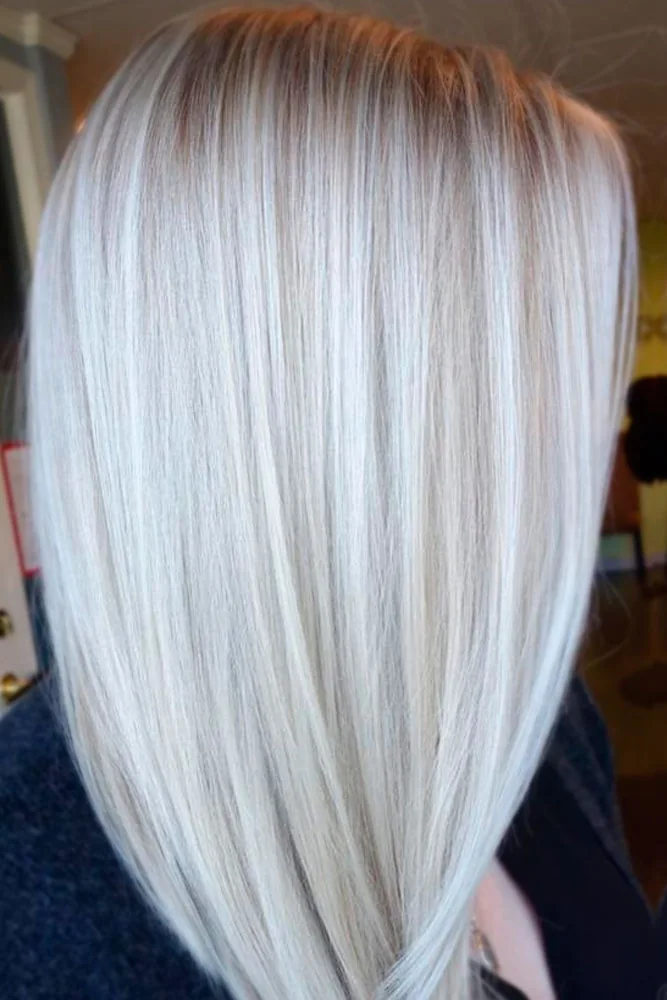
Icy Straight Blonde Lengths
The nearly white length is the main feature, with very little wave to soften its impact. A straight finish lets you see how far the pale color travels and how narrow the lower outline becomes.
- Tone
- Icy blonde
- Finish
- Straight
The bottom forms a gentle taper instead of a completely horizontal edge. Cooler shaded lines remain between the lighter panels, preventing the hair from reading as a blank white shape despite the strong overall brightness.
Wearability note: This is a useful reference for a cool, streamlined color result. Keep the taper in mind if you want fuller-looking ends; a straighter perimeter would make a different silhouette even with the same very pale shade.
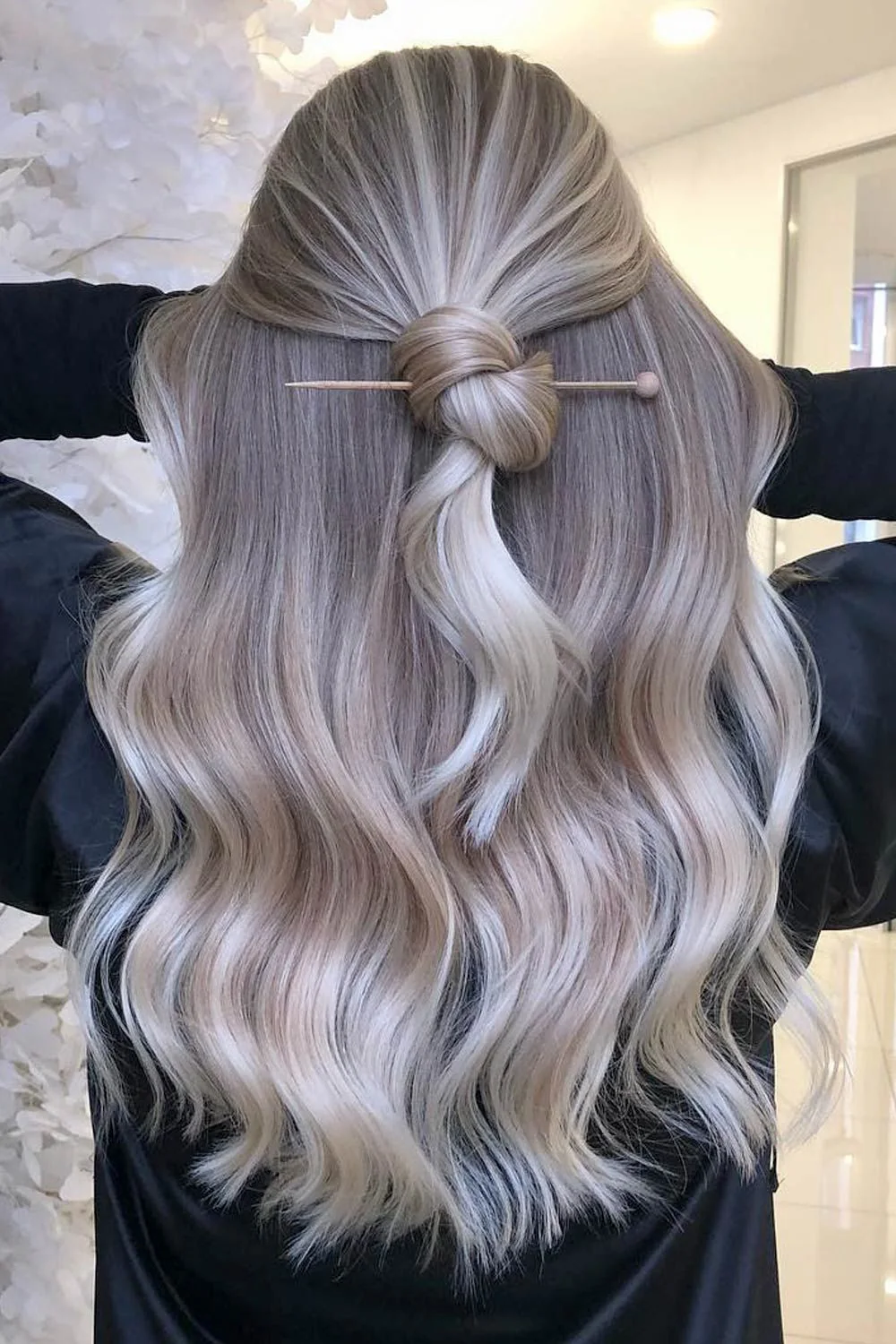
Idea 09
Silver-Blonde Half-Up Knot
A small knot reveals the shaded root and the pale lower sections in the same frame. The color is visible both where the hair is gathered and where it falls loose, showing a soft contrast rather than a hard dividing line.
- Tone
- Silver blonde
- Styling
- Half-up knot
Large rounded waves sit below the knot, with cool blonde on their outer curves. The upper sides sweep back cleanly, leaving the central knot as a compact detail instead of the dominant visual feature.
Wearability note: Save this for the placement, even if you rarely wear half-up styles. Gathering the front can reveal darker sections that disappear when the hair is down, so mention how often you pull your hair back during a color consultation.
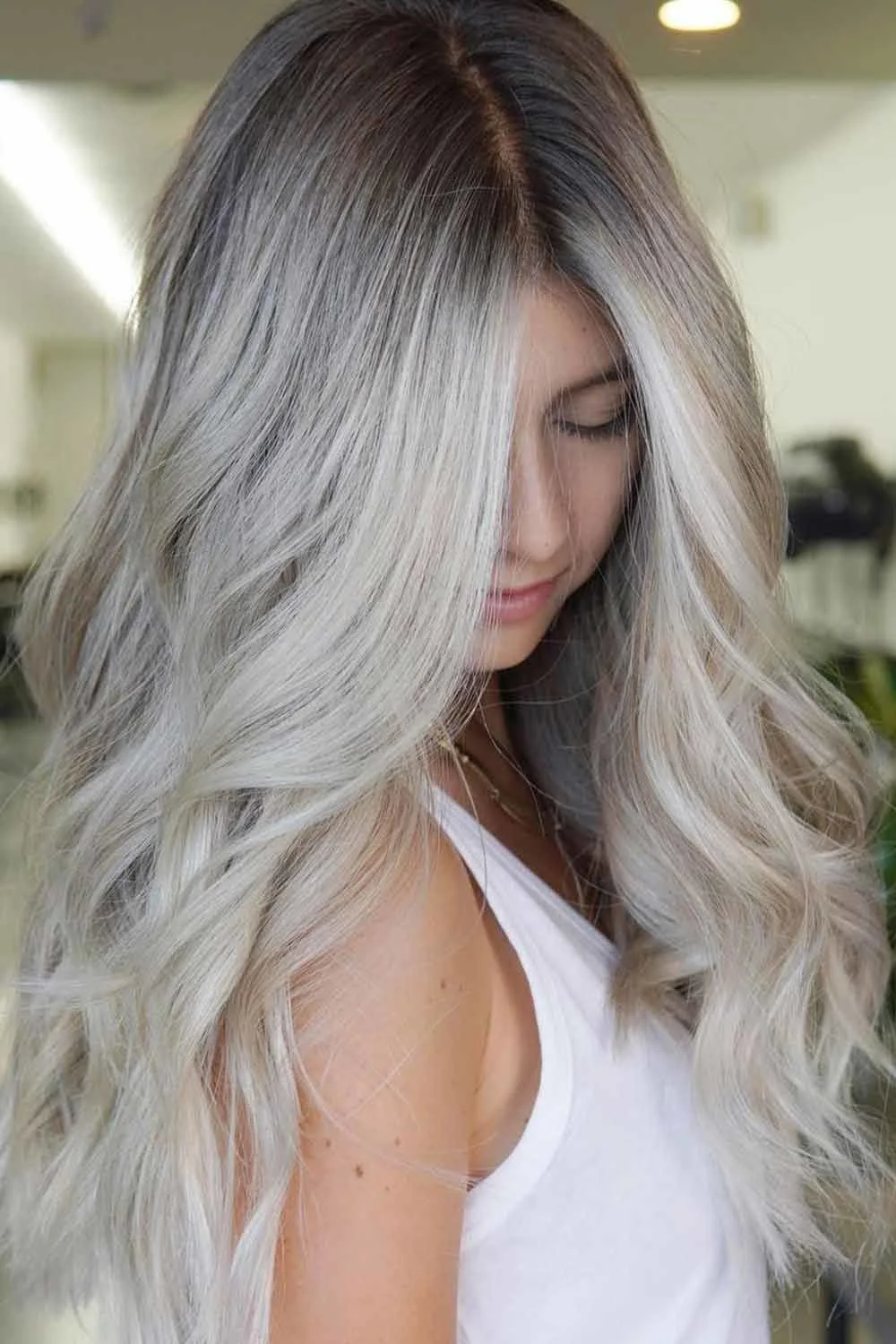
Idea 10
Cool Blonde Face-Framing Waves
The pale face frame is pronounced against the deeper crown. It makes this a useful choice for someone drawn to platinum near the face but not to a uniformly light surface from root to tip.
- Placement
- Pale face frame
- Texture
- Long waves
Long waves open away from the front, displaying broad blonde ribbons through the sides. The lower hair looks bright and soft, while the upper shading remains concentrated near the part rather than extending through every strand.
Wearability note: Compare the width of the bright front section with what you would actually wear. A strong face frame is more noticeable when the hair is tied back, and its placement should follow your usual part rather than only the photo pose.
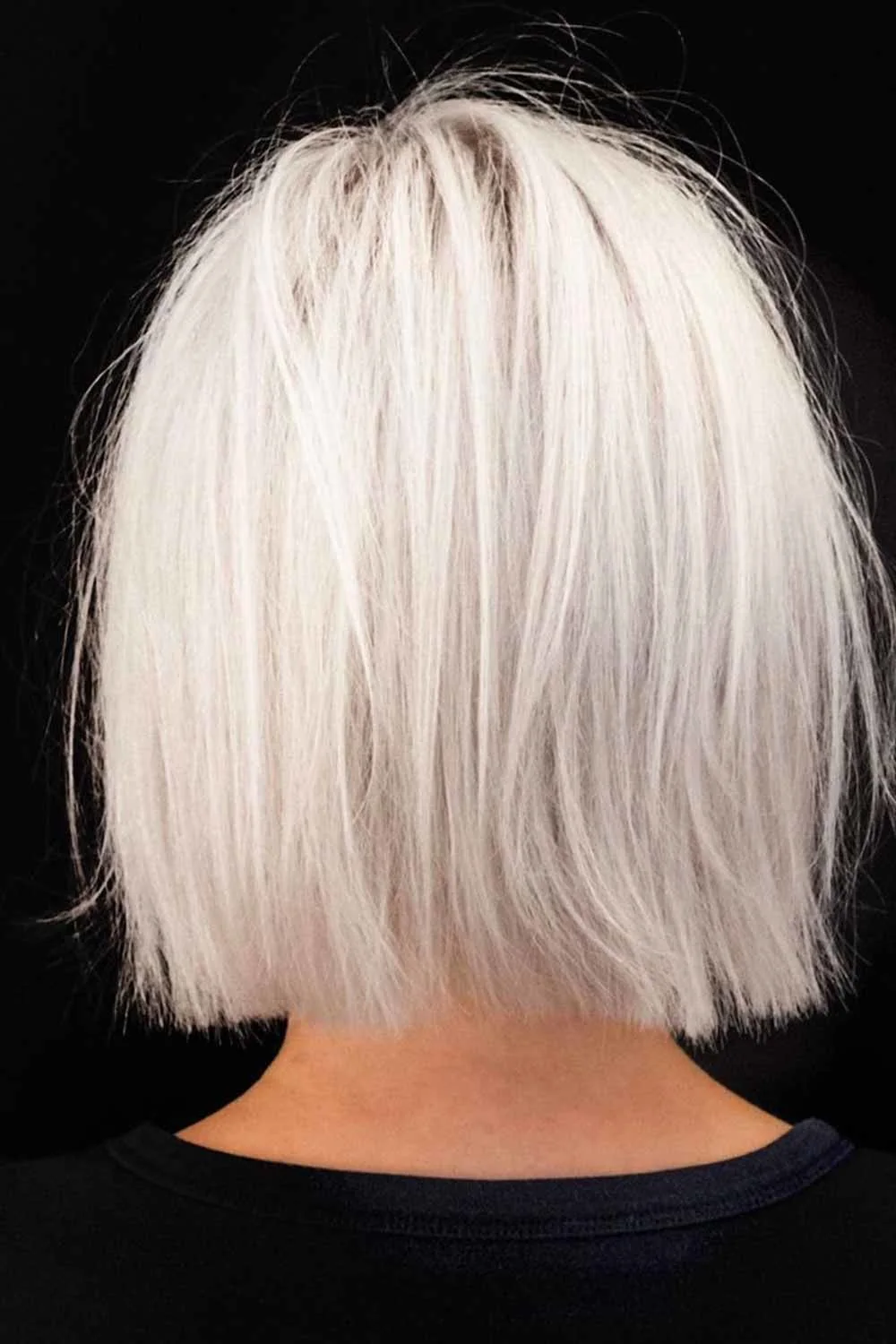
Idea 11
Pale Blunt Blonde Bob
This bob gives pale color a compact, almost squared-off shape. The bottom looks much more level than the long tapered example, keeping the brightest section gathered into a solid-looking edge at the back.
- Length
- Bob
- Edge
- Blunt-looking
The surface has slight natural separation instead of a highly polished curve. Light blonde extends across the visible back, with a small amount of root depth above it, so the color impression stays bright without requiring long flowing sections.
Wearability note: Bring this photo when the perimeter matters as much as the shade. Ask how much length should remain to keep the bottom looking substantial on your own hair, especially if you do not plan to curl or bend it daily.
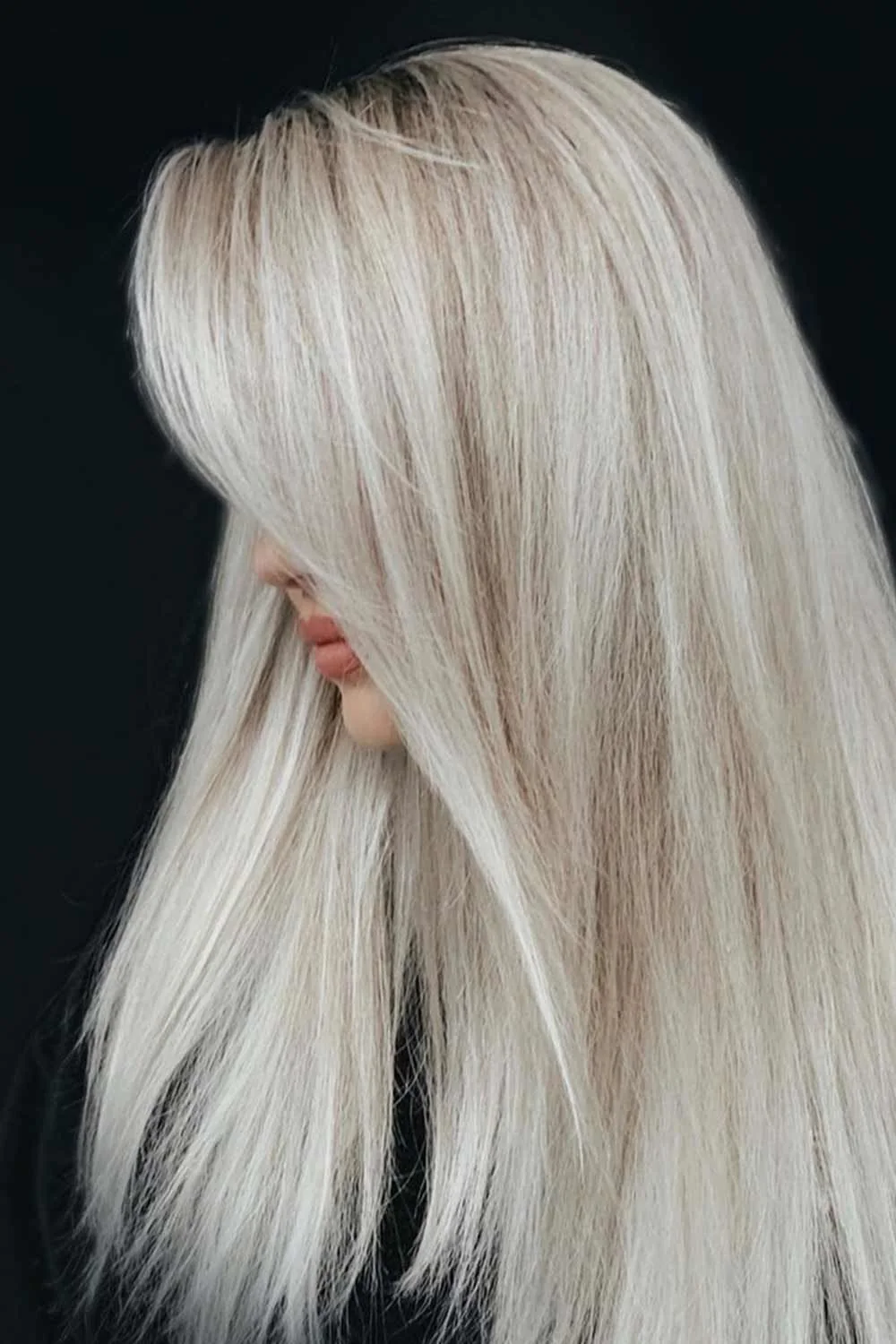
Idea 12
Creamy Straight Platinum Hair
A creamy platinum tone can feel gentler than the silver examples without becoming strongly golden. Here the light sections fall in long, relatively straight panels, making the overall brightness the feature rather than an elaborate styled shape.
- Tone
- Creamy pale blonde
- Finish
- Straight
The front is long and uninterrupted, with the face partly hidden by the pale side section. Ends separate lightly at the bottom, and the surface has small tonal differences that stop the color looking completely flat.
Wearability note: Use this to discuss a neutral-to-creamy pale finish rather than an exact shade formula. The hidden part limits what the photo tells you about root placement, so pair it with a clearer scalp view if that detail matters.
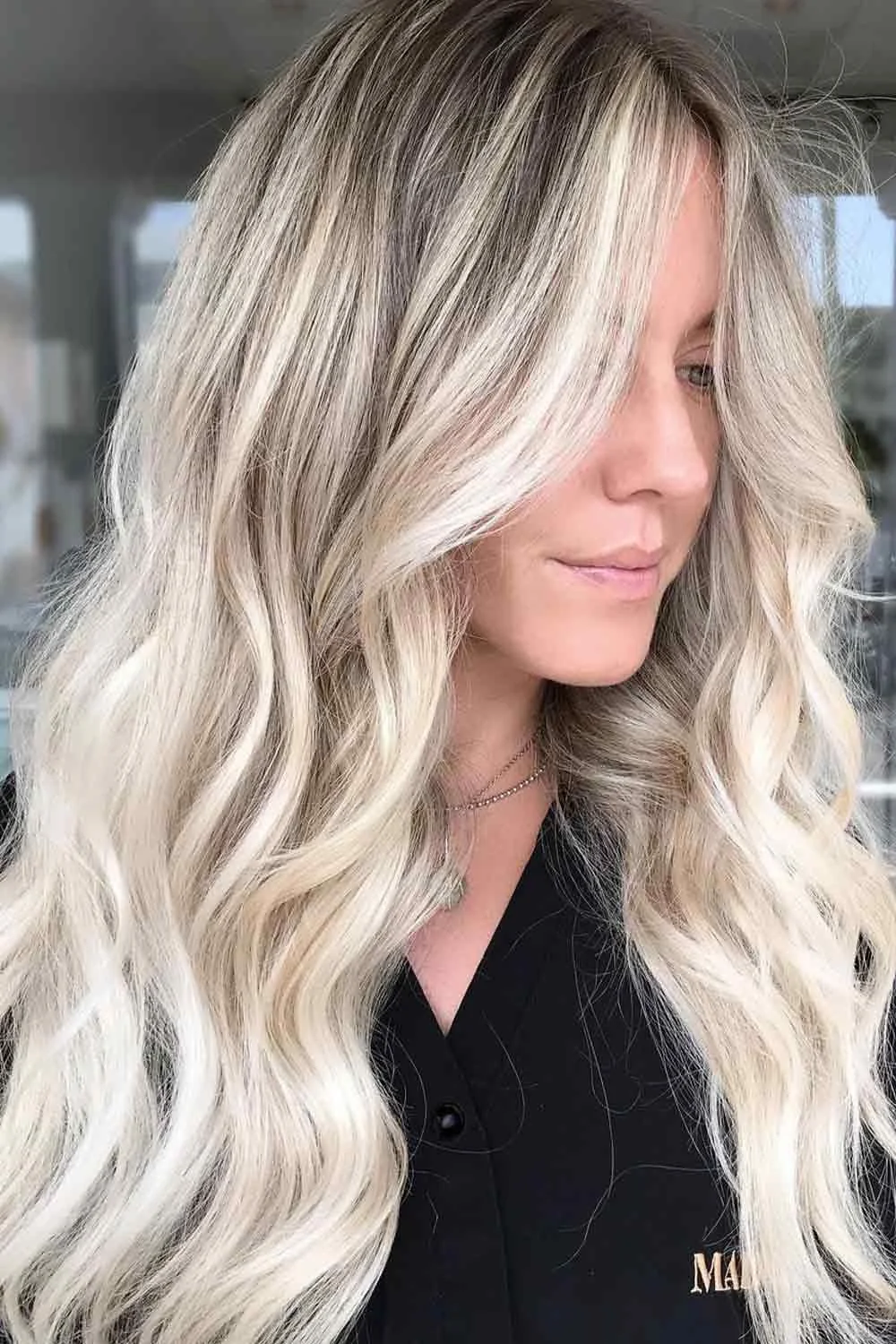
Idea 13
Rooted Blonde With Broad Waves
The broad waves make pale blonde look airy rather than sharply graphic. A shaded root remains visible at the top, but the lighter sections quickly take over through the face-side lengths and most of the lower hair.
- Roots
- Soft shading
- Texture
- Broad waves
Each bend holds a wide reflective panel with a darker crease beside it. The arrangement emphasizes movement across the length without a heavy fringe, letting the light color remain the main frame around the face.
Wearability note: This reference suits a discussion about soft contrast, not just maximum brightness. Decide whether you want this much wave definition for everyday wear, because a straighter finish will show the color blend with fewer alternating bands of light and shade.
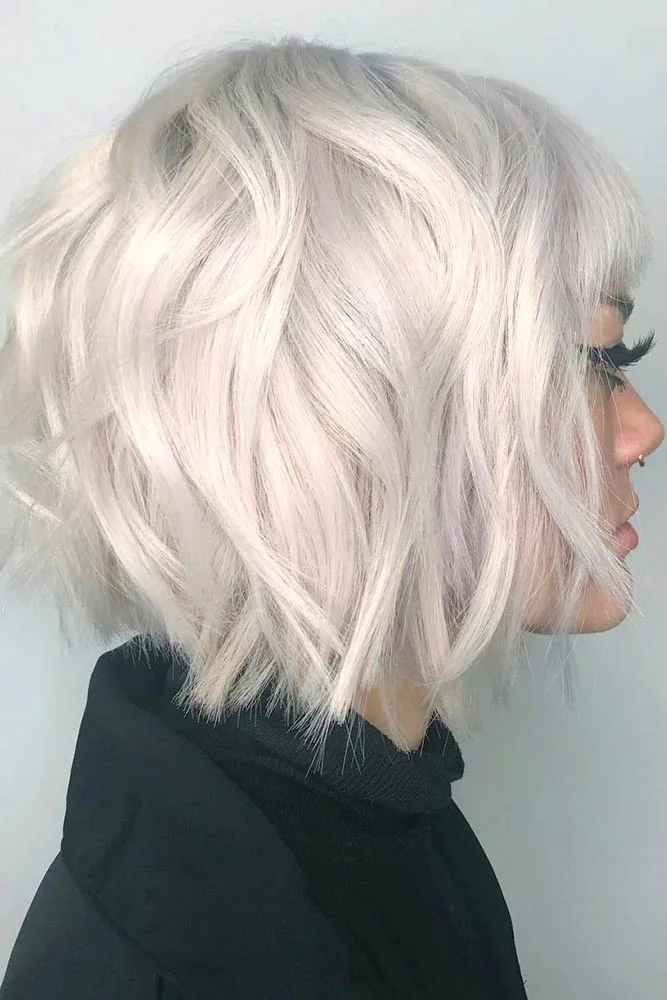
Idea 14
Textured White-Blonde Bob
The short pale shape is deliberately broken into small sections. That separation gives a white-blonde bob movement without relying on a dramatic dark base or a very large difference between the root and the ends.
- Shape
- Textured bob
- Finish
- Separated bends
The side pieces curve in several directions, and the lower edge looks softer than a blunt straight bob. A long front section falls toward the face, keeping the silhouette asymmetric in the photograph without proving an asymmetric cut.
Wearability note: Choose this for a lightly tousled finish, not for a precise cutting diagram. If you want to keep the same pale shade but prefer a tidy outline, show the smooth bob elsewhere in the gallery as your perimeter reference.
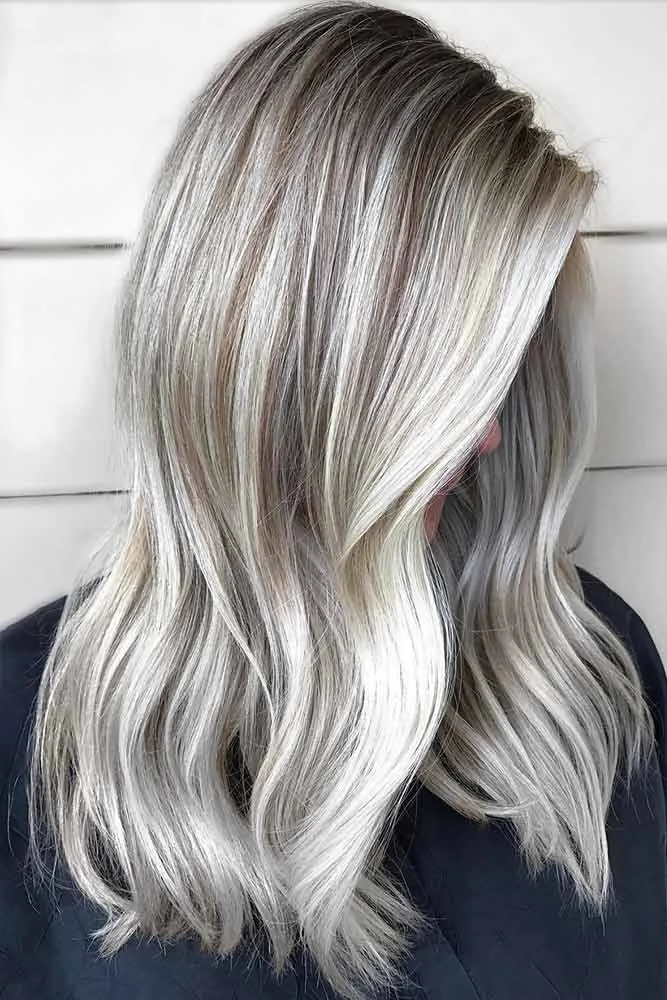
Idea 15
Silver Ribbons Through Waves
Fine pale ribbons keep a deeper base visible through the upper sides. This is a more dimensional route to a platinum impression than a uniformly light bob, with alternating cool light and shadow along the same wave.
- Placement
- Pale ribbons
- Contrast
- Deeper base
The broad bends fall toward the shoulder area and make the tonal strips easy to compare. The part is not fully visible, but the dark-to-light relationship along the upper side is clear enough to serve as a placement reference.
Wearability note: Save this when you want contrast within the lengths as well as at the roots. Ask which visible pale ribbons are important to you; simply requesting platinum could lead to a much more uniform result than this image suggests.
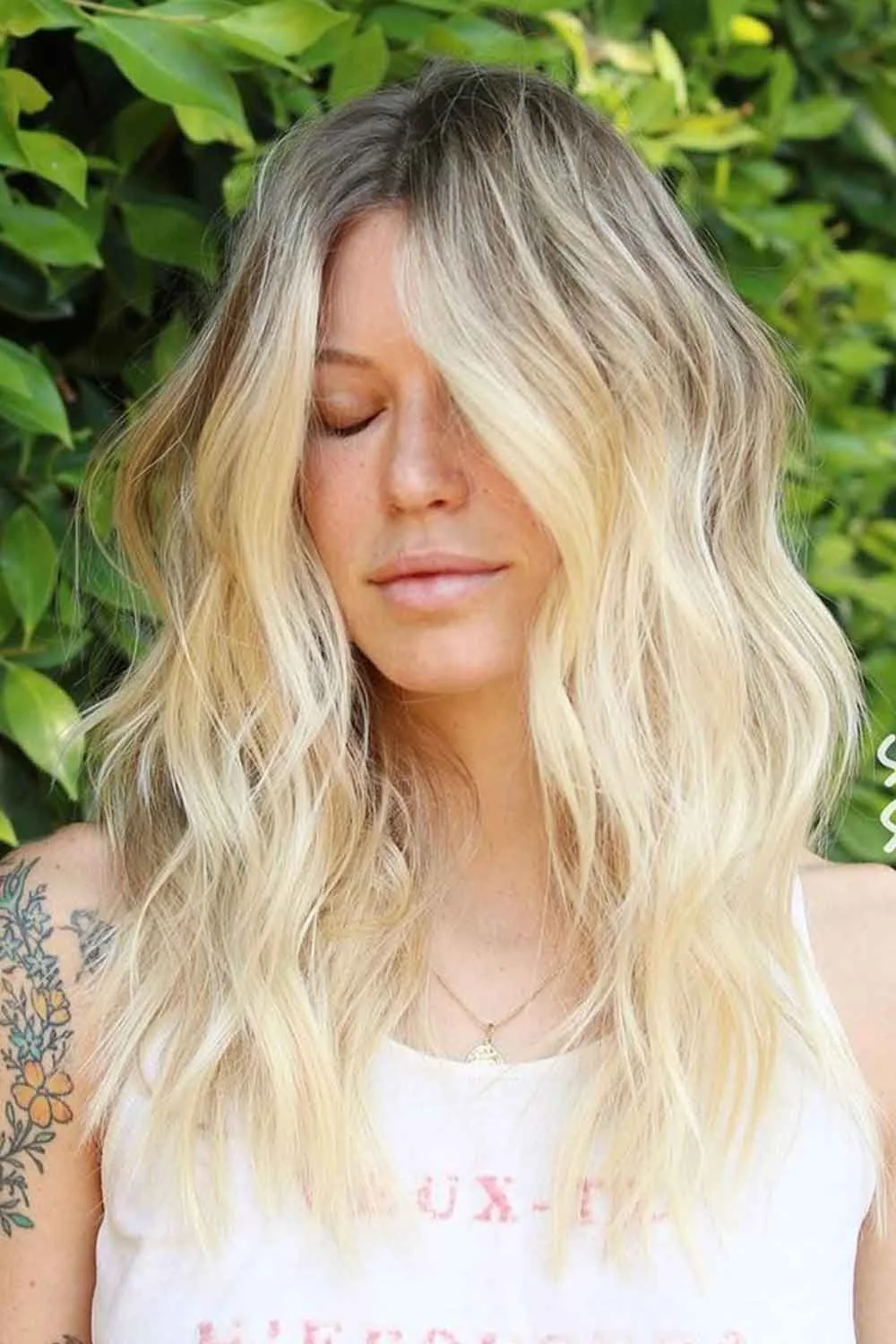
Idea 16
Soft Pale Blonde With Root Depth
The darker upper area is softened by pale pieces near the face. It creates a quieter rooted blonde than a stark black-and-white pairing, with the bright sections spread through the front rather than gathered into one solid panel.
- Placement
- Soft root blend
- Finish
- Loose waves
Loose, slightly irregular waves travel through the longer sides. The finish is less arranged than the spiral example, so the color reads through several small changes in direction and texture rather than a repeating set of curls.
Wearability note: This is helpful if you want a relaxed finish around a very light color. Do not judge the tone from a single bright strand outdoors; show the whole image so the colorist can see the root depth and softer lower blend.
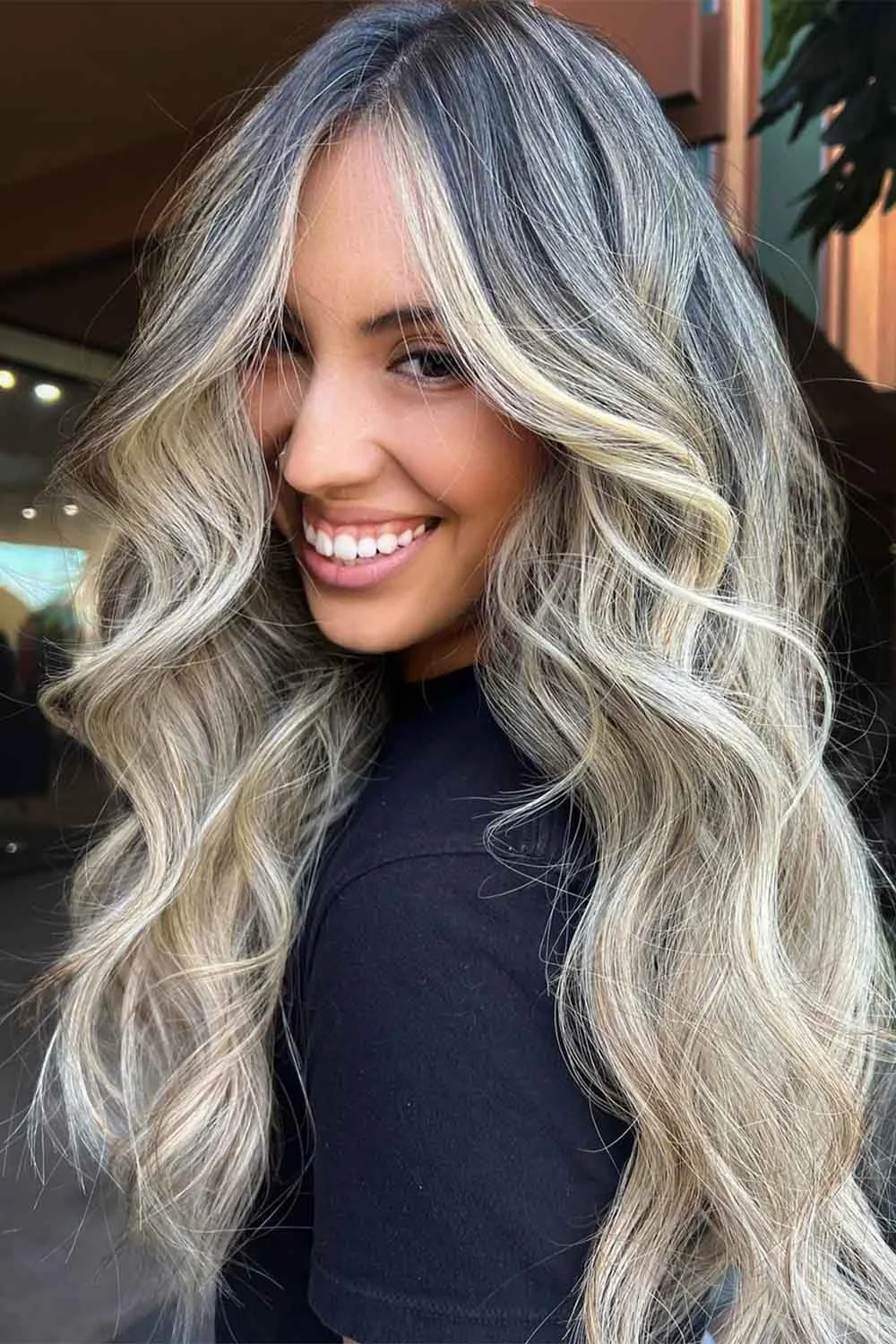
Idea 17
High-Contrast Silver Blonde
This is one of the strongest contrasts in the gallery. The root remains deep while pale silver-blonde sections sweep forward and continue into the long sides, creating a bright frame without disguising the darker starting area.
- Contrast
- Dark and pale
- Front
- Bright sections
Large waves make the light ribbons broad and easy to see. The top and the front do not share the same brightness, which is an important distinction if you are comparing this photo with the more evenly pale straight examples.
Wearability note: Treat the dark base as an intentional choice when saving this look. Discuss where the lighter pieces should begin around your own part, and whether the contrast you like still feels comfortable when the hair is worn tied back.
Separate tone from brightness
A creamy white blonde and a blue-silver blonde may be equally light but read very differently beside your complexion. Look at the less reflective areas of each photo; bright highlights alone are an unreliable guide to the overall shade.
Bring a placement reference
Show the root area, the front pieces and the ends to your colorist. The starting color, previous services and hair condition matter more than whether a photo is labeled platinum. This gallery is inspiration, not a promise of a particular lightening result.

About the author
Bella Ross
Bella Ross is the hairstyle editor behind Latest Easy Hairstyles. She curates practical haircut, braid, color, and styling ideas with a focus on looks that are easy to browse, realistic to recreate, and useful for everyday hair decisions.