
Before you choose
Choose where the blonde begins
Blonde ombre describes a dark-to-light color impression, but the change need not be a hard stripe. Some references keep a large brown area at the top; others leave only a little root depth above a mostly pale result.
Look beyond the word blonde. Choose how much of the hairstyle should remain dark, where the lighter area starts and whether you prefer a warm golden or cooler-looking finish.
The hairstyle gallery
15 dark-to-light color placements
These photos range from subtle root depth to an obvious darker upper half. Compare the height and width of the transition; the images do not establish how the hair was colored.
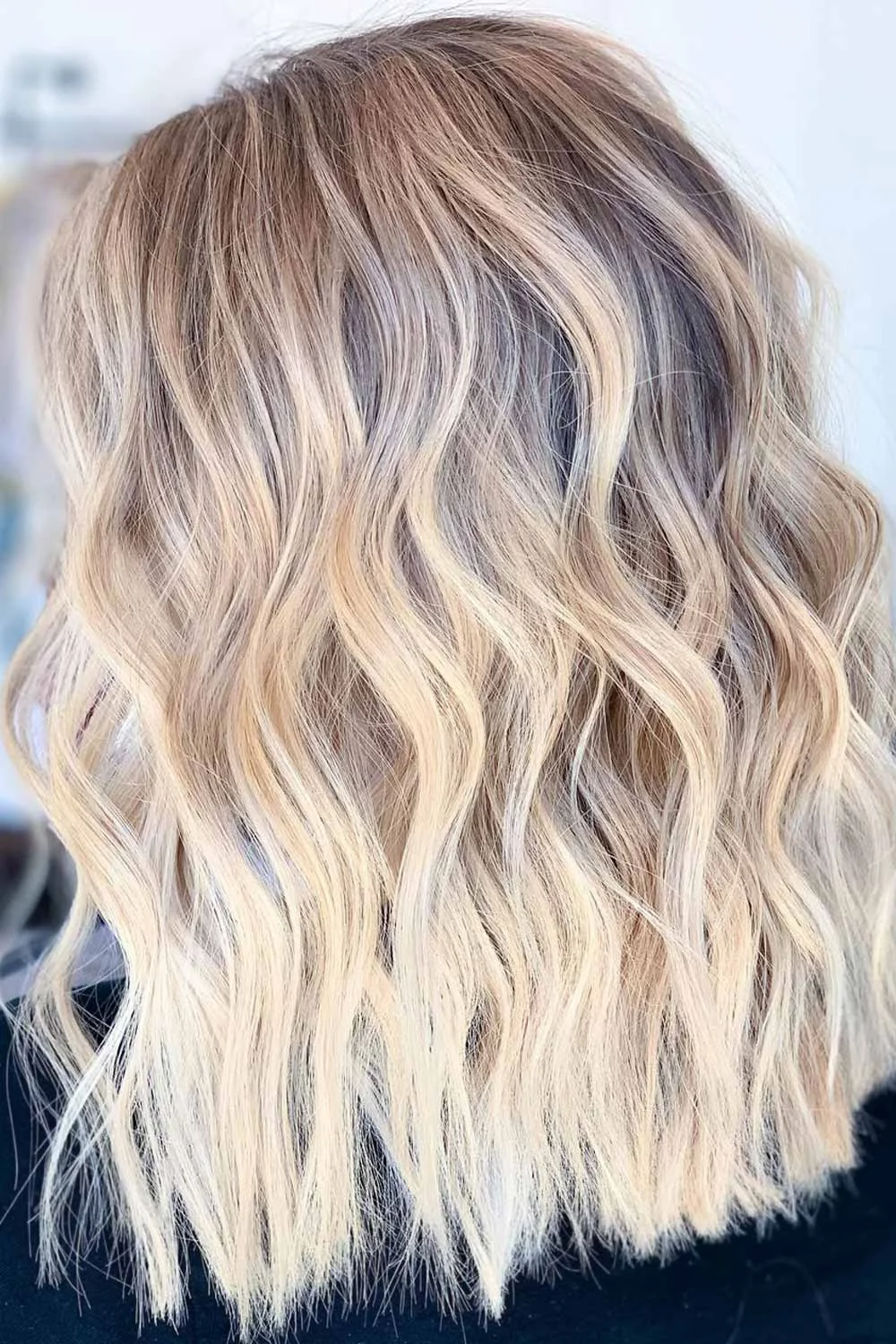
Idea 01
Cool Blonde Ends on a Short Wavy Shape
The darker area is concentrated near the top while pale ends occupy most of the short silhouette.
- Length
- Short
- Top
- Darker
- Ends
- Pale blonde
The hair bends outward in separated waves around the neck and shoulders. A deeper brown-gray area is visible near the crown, becoming paler through the middle. The lower edge has light, uneven tips rather than a solid dark perimeter, so the blonde finish remains clear across the back.
Wearability note: Choose this for a mostly light short result with root depth. Bring a straight cut reference if length matters; the photographed waves lift the ends and can make the same haircut appear shorter than it rests naturally.
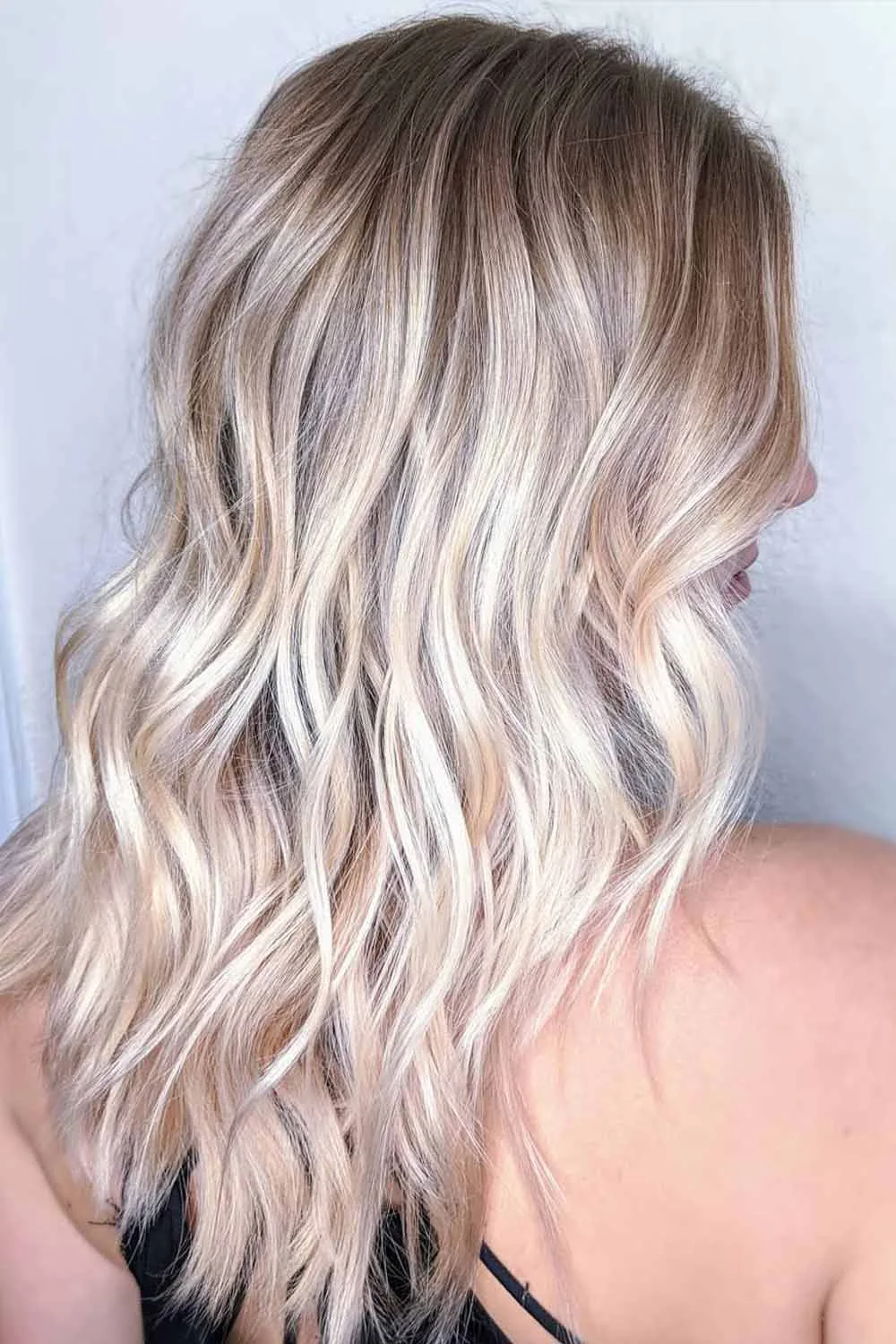
Idea 02
Brown-to-Pale Blonde Shoulder Waves
The mixed middle softens the change between the brown crown and brighter lower bends.
- Length
- Shoulder
- Top
- Brown
- Transition
- Soft blend
The top looks brown, with narrow lighter pieces visible before the hair reaches the main waves. Pale strands become more prominent around the shoulder-level curves and separated ends. Darker lines continue between them, preventing the lower half from looking like one flat, unbroken light block.
Wearability note: Use this if you want a gentle transition at a moderate length. Show the brown area you would like to retain, and discuss whether the front should brighten at the same height as the back shown here.
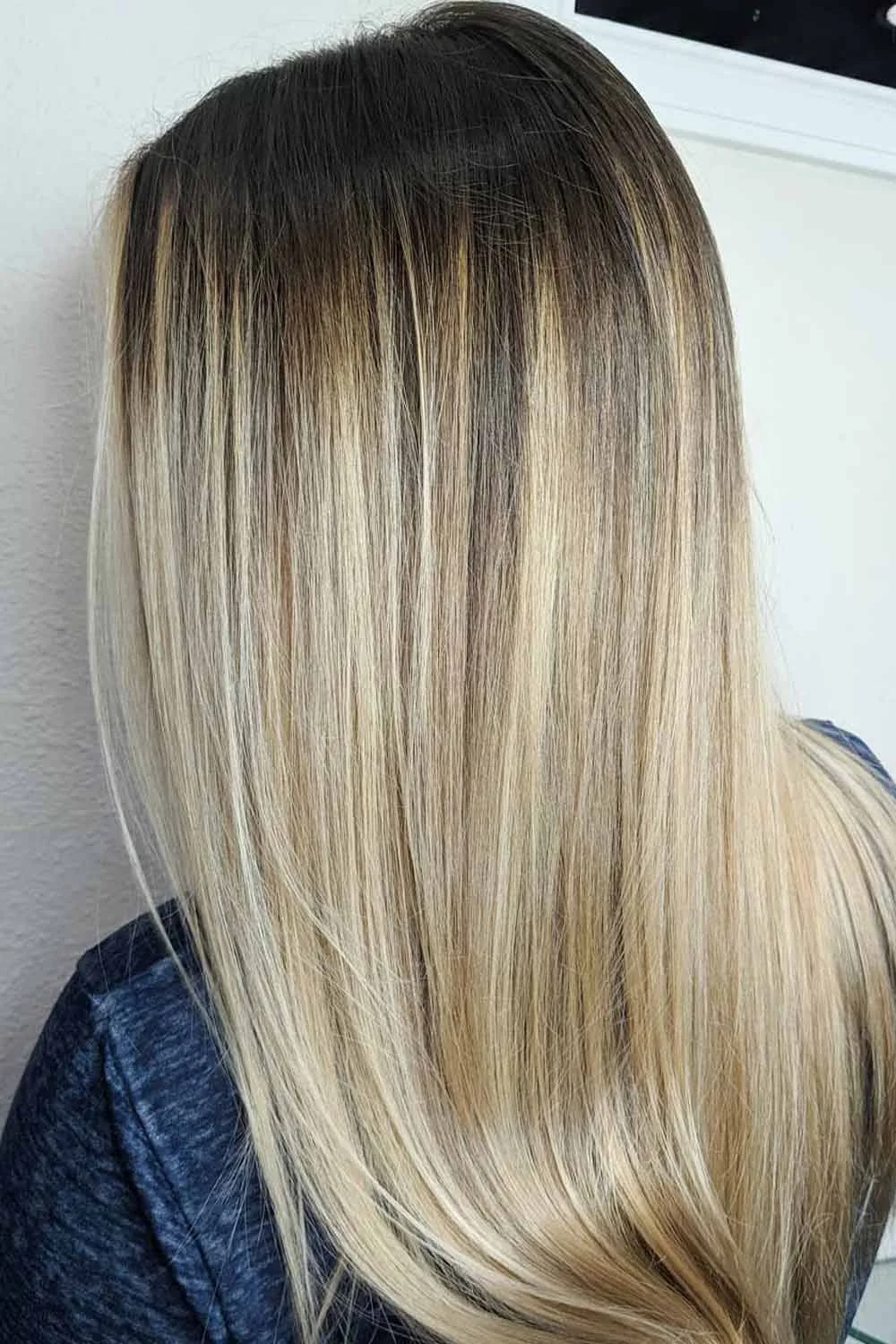
Idea 03
Straight Brown-to-Blonde Lengths
The smooth surface makes the length of the darker upper area especially easy to compare.
- Finish
- Straight
- Top
- Deep brown
- Ends
- Blonde
A dark section occupies the crown before fine lighter lines become visible through the middle. The lower lengths read pale blonde and remain straight, with a softly curved edge at the bottom. There are no arranged curls hiding the progression, so the color change appears as a long vertical fade.
Wearability note: Save this when you usually wear your hair smooth. Ask to see a straight view of the proposed result, and mark where the brighter area should begin rather than using a curled photograph to explain every part of the transition.
Choose your direction
Depth
Decide whether you want a small dark root or a broad darker upper area.
Tone
Compare golden ends with cooler-looking blonde in similar light.
Finish
Save a straight reference if that is how you normally wear your hair.
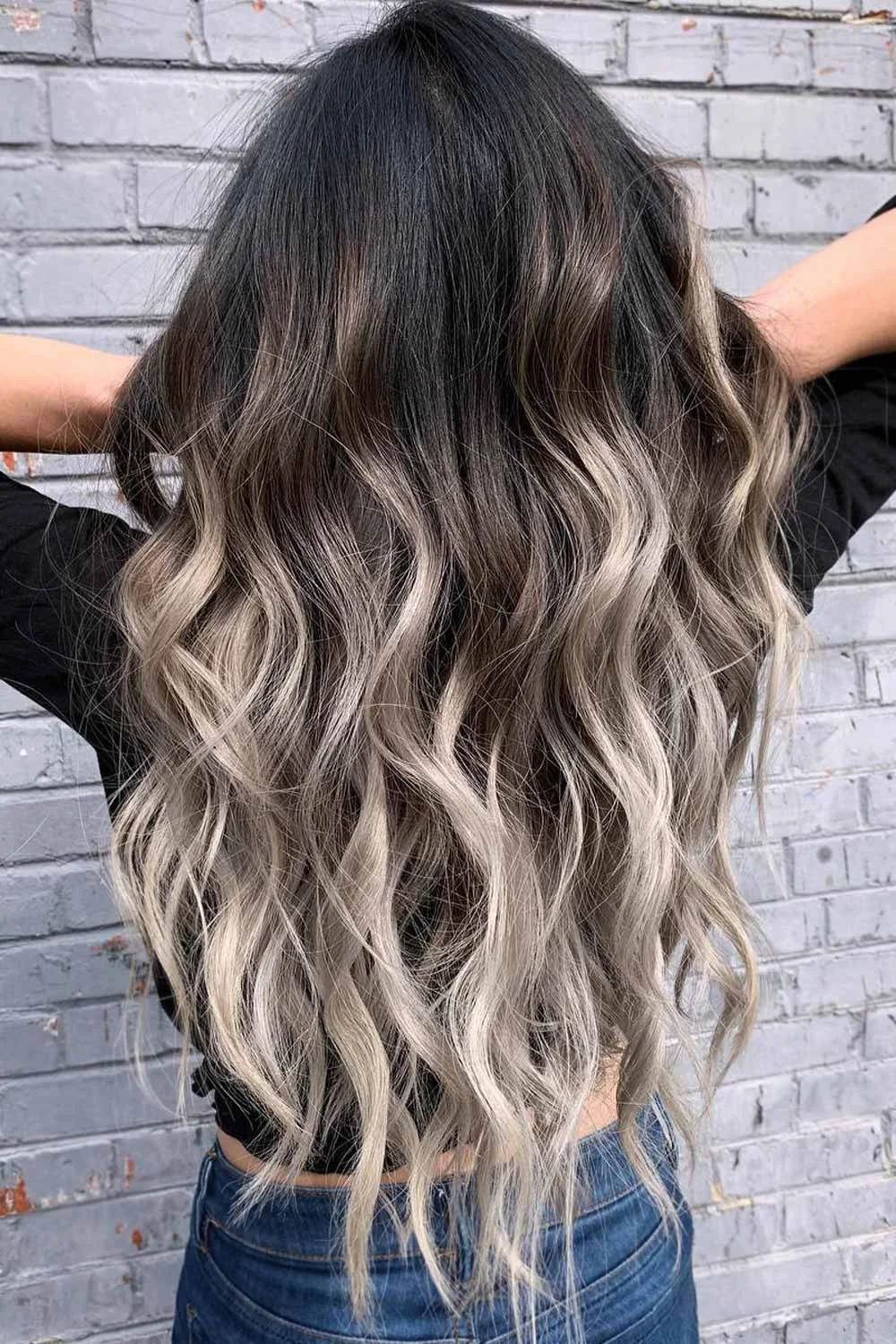
Idea 04
Deep Roots With Pale Curled Ends
A substantial dark upper area creates stronger contrast with the pale lower curls.
- Top
- Deep dark
- Length
- Long
- Finish
- Separated waves
The upper surface remains dark through the crown and down several strands. Lower waves open to reveal pale blonde ribbons, with dark sections remaining inside the bends. The ends are separated and irregular, so the bright lower half has movement rather than forming a sharp, straight horizontal boundary.
Wearability note: Choose this for a clearly dark-to-light result. Show both the depth at the top and the proportion of pale hair below; simply asking for lighter ends could produce a much smaller bright area than this back view.
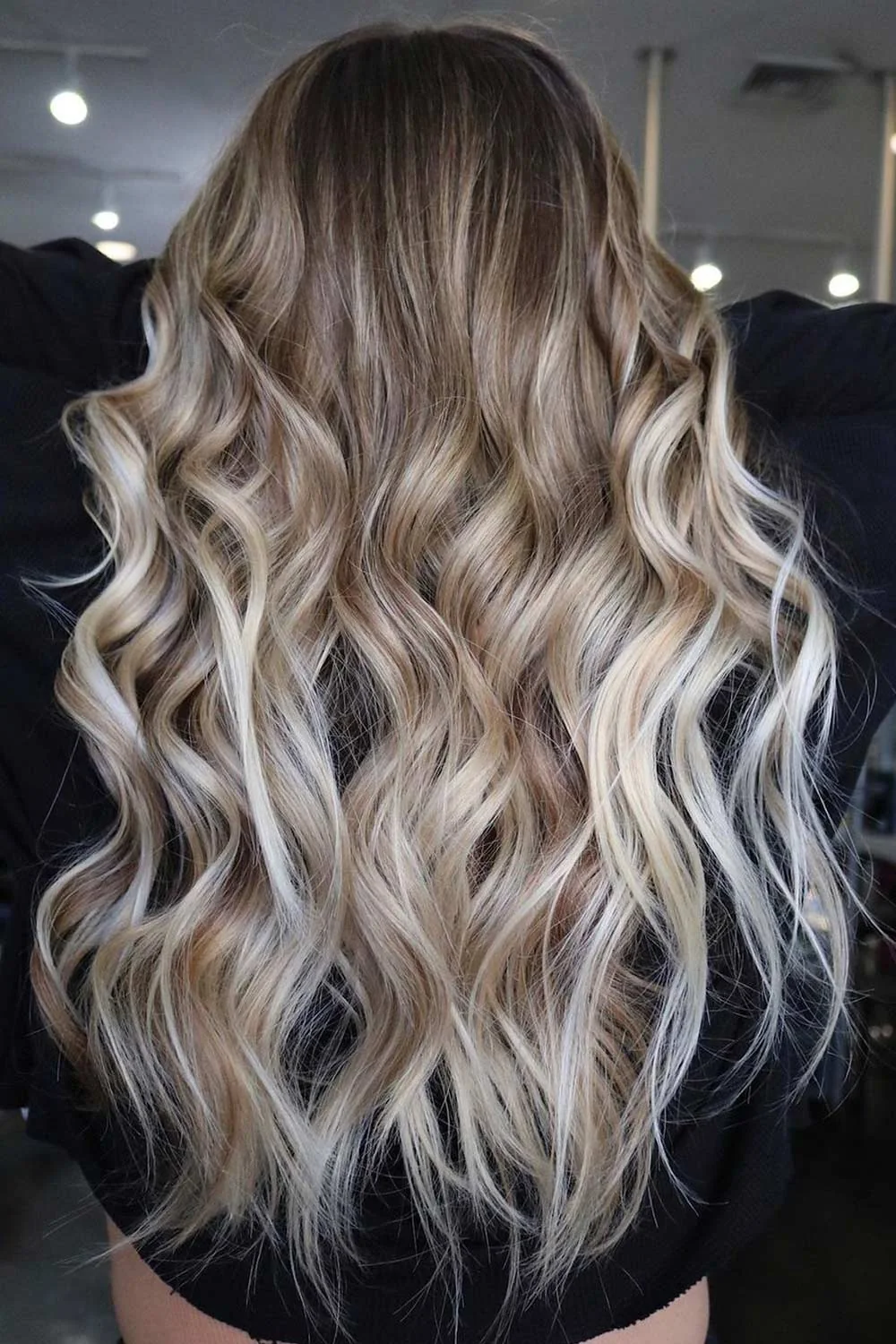
Idea 05
Pale Ribbons Beneath a Brown Crown
Light strands become broader through the lower lengths while brown remains visible between them.
- Top
- Brown
- Detail
- Pale ribbons
- Finish
- Loose waves
The crown is deeper and comparatively smooth. Through the middle, the hair bends into large waves that expose pale edges around darker inner sections. The bottom is much lighter overall, with narrow tips continuing below the last bends instead of joining into one blunt light-colored line.
Wearability note: Use this for a mixed transition rather than a clean color boundary. Compare the visible brown spaces with the brighter references in the gallery, and tell your colorist whether those darker lines should remain obvious after the lightness is added.
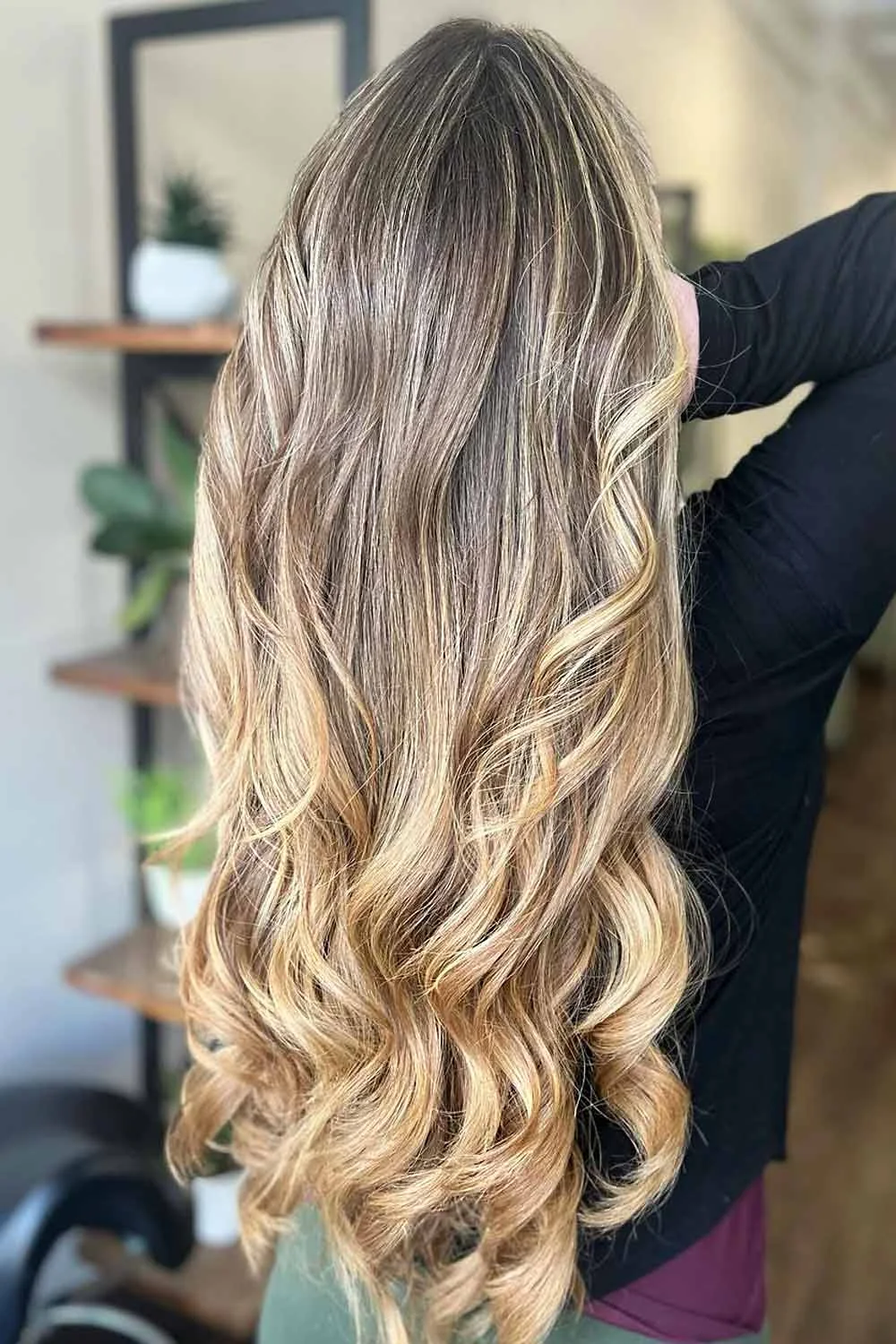
Idea 06
Golden Lower Curls on Brown Hair
The brightest golden pieces are concentrated around the large curls below the darker upper section.
- Top
- Brown
- Ends
- Golden blonde
- Finish
- Large curls
The top and middle retain brown depth, with light strands beginning at different heights. Toward the ends, the curls show warm golden edges against darker inner sections. The lower outline is full and rounded from the arranged bends, making the color seem more concentrated wherever those curves face the light.
Wearability note: Save this for warm blonde ends with a substantial brown background. Treat the curled finish separately from the coloring request, and compare a straighter view if you want to judge how much blonde would remain visible without the large loops.
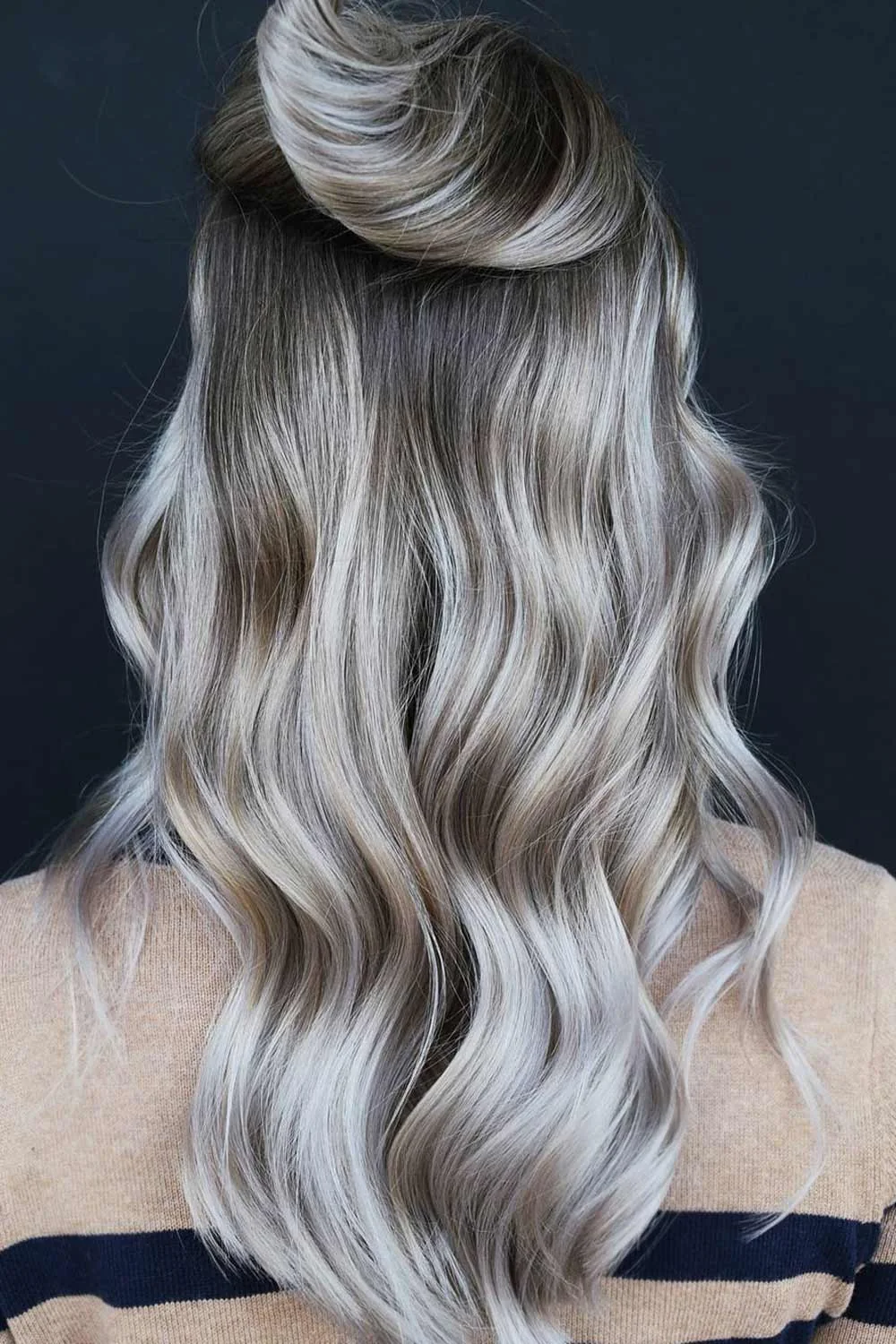
Idea 07
Cool Pale Waves With Dark Root Depth
The very light lower surface makes the dark root area a distinct feature rather than a faint shadow.
- Roots
- Dark depth
- Ends
- Cool pale
- Finish
- Broad waves
A small upper section is lifted into a rounded gathering, exposing the deeper hair beneath it. The remaining lengths fall in broad pale waves with darker strands visible near the top. The lower surface has a silver-neutral impression in this lighting, rather than the golden warmth seen in several other references.
Wearability note: Choose this for the contrast between a deeper top and a very pale finish. Use it to discuss placement, and confirm the tone in neutral light; a photograph cannot establish whether the cool appearance comes from color, lighting or both.
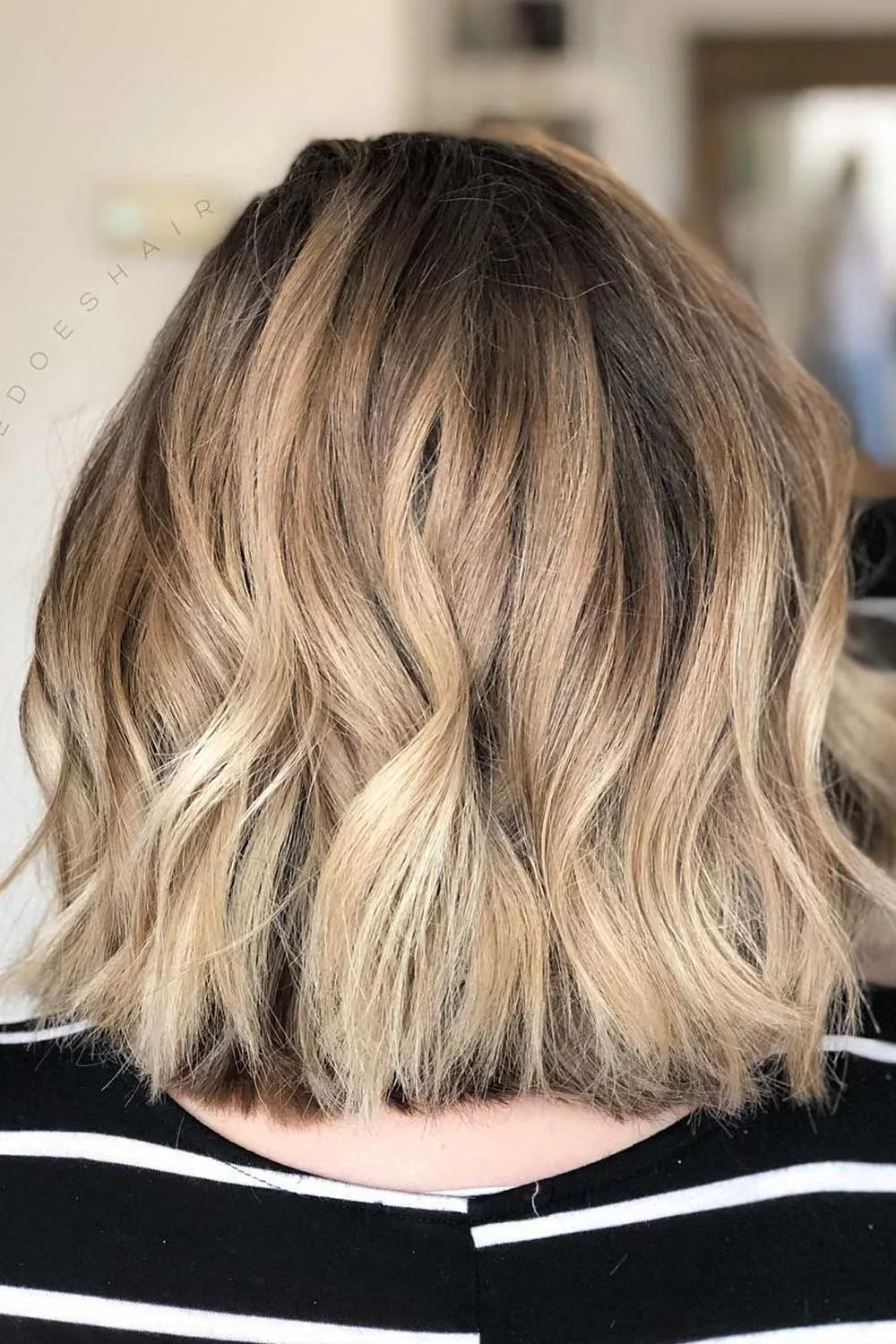
Idea 08
Root Depth on a Relaxed Blonde Lob
The darker root area stays relatively small compared with the lighter shoulder-skimming surface.
- Length
- Lob
- Roots
- Darker
- Ends
- Warm blonde
The crown has brown depth and the main lengths appear warm blonde. Loose irregular bends separate the lower hair, with flatter tips resting near the shoulders. Some deeper lines continue between the lighter pieces, but there is no large dark block extending halfway down the cut.
Wearability note: Use this if you want mostly blonde hair with a deeper top. Compare it with the long dark-rooted references before choosing; a small shaded root and a broad brown upper half give very different amounts of visible lightness.
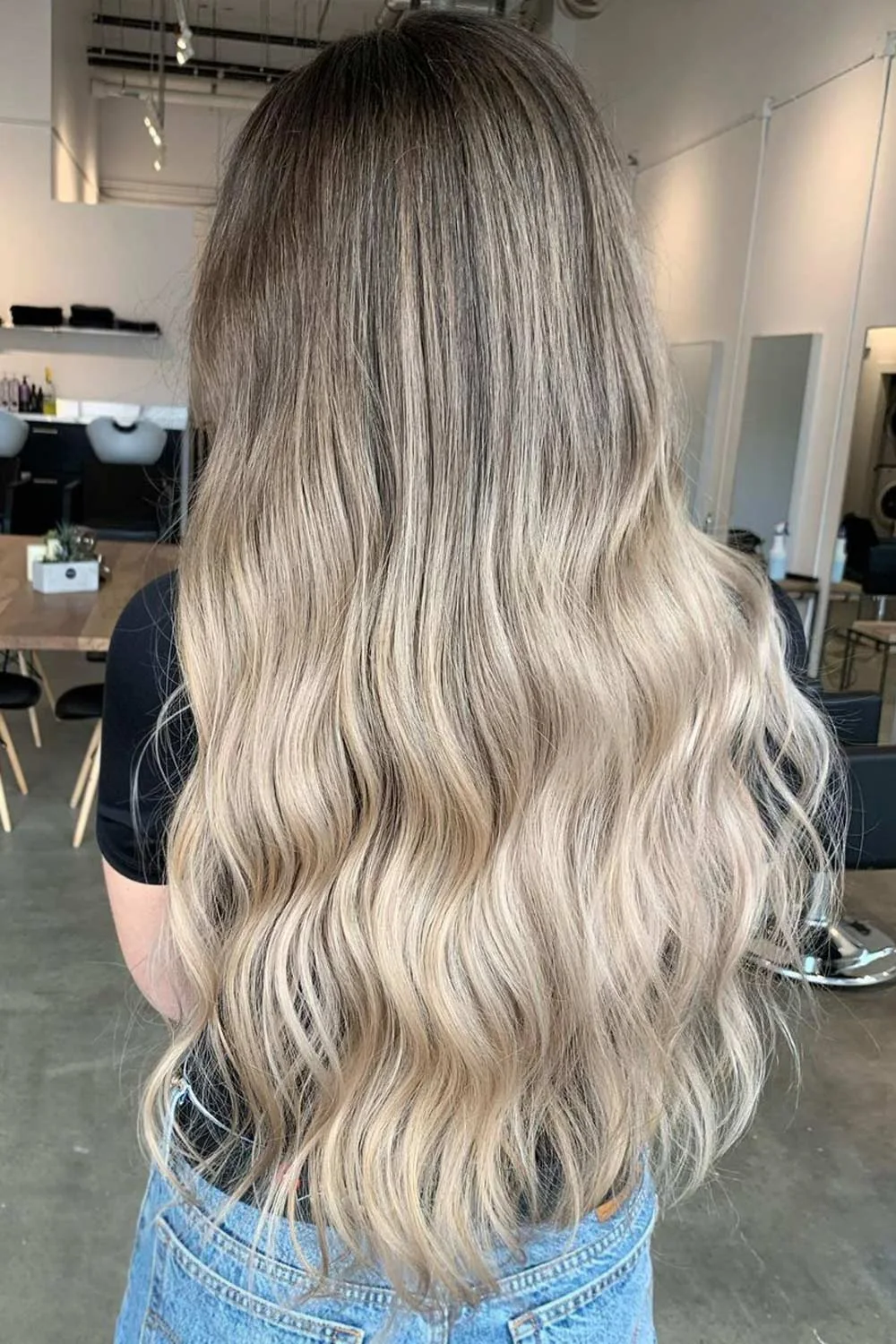
Idea 09
Long Soft Fade Into Pale Blonde
The long transition gives the color room to become progressively lighter without an abrupt band.
- Length
- Long
- Transition
- Gradual
- Ends
- Pale blonde
The upper hair remains brown and falls smoothly before the lower waves begin. Lighter fine strands appear through the middle and become more numerous farther down. The lower lengths read mostly pale blonde, while a few deeper ribbons remain visible inside the relaxed bends and separated tips.
Wearability note: Choose this for a gradual change across long hair. Point out how far the brown area extends, and ask how the same proportion would translate if your own hair is shorter or has a different wave pattern.
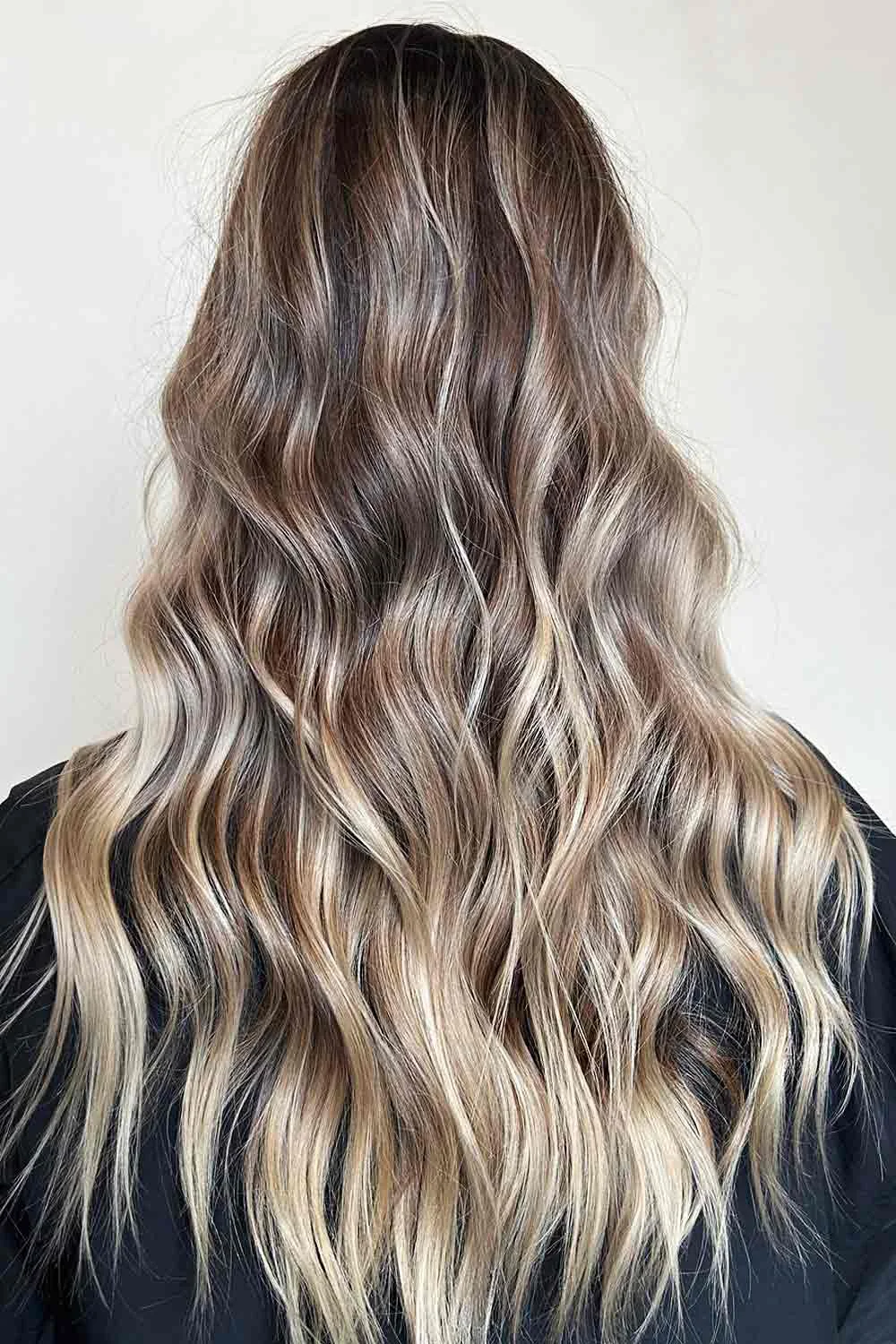
Idea 10
Pale Ends With Brown Strands Between Them
Dark strands continue through the lighter lower area, keeping the waves visibly divided.
- Top
- Brown
- Pattern
- Mixed ribbons
- Finish
- Wavy
A brown crown gives way to alternating pale and deeper ribbons through the middle. The large waves open the light sections toward the outside while darker hair remains in the valleys. The tips look lighter overall but retain separated points, rather than forming one even blonde perimeter across the back.
Wearability note: Save this when you want contrast to remain visible after the hair becomes lighter. Show the darker sections that continue toward the ends, since removing too much brown would create a more uniformly blonde result than the photograph.
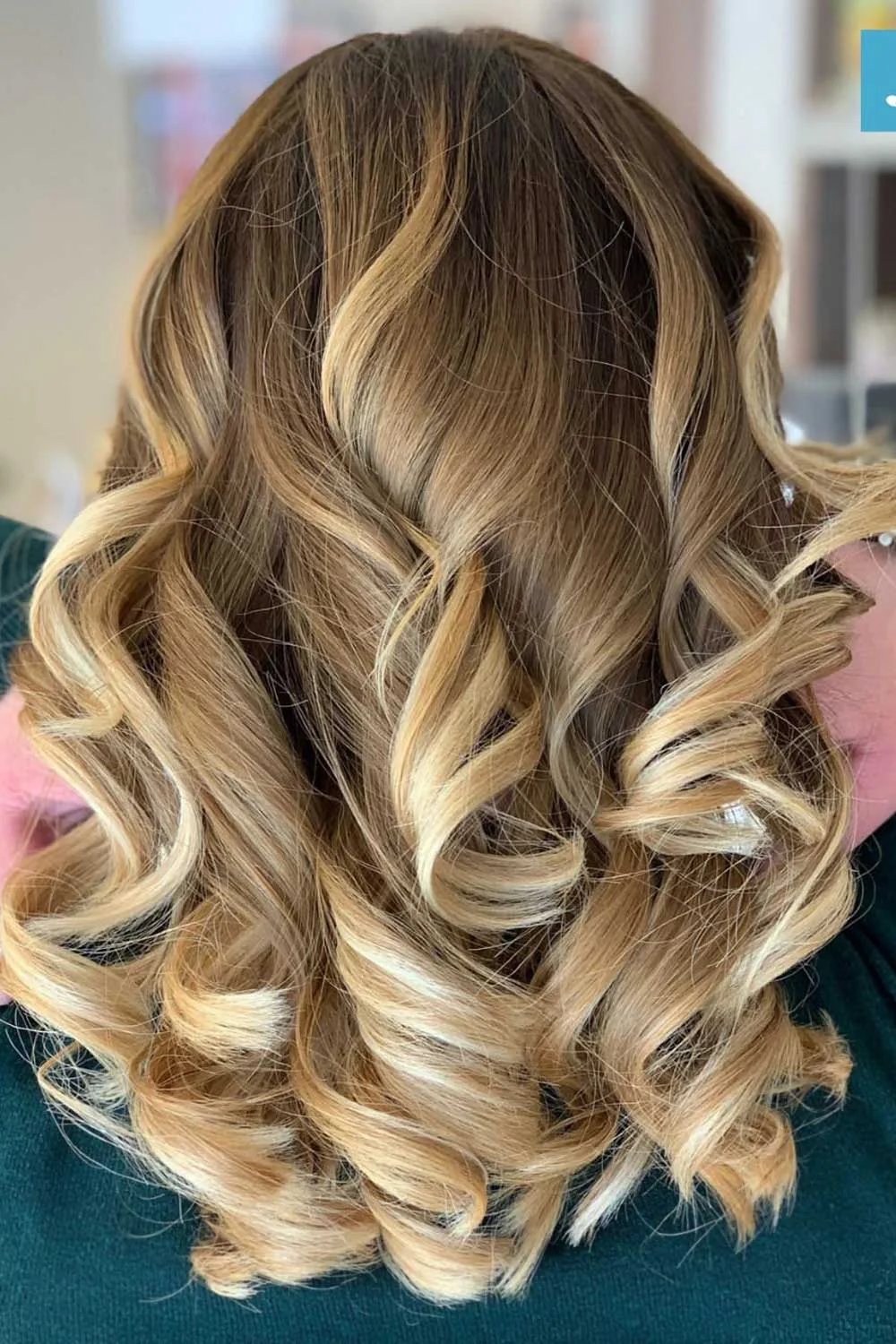
Idea 11
Golden Curls With a Deeper Upper Area
The bright lower loops show a warm blonde finish against the deeper crown and inner lengths.
- Top
- Deeper brown
- Ends
- Golden blonde
- Finish
- Rounded curls
The top stays comparatively dark, with lighter lines appearing through the middle. Below that, large curved sections show golden surfaces and paler tips. Darker strands remain inside several loops, so the color still has depth even where the lower part of the hairstyle reads clearly blonde.
Wearability note: Choose this for warm rather than silver-looking ends. Bring a second reference showing the hair less curled if you want the everyday color distribution clarified; the arranged loops expose light surfaces that may fall underneath a straighter finish.
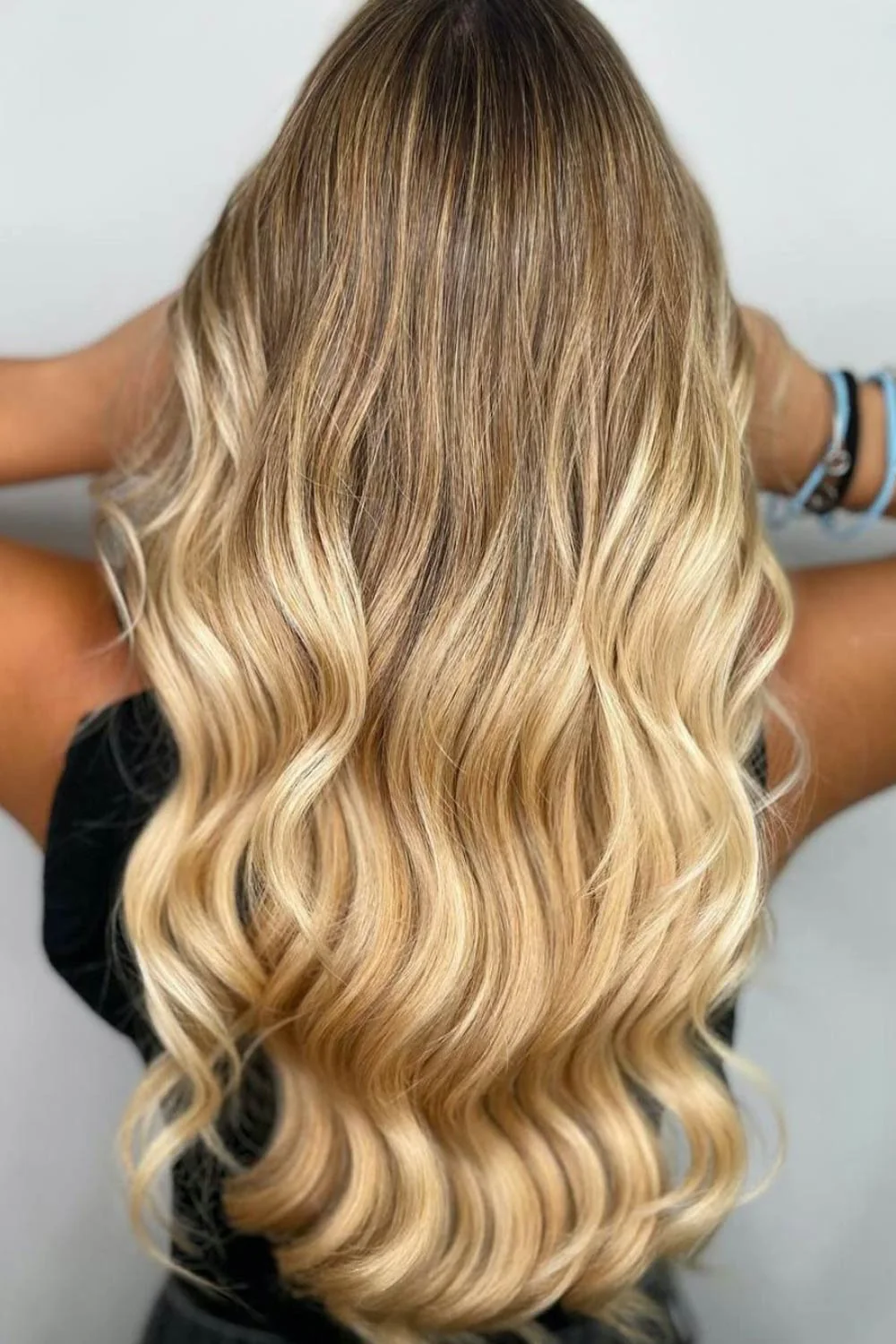
Idea 12
Broad Golden Waves With Brown Root Depth
Most of the visible lengths are light, leaving a smaller deeper area near the crown.
- Roots
- Brown depth
- Tone
- Golden blonde
- Finish
- Broad waves
The crown has brown depth before the color opens into broad warm-blonde ribbons. The waves are large and orderly, with a rounded lower edge and pale tips along some curves. Brown is still visible between sections, but it occupies less of the surface than in the strongly dark-rooted examples.
Wearability note: Use this for a brighter overall result with a warm finish. Compare the amount of blonde with the depth you currently have, and discuss the coloring goal independently of these carefully arranged, repeating waves.
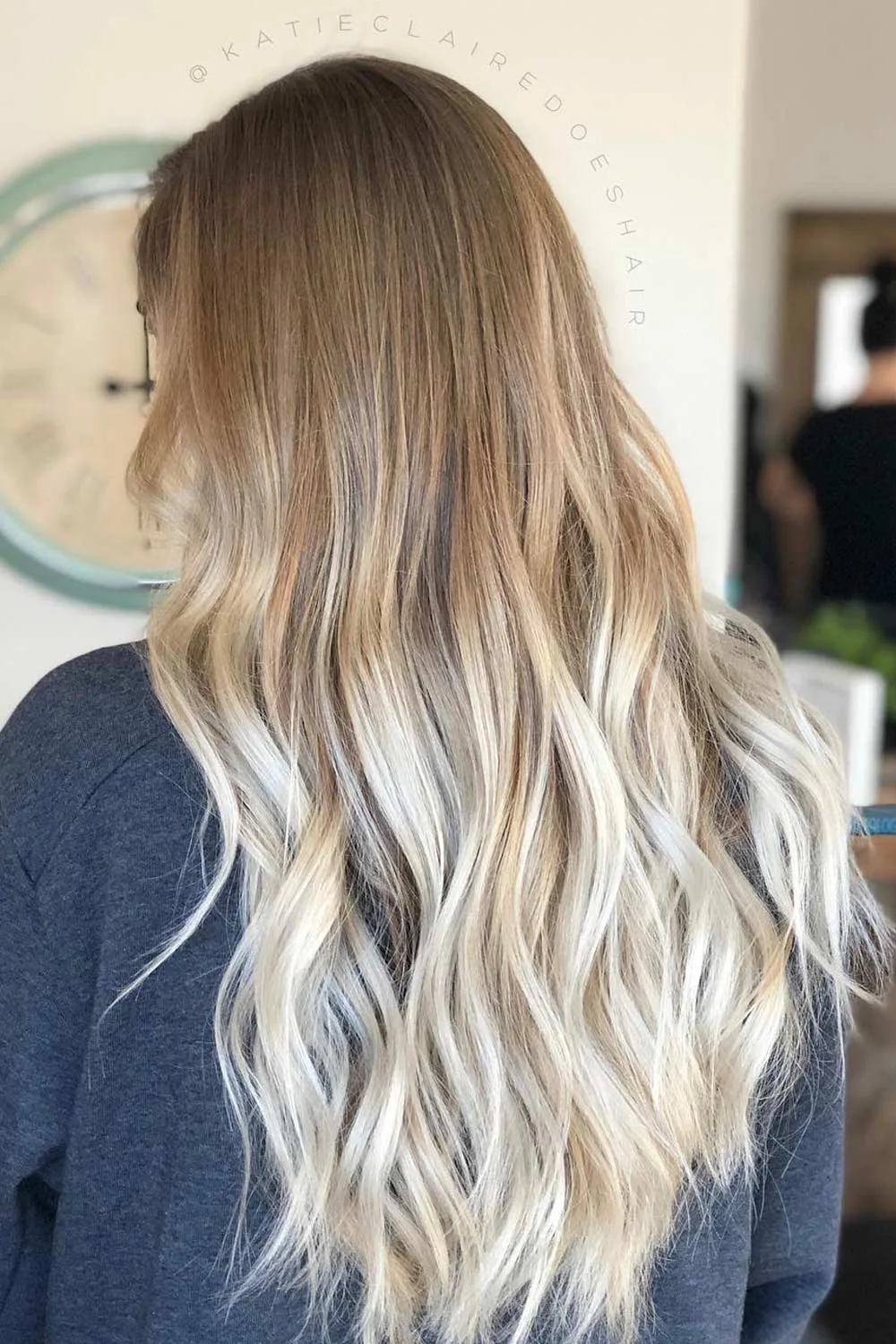
Idea 13
Soft Root Shade Above Pale Lengths
The transition begins relatively high, so the overall impression is light rather than brunette.
- Roots
- Brown shade
- Overall
- Mostly light
- Finish
- Loose waves
A brown-toned upper section passes into many fine lighter strands through the middle. The lower lengths are pale and loosely waved, with small deeper lines visible around the curves. The ends are separated and gently tapered, giving the bright area a softer outline than a smooth blunt cut.
Wearability note: Save this if you want only moderate root depth above mostly blonde hair. Explain how high the lightness should begin, and use a neutral-light comparison to settle the exact tone instead of assuming every pale reference has the same warmth.
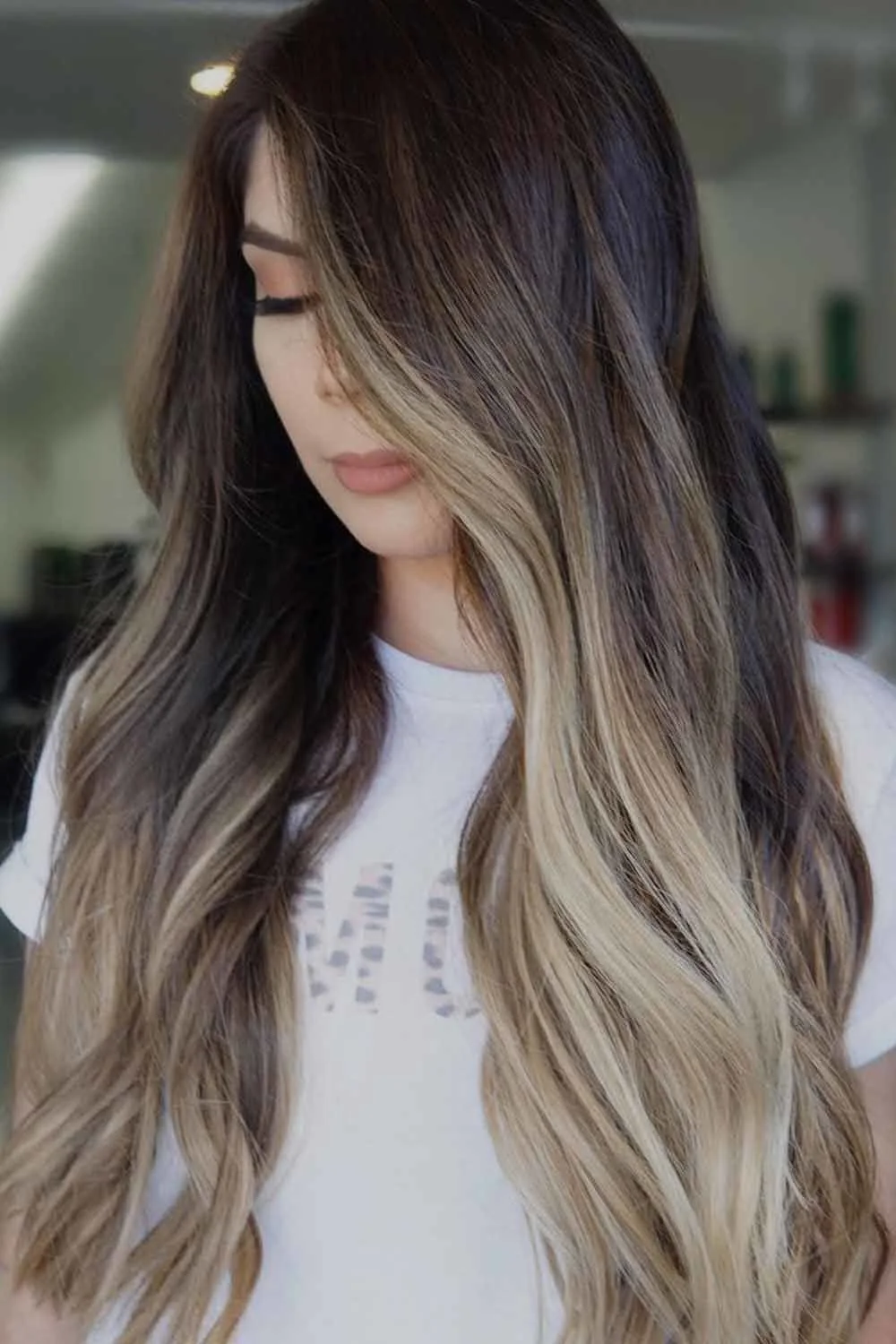
Idea 14
Dark Upper Lengths With Light Front and Ends
The front is visibly lighter before the full lower section becomes pale.
- Top
- Dark
- Front
- Pale strands
- Ends
- Blonde
The upper hair remains dark around the part and through much of the side. Slim pale strands run beside the face, while a larger light area appears through the long lower waves. Darker lines are still visible between those sections, keeping the change broken up rather than a solid horizontal split.
Wearability note: Choose this when both face-framing brightness and lighter ends matter. Show where the front pieces should begin separately from the back transition, and discuss how their position will change with your usual part.
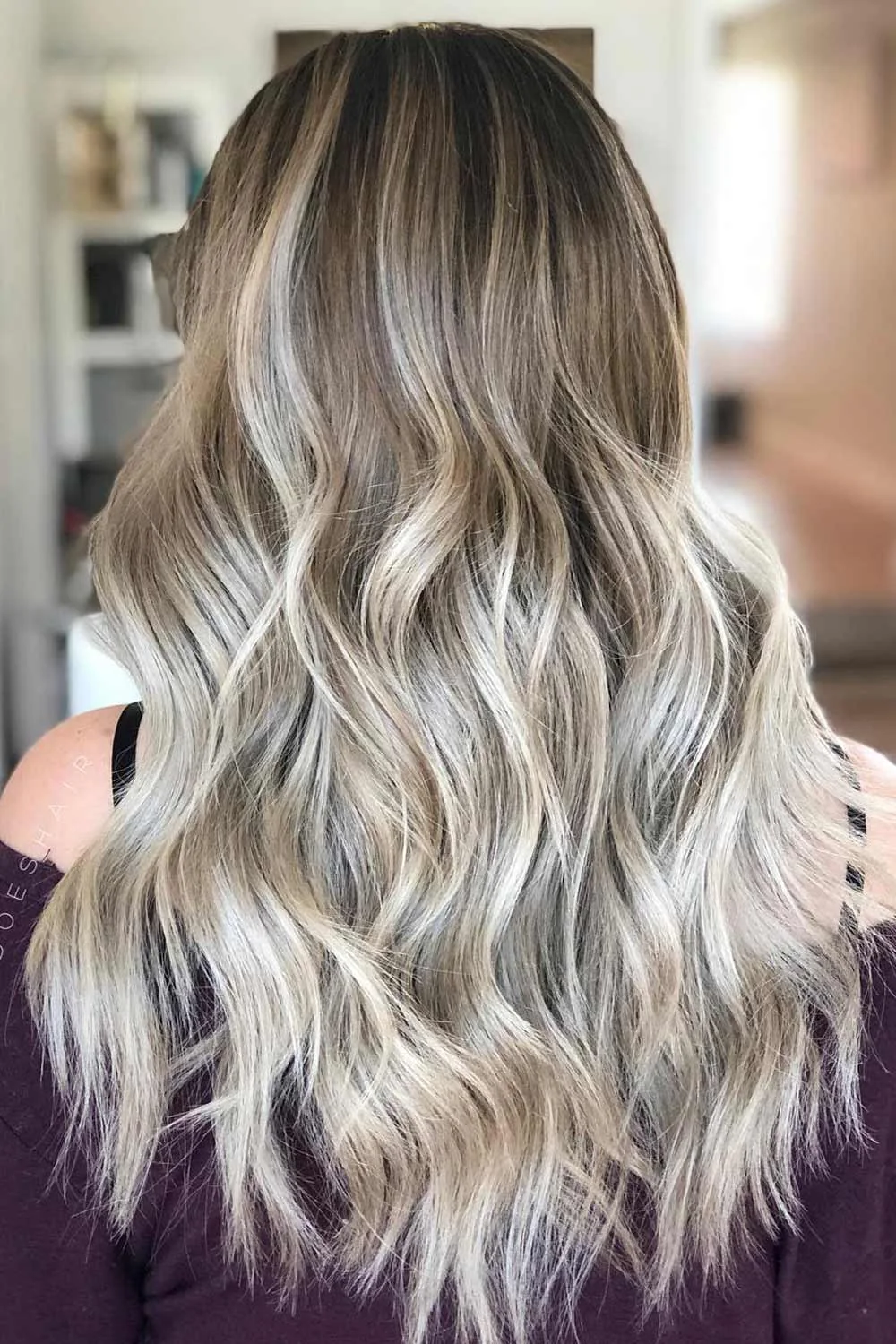
Idea 15
Brown Crown Above Cool Pale Waves
The deeper crown contrasts with a broad pale lower area while fine darker lines remain inside it.
- Top
- Brown
- Ends
- Cool pale blonde
- Finish
- Soft waves
The upper surface appears brown, becoming lighter through the first large bends. Below that, the hair is mostly pale blonde with a cooler impression in this lighting. Several deeper strands continue through the curves, and the ends break into soft points rather than one fully solid light-colored edge.
Wearability note: Use this for a cooler-looking blonde finish with visible root depth. Show the amount of pale hair you want as well as the top, and ask to compare the tone outside the salon lights before settling on an exact shade target.
Compare the transition height
On long hair, a darker area can extend well below the crown before the ends become light. On a short cut, the same proportion occupies a much smaller physical distance. Show the transition relative to your own length rather than asking for the exact number of inches in a photo.
A few lighter strands near the top soften the boundary. They do not necessarily mean the whole upper section should become blonde.
Separate tone from lightness
Golden and very pale ends can have similar placement but a different overall impression. Use a neutral-light photograph when tone is the main decision; warm lighting, colored walls and a reflective finish can all alter how a shade reads.
Discuss your previous color and hair condition before choosing a target. These references do not establish what is achievable in one visit, and they should not be used as instructions for at-home bleaching.

About the author
Bella Ross
Bella Ross is the hairstyle editor behind Latest Easy Hairstyles. She curates practical haircut, braid, color, and styling ideas with a focus on looks that are easy to browse, realistic to recreate, and useful for everyday hair decisions.