
Before you choose
Pick a color family, then its placement
A winter color does not have to be dark. Rich cherry and chocolate shades sit beside ash blonde, silver, soft pink and an icy blue accent in this collection. Start with the warmth or coolness you prefer, then look at whether the color begins at the root, frames the face or appears mainly through the ends.
If you already know you want a deep brunette base, our dark brown color ideas gallery gives that narrower choice more room. Here the purpose is to compare across color families before committing to one.
The hairstyle gallery
20 winter hair colors to compare
These photographs are a palette, not a list of colors that only work in one season. Compare the root depth, undertone, and placement you actually want to wear.
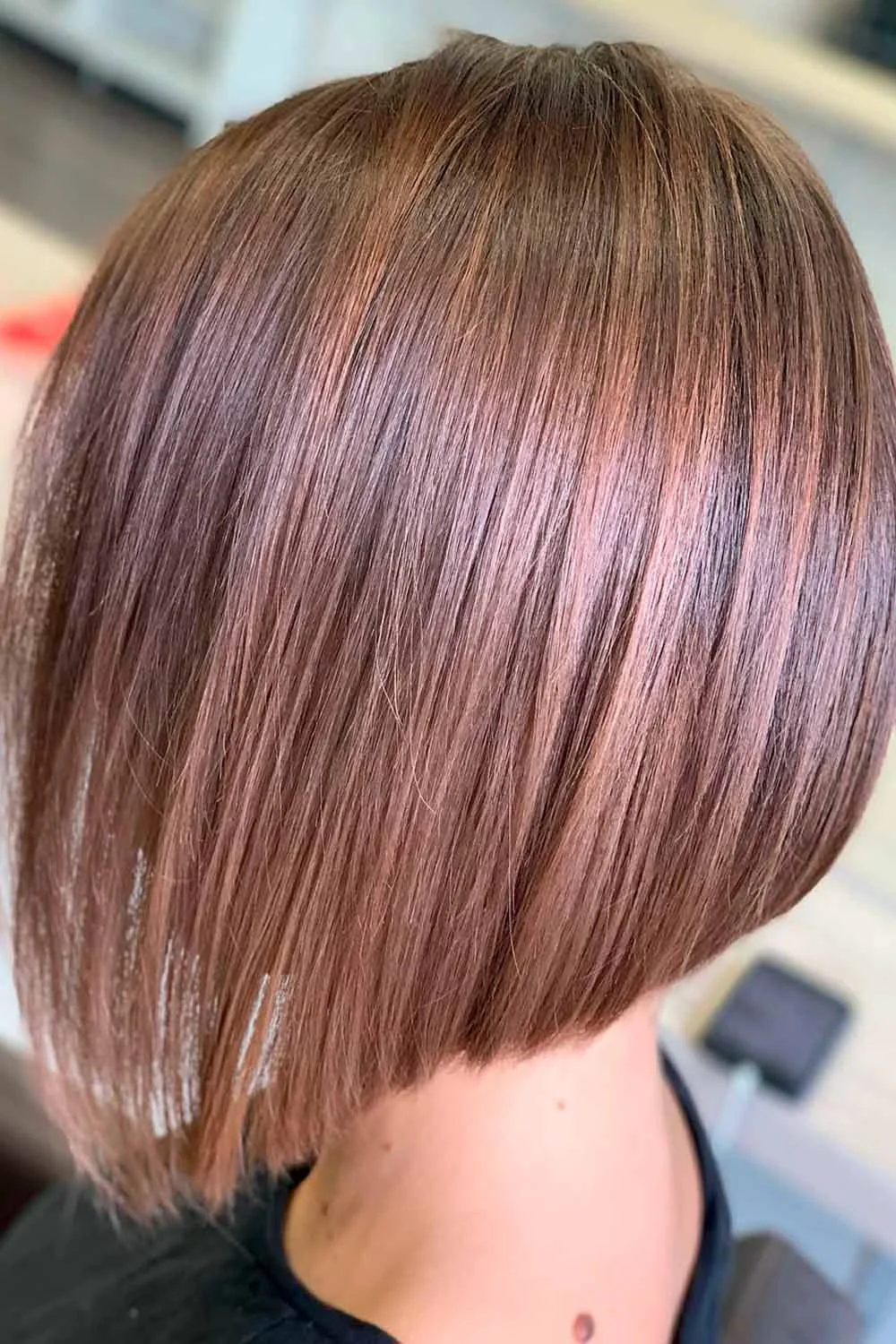
Idea 01
Soft Caramel Blunt Bob
A short blunt edge gives this caramel shade one smooth surface instead of breaking it into highlighted waves.
- Length
- Short bob
- Tone
- Caramel brown
- Finish
- Straight
The color sits between light brown and dark blonde, with a slightly warmer glow where the bob catches the light. The nape is cut clean and the hair remains straight, so the tone can be judged without curl-induced contrast.
Wearability note: Save this for an all-over warm neutral rather than bold highlights. The blunt haircut is a separate choice; a layered bob would make the same shade look less uniform.
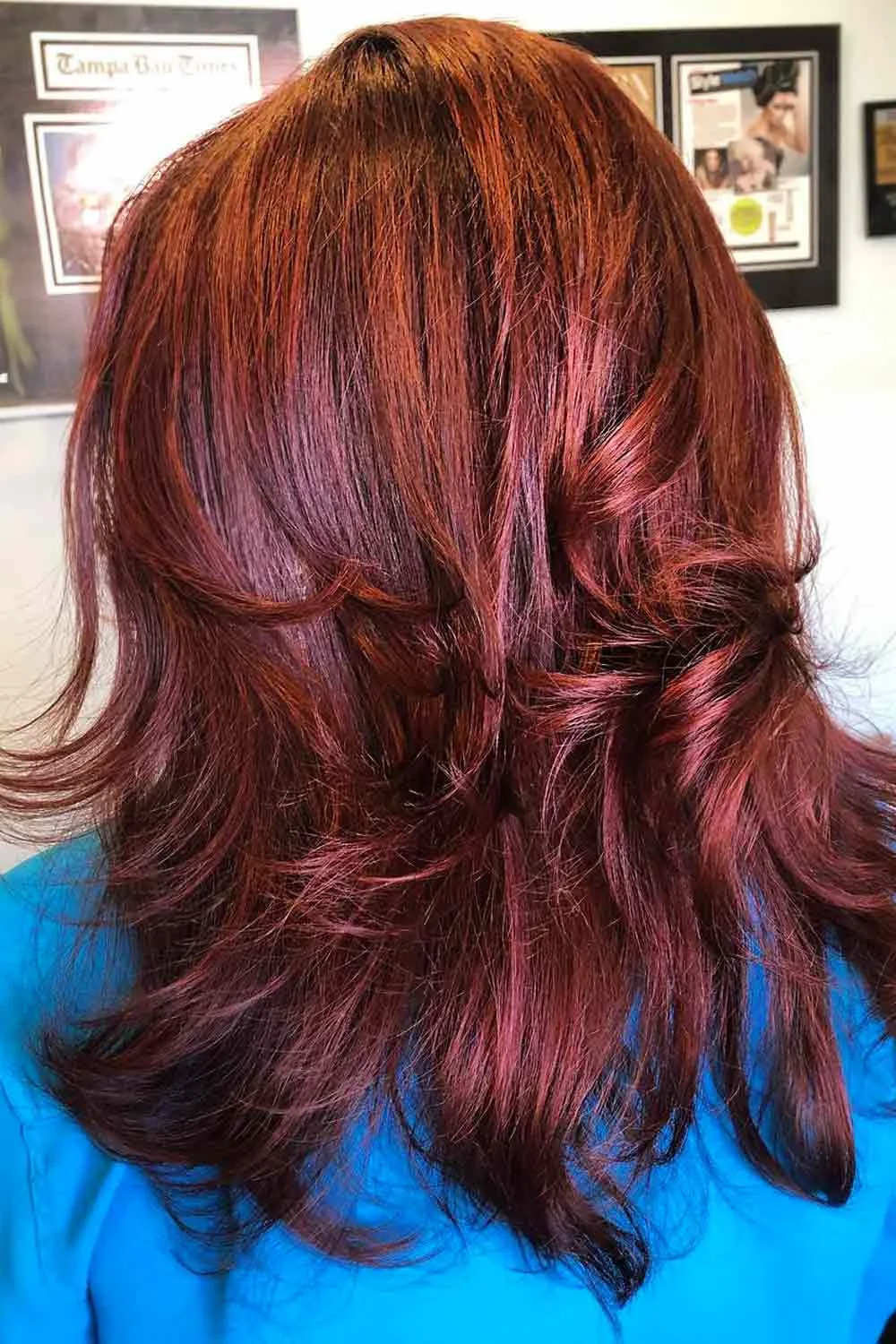
Idea 02
Deep Red Layered Waves
Dark red carries through the full length, while ruby reflections become visible on the raised layers.
- Tone
- Deep red
- Cut
- Layers
- Texture
- Wavy
The crown is deeper than the curled ends, but the transition is soft rather than an ombre line. Layered pieces turn outward at different heights and reveal both wine and brighter red tones against one another.
Wearability note: Use this if you want a red shade that still reads deep indoors. Ask how the brighter ribbons would appear when your hair is straight, since the waves expose more of them in this image.
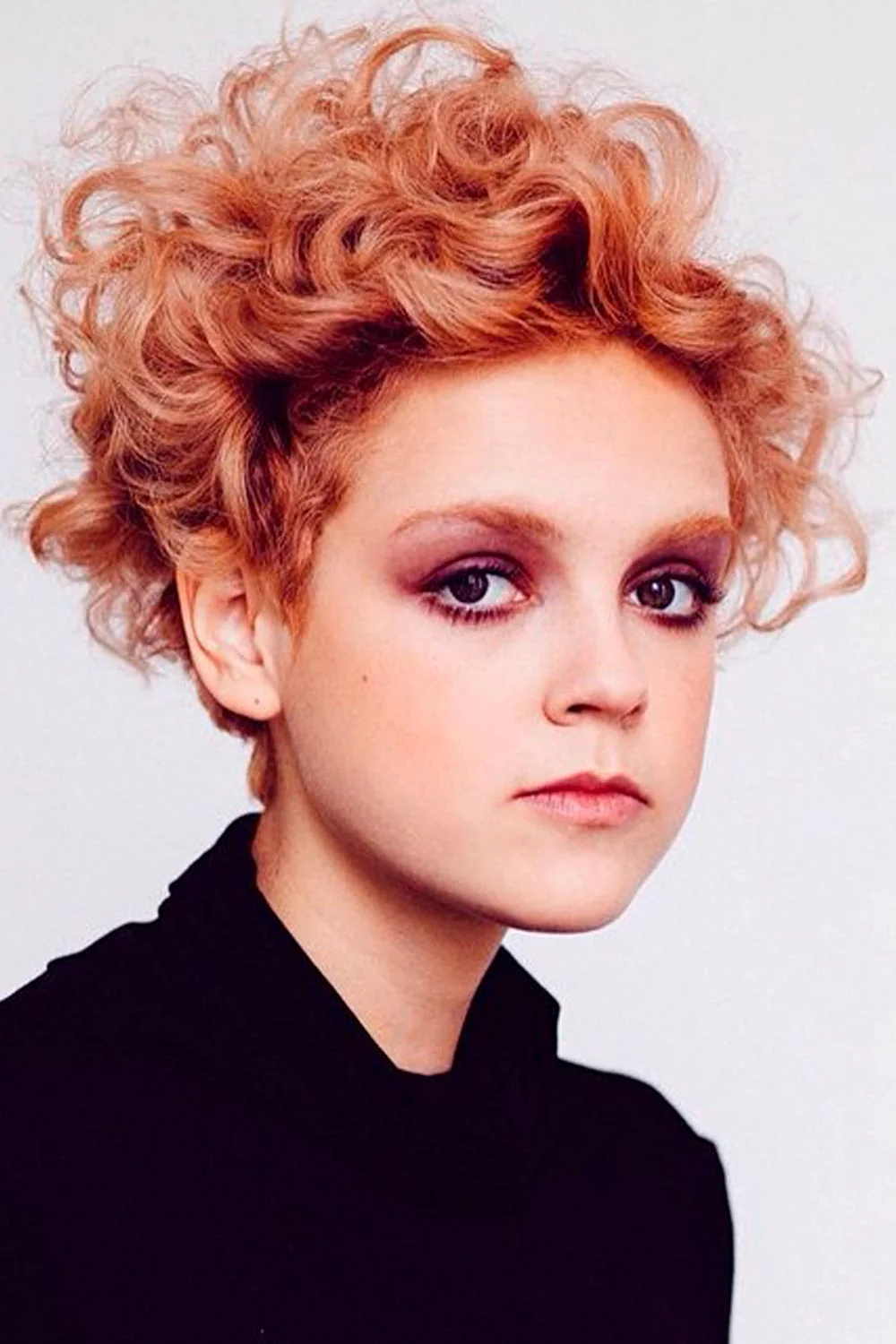
Idea 03
Copper Curls on a Short Cut
The copper is vivid from root to tip, and the short curls keep the orange-red tone close to the face.
- Length
- Short
- Tone
- Bright copper
- Texture
- Curly
Tight, uneven curls lift away from the forehead and create shadow between the bright strands. Because there are no darker roots or contrasting ends, the variation comes from texture and light rather than a second color.
Wearability note: This is a useful all-over copper reference if you want a strong, consistent shade. Save the color separately from the cut: the same copper will read differently on longer smooth hair.
Choose your direction
Warm and subtle
Caramel bob, copper-brown layers or warm chocolate waves.
Cool and light
Smoky silver lob or pale ash-blonde ends with visible root depth.
Rich red
Dark cherry layers, mahogany waves or the short wine-red bob.
Vivid accent
Rose-pink lengths or a teal panel against a pale blonde base.
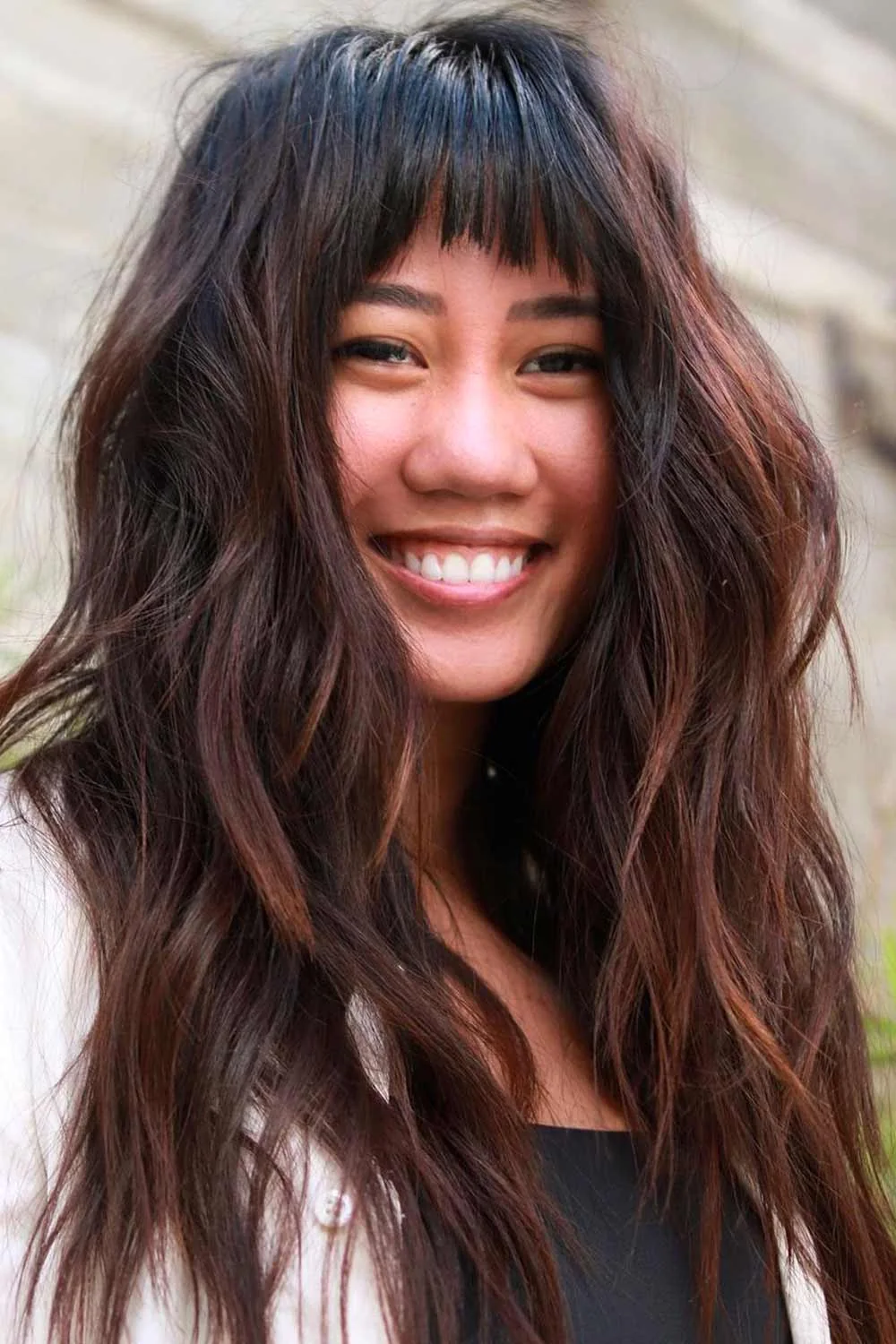
Idea 04
Dark Caramel on Loose Waves
Caramel appears as narrow warm ribbons rather than replacing the dark brunette base.
- Base
- Dark brunette
- Accent
- Caramel ribbons
- Length
- Long
The crown stays deep brown while lighter pieces surface along the waves and near the cheeks. The warm accents are separated enough that the overall result remains brunette, especially where the hair falls in shadow. They continue through the lower bends instead of stopping abruptly at mid-length.
Wearability note: Choose this if you want warmth without a fully lighter color. Bring the image for the spacing of the ribbons, then discuss how much brightness you want beside your face.
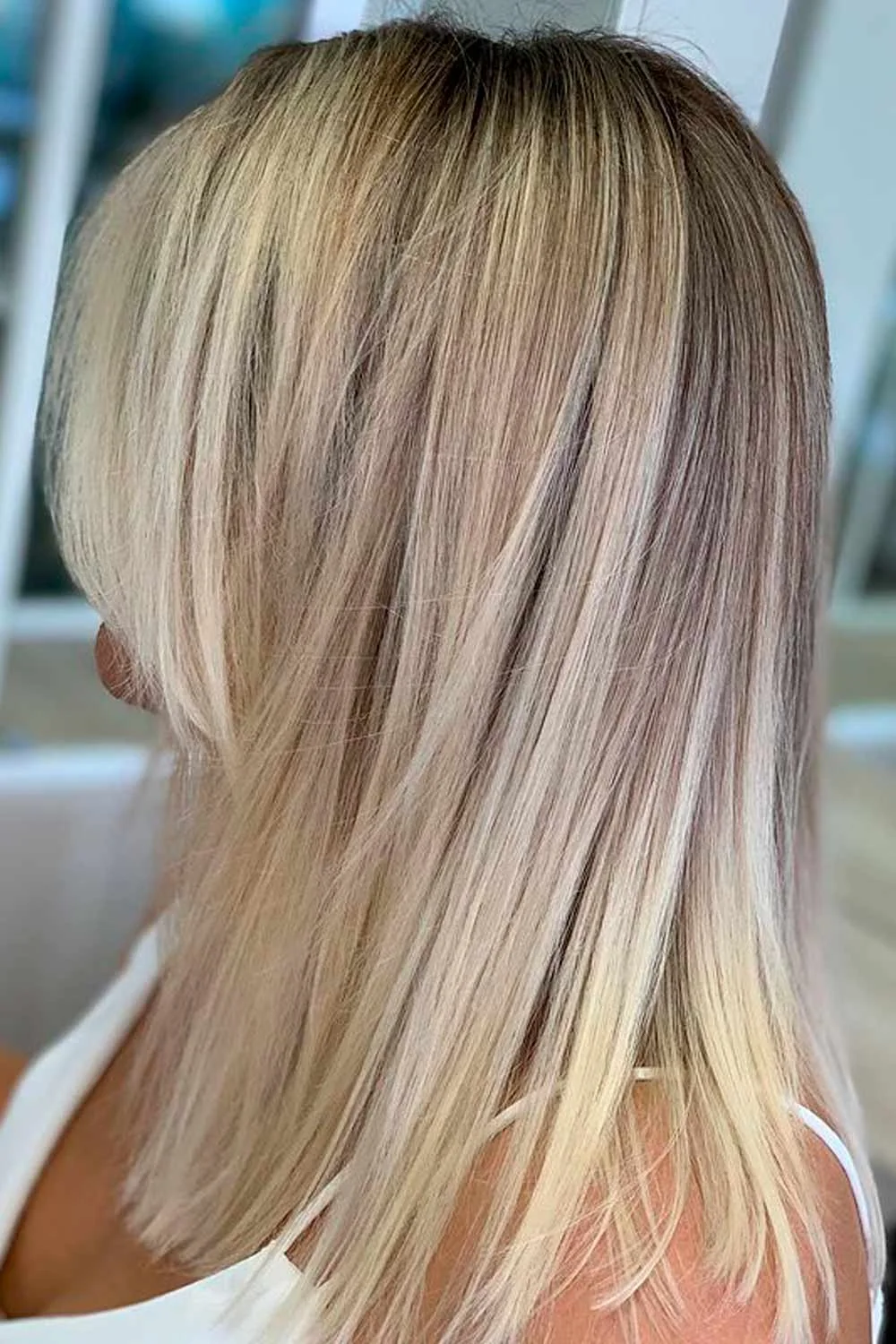
Idea 05
Ash Blonde Straight Lob
Cool ash blonde fills most of the lob while a deeper root keeps the pale lengths anchored.
- Length
- Lob
- Tone
- Ash blonde
- Root
- Darker
The sleek surface makes the color transition particularly clear. The roots are a few shades darker, then the hair becomes a pale beige-ash through the middle and blunt ends. There are no visible curls to soften the change.
Wearability note: Save this for the cool tone and straight-hair view. If you usually wear waves, ask to see a second reference in that texture before deciding how blended the same placement should be.
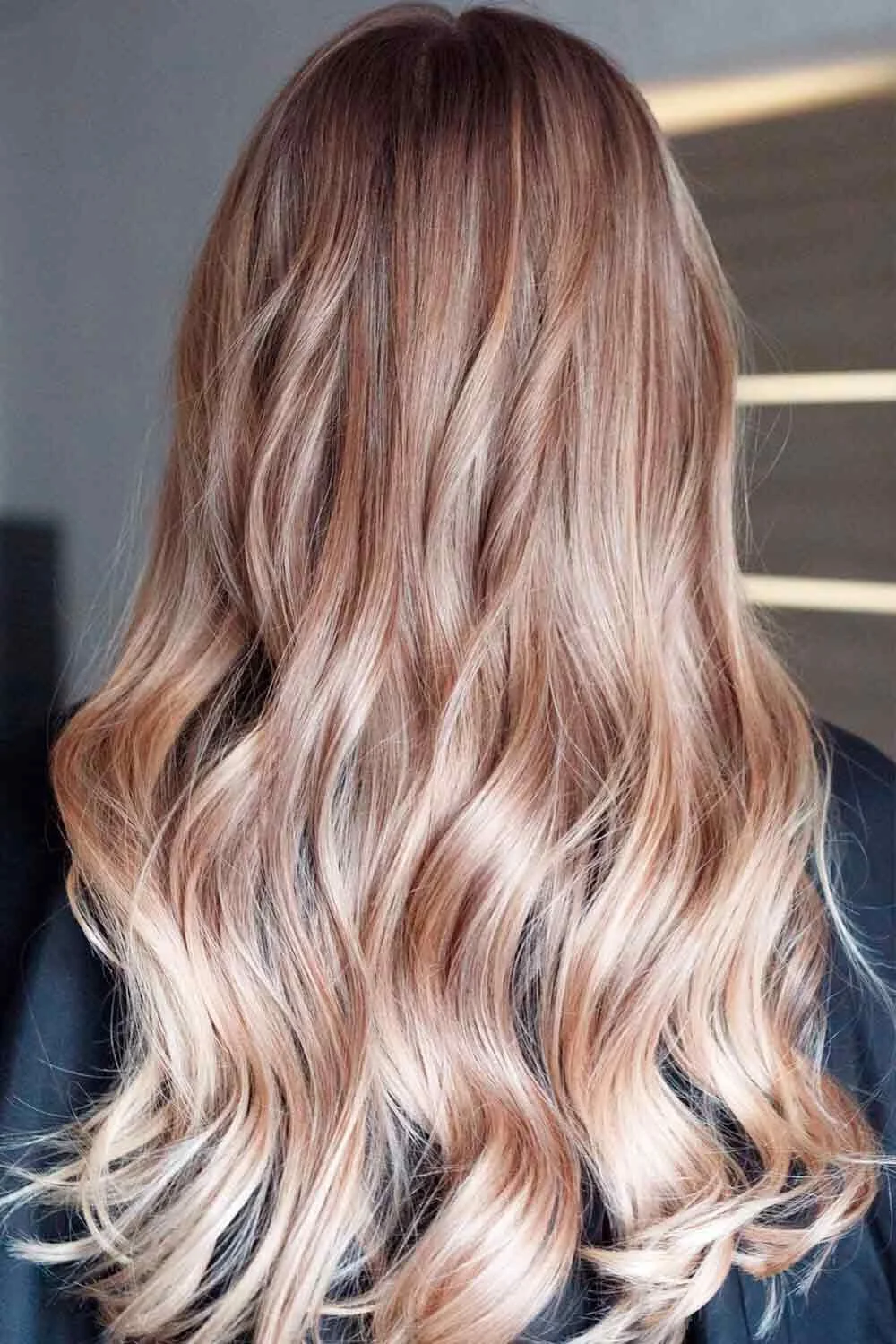
Idea 06
Sandy Beige Blonde Waves
Sandy beige keeps this blonde warmer than silver but quieter than golden yellow.
- Tone
- Sandy beige
- Contrast
- Low
- Length
- Long
Fine light strands run over a muted darker base from crown to ends. The broad waves turn those small differences into gentle depth without a high-contrast ombre. The overall effect stays neutral and soft.
Wearability note: Use this when you want a low-contrast blonde rather than a platinum statement. Check the shade in daylight with your colorist; warm salon lighting can make beige look more golden than it is.
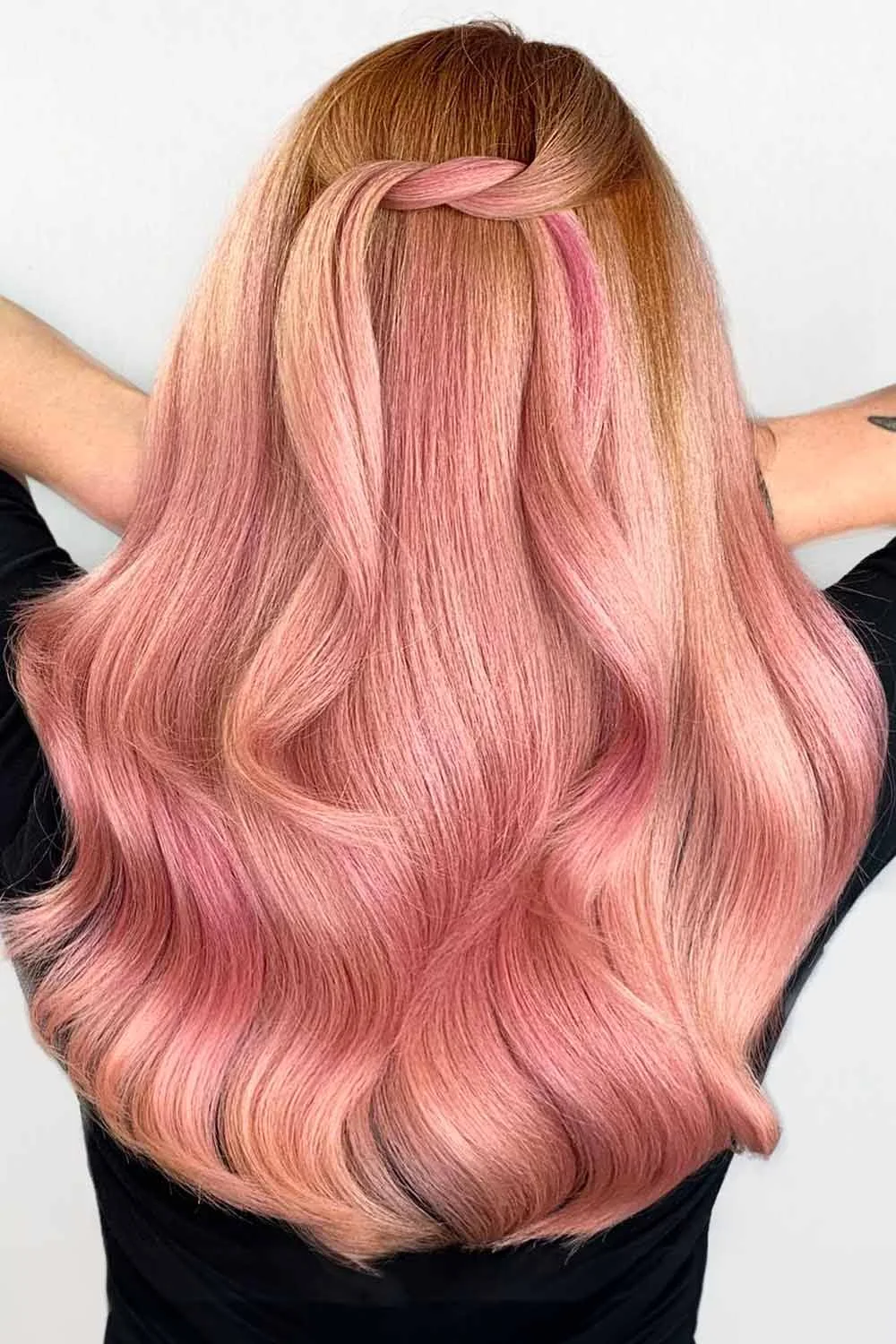
Idea 07
Rose-Pink Long Waves
A warm copper-pink crown gives way to softer rose-pink lengths instead of one flat pastel shade.
- Tone
- Rose pink
- Placement
- Lighter lengths
- Length
- Long
A small twisted top section exposes the color underneath. Across the waves, pink is strongest in the middle and softer near the lower edge, with a little golden warmth still visible at the roots.
Wearability note: Save this for the balance of warm and cool pink. Ask how light your starting hair would need to become to achieve the paler lengths, rather than assuming the shade is a simple color overlay.
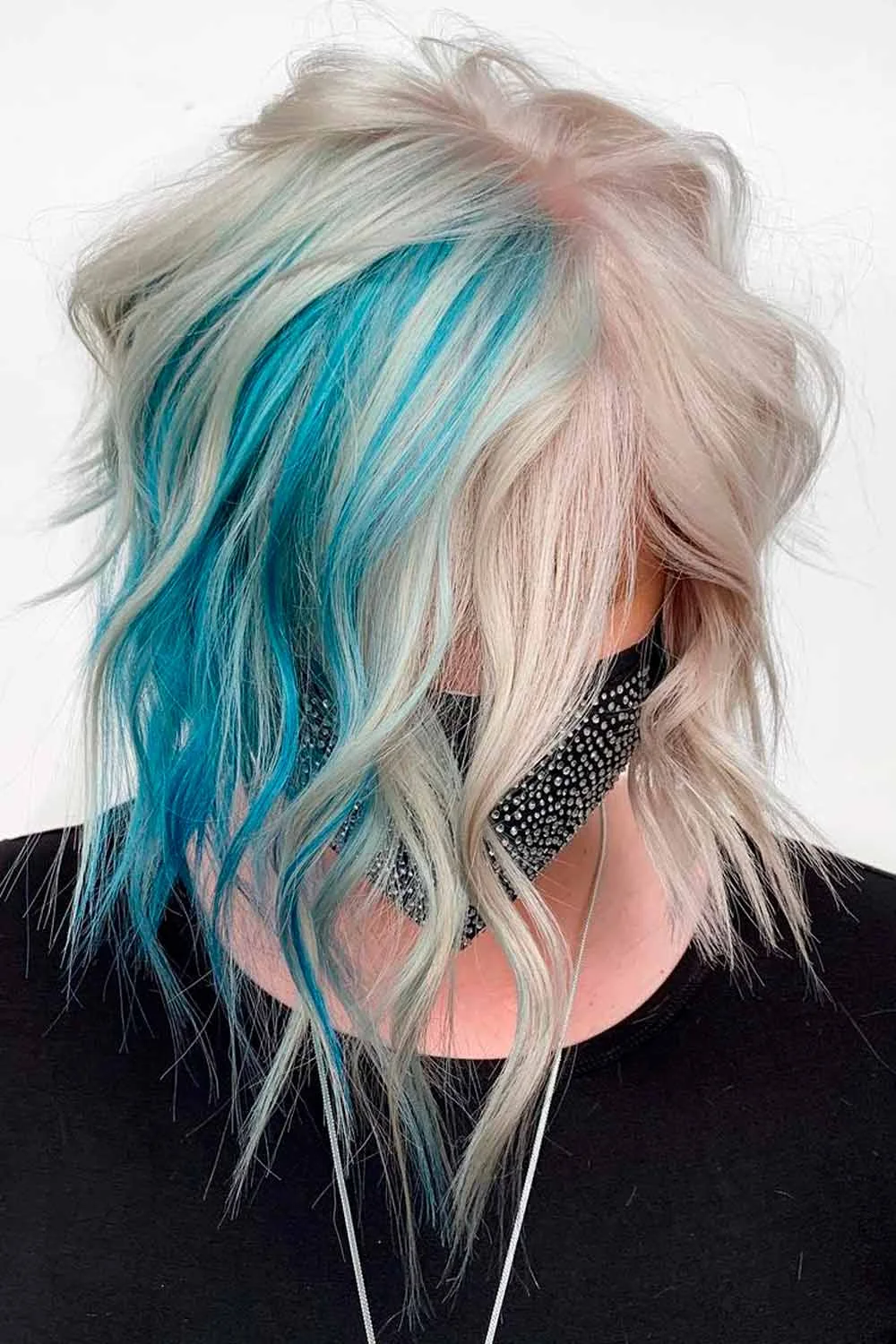
Idea 08
Teal Panel on Icy Blonde
A single teal panel interrupts a very pale blonde base, making the vivid color an accent rather than the whole head.
- Base
- Icy blonde
- Accent
- Teal panel
- Cut
- Layered
The blue-green begins beneath the top layer and falls beside the cheek toward the shoulder. Pale strands continue around it, so the panel can partly disappear when the hair shifts. The choppy cut makes that contrast easy to see.
Wearability note: Use this if you want a cool vivid accent with some concealment. Show the side placement, then decide whether you want the teal to be visible all the time or only when the hair moves.
Idea 09
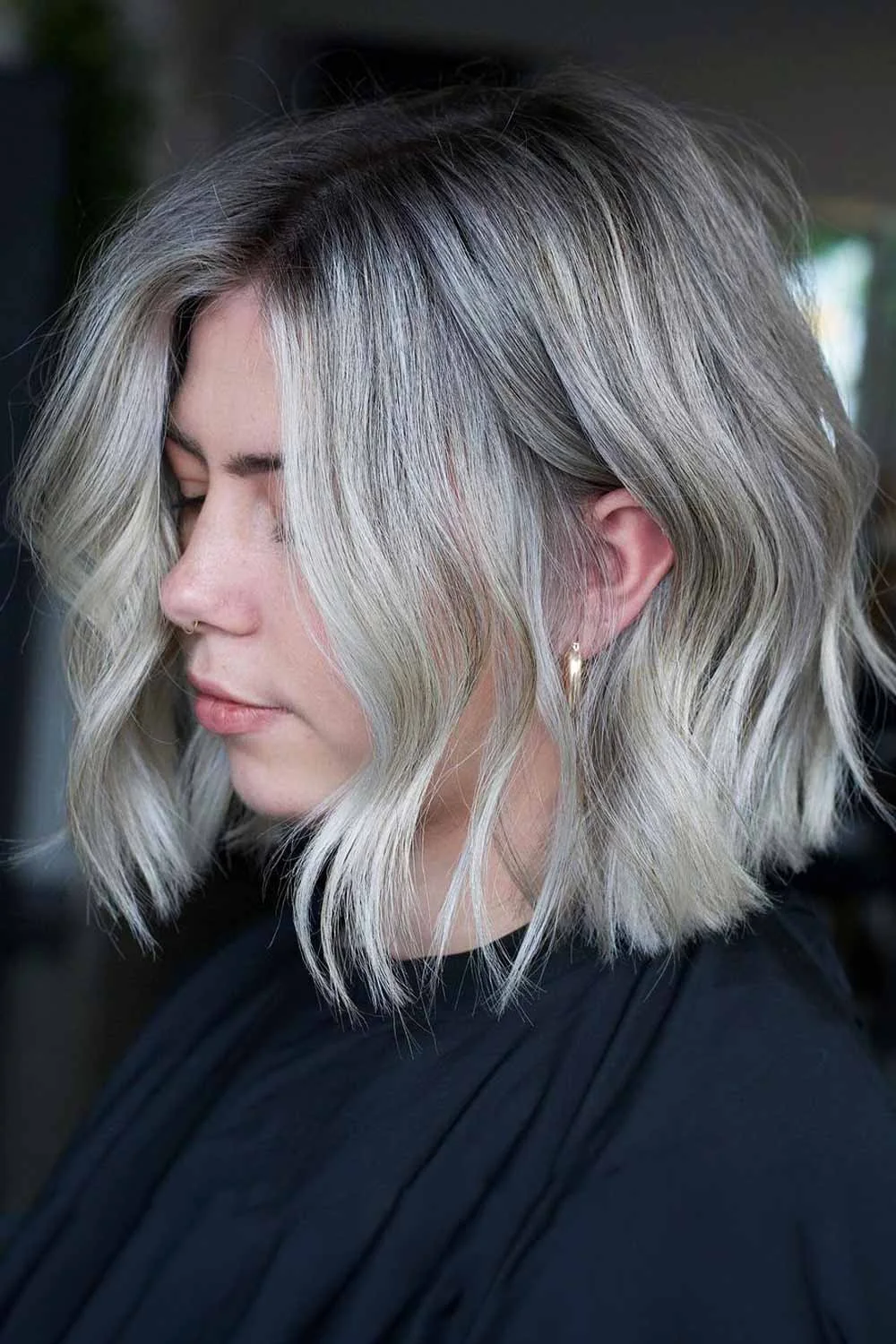
Smoky Silver Wavy Lob
Charcoal root depth keeps this bright silver lob from looking like a single flat white tone.
- Length
- Lob
- Tone
- Smoky silver
- Root
- Charcoal
Cool gray and pale silver strands meet in loose bends around the cheek and neck. The darker crown remains visible at the part and beneath the upper layers, sharpening the contrast with the light ends.
Wearability note: Save this for silver with shadowed roots. Discuss the starting base and maintenance separately; a photograph cannot show the lightening and toning work behind a cool result like this.
Idea 10
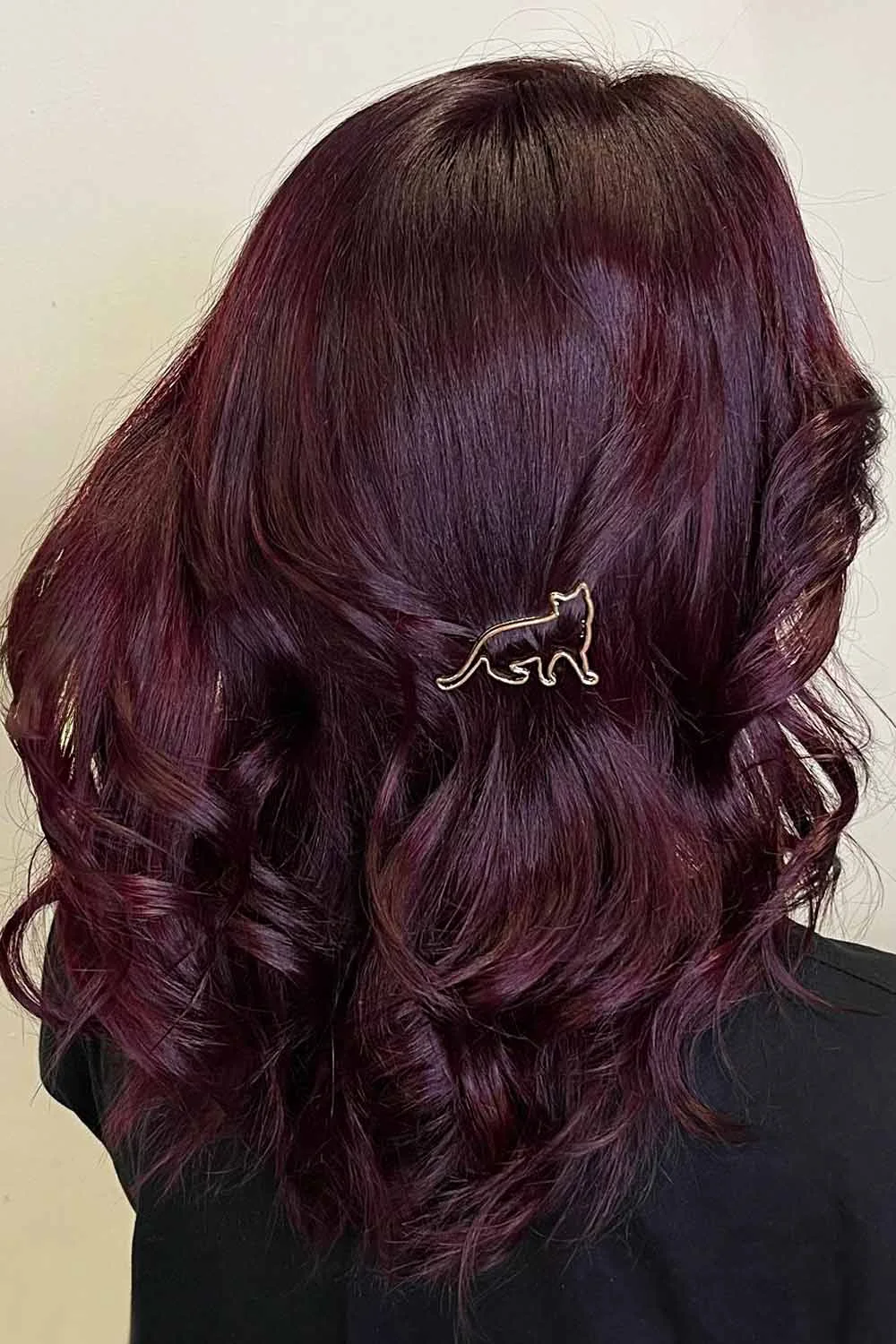
Purple-Chestnut Glossy Waves
The color reads dark chestnut first, then reveals a purple-red cast along the glossy wave ridges.
- Base
- Chestnut
- Cast
- Purple red
- Finish
- Glossy waves
The crown remains nearly brown-black, while the middle and ends pick up the wine tone under the light. A small decorative clip sits near one side, but the color shift is visible even away from it.
Wearability note: Choose this if you want red-violet that stays understated in shade. Bring a daylight reference too, because a glossy studio-lit wave can make the purple tone appear stronger.
Idea 11
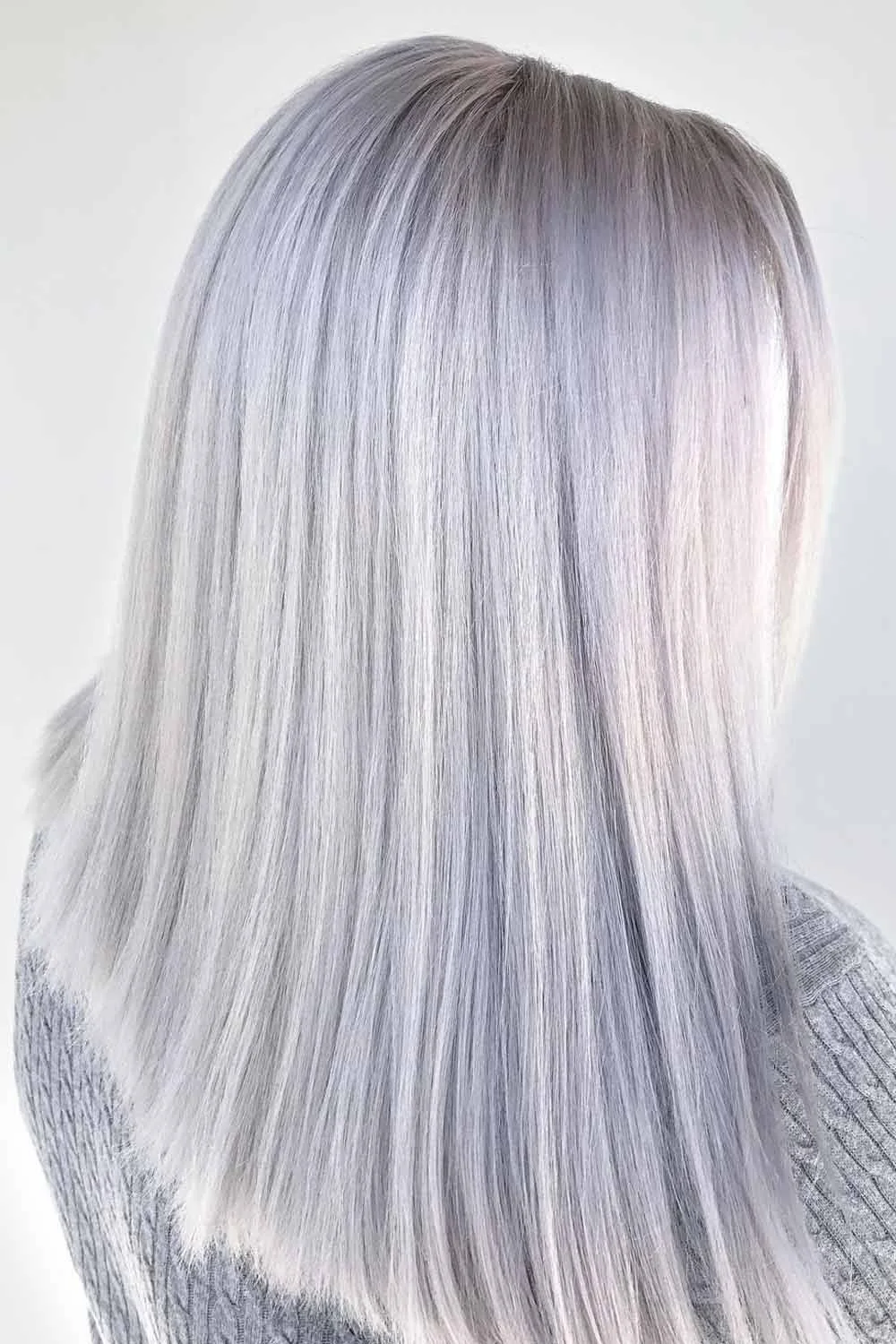
Pale Platinum With Gray Shadow
A nearly white platinum length contrasts with a soft gray shadow close to the crown.
- Tone
- Platinum
- Root
- Soft gray
- Finish
- Straight
The smooth finish reveals fine cool strands running the full length. The root area is not black; it is a gentle gray-beige that connects to the pale surface without a hard boundary. The lower strands look nearly white against the sweater, making this distinctly cooler than beige blonde.
Wearability note: Use this as a reference for how pale you want the ends and how subtle the root should stay. The exact result depends heavily on your starting color and hair condition.
Idea 12
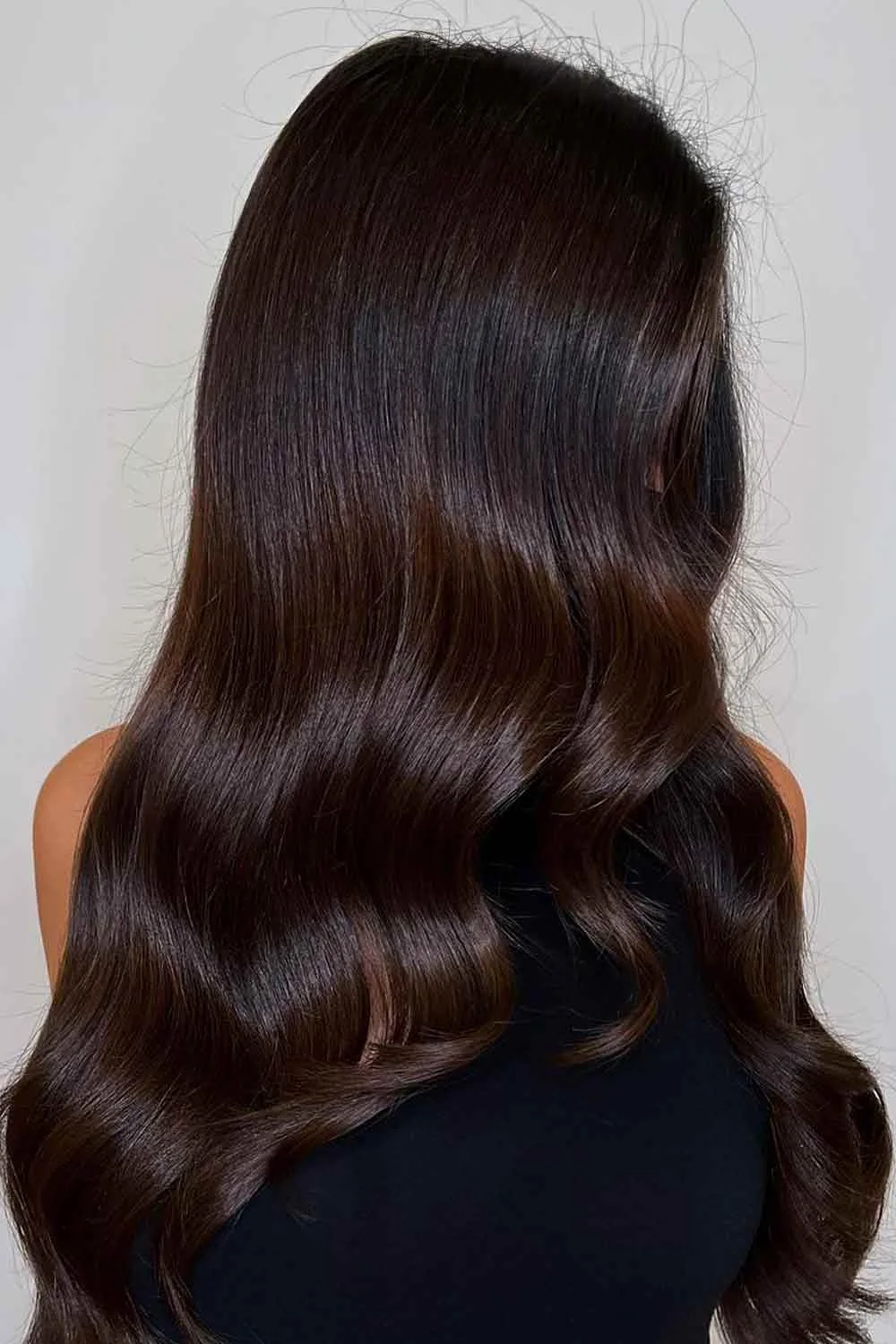
Espresso Brown Polished Waves
This deep brunette looks nearly black at the crown but warm brown along the lower waves.
- Tone
- Espresso brown
- Contrast
- Subtle
- Length
- Long
Broad connected bends create large reflective surfaces that reveal the brown tone. There are no obvious blonde ribbons or red panels; the difference from root to end is subtle and mostly a play of depth and light.
Wearability note: Choose this if you want a rich dark result without visible highlights. Compare it with a straight-hair photo before asking for the exact depth, because waves and gloss can make brown appear lighter.
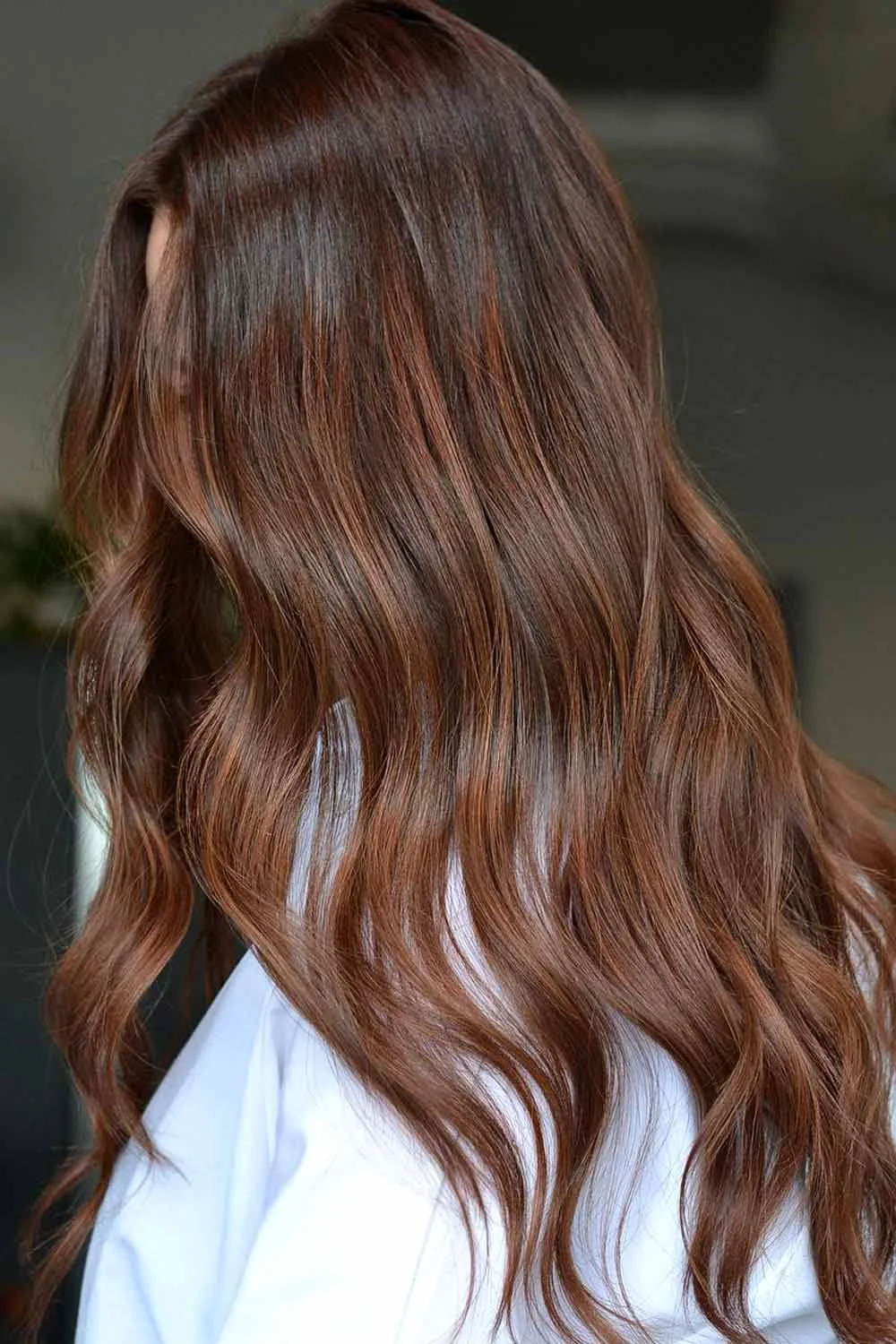
Idea 13
Warm Chocolate Ribbon Waves
Warm chocolate remains the base while lighter brown ribbons emerge through the wave bends.
- Base
- Chocolate brown
- Accent
- Warm ribbons
- Length
- Long
The crown and underside stay deep, then a few warm pieces become clearer toward the middle and ends. Because the lighter color is not concentrated at the front, the hair still reads as a rich brunette overall.
Wearability note: Save this for a small lift in dimension rather than a blonde transformation. Ask for the width and number of warm ribbons you want, since those details control how subtle the result stays.
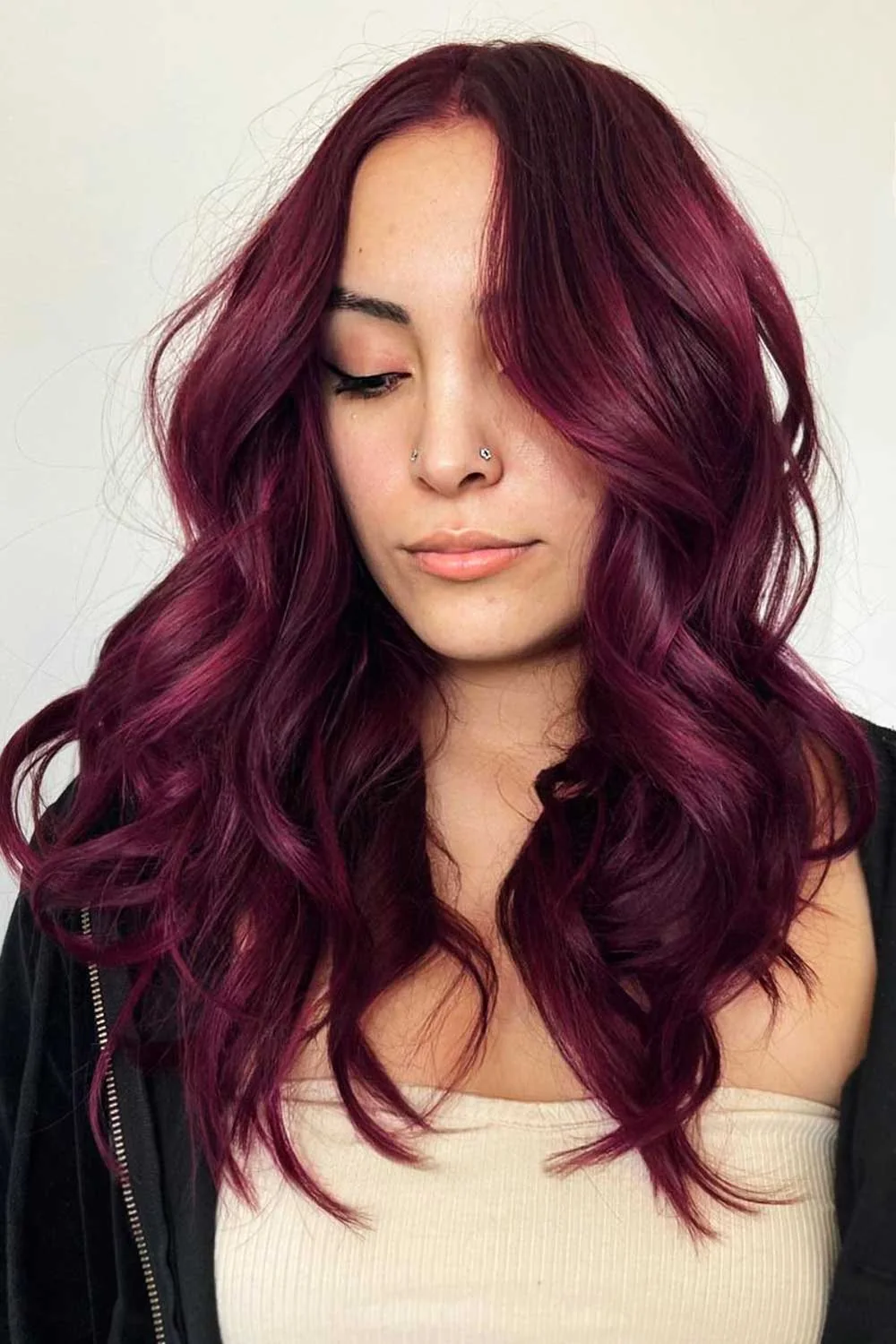
Idea 14
Deep Mahogany Shoulder Waves
Mahogany sits between brunette and burgundy here, giving the waves a rich red cast without bright copper.
- Tone
- Mahogany
- Length
- Shoulder
- Texture
- Wavy
The part and upper layers stay dark, while the lower curls show more berry-red. The hair is worn down with a soft side sweep, so the color is visible next to the face as well as through the ends.
Wearability note: This is a useful reference if copper feels too orange and purple feels too cool. Ask for the red-brown balance, not just the word mahogany, because the visible warmth changes with lighting.
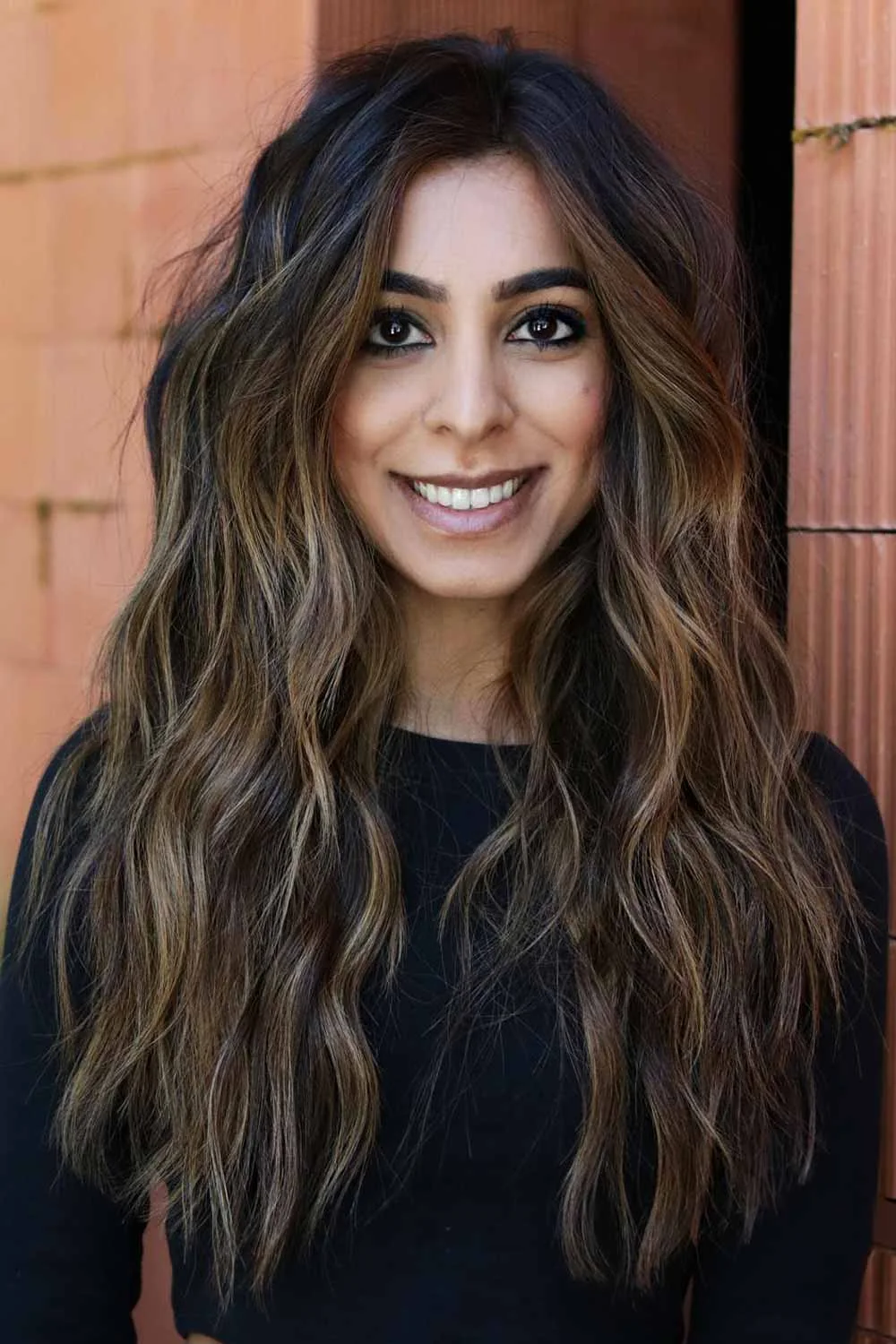
Idea 15
Ash-Brown Highlighted Layers
Cool lighter strands add definition to dark brown hair without turning the whole look blonde.
- Base
- Dark brown
- Accent
- Ash-brown strands
- Cut
- Long layers
The front sections show the clearest ash contrast, while the deeper base remains visible underneath. Loose waves separate the strands through the lower half, showing that the color is distributed rather than confined to one face-frame strip.
Wearability note: Use this if you want brightness but not golden warmth. Save the photograph for where the cool strands sit; the wave styling makes their spacing more obvious than a straight finish would.
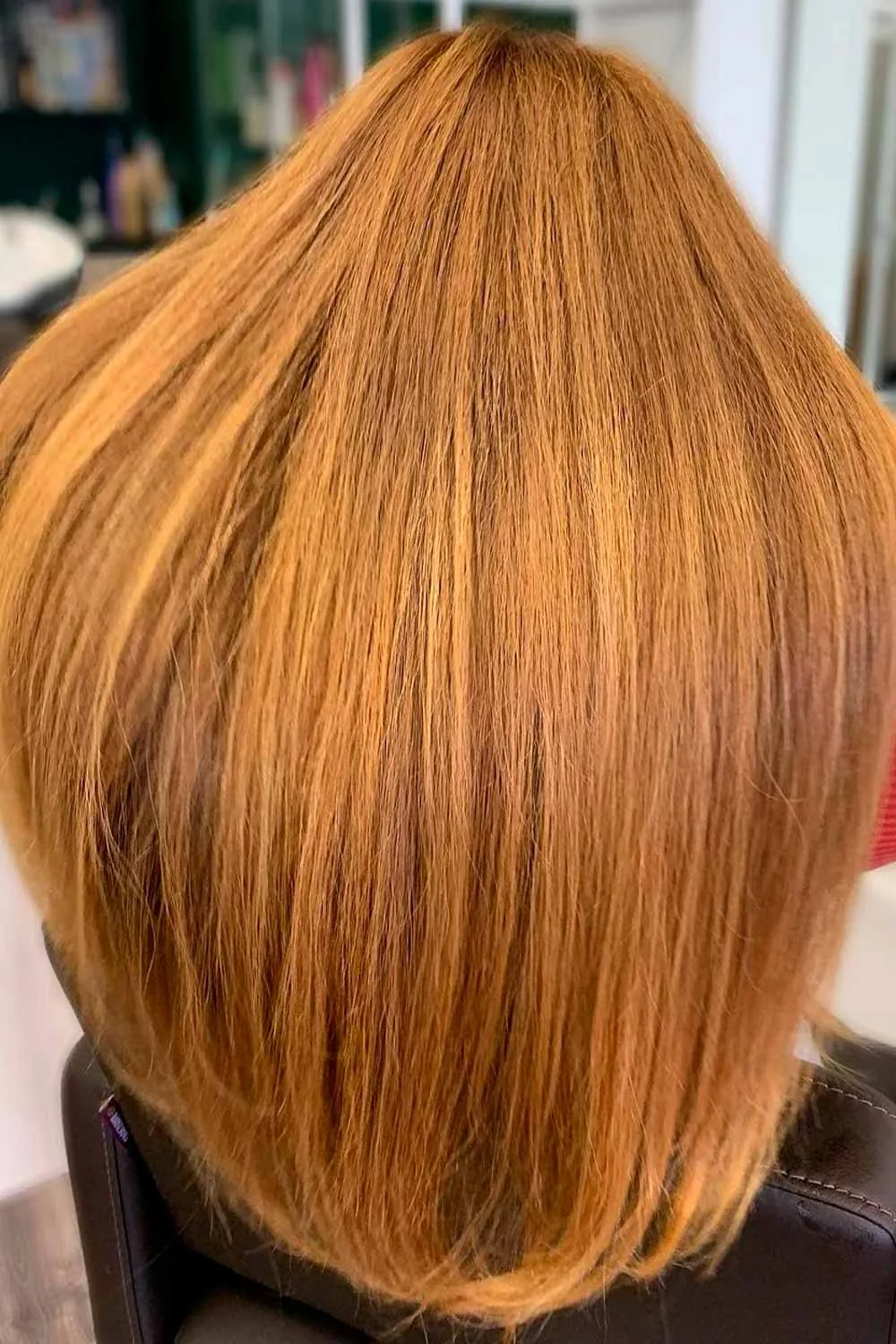
Idea 16
Natural Copper Straight Bob
The copper is even and medium in depth, offering a quieter comparison with the brighter curly copper cut.
- Length
- Short bob
- Tone
- Medium copper
- Finish
- Straight
Straight hair and a clean lower edge reveal the color without reflected wave highlights. The top appears a little deeper, but there is no clear dark-root fade or separate colored panel.
Wearability note: Choose this if you want copper that stays close to a natural redhead palette. Ask to compare it in daylight before selecting a formula, as indoor warmth can make copper look more orange.
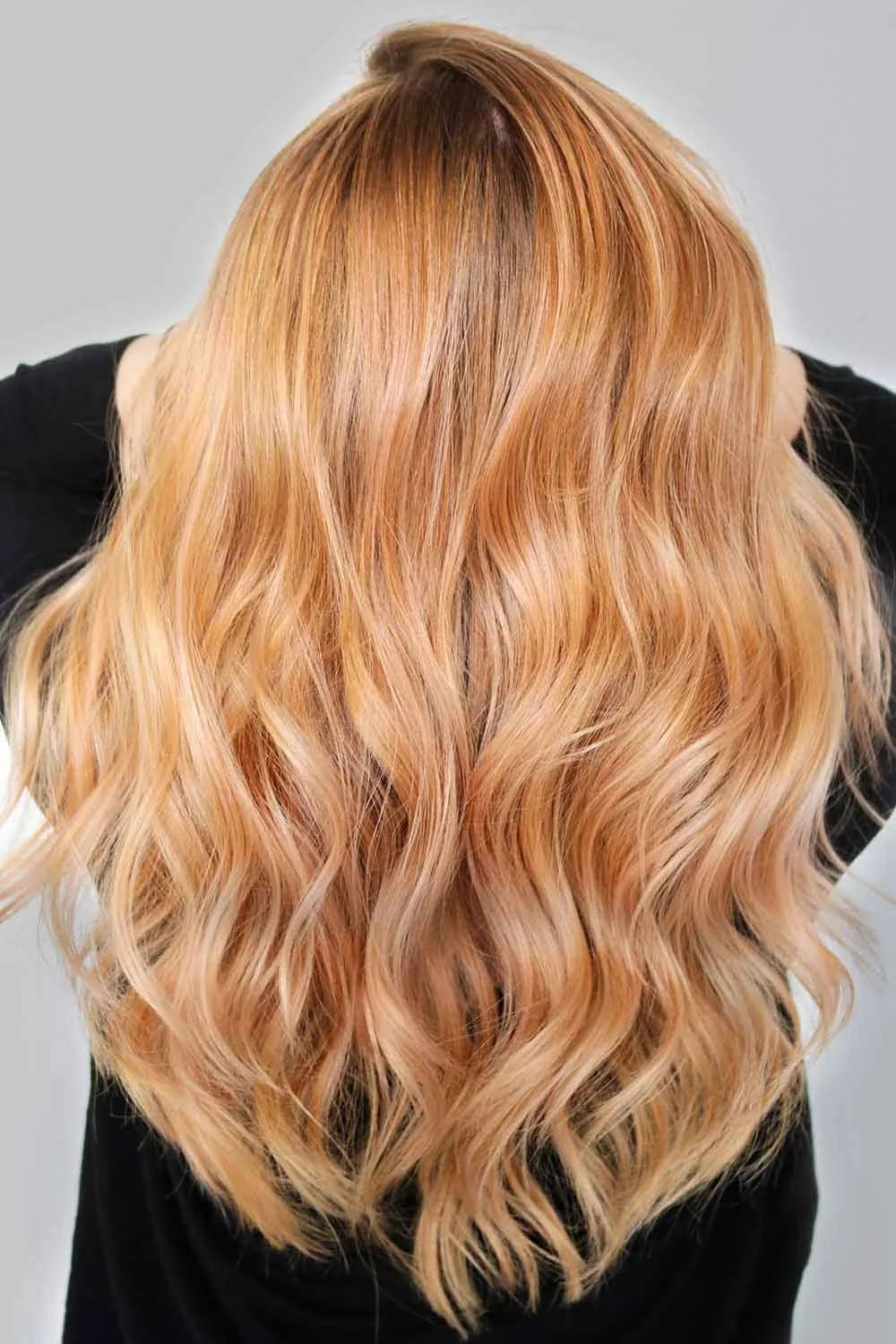
Idea 17
Strawberry-Blonde Long Waves
Pale gold and muted copper blend together, making this the gentlest red-toned option in the gallery.
- Tone
- Strawberry blonde
- Contrast
- Soft
- Length
- Long
The crown is softly warm rather than dark, and the color stays bright through the curled ends. Individual lighter strands show across the broad waves, preventing the strawberry tone from reading as one flat peach shade.
Wearability note: Save this if you want warmth without a strong auburn or vivid copper result. Discuss the proportion of gold to red, since shifting that balance changes the whole effect.
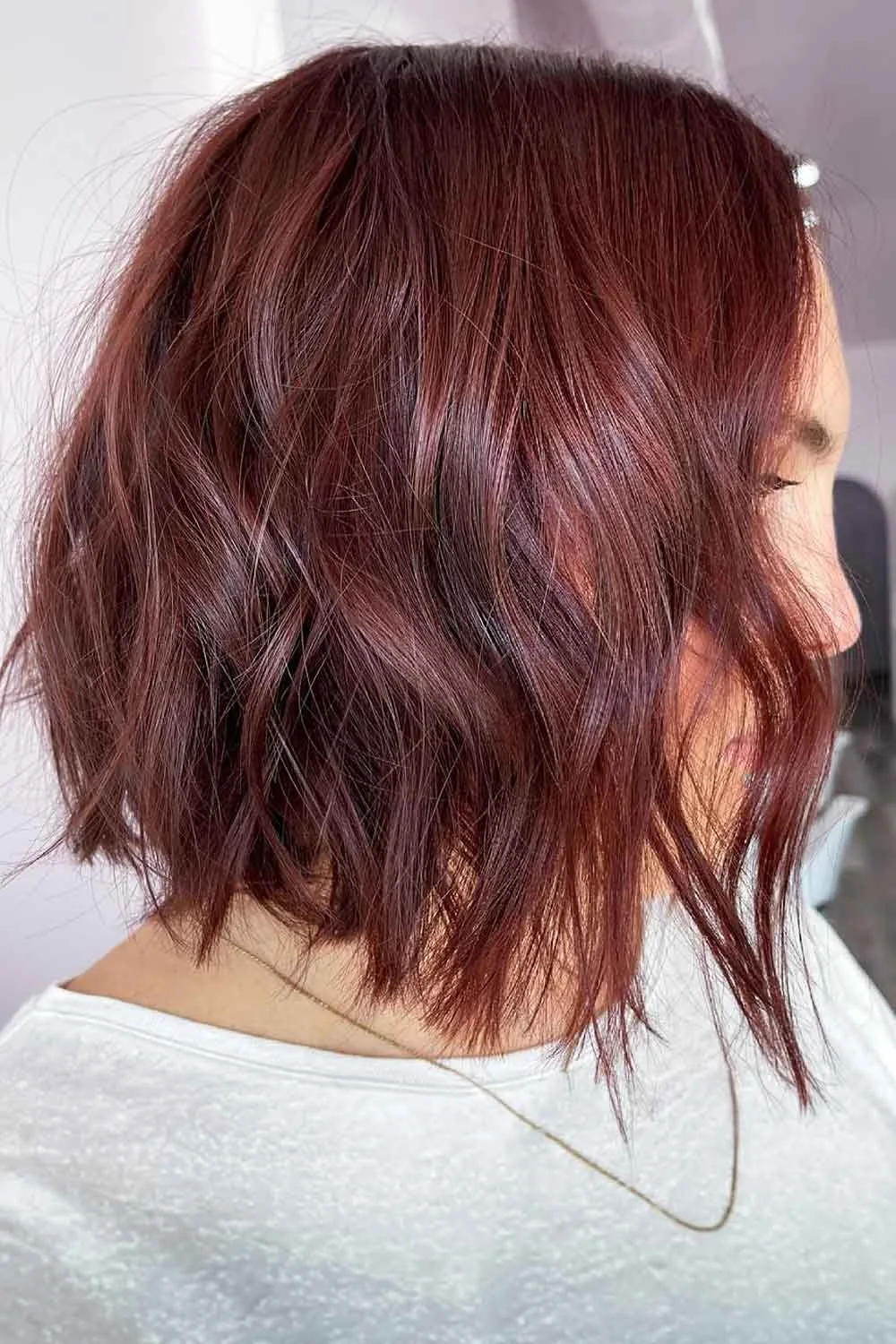
Idea 18
Wine-Red Textured Bob
A deep red-brown base becomes visibly wine colored along the choppy bob layers.
- Length
- Short bob
- Tone
- Wine red
- Root
- Dark
The crown is darker and the ends turn outward in uneven pieces, exposing brighter berry tones inside the cut. This is less uniform than the straight copper bob and shorter than the mahogany shoulder waves.
Wearability note: Choose this if you want a moody red on a short shape. Ask how much of the dark root you want to preserve, since that shadow is a large part of the photograph's depth.
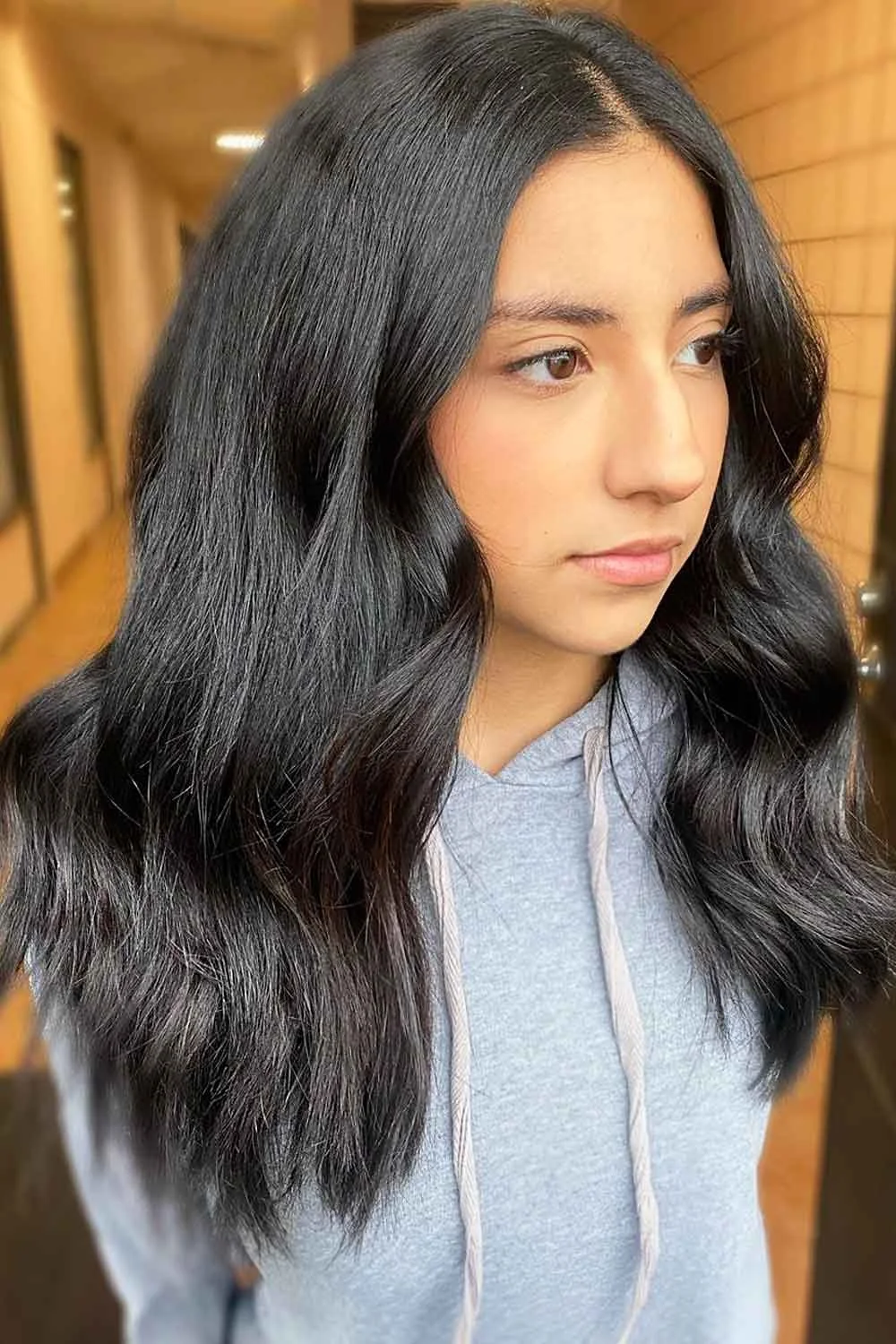
Idea 19
Soft Black Long Waves
A nearly uniform soft black creates depth through the long waves without any obvious colored highlights.
- Tone
- Soft black
- Length
- Long
- Finish
- Soft waves
The center part and smooth crown keep the deep tone continuous. Large waves around the shoulders catch light without showing contrasting highlights, so the color remains almost uniform from root to end.
Wearability note: Save this if you want a deep dark result without visible highlight ribbons. Compare it in daylight before choosing a black formula, because a photograph alone does not establish its exact undertone.
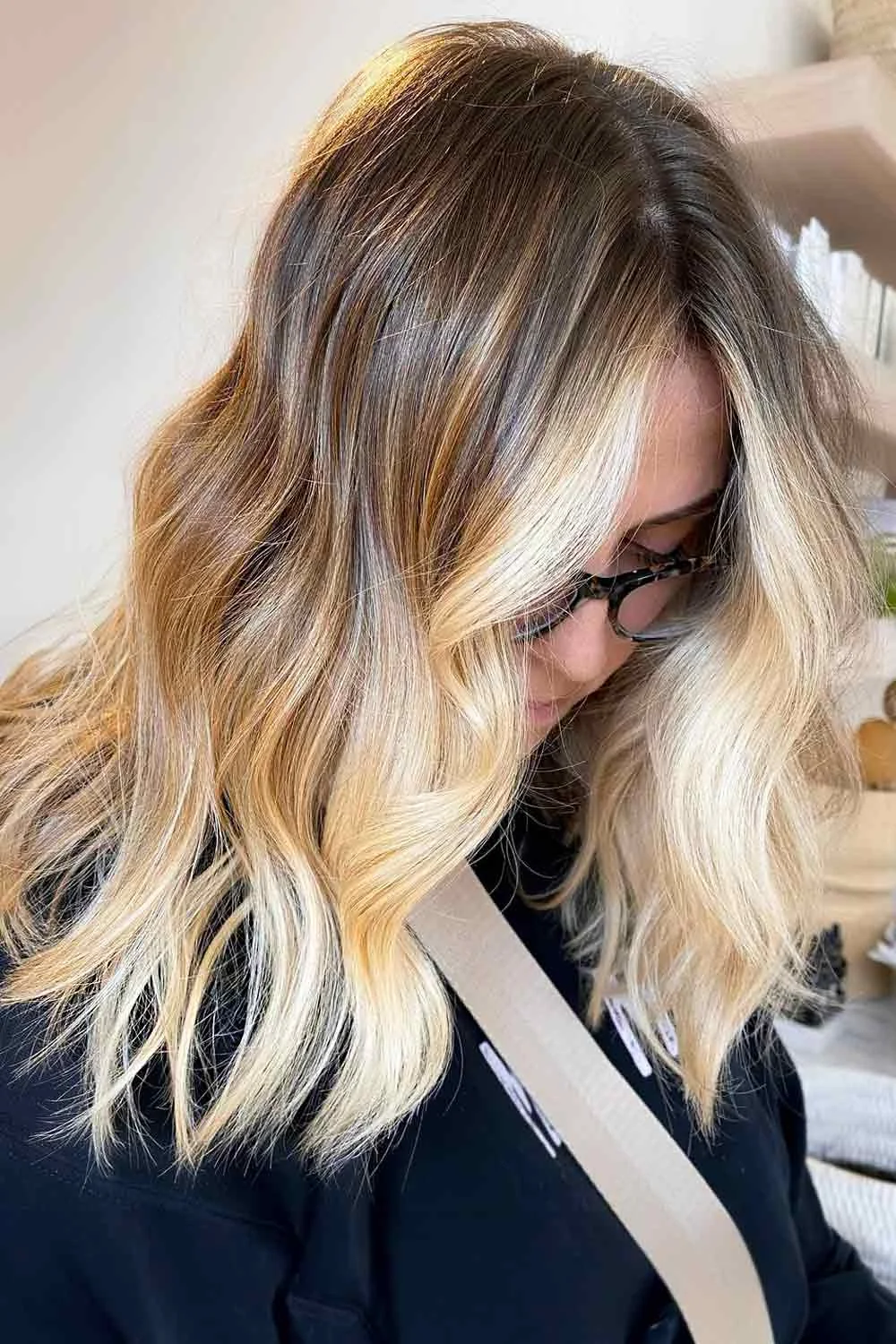
Idea 20
Blonde Face Frames on Brown Roots
Two broad pale pieces brighten the front while a darker brown root and underside remain visible.
- Base
- Brown roots
- Accent
- Blonde face frame
- Length
- Shoulder
The lightest color begins beside the cheek and continues through the ends. Behind it, warmer brown strands and a deeper crown keep the blonde from becoming an all-over look. The loose waves expose where the light and dark sections overlap.
Wearability note: Use this for bold front placement if you want brightness without lightening the whole head. Ask how wide the face-framing sections should be when you wear your hair straight or tied back.
Warm color or cool color?
Copper, chestnut and caramel add red or gold warmth in these photographs. Ash blonde, smoky silver and charcoal-dark brunette feel cooler. Neither family is inherently more winter-appropriate; the useful difference is how the shade looks beside your skin, clothes and natural base.
Compare a face-framing image with a back view before choosing. A pale end color can feel restrained from behind but much brighter when it begins beside the cheek.
How much of the base should stay visible?
Several examples preserve a dark crown and place lighter or brighter color through the middle and ends. Others are more uniform, such as the copper bob or near-black waves. The amount of untouched-looking root affects the visual contrast and the way regrowth will appear.
Bring one photograph for your preferred shade and another for where it starts. That separates a color you love from a placement that may not suit your routine.
What can a photograph not tell you?
It cannot show the lighting conditions, starting shade, prior color history or work needed to reach a pale silver or pastel tone. A styled wave also exposes several color ribbons that may look different when the hair is straight.
Use the gallery to explain the visible result you want, then have a colorist assess what is realistic for your hair. Do not treat a caption or edited salon photo as a one-session guarantee.

About the author
Bella Ross
Bella Ross is the hairstyle editor behind Latest Easy Hairstyles. She curates practical haircut, braid, color, and styling ideas with a focus on looks that are easy to browse, realistic to recreate, and useful for everyday hair decisions.