
Before you choose
Follow the curve behind the ear
The defining comparison here is the route of the fade: it descends behind the ear rather than staying level around the head. Some photographs show a soft lower connection, while others have a stronger curve or a decorative line. The line itself is optional. Use side and rear views together to separate the fade shape from the length retained on top.
The hairstyle gallery
15 drop fade haircut ideas to compare
Compare the visible length, shape, texture, and finish before choosing a salon reference.
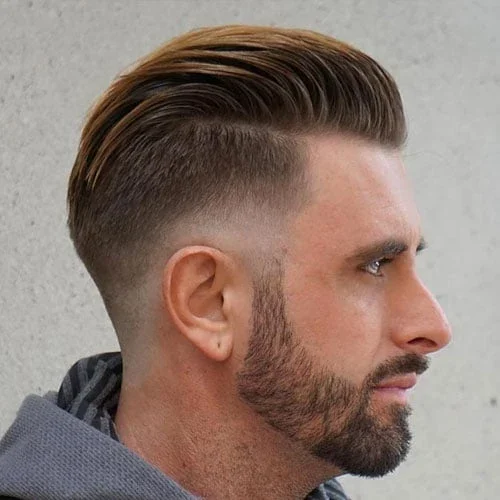
Idea 01
Smooth Sweep With a Lower Rear Blend
The smooth upper sweep sits above a side that becomes lighter around the ear. More dark coverage remains toward the back, giving the blend a descending rather than level route.
- Shape
- Smooth swept-back top
- Detail
- Lower rear coverage
The longer top curves backward in visible combed strands. The short beard has a separate cheek edge, so it adds definition below the fade without explaining the nape shape itself.
Wearability note: Use this for the softer side connection, and add a rear photograph if you want a stronger drop at the back. This profile shows the change beside the ear more clearly than the complete lower outline.
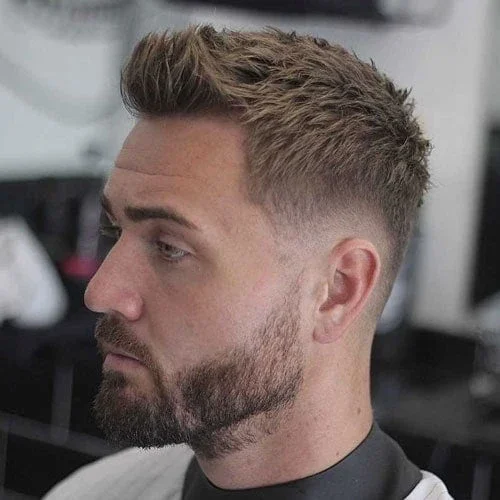
Idea 02
Short Quiff With Soft Rear Coverage
A short quiff rises at the front while the side stays close. The darker hair retained farther back gives the transition a lower route behind the ear.
- Shape
- Short textured quiff
- Detail
- Dark retained rear
The top has small separated tips rather than a continuous polished ridge. The fade is softer toward the back, creating a less abrupt connection between the upper texture and the lower nape.
Wearability note: Compare the back coverage with a higher exposed version before choosing. Keeping more hair behind the ear can change the profile even when the front quiff stays at exactly the height you prefer.
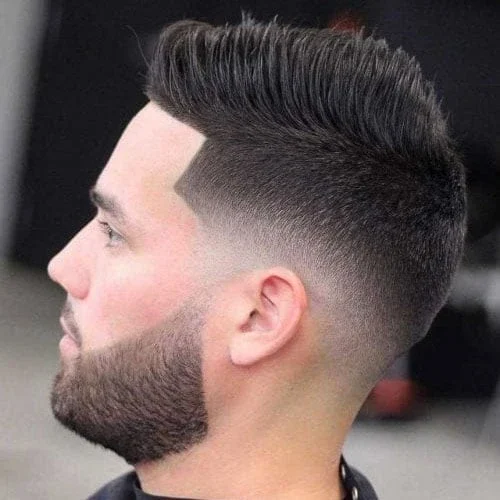
Idea 03
Tall Dark Quiff With a Descending Fade
The front rises sharply while the fade descends toward the back. The darker rear section keeps the profile connected beneath the raised upper hair.
- Shape
- Tall upright front
- Detail
- Descending side blend
At the temple, the transition sits higher than it does behind the ear. The beard begins below the close side, creating another dark shape that is visually separate from the longer upper ridge.
Wearability note: Point to the route of the blend as well as the tall front. A similar quiff above a level high fade would expose a different amount of the back, so the two photographs would not be interchangeable.
Choose your direction
Trace the curve
Look at how the darker transition descends behind the ear.
Compare rear length
Choose between a rounded back and a longer retained central section.
Separate the accents
Decide on parts, shaved lines and beard shape independently.
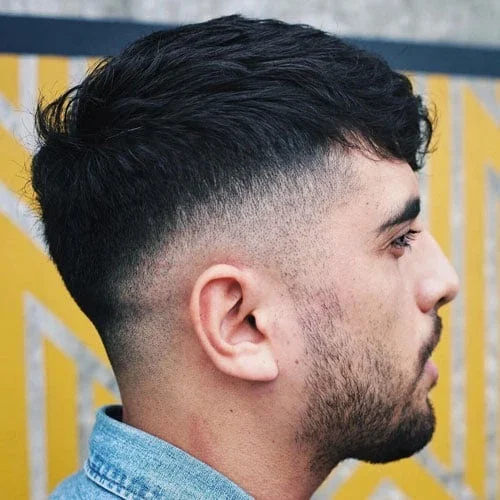
Idea 04
Loose Black Texture With a Curved Blend
Loose pieces break up the front while the fade curves around the ear. The darker area expands toward the back, making the rear coverage part of the visible shape.
- Shape
- Loose upper texture
- Detail
- Curved darker rear
The top remains broad and softly raised rather than narrowing into a central ridge. The sideburn stays short above the beard, which keeps the upper blend easy to distinguish from the jawline.
Wearability note: This is useful if you want a fuller top with a close side but some rear weight. Save the profile to explain that balance, rather than describing the whole cut only by its front texture.
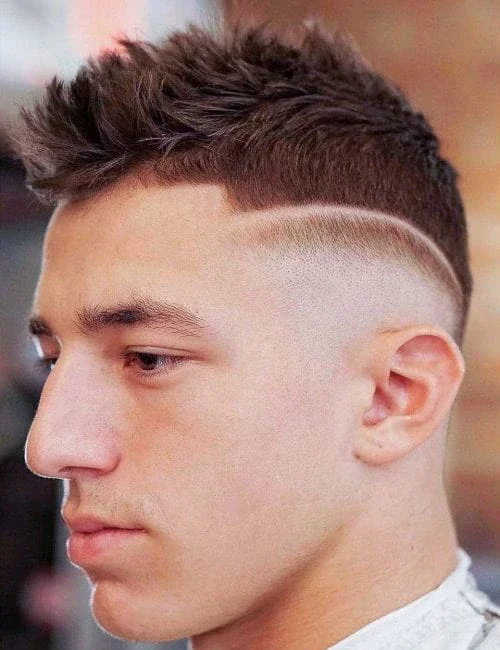
Idea 05
Short Spikes With a Curved Shaved Accent
A curved pale line echoes the route beneath the short spiky top. The side below it is closely exposed, making the decorative arc unusually prominent.
- Shape
- Short pointed top
- Detail
- Pale curved accent
The fringe stays short and the temple edge is squared. The dark hair above the line continues backward, while the lighter lower area curves around the ear.
Wearability note: Distinguish the shaved accent from the fade itself when choosing. The line is optional, and a plain drop fade would still need a clear reference for how far the darker rear section should extend.
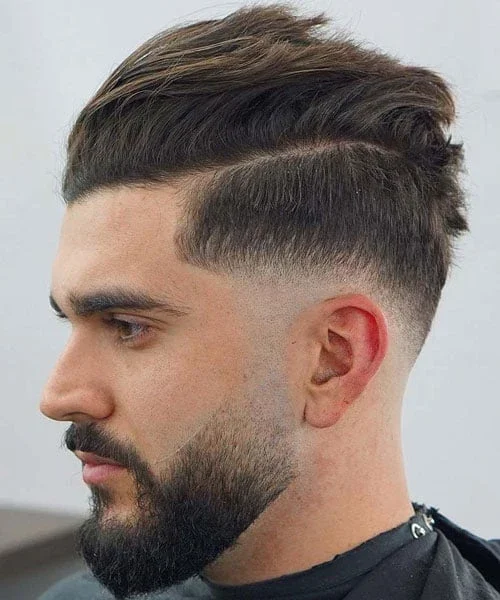
Idea 06
Parted Sweep With a Low Rear Connection
A defined side division organizes the longer top while the fade drops toward the rear. The close area around the ear contrasts with the darker hair retained above and behind it.
- Shape
- Defined side division
- Detail
- Lower rear connection
The front is swept diagonally rather than pushed straight upward. The temple has a crisp squared corner, giving this version a more structured edge than the loose textured cuts.
Wearability note: Choose the part direction separately from the rear coverage. If you prefer a softer front corner, bring another hairline reference while keeping this side angle for the path of the blend.
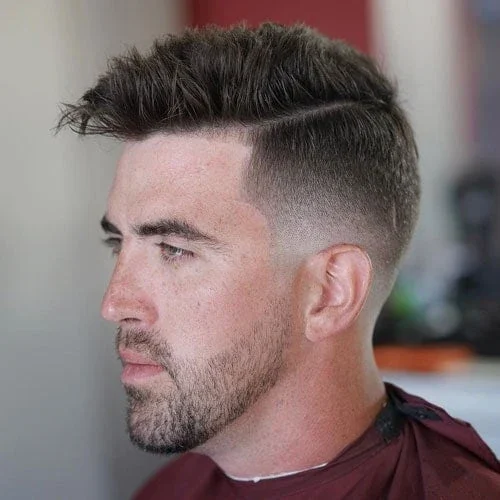
Idea 07
Compact Parted Top With a Soft Drop
The upper hair stays compact beside a narrow part, and the side blend softens as it runs toward the back. This keeps the outline smaller than the tall quiff examples.
- Shape
- Compact parted top
- Detail
- Soft lower rear blend
The front lifts only slightly, with short pieces following the same general direction. The lightest area sits around the ear while darker hair remains over the rear side.
Wearability note: Use this when your main priority is the fade route rather than extra height. A compact top still needs its own length discussion, because the label drop fade does not specify how short that upper section should be.
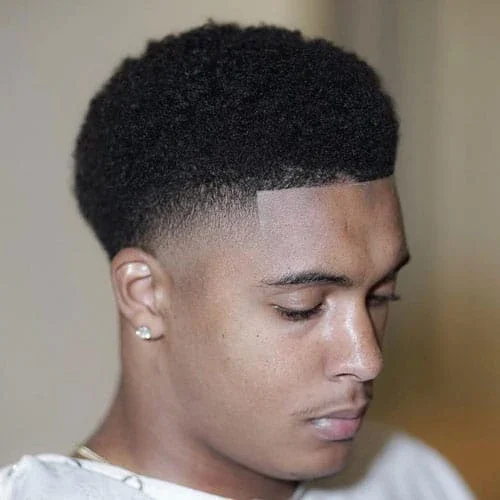
Idea 08
Rounded Coiled Top With a Lower Back
The coiled top forms a rounded, raised outline above the closer side. The darker rear coverage makes the blend look less level than a uniformly high exposed cut.
- Shape
- Rounded coiled top
- Detail
- Retained lower rear
A squared front corner creates a firm boundary against the softer upper texture. The side portrait shows the transition near the ear, but only part of the nape is visible.
Wearability note: Compare this with a rear angle before deciding how low the drop should sit. The upper height and front edge are clear here, while the exact amount of lower-back coverage still needs another reference.
Idea 09
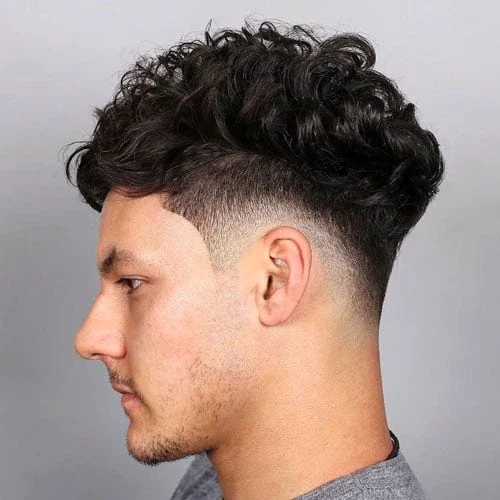
Curly Top With a Defined Rear Curve
Loose curls sit above a clearly curved side transition. Behind the ear, the darker hair drops lower than the short exposed area at the temple.
- Shape
- Loose upper curls
- Detail
- Defined rear curve
The upper curls add width and movement without hiding the side outline. The lower nape stays close, so the retained dark curve stands out between the full top and the lighter skin below.
Wearability note: Save this profile if the rear curve is the feature you want to explain. Compare the curl length independently, since a shorter upper section could keep a similar drop while producing much less overall volume.
Idea 10
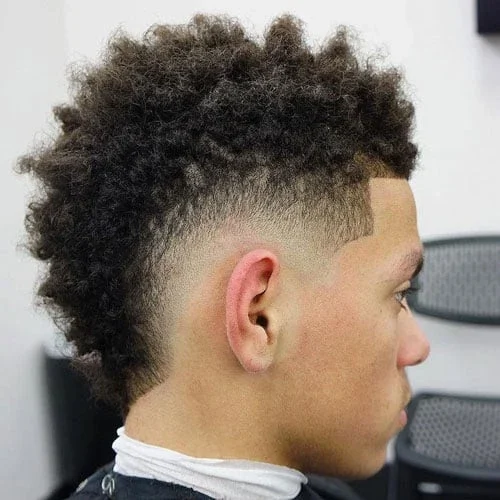
Coiled Ridge With Extended Rear Length
The coiled upper section continues into a longer central rear shape. The close side curves around the ear, leaving a more pronounced dark section behind it.
- Shape
- Raised coiled ridge
- Detail
- Longer central rear
This profile has a narrower, more extended back than the rounded crops in the gallery. The exposed side makes the retained central length especially visible, while the front edge stays compact.
Wearability note: Use this to compare how much rear length you actually want. The extended central section is an additional haircut choice, so it should not be assumed whenever you ask for a drop fade.
Idea 11
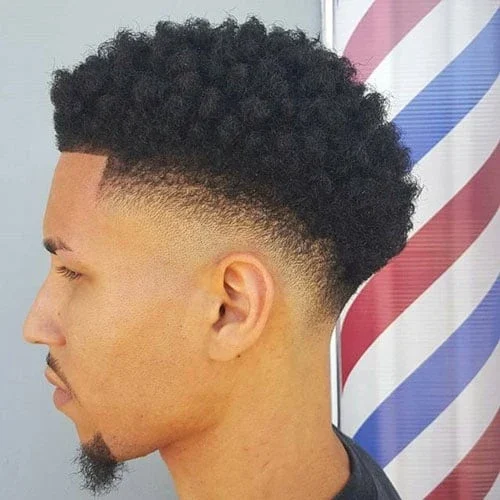
Short Coils With a Rounded Rear Drop
Short coils create an even textured top while the fade leaves a rounded darker section behind the ear. The rear coverage is visible without extending into a long tail.
- Shape
- Short coiled top
- Detail
- Rounded rear drop
The front edge is squared, and the upper outline remains compact. The blend lightens close to the ear before meeting the darker rear curve, keeping the contrast concentrated along the lower side.
Wearability note: Compare this with the longer coiled ridge if you want a shorter back. The side route can be similar, but the retained central length changes the silhouette and should be discussed as its own detail.
Idea 12
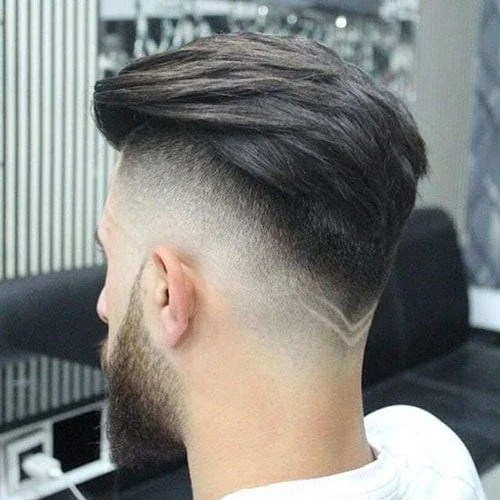
Swept Top With a Rear Chevron Accent
Two pale lines form a chevron at the lower rear, beneath the swept upper hair. The fade keeps darker coverage above that accent before the nape becomes closely exposed.
- Shape
- Swept longer top
- Detail
- Rear chevron detail
The rear-side angle reveals a longer upper section moving backward. The decorative lines sit inside the lower transition, so they draw attention to the back without determining the top length.
Wearability note: Show this angle if you like the rear placement, but decide whether you want the chevron at all. A plain version can retain the same descending blend without any shaved pattern.
Idea 13
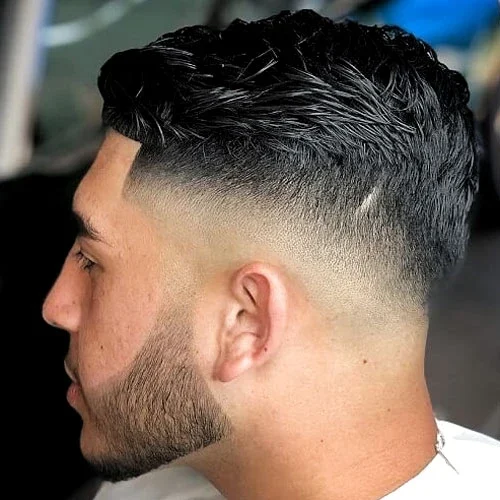
Glossy Waves With a Lower Rear Blend
Glossy waves keep the upper hair full while the close side narrows the profile. The transition drops lower behind the ear, retaining more dark coverage toward the rear.
- Shape
- Glossy upper waves
- Detail
- Lower rear transition
The front edge is squared and the wave ridges are visibly separated. The beard sits below the fade, leaving a lighter area around the sideburn that helps distinguish the haircut from the facial-hair outline.
Wearability note: Choose the wave finish independently of the fade route. If you prefer a less glossy surface, this profile can still explain the rear coverage, while another top photograph can show your preferred texture.
Idea 14
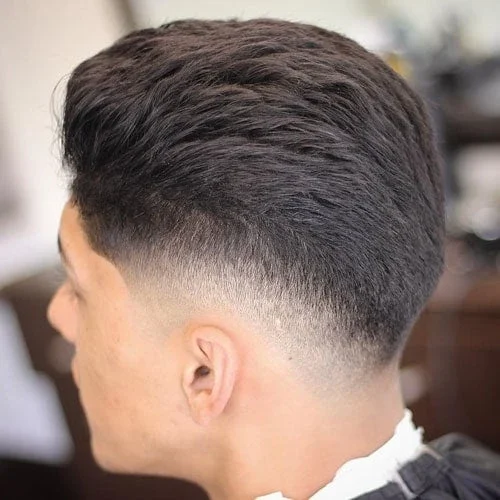
Short Sweep With a Rounded Dark Back
The rear-side view shows the fade curving beneath a rounded darker back. The top stays short and swept, making the lower shape easier to compare without a large crest above it.
- Shape
- Short swept top
- Detail
- Rounded retained rear
The area around the ear is much lighter than the hair toward the crown. The retained dark section slopes downward before meeting the closely exposed nape.
Wearability note: Bring this angle if you want to specify the drop itself. It is a clearer back reference than a front portrait, though you will still need to explain your preferred fringe and front height separately.
Idea 15
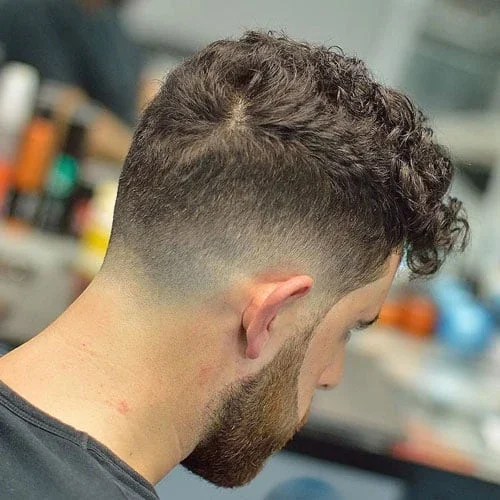
Loose Curls With a Soft Nape Transition
Loose curls sit above a softly shaded rear transition. The darker hair follows a descending curve behind the ear instead of ending at one level across the back.
- Shape
- Loose upper curls
- Detail
- Soft nape shading
The overhead rear angle reveals the crown and the upper curl movement together. The nape becomes progressively lighter below the retained dark section, giving the lower outline a gradual finish.
Wearability note: Use this when you prefer a softer rear blend over a sharply drawn lower edge. Pair it with a front view for curl length, since the lowered head changes how much height the top appears to have.
Use a rear view to explain the drop
Two front portraits may look similar while hiding very different back shapes. A rear-side photograph shows how low the darker hair continues and where the shortest area meets the nape.
Compare the underlying blend without relying on a shaved design to define it. A curve can remain visible through shading alone, and the top can be short, swept, curly or longer without changing that basic choice.

About the author
Bella Ross
Bella Ross is the hairstyle editor behind Latest Easy Hairstyles. She curates practical haircut, braid, color, and styling ideas with a focus on looks that are easy to browse, realistic to recreate, and useful for everyday hair decisions.