
Before you choose
Choose a tone and a contrast
Start with two photos: one showing the tone you like and another showing the root contrast you would wear. Your starting color and previous services will affect what is realistic; these photographs cannot establish a safe lightening plan.
The hairstyle gallery
Compare the blonde palette
Look at the shaded sections as well as the brightest strands. Root depth, warmth and placement explain more than a shade name alone.
Idea 01
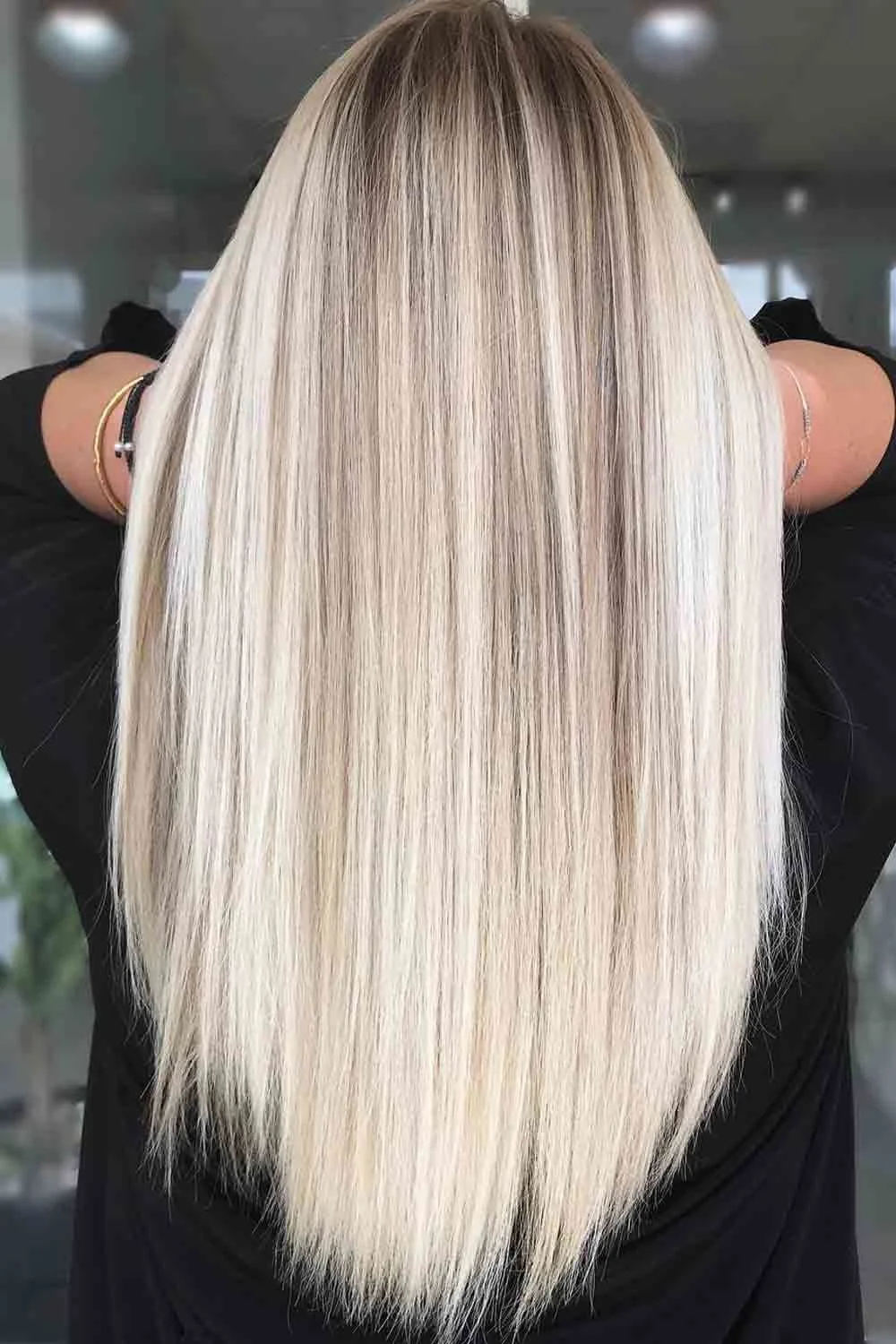
Pale Blonde With Fine Ribbons
Fine darker lines keep this very light blonde from looking completely uniform. The pale color extends through most of the length, but the crown retains enough depth to make the transition visible.
- Tone
- Pale blonde
- Finish
- Straight
Straight hair lays the ribbons beside each other, so their width is easy to compare. The lower outline tapers gently, concentrating the longest pale sections at the center rather than forming a broad horizontal edge.
Wearability note: Save this when you want a light result with subtle vertical contrast. If substantial ends are your priority, discuss the perimeter separately; this photo shows a tapered outline, and the color alone will not create a thicker bottom.
Idea 02
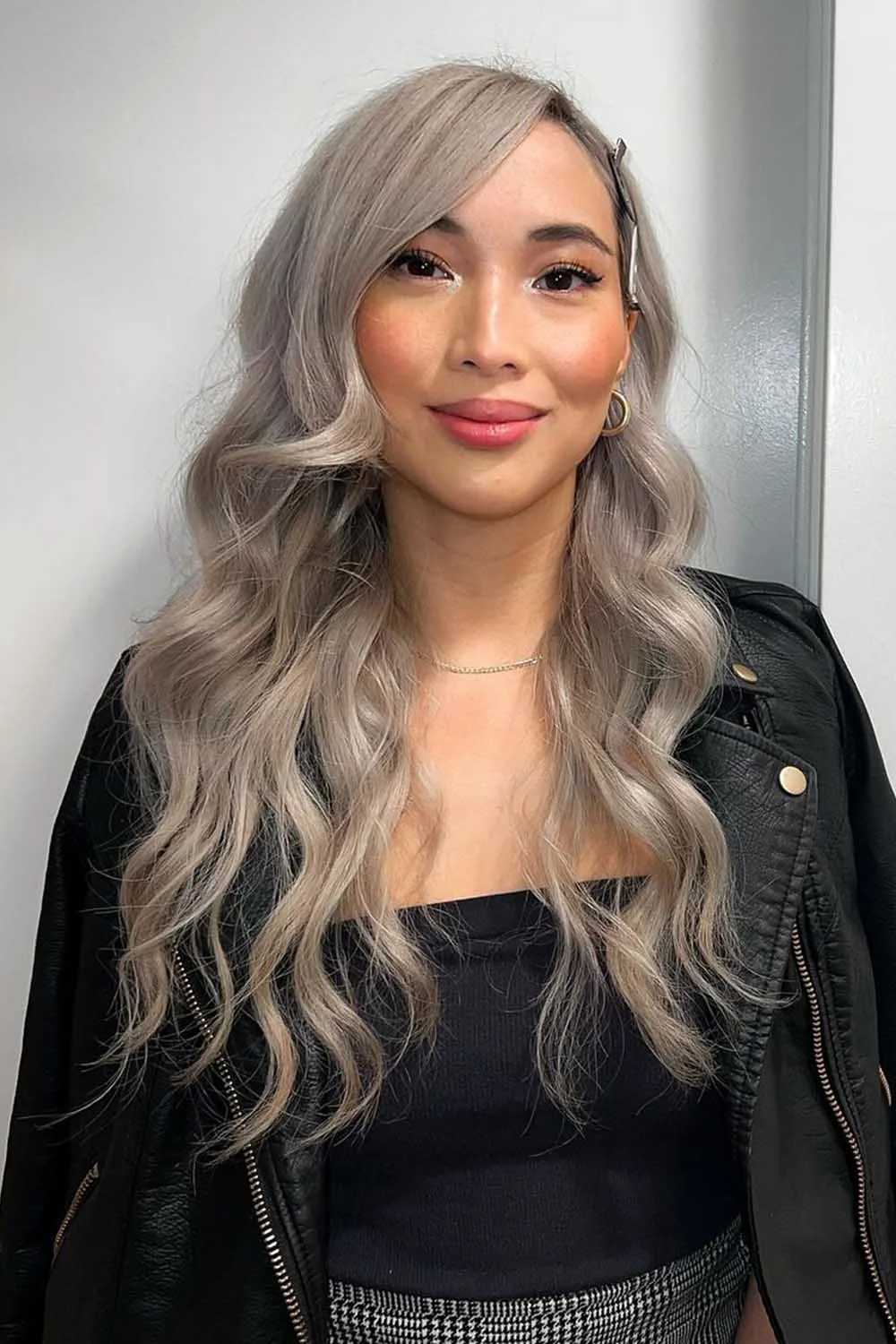
Silver Blonde With Soft Waves
The shaded sections carry a cool gray cast rather than a honey tone. That makes this a useful comparison with the warmer blondes even though several reflective curves appear almost white in the photograph.
- Tone
- Silver blonde
- Front
- Side opening
A side opening sweeps the front across the forehead, and loose waves fall below the shoulders. The shape is soft rather than sharply curled, leaving the silver impression visible through long, overlapping sections.
Wearability note: Bring the whole image to a color consultation instead of isolating one bright strand. Discuss whether you like the cooler shade or the side-swept styling most; those are separate choices, and warm lighting may change how silver appears.
Idea 03
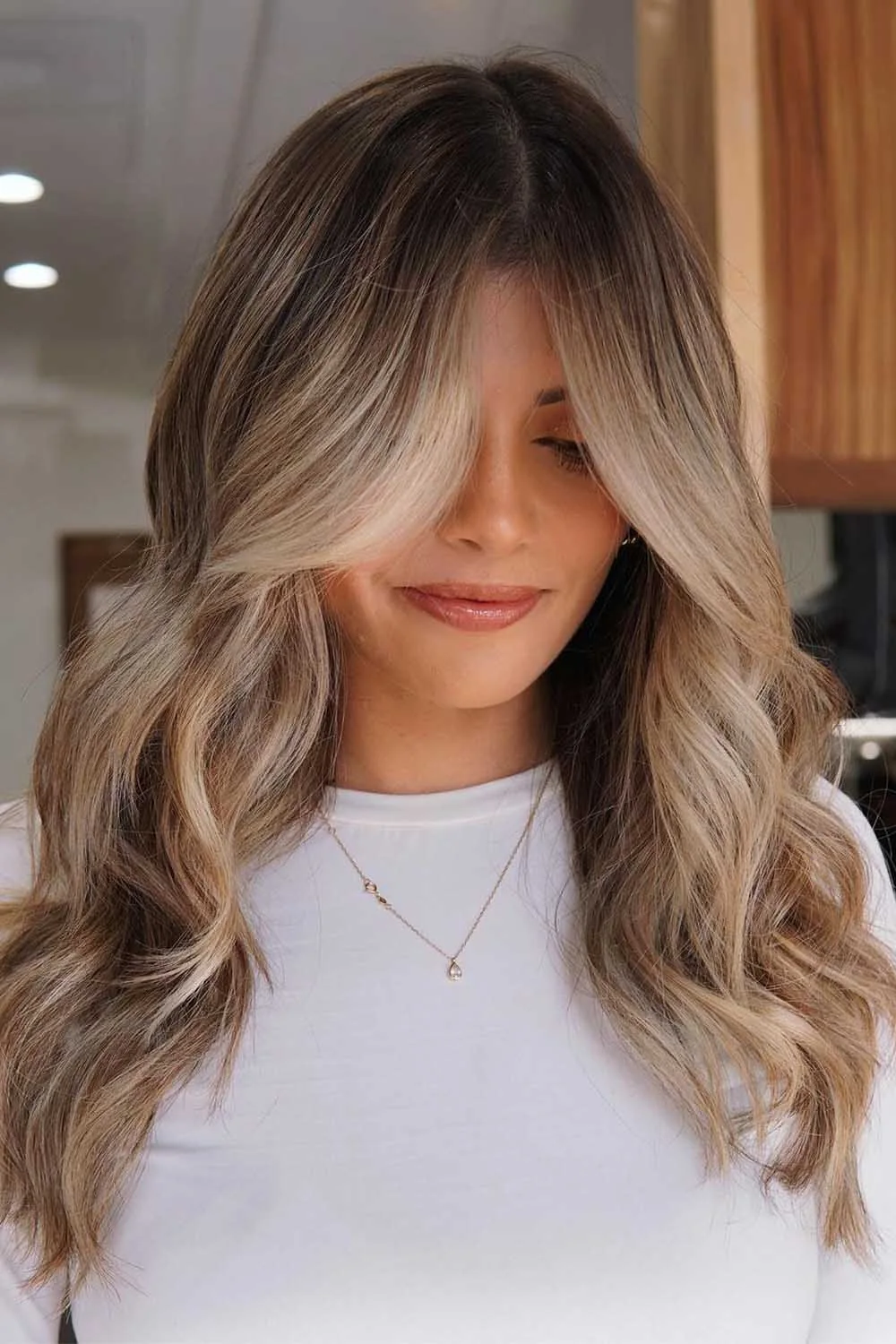
Dark Blonde With Light Fronts
This look keeps a substantial brown upper area and moves into lighter beige-blonde through the front. It is more useful as a depth-and-placement reference than as an example of uniformly blonde hair.
- Roots
- Brown depth
- Placement
- Lighter front
Long front pieces bend away from the face before curling back toward the chest. The contrast is strongest around that opening, while the rest of the wave blends darker and lighter strands into a softer mixture.
Wearability note: Choose it if you want a bright face frame without losing the deeper crown. Show where you normally part your hair, because the placement that looks balanced in this center-opening photograph may need adjusting for a side part.
Choose your direction
Want visible depth?
Compare rooted and brown-blonde examples rather than saving only their lightest ends.
Prefer warmth?
Look at honey, copper-gold and champagne examples in the less reflective sections.
Considering pink?
Save the amount of pink you want as well as the underlying blonde; these tinted examples are not neutral shades.
Idea 04
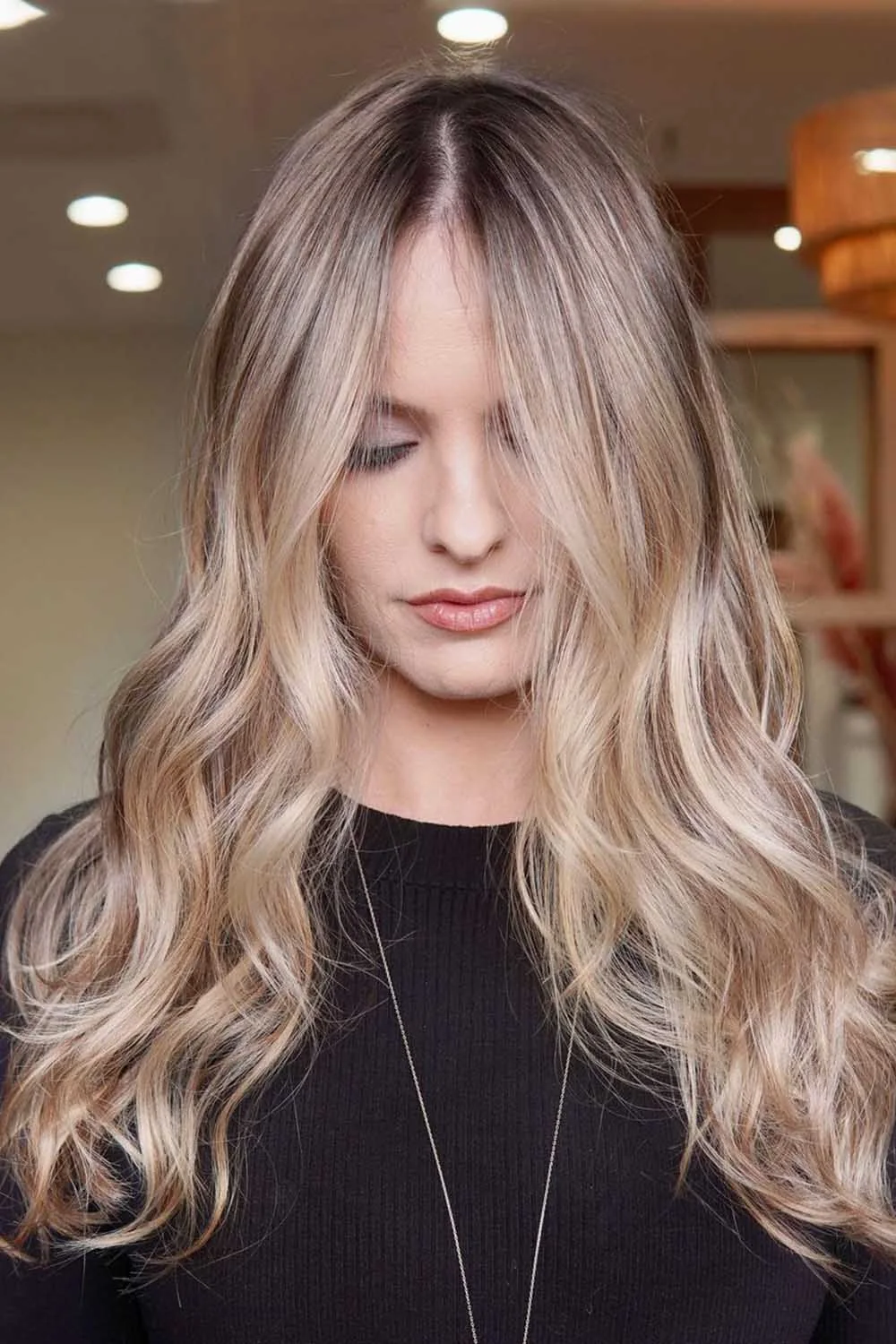
Creamy Blonde on a Deeper Base
Creamy light sections sit over a deeper base instead of replacing every dark strand. The overall impression is neutral and softly bright, with the transition spread through the upper sides rather than drawn as one clear horizontal line.
- Tone
- Creamy blonde
- Placement
- Rooted blend
Large bends reveal pale panels near the face and darker strips behind them. The ends stay loosely separated, which makes the blend look more relaxed than the straight ribbon example at the start of the gallery.
Wearability note: This is worth saving when you want dimension rather than maximum lightness. Ask which sections should remain deeper, especially near the part; describing only the pale ends would leave out an important feature of the result you like.
Idea 05
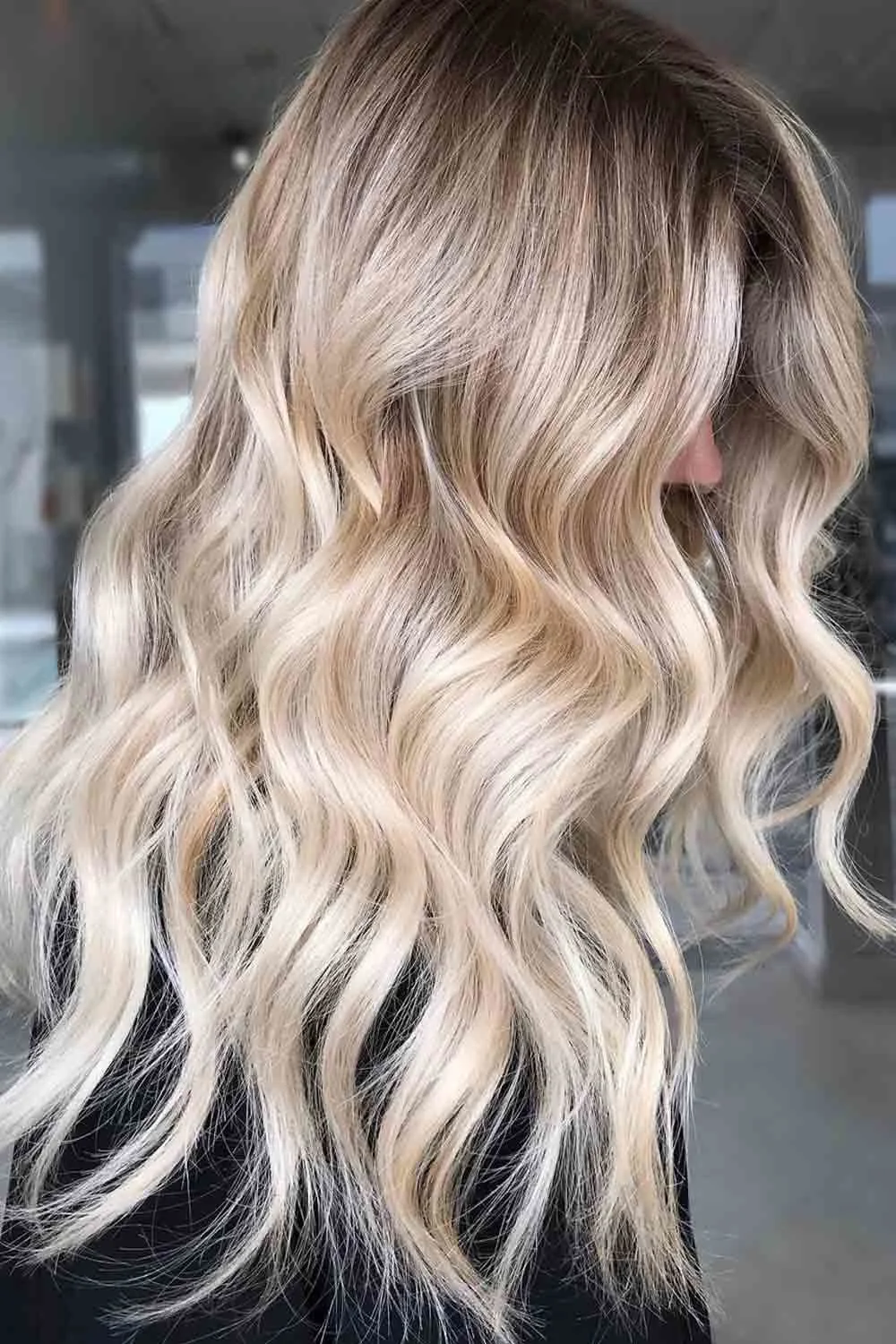
Cream Blonde in Broad Waves
A darker crown flows into creamy pale lengths, keeping the upper hair noticeably deeper. The back view makes the overall blend clear without a face frame or fringe competing for attention in the photograph.
- Tone
- Cream blonde
- Texture
- Broad waves
Broad waves break the blonde into smooth light panels and narrow shaded folds. The lower sections are bright but not visually flat, and their repeated bends account for much of the fullness seen across the back.
Wearability note: Use this for a root-to-length comparison, not a precise facial placement plan. If you prefer straighter hair, ask to see the proposed blend without waves as well; smooth lengths can make the same transition look more pronounced.
Idea 06
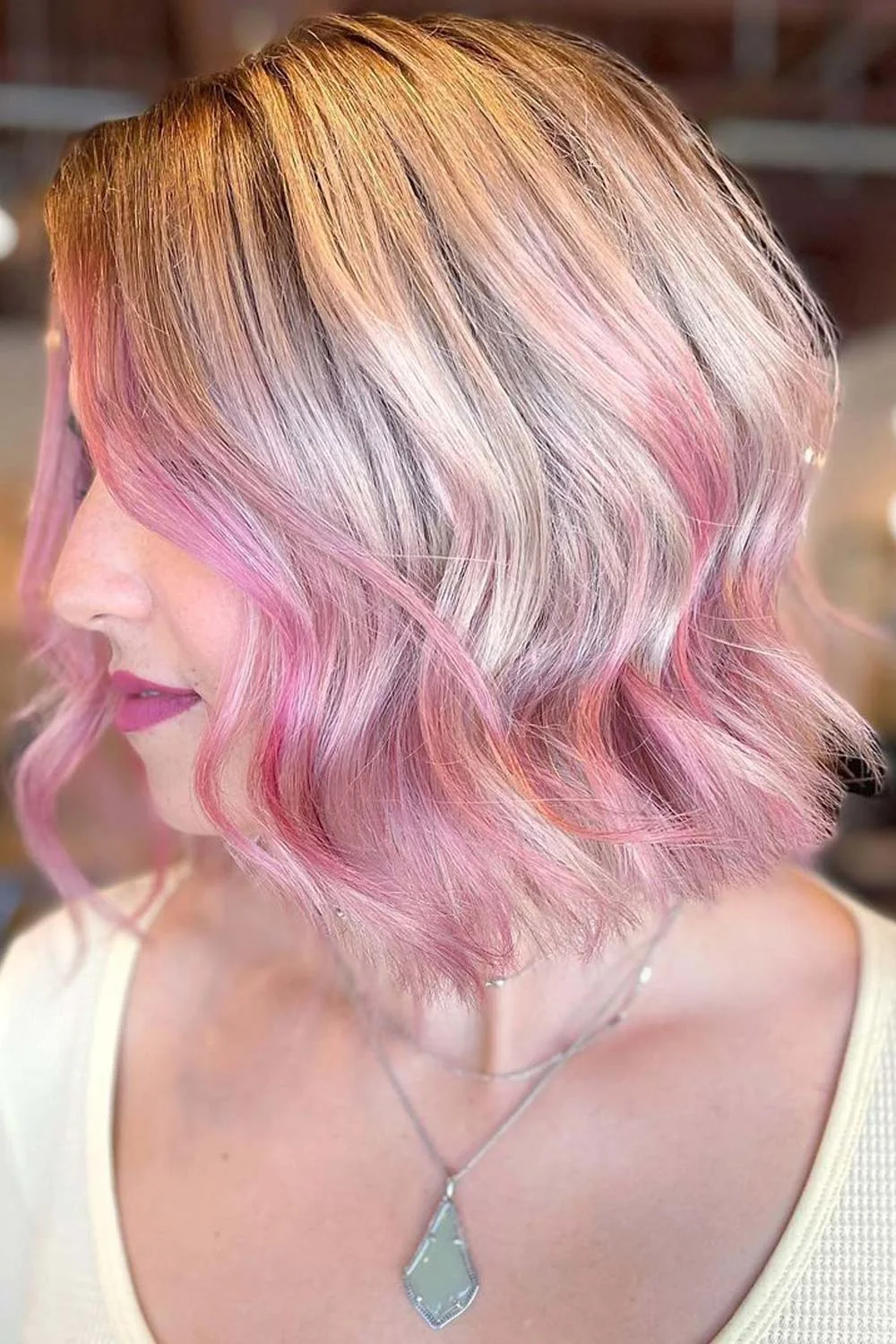
Blonde Bob With a Pink Tint
Pink sits within a light blonde bob rather than covering it as a solid vivid shade. A warmer upper section and cooler pastel pieces make this a color-combination reference, not an example of neutral blonde.
- Accent
- Pastel pink
- Shape
- Wavy bob
Small bends expose pink through the middle and ends, especially near the cheek. The compact bob keeps the color in a concentrated area, while the separated finish prevents the pastel panels from reading as a perfectly even block.
Wearability note: Save this if a hint of pink appeals more than an all-over bright color. Show how much blonde you still want visible, and discuss the tint as a separate choice from the length and wave in the photograph.
Idea 07
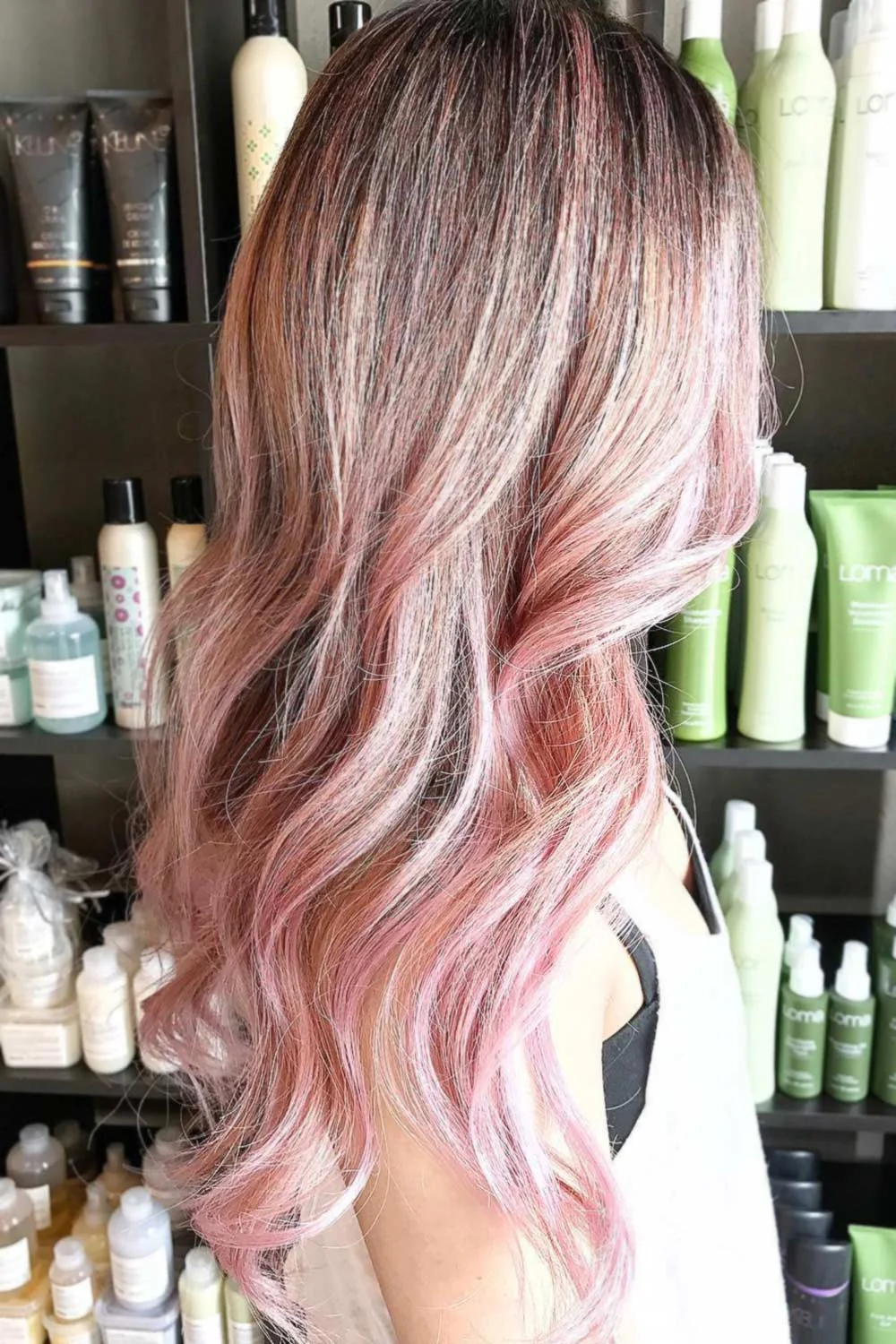
Pink-Blonde Through Long Waves
The upper hair remains relatively deep, while blonde and soft pink appear farther down the length. The result reads as a tinted blend, with warmth and pastel color sharing the same flowing sections.
- Placement
- Lighter lower lengths
- Accent
- Soft pink
Several wide curves cross the lower back and make the pink more obvious near the tips. The darker crown is comparatively smooth, so the color change and the shift into waves happen in a similar region of the photograph.
Wearability note: Choose this for a gradual tinted effect rather than a pale all-over blonde. Tell your colorist whether the pink should be a subtle accent or a clear feature; its visibility here depends on both placement and the way the lower hair bends.
Idea 08
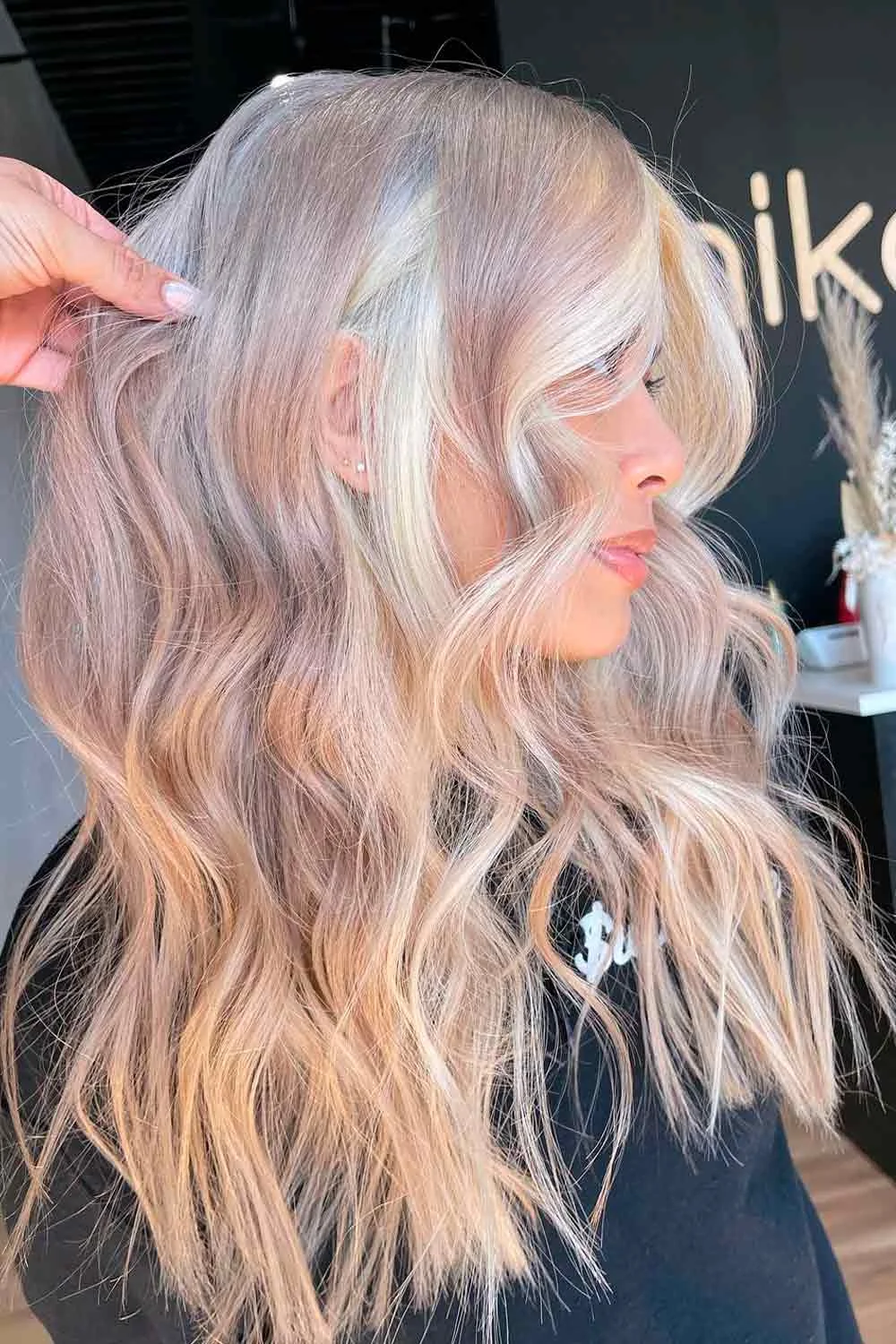
Pale Blonde With a Pink Veil
This is a quieter pink option than the stronger tinted blend beside it. Much of the hair stays pale blonde, with a delicate pink cast showing through the front and some of the lower curved sections.
- Base
- Pale blonde
- Accent
- Faint pink
The side opening and loose waves allow different shades to overlap rather than appear in rigid stripes. Bright reflections make the upper side look almost silver, while the softer tint becomes easier to see in less reflective areas.
Wearability note: Save this if you want to compare a barely tinted blonde with a neutral version. A faint pastel may be hard to judge in one photograph, so discuss the desired intensity under ordinary indoor light as well as bright salon lighting.
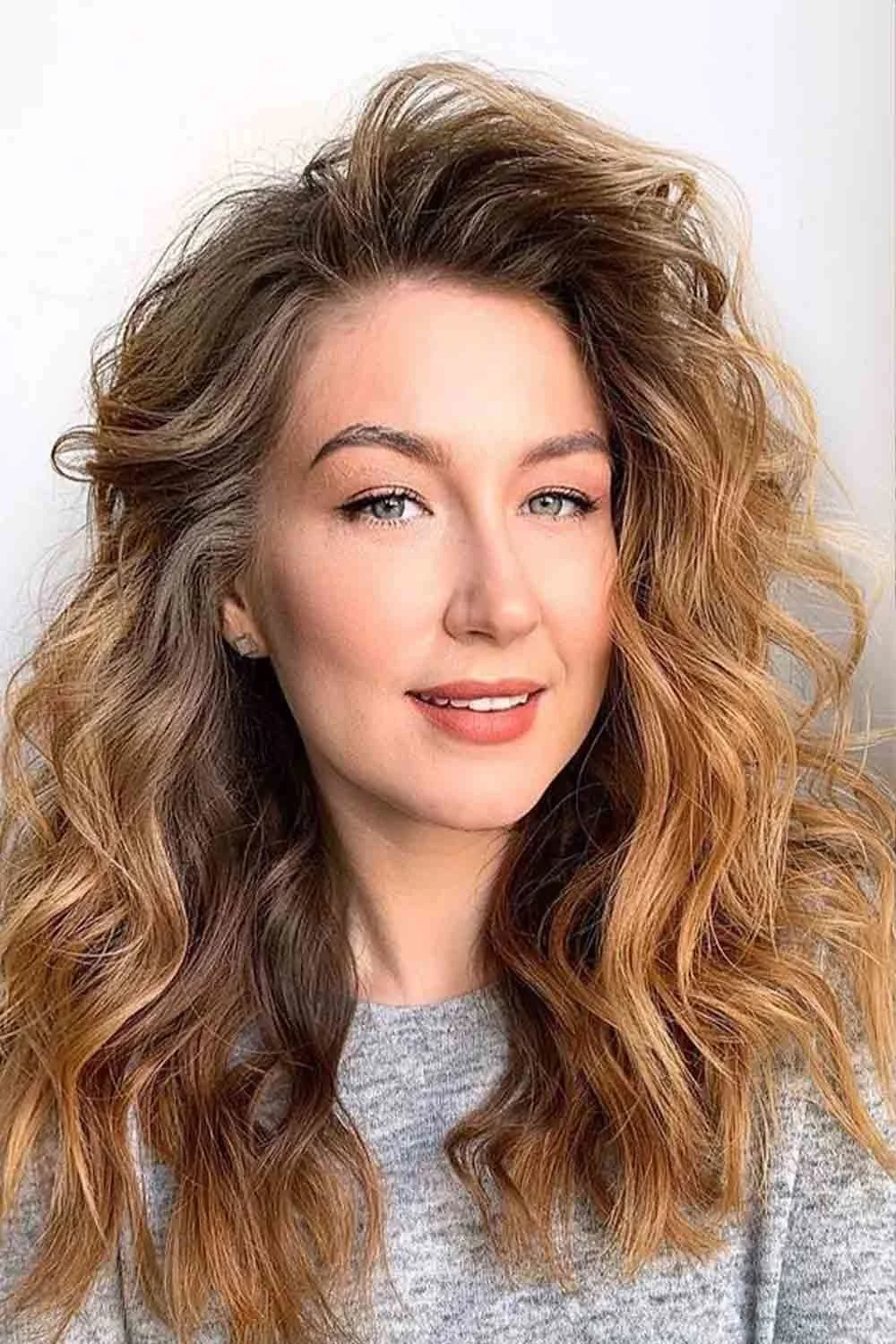
Idea 09
Warm Brown-Blonde Curls
This is the deeper end of the blonde comparison: brown remains prominent, with lighter golden strands giving the curls a warm glow. It does not promise an all-over pale result or a uniformly light root.
- Palette
- Brown and gold
- Texture
- Curls
The curls are irregular and softly expanded around the sides. Lighter strands trace several outer curves, making the color easier to see without removing the darker areas inside the shape or along the top.
Wearability note: Bring this when warmth and a natural-looking mix matter more than brightness. If your texture differs, ask to keep the brown-to-gold relationship while judging the cut separately; the photographed curls contribute much of the width around the face.
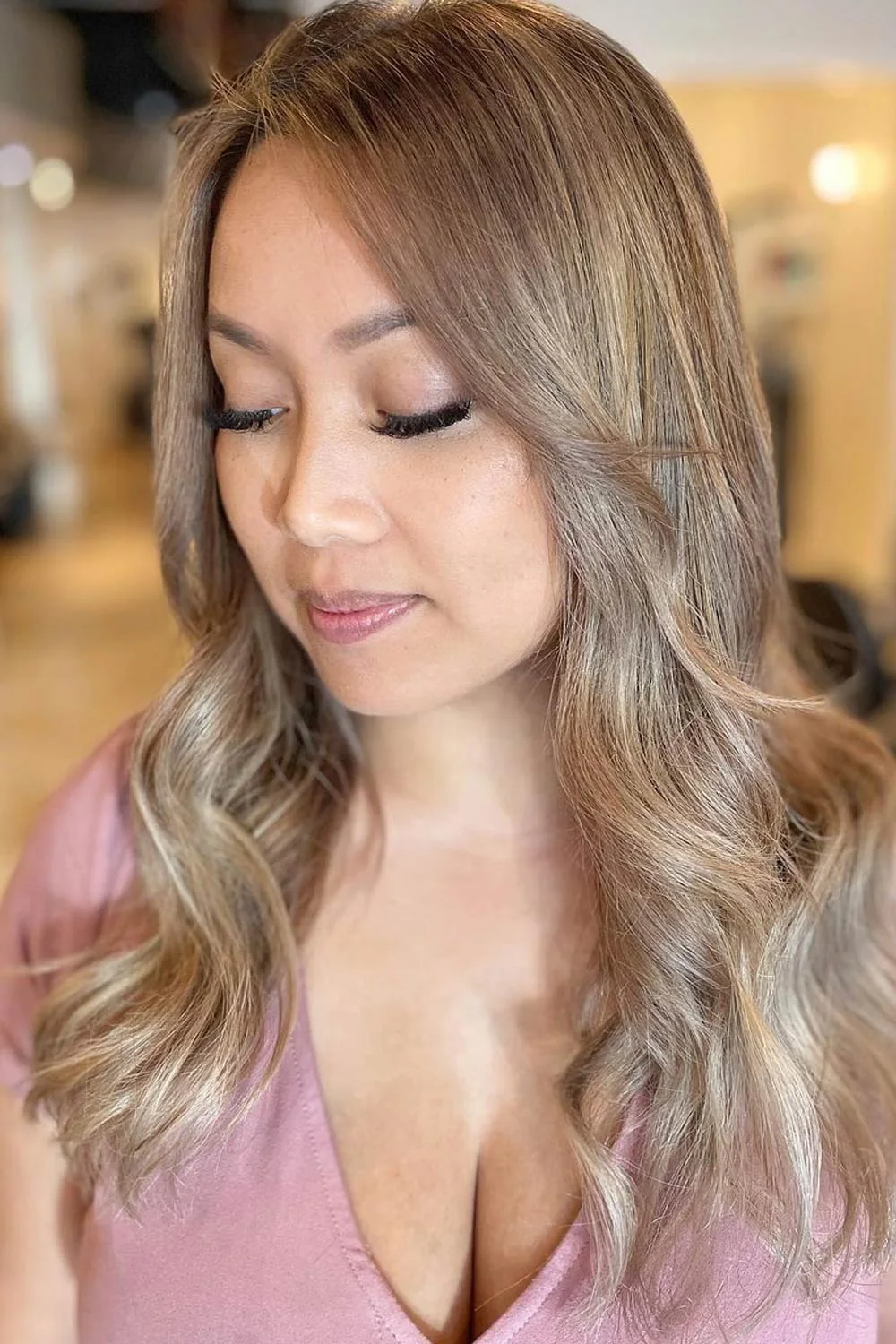
Idea 10
Sandy Blonde in Loose Waves
The blonde looks sandy rather than strongly silver or yellow. A deeper upper section keeps the part visible, while the lighter sides create a gentle frame instead of a bold pale stripe near the face.
- Tone
- Sandy blonde
- Texture
- Loose waves
Loose waves spread through the long hair and relax toward the tips. Small differences in brightness remain between the curves, giving the neutral-looking shade depth without the dramatic contrast of the rooted platinum examples.
Wearability note: Choose this if you want an in-between tone for comparison. Show the shaded portions, not only the brightest ends, and ask how the balance of beige and gold might read against your own complexion and in your usual lighting.
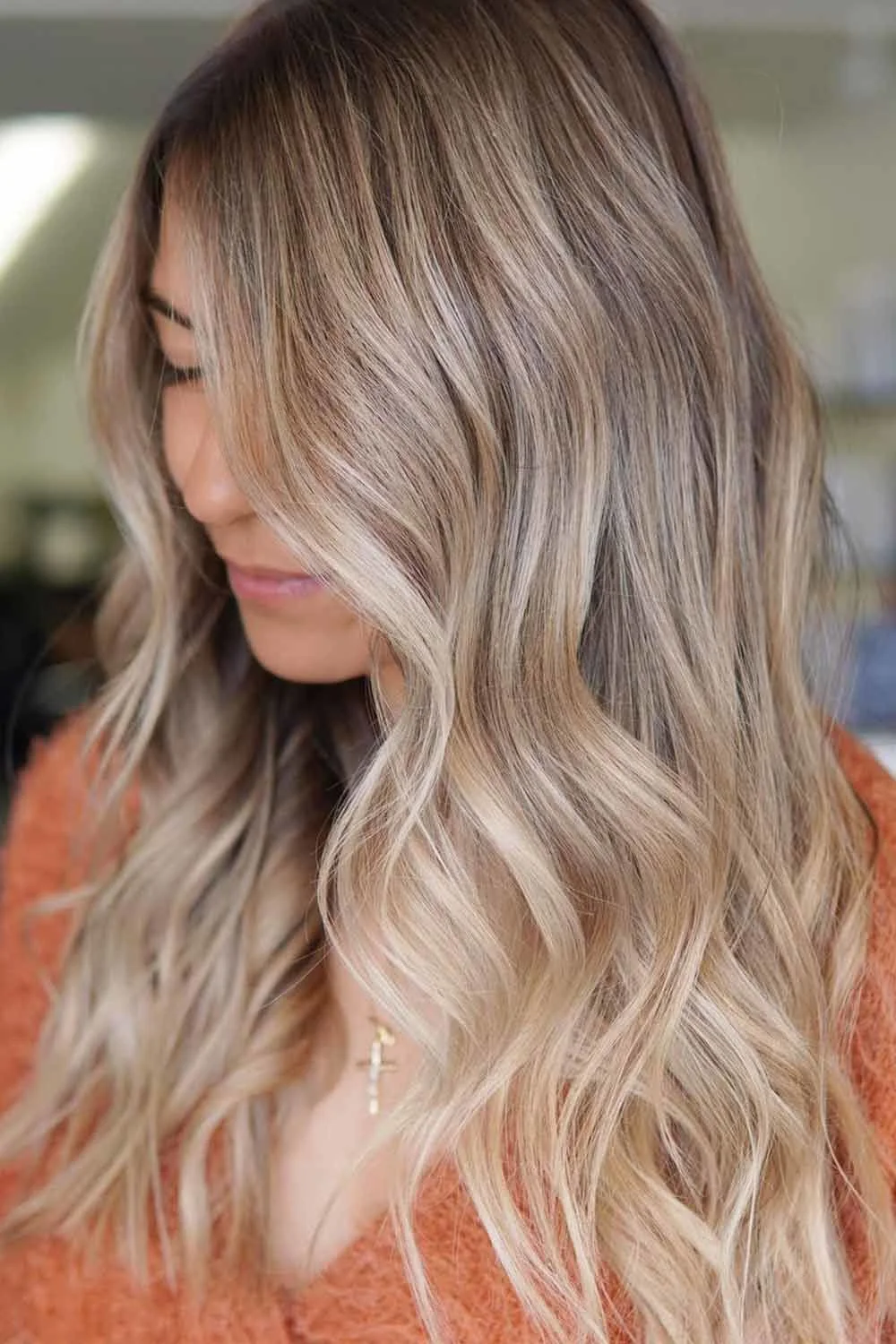
Idea 11
Beige Blonde With Dark Roots
The pale face-side hair stands out against a noticeably dark crown. Beige-blonde sections continue through the long sides, so the result has a bright lower impression without pretending that the scalp area is equally light.
- Tone
- Beige blonde
- Roots
- Dark contrast
Broad curved pieces expose different amounts of dark and light as they turn. The front is long and partially covers the face, making this a stronger reference for contrast than for a precise fringe or hairline design.
Wearability note: Save the width of the bright front along with its tone. If you regularly tuck the sides back, ask how that placement will look with the darker sections exposed; the down-styled view does not answer that question on its own.
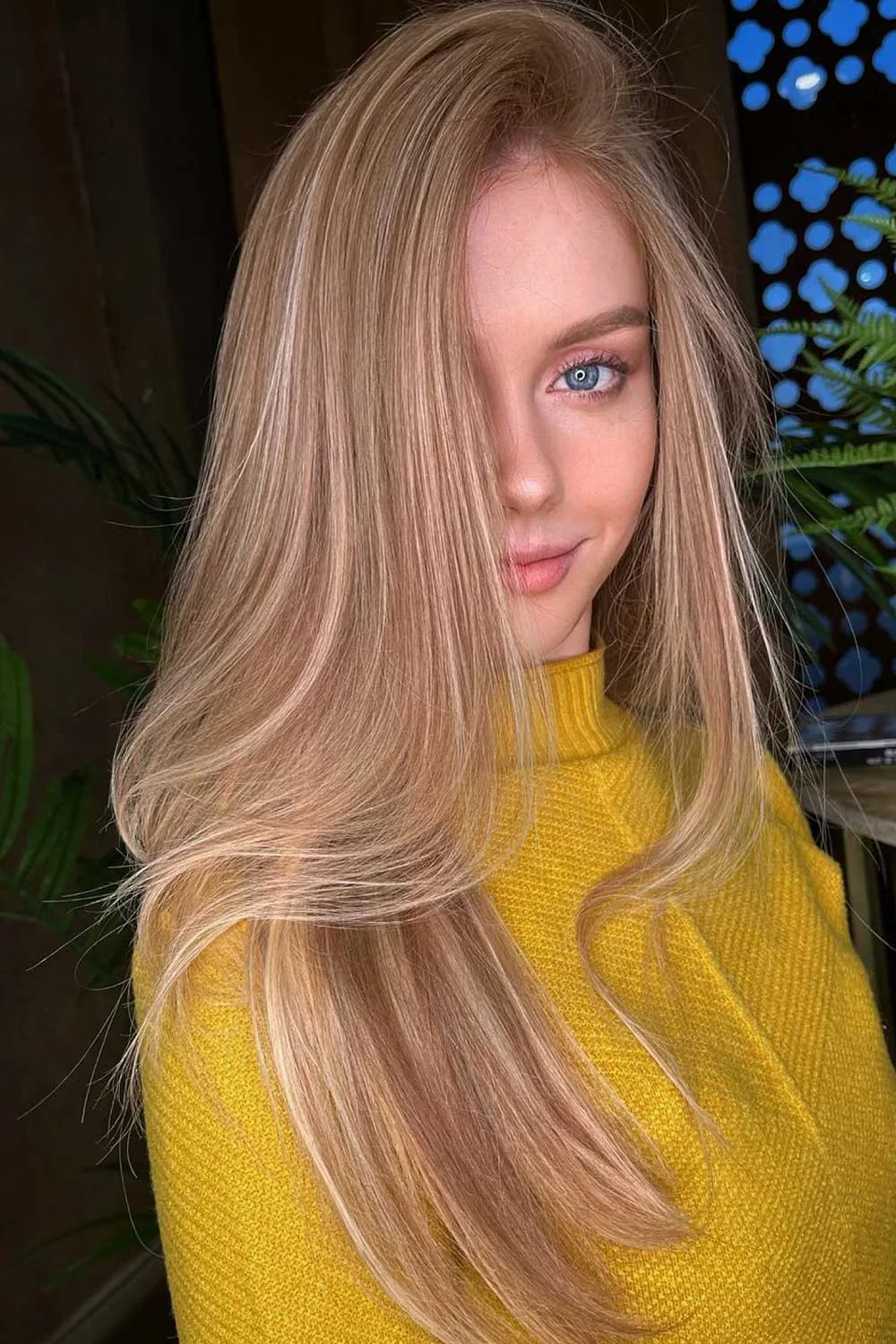
Idea 12
Honey Blonde With Smooth Lengths
Warm honey color is easy to read here because the finish is mostly smooth. The blonde has a golden impression without the very pale silver sections seen elsewhere, making it a useful warm-tone comparison.
- Tone
- Honey blonde
- Finish
- Mostly smooth
The front falls in a long panel, while the ends bend gently inward and outward rather than forming repeated curls. Fine variations in color remain visible along the length, but the overall shape stays streamlined beside the face.
Wearability note: Use this when you want warmth without a highly waved finish. Check whether the golden shade or the smooth silhouette is the main attraction, then bring a second reference if your preferred haircut has a different front or perimeter.
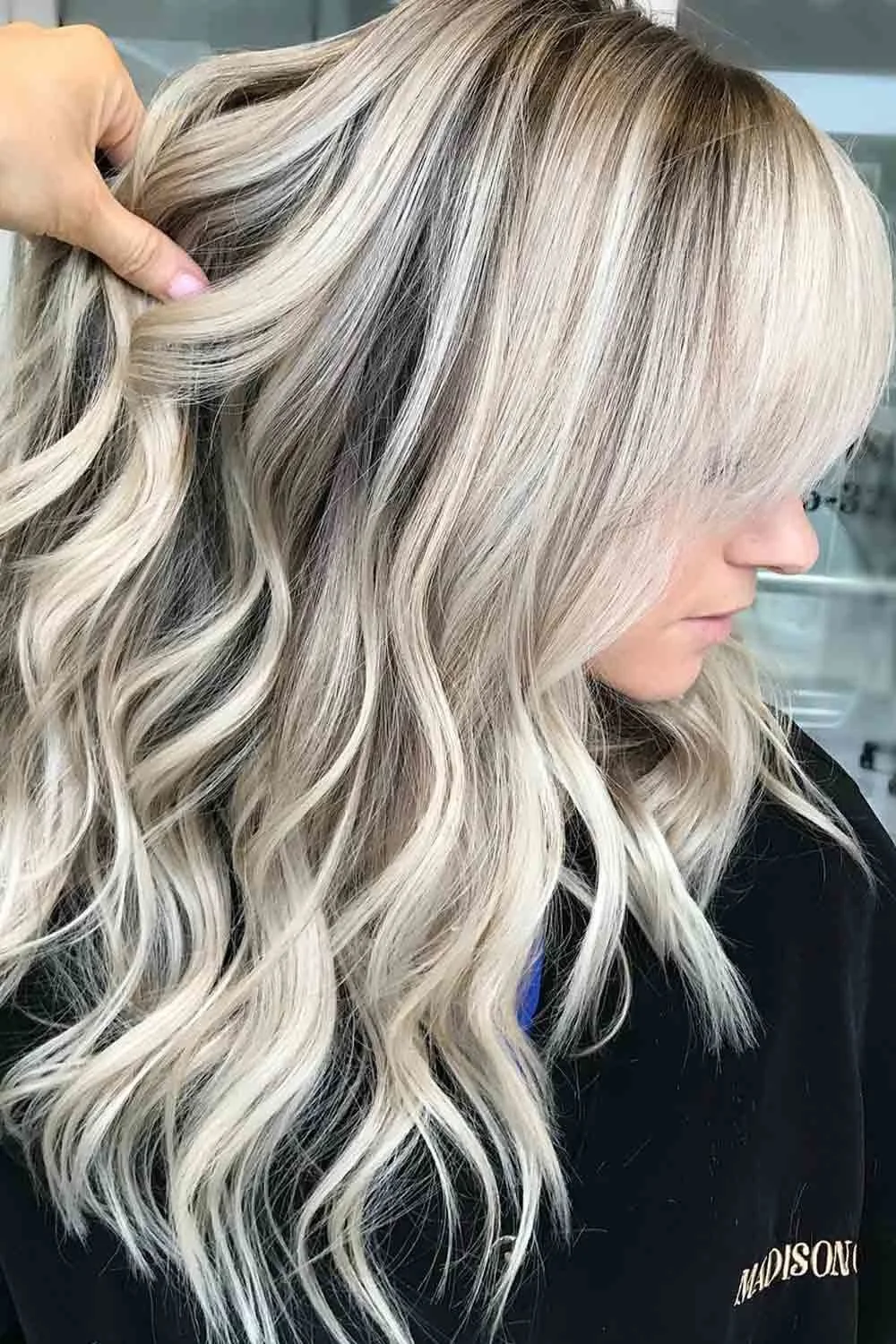
Idea 13
Ash Blonde With Pale Strands
Pale strands sit over a cooler, darker base, creating a layered ash-blonde impression. The contrast is visible near the upper side as well as the ends, so this is not simply a light color applied uniformly throughout.
- Tone
- Ash blonde
- Placement
- Pale ribbons
The hair is lifted slightly at the crown in the photograph, revealing the darker interior. Waves through the lower section make the pale ribbons wider on the outer curves and thinner where the hair folds inward.
Wearability note: Save the deeper interior if that is part of what you like. A close color reference is useful here, but it cannot establish how much lift your own hair can support or guarantee the same cool appearance under different light.
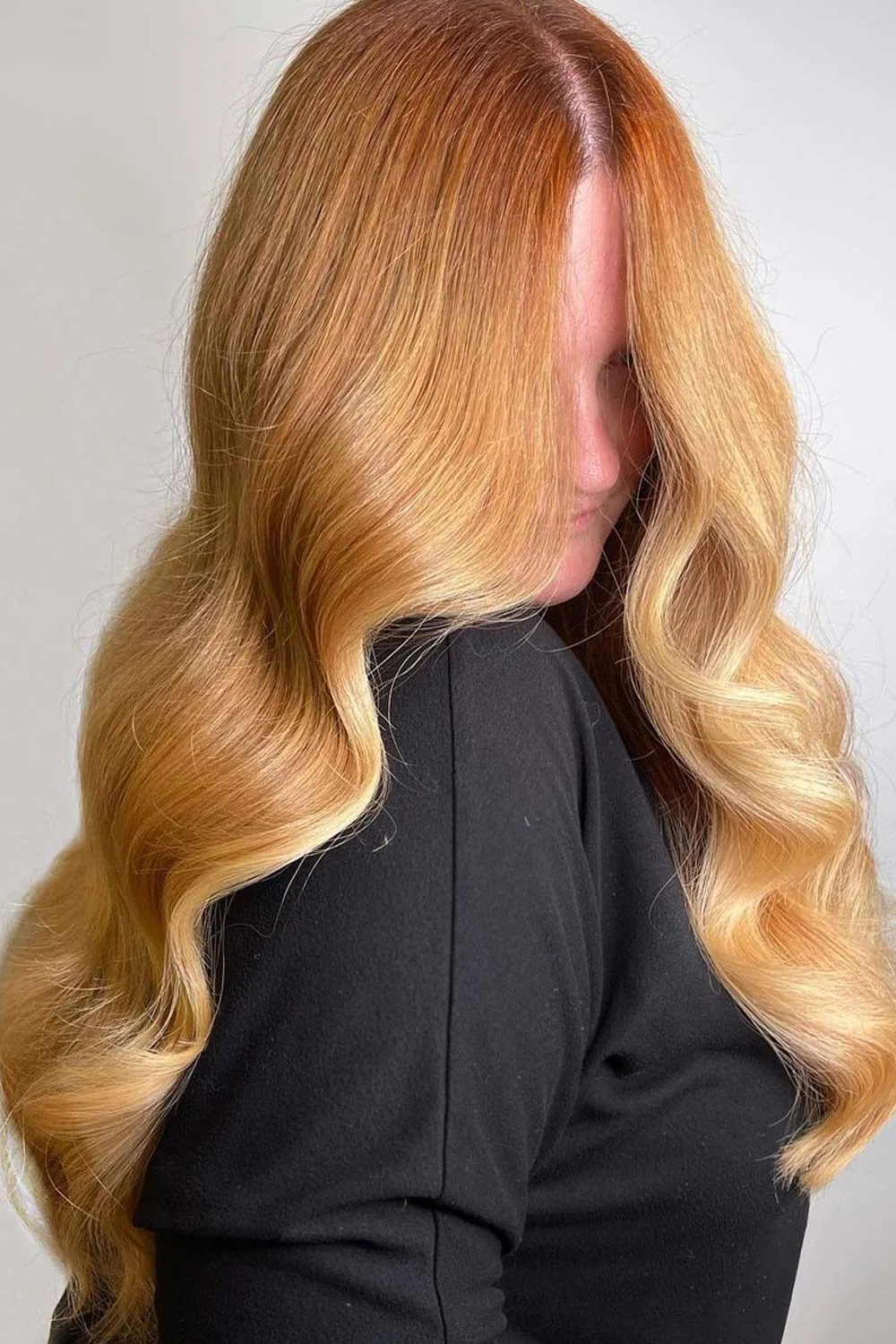
Idea 14
Copper-Gold Blonde Curls
This example moves toward copper rather than beige or silver. The upper hair is warm, and the lighter golden curls continue that warmth instead of introducing a strongly contrasting cool section at the bottom.
- Tone
- Copper gold
- Finish
- Defined curls
A smooth front panel curves away from the face before joining large defined curls. Their rounded ends make the warm shades particularly visible, with lighter reflections on the outside and deeper orange-gold tones between the folds.
Wearability note: Choose this to compare a warm blonde with a copper influence. Describe both the depth at the top and the gold through the ends, since simply asking for honey could miss the stronger copper impression shown in the photograph.
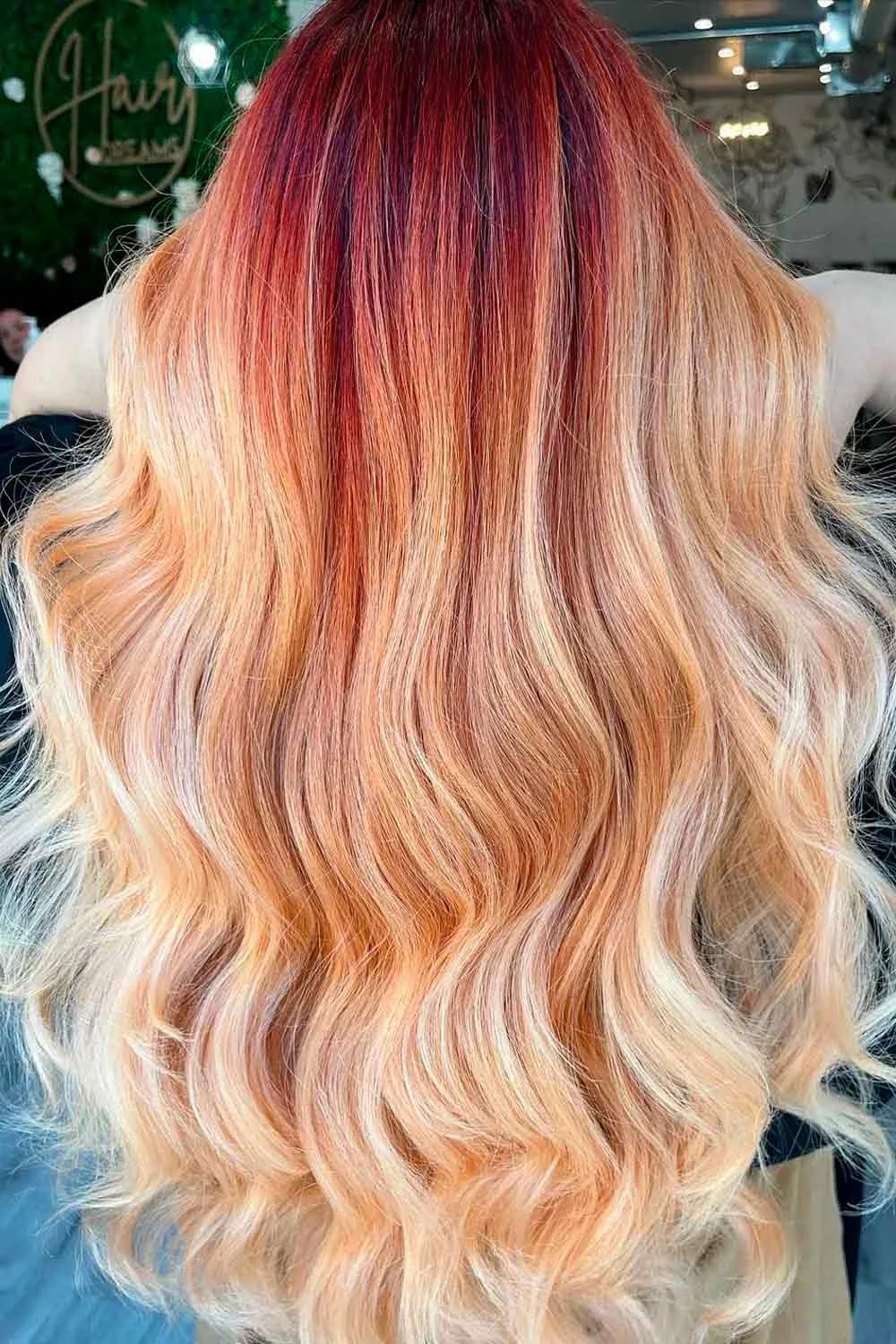
Idea 15
Strawberry-Gold With Pale Ends
The red-gold upper area is the distinctive feature here. It shifts toward paler golden lengths rather than staying the same shade throughout, so the reference is about a warm transition as much as a blonde tone.
- Roots
- Red-gold tone
- Placement
- Paler ends
Wide waves spread the lighter bottom across the back while the darker top stays smoother. The bright ends retain a peach-gold impression, keeping the blend warm even where the lightest strands reflect almost creamy white.
Wearability note: Save this if you want a warm upper section and lighter ends together. Ask where that transition should start on your own length, and do not assume the photographed root tone comes from natural growth rather than a color service.
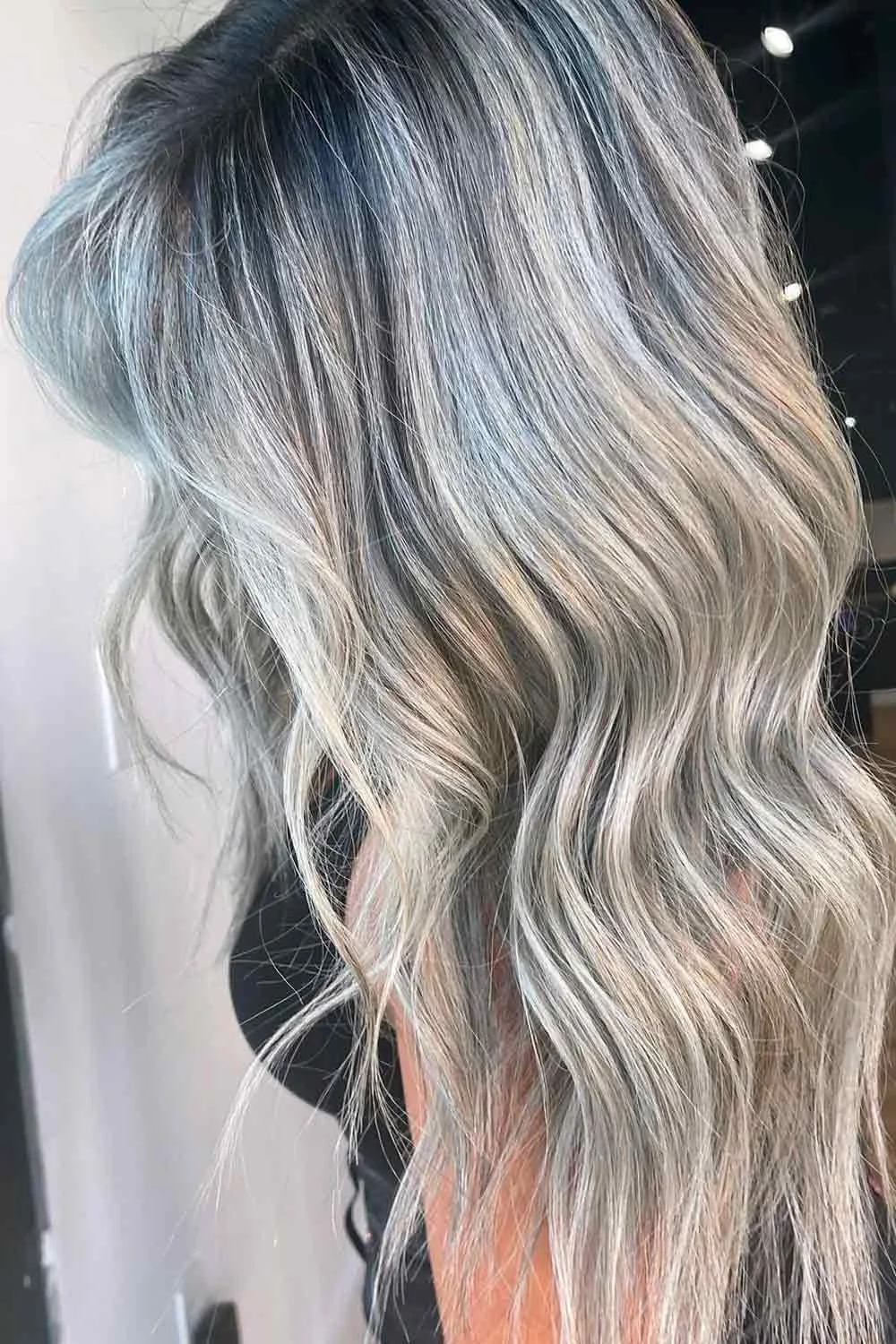
Idea 16
Silver Blonde With Root Shading
A gray-silver cast runs through the lighter hair, with darker shading concentrated near the top. Compared with the sandy and honey examples, this gives a distinctly cooler impression in both the bright and less reflective sections.
- Tone
- Silver blonde
- Roots
- Soft shading
The waves sit in broad bends and separate near the ends. Subtle darker strips remain between them, allowing the pale surface to keep definition instead of looking like one continuous white panel across the back.
Wearability note: This is a useful comparison when you prefer cool rather than warm blonde. Bring an image of the root blend too if you like its softness, since choosing a silver tone alone does not specify how much darker color should remain.
Idea 17
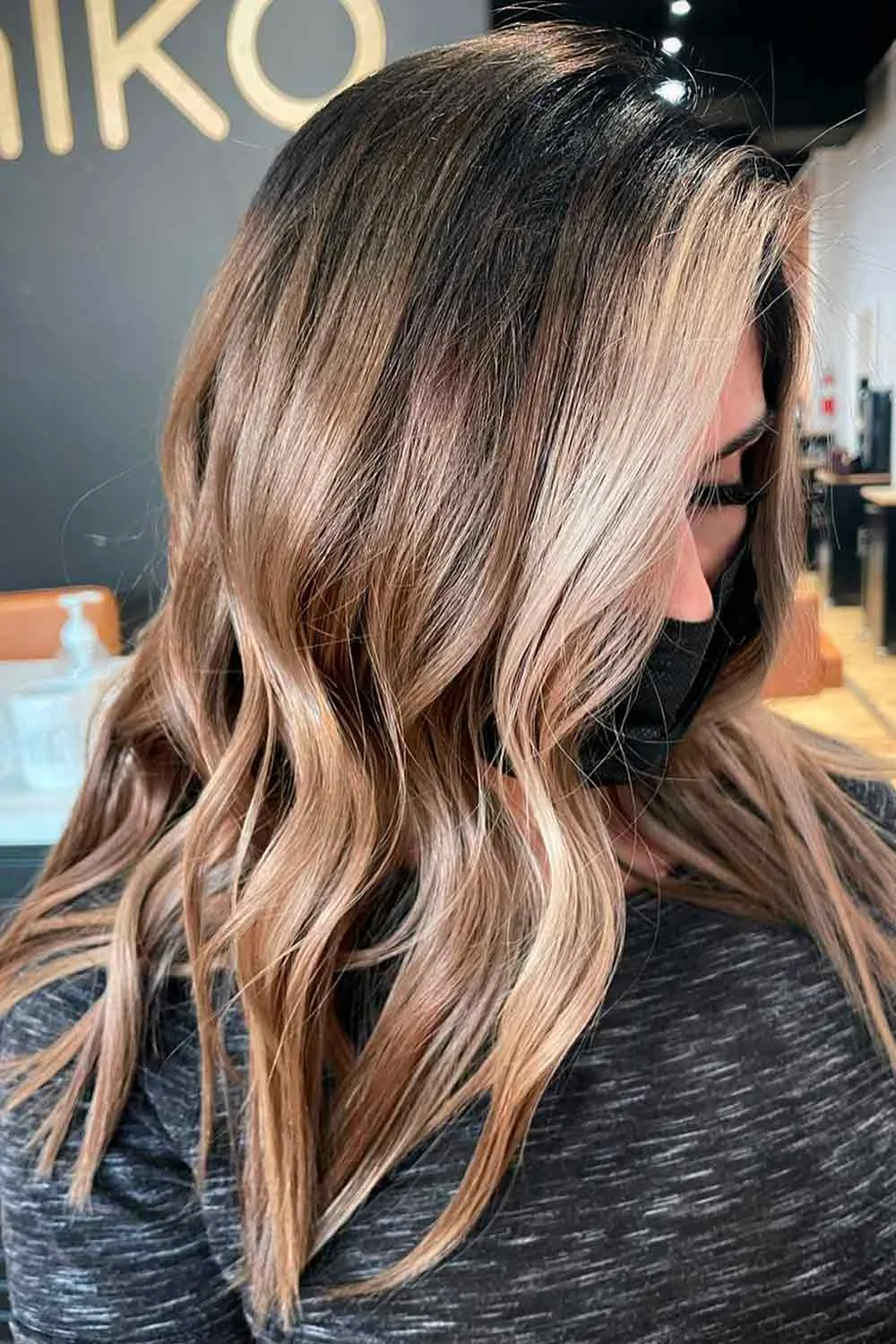
Brown-Blonde With Light Ribbons
Brown remains a large part of this look, especially through the crown. Lighter blonde ribbons create contrast through the side and lower hair, placing it firmly in the brown-blonde category rather than pale blonde overall.
- Palette
- Brown and blonde
- Placement
- Light ribbons
The visible side bends loosely, showing narrow light strands over a deeper interior. A brighter front section draws attention to the face opening, while the ends keep a mixture of the two depths instead of becoming uniformly blonde.
Wearability note: Choose this if you want visible lightness while keeping a substantial darker base. Be specific about the front ribbon and the amount of brown you want preserved; both matter more than whether the result is labeled bronde or highlights.
Idea 18
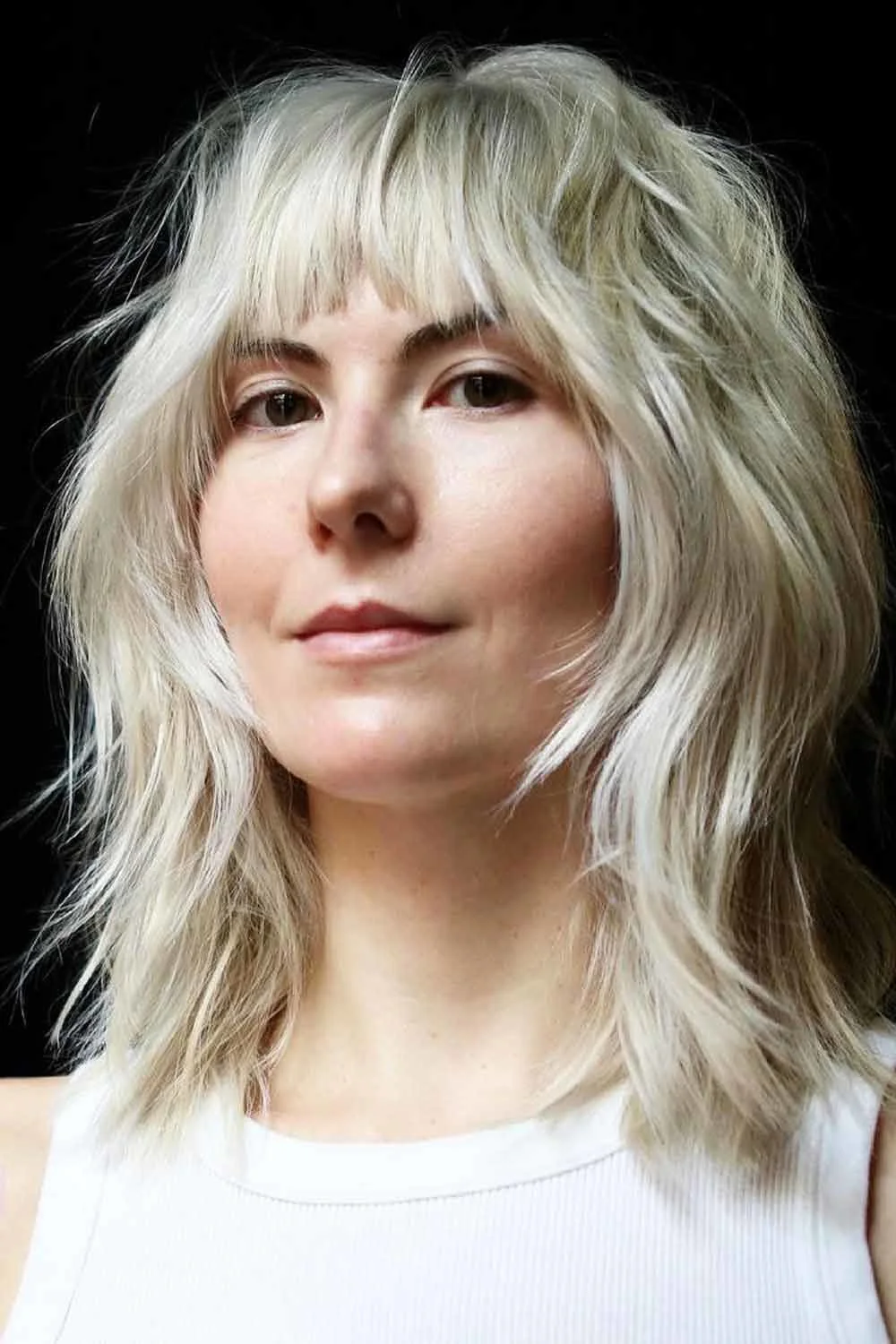
Cool Blonde Shag With Fringe
The cooler blonde is paired with a visibly textured shape. A short fringe brings pale color close to the eyes, while the side lengths contain both light strands and shaded sections that keep the overall impression softly dimensional.
- Tone
- Cool blonde
- Front
- Short fringe
The ends spread into small irregular pieces rather than a polished horizontal edge. Texture runs around the face and through the lower sides, so the tousled outline is just as noticeable as the blonde shade in this photograph.
Wearability note: Save the color separately if you do not want a fringe or shag. If the complete look appeals, discuss the front length and everyday texture too; a smooth bob in the same shade would make a very different face frame.
Idea 19
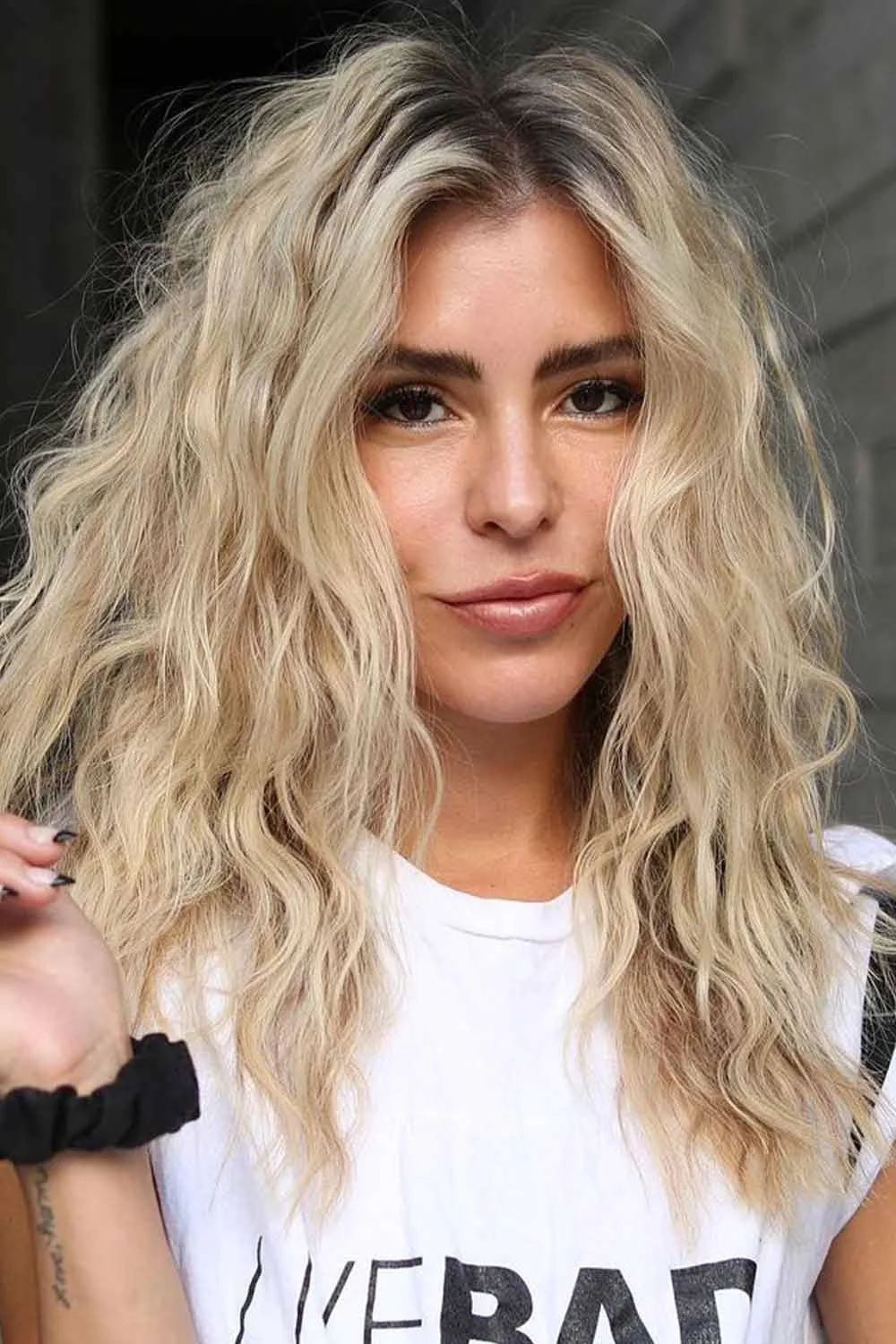
Cream Blonde With Relaxed Texture
Cream-colored lengths soften the contrast with the darker root. The bright hair is distributed through both sides rather than concentrated into one front stripe, giving the whole shape a lighter appearance while retaining depth at the top.
- Tone
- Cream blonde
- Finish
- Relaxed waves
Small, irregular bends produce a relaxed surface and separated ends. The front opens around the face without a short fringe, and the lower texture is less arranged than the broad salon waves elsewhere in the gallery.
Wearability note: This is useful when you like blonde with a casual finish. Ask for a shade and root blend that also make sense when your hair is straighter; the photographed texture influences how smoothly the darker and lighter sections appear to mix.
Idea 20
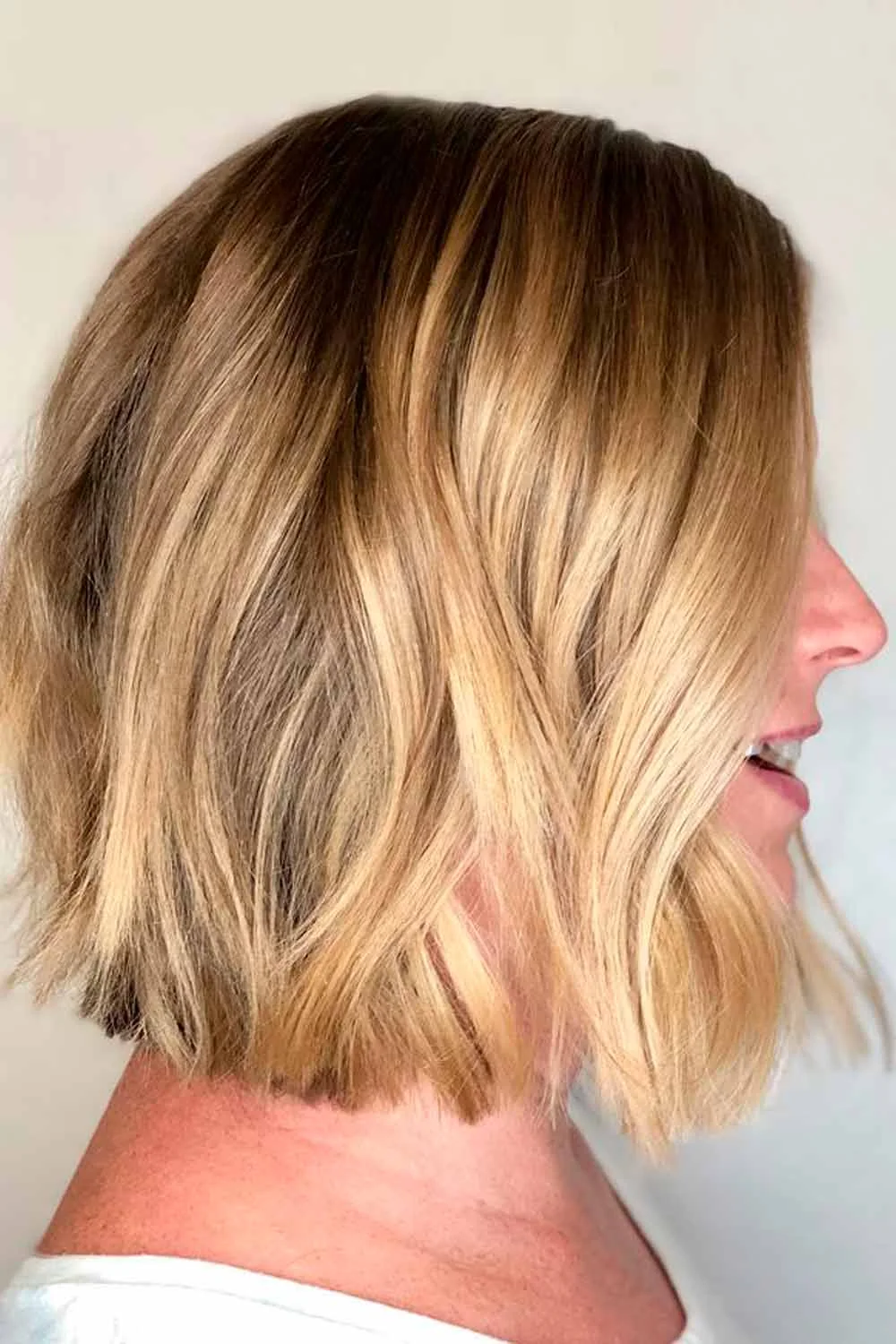
Champagne Blonde Wavy Bob
A soft golden blonde gives this bob warmth without the strong copper impression of the long curled example. The deeper upper section fades into lighter sides, creating a compact color blend around the cheek and jaw.
- Tone
- Champagne blonde
- Shape
- Wavy bob
The lower edge looks fairly substantial but is loosened by small bends. A long front section sweeps down beside the face, showing the shade across a broad panel rather than through a short fringe or tiny highlights.
Wearability note: Choose this when you want a warm shade in a shorter shape. Show the root depth you like, and confirm how the bob should look uncurled; the waves soften the perimeter and may make the front seem shorter than it is.
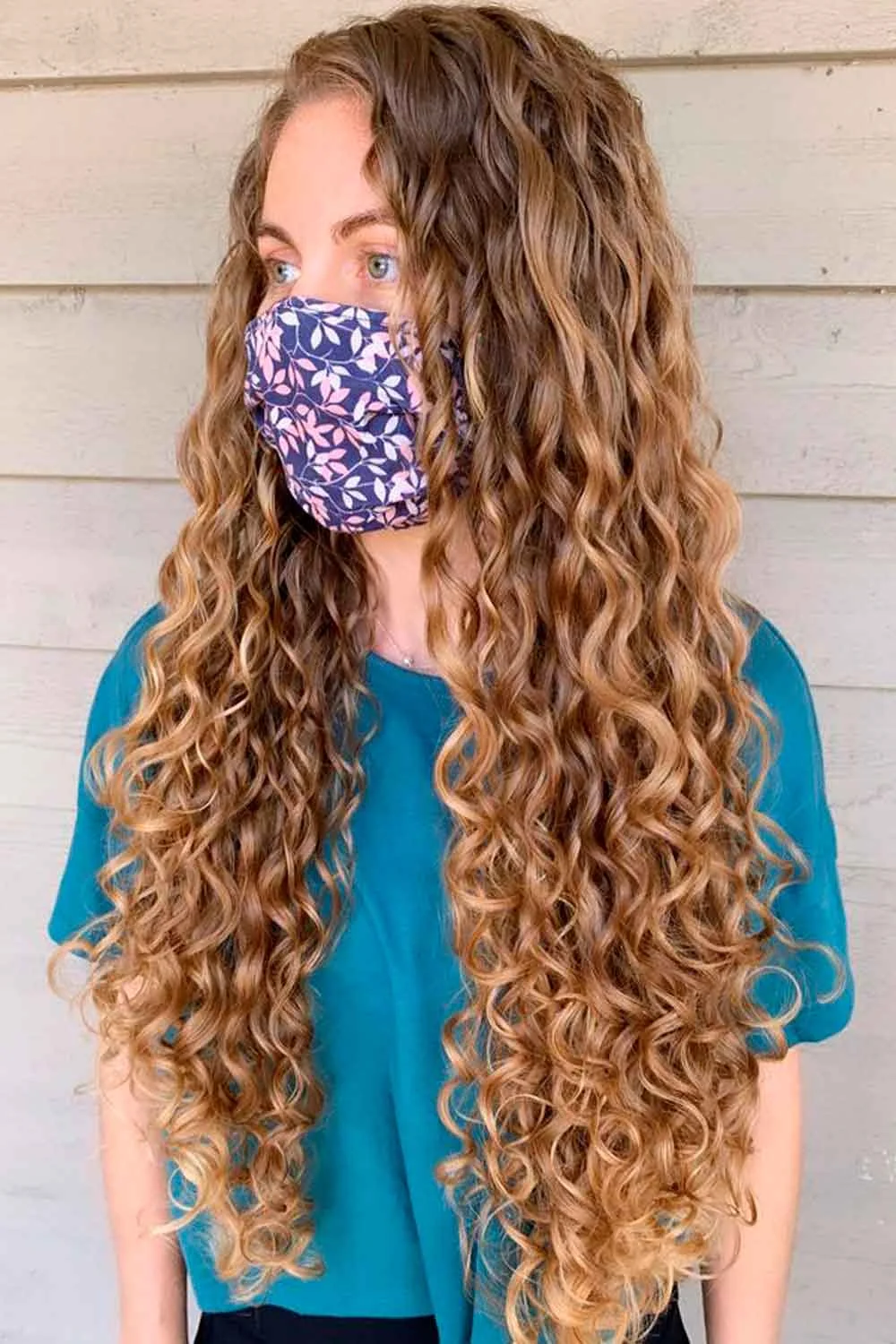
Idea 21
Golden Highlights Through Long Curls
Honey-gold strands follow the outer curves of long curls, while brown remains visible between them. The effect comes from a mixture of depths rather than making the entire head a single bright blonde shade.
- Palette
- Honey and brown
- Texture
- Long curls
The curls form narrow repeated spirals through the lower length. Lighter sections run along several of those spirals, drawing attention to the texture without erasing the darker crown or the shaded spaces inside the shape.
Wearability note: Save this if you want warm lightness that works with visible curls. Discuss the placement on your own texture, because a highlight that is obvious on one curved section can sit differently when the hair is stretched, tied up or worn straighter.
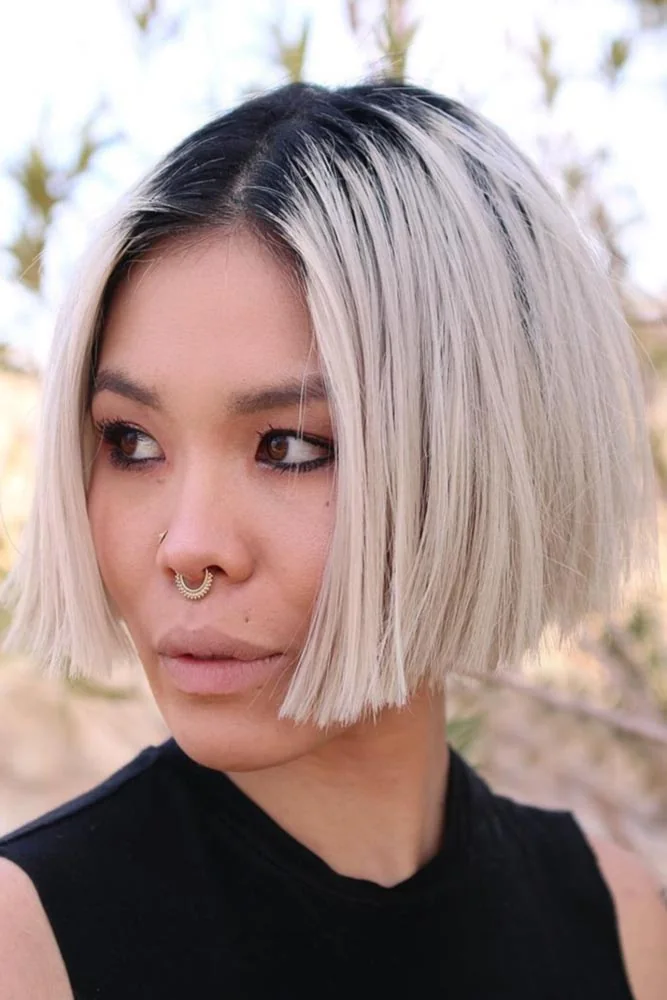
Idea 22
Pale Blonde Bob With Dark Roots
The dark center root is intentionally visible above pale blonde sides. This makes the bob a clear contrast reference, with the light sections framing the face rather than blending invisibly into the upper hair.
- Contrast
- Dark and pale
- Shape
- Smooth blunt bob
Smooth sides fall to a compact, nearly level bottom. The front stays long without a short fringe, allowing the dark part and the two pale panels to define the face opening more strongly than any wave or curl.
Wearability note: Choose this when a crisp outline and visible root depth both appeal. Compare the amount of dark hair at the part with what you would wear between appointments, and confirm the desired bob length independently of the pale color.
Read the whole color
A bright curl may reflect almost white even when the rest of the hair is golden. Check the crown, the darker folds and the ends before deciding that two photos show the same shade.
Keep texture separate
Curls spread the color into ribbons, while straight hair makes the blend easier to see. Choose your shade reference independently of the haircut and styling you want to maintain.

About the author
Bella Ross
Bella Ross is the hairstyle editor behind Latest Easy Hairstyles. She curates practical haircut, braid, color, and styling ideas with a focus on looks that are easy to browse, realistic to recreate, and useful for everyday hair decisions.