
Product reviews / Triple-Barrel Wavers: Pattern and Placement
Best Triple-Barrel Wavers: Pattern and Placement
Six triple-barrel wavers reviewed for pattern geometry, overlap, clamp handling, heat choices and safe face-framing placement.

As an Amazon Associate I earn from qualifying purchases, at no extra cost to you. Affiliate disclosure
A digital wave-stamping routine
THE SHORTLIST
Find the right fit
Wave Affair gives a digital three-barrel routine; Hot Tools starts with broad jumbo movement and Conair offers closer geometry.
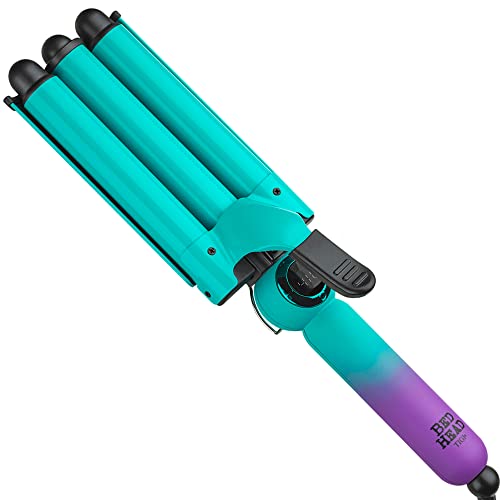
Bed Head Wave Affair
A digital wave-stamping routine

Hot Tools 24 K Gold Jumbo Waver
Broad wave spacing on longer lengths

TYMO ROVY 1.25-inch
A shielded broad wave head

Conair Double Ceramic Triple Waver
Closer wave geometry with many presets

BaBylissPRO Porcelain Ceramic Triple Waver
A shaped three-barrel layout

Alure 1-inch Triple Waver
A plain three-barrel head with LCD control
THE EDITOR'S TAKE
The details that matter
Wave Affair gives a digital three-barrel routine; Hot Tools starts with broad jumbo movement and Conair offers closer geometry.
A triple waver stamps a connected pattern. Match each next placement to the previous outer wave instead of pulling the tool through hair.
Rotating single-barrel curlers form a different starting shape and are not interchangeable with this clamp mechanism.
A CLOSER LOOK
The full product reviews
Bed Head Wave Affair
Wave Affair uses ten digital heat choices with a three-barrel clamp, letting you set the wave imprint section by section.
The next placement makes the continuous pattern
Wave Affair stamps a section between three barrels. After release, align the next placement with the outer wave already formed, rather than close over an arbitrary point farther down. A small overlap continues the pattern; a large overlap heats the same area again. Learn that alignment with the cool tool before beginning on the face-framing sections.
Digital settings support a planned sequence
Choose one of the ten heat levels for strand condition and keep the ribbon thin enough to lie evenly in the clamp. A wider section can still be a single flat layer; a deep bundle is different. Keep the ends supported so they do not fold into the final placement. The visible menu is useful when you prefer a deliberate control check.
Release the pattern before brushing
Let the formed wave cool before deciding whether to keep distinct ridges or soften them with light separation. Brushing immediately can stretch the pattern while it is still being set. Wave Affair fits a repeatable stamped-wave routine, with less appeal if you want isolated round curls rather than a connected S-shaped length.
What stands out
- Ten choices provide adjustable setup.
- The triple clamp forms successive wave sections.
The trade-offs
- Repeatedly reheating the overlap can create an overly defined join.
Our verdict The straightforward three-barrel starting point when you want visible settings and a continuous stamped wave.
Using it in your routine
Stamp flat dry ribbons and align the next clamp with the existing outer wave.
Consider another option if: Choose a curling iron for isolated round curls.
Hot Tools 24 K Gold Jumbo Waver
Hot Tools pairs a jumbo wave face with a nine-foot swivel lead, requiring enough prepared length for its broad imprint.
A jumbo stamp needs enough length
The large clamp is relevant when you want a broad repeating pattern. On a short section it may make only one bend, rather than several visible waves. Check the amount of usable length before choosing the largest head. Do not bring the broad hot body closer to skin simply to squeeze in another placement.
Plan the counter and cable
The nine-foot lead can reach a larger styling area, while the spare cable needs a clear route away from the hot clamp. Set down the head on a stable heat-resistant surface between ribbons. A heavy or broad head held at an awkward angle is not helped by a longer cord alone; position the mirror so the active edge remains visible.
Pick the spacing before the tool
Hot Tools makes most sense when broad waves are the intended starting shape. Keep the panel flat and allow it to cool before softening. If small close ridges are wanted, a narrower triple waver gives that geometry more directly than using the jumbo head hotter or holding it longer.
What stands out
- The jumbo format starts with broad curvature.
- A long swivel lead gives counter reach.
The trade-offs
- The large head needs clearance near ears and short layers.
Our verdict The broad-pattern choice when long lengths give the jumbo clamp enough space for several successive placements.
Using it in your routine
Use long flat ribbons and leave the broad head room around skin and the counter.
Consider another option if: Choose a smaller stamp for short layers or close ridges.
TYMO ROVY 1.25-inch
TYMO ROVY places its 1.25-inch wave format within a wrapped design, while careful clamp placement still determines the pattern.
Protection changes the grip, not the clearance rule
ROVY surrounds its working format with a wrapped protective design. Keep hands on the permitted grip and leave space from the scalp anyway. A shield does not make every outer surface a safe resting point or remove the need to see where the clamp closes. Practice the opening motion before using it around the face.
The broad wave needs an orderly ribbon
Spread a fully dry detangled section flat before clamping. Long strands that fold beneath the edge can create a sharper crease than the intended wave. Support the ends, release completely and align the next placement with the existing pattern. Do not pull the length through a partly closed head.
Choose its handling rather than an ion promise
The useful purchase difference is the wrapped head and broad pattern. An ion count does not establish how long the finish will hold or whether every hair condition tolerates the selected heat. ROVY fits someone who wants broad stamped movement with this body shape; tiny short sections may need a smaller head.
What stands out
- A wrapped body separates the fingers from some exposed surfaces.
- The broad format suits larger wave movement.
The trade-offs
- A shielded design does not permit touching the working surface or scalp.
Our verdict The body-design alternative when you prefer a more enclosed broad clamp while building a repeating wave.
Using it in your routine
Learn the grip, keep a flat dry ribbon and open fully before moving to the next stamp.
Consider another option if: Skip short pieces that leave inadequate clearance for the broad head.
Conair Double Ceramic Triple Waver
Conair combines smaller outer and center barrels with thirty settings for a more compact starting wave geometry.
The three barrels are not equal
Conair’s outer barrels are 5/8 inch while the middle is 1/2 inch. That creates a smaller wave geometry than the jumbo options here. Choose it when close repeating bends are wanted, or when a shorter length needs a smaller working pattern. The barrel numbers describe the geometry, not three separate curl choices.
Keep the preset and overlap modest
Choose a suitable ordinary setting before considering Turbo Heat. Use a thin flat ribbon and continue the pattern with a limited overlap. Repeated closure on the same ridge makes the join more pronounced and reheats that area. If the desired finish is soft, begin with careful placement rather than assume brushing will remove every hard crease.
Use the exact voltage boundary
The current CD704L offer is described as single voltage. Do not pack it for a different electrical system because other Conair tools are dual voltage. Confirm the exact rating when travel matters. This Conair is most relevant for a close wave pattern and a controlled domestic routine.
What stands out
- Smaller barrel geometry supports closer ridges.
- Thirty choices provide gradual adjustment.
The trade-offs
- Small ridges can become more defined than the soft wave you intended.
Our verdict The smaller-pattern option when jumbo wave spacing is more than your length or desired texture needs.
Using it in your routine
Use suitable ordinary heat and match each small pattern carefully before the next closure.
Consider another option if: Choose broader geometry for large loose movement.
BaBylissPRO Porcelain Ceramic Triple Waver
BaBylissPRO uses a narrower center barrel between one-inch outer barrels, with twenty-five choices selected before clamping.
Different barrel sizes define the clamp
BaBylissPRO uses a 1-inch, 3/4-inch, 1-inch arrangement. That makes its geometry distinct from the small Conair and the broad jumbo heads. Compare that pattern requirement first: a three-barrel tool forms connected bends, rather than wrapping an isolated curl around one cylinder.
Use the ready indicator as a setup check
Wait for the permitted ready state before beginning, choose a suitable level and keep the next ribbon separate. The swivel cord can follow a changing angle, but the hot clamp still needs a clear resting place. Avoid holding a folded end beneath the outer barrel while aligning the next placement.
A middle geometry can be the best fit
This waver suits someone who wants visible continuous texture without the smallest ridges or broadest jumbo pattern. Let it cool before softening and keep the overlap controlled. Choose it for its geometry and controls rather than treating porcelain ceramic as evidence of a damage-free session.
On layered hair, collect a panel whose tips finish at a similar point. A shorter layer folded beneath the outer barrel can leave a sharp end inside an otherwise continuous wave.
What stands out
- The shaped barrel layout gives a distinct pattern size.
- Twenty-five choices support deliberate heat selection.
The trade-offs
- The broad clamp still needs flat, separated ribbons.
Our verdict A middle-pattern alternative when you want a broader layout than the small Conair without automatically choosing a jumbo head.
Using it in your routine
Choose for the three-barrel geometry and keep each dry ribbon flat through successive placements.
Consider another option if: Use a single-barrel iron for separated cylindrical curls.
Alure 1-inch Triple Waver
Alure’s one-inch triple-barrel format provides an LCD heat readout for checking the setting between wave placements.
Keep the exposed head visible
Alure’s three-barrel format places the working surfaces in an exposed head. Hold only the permitted handle and tips, keep it clear of the ear and arrange a mirror view before the face-framing stamp. Insulated tips do not turn the rest of the barrel into a cool surface.
The LCD supports consistency
Read the selected value before the first ribbon and again after an interruption. Keep the flat section evenly distributed rather than squeezing a dense bundle into the head. An adjustable temperature does not determine the desired spacing; the one-inch geometry does that.
Finish a connected pattern
Open fully and move to the next aligned placement without dragging. Allow cooling before separation or brush-out. Alure is a useful conventional geometry-and-display choice when you are comfortable with an exposed head. A wrapped or smaller head may fit better if clearance is your main concern.
Check the final placement before starting at the top. A last stamp with the tips partly folded beneath the edge creates a different bend from the rest of the ribbon.
What stands out
- An LCD gives a visible setting check.
- Matching barrel format supports a repeated pattern.
The trade-offs
- Exposed hot surfaces require deliberate hand and skin clearance.
Our verdict The familiar exposed-head option for someone who wants a visible temperature value and an uncomplicated repeated stamp.
Using it in your routine
Read the LCD, keep exposed surfaces clear of skin and open fully before repositioning.
Consider another option if: Choose another body style if exposed-head handling feels awkward.
EVERYDAY DETAILS
What matters in everyday use
Geometry
Choose close ridges or broad movement before selecting the head.
Overlap
Align the next stamp without reheating a large area.
Clearance
A broad head needs room beside the face and counter.
Product photographs: Amazon. Certain content that appears on this site comes from Amazon. This content is provided “as is” and is subject to change or removal at any time.
GOOD TO KNOW
Questions before choosing
Is a triple waver a curling wand?
It clamps a connected wave pattern rather than wrapping hair around an open single barrel.
Why are there sharp joins?
The next placement may overlap too far or begin at the wrong point. Practice alignment with the cool tool.
Can I slide the clamp down the hair?
Open fully before repositioning. Do not drag hair through partly closed hot barrels.
Bella Ross curates practical hairstyle ideas for everyday cuts, braids, color inspiration, and simple styling routines.
Our editorial policySTYLE IT YOUR WAY
A little styling inspiration
 Product reviews
Best Triple-Barrel Wavers for Long Hair
Six triple-barrel wavers for long hair, reviewed for repeat spacing, layered ends, overlap alignment, cable clearance and heat selection.
 Product reviews
Best Triple-Barrel Wavers for Short Hair
Four triple-barrel wavers for short hair, reviewed for mini geometry, bob-length clearance, fixed heat limits and short-tip placement.
 Product reviews
6 Best Beach Wavers: Our Detailed Reviews
Beach waves can mean either a repeated S-pattern or a softened round curl. That distinction is more useful than the word beach on the box.