
Product reviews / Triple-Barrel Wavers for Long Hair
Best Triple-Barrel Wavers for Long Hair
Six triple-barrel wavers for long hair, reviewed for repeat spacing, layered ends, overlap alignment, cable clearance and heat selection.

As an Amazon Associate I earn from qualifying purchases, at no extra cost to you. Affiliate disclosure

Broad repeats down a long ribbon
THE SHORTLIST
Find the right fit
Hot Tools Jumbo suits broad repeats; INFINITI PRO CONAIR gives equal one-inch geometry and Bed Head offers a longer digital menu.
Hot Tools 24 K Gold Jumbo Waver
Broad repeats down a long ribbon
Bed Head Wave Affair
Consistent digital setup across many placements

INFINITI PRO CONAIR 1-inch Triple Waver
Equal-diameter repeating waves

Ion Titanium Triple Barrel Waver
A low-starting digital adjustment range

BaBylissPRO Porcelain Ceramic Triple Waver
A middle-sized pattern across long layers
Alure LCD 1-inch Triple Waver
A visible temperature for equal broad repeats
THE EDITOR'S TAKE
The details that matter
Hot Tools Jumbo suits broad repeats; INFINITI PRO CONAIR gives equal one-inch geometry and Bed Head offers a longer digital menu.
Plan the start and final placement before working down a long ribbon. Shorter layer tips must not fold beneath the edge.
Length gives room for more repeats, while density still requires thin flat panels.
A CLOSER LOOK
The full product reviews
Hot Tools 24 K Gold Jumbo Waver
The jumbo Hot Tools face can cover a broad portion of a long panel when the ribbon is spread evenly before clamping.
Plan the last placement before the first
Long hair gives the jumbo head room to repeat, but the last few inches still need a decision. Keep enough length in hand that the tips lie flat rather than disappear under the edge. If the final section is too short for a full stamp, finish with the permitted partial placement without pulling the head toward the ends.
Let the cable follow the long section
The nine-foot cord is useful when the mirror and counter are separated, while spare cable should stay off the hot face. Hold the long ribbon so the unstyled length does not fall across the barrel. Pause if the head feels unstable in the hand. This Hot Tools is strongest for large wave spacing, not for using heat to force a small-ridge pattern.
Cooling preserves the long pattern
Support the released length and avoid stretching it while warm. Brush-out can soften the broad repeat after it cools; immediate pulling changes the starting shape. Choose this jumbo head when length and desired spacing justify its size.
What stands out
- Jumbo geometry suits broad repeating movement.
- The long cord supports a wider styling position.
The trade-offs
- A large head asks for counter space and wrist support.
Our verdict The most direct broad-pattern choice when your length provides room for several large successive waves.
Using it in your routine
Keep the long tips aligned and support the length while each broad pattern cools.
Consider another option if: Choose smaller geometry if large waves leave too few repeats.
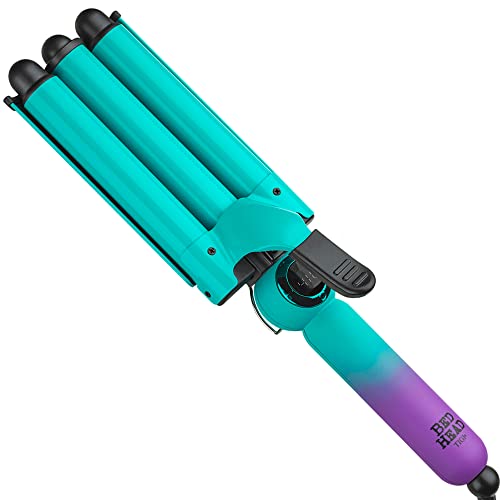
Bed Head Wave Affair
Wave Affair supplies ten heat choices for long sections, with each new clamp aligned to the previous wave rather than overlapped blindly.
Use the existing wave as the alignment marker
On a long length, small placement errors accumulate over many stamps. Match the next outer barrel to the previous formed wave instead of estimating a fixed distance each time. Keep the overlap modest. If the alignment drifts, stop and inspect before adding another closure that makes the join harder to soften.
Long does not mean one heat level suits everything
The ten choices are useful when the ends differ from the roots. Select for the weakest length included in the active section and keep panels even. Long tips can be especially weathered, so do not use a stronger root as the reason to heat the whole ribbon more.
Keep the unworked hair separate
Clip the next layer away and support the hanging length so it cannot enter the head beside the active ribbon. Wave Affair fits a methodical long-hair session where control consistency matters. It is less direct when the desired result is an isolated spiral rather than connected waves.
Place a mirror where the back sections remain visible. A long hanging ribbon can twist as the wrist changes direction; flatten it again before the next closure instead of stamping a twisted panel. Keep the next layer clipped above the active one so it cannot drift across the heated barrel.
What stands out
- Digital choices make setup clear.
- The triple clamp repeats a connected pattern.
The trade-offs
- The same overlap can be heated twice if alignment drifts.
Our verdict A useful repeat-session choice when long hair needs many placements and a visible setting before each layer.
Using it in your routine
Match the previous ridge carefully and select heat for the weakest part of the long section.
Consider another option if: Choose a curling iron for isolated spirals.
INFINITI PRO CONAIR 1-inch Triple Waver
INFINITIPRO Conair gives long panels three equal one-inch barrels and a five-setting menu for repeated wave placement.
Equal barrels make the size easy to compare
The S 9 L uses three one-inch barrels. That gives a clear size reference when comparing the smaller mixed-diameter Conair or jumbo heads. On a long section, plan how many repeats you want and where the wave starts before beginning. Root-to-end stamping and mid-length movement produce different silhouettes.
Use the small menu deliberately
Choose among the five levels for condition and follow the ready-state directions. A smaller menu can simplify a long session, but adjacent choices may be farther apart than you prefer. Keep the active panel thin enough to sit flat, particularly when long layers vary in density near the ends.
Release cleanly at every step
Open completely before moving down the ribbon. A partly closed head can drag and stretch the last wave. This Conair suits an orderly equal-diameter long pattern with few controls; choose finer increments if small temperature changes are essential.
Keep a clear resting place beside the mirror for pauses between long sections. Rest the tool only on its permitted support, and keep the hanging length away from that surface. When returning to the panel, check both the selected setting and the last finished ridge before placing the next stamp.
What stands out
- Three equal barrels define the geometry clearly.
- Five settings keep selection compact.
The trade-offs
- Five presets offer less fine adjustment than a long digital range.
Our verdict The simple equal-barrel option for long hair that needs a visible repeating pattern without a large control menu.
Using it in your routine
Plan the start point, keep each ribbon flat and open fully between equal-barrel placements.
Consider another option if: Choose finer controls if preset gaps do not suit your routine.
Ion Titanium Triple Barrel Waver
Ion’s LCD displays its selected 180–450°F setting before a long ribbon is positioned across the titanium waver.
A broad range is a control feature
Ion lists 180–450°F. The low end can matter when comparing irons whose menus begin much higher, but it is not a prescription for every fragile section. Follow the exact directions and select for condition. If hot-tool styling is inappropriate for the ends, an available low number does not make it appropriate.
Long panels need uniform placement
Keep the ribbon thin and the ends aligned before closing. Read the LCD again after an interruption, then continue the next stamp at the existing outer wave. A titanium surface is a construction choice; panel organization and temperature remain separate decisions.
Travel compatibility needs the exact rating
The product describes dual voltage, but confirm the supplied unit’s label and directions before connecting abroad. A long cord and an adapter do not establish electrical compatibility by themselves. Ion is most relevant when its displayed range is a real control requirement in your long-hair routine.
An LCD is most useful when it stays visible during the normal grip. Check the readout after turning toward the back of the head, and keep the inactive length from wrapping around the handle or cable. Separate a knot before it reaches the heated face instead of closing over it.
What stands out
- The range includes a lower starting option.
- The LCD gives a control check.
The trade-offs
- A low starting value does not establish suitability for damaged hair.
Our verdict The temperature-menu alternative when you want a lower available starting point and a visible value during a long session.
Using it in your routine
Confirm the LCD and follow exact unit directions while keeping long panels evenly distributed.
Consider another option if: Do not use a low menu number as permission for unsuitable fragile lengths.
BaBylissPRO Porcelain Ceramic Triple Waver
BaBylissPRO combines one-inch outer barrels and a three-quarter-inch center for a shaped imprint along prepared long lengths.
Layer lengths affect the final stamp
Long hair often includes shorter layers within the same panel. Separate those ends so they do not fold beneath the outer barrel while the longer strands continue. The mixed one-inch and three-quarter-inch geometry gives a middle-sized repeat, but does not align mixed tips for you.
Check the selected level before the next layer
A twenty-five-choice menu offers gradual adjustment. Use that control deliberately when exposed upper layers differ from protected inner hair. Keep the head clear of loose unstyled lengths and rest it safely between panels.
Choose it for the pattern you will keep
Allow the wave to cool, then soften only as much as the desired finish needs. A middle geometry can be more useful than the largest head when you want several visible repeats down a long layered cut. The ceramic description is not a promise that every layer holds the same result.
Around the front, keep the large body clear of the cheek and direct the long ribbon outward before closing. The back of the head may need a different hand position to preserve the same wave orientation. Reposition the panel while the head is open rather than twisting a clamped section to make the mirror view easier.
What stands out
- Mixed geometry gives a middle-sized starting pattern.
- Twenty-five levels allow gradual selection.
The trade-offs
- Layered ends may need different final placement.
Our verdict The useful middle-geometry choice when jumbo waves are too broad but small close ridges are not the intended result.
Using it in your routine
Separate shorter tips within long panels and choose the level before each layer.
Consider another option if: Choose a jumbo head if very broad movement is the main goal.
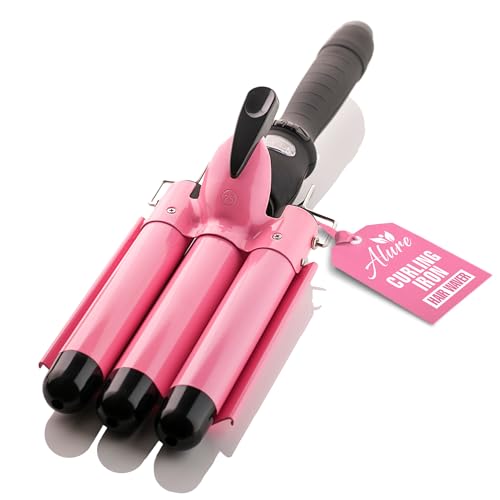
Alure LCD 1-inch Triple Waver
Alure lets you check the LCD before continuing down a long section with its one-inch triple-barrel face.
Keep loose length out of the head
The exposed Alure clamp should meet only the active ribbon. Clip the next layer away and keep the hanging length from crossing the hot barrels while you reposition. This is especially relevant near the back, where a long section can obscure the head. Arrange a mirror view before continuing.
Read before closing
Confirm the LCD while the head is away from the section. Keep the panel flat and avoid gripping the clamp harder to compress a bundled area. Open fully before aligning the next wave, then let the released shape cool without stretching it.
Use equal geometry for a planned sequence
Alure suits someone comfortable with a plain exposed head and a visible temperature. Its one-inch format should be chosen for the repeat size, rather than a promise that all long textures hold the same wave. A wrapped body may be more convenient if clearance is the main handling concern.
A long front section can hang beside the face while the last stamp is being planned. Hold that ribbon away from the cheek and inspect the tips before closure. If shorter layer ends fall into the same panel, separate them first instead of letting them fold beneath the broad barrel edge.
What stands out
- The LCD supports a quick setting check.
- One-inch barrels give a clear geometry reference.
The trade-offs
- The exposed head needs a clear path around hanging lengths.
Our verdict A conventional exposed-head option when you want equal geometry and a displayed value for repeated long-length stamping.
Using it in your routine
Clear loose lengths from the head and check the displayed setting before each layer.
Consider another option if: Choose a different body style if exposed-head handling is uncomfortable.
EVERYDAY DETAILS
What matters in everyday use
Pattern planning
Choose where the first and last wave should sit.
Layered ends
Keep shorter tips aligned separately from the full length.
Repeat control
Small alignment errors accumulate down a long ribbon.
Product photographs: Amazon. Certain content that appears on this site comes from Amazon. This content is provided “as is” and is subject to change or removal at any time.
GOOD TO KNOW
Questions before choosing
Can I take one very thick long section?
Keep the layer thin enough for contact. More length does not make a deep bundle easier to stamp evenly.
Why do the ends look sharply bent?
The tips may have folded under the edge or received an awkward final stamp. Plan that last placement before starting.
Should I stretch the wave while it cools?
Support it without pulling long. Stretching while warm changes the starting pattern.
Bella Ross curates practical hairstyle ideas for everyday cuts, braids, color inspiration, and simple styling routines.
Our editorial policySTYLE IT YOUR WAY
A little styling inspiration
 Product reviews
Best Triple-Barrel Wavers: Pattern and Placement
Six triple-barrel wavers reviewed for pattern geometry, overlap, clamp handling, heat choices and safe face-framing placement.
 Product reviews
Best Triple-Barrel Wavers for Short Hair
Four triple-barrel wavers for short hair, reviewed for mini geometry, bob-length clearance, fixed heat limits and short-tip placement.
 Product reviews
6 Beach Wavers for Long Hair: Detailed Reviews
Long hair gives a wave room to develop, but it also makes uneven spacing obvious. Large clamping heads reduce the number of placements while extended rotating barrels give wrapped hair more room.