
Product reviews / Wave styling
6 Best Beach Wavers: Our Detailed Reviews
Beach waves can mean either a repeated S-pattern or a softened round curl. That distinction is more useful than the word beach on the box.

As an Amazon Associate I earn from qualifying purchases, at no extra cost to you. Affiliate disclosure

Defined beach waves
THE SHORTLIST
Our six picks at a glance
Choose the wave-making method first, then select its size and controls.
Defined beach waves
TYMO ROVY 1.25-inch
A pronounced S-pattern rather than round curls.
Broad wave sections
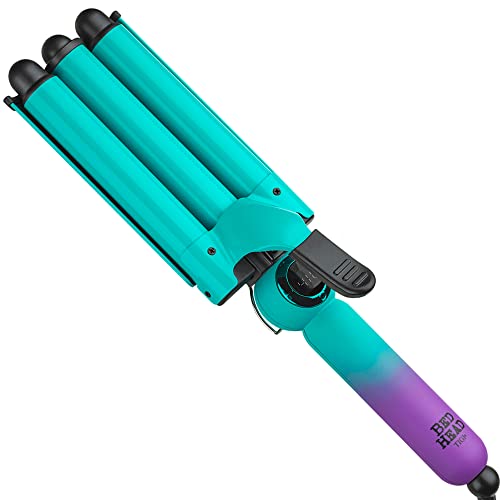
Bed Head Wave Affair
Broad coverage for an intentionally uniform wave.
Visible rotation

Beachwaver B1 Pink Sunset
Loose beach movement made from a round curl.
Heat-dial control

Conair Double Ceramic Triple Waver
Smaller heat adjustments on an exposed triple head.
Visible temperature
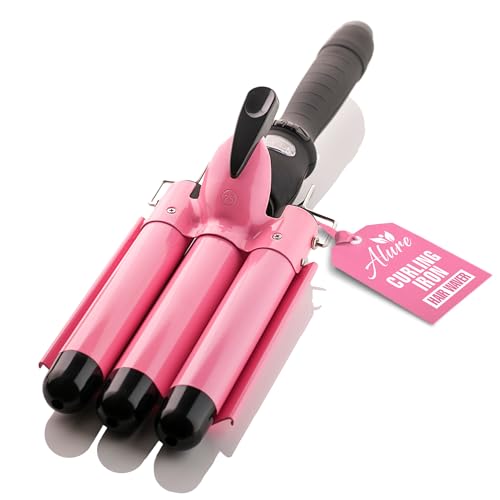
Alure Triple Barrel Waver
A closer wave rhythm with a readable display.
Timer-assisted waves

Wavytalk Power Wave
Deep waves with a repeatable timing sequence.
THE EDITOR'S TAKE
Choose the wave-making method first, then select its size and controls
Beach waves can mean either a repeated S-pattern or a softened round curl. That distinction is more useful than the word beach on the box. Clamp wavers imprint a pattern; rotating irons create a curl that you loosen after cooling. The finished texture depends on placement and how much you separate it afterward.
A CLOSER LOOK
The full product reviews
Defined beach waves
TYMO ROVY 1.25-inch
A pronounced S-pattern rather than round curls.
ROVY clamps a repeating wave pattern into the hair. Covered upper surfaces make positioning easier to understand than wrapping around three exposed rods, but the heated area still needs scalp clearance. The 1.25-inch scale favors a pronounced beach-wave pattern rather than an automatic curler’s spiral finish.
Controls and section placement
Keep the hair flat between the triple-barrel surfaces so the pattern is pressed evenly across the ribbon. Move to the next point by lining it up with the completed wave’s lower bend rather than overlapping the entire imprint. The 1.25-inch scale rewards a longer open section; loose layered ends may need a smaller ribbon than the middle lengths.
What this version suits
ROVY makes the wave by clamping a flat section, so the pattern repeats as you move down the length. Its 1.25-inch scale works well when you want obvious beach-wave bends with relatively open spacing. A missed overlap can leave a kink at the join. Keep that join visible on the first side before attempting the same alignment behind your head.
What stands out
- Triple-barrel waver
- Clamp-style wave placement
The trade-offs
- The broad head is awkward on short nape pieces; overlaps can leave doubled bends.
Our verdict The broad head is awkward on short nape pieces; overlaps can leave doubled bends.
Using it in your routine
Keep the hair flat between the triple-barrel surfaces so the pattern is pressed evenly across the ribbon.
Consider another option if: The broad head is awkward on short nape pieces; overlaps can leave doubled bends.
Broad wave sections
Bed Head Wave Affair
Broad coverage for an intentionally uniform wave.
Wave Affair prioritizes coverage with a jumbo triple-barrel shape. It suits a repeated undulating pattern through long sections, but still needs thin enough sections to close evenly. The grip and cool tip provide two positioning points; heated barrels should never become a resting place for the free hand.
Controls and section placement
Use the jumbo head for a broad, thin ribbon rather than a dense bundle. Set the first clamp squarely and use the cool tip only as instructed to steady positioning. At the next placement, follow the existing curve so the large pattern remains continuous; a crooked overlap is especially visible through a long finished section.
What this version suits
Wave Affair’s jumbo head favors a consistent waved finish through substantial lengths. It is less suited to a few discreet bends at the hairline: the head covers too much of a short section to fine-tune them. The cool tip offers a positioning point for the other hand. Use it to align the pattern, while keeping both hands away from the heated barrels.
What stands out
- Jumbo triple-barrel waver
- Adjustable heat and cool tip
The trade-offs
- The jumbo head sacrifices precision on short layers and needs counter space while cooling.
Our verdict The jumbo head sacrifices precision on short layers and needs counter space while cooling.
Using it in your routine
Use the jumbo head for a broad, thin ribbon rather than a dense bundle.
Consider another option if: The jumbo head sacrifices precision on short layers and needs counter space while cooling.
Visible rotation
Beachwaver B1 Pink Sunset
Loose beach movement made from a round curl.
The B1 leaves its barrel visible and uses a short clamp with arrow-controlled rotation. Secure the ends, hold a direction button, and stop rotation by releasing it. That keeps winding in view and gives control over how much length you wrap. It resembles a familiar clamp iron with powered movement.
Controls and section placement
Secure the flat ends with the short clamp, then hold the arrow for the direction you want. Release the button to stop winding and open the clamp to slide the barrel downward out of the curl. The 290°F, 350°F and 410°F presets are distinct choices, so start with the lower appropriate option rather than treating rotation as permission for more heat.
What this version suits
The B1 gives a spiral starting shape, unlike the stamped curves of a triple waver. Alternate selected curl directions and separate the cooled lengths if you want less uniform movement. The short clamp also lets you leave a little of the end outside the winding. This is the more adaptable method when you want curled face-framing pieces and a softer finish elsewhere.
What stands out
- 1-inch ceramic barrel
- 290°F, 350°F and 410°F
The trade-offs
- The exposed barrel needs clearance from skin; three presets provide limited temperature finesse.
Our verdict The exposed barrel needs clearance from skin; three presets provide limited temperature finesse.
Using it in your routine
Secure the flat ends with the short clamp, then hold the arrow for the direction you want.
Consider another option if: The exposed barrel needs clearance from skin; three presets provide limited temperature finesse.
Heat-dial control
Conair Double Ceramic Triple Waver
Smaller heat adjustments on an exposed triple head.
Conair combines a conventional triple-barrel shape with a stepped heat dial. The many settings allow smaller adjustments than a three-preset tool, while exposed barrels make alignment visible. Each new clamp should start at the end of the previous curve, rather than doubling back over a completed wave.
Controls and section placement
The stepped heat dial lets you make small adjustments while retaining a conventional triple-barrel pattern. Begin with a manageable ribbon and observe how its width fits the open head. For later placements, line up the lower barrel with the last completed bend rather than treating each clamp as a separate random wave.
What this version suits
Conair’s 30-setting dial is useful when a three-preset waver feels too coarse a choice. The triple barrels still create a regular wave rather than a casual single bend. Their open layout makes each join visible, although it requires careful positioning near the skin. A section that falls out of the side needs repositioning; squeezing harder will not bring it into even contact.
What stands out
- Triple-barrel wave tool
- 30 heat settings
The trade-offs
- The exposed head needs particular care around ears and the forehead.
Our verdict The exposed head needs particular care around ears and the forehead.
Using it in your routine
The stepped heat dial lets you make small adjustments while retaining a conventional triple-barrel pattern.
Consider another option if: The exposed head needs particular care around ears and the forehead.
Visible temperature
Alure Triple Barrel Waver
A closer wave rhythm with a readable display.
Alure pairs three 1-inch barrels with an LCD display, giving a clear reference when changing heat. The compact wave scale creates a more closely repeated pattern than jumbo barrels. This format suits deliberate crimped-wave texture and someone comfortable moving an exposed head down each section.
Controls and section placement
Use the LCD as a reference for the chosen setting before placing the first ribbon between the three one-inch barrels. The tighter repeated wave needs aligned placements down the strand, especially if you want both sides to match. Keep layered ends visible rather than trapping them at an angle under the wide closing surface.
What this version suits
Alure’s three one-inch barrels produce a more closely repeated pattern than a jumbo head. That suits visible texture, but can look more crimped than loose if you wave every inch of the hairstyle. The LCD gives a clear temperature reference when returning to the tool. Use the smaller pattern selectively through the lengths if you want movement without a fully stamped appearance.
What stands out
- 1-inch triple barrels
- LCD temperature display
The trade-offs
- The one-inch wave scale is tighter than a jumbo pattern, and the exposed barrels require careful placement.
Our verdict The one-inch wave scale is tighter than a jumbo pattern, and the exposed barrels require careful placement.
Using it in your routine
Use the LCD as a reference for the chosen setting before placing the first ribbon between the three one-inch barrels.
Consider another option if: The one-inch wave scale is tighter than a jumbo pattern, and the exposed barrels require careful placement.
Timer-assisted waves
Wavytalk Power Wave
Deep waves with a repeatable timing sequence.
Power Wave uses deep V-shaped plates and a selectable timer. Its 35mm pattern favors a structured wave rather than a gentle round-brush bend. The timer helps repeat the sequence at the back of the head; it is not a reason to choose the longest interval for every section.
Controls and section placement
The deep V-shaped plates create a bold pattern, with eight listed temperatures from 280°F to 420°F and a selectable timer. Start with a suitable lower setting and a shorter interval allowed by the directions. A timer helps repeat placement, but a thin face-framing piece should not automatically receive the same sequence as a dense back section.
What this version suits
Power Wave’s V-shaped plates create a more angular, deep pattern than a round-barrel curler. Its 4–10-second timer helps keep placements consistent when the back is awkward to watch. The eight temperature choices provide more adjustment than a small preset menu. This combination suits deliberate sculpted waves; for barely bent ends, the pronounced imprint is more shape than the task needs.
What stands out
- 35mm deep-wave plates
- Eight settings, 280–420°F
The trade-offs
- A deep pattern can feel too styled if you only want a slight bend.
Our verdict A deep pattern can feel too styled if you only want a slight bend.
Using it in your routine
The deep V-shaped plates create a bold pattern, with eight listed temperatures from 280°F to 420°F and a selectable timer.
Consider another option if: A deep pattern can feel too styled if you only want a slight bend.
EVERYDAY DETAILS
What matters in everyday use
TYMO ROVY 1.25-inch
A pronounced S-pattern rather than round curls. The broad head is awkward on short nape pieces; overlaps can leave doubled bends.
Bed Head Wave Affair
Broad coverage for an intentionally uniform wave. The jumbo head sacrifices precision on short layers and needs counter space while cooling.
Beachwaver B1 Pink Sunset
Loose beach movement made from a round curl. The exposed barrel needs clearance from skin; three presets provide limited temperature finesse.
Product photographs: Amazon. Certain content that appears on this site comes from Amazon. This content is provided “as is” and is subject to change or removal at any time.
Putting the tools into your routine
Keep each section thin and flat, with neighboring strands clipped away. A clamp waver moves in aligned placements down the length; a rotating iron winds and releases one strand. Keep the ends slightly less structured if you want a relaxed finish, and avoid brushing aggressively while the shape is warm.
Cleaning and storage
Let the waver cool before clearing residue around the plates or barrels. Check the closing lever and keep stored objects from pressing against the head. A cool tip is a handling aid during placement, not a reason to pack a warm waver away.
GOOD TO KNOW
Your practical questions
Will a waver make the same waves as a rotating curler?
No. A clamp waver imprints a repeated pattern, while a rotating barrel creates a round curl that you can soften after cooling. Pick the format for the shape you want rather than treating them as identical.
What makes TYMO ROVY 1.25-inch the first pick?
Its triple-barrel waver and clamp-style wave placement suit the main routine covered here. Choose the wave-making method first, then select its size and controls.
What should I check before ordering?
Confirm the exact product version, included parts and operating instructions on the selected listing. Do not assume similarly named versions have identical controls or dimensions.
Bella Ross curates practical hairstyle ideas for everyday cuts, braids, color inspiration, and simple styling routines.
Our editorial policySTYLE IT YOUR WAY
A little styling inspiration
 Style inspiration
28+ Blunt Bob Ideas
A photo-first guide to blunt bob ideas, with concise image-specific notes and practical comparison points.
 Style inspiration
29+ Hairstyles for Bob Haircuts
A photo-first guide to hairstyles for bob haircuts, with concise image-specific notes and practical comparison points.
 Style inspiration
15 Ways to Style Bangs in Summer Heat
A photo-first guide to ways to style bangs in summer heat, with concise image-specific notes and practical comparison points.