
Product reviews / Natural-hair hot combs
Best Hot Combs for Natural Hair: Five Reviews
Five hot-comb reviews for natural curls and coils, covering root access, heated teeth, temperature controls and careful dry-hair handling.

As an Amazon Associate I earn from qualifying purchases, at no extra cost to you. Affiliate disclosure

Narrow work with a shield
THE SHORTLIST
Natural-hair hot combs worth a closer look
For occasional straightening of natural curls and coils, the useful choice is between a narrow pressing comb and a broader heated-tooth tool. Terviiix offers a removable shield and stepped settings; TYMO RING starts lower, while Ionic Plus gives more temperature steps across a broader brush. Select by strand condition and section access rather than a race-based heat rule.
Terviiix Electric Hot Comb
Narrow work with a shield

NICEMOVIC Ceramic Hot Comb
Simple three-step controls
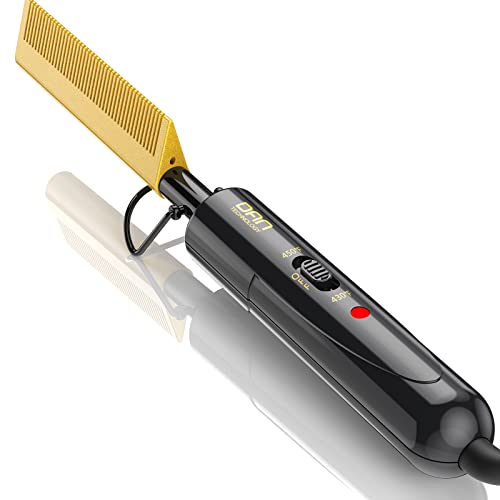
DAN Technology Mini Hot Comb
Small travel-format sections

TYMO RING Straightening Comb
Lower-starting comb-style tool

TYMO Ionic Plus Straightening Brush
More stepped control for lengths
THE EDITOR'S TAKE
Best Hot Combs for Natural Hair
For occasional straightening of natural curls and coils, the useful choice is between a narrow pressing comb and a broader heated-tooth tool. Terviiix offers a removable shield and stepped settings; TYMO RING starts lower, while Ionic Plus gives more temperature steps across a broader brush. Select by strand condition and section access rather than a race-based heat rule.
A CLOSER LOOK
The full product reviews
Terviiix Electric Hot Comb
The narrow head and removable shield are the useful details for separated small sections.
The shield changes positioning, not the task
Terviiix combines a narrow heated comb with a removable shield. That makes it worth considering for a small prepared section near the part, where a broad brush can be more difficult to position. The shield is an additional barrier, not permission to press the teeth against the scalp. Lift the section so the hair can enter the comb beyond the skin, and keep the hairline visible while working. The narrow shape also means you will cover less width at once than with a full heated brush.
Five levels need a deliberate choice
The tool has five heat levels, a maximum of 450°F, a swivel cord and a 60-minute shutoff. Choose the setting before bringing it to the hair and recheck it when changing grip. The high ceiling should not become the target merely because the hair is curly or dense. Ceramic coating and the brand’s infused-teeth claims do not establish a damage-free pass. Terviiix makes most sense for controlled narrow-section smoothing with a shield available; for broad lengths, a wider tooth tool may fit the routine better, while fragile hair may require a lower-starting alternative.
What stands out
- Five heat levels offer a choice beyond a simple high/low switch.
- A removable shield gives an additional positioning accessory.
The trade-offs
- The heated teeth remain a burn risk, and the 450°F maximum is not a recommended default.
Our verdict The clearest narrow-comb choice here when adjustable settings and a removable shield matter more than broad coverage.
Using it in your routine
Separate a dry detangled section, fit the shield as instructed and keep the teeth clear of the scalp during a controlled stroke.
Consider another option if: Avoid if its lowest usable setting is too high for your fragile or treated hair.
NICEMOVIC Ceramic Hot Comb
A clearly stated three-level scale makes both the starting heat and its large increments visible.
The three levels reveal the limitation
NICEMOVIC lists three settings: 320°F, 360°F and 450°F. That is easy to understand but less flexible than a tool with more closely spaced steps. The lowest option may be unsuitable for a fragile section, and the gap between the middle and highest levels is substantial. Do not treat the brand’s broad texture labels as instructions to assign the maximum to tight curls. Choose according to the condition of the prepared hair and stop if the available steps do not offer an appropriate setting.
Plan the pause as well as the stroke
This is a narrow ceramic-coated metal comb with a plastic handle and support bracket. The bracket gives you a place to rest the heated head, but it still needs a stable heat-tolerant surface clear of cords and other products. Use the section clips to keep unworked hair out of the way rather than trying to press a thick tangle flat. The controls use a long press for power, so check the selected level before each change of position. Choose NICEMOVIC for a straightforward narrow-comb routine; a lower-starting tool is the more useful purchase when heat precision is your main concern.
What stands out
- Three stated temperatures make the available steps clear.
- The support bracket gives the hot head a resting position.
The trade-offs
- The lowest listed setting is 320°F and the jump from 360°F to 450°F is large.
Our verdict A simple stepped comb for prepared sections when the 320°F starting level is appropriate for your hair.
Using it in your routine
Select the level before working, keep the comb moving through a dry detangled section and rest it on its bracket on a suitable surface.
Consider another option if: Skip it when you need a lower starting point or fine temperature increments.
DAN Technology Mini Hot Comb
The compact head reduces footprint, while the high/low switch leaves temperature precision to the supplied instructions.
Compact does not mean cooler
DAN’s mini comb trades broad coverage for a smaller format. That can be relevant at a prepared short section where a full-width brush is awkward to position, but it does not reduce the need for scalp clearance. The heated head still needs to stay off the skin. It is a dry-hair smoothing tool, so finish detangling with an unheated comb before bringing this one to the section. Its compact head can address separated roots as well as longer sections; keep a clear gap between the heated surface and a real scalp.
A high/low switch leaves more checking to you
The current description identifies a high/low switch and dual-voltage operation without supplying a detailed numbered temperature scale. That lack of precision is the reason this is a narrower recommendation than the stepped tools. Before purchase and use, check the exact supplied instructions rather than infer a temperature from the word low. For packing, also check the local plug requirements; voltage compatibility does not change the physical plug. Choose DAN when compact section access is the priority and its instructions provide a suitable setting. If your routine needs repeatable fine heat adjustment, a more explicit control system is the better fit.
What stands out
- The compact head is easier to plan around a small section.
- Dual-voltage operation accommodates compatible mains supplies.
The trade-offs
- High and low labels provide less setting precision than stated temperature steps.
Our verdict A compact narrow comb for small dry sections, with less control detail than the digitally stepped alternatives.
Using it in your routine
Check the supplied temperature and voltage instructions, select the appropriate level and work only a dry detangled small section.
Consider another option if: Avoid if you need a clearly numbered low-temperature setting for fragile or chemically treated hair.
TYMO RING Straightening Comb
Guarded heated teeth provide a different section path from an exposed narrow pressing comb.
The tooth arrangement changes section access
TYMO RING surrounds its heated interior with an exterior guard and uses a wider tooth arrangement than a traditional narrow hot comb. It is best approached as a section-smoothing tool for hair that can enter those teeth evenly. If the inner hair is not reaching the heated area, making the stroke repeatedly hotter is not the first solution; reduce the section and check its placement. The outer guard helps handling, but the interior is still heated and should not be pressed against the scalp.
Five levels with a lower beginning
The stated 266–410°F range provides a lower starting point than the NICEMOVIC steps. That is a meaningful selection difference when the condition of a section calls for less heat, although no setting guarantees the absence of damage. RING also has a 30-minute inactivity shutoff. Keep the powered tool in a clear resting place between sections instead of depending on the shutoff as the way to finish a session. Choose RING when you want this broader comb-style arrangement with a lower-starting scale; choose a narrow pressing head when precise access to a small prepared section is more useful than coverage.
What stands out
- Five levels include a 266°F starting point.
- A guarded exterior separates the hand from the heated interior.
The trade-offs
- The larger tooth arrangement offers less narrow placement than a traditional pressing comb.
Our verdict A lower-starting comb-style option than the three-level NICEMOVIC when you prefer guarded heated teeth to a narrow exposed head.
Using it in your routine
Fully dry and detangle the hair, choose the setting and feed a separated section into the teeth without touching the scalp.
Consider another option if: Avoid if you need a tiny pressing head at a short parting or cannot keep the section clear of the skin.
TYMO Ionic Plus Straightening Brush
The broad brush and sixteen steps favour length smoothing over tiny hairline sections.
A brush footprint serves the lengths
Ionic Plus is a broad heated brush rather than a slim pressing comb. Its denser tooth layout can engage more hair across a section, but that only helps when the hair is separated enough to enter the heated area. Holding a large dense bundle on top of the bristles is different from arranging a controlled section between them. For natural curls and coils, detangling beforehand matters more than trying to make a hot brush release knots while it smooths.
More steps are useful only if you check them
The tool lists 16 temperature settings and places its buttons near the end of the handle. Those details offer more selection choices while moving the controls away from the primary grip. Choose the setting deliberately and look again when your hand changes position. Cool outer tips and the guarded design help handling but do not remove the need to keep the heated interior clear of the scalp. The ionic feature is not a guarantee of a particular finish or curl preservation. Choose Ionic Plus for broader dry-length smoothing with more setting options; a traditional narrow comb is a better format for a smaller, clearly separated area.
What stands out
- Sixteen settings provide more control choices than a high/low switch.
- Controls at the handle end separate adjustment from the main grip.
The trade-offs
- The broad head is less suited to narrow areas beside the ear or hairline.
Our verdict The broad-section option when you want more setting steps and will work through lengths rather than tiny root areas.
Using it in your routine
Detangle first, select the setting and feed a manageable dry section through the heated bristles while keeping skin clear.
Consider another option if: Choose a narrower comb if close section access matters more than broad length coverage.
EVERYDAY DETAILS
What matters in everyday use
Section access
A narrow comb and a broad heated brush reach different amounts of hair at once.
Heat control
Choose a usable setting for strand condition; a high maximum is not a styling target.
Scalp clearance
A shield or cool exterior helps positioning but does not make hot teeth safe to touch.
Product photographs: Amazon. Certain content that appears on this site comes from Amazon. This content is provided “as is” and is subject to change or removal at any time.
Untreated curls and chemically treated hair are different branches
This page focuses on natural curls and coils attached to the scalp. Completely dry, detangled sections are the starting point for these heated tools. Use the heat protection and handling directed by the tool instructions, and keep the heated teeth away from skin.
Chemically treated, highlighted or fragile sections deserve a separate check of their condition and tolerance. Being Black, having dense hair or having tight curls does not set a universal temperature. If the lowest setting is too much for your hair, choose another tool or a nonheated style rather than making faster repeated passes.
Roots need space, not closer contact
Lift and separate the section so the teeth can engage hair beyond the scalp. A comb may be easier to place in a narrow area than a broad brush, but moving it against the skin does not improve safe root work. Keep a clear view near the ear and hairline and stop if the section snags; do not use the heated tool as a detangler.
GOOD TO KNOW
Questions before you choose
Is a hot comb the same as a straightening brush?
Not exactly. A traditional narrow pressing comb has a different footprint from a broad brush with heated teeth. Both can smooth dry hair, but they offer different section access and contact.
What temperature should natural hair use?
There is no single setting for all natural hair. Strand condition, diameter and the exact tool instructions matter; choose the lowest effective setting for your prepared section rather than default to the maximum.
Can I smooth wet roots with these tools?
No. These recommendations are dry-hair heated tools, not dryers. Finish drying and detangling before introducing the hot teeth.
Can I use the same settings on relaxed hair?
Do not assume that. Chemical treatment changes the condition you need to assess, and an imprecise or high starting setting may be unsuitable for a fragile treated section.
Bella Ross curates practical hairstyle ideas for everyday cuts, braids, color inspiration, and simple styling routines.
Our editorial policySTYLE IT YOUR WAY
A little styling inspiration
 Product reviews
Electric Hot Combs: 6 Detailed Reviews
A hot comb works through a small prepared section with heated teeth. It needs more skin clearance than an ordinary comb, and the wig fiber’s own heat instructions take priority over broad listing claims.
 Product reviews
Best Flat Irons for Natural Hair: 6 Detailed Reviews
Six flat irons for occasional natural-hair straightening, reviewed for section contact, adjustable controls, root access and shaping the ends.
 Product reviews
Flat Irons for 4C Hair: 6 Detailed Reviews
A 4C routine needs clear section access, complete preparation and a heat setting chosen for the hair’s condition. Plate width should improve placement, not encourage thick bundles or extra pressure.