
Product reviews / Pressing tools
Electric Hot Combs: 6 Detailed Reviews
A hot comb works through a small prepared section with heated teeth. It needs more skin clearance than an ordinary comb, and the wig fiber’s own heat instructions take priority over broad listing claims.

As an Amazon Associate I earn from qualifying purchases, at no extra cost to you. Affiliate disclosure
Prepared roots and heat-compatible wigs
THE SHORTLIST
The six products at a glance
Different working designs for pressing prepared roots and heat-compatible wigs.
Our first pick
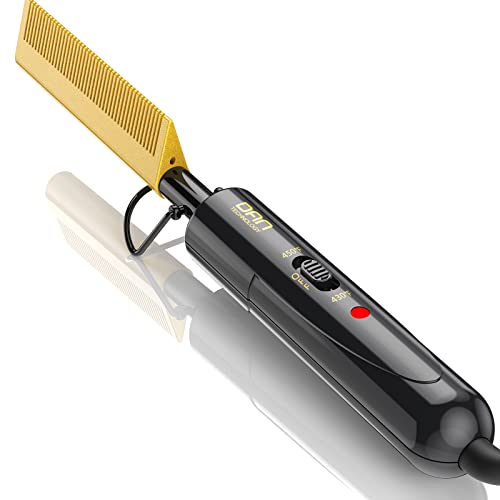
DAN Technology Electric Hot Comb
Prepared roots and heat-compatible wigs
Pick 2

NICEMOVIC Ceramic Hot Comb
Prepared roots and heat-compatible wigs
Pick 3
BudiGl Ceramic Hot Comb
Prepared roots and heat-compatible wigs
Pick 4

Terviiix Adjustable Electric Hot Comb
Prepared roots and heat-compatible wigs
Pick 5

DAN Technology Dual-Voltage Hot Comb
Prepared roots and heat-compatible wigs
Pick 6

Digital Ceramic Hot Comb
Prepared roots and heat-compatible wigs
THE EDITOR'S TAKE
The details that matter in daily use
A hot comb works through a small prepared section with heated teeth. It needs more skin clearance than an ordinary comb, and the wig fiber’s own heat instructions take priority over broad listing claims.
Separate styling real hair from styling a wig. A wig fiber has its own heat limits and support needs; pressing prepared natural curls or coils requires a routine built around that hair and clear skin access. The dedicated natural-hair hot-comb review covers the latter task.
A CLOSER LOOK
The full product reviews
Our first pick
DAN Technology Electric Hot Comb
- Working format
- Heated comb for roots and wigs
- Controls
- High and low settings; dual voltage
The comb format separates and presses a small prepared section rather than sandwiching it between plates. A wig should be removed and secured on a stand when possible, with the fiber’s own heat limit checked before the comb is switched on.
High and low on the CP05C1P
The comb format separates and presses a small prepared section rather than sandwiching it between plates. A wig should be removed and secured on a stand when possible, with the fiber’s own heat limit checked before the comb is switched on.
The DAN CP05C1P is a two-position control format. Learn the switch location with the tool cool, then select the setting before bringing the teeth toward a fully dry section. The simple menu can suit an established pressing routine, but it gives less information when a wig specifies a precise temperature limit. A fiber limit needs an actual compatible setting, not an assumption that low must be acceptable.
Dual voltage is useful only when the exact electrical rating supports the destination supply. A plug adapter changes the connection shape, not the heat setting or fiber compatibility. Choose this DAN for a straightforward high-and-low routine with clear supplied instructions. A displayed lower-temperature menu is the more relevant change if selecting heat precisely is your main concern.
After the session
Unplug the CP05C1P after pressing and give the heated teeth time to cool before handling the head. Clear residue only by the supplied method; scraping the coated teeth or immersing the electrical body is inappropriate. Leave the switch and cord clear while storing it, so the simple high-low control is easy to inspect next time.
What stands out
- Heated comb for roots and wigs
- Dual-voltage design
The trade-offs
- A wig-compatible listing does not establish that every synthetic fiber tolerates heat.
Our verdict Choose this DAN for a straightforward high-and-low routine with clear supplied instructions. A displayed lower-temperature menu is the more relevant change if selecting heat precisely is your main concern.
Using it in your routine
Prepare fully dry, untangled hair or a verified heat-compatible wig. Select the heat before styling and keep the heated comb for roots and wigs clear of skin and adhesives.
Consider another option if: A wig-compatible listing does not establish that every synthetic fiber tolerates heat.
Pick 2
NICEMOVIC Ceramic Hot Comb
- Working format
- Ceramic-coated heated teeth
- Controls
- Three settings: 320, 360 and 450°F
Heated teeth provide access to a small section, but they need clear separation from the scalp and ears. Work on fully dry, untangled hair and leave space at the roots rather than pressing the hot comb directly against skin.
Three temperatures with a 320°F floor
Heated teeth provide access to a small section, but they need clear separation from the scalp and ears. Work on fully dry, untangled hair and leave space at the roots rather than pressing the hot comb directly against skin.
NICEMOVIC lists 320, 360 and 450°F, with long-press power operation. The lowest choice is therefore a meaningful limit. Check that choice against the hair condition or wig directions before deciding the ceramic coating makes this the right tool. Learn the long press while the comb is cold so power and setting selection do not become part of the movement through a strand.
The support bracket provides a set-down point, so arrange a suitable surface before starting and keep the bracket clear. A three-setting menu is simple but leaves large jumps rather than fine changes. Choose it for an appropriate established temperature; choose the digital 210°F-starting format if having lower options is the feature you specifically need. The heated teeth remain a pressing tool, never the first detangler.
After the session
The metal support bracket needs a clear resting surface during cooling. Once the comb is unplugged and cold, remove product residue by the supplied method rather than scraping the ceramic surface. Keep the included clips separate when cleaning them. Before the next session, inspect the bracket position and rehearse the long-press control without hair near the teeth.
What stands out
- Ceramic-coated heated teeth
- Electric pressing format
The trade-offs
- The heated comb is not a detangling brush and should not be used to pull through knots.
Our verdict Choose it for an appropriate established temperature; choose the digital 210°F-starting format if having lower options is the feature you specifically need. The heated teeth remain a pressing tool, never the first detangler.
Using it in your routine
Prepare fully dry, untangled hair or a verified heat-compatible wig. Select the heat before styling and keep the ceramic-coated heated teeth clear of skin and adhesives.
Consider another option if: The heated comb is not a detangling brush and should not be used to pull through knots.
Pick 3
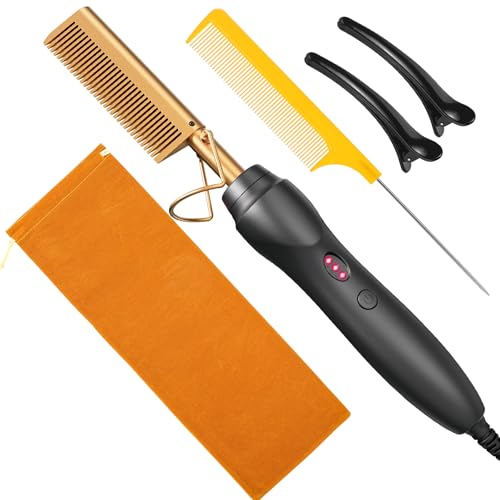
BudiGl Ceramic Hot Comb
A pressing comb asks you to support the section while heated teeth pass through it. That is a more deliberate job than surface brushing; prepare the hair first and avoid treating a hot comb as the first tool on tangled roots.
A basic comb with sparse control detail
A pressing comb asks you to support the section while heated teeth pass through it. That is a more deliberate job than surface brushing; prepare the hair first and avoid treating a hot comb as the first tool on tangled roots.
BudiGl is a ceramic-coated pressing comb with a plastic body, but the listing gives less useful temperature-control detail than the digital option. That matters before purchase, particularly if you are choosing a tool around a wig fiber limit. Do not infer a precise minimum from a similar-looking comb or a broad ceramic label.
Its simple format is relevant only if the supplied instructions establish a suitable setting for the prepared section. Support the dry lengths and keep the teeth clear of skin and the wig base. If you need to plan around a specific number before buying, a model with a documented displayed menu is the clearer choice. The lighter body description does not establish grip comfort, balanced heat or faster pressing.
After the session
Allow the pressing teeth to cool before wiping residue as directed. The plastic body and electrical connection should not be treated like a washable ordinary comb. Keep the instructions with this unit because its sparse listing detail makes them important for selecting a setting. Store it without pulling the cable tightly around the head or pressing the teeth against other tools.
What stands out
- Ceramic-coated pressing comb
- Electric heating
The trade-offs
- Avoid unverified synthetic fibers and keep heated teeth away from lace adhesives and skin.
Our verdict If you need to plan around a specific number before buying, a model with a documented displayed menu is the clearer choice. The lighter body description does not establish grip comfort, balanced heat or faster pressing.
Using it in your routine
Prepare fully dry, untangled hair or a verified heat-compatible wig. Select the heat before styling and keep the ceramic-coated pressing comb clear of skin and adhesives.
Consider another option if: Avoid unverified synthetic fibers and keep heated teeth away from lace adhesives and skin.
Pick 4
Terviiix Adjustable Electric Hot Comb
The adjustable setting is the important feature because roots, lengths and wig fibers do not all tolerate the same exposure. The shield and stand assist positioning, but neither permits resting the heated teeth on the scalp.
A shield beside a five-setting menu
The adjustable setting is the important feature because roots, lengths and wig fibers do not all tolerate the same exposure. The shield and stand assist positioning, but neither permits resting the heated teeth on the scalp.
Terviiix TXB002 combines five heat choices up to 450°F with a removable shield. Check the shield is seated as directed and set the temperature before loading a section. The guard helps position the tool, but the teeth still need clearance from skin, lace and adhesives. At a wig stand, secure the base so guiding the comb does not shift the entire wig.
The six-and-a-half-foot swivel cord gives positioning room, making cord routing part of the setup. Keep it away from the working teeth and the path of your hand. Choose this model if the adjustable menu and shield solve a practical control problem. Do not buy it solely for infused-coating language; the useful question is whether its actual available settings match the hair or verified fiber you intend to press.
After the session
Keep the removable shield with the TXB002 while storing the cooled tool, and inspect its seating before the next use. Remove residue from the tooth bases only as instructed. Leave the swivel cord in a loose arrangement rather than tightly wound around the heated head. Automatic shutoff is a backup; switch off and unplug deliberately when the pressing session is over.
What stands out
- Coated heated comb teeth
- Adjustable heat; automatic shutoff
The trade-offs
- Infused coatings and a protective shield do not make the tool safe for unrestricted close-scalp contact.
Our verdict Choose this model if the adjustable menu and shield solve a practical control problem. Do not buy it solely for infused-coating language; the useful question is whether its actual available settings match the hair or verified fiber you intend to press.
Using it in your routine
Prepare fully dry, untangled hair or a verified heat-compatible wig. Select the heat before styling and keep the coated heated comb teeth clear of skin and adhesives.
Consider another option if: Infused coatings and a protective shield do not make the tool safe for unrestricted close-scalp contact.
Pick 5
DAN Technology Dual-Voltage Hot Comb
- Working format
- Ceramic-coated heated teeth
- Controls
- High and low temperature options
The listing describes high and low settings, which is simpler than a detailed digital menu. That simplicity is a compromise when a wig fiber has a specific maximum temperature rather than a broad high-or-low instruction.
Confirming the separate DAN variant
The listing describes high and low settings, which is simpler than a detailed digital menu. That simplicity is a compromise when a wig fiber has a specific maximum temperature rather than a broad high-or-low instruction.
This DAN listing also emphasizes high and low settings, but it should be assessed as its own variant rather than borrowing every detail from the CP05C1P. Confirm the model directions and electrical rating before travel. The two-choice control can be convenient once a routine is established, while leaving less room to match a fiber with a narrow permitted temperature range.
For wig work, check the fiber instructions before the tool instructions: that establishes whether pressing is appropriate at all. Mount the wig securely where possible and separate a small dry section before bringing the comb near the base. Choose this variant if its documented choices fit the task. If a precise display is the reason you are replacing a tool, another high-and-low DAN is unlikely to solve that problem.
After the session
Store the supplied instructions with this separate DAN variant so the two similar listings do not become interchangeable in your routine. Unplug and cool the head before cleaning between the teeth by the permitted method. Keep the cable connection clear of bending pressure. Recheck the appliance rating when packing for travel rather than relying on the appearance of its plug.
What stands out
- Ceramic-coated heated teeth
- High and low temperature options
The trade-offs
- Limited heat selection makes precise fiber-temperature matching less convenient.
Our verdict Choose this variant if its documented choices fit the task. If a precise display is the reason you are replacing a tool, another high-and-low DAN is unlikely to solve that problem.
Using it in your routine
Prepare fully dry, untangled hair or a verified heat-compatible wig. Select the heat before styling and keep the ceramic-coated heated teeth clear of skin and adhesives.
Consider another option if: Limited heat selection makes precise fiber-temperature matching less convenient.
Pick 6
Digital Ceramic Hot Comb
- Working format
- Heated comb with shield and stand
- Controls
- 14 settings from 210–450°F
A displayed temperature and wider menu make it easier to select a lower starting setting than a two-position switch. Still check the wig’s own instructions: a low menu option does not establish compatibility with an unknown synthetic fiber.
Fourteen choices beginning at 210°F
A displayed temperature and wider menu make it easier to select a lower starting setting than a two-position switch. Still check the wig’s own instructions: a low menu option does not establish compatibility with an unknown synthetic fiber.
The digital format is the clearest low-setting alternative in this group, listing fourteen choices from 210 to 450°F. The display allows you to confirm the selected level before the hair reaches the teeth. That is a practical difference from NICEMOVIC’s 320°F floor or a high-and-low switch, particularly when the purpose of changing tools is having more choices near the lower end.
A low option still needs to fit the actual fiber directions; it is not blanket permission to press an unknown synthetic wig. Seat the shield and arrange the stand as instructed before starting, then keep the comb moving through a small prepared section. Choose it for readable adjustment and the documented range, while checking the exact supplied model rather than relying on the generic digital product name.
After the session
Let the comb, shield and stand cool before moving them into storage. Clean residue around the heated tooth bases as instructed and avoid scraping the coating. Keep the display readable so the chosen number can be confirmed before the next section. A large menu is only useful when the exact setting is visible and the connector and cord remain undamaged.
What stands out
- Heated comb with shield and stand
- 14 settings from 210–450°F
The trade-offs
- The shield protects positioning only; heated working surfaces still require clearance from skin and lace.
Our verdict Seat the shield and arrange the stand as instructed before starting, then keep the comb moving through a small prepared section. Choose it for readable adjustment and the documented range, while checking the exact supplied model rather than relying on the generic digital product name.
Using it in your routine
Prepare fully dry, untangled hair or a verified heat-compatible wig. Select the heat before styling and keep the heated comb with shield and stand clear of skin and adhesives.
Consider another option if: The shield protects positioning only; heated working surfaces still require clearance from skin and lace.
EVERYDAY DETAILS
What matters in everyday use
For this review, we prioritized pressing prepared roots and heat-compatible wigs. Manufacturer performance promises are treated as claims; the purchase judgments focus on the documented design and how it fits the routine.
Heat and clearance
Temperature choice, tooth access and supported fiber use
Control and placement
A working head you can place deliberately, with controls that are clear during the session.
Care and storage
The practical work required to clean, cool when needed, and keep the tool ready for its next session.
Product photographs: Amazon. Certain content that appears on this site comes from Amazon. This content is provided “as is” and is subject to change or removal at any time.
A workable section comes first
When working on a wig, use a secured stand where possible and check the fiber’s permitted temperature. Do not assume every synthetic or lace-front wig can accept the same heat.
GOOD TO KNOW
Questions about this styling routine
Can every synthetic wig be pressed with a hot comb?
No. Check the wig fiber’s own permitted temperature and directions. Broad wig-compatible wording on the tool does not establish that an unknown synthetic fiber can tolerate heat.
Which model has the lowest documented starting setting here?
The digital ceramic comb lists fourteen choices beginning at 210°F. NICEMOVIC begins at 320°F. A lower option still needs to match the instructions for your hair or exact wig fiber; it does not establish universal compatibility.
Bella Ross curates practical hairstyle ideas for everyday cuts, braids, color inspiration, and simple styling routines.
Our editorial policySTYLE IT YOUR WAY
A little styling inspiration
 Product reviews
Best Hot Combs for Natural Hair: Five Reviews
Five hot-comb reviews for natural curls and coils, covering root access, heated teeth, temperature controls and careful dry-hair handling.
 Style inspiration
24+ Afro Textured Hairstyles
A photo-first guide to afro textured hairstyles, with concise image-specific notes and practical comparison points.
 Age-aware guide
20 Short Hairstyles for Black Women Over 50
A photo-first guide to short natural hairstyles for Black women over 50, with mature coily crops, curls, pixies, waves, gray bobs, and sleek short cuts.