
Before you choose
Choose the purple placement first
Start by deciding whether you want purple near your face, only through the ends, or all over. The color family matters too: blue-violet feels cooler, while magenta and plum add more red. If you prefer the color on a specific short shape, compare the dedicated purple bob ideas gallery after choosing your shade.
The hairstyle gallery
16 Purple Hair Color Ideas, From Lilac to Plum
Compare where the purple begins, how much of the natural-looking base remains, and whether the result reads cool violet, warm plum, or pale lilac.
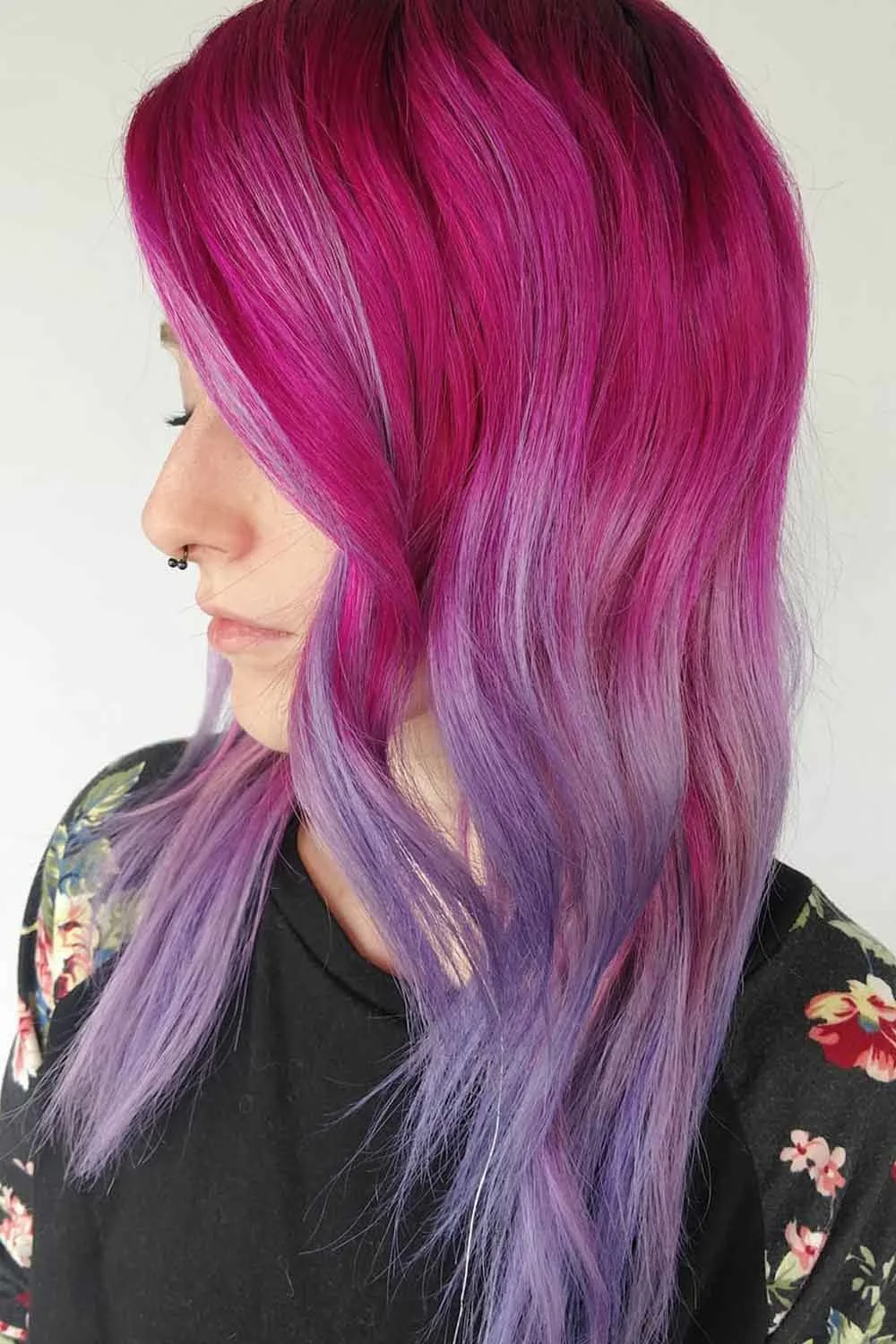
Idea 01
Magenta Roots With Lavender Ends
The bright magenta is concentrated near the face and crown, while the lower lengths cool into lavender. The straight finish makes the color transition easy to read.
- Base
- Magenta
- Ends
- Lavender
- Finish
- Straight
This look does not switch colors at one blunt line. Pink-purple threads continue through the mid-lengths, so the lavender ends still feel connected to the top. The side part and smooth surface show how the blend looks on hair that is worn down rather than curled for a photograph.
Wearability note: Save this for the placement of the magenta near the face and the softer tone below the shoulders. If you prefer less root upkeep, ask to move the brightest color farther down instead of copying the high starting point.
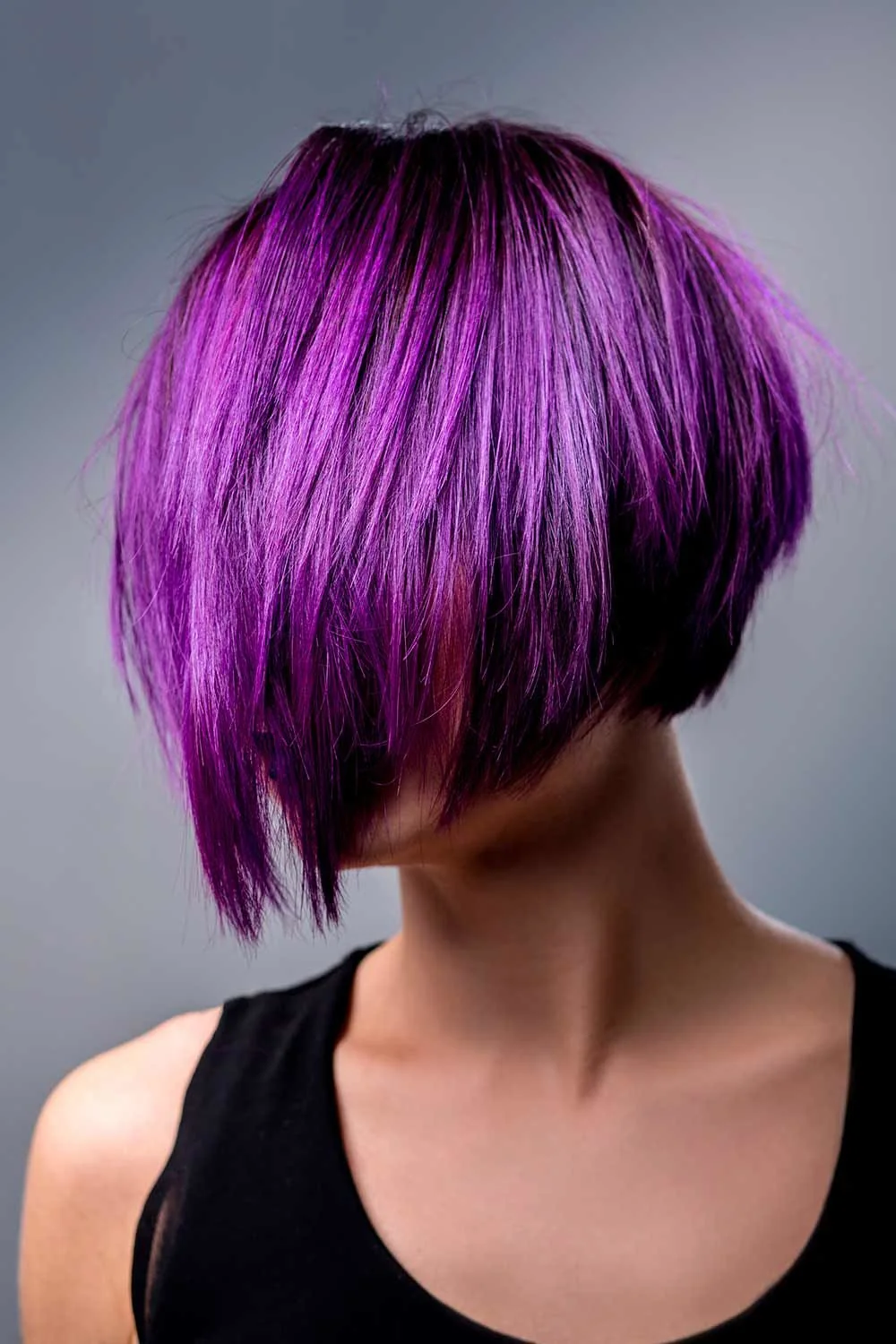
Idea 02
Royal Purple Angled Bob
The violet surface follows an angled bob, with longer front pieces creating a diagonal outline rather than a straight fringe.
- Length
- Short bob
- Color
- Royal purple
- Edge
- Angled
The crown is dark and the smooth outer lengths are a brighter violet. Hair is shorter toward the back, while the swept front reaches below the jaw. The long forward section and sloping lower edge give the color a different shape from a level, blunt bob.
Wearability note: Save this for the combination of vivid purple and a longer angled front. Discuss the cut separately from the color, especially how much of the face the swept section should cover.
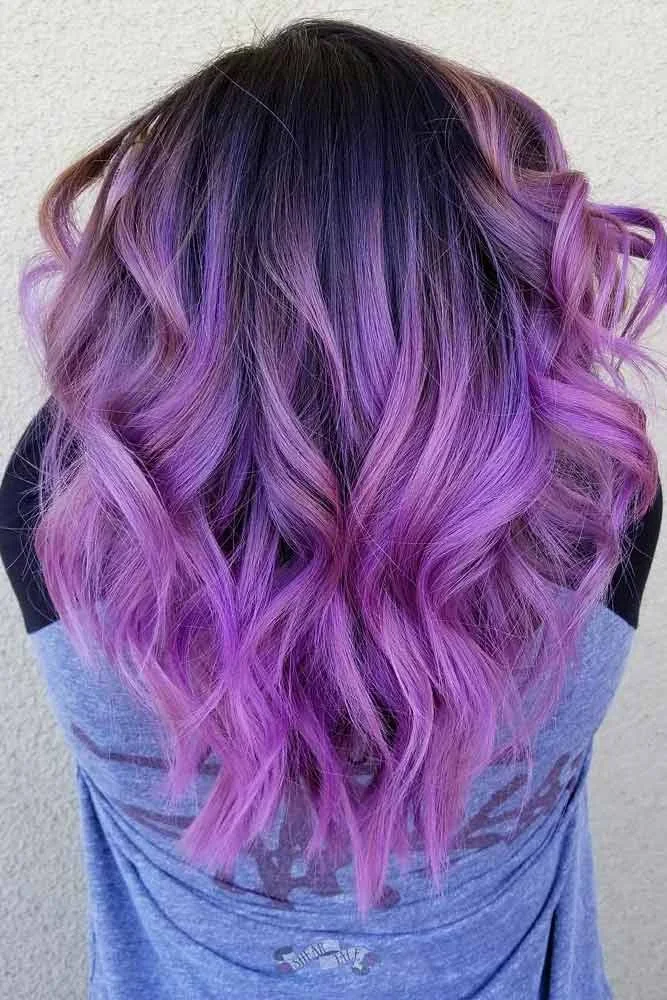
Idea 03
Black-to-Lilac Wavy Ombre
The dark top remains visible through the upper half of the hair, while lavender builds toward the wavy ends. That placement gives the pastel shade contrast without coloring every inch.
- Base
- Dark
- Color
- Lilac ombre
- Texture
- Wavy
Loose waves separate the lilac pieces and reveal darker hair between them. The transition is gradual through the middle rather than a narrow color band. It is a useful visual example of how a pale purple can still look dimensional against a nearly black natural-looking base.
Wearability note: Choose this direction if you want to preserve a dark root area. The pastel lower section will require a lightened base to look this pale, so discuss the condition of the ends before committing to the exact shade.
Choose your direction
Most subtle
Blonde bob with hidden lilac or a muted mauve blend with brown roots.
Best dark-base contrast
Black-to-lilac ombre or dark hair with violet ribbons.
Bold short option
Royal-purple angled bob or blue-violet textured bob.
Softest all-over color
Pastel lavender long layers with a small amount of root depth.
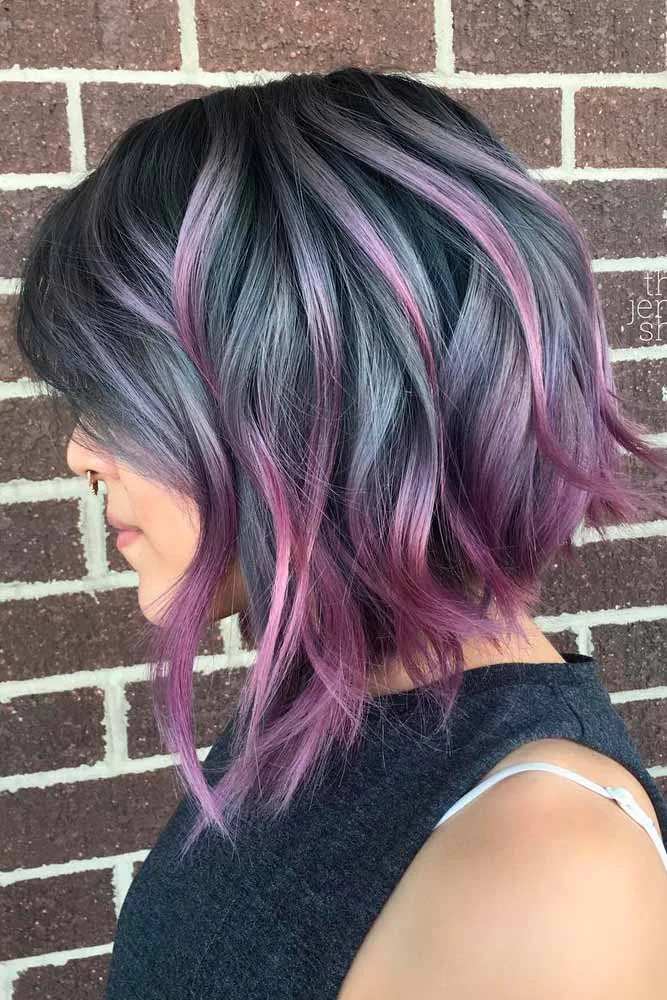
Idea 04
Smoky Lilac Angled Bob
Silver and muted lilac streaks run through a dark angled bob. The longer front pieces show the color from root to tip without needing long hair.
- Length
- Angled bob
- Tone
- Smoky lilac
- Detail
- Silver ribbons
The back is shorter and fuller, while the front falls below the jaw. Pale violet and cool gray are distributed in narrow strands rather than one solid panel. The result is more textured and smoky than a bright purple dip dye, especially where the strands cross the side-swept fringe.
Wearability note: Use this photograph if you like purple but want a cooler, less saturated finish. The angled cut and color are separate choices; a straight bob could carry the same silver-lilac placement with a quieter silhouette.
Idea 05
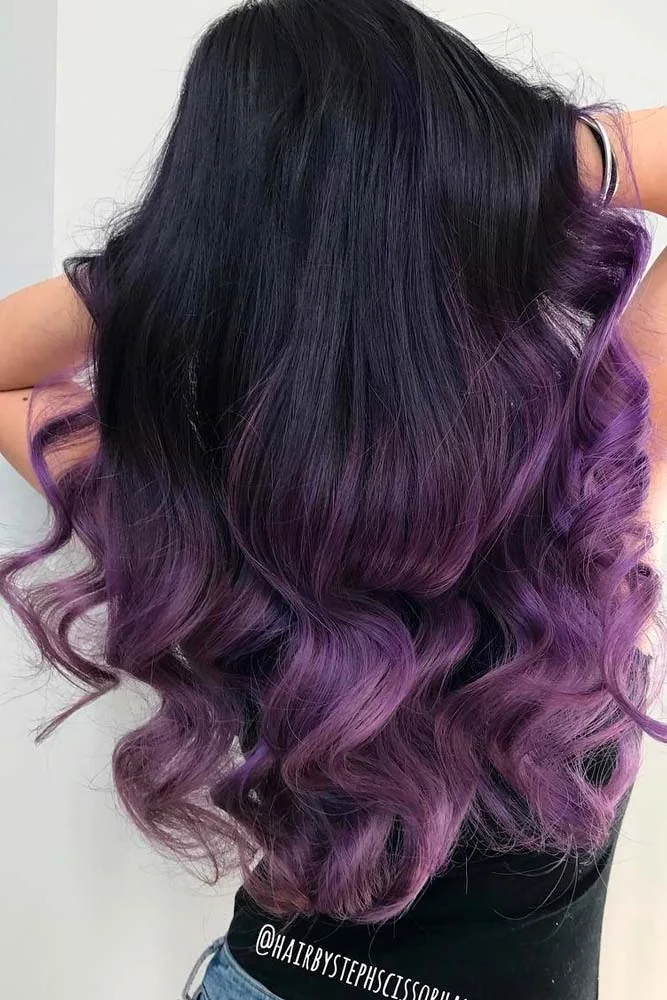
Plum Ombre on Dark Waves
Muted plum appears mainly from the mid-lengths down, leaving the crown dark. The color reads subtle in shadow and clearer along the curved wave edges.
- Base
- Dark
- Tone
- Muted plum
- Placement
- Lower half
The dark base is still a large part of the finished look. Purple tones do not begin at one exact line; they appear gradually among the loose curls, which keeps the transition soft. This is a practical comparison point for someone deciding between vivid violet and a deeper, more wearable plum.
Wearability note: Bring this image if you want purple to become noticeable in movement rather than dominate at the roots. Ask for the lower-half placement and the muted shade separately, since either can be adjusted without changing the other.
Idea 06
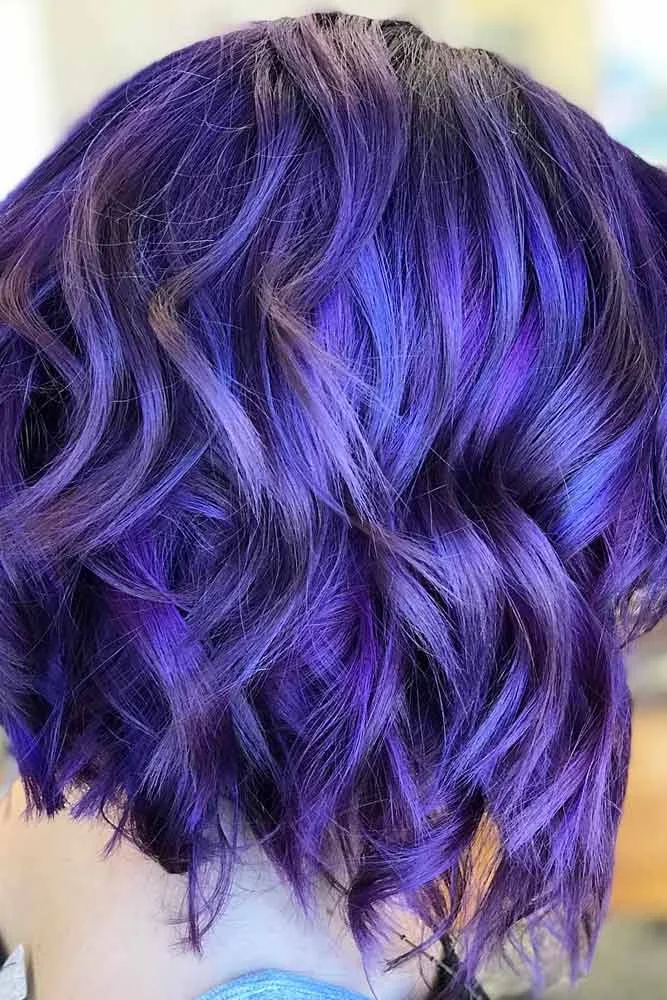
Blue-Violet Textured Bob
This short bob leans distinctly blue-violet, with dark roots adding depth beneath the bright surface. Tousled waves show several violet values at once.
- Length
- Short bob
- Tone
- Blue-violet
- Finish
- Tousled
The color looks cooler than a pink-based purple. Short layered ends and an uneven wave pattern catch the light in small sections, so the result is lively rather than one flat block. The nape remains dark enough to define the haircut's outline against the bright upper layers.
Wearability note: This is a strong choice if you prefer a cool violet and already wear a textured bob. Save the back view to discuss how much root depth and nape darkness you want to keep visible.
Idea 07
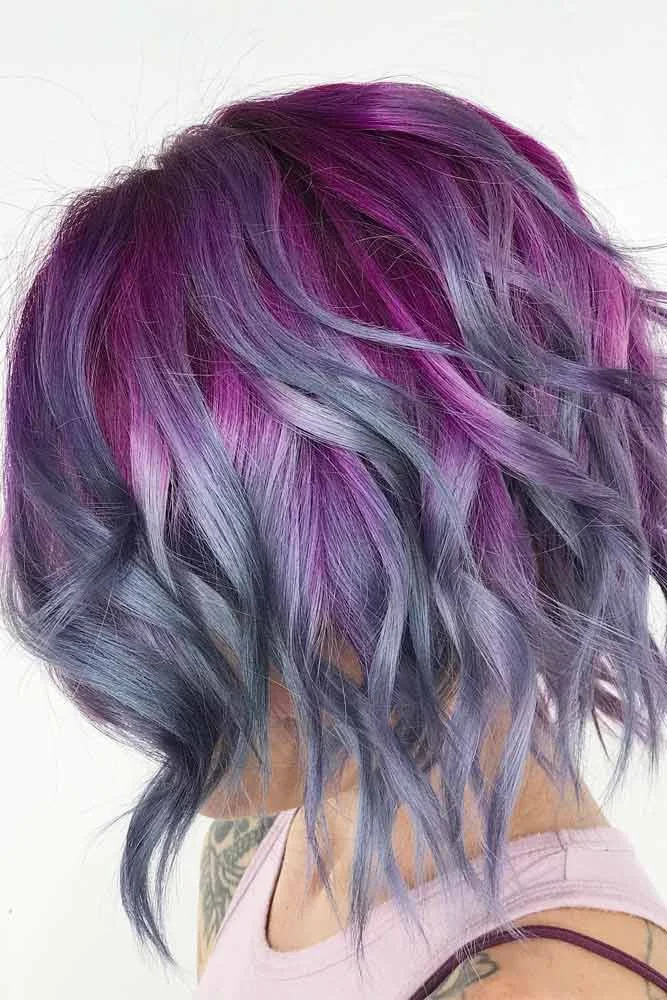
Purple and Silver Shaggy Bob
Violet at the crown fades into silver-gray through choppy bob layers. The broken perimeter makes the two-tone transition feel softer than it would on a blunt cut.
- Length
- Short bob
- Color
- Purple to silver
- Edge
- Choppy
Purple remains strongest around the top and side fringe. Below that, the cool gray becomes more prominent as the pieces separate toward the neck. A loose, slightly messy finish gives each color strand room to show, while the overall length stays short and easy to compare with other bob options.
Wearability note: Use this image if you want purple and gray together but do not want a neat horizontal split. The layered cut contributes heavily to the feathered effect, so discuss the shape as well as the color fade.
Idea 08
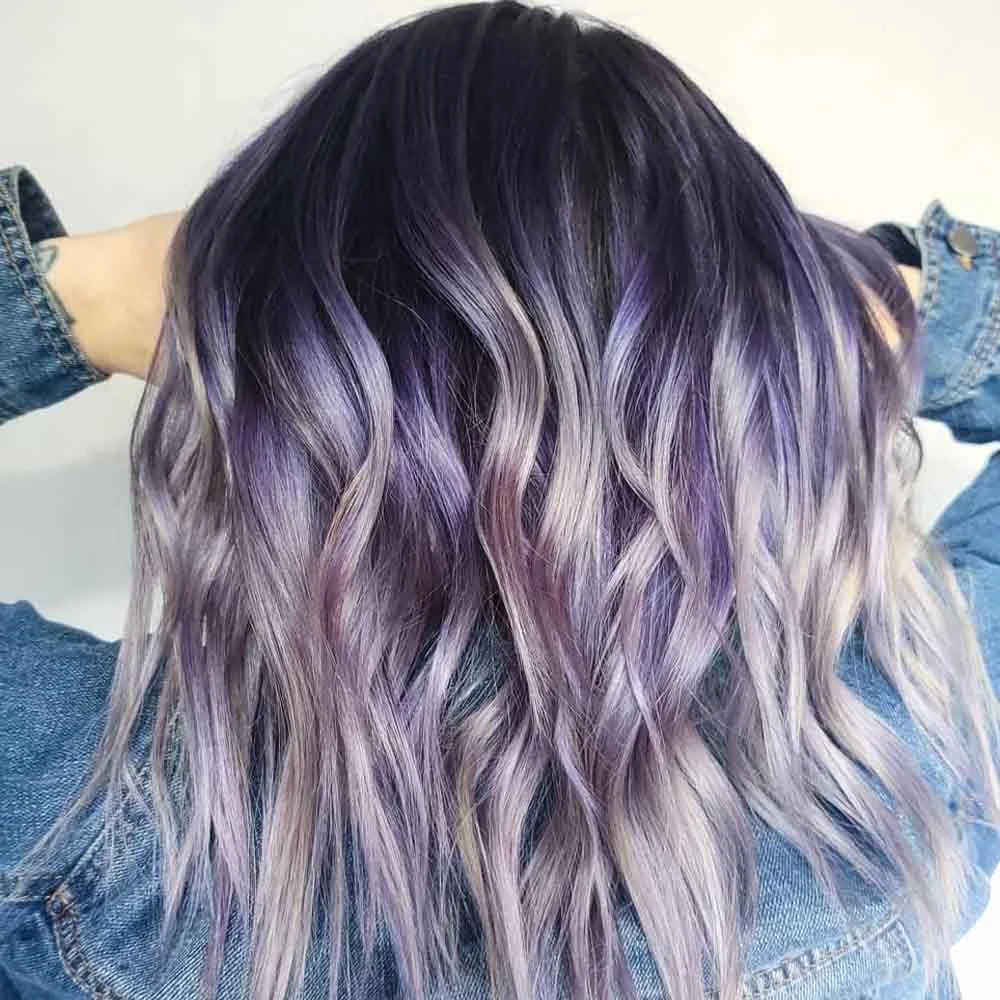
Dark Roots With Silver-Lavender Ends
A deep root area contrasts with the pale lower waves, where a muted lavender tint softens the silver.
- Base
- Dark roots
- Ends
- Silver-lavender
- Length
- Shoulder
The upper hair is distinctly dark, then becomes pale through the middle and ends. Loose bends reveal the transition and the faint lavender cast across the lighter lengths. This is a dark-to-light placement reference, not an all-over ash-blonde base.
Wearability note: Use this to show both the depth you want at the crown and the restrained lavender through the ends. Ask your colorist what lightening the lower lengths would require on your own hair rather than assuming a pale tint will show on a dark base.
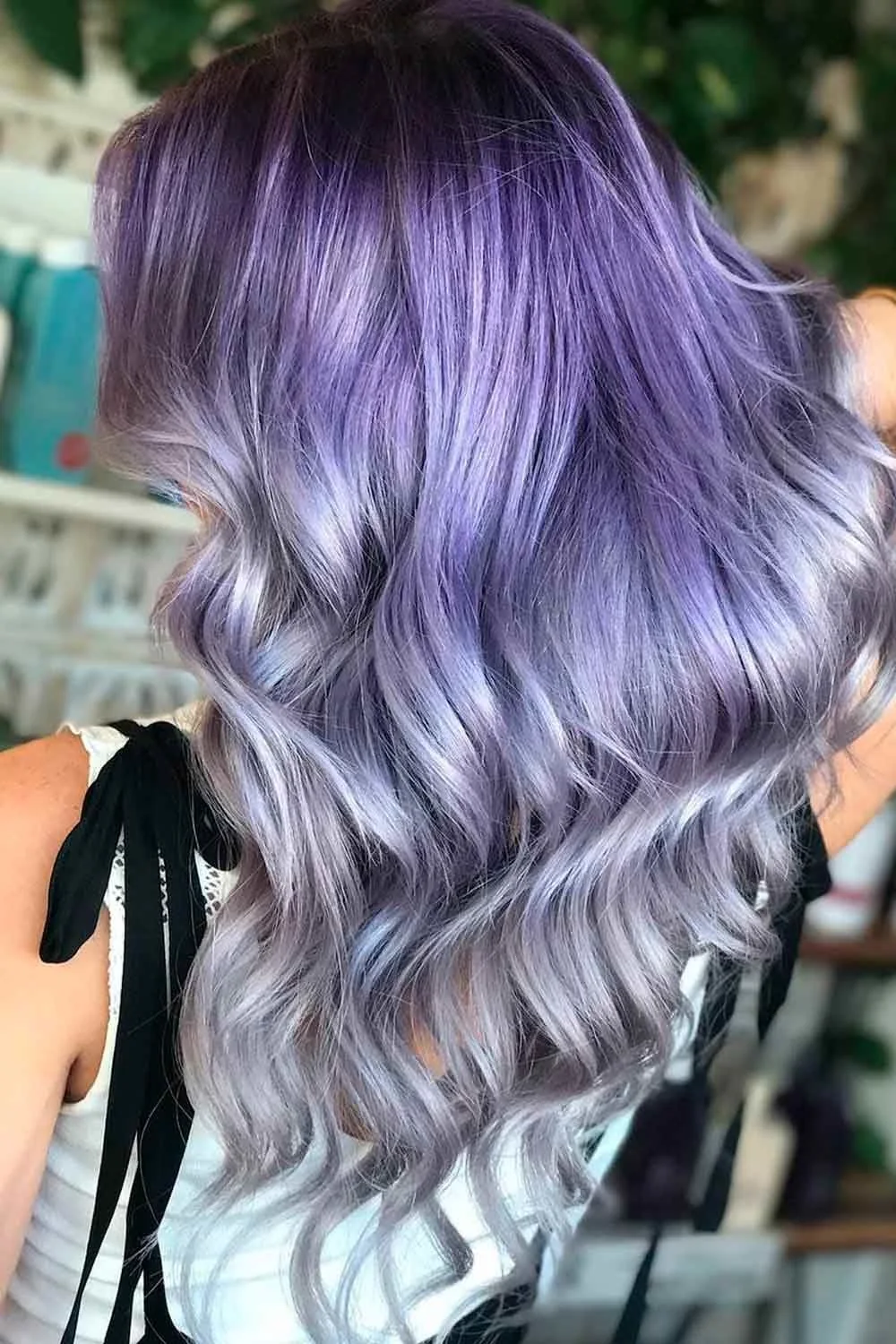
Idea 09
Silver Waves With Amethyst Tint
A cool silver base carries a faint amethyst cast across broad, polished waves. The effect is reflective and understated rather than bright or striped.
- Tone
- Silver-amethyst
- Length
- Long
- Finish
- Polished waves
The long waves are brushed into connected bends, so large smooth surfaces display the lilac undertone. The darker area near the crown prevents the pale lengths from looking flat. Compared with multicolor purple looks, this one depends on tonal nuance and shine more than contrast.
Wearability note: Save this if you want a gray-purple result that reads almost silver in some light. Bring an additional photograph in natural light when consulting a colorist, because cool salon lighting can make subtle violet tones look stronger.
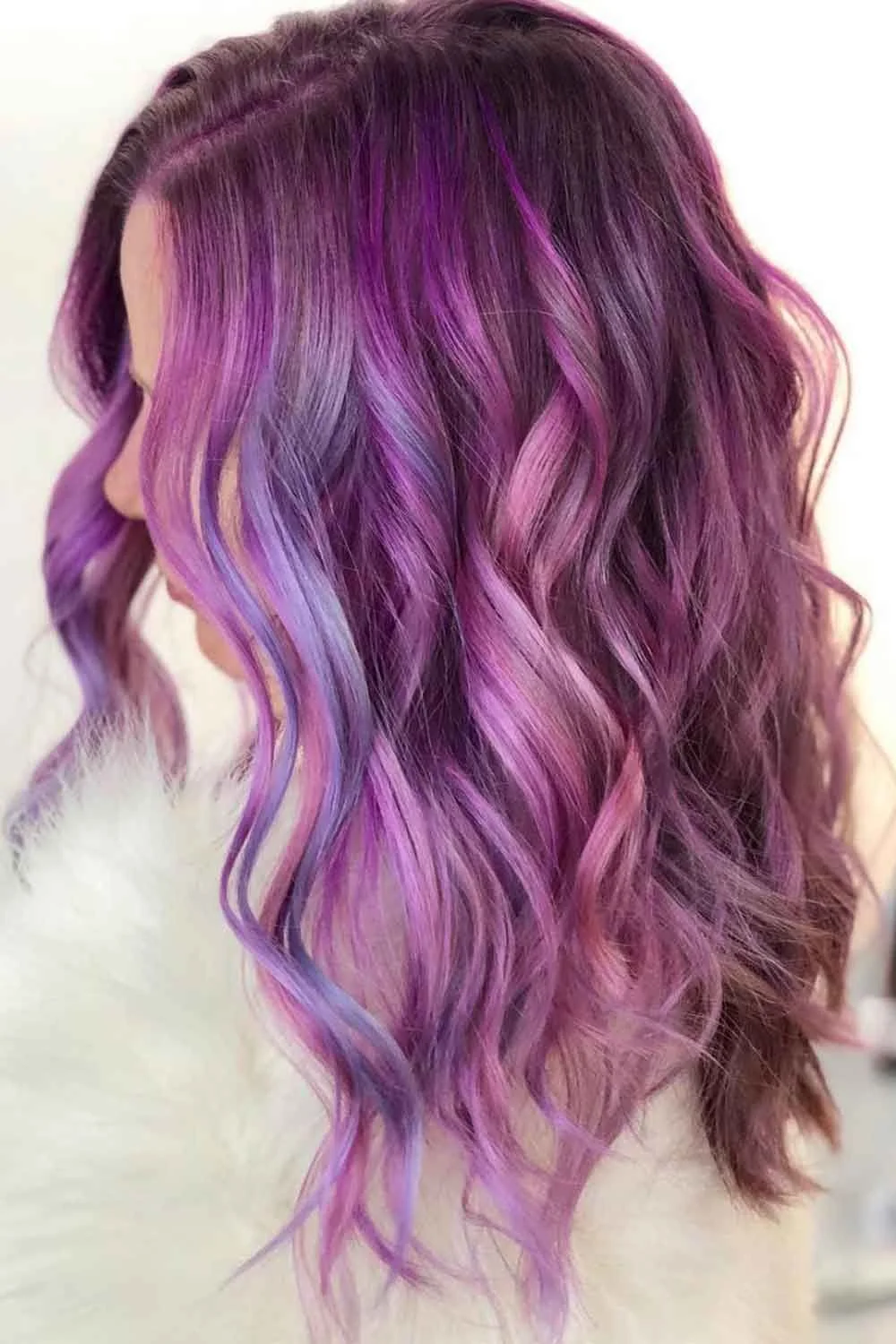
Idea 10
Dusty Mauve Shoulder Waves
Muted mauve gives these shoulder-length waves a gentler purple finish. The side view shows the color moving through face-framing pieces as well as the ends.
- Length
- Shoulder
- Tone
- Dusty mauve
- Texture
- Loose waves
The shade sits between pink and lavender, with darker root depth visible at the part. The lower waves are loose enough that the color remains the main feature. It is less high-contrast than a dark-to-lilac ombre and less vivid than the royal-purple bob, which makes it a useful middle-ground option.
Wearability note: Choose this if you want purple that feels soft rather than electric. Ask for a muted mauve tone and preserve some root depth if you want the photograph's dimensional result instead of an evenly colored pastel.
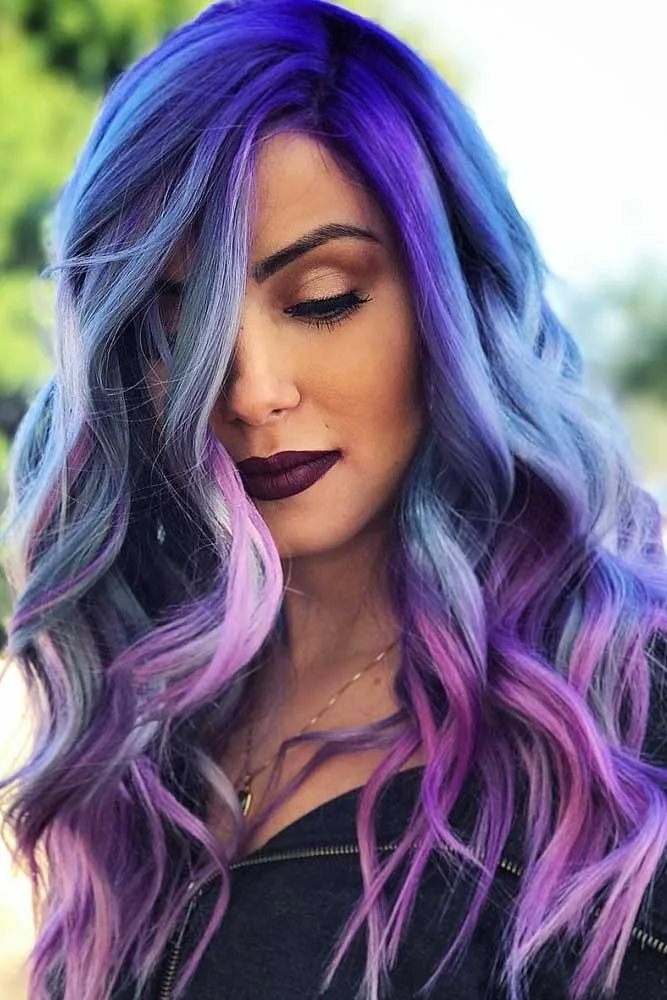
Idea 11
Indigo and Pink Face Frames
Blue-violet dominates the crown, while pale pink strands frame the face and return through the ends. The visible contrast makes the front placement the defining feature.
- Base
- Indigo-violet
- Accent
- Pink face frame
- Length
- Long
The lighter strands sit where the side-swept hair bends across the cheek. Deeper indigo remains behind them, giving the pink pieces a clear outline. The color continues through long waves instead of ending in a single dip, so the front and back remain visually connected.
Wearability note: Use this if you want a purple palette with a deliberate face-framing accent. Show the photograph for where the pink begins, then decide whether you want the blue base to be equally bright or more muted.
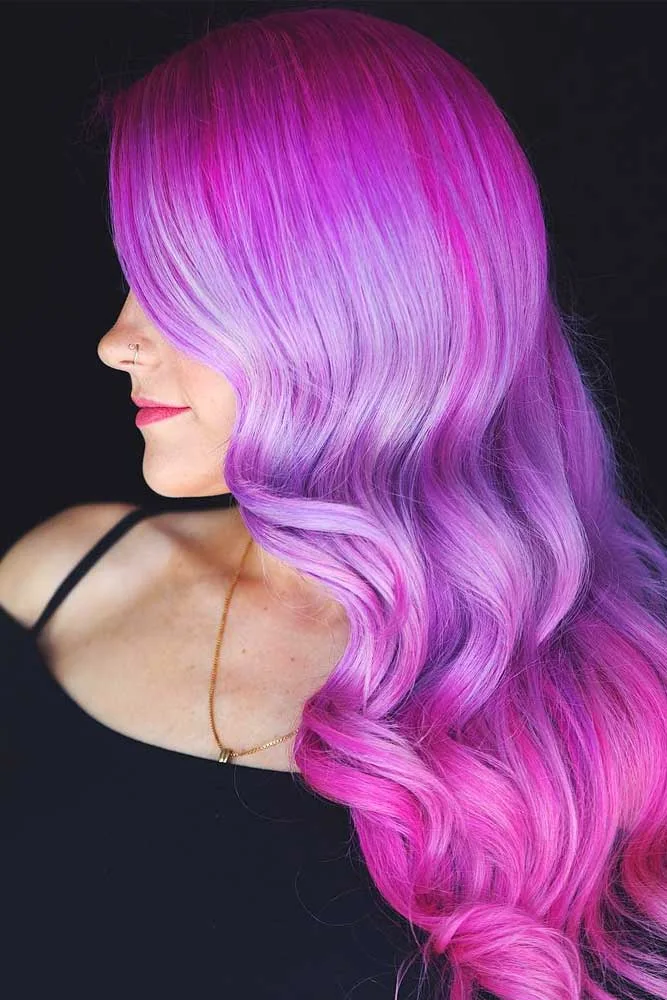
Idea 12
Magenta-to-Lilac Glossy Waves
A smooth side sweep reveals a bold magenta-to-lilac blend. The continuous waves make the transition look fluid rather than banded.
- Base
- Magenta
- Lengths
- Lilac-pink
- Finish
- Glossy waves
The crown carries the darkest berry shade, then the front wave turns lilac before becoming pinker near the ends. There is no abrupt color stripe; several related tones overlap along the bends. The glossy finish amplifies this blend and makes the front section especially useful as a color-placement reference.
Wearability note: Save this when you want a warm purple family rather than a cool blue-violet. If you usually wear your hair straight, ask to see a straight-hair swatch too, since these waves make the blended sections look softer.
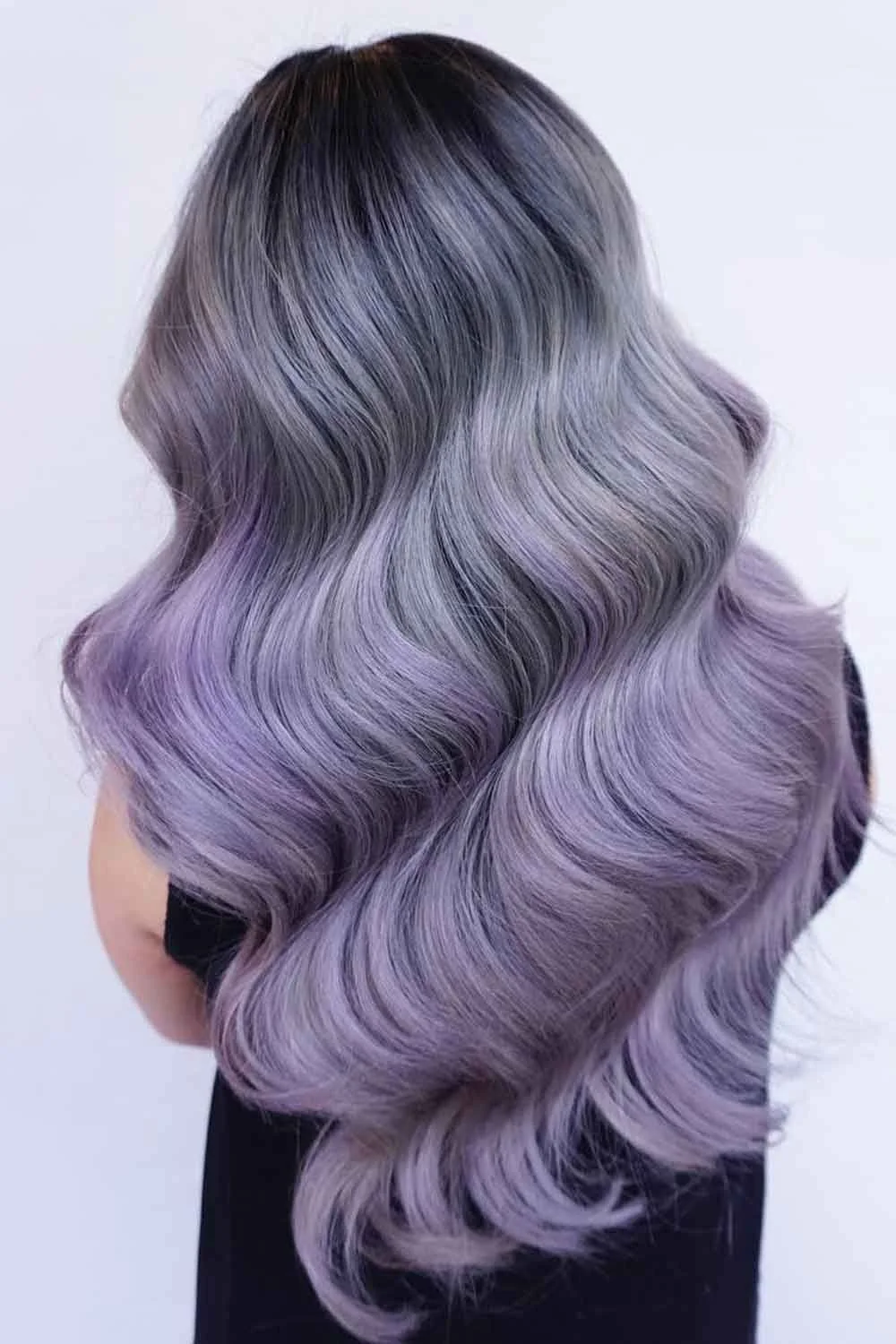
Idea 13
Smoky Lavender Glam Waves
Broad brushed waves show a nearly silver lavender tone, while the shadow root gives the top a darker anchor. The result is cool, soft, and highly polished.
- Tone
- Smoky lavender
- Root
- Shadowed
- Pattern
- Broad waves
The wave pattern forms wide connected ridges through the length. That smooth surface shows subtle shifts from gray to lilac without relying on bright streaks. The lower ends remain lavender, so the cool color carries all the way through rather than fading to blonde.
Wearability note: This photograph is helpful for judging the desired finish as much as the shade. If you prefer casual texture, keep the smoky color idea but do not assume the same sculpted wave shape will happen without styling.
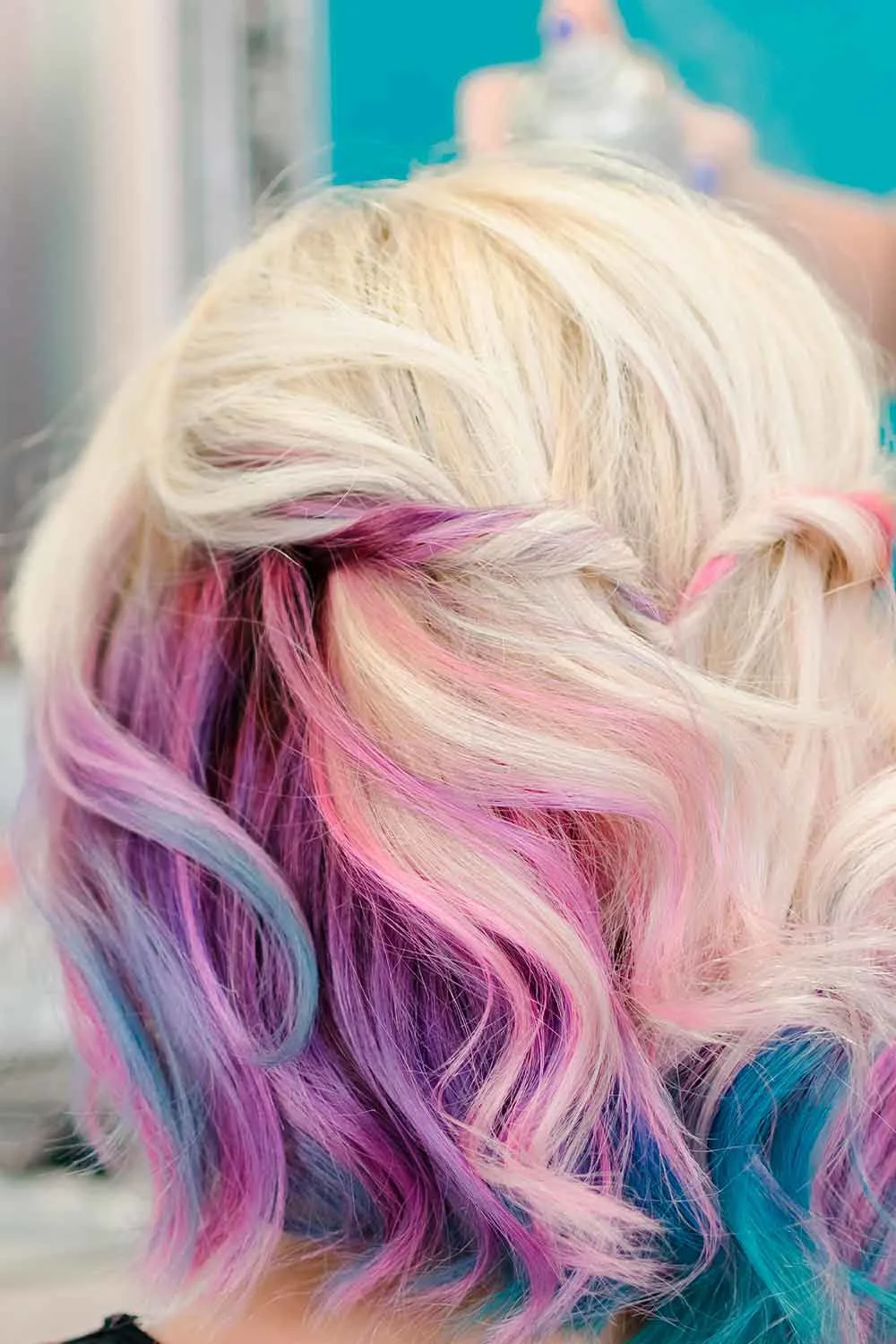
Idea 14
Blonde Bob With Hidden Lilac
The blonde surface stays light and familiar, while lilac and pink appear under the twisted top section. The color is revealed by the half-up styling.
- Length
- Short bob
- Base
- Blonde
- Accent
- Hidden lilac
Most of the visible bob is pale blonde. The purple is tucked through lower layers, so it reads as an accent when the hair is lifted or moved. The short length and loose wave pattern stop the hidden color from disappearing completely, but it remains much quieter than an all-over dye.
Wearability note: Choose this if you want a purple idea that can be partly concealed. Ask where the colored panels would sit when your hair is worn down, because this half-up photograph shows more of the underlayer than a simple loose bob would.
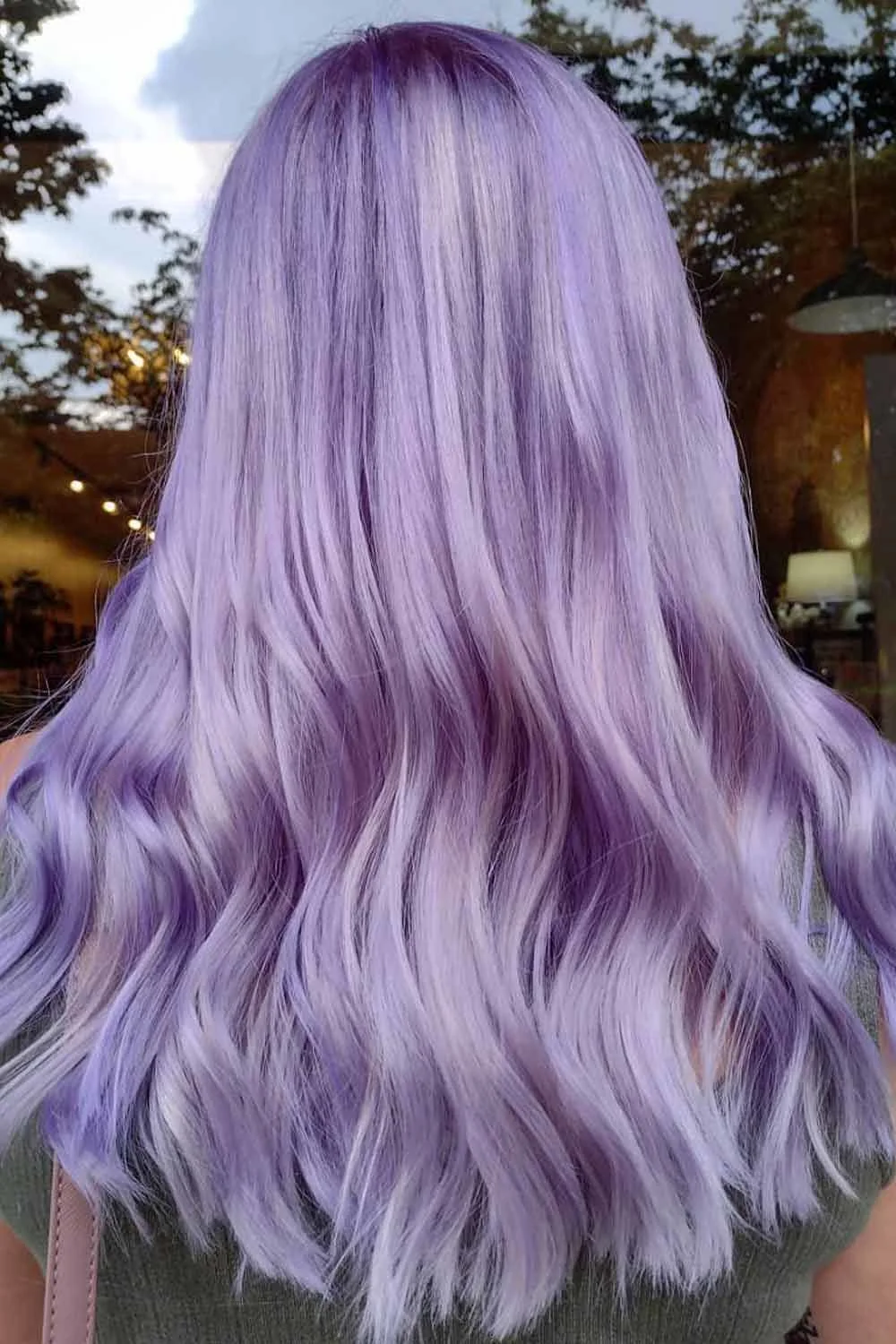
Idea 15
Pastel Lavender Long Layers
A consistent pastel lavender covers most of these long layers. Small darker roots and loose ends give the pale tone enough depth to avoid looking flat.
- Tone
- Pastel lavender
- Length
- Long
- Cut
- Layers
The mid-lengths are smoother than the ends, where gentle waves separate the layered pieces. Lavender remains visible from the upper lengths to the tips, making this a clear all-over pastel option. It contrasts with the ombre examples that keep a much darker top half.
Wearability note: Use this photograph if your main goal is a light purple overall shade. The pale result depends on the starting color and condition of the hair, so use it as a visual target for tone rather than assuming one coloring session will reproduce it.
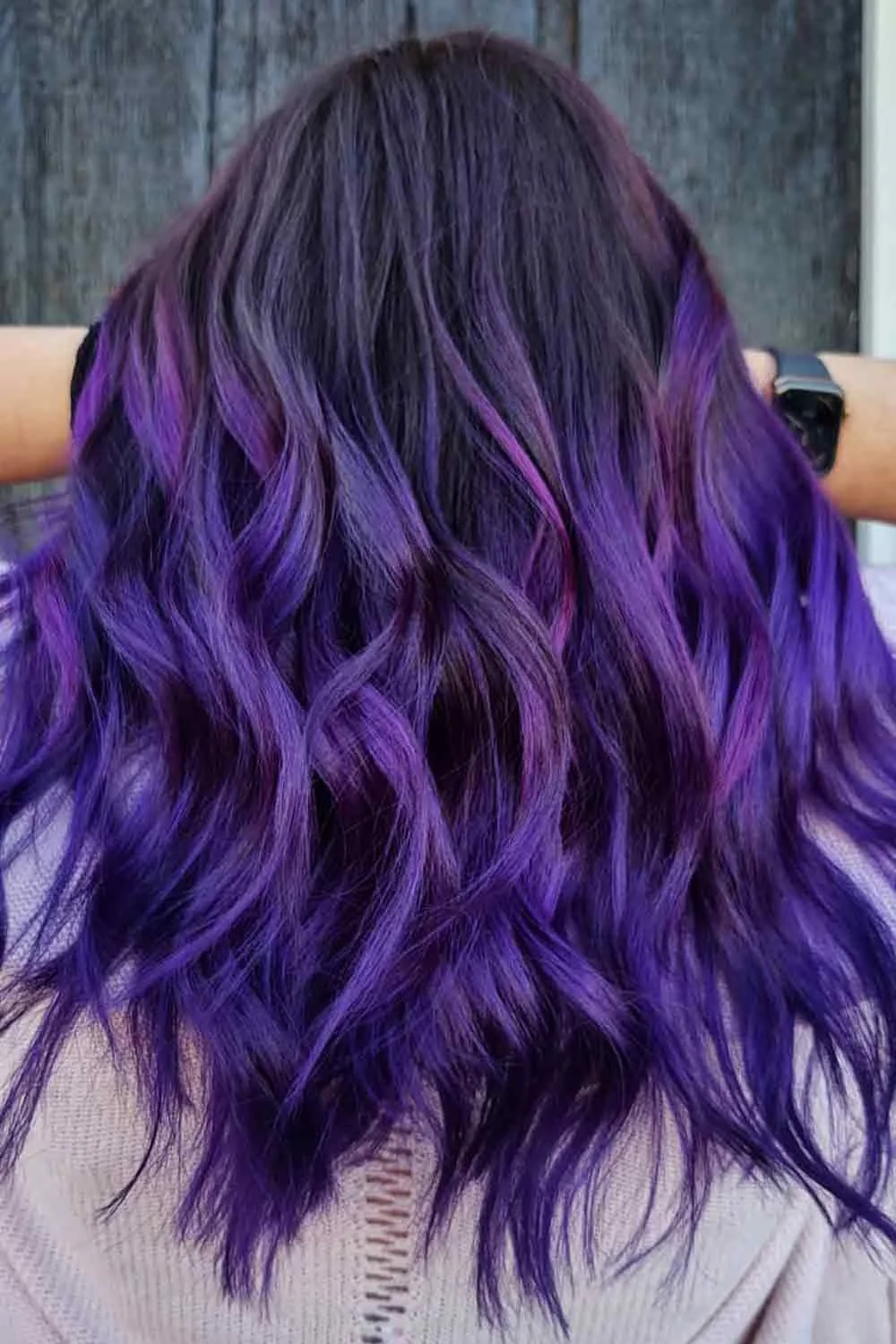
Idea 16
Dark Hair With Violet Ribbons
Dark hair remains visible between vivid violet ribbons, creating a high-contrast result without an all-over purple base. The waves reveal each colored section.
- Base
- Dark
- Accent
- Violet ribbons
- Texture
- Wavy
The crown stays almost black. Purple appears in broad but separated pieces from the middle toward the ends, especially where the hair bends. Because the dark strands continue throughout, the color has a ribbon effect instead of becoming a solid block at the bottom.
Wearability note: Save this for the spacing of the violet pieces and the preserved dark base. If you prefer a subtler result, ask to reduce the saturation or the number of ribbons while keeping the same placement pattern.
How to choose between lilac, violet, and plum
Lilac is the palest option here, often appearing beside ash blonde or silver. Violet is more saturated and can look distinctly blue or red depending on the mix. Plum is deeper and sits closer to a dark brunette base.
Compare the same shade near the face and at the ends before deciding. A color that feels subtle in a back-view photograph can be much more noticeable beside the eyes and skin.
Which purple placement feels easiest to live with?
A lower ombre or hidden panel leaves more of the root area unchanged in the photographs. An all-over pastel gives a clearer statement but makes the starting base and future regrowth more important.
Bring two images to a color consultation: one for the exact tone and one for the placement. That helps separate the look you love from the cut or styling used to photograph it.
What to ask before lightening for purple
A very pale lavender result depends on how light the hair can safely become and on the starting color. Deep violet or plum can create a different effect on darker hair, but the exact result still varies by base and prior color history.
Use these photographs as visual targets, not a guarantee of a one-session result. A colorist can assess the hair in person and explain which tones and placements are realistic.

About the author
Bella Ross
Bella Ross is the hairstyle editor behind Latest Easy Hairstyles. She curates practical haircut, braid, color, and styling ideas with a focus on looks that are easy to browse, realistic to recreate, and useful for everyday hair decisions.