
Before you choose
How to choose from these fine hair haircuts
Start with the feature that matters most to you, then use the photographs to compare the remaining details. Treat color, lighting, and a fresh salon finish as separate from the underlying cut or style.
The hairstyle gallery
15 Fine Hair Haircuts
Compare these 15 fine hair haircuts by their visible shape, texture, front detail, and wearability. Save the details that fit your hair and routine.
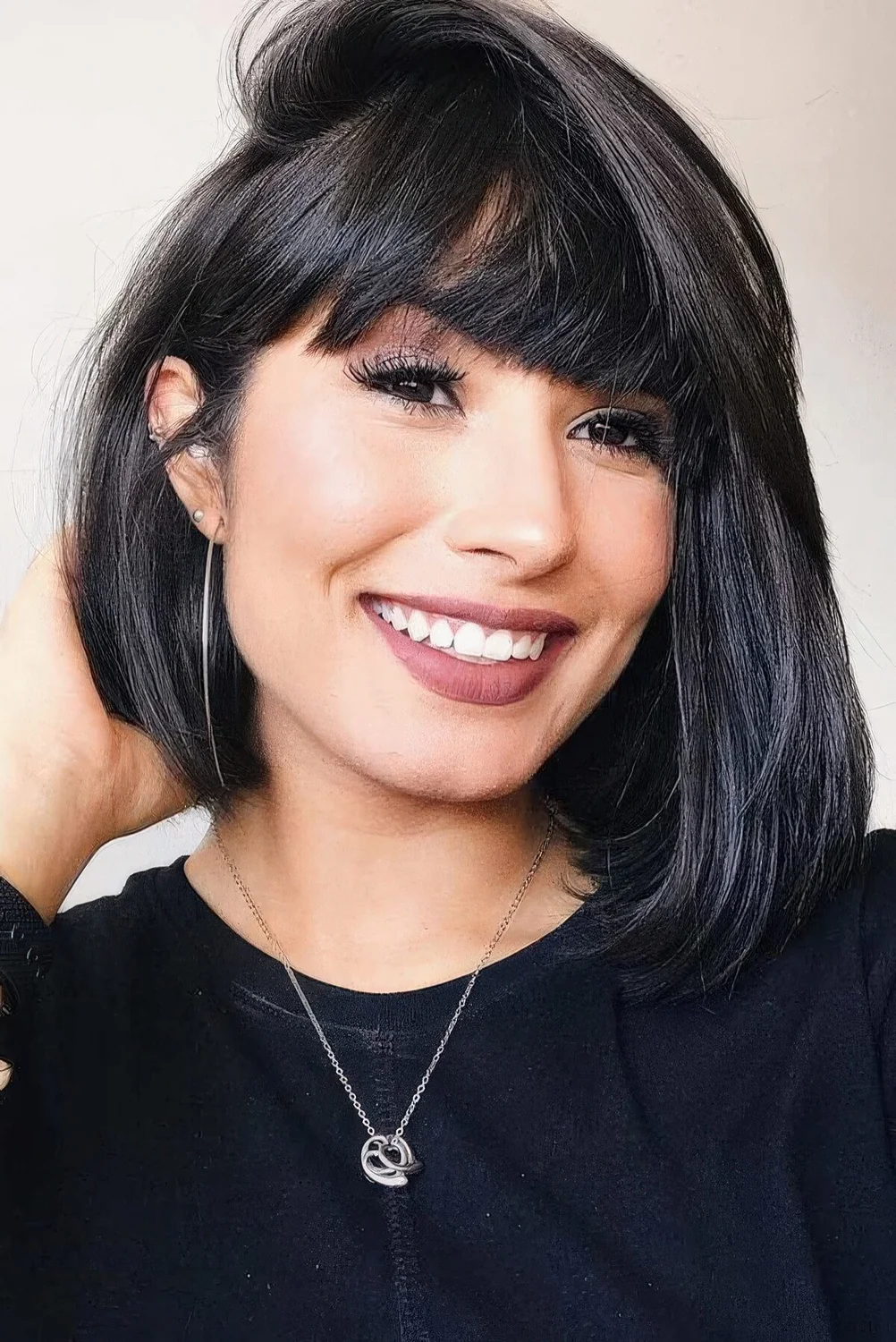
Idea 01
Asymmetrical Bob with Bangs
For shape comparison, visible natural separation gives the bob movement without obscuring an open front.
- Style
- Bob
- Shape
- Bob
Asymmetrical bob with bangs; look past the styling polish and notice where the cut ends, where the weight sits, and how the layers connect to the front; the natural finish makes those transitions visible without changing the underlying bob; compare these visible proportions with your natural density, texture, growth pattern, and usual styling routine rather than expecting an identical result.
Wearability note: At consultation, decide whether the open front, bob perimeter, or natural movement is the feature you want preserved most.

Idea 02
Feathered Bob for a Dimensional Look
At a glance, visible feathered separation gives the bob movement without obscuring an open front.
- Style
- Bob
- Finish
- Feathered
Feathered bob for a dimensional look; look past the styling polish and notice where the cut ends, where the weight sits, and how the layers connect to the front; the feathered finish makes those transitions visible without changing the underlying bob; compare these visible proportions with your natural density, texture, growth pattern, and usual styling routine rather than expecting an identical result.
Wearability note: For daily wear, decide whether the open front, bob perimeter, or feathered movement is the feature you want preserved most.

Idea 03
Layered Bob with a Soft Undercut
Here, an open front connects cleanly to the bob, and the natural finish keeps the shape light.
- Style
- Bob
- Shape
- Bob
Layered bob with a soft undercut; the main salon reference is the relationship between the open front and the lower outline; the natural texture shows how the shape can move, but the cut will look different when worn straighter or with less volume; compare these visible proportions with your natural density, texture, growth pattern, and usual styling routine rather than expecting an identical result.
Wearability note: Before committing, ask how this natural bob will sit at your density and whether the front needs regular reshaping.
Choose your direction
First decision
Choose the endpoint and overall silhouette before comparing texture or color.
Texture check
Front pieces and fringe change how the cut frames the face and how often it needs reshaping.
Upkeep check
Save more than one angle when the back shape or crown volume matters.
Best reference
Save a clear front view and a second angle when the back shape matters.

Idea 04
Long Angled Bob with Messy Waves
At a glance, this bob is defined by a wavy surface, a clear lower edge, and an open front.
- Length
- Long
- Style
- Bob
- Finish
- Wavy
Long angled bob with messy waves; this image clearly shows the perimeter, front connection, and surface movement; use the bob as the cut reference, then decide separately how much of the photographed wavy finish fits your normal routine; compare these visible proportions with your natural density, texture, growth pattern, and usual styling routine rather than expecting an identical result.
Wearability note: For daily wear, decide whether the open front, bob perimeter, or wavy movement is the feature you want preserved most.

Idea 05
Long Bob with Feathered Layers to Add Depth
For shape comparison, the face frame is set by an open front, while the feathered finish keeps the long bob from looking rigid.
- Length
- Long
- Style
- Long bob
- Finish
- Feathered
Long bob with feathered layers to add depth; this image clearly shows the perimeter, front connection, and surface movement; use the long bob as the cut reference, then decide separately how much of the photographed feathered finish fits your normal routine; compare these visible proportions with your natural density, texture, growth pattern, and usual styling routine rather than expecting an identical result.
Wearability note: For a closer match, ask where the weight should sit in this long bob and how the open front will grow between appointments.

Idea 06
Shoulder-Length Butterfly Haircut with Bangs
The balance comes from a defined butterfly cut, natural movement, and the way an open front shapes the front.
- Length
- Shoulder-length
- Style
- Butterfly cut
Shoulder-length butterfly haircut with bangs; look past the styling polish and notice where the cut ends, where the weight sits, and how the layers connect to the front; the natural finish makes those transitions visible without changing the underlying butterfly cut; compare these visible proportions with your natural density, texture, growth pattern, and usual styling routine rather than expecting an identical result.
Wearability note: When adapting the look, for a salon consultation, point out the butterfly cut and open front first; treat the natural color and blowout volume as separate choices.

Idea 07
Shoulder-Length Haircut with Balayage and Waves
Here, an open front connects cleanly to the cut, and the wavy finish keeps the shape light.
- Length
- Shoulder-length
- Style
- Wavy style
- Finish
- Wavy
Shoulder-length haircut with balayage and waves; look past the styling polish and notice where the cut ends, where the weight sits, and how the layers connect to the front; the wavy finish makes those transitions visible without changing the underlying cut; compare these visible proportions with your natural density, texture, growth pattern, and usual styling routine rather than expecting an identical result.
Wearability note: Before committing, ask how this wavy cut will sit at your density and whether the front needs regular reshaping.

Idea 08
Tousled Long Bob with Chunky Layers
At a glance, the balance comes from a defined long bob, tousled movement, and the way an open front shapes the front.
- Length
- Long
- Style
- Long bob
- Finish
- Tousled
Tousled long bob with chunky layers; the main salon reference is the relationship between the open front and the lower outline; the tousled texture shows how the shape can move, but the cut will look different when worn straighter or with less volume; compare these visible proportions with your natural density, texture, growth pattern, and usual styling routine rather than expecting an identical result.
Wearability note: For daily wear, save a second angle of this long bob so the crown, side weight, and open front are not left to interpretation.

Idea 09
Tousled Wave Lob with a Sun Faded Balayage
Visible tousled separation gives the long bob movement without obscuring an open front.
- Style
- Long bob
- Finish
- Tousled
- Detail
- Balayage
Tousled wave lob with a sun faded balayage; this image clearly shows the perimeter, front connection, and surface movement; use the long bob as the cut reference, then decide separately how much of the photographed tousled finish fits your normal routine; compare these visible proportions with your natural density, texture, growth pattern, and usual styling routine rather than expecting an identical result.
Wearability note: When adapting the look, decide whether the open front, long bob perimeter, or tousled movement is the feature you want preserved most.

Idea 10
Wavy Pixie with an Undercut
For shape comparison, visible wavy separation gives the pixie movement without obscuring an open front.
- Style
- Pixie
- Finish
- Wavy
Wavy pixie with an undercut; the main salon reference is the relationship between the open front and the lower outline; the wavy texture shows how the shape can move, but the cut will look different when worn straighter or with less volume; compare these visible proportions with your natural density, texture, growth pattern, and usual styling routine rather than expecting an identical result.
Wearability note: For a salon consultation, point out the pixie and open front first; treat the natural color and blowout volume as separate choices.

Idea 11
Line Bob with Minimal Layers
For shape comparison, the natural finish gives this bob visible movement, with the front defined by an open front.
- Style
- Bob
- Shape
- Bob
Line bob with minimal layers; the main salon reference is the relationship between the open front and the lower outline; the natural texture shows how the shape can move, but the cut will look different when worn straighter or with less volume; compare these visible proportions with your natural density, texture, growth pattern, and usual styling routine rather than expecting an identical result.
Wearability note: For a closer match, ask where the weight should sit in this bob and how the open front will grow between appointments.

Idea 12
Mid Length Haircut with an Ombré Effect and Waves
At a glance, the cut remains readable through the wavy texture, and the main front detail comes from an open front.
- Style
- Wavy style
- Finish
- Wavy
- Detail
- Ombré
Mid length haircut with an ombre effect and waves; the main salon reference is the relationship between the open front and the lower outline; the wavy texture shows how the shape can move, but the cut will look different when worn straighter or with less volume; compare these visible proportions with your natural density, texture, growth pattern, and usual styling routine rather than expecting an identical result.
Wearability note: Ask how this wavy cut will sit at your density and whether the front needs regular reshaping.

Idea 13
Textured Waves with a Subtle Balayage
At a glance, the balance comes from a defined cut, wavy movement, and the way an open front shapes the front.
- Style
- Wavy style
- Finish
- Wavy
- Detail
- Balayage
Textured waves with a subtle balayage; the main salon reference is the relationship between the open front and the lower outline; the wavy texture shows how the shape can move, but the cut will look different when worn straighter or with less volume; compare these visible proportions with your natural density, texture, growth pattern, and usual styling routine rather than expecting an identical result.
Wearability note: For daily wear, for a salon consultation, point out the cut and open front first; treat the balayage and blowout volume as separate choices.

Idea 14
Short Silver Pixie with Fine Feathered Texture
For shape comparison, visible textured separation gives the pixie movement without obscuring an open front.
- Length
- Short
- Style
- Pixie
- Finish
- Textured
Short silver pixie with fine feathered texture and a soft tapered neckline; look past the styling polish and notice where the cut ends, where the weight sits, and how the layers connect to the front; the textured finish makes those transitions visible without changing the underlying pixie; compare these visible proportions with your natural density, texture, growth pattern, and usual styling routine rather than expecting an identical result.
Wearability note: For a salon consultation, point out the pixie and open front first; treat the silver and blowout volume as separate choices.

Idea 15
Platinum Shag with Fine Airy Layers and a Full Wispy Fringe
At a glance, the natural texture softens the shag; the main face-framing detail comes from an open front.
- Style
- Shag
- Color
- Platinum blonde
Platinum shag with fine airy layers and a full wispy fringe; this image clearly shows the perimeter, front connection, and surface movement; use the shag as the cut reference, then decide separately how much of the photographed natural finish fits your normal routine; compare these visible proportions with your natural density, texture, growth pattern, and usual styling routine rather than expecting an identical result.
Wearability note: Ask where the weight should sit in this shag and how the open front will grow between appointments.
Start with length and perimeter
Identify where the cut ends and whether the lower edge looks blunt, rounded, graduated, or broken up. Those decisions remain visible even when the hair is styled differently.
Compare layers with your natural texture
Layers behave differently on straight, wavy, curly, fine, and dense hair. Focus on where they begin and how much weight remains at the ends.
Build a clearer salon reference
Combine a front image with a side or back view when possible. Name the exact details you want preserved instead of asking for the entire photograph to be copied.

About the author
Bella Ross
Bella Ross is the hairstyle editor behind Latest Easy Hairstyles. She curates practical haircut, braid, color, and styling ideas with a focus on looks that are easy to browse, realistic to recreate, and useful for everyday hair decisions.