
Before you choose
Choose the height and side contrast
Look at how far the center rises and how much hair remains at the sides. Some versions are compact and softly blended; others have a high crest and a close fade. Side and rear views help explain whether you want the ridge to continue behind the crown.
The hairstyle gallery
16 faux hawk haircuts ideas to compare
Compare the visible length, shape, texture, and finish before choosing a salon reference.
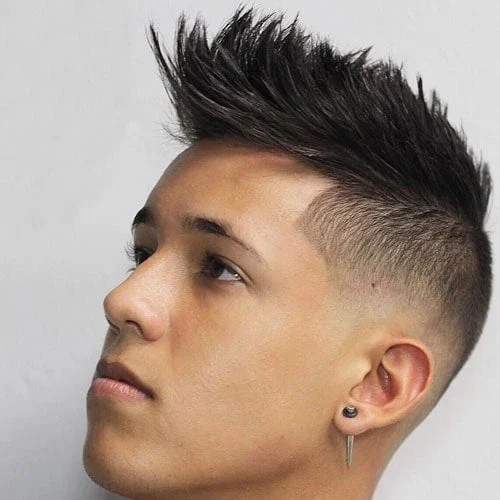
Idea 01
Tall Spikes With a Close Fade
Tall spikes pull the eye toward the center of the head. The front rises noticeably, while the sides become much shorter around the temple and ear.
- Shape
- Tall spikes
- Detail
- Close fade
The upper pieces remain individually visible instead of forming one smooth crest. This creates a sharper surface than the softly brushed faux hawks later in the gallery.
Wearability note: Choose this reference for its height and separation. A central shape can be adapted to a lower profile if you like the direction but do not want the same amount of projection.
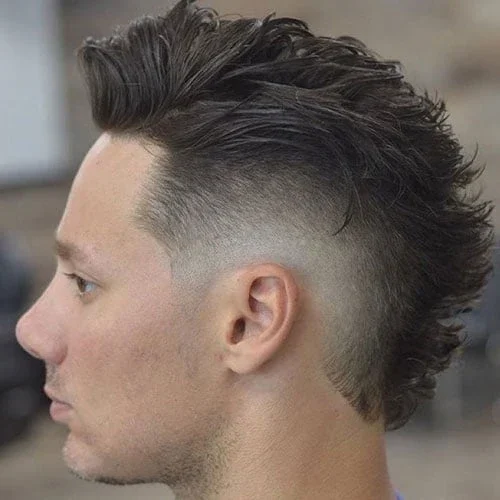
Idea 02
Full Crest With a Soft Back
This full crest keeps a substantial amount of hair through the center and back. The upper pieces sweep backward, while the sides shorten gradually toward the ear.
- Shape
- Full central crest
- Detail
- Tapered sides
The rear outline remains fuller than a narrowly shaved mohawk. From this side angle, the cut shows how a faux hawk can continue behind the crown rather than stopping at the front.
Wearability note: Compare the back length as carefully as the front height. Save a rear view too if you want to explain whether the central shape should finish neatly or extend farther down.
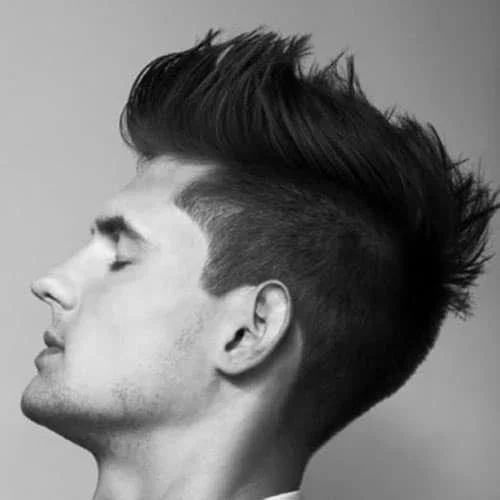
Idea 03
Airy Crest With Fuller Sides
Airy upper pieces rise into a loose crest without a skin-close side. The front is high, but the sides retain visible hair and a softer connection to the top.
- Shape
- Airy upper crest
- Detail
- Fuller sides
The ends project in slightly different directions, especially behind the crown. This gives the outline a lighter, more irregular character than a compact spiked strip.
Wearability note: This is useful if you want a faux hawk without the strongest shaved contrast. In the monochrome photo, compare height and side coverage rather than trying to infer a particular color.
Choose your direction
Keep it compact
Compare short central lifts and small separated spikes.
Add height
Look at pointed fronts and longer curved crests.
Soften the contrast
Compare fuller sides and gradual blends with the closer fades.
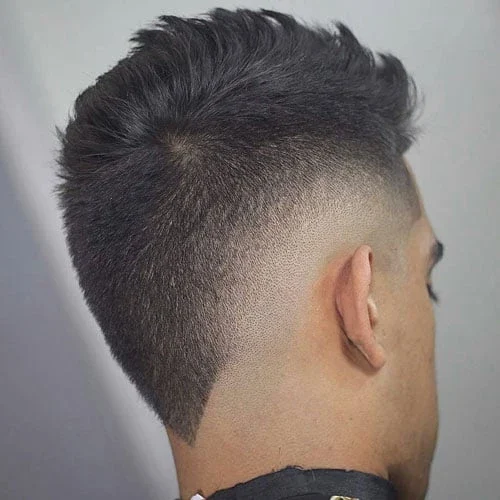
Idea 04
Short Textured Crest From Behind
A short ridge runs through the center of this cut. Seen from behind, the upper hair narrows toward the back while the sides remain close around the ear.
- Shape
- Short central ridge
- Detail
- Close sides
The height is modest compared with the tall spiked examples. The visible crown helps explain the shape that a front portrait would leave hidden.
Wearability note: Use this angle when deciding how far the crest should continue. A compact back can make the cut feel quite different from a longer strip extending down the nape.
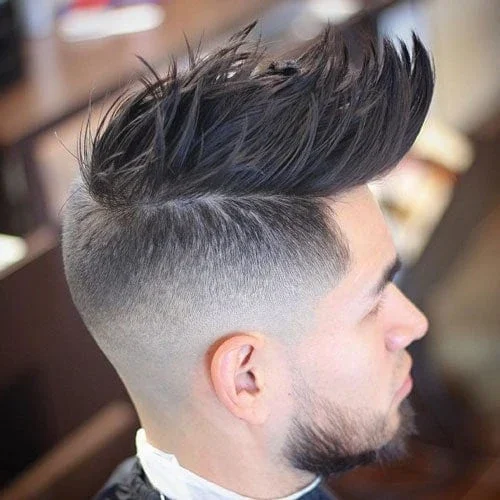
Idea 05
Long Pointed Front With a Fade
The front rises into a long pointed fan, making height the strongest feature of this faux hawk. The very close side increases the difference between the upper hair and the ear area.
- Shape
- Long pointed front
- Detail
- Skin-close side
The visible pieces curve upward and backward rather than lying in a flat central line. A clear boundary separates the longer top from the short side.
Wearability note: This is a strong reference for a dramatic silhouette. Compare the high front with the shorter crests before choosing how much length and daily shaping you want to keep.
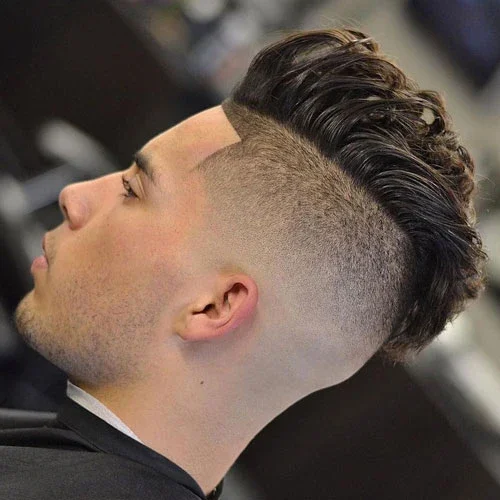
Idea 06
Curved Crest With Shaved Sides
A curved crest runs back from the forehead, with the sides shaved very close. The upper hair bends in broad pieces instead of standing in evenly pointed spikes.
- Shape
- Curved upper crest
- Detail
- Shaved sides
The side view shows a fuller top that continues behind the crown. Its rounded surface softens the effect of the strong short-to-long contrast.
Wearability note: Save this if you prefer a curved ridge to a prickly finish. Be clear about how much back length you want, since that changes the profile even when the sides are similarly close.
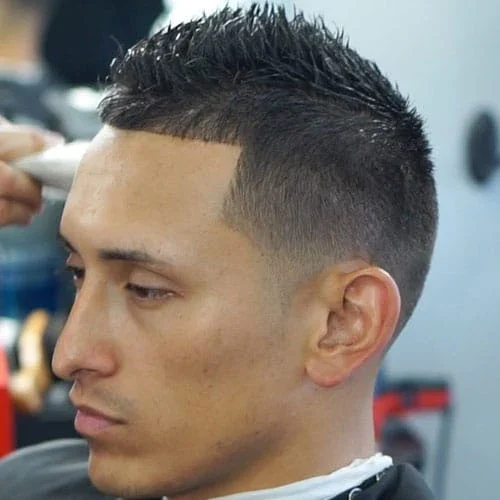
Idea 07
Compact Spikes With a Defined Front
Small spikes keep this faux hawk compact. The front edge is sharply defined, while the upper hair rises in short separated pieces rather than one tall sweep.
- Shape
- Compact spikes
- Detail
- Defined front edge
The sides fade close around the temple. Most of the shape comes from the central texture, with relatively little upper length projecting beyond the head.
Wearability note: Compare this with the taller examples if you like a central ridge but want less height. Keeping the crisp hairline is a separate upkeep choice from maintaining the short spiked top.
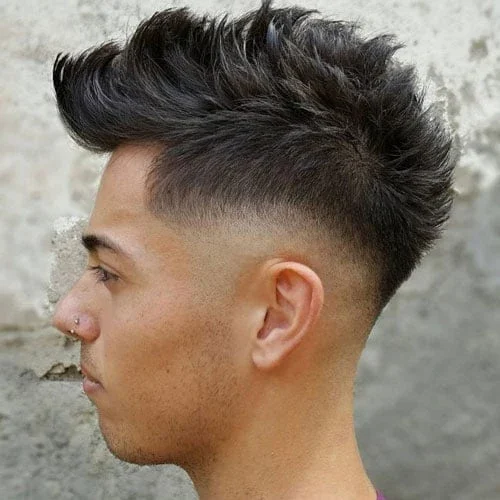
Idea 08
Loose High Crest With Tapered Sides
A loose high crest combines a raised front with broken pieces through the crown. The side stays short, but a visible band of hair softens the transition above the ear.
- Shape
- Loose high crest
- Detail
- Tapered sides
The top is less compact than a short spiked crop, with individual ends lifting in different directions. The shape remains wider than a very narrow mohawk strip.
Wearability note: This is a useful middle ground between soft texture and stronger height. Consider whether you prefer the loose upper outline or a more controlled version with fewer projecting ends.

Idea 09
Light-Tipped Tousled Hawk
Lighter tips make the broken center of this short faux hawk particularly visible. The front lifts into an irregular point, while the sides stay much lower.
- Shape
- Light-tipped texture
- Detail
- Tousled center
The upper pieces cross in different directions rather than forming a smooth swept surface. Color contrast adds emphasis, but the underlying idea is the short central rise.
Wearability note: You can use the silhouette without choosing the same color. Compare where the tallest pieces sit and how much side length remains before deciding which details you actually want to carry over.
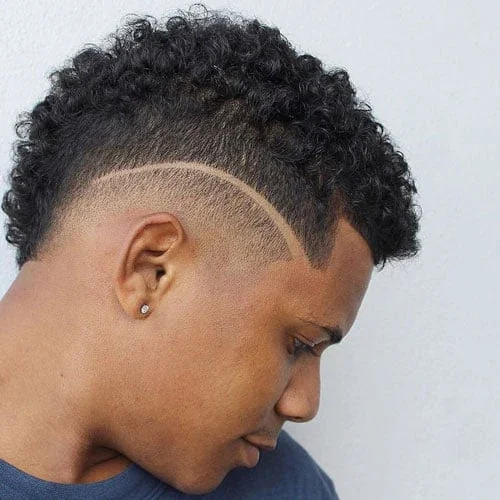
Idea 10
Curly Crest With a Curved Line
Small curls form a rounded central crest instead of straight spikes. A curved shaved line sweeps above the ear and separates two levels of short side hair.
- Shape
- Curly central crest
- Detail
- Curved shaved line
The curls continue toward the back, giving the upper strip a fuller outline. The decorative line is a distinct feature, not a requirement for creating the curly shape.
Wearability note: Choose whether you want the curl arrangement, the side design or both. A shaved line becomes less clear as it grows, so include its upkeep when comparing this with a simpler tapered version.
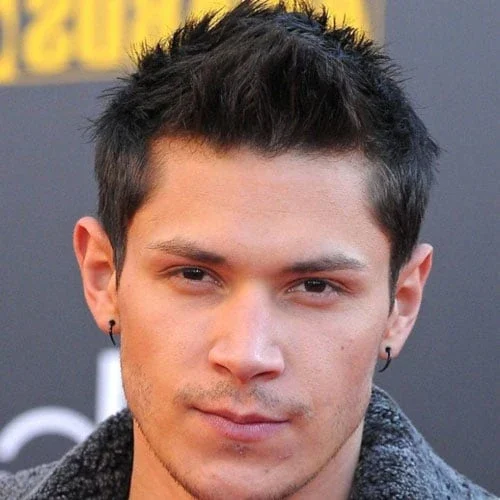
Idea 11
Short Central Lift With Full Sides
A short lift through the middle gives this cut a restrained faux-hawk direction. The sides retain visible hair, so the center stands out without a skin-close contrast.
- Shape
- Short central lift
- Detail
- Full sides
The front is irregular rather than drawn into one tall point. The overall width remains compact, making this one of the quieter interpretations of the shape.
Wearability note: This reference is helpful when you want a suggestion of a crest rather than a dramatic ridge. Compare it with your usual short cut and identify how much extra front height appeals to you.
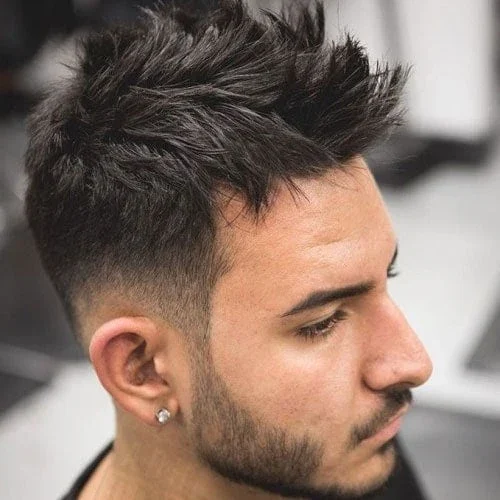
Idea 12
Separated Spikes With a Soft Fade
Separated spikes spread across the upper center, creating a broken rather than polished crest. The front lifts away from the forehead, with a few shorter pieces at the edge.
- Shape
- Separated upper spikes
- Detail
- Soft fade
The side fades gradually and keeps the shape connected above the ear. This reduces the hard division seen in the sharply disconnected undercut examples.
Wearability note: Focus on the amount of separation you like, not just the overall height. A softer fade and an uneven top can be discussed separately if you want to simplify one part of the reference.
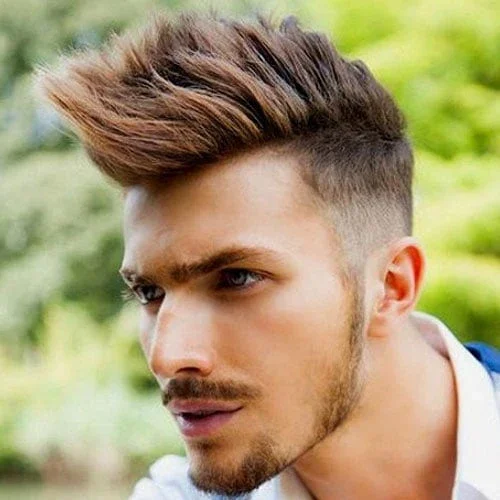
Idea 13
Broad Warm-Brown Crest
This broad crest rises across much of the top instead of narrowing into a thin strip. The front moves upward and slightly back, keeping the forehead open.
- Shape
- Broad raised crest
- Detail
- Close sides
The shorter sides create a clean contrast, while the warm-brown upper pieces add visible separation. The raised section stays relatively full from the front toward the crown.
Wearability note: Choose this if a narrow ridge feels too severe for your preference. Compare the width at the top of the temples as well as the height, since both affect how the cut looks from the front.
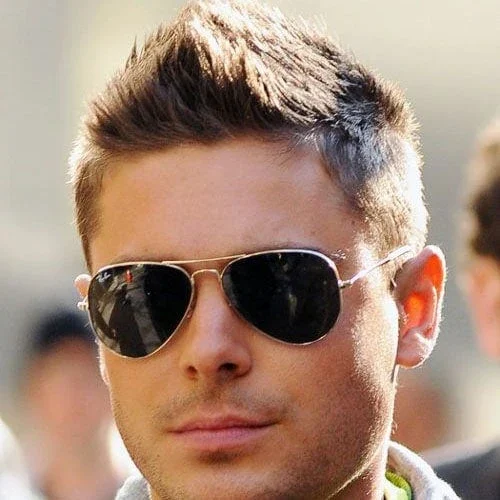
Idea 14
Pointed Front With Softer Sides
The front rises into a compact point while the sides remain softly short. The upper pieces angle toward the middle without creating a long strip down the back.
- Shape
- Pointed front
- Detail
- Softer short sides
This front view makes the central direction easy to compare with the width at the temples. The sunglasses cover the eyes but leave the hairline and upper outline clearly visible.
Wearability note: If you wear frames, consider the relationship between the temple area and the cut. Save a side view as well if the back shape matters, because this image mainly explains the front.
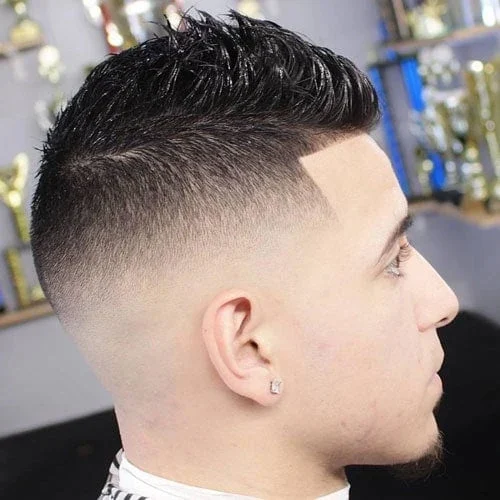
Idea 15
Neat Crest With a Close Side
A neat central crest lifts gradually from a defined front edge. The upper hair curves back in short pieces rather than extending into a large pointed fan.
- Shape
- Neat central crest
- Detail
- Close side fade
The close fade gives the side a smooth outline around the ear. The top remains relatively compact, making the sharp hairline more prominent than long upper ends.
Wearability note: This works as a reference for a tidier faux-hawk finish. Compare the crisp perimeter with a softer version and decide how important that freshly edged appearance is to your regular upkeep.
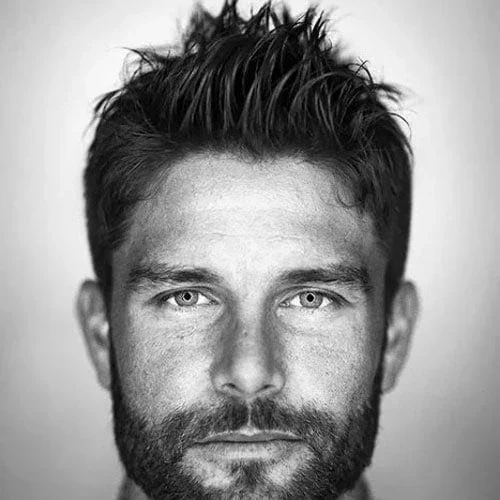
Idea 16
Loose Spikes With a Natural Edge
Loose spikes rise through the center with a less sharply defined forehead edge. The front has small gaps and uneven pieces, creating a relaxed version of the faux-hawk silhouette.
- Shape
- Loose upper spikes
- Detail
- Soft hairline
The sides retain visible hair rather than disappearing into a high skin fade. This front angle emphasizes the central height and the fuller width around the temples.
Wearability note: Use this to compare a softer perimeter with the sharply edged examples. The monochrome image shows texture clearly, but it cannot establish the exact shade or the routine used for this finish.
Show where the crest should finish
A raised front alone does not explain the back. Save an angle that shows the crown if you want the central shape to continue farther behind the head.
Choose color and shaved accents separately. You can use a light-tipped reference for its shape without needing the color, or keep a curly crest with a plain side instead of a design.

About the author
Bella Ross
Bella Ross is the hairstyle editor behind Latest Easy Hairstyles. She curates practical haircut, braid, color, and styling ideas with a focus on looks that are easy to browse, realistic to recreate, and useful for everyday hair decisions.