
Before you choose
Choose the depth before the highlight pattern
First decide how light you want the whole hairstyle to look. Then compare the tone and placement: a darker crown, pale front or bright ends can change the impression even within the same brown-blonde range. Shade names vary, so use the visible balance in a photo to explain your preference.
The hairstyle gallery
17 dark blonde hair ideas to compare
Compare the visible length, shape, texture, and finish before choosing a salon reference.
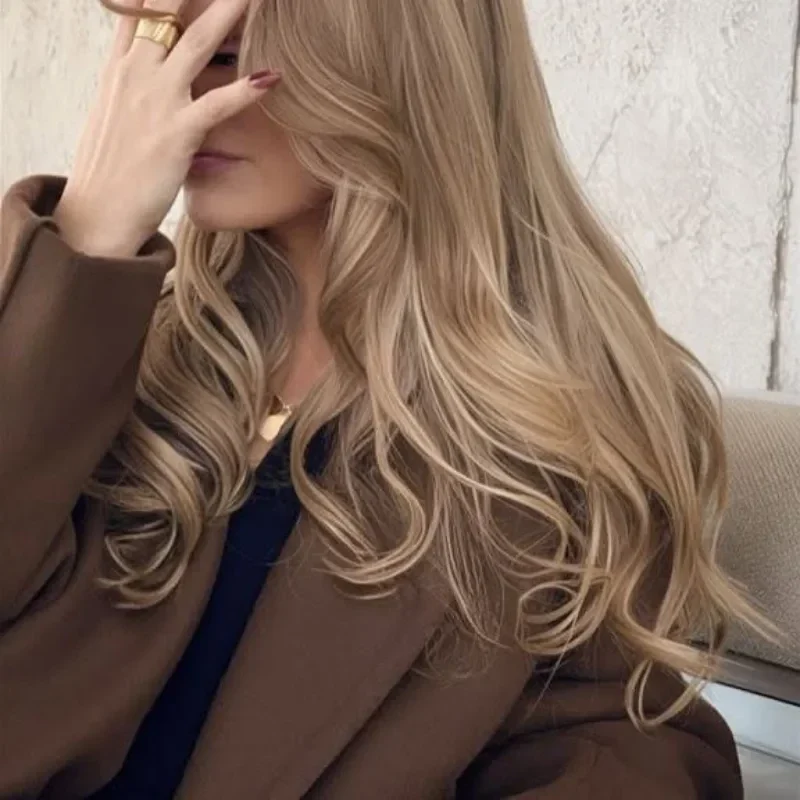
Idea 01
Honey-Beige Lengths
Honey-beige lengths give this dark blonde look a warm finish without the brightness of a pale platinum. A deeper upper section remains visible beneath the long sweep at the front.
- Shape
- Honey beige
- Detail
- Long layers
The lower layers bend loosely, revealing lighter strands along the outer curves. The overall color sits between a light brown base and golden blonde ends rather than reading as one uniform shade.
Wearability note: Compare the upper lengths with the tips before choosing. You may want the deeper honey balance through most of your hair even if the lightest ends are not your preference.
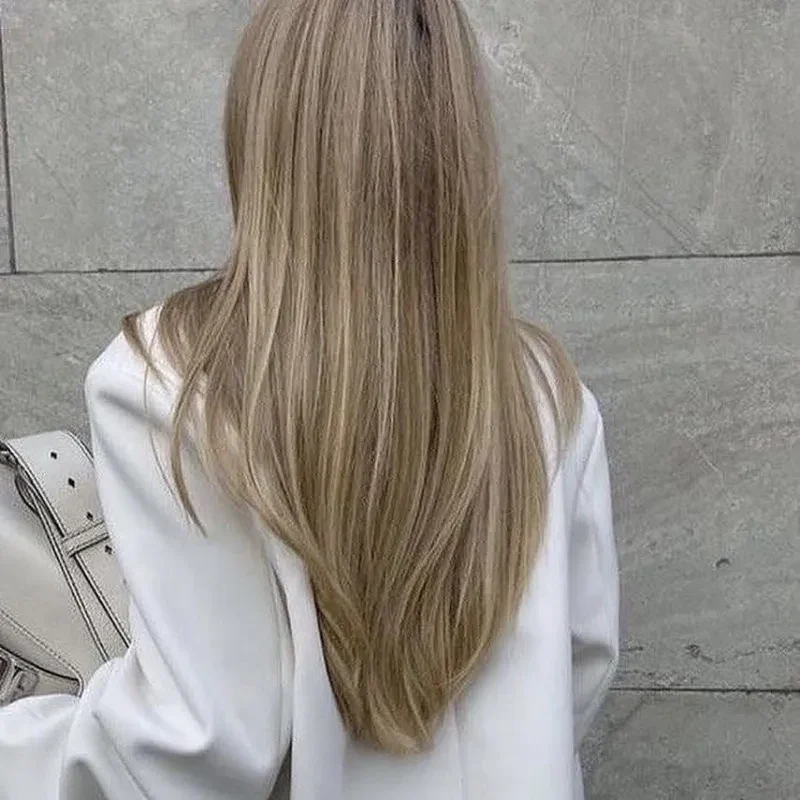
Idea 02
Straight Beige Blonde
Fine highlights create a quiet beige blonde finish on this long, straight hair. The color remains deeper near the crown, and the light pieces are narrow enough to blend into the surface.
- Shape
- Beige blonde
- Detail
- Fine highlights
The ends form a tapered outline, with lighter strands running through the middle and lower sections. There is no pronounced copper cast or solid pale blonde block.
Wearability note: Save a straight view when discussing subtle dimension. A fine highlight pattern can be easier to judge here than in a curled photo where shadows exaggerate the contrast between strands.
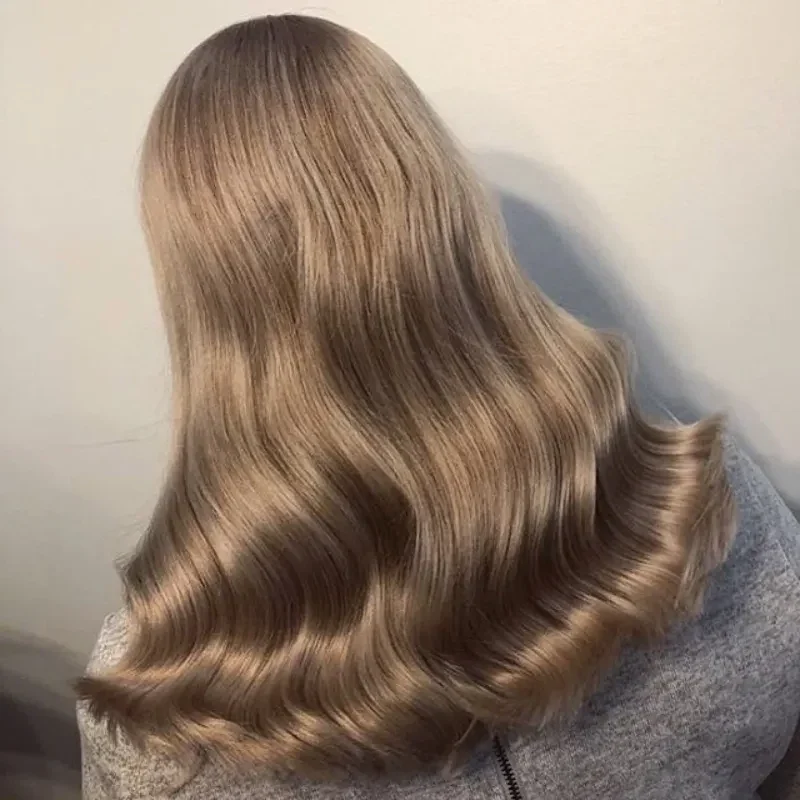
Idea 03
Glossy Golden-Beige Waves
Broad waves show the golden-beige tone in wide bands of light and shadow. The color stays fairly deep through the upper half, with a softer blonde brightness appearing toward the lower bends.
- Shape
- Golden beige
- Detail
- Broad waves
The highlight pattern is understated rather than stripe-like. Much of the visible contrast comes from the direction of the smooth waves and the way they reflect the light.
Wearability note: Treat the shade and the glossy finish as separate choices. This photograph is useful for its depth, but the same color on loosely worn hair will not show identical reflective bands.
Choose your direction
Prefer warmth
Compare honey-beige and golden ribbons.
Prefer a muted tone
Look at ash and gray-beige references.
Keep it subtle
Use the deeper straight examples to compare fine highlights with brighter waves.
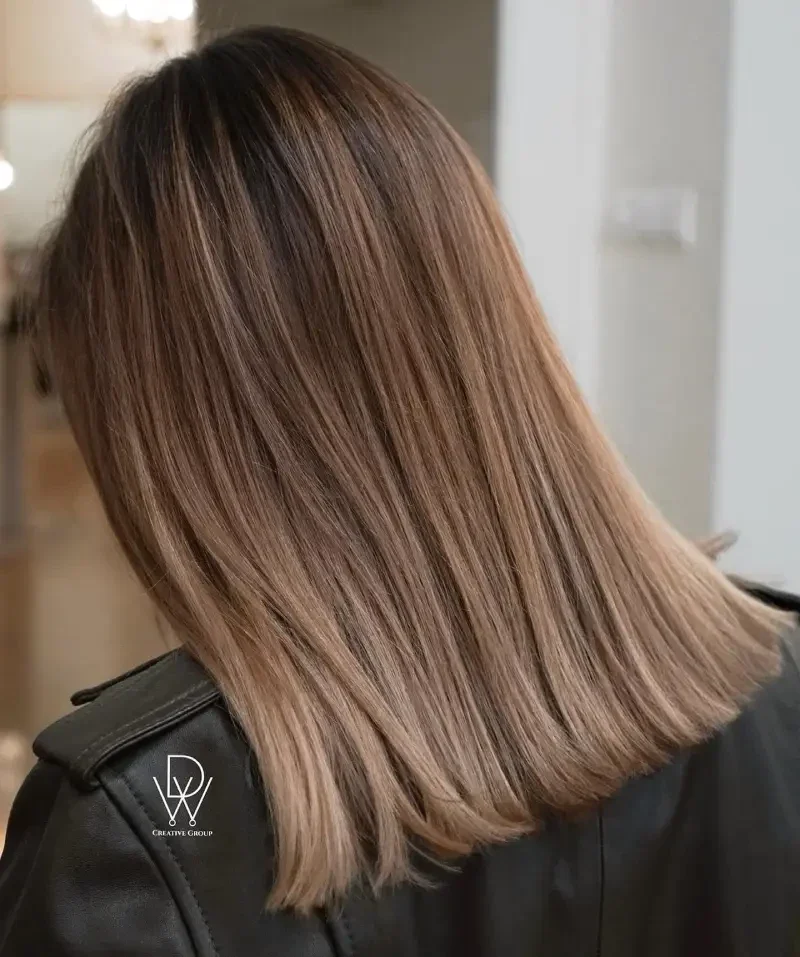
Idea 04
Smooth Brown-Blonde Lob
This smooth lob sits at the deeper, brown-blonde end of the gallery. Subtle lighter strands soften the brown base without making the entire cut look bright blonde.
- Shape
- Brown blonde
- Detail
- Straight lob
The straight surface reveals fine vertical variation from the crown to the full lower edge. There is little obvious root contrast, so the color looks more continuous than the strongly highlighted examples.
Wearability note: Use this as a depth reference if pale blonde feels too light. Ask to compare it with a slightly brighter beige option in daylight before deciding how much blonde you want visible.
Idea 05
Beige Ribbons Through Long Waves
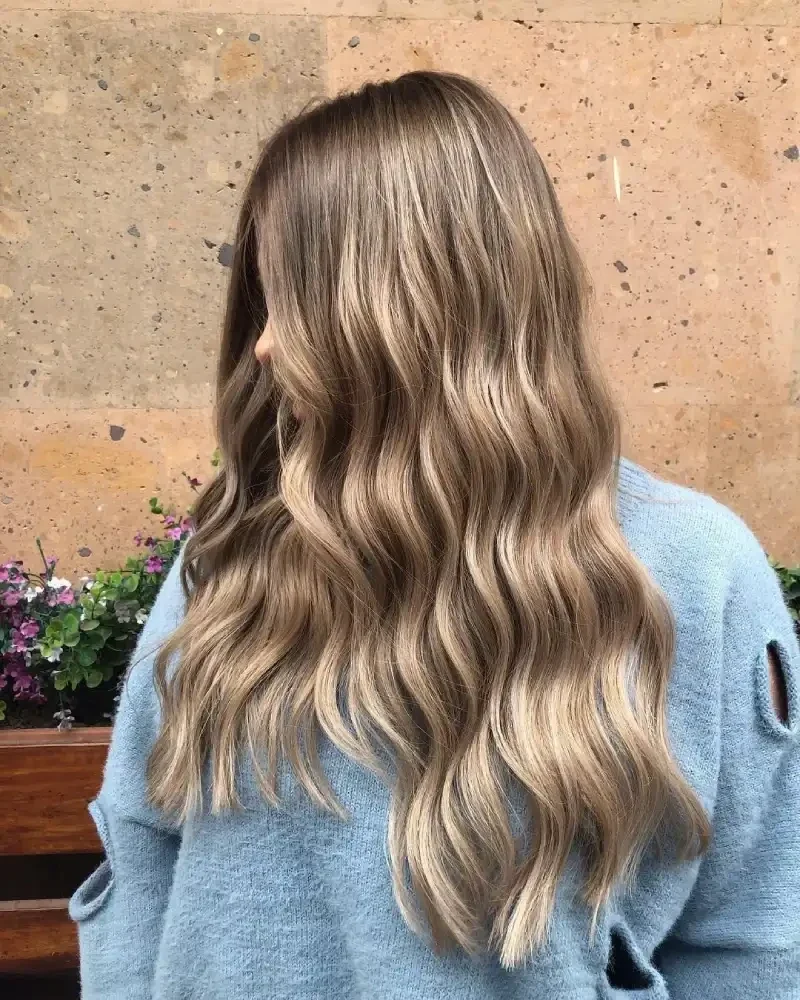
Beige ribbons lift this deeper base while leaving brown clearly visible between them. The blonde is distributed through the lengths instead of being limited to a single pale front section.
- Shape
- Beige ribbons
- Detail
- Deeper base
Loose waves show alternating deeper and lighter curves. The top stays restrained, while the lower half has more visible brightness and separation near the ends.
Wearability note: Look at how much base color remains when saving this reference. If you prefer a quieter result, preserving those darker spaces may matter more than matching the palest individual strand.
Idea 06
Golden Strands Around the Front
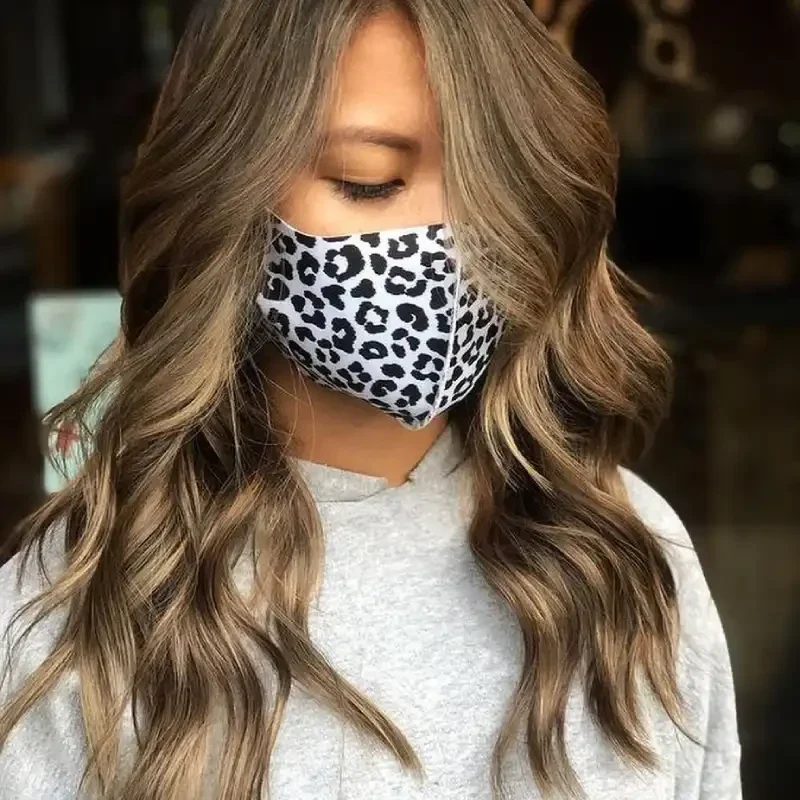
Golden strands around the front brighten this dark blonde look without erasing the deeper root. The lighter pieces follow the loose waves, making the face frame stand out from the rest of the lengths.
- Shape
- Golden beige
- Detail
- Dark root
Brown-blonde sections remain visible beneath and between the brighter ribbons. The color has a warm beige impression rather than the gray cast of the ashier examples.
Wearability note: Decide how bold you want the front to be compared with the back. A reference that looks softly blended from behind can still have a noticeably bright face frame.
Idea 07
Ash-Beige in a Loose Braid
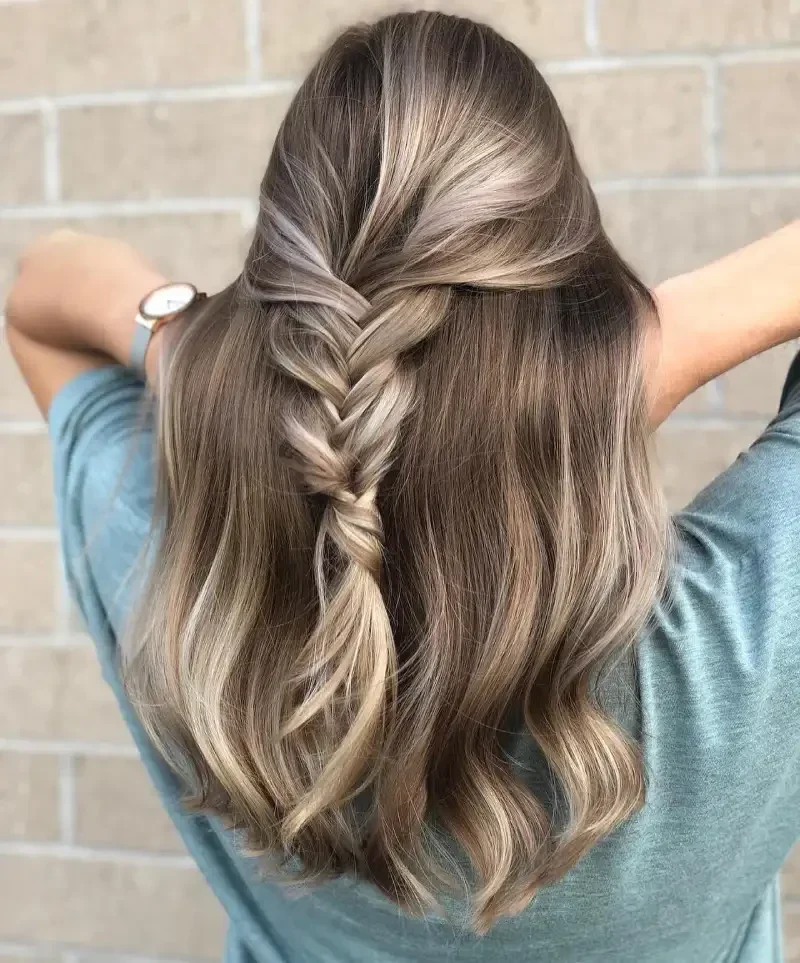
A loose braid exposes the deeper and lighter strands within this ash-beige color. The blonde looks muted, with a brown-gray base keeping the overall depth relatively dark.
- Shape
- Ash beige
- Detail
- Dark dimension
Light ribbons cross the braid and continue into the loose waves below. Because the hair is gathered at the top, the darker inner sections are more visible than in a flat back view.
Wearability note: Include a tied-back reference if that is how you often wear your hair. It helps show whether you like the contrast that appears when lighter surface pieces move away from the darker underneath.
Idea 08
Rooted Beige With Light Ends
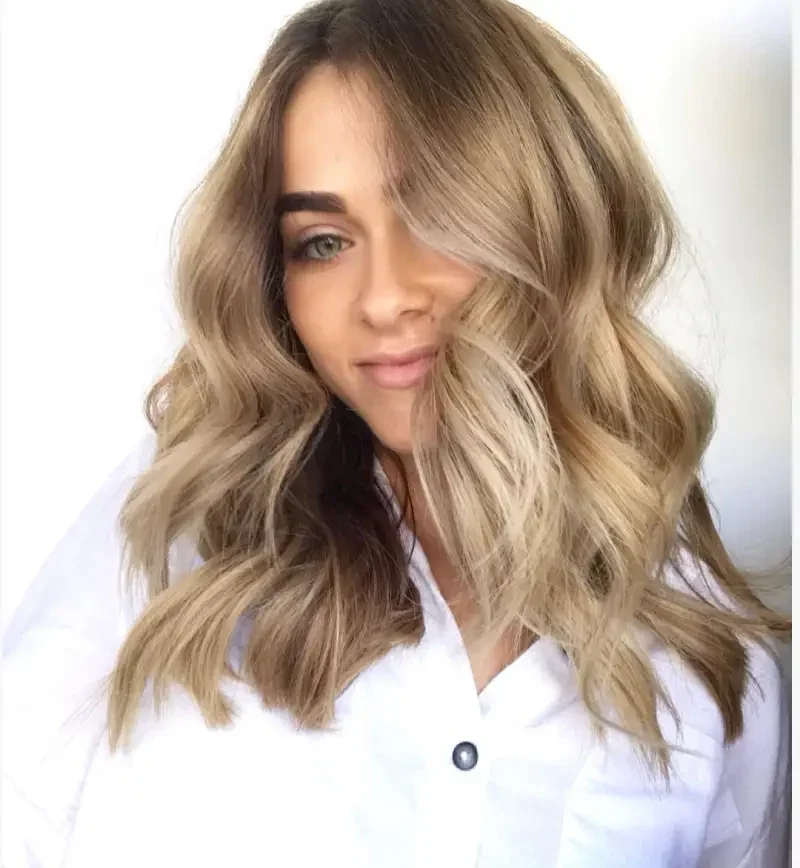
A deep root leads into beige blonde lengths in this shoulder-length look. The front and ends are lighter than the crown, giving the color a noticeable gradient without a sharp horizontal boundary.
- Shape
- Rooted beige
- Detail
- Lighter ends
The waves reveal brown-blonde depth between the brighter sections. Around the face, a broad lighter sweep makes the overall result appear blonder than the root alone would suggest.
Wearability note: Compare the front brightness with the amount of dark root you want to retain. Both affect how light the hairstyle looks, especially when the cut is worn around the shoulders.
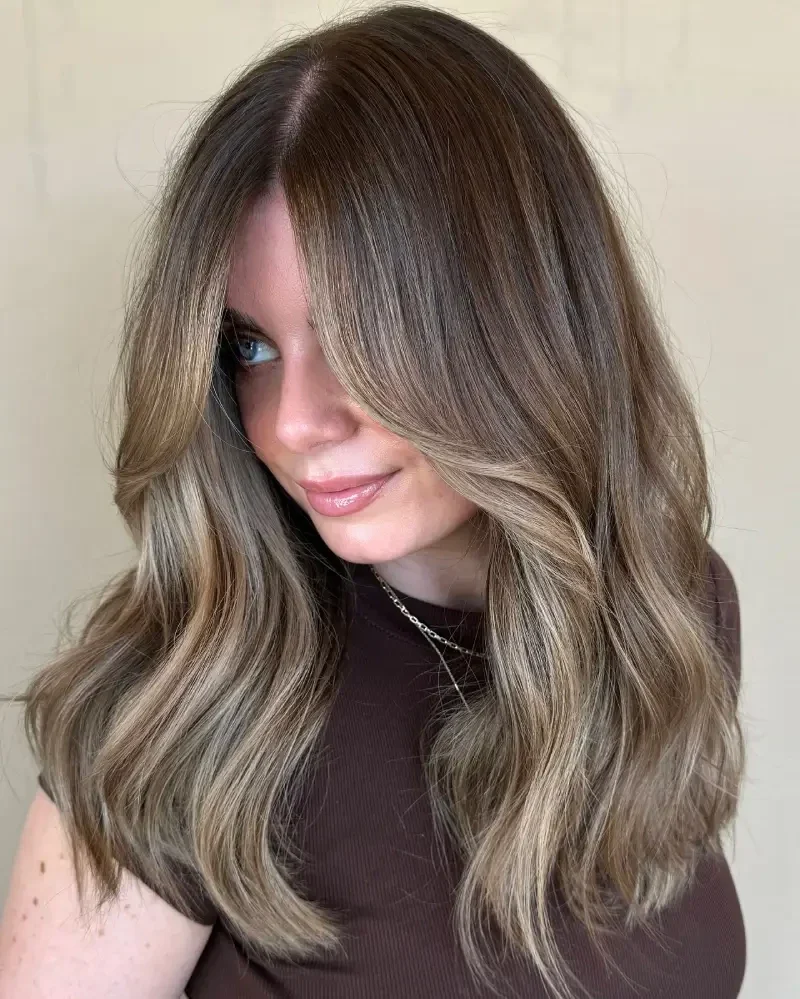
Idea 09
Muted Ash Blonde With Long Layers
Muted ash tones give these long layers a quieter finish than the honey examples. The crown remains deep, while the face-framing sections are lighter and curve away from the cheeks.
- Shape
- Muted ash
- Detail
- Long face frame
A gray-beige cast is visible through the smooth upper lengths and softer lower bends. The lighter strands are blended rather than isolated into sharply outlined streaks.
Wearability note: Save this beside a warm example if you are unsure about tone. Comparing the two at a similar depth makes it easier to explain whether you prefer honey warmth or a more muted beige.
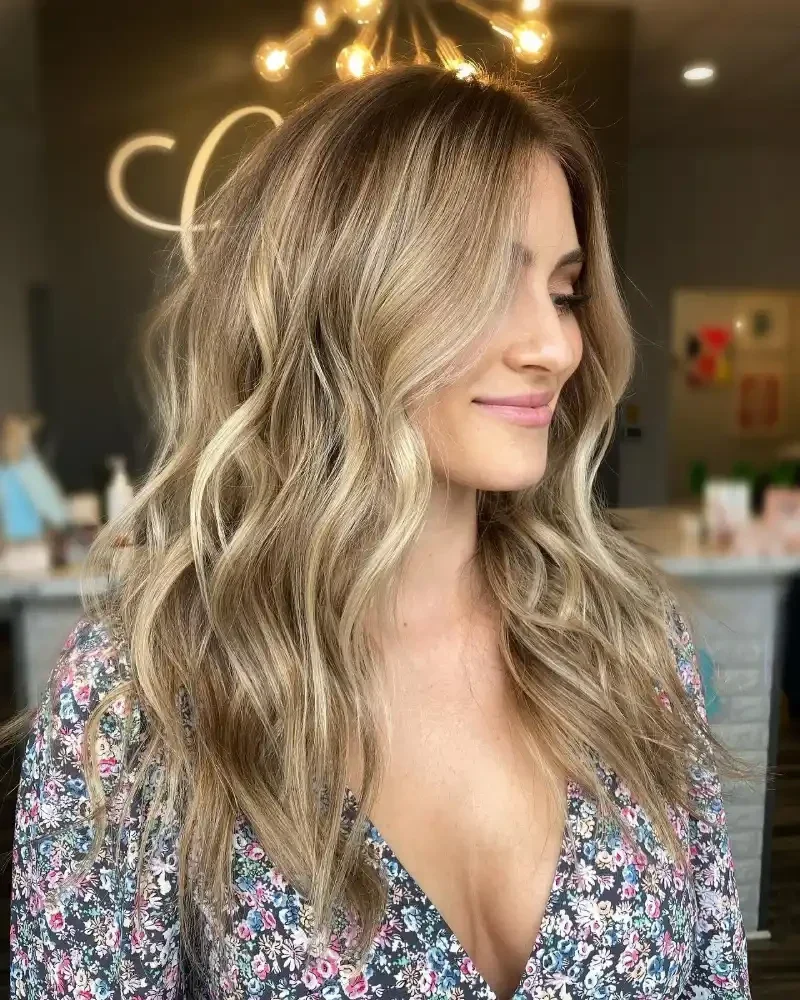
Idea 10
Warm Beige With Soft Ribbons
Soft ribbons bring a warm beige brightness to these long waves. The root is deeper, but the transition through the front is gradual enough to avoid a strongly divided dark-and-light look.
- Shape
- Warm beige
- Detail
- Soft highlights
Fine lighter pieces trace the curves near the cheeks and continue toward the ends. Deeper strands remain underneath, creating a brown-blonde balance rather than an all-over pale finish.
Wearability note: Judge the amount of contrast along with the tone. A similar beige shade could look much bolder if it were placed in wider sections or brought more heavily to the front.
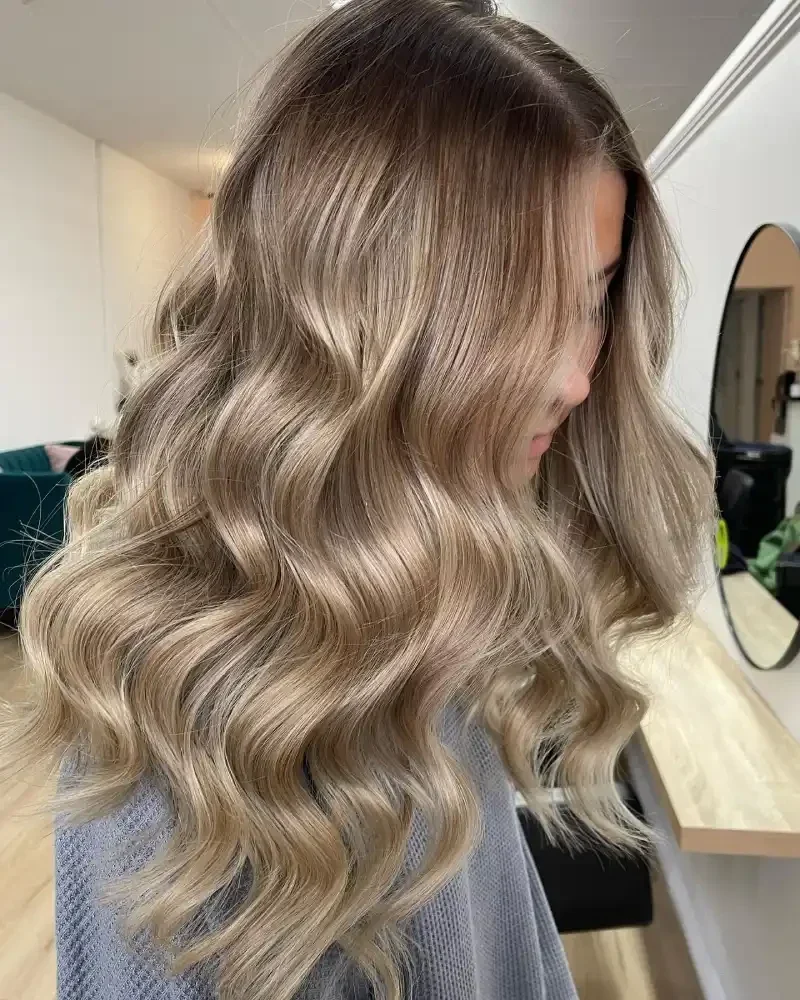
Idea 11
Deep-Rooted Beige Waves
A deep root makes these beige waves read as a dimensional dark blonde. The upper hair stays brown-toned, while finer light strands become more visible through the middle and lower lengths.
- Shape
- Beige waves
- Detail
- Deep root
The wave pattern creates soft changes in brightness rather than large contrasting stripes. Pale sections sit near the face and along the outer curves, with darker hair visible between them.
Wearability note: Use this reference to discuss where the lightness begins. Moving the blonde closer to the part would change the overall impression even if the ends stayed exactly the same shade.
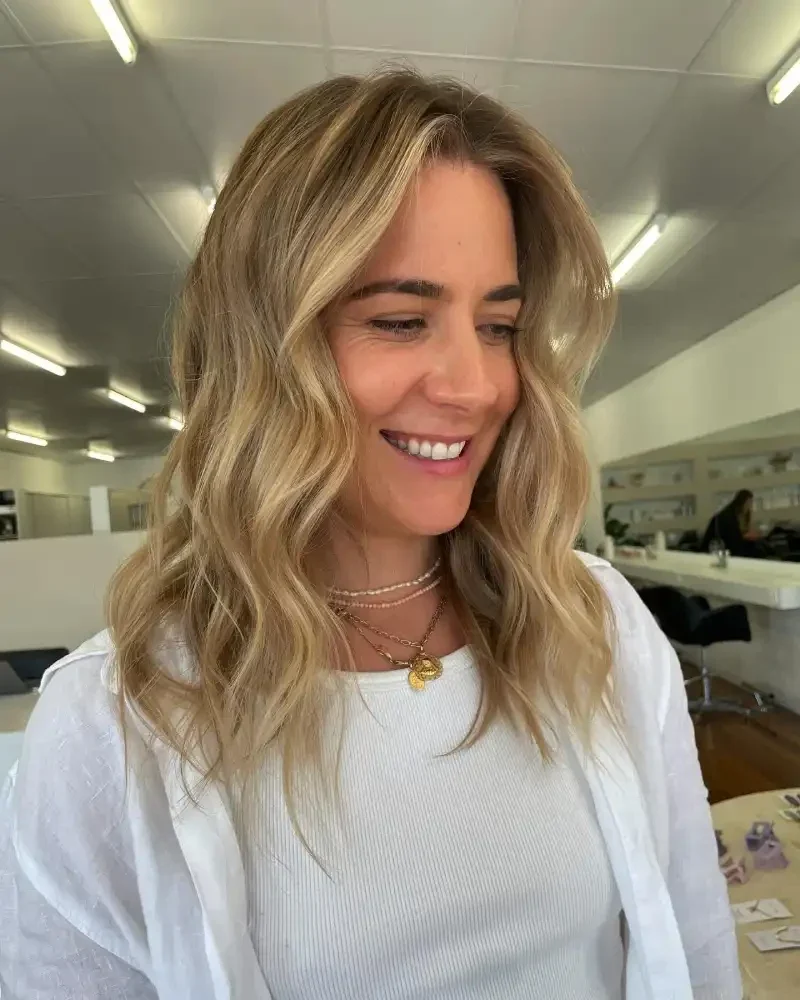
Idea 12
Honey Blonde With a Deeper Crown
Honey blonde lengths sit below a deeper crown in this relaxed look. The warm tone is most noticeable through the front and ends, while the part retains a brown-blonde depth.
- Shape
- Honey blonde
- Detail
- Deeper crown
The waves are loose and irregular, leaving a softer outline than the glossy, sculpted examples. The lighter sections blend through the sides rather than appearing as a single bright streak.
Wearability note: This photo is useful for a less formal color reference. Compare it with a smooth back view if you want to understand how the same level of brightness might read without waves.
Idea 13
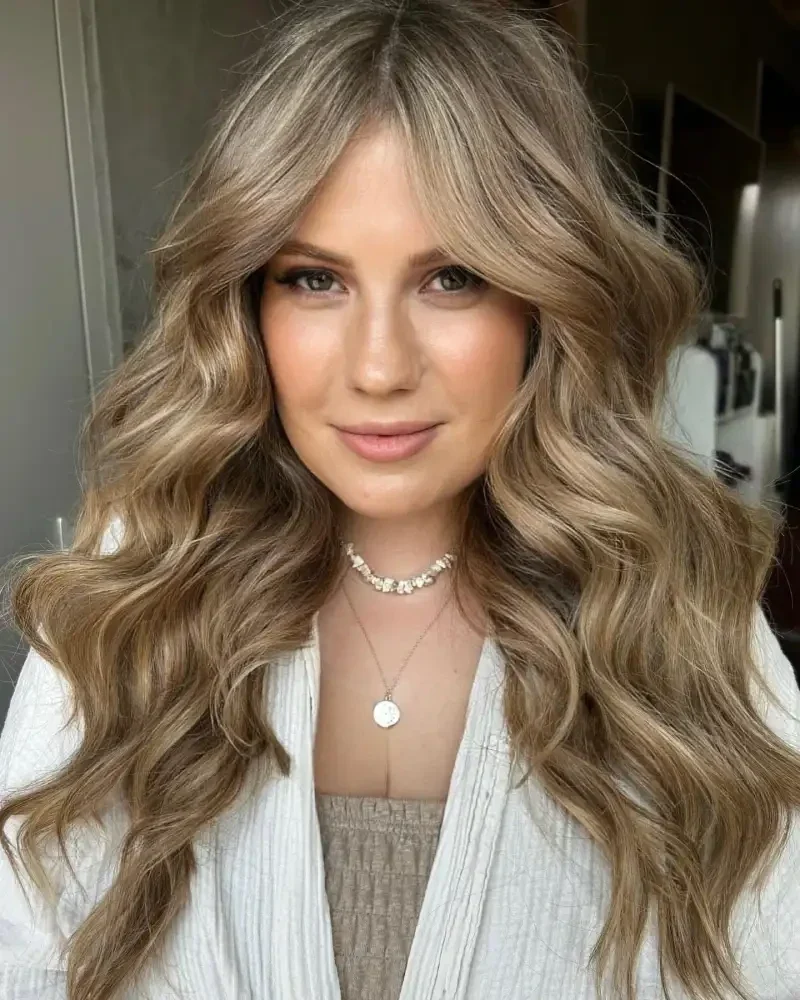
Dark Blonde With Curtain Framing
Curtain-shaped front pieces open around the face in this dark blonde look. Fine beige highlights sit within a deeper base, keeping the color soft rather than dramatically light.
- Shape
- Dark blonde
- Detail
- Curtain frame
The fringe area bends outward near the cheeks and joins the longer waves. Lighter ribbons are visible on the surface, but the overall crown remains noticeably deeper than the ends.
Wearability note: Separate the haircut from the color when choosing this reference. You can like the muted blonde balance without wanting the same shorter face-framing pieces or the same amount of wave.
Idea 14
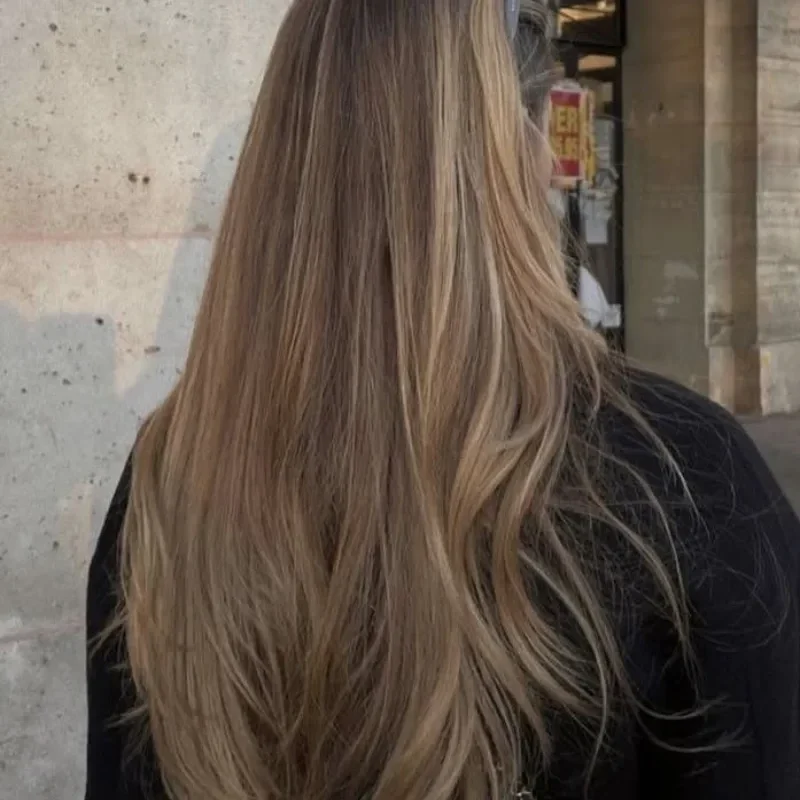
Subtle Beige on Straight Layers
Subtle beige highlights give this straight brown-blonde hair a restrained finish. The color stays fairly deep from the crown through the middle, with lighter strands appearing along the outer lengths.
- Shape
- Subtle beige
- Detail
- Straight layers
The layered ends separate into narrow points rather than a solid straight line. This exposes the fine highlight pattern without the strong light-and-shadow bands created by large curls.
Wearability note: Choose this reference if you want to keep the overall result deeper. Ask to compare the amount of blonde in ordinary daylight, where a subtle blend may look different from salon lighting.
Idea 15
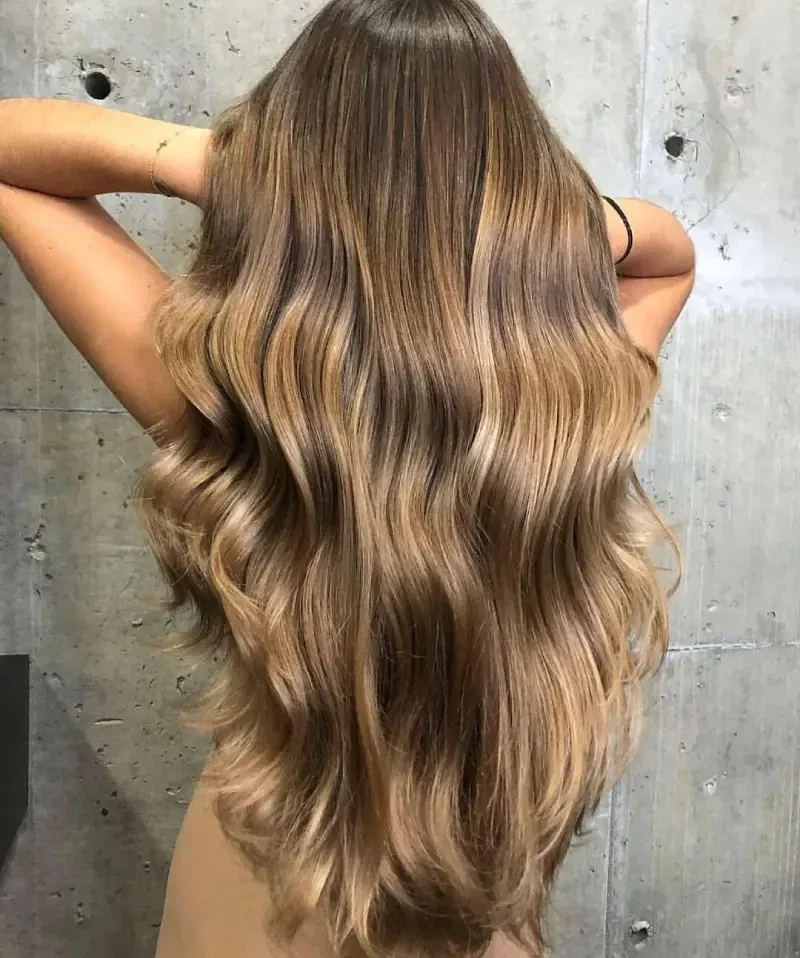
Golden-Beige Waves With Brown Depth
Golden-beige waves sit over visible brown depth in this long color look. The brighter sections form broad ribbons, but the darker spaces remain part of the finished pattern.
- Shape
- Golden beige
- Detail
- Brown depth
The top is deeper and smoother, while the lower waves reveal stronger contrast. Warm light catches the outer bends, making the blonde look richer than the muted ash examples.
Wearability note: Keep both colors in the reference conversation. If the darker sections are lightened too far, the result could lose the contrast that makes these golden ribbons stand out.
Idea 16
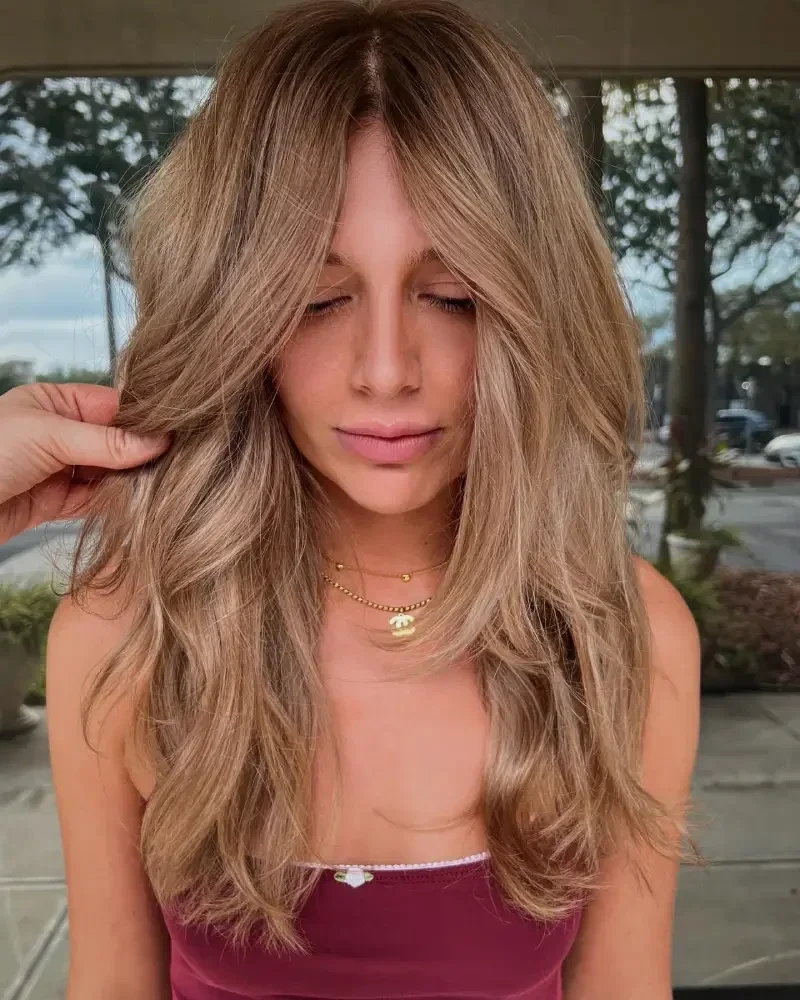
Warm Dark Blonde With Feathered Layers
Warm dark blonde gives these feathered layers a soft, brown-blonde finish. The center opening reveals a slightly deeper root, with lighter pieces following the curved front sections.
- Shape
- Warm dark blonde
- Detail
- Feathered front
The ends turn outward at several levels, so the color appears in overlapping bands rather than long uninterrupted ribbons. The warmth is subdued compared with the more golden examples.
Wearability note: Consider the tone independently of the layered finish. If you usually wear your hair straighter, ask to see a similar shade on a smoother reference before choosing the overall brightness.
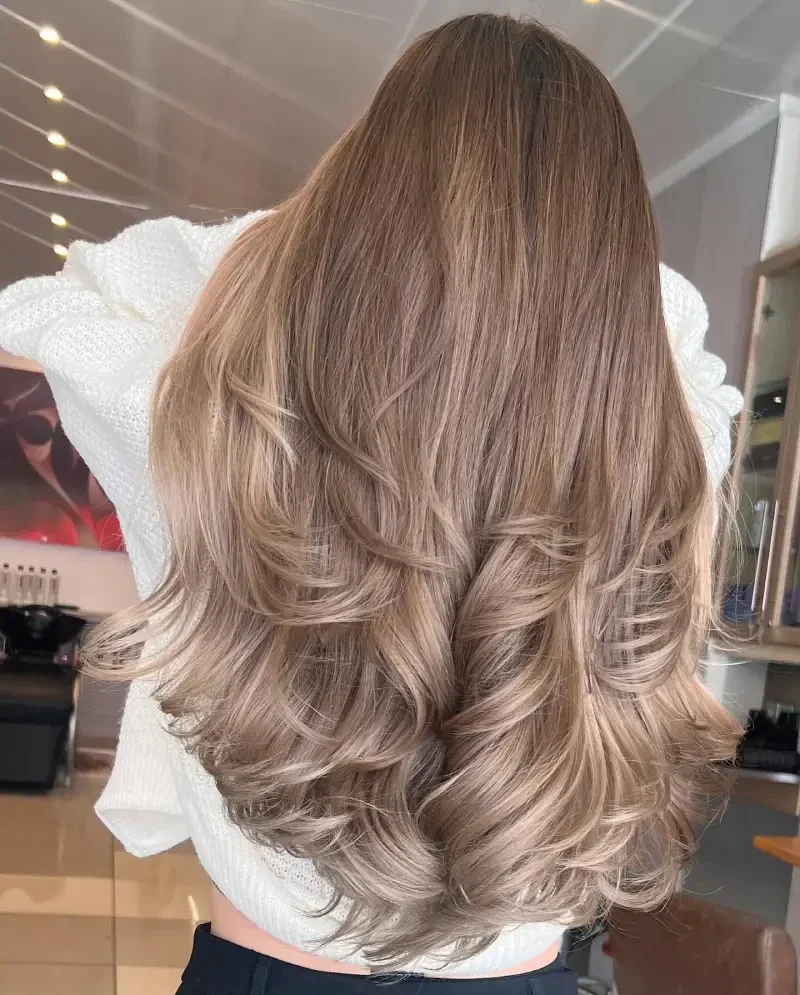
Idea 17
Beige Blonde Through Long Layers
A softly blended crown keeps this beige blonde from looking sharply rooted. The lengths are lighter, but the change in depth happens gradually through the upper and middle sections.
- Shape
- Beige blonde
- Detail
- Blended crown
Curved layers expose pale strands along the lower edge. The overall tone is muted and creamy rather than distinctly copper, with enough deeper hair remaining to show the shape of the layers.
Wearability note: Use the upper half to judge the root blend and the lower half to judge brightness. Choosing only the lightest end section would miss much of the balance visible in this photograph.
Explain the overall color balance
Choose a reference for its average depth, not just the brightest face-framing piece. A photo with a deep root and pale ends may be much more contrasted than the dark blonde you have in mind.
Compare the tone in neutral daylight as well as salon lighting. Bring your preferences to a color consultation so the chosen direction can account for your starting hair and existing color.

About the author
Bella Ross
Bella Ross is the hairstyle editor behind Latest Easy Hairstyles. She curates practical haircut, braid, color, and styling ideas with a focus on looks that are easy to browse, realistic to recreate, and useful for everyday hair decisions.