
Before you choose
Decide how much pink you want visible
Cotton candy hair is a useful visual idea but a loose color request. One photograph may show dusty rose over a brunette root; another may be nearly white blonde with a faint pink veil. The difference matters more than the shared pastel label. Look closely at the crown, face-framing pieces and ends as you browse.
This gallery stays focused on pink and lavender placement across different lengths. If you have already chosen a length and want a broader color palette, the site's long pastel hair ideas and medium pastel hair ideas galleries are more relevant comparisons.
The hairstyle gallery
16 pink and lavender color references
Compare the amount of pink, the root depth and whether lavender is a second shade or just a cool cast. These are photographed results, not promises about what one appointment can achieve.
Idea 01
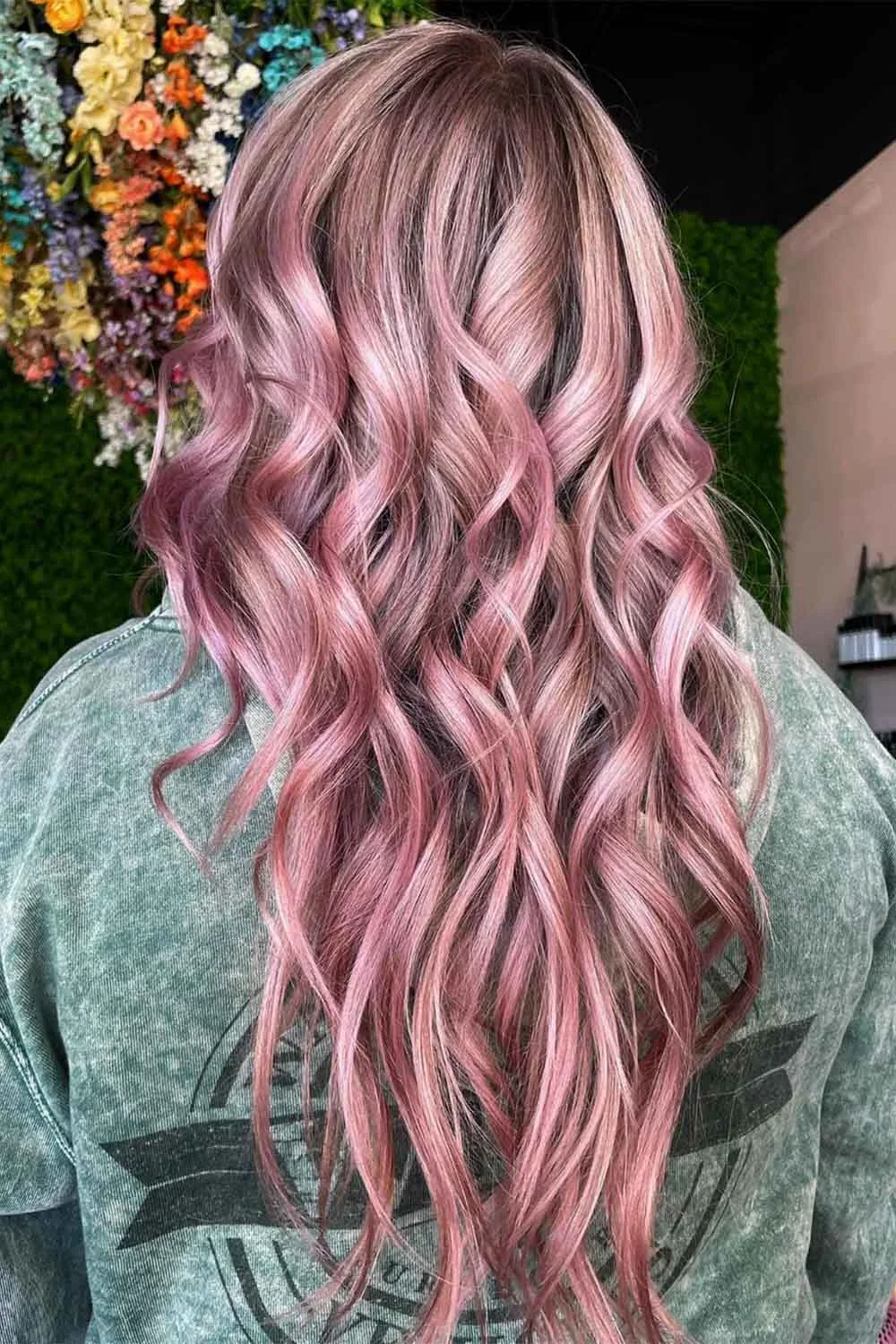
Dusty Rose Waves With Dark Roots
A brown root keeps these long dusty-rose waves from looking uniformly pale.
- Length
- Long
- Tone
- Dusty rose
- Root
- Brown
Pink runs through broad, well-separated waves, strongest across the middle and lower lengths. The darker crown remains visible between the upper bends and the ends look slightly lighter where they curl forward. This is a muted rose rather than a neon pink.
Wearability note: Save this if you want pink to be obvious but still softened by root depth. Ask where the rosy color should begin on your own hair, because a higher start would put much more pink beside your face.
Idea 02
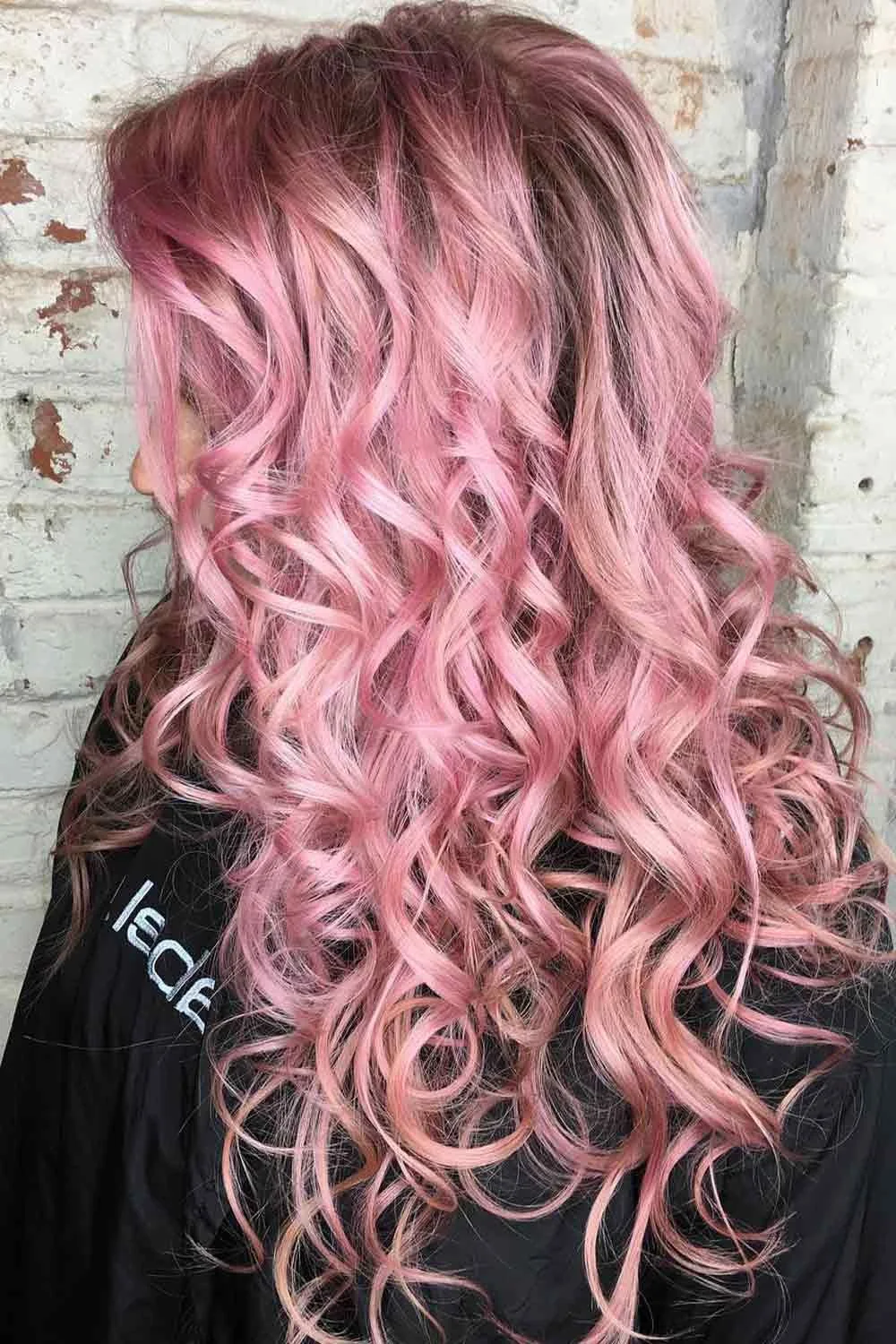
Pink Curls on Long Layers
Narrow pink curls expose darker rosy spaces between the layers instead of one flat surface.
- Length
- Long
- Tone
- Pale pink
- Finish
- Defined curls
The crown reads deeper mauve-pink while the tightly separated lower curls catch more light. The longest pieces reach well below the shoulders. A few darker strands remain visible near the scalp, making the light pink ends feel more dimensional.
Wearability note: Use this for the mix of darker top and paler curled ends. If you usually wear your hair straight, ask to see a straight-hair color reference too; the curls reveal more of the hidden darker strands.
Idea 03
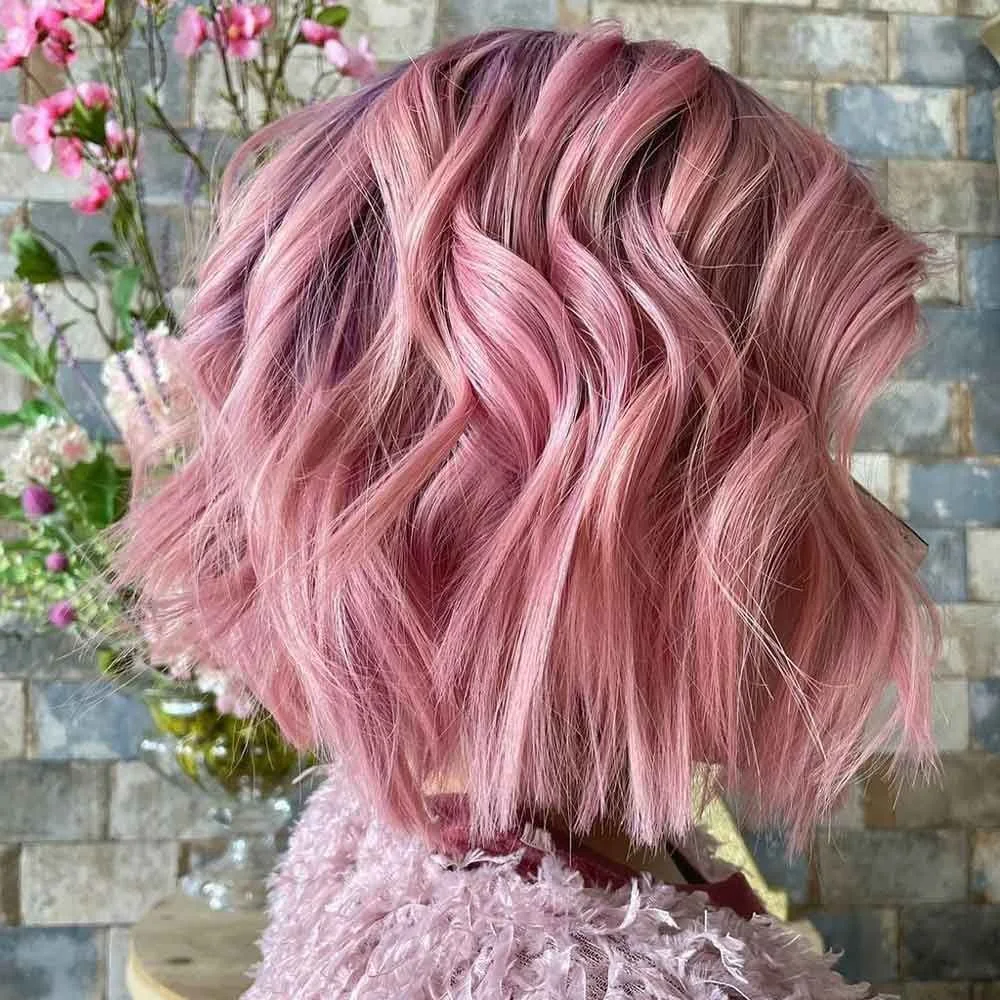
Blush-Pink Textured Short Bob
The softly broken bob outline keeps a pale blush color from looking too uniform.
- Length
- Short bob
- Tone
- Blush pink
- Finish
- Textured
The hair sits above the shoulders and turns into small uneven bends at the bottom. Pink is strongest across the visible surface; a deeper rose-brown shows at the crown and inside the waves. The nape is short but not close-cropped.
Wearability note: Save this if you want a short pink result without a precise blunt edge. The photograph shows the back-side shape well; bring a separate front view if fringe or face-framing length matters to you.
Choose your direction
Barely pink
Compare the white-blonde ends with a pink veil or the silver lengths with a blush fade.
Clearly pink
Use the dusty-rose long waves or the bright peach-pink short bob.
Cooler blend
Look at lavender roots fading to pale lilac or pink-lavender waves.
More contrast
Choose a brown-rooted pink lob or a dark crown over soft pink lengths.
Idea 04
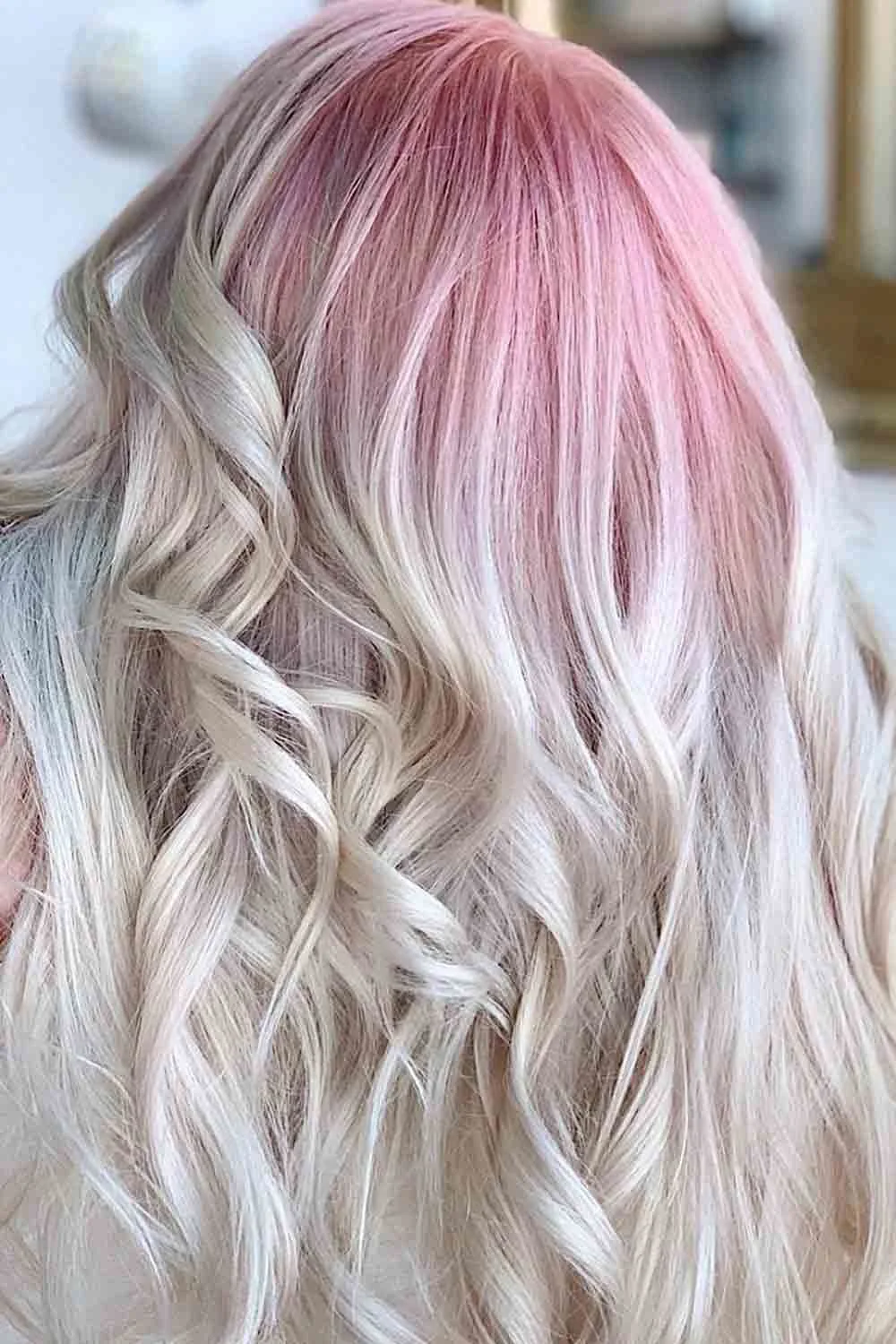
Pink Crown Over White-Blonde Ends
Pink sits mainly near the top, leaving most of the long curled ends nearly white blonde.
- Length
- Long
- Top
- Pale pink
- Ends
- White blonde
The visible part and upper layers have a delicate blush cast. Through the mid-lengths the color quickly becomes very light blonde, with only a little pink remaining in some wave ridges. The long loose curls emphasize the pale finish.
Wearability note: Use this if you want a restrained pastel that still reads mostly blonde. Show the image for where the pink fades out, and discuss what level your starting hair would need to reach for such pale ends.
Idea 05
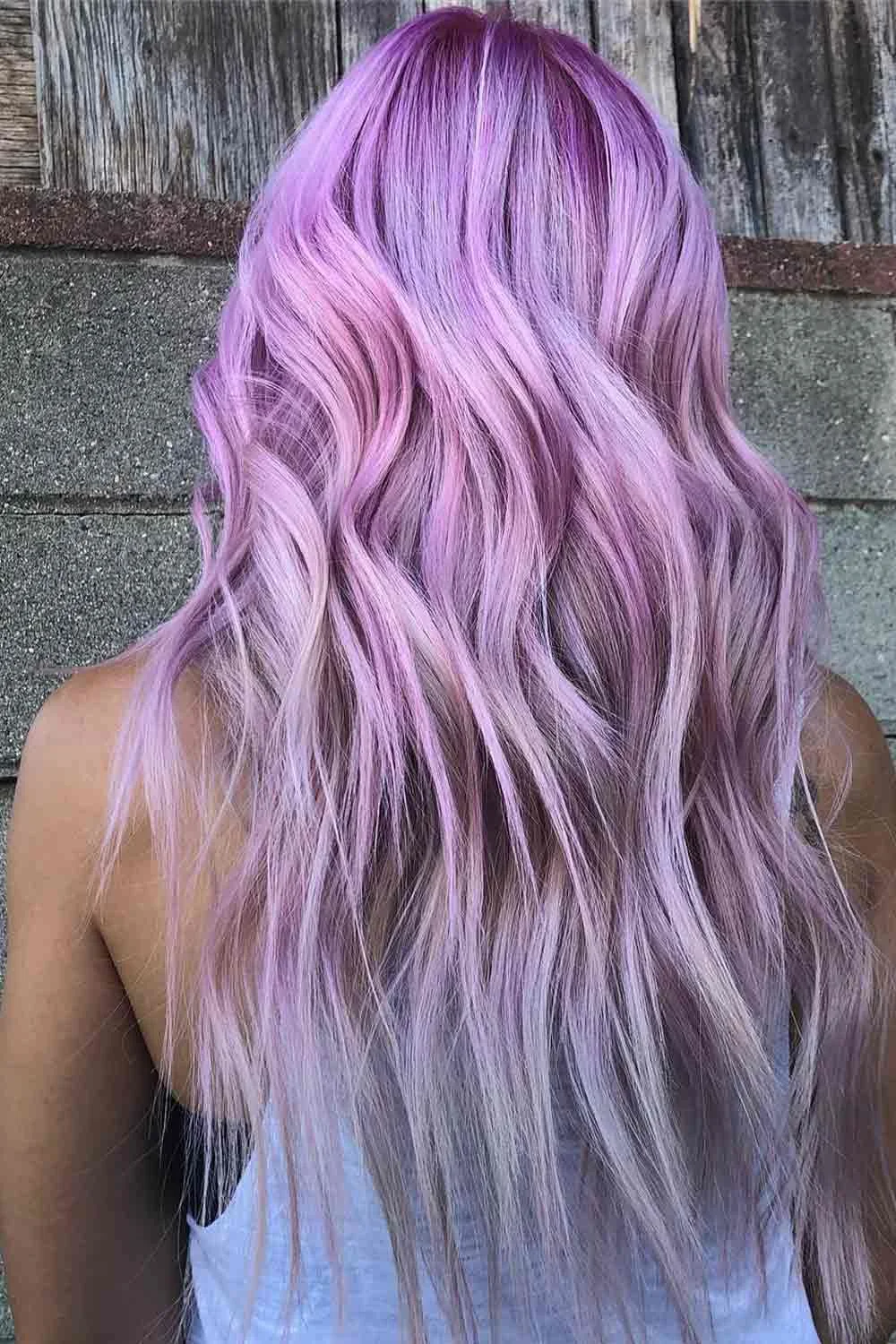
Lavender Waves With Lilac Ends
Cool lavender at the crown fades to a near-silvery lilac through the long lower waves.
- Length
- Long
- Top
- Lavender
- Ends
- Lilac silver
The top looks more saturated purple, while broad waves expose paler strands as they travel down the back. There is no hard ombre band; several lighter and darker pieces run the length together. The ends have a faint gray cast.
Wearability note: Choose this if the cool side of cotton-candy color appeals more than bubblegum pink. Save the full back view to show the gradual fade, then confirm how purple you want the crown to remain.
Idea 06
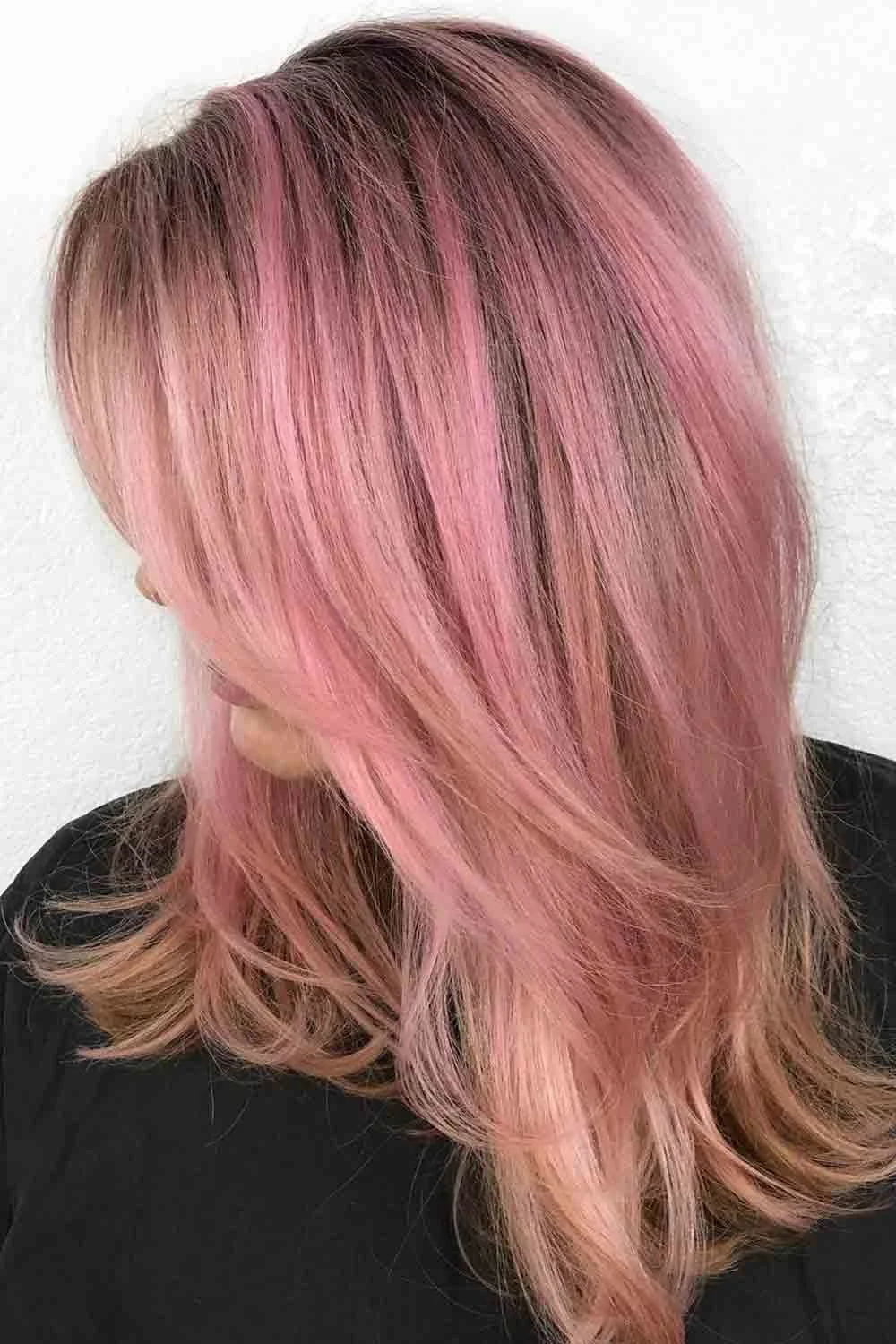
Rose-Pink Shoulder-Length Layers
The rose tone becomes clearer through the front layers while the crown stays darker.
- Length
- Shoulder length
- Tone
- Rose pink
- Root
- Darker
A soft side part directs the upper pieces across the face. The hair rests around the shoulders, with flicked ends that reveal several pink strengths from dusty rose to pale peach. Root depth is visible at the top rather than concealed by the styling.
Wearability note: Use this if you want pink on a wearable medium cut rather than an all-over pastel from the scalp. Ask where the strongest pink should sit around your face, since that is the brightest part of this view.
Idea 07
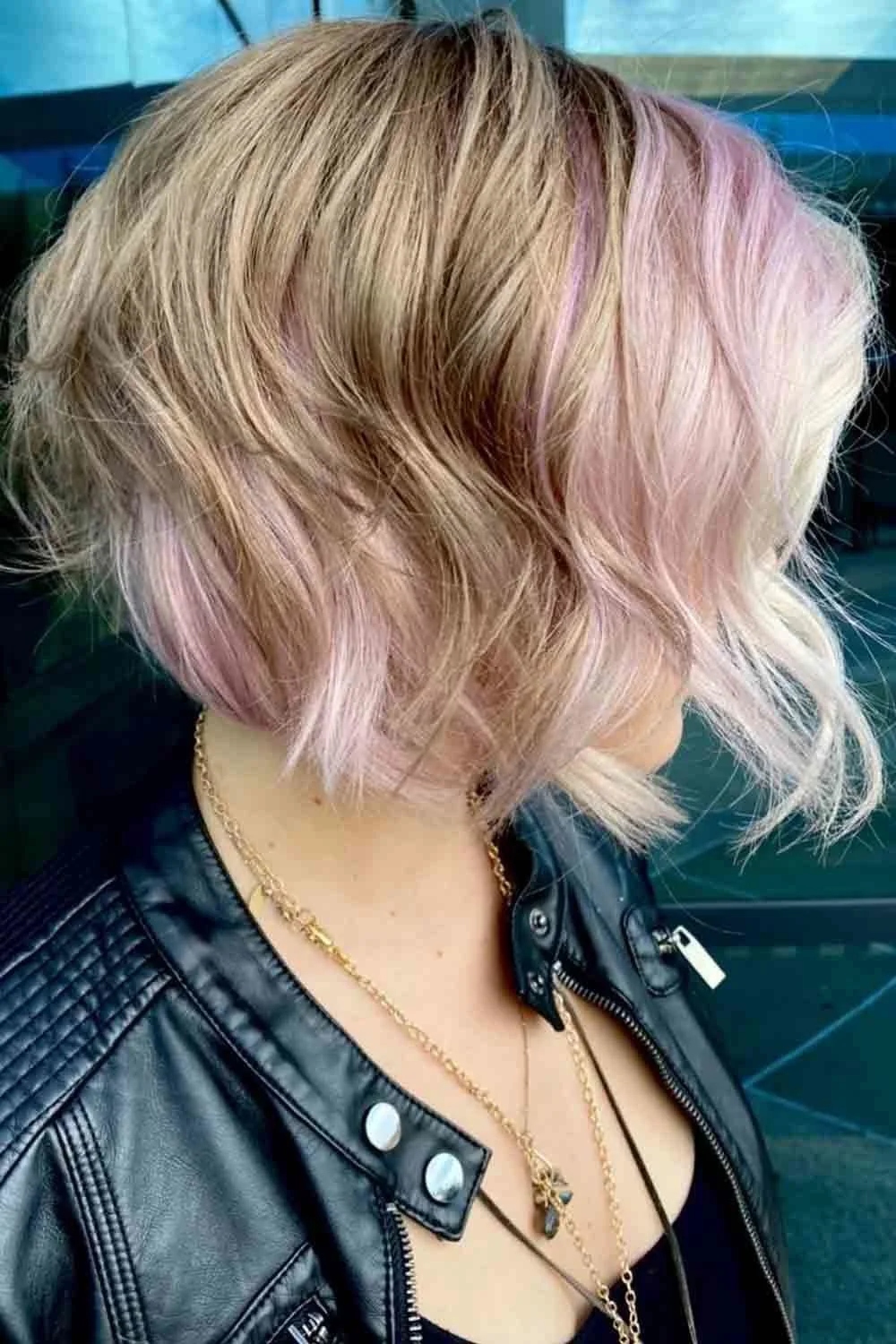
Blonde Bob With Blush Panels
Blush appears as selected panels on this bob, while most of the hair remains blonde.
- Length
- Short bob
- Base
- Blonde
- Accent
- Blush panels
The crown is warm blonde and loosely waved. Pink is easiest to see beside the cheek and beneath the shorter back layer, not across every strand. A pale front piece reaches toward the jaw and keeps the overall effect light.
Wearability note: Save this for a partial pink placement if you do not want an all-over pastel. Point out the pink beside the face and at the underside so the reference does not get interpreted as only a root tint.
Idea 08
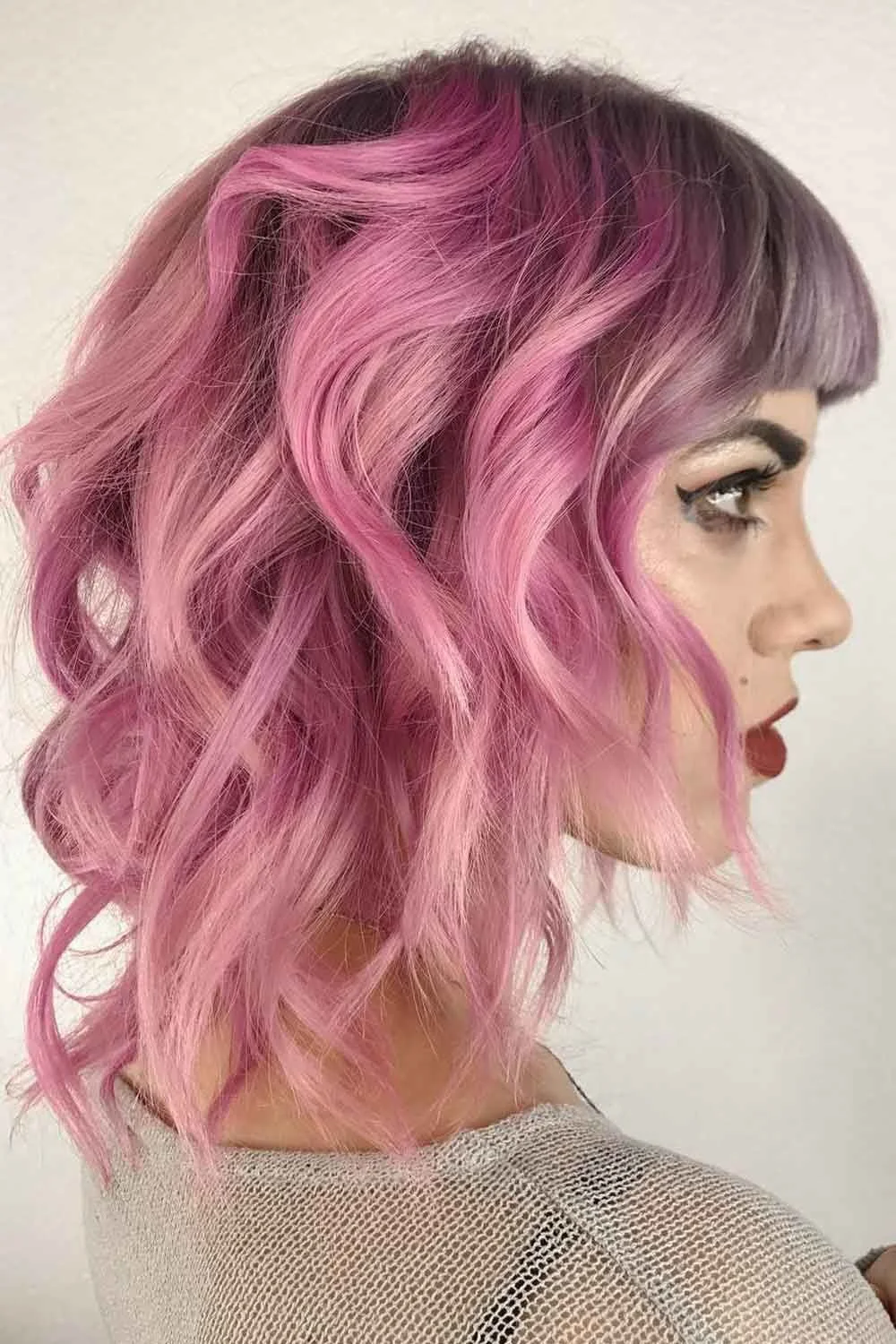
Antique-Rose Bob With Baby Bangs
Baby bangs interrupt the soft pink waves with one crisp line at the forehead.
- Length
- Short bob
- Tone
- Antique rose
- Front
- Baby bangs
The crown has a deeper mauve-pink cast. Loose waves begin below the short blunt fringe and fall toward the neck, with paler pink visible on the outer bends. A narrow curl hangs near the cheek, making this more sculpted than a plain bob.
Wearability note: Choose this only if you like both the antique-rose shade and a very short fringe. Save a second cut reference if you want the pink but are not ready for bangs above the brows.
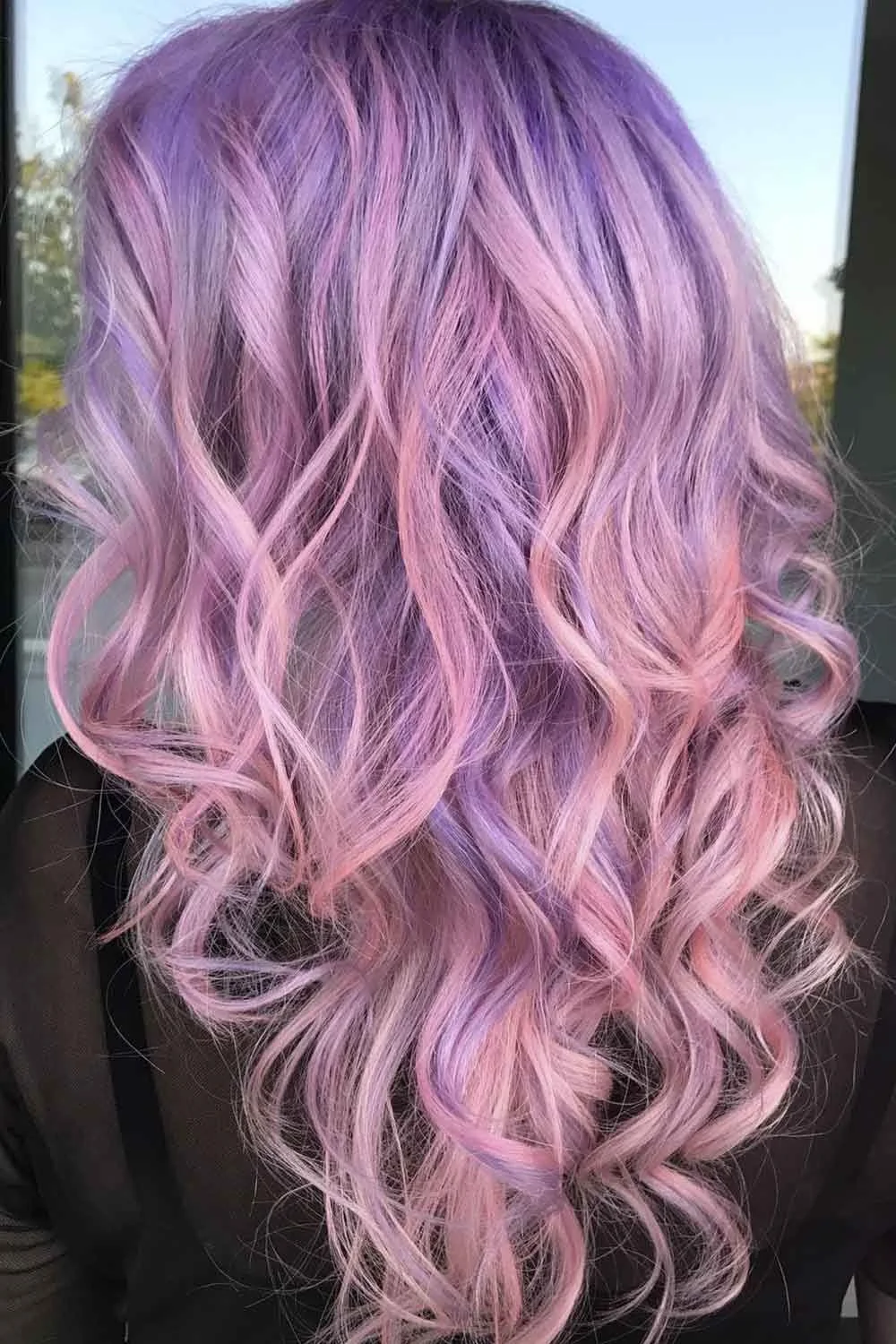
Idea 09
Lavender and Pink Long Waves
Lavender and pink alternate through the waves, making neither shade a single solid block.
- Length
- Long
- Colors
- Lavender and pink
- Finish
- Wavy
The upper section appears cooler purple while rosy pieces emerge through the middle and ends. Wide curls separate the light lilac strands from the deeper violet base. The lower edge remains long and softly layered rather than blunt.
Wearability note: Save this if you want two pastel colors interwoven instead of a top-to-bottom fade. Ask how the mix will read when your hair is worn straight, because the waves expose several layers at once.
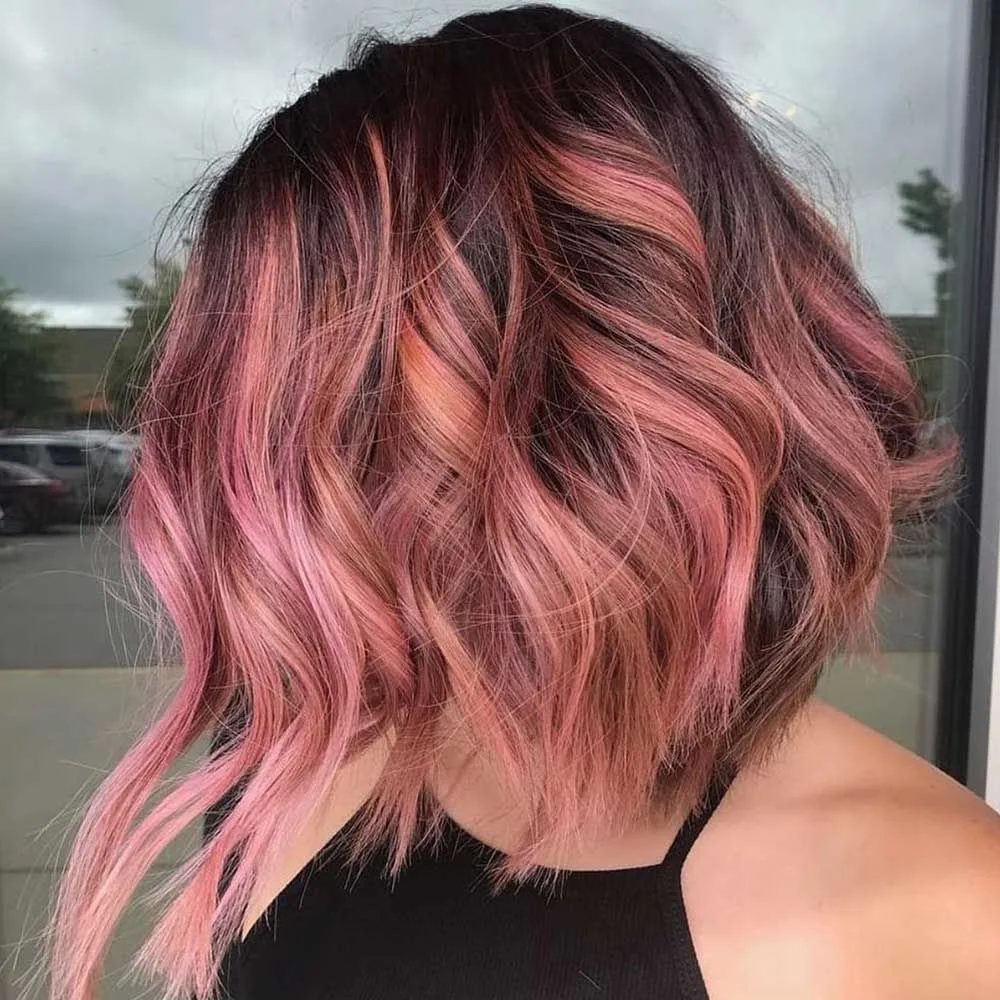
Idea 10
Pink Balayage on a Dark Lob
Dusty pink covers much of the lower bob, but the dark crown stays plainly visible.
- Length
- Lob
- Base
- Dark brown
- Ends
- Dusty pink
The roots are deep brown, with pink beginning in separated ribbons well below the part. Broad bends expose lighter rose pieces at the front and ends. The cut stops near the shoulder and includes one longer front section.
Wearability note: Use this for dark-to-pink contrast rather than pale all-over color. Show how far down the pink starts; bringing it closer to the scalp would change the whole mood and regrowth pattern.
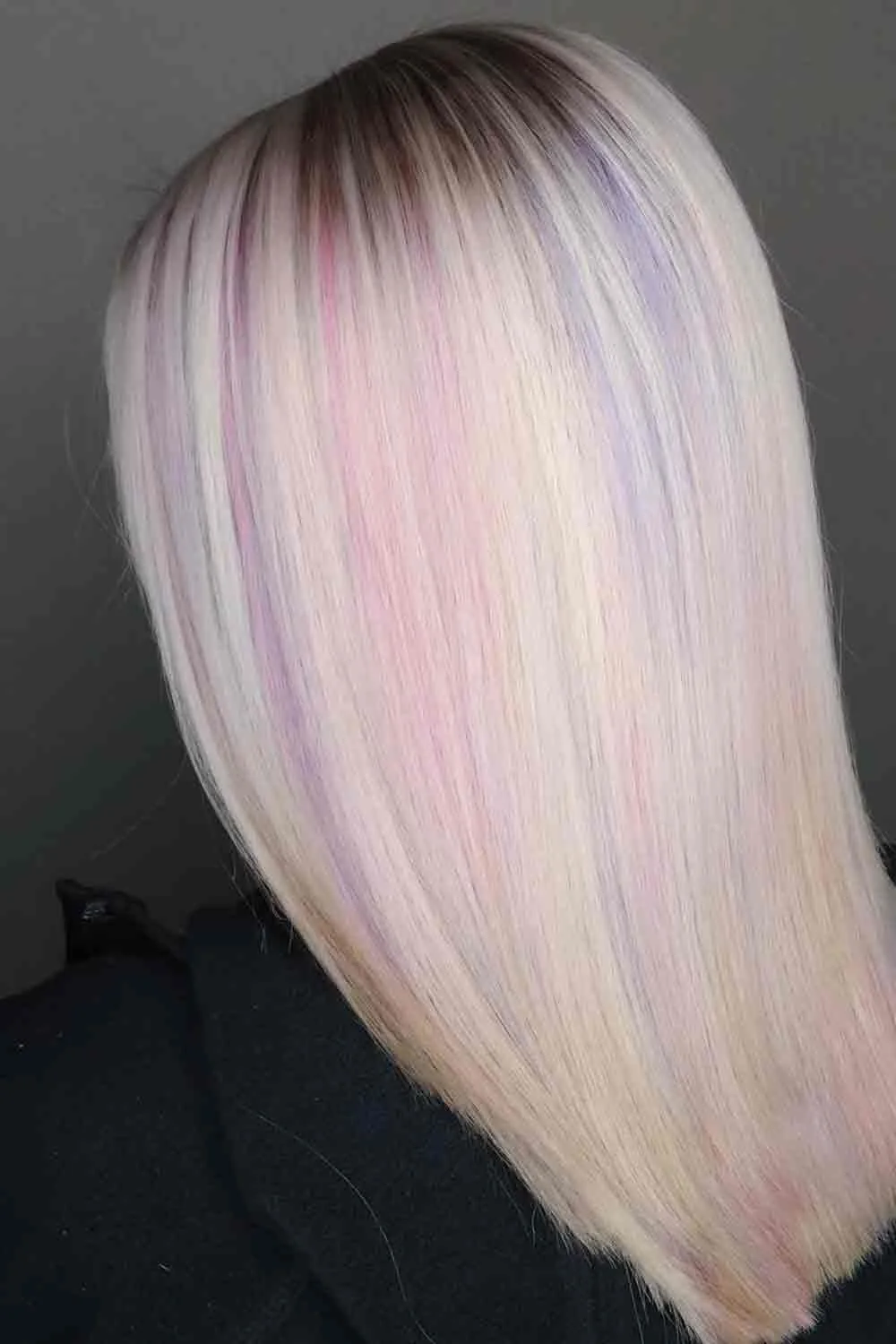
Idea 11
Platinum Lob With Pink Veil
The color remains nearly platinum, with pink acting as a sheer tint rather than a strong shade.
- Length
- Lob
- Base
- Platinum blonde
- Tint
- Faint pink
A smooth, straight finish makes the pastel easy to judge without curls. The faint blush is visible along the upper and middle lengths, while the ends look almost white. The cut falls to the shoulders with a clean lower line.
Wearability note: Save this if you want someone to notice the pink only in certain light. Discuss the pale blonde base separately: reaching that level can be a much bigger change than adding the sheer tint.
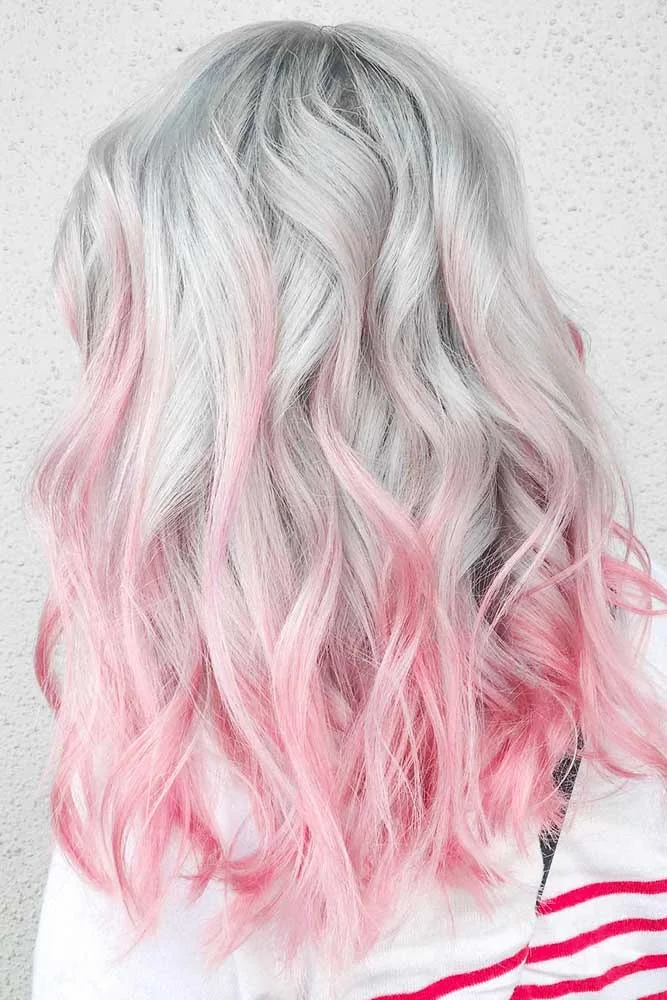
Idea 12
Silver Waves With Pink Ends
Pink is concentrated at the curled ends while the upper hair remains icy silver-white.
- Length
- Shoulder length
- Base
- Silver white
- Ends
- Soft pink
The top section is pale gray-silver with slightly darker root depth. Loose waves reveal blush pink mainly below the shoulders, giving the lower edge a soft colored halo. The color boundary is diffused rather than a single hard stripe.
Wearability note: Use this if you prefer pastel as an end accent. Show the lower-half placement clearly, and confirm whether you want the upper hair to be silver, white blonde or your existing shade.
Idea 13
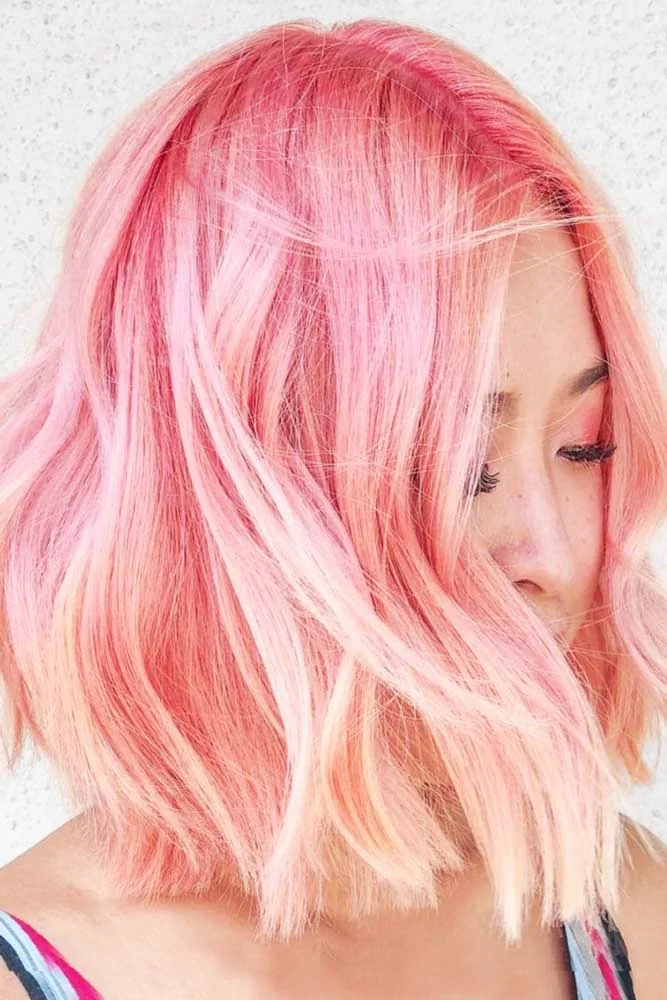
Pink-to-Peach Textured Bob
A stronger pink upper section fades toward pale peach across a softly broken bob outline.
- Length
- Bob
- Top
- Bright pink
- Ends
- Pale peach
Bright pink is most visible around the upper layers and part. The color becomes softer and warmer through the middle and ends. Loose bends and lifted front strands separate the outline instead of forming a uniformly straight, blunt edge.
Wearability note: Save this for a warm pink fade paired with an airy bob. Discuss how much pink should remain in the front sections, and treat the movement and cut length as separate choices from the color placement.
Idea 14
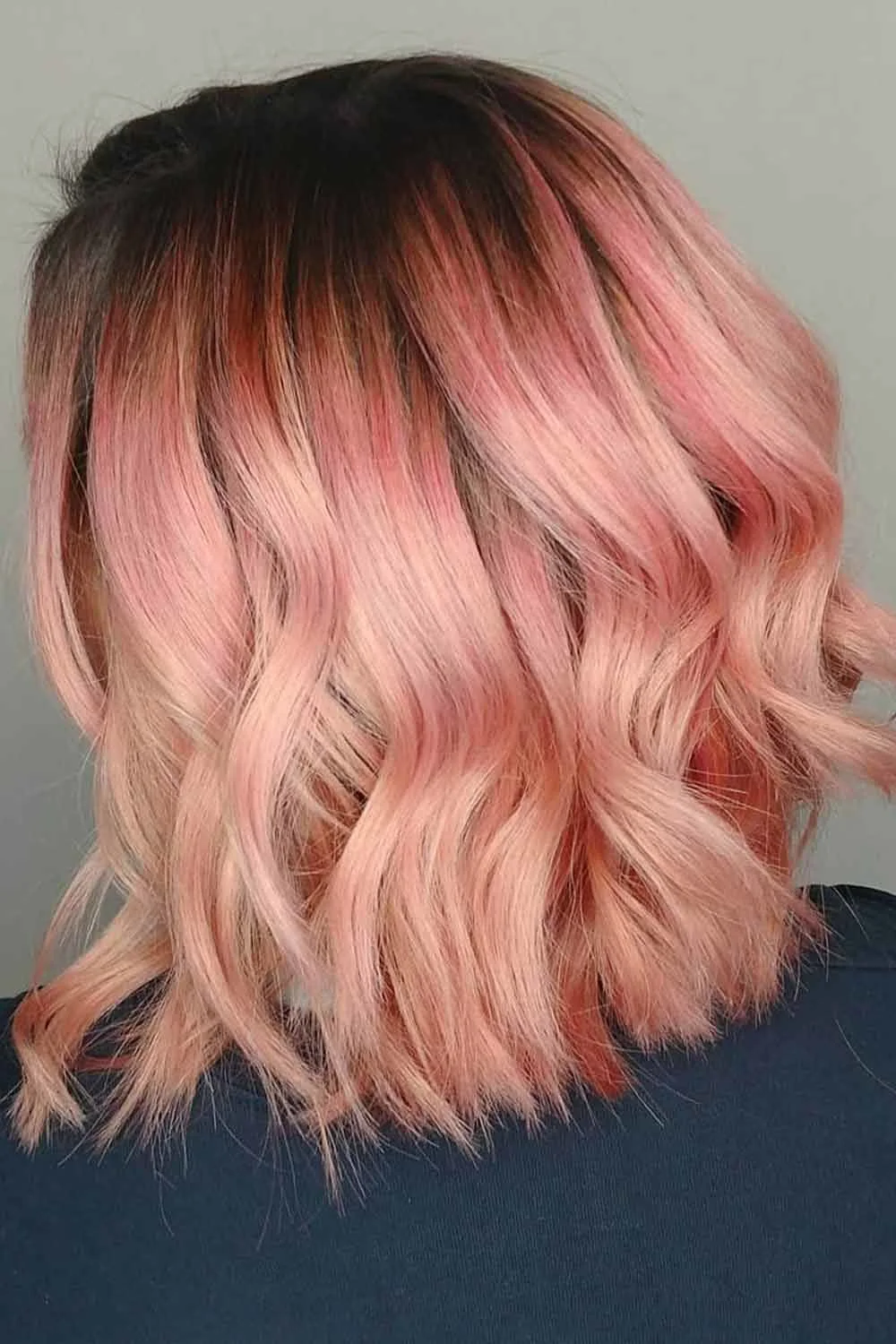
Rooted Peach-Pink Wavy Bob
The brown root area gives the peach-pink lower waves a clear point of contrast.
- Root
- Brown
- Color
- Peach-pink
- Finish
- Wavy bob
Dark brown is visible through the crown and upper parting. Below it, warm peach and pale pink mingle across loose bends rather than forming a fixed horizontal split. The separated ends keep the colored lower section airy while the darker top remains noticeable.
Wearability note: Choose this for warm pastel lengths with visible root depth. Show your colorist both the brown upper area and the peach-pink balance; removing that contrast would create a different result.
Idea 15
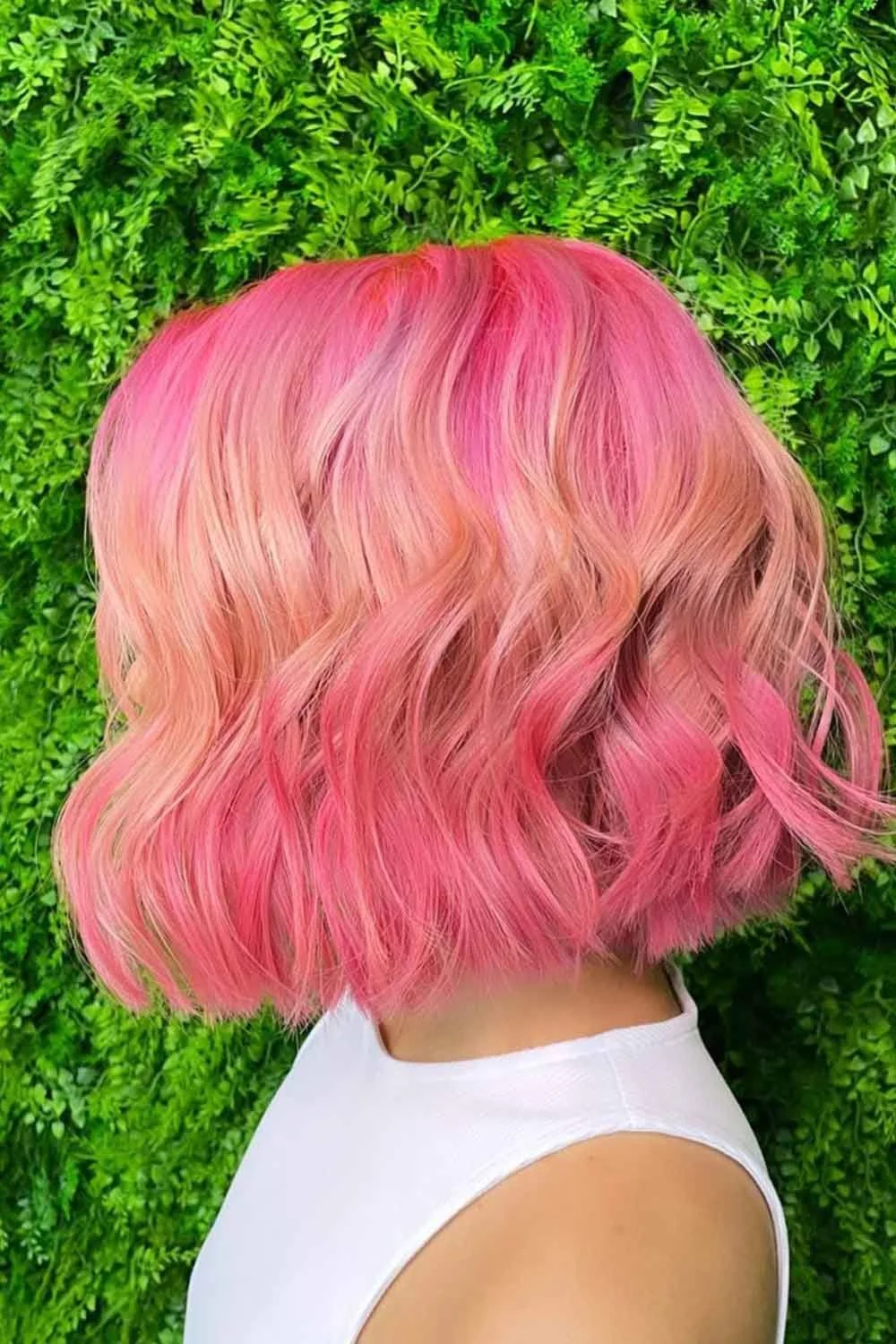
Bright Peach-Pink Short Bob
A vivid pink crown moves into peachy ends, giving this bob more contrast than the muted examples.
- Length
- Short bob
- Top
- Bright pink
- Ends
- Peach
The back is cut above the shoulders and curls outward at several heights. Pink is strongest near the part and upper waves, while the lower curls read warmer peach and coral. A green background makes the color appear especially vivid in this photo.
Wearability note: Save this for a brighter warm pastel and short wavy outline. Compare it in neutral light with your colorist before assuming the photographed saturation will look identical indoors.
Idea 16
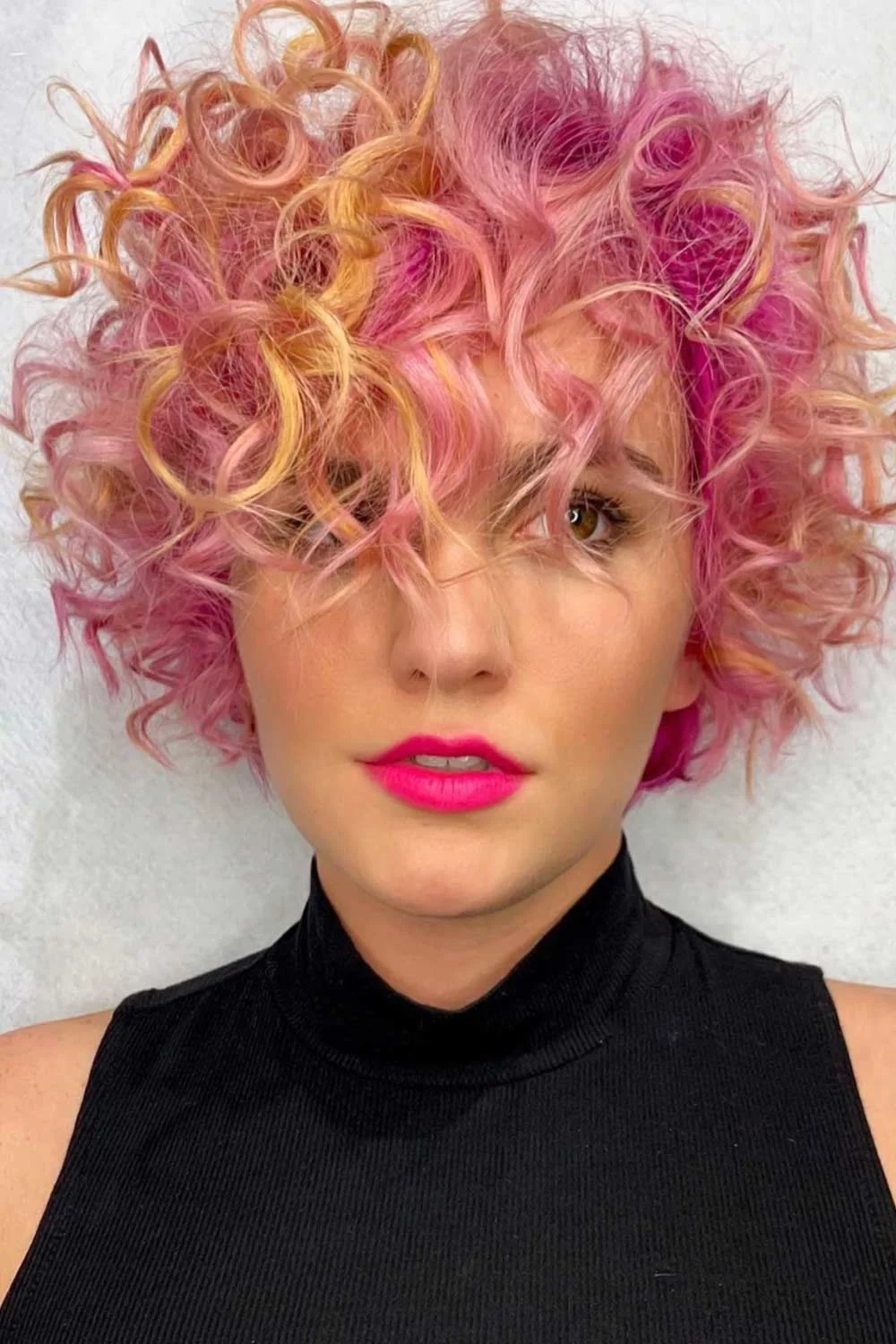
Pink and Apricot Curly Crop
Tight lifted curls mix pink and apricot close to the face rather than placing pastel only at the ends.
- Length
- Cropped
- Colors
- Pink and apricot
- Texture
- Curly
The cropped shape expands outward above the ears, with ringlets of different sizes across the forehead. Pink dominates one side and apricot-gold curls brighten the other. Small gaps between curls reveal darker roots and prevent the mix from reading as one flat tone.
Wearability note: Use this if you want a playful warm multitone on a curly short cut. Save the curl silhouette separately from the color; a smoother texture would distribute these pink and apricot pieces very differently.
Pink, lavender or a blend?
Dusty rose and pale blush are restrained pinks, while bubblegum and fuchsia draw more attention. Lavender can make the palette cooler and more silvery; peach brings warmth. Several photographs use more than one of these tones, so save the placement as well as the color name.
A back view often shows the full blend better than a portrait. A face view tells you how much pastel will frame your skin.
What does the base change?
Some references retain a dark or medium-brown crown; others begin with pale blonde or silver. Pink over each base reads differently. A root shadow can anchor very pale ends, while an all-over pastel makes the whole shape look lighter.
Point out how much of the natural-looking root you want visible. The image alone cannot show the starting hair color or the process used to get there.
How should you use these photos?
Save the photograph that best shows your desired pink strength and a second one for your preferred cut or length. The same pale tone on a chin-length bob has a different impact than it does through long waves or tight curls.
Discuss feasibility, fading and hair condition with a colorist before treating any salon photograph as a formula. Lighting, editing and styling all change how a pastel reads on screen.
About the author
Bella Ross
Bella Ross is the hairstyle editor behind Latest Easy Hairstyles. She curates practical haircut, braid, color, and styling ideas with a focus on looks that are easy to browse, realistic to recreate, and useful for everyday hair decisions.