Before you choose
Choose where the design should sit
These haircut designs focus on the visible linework rather than one particular top length. Compare small temple marks, curved side patterns and larger rear layouts. A design can be paired with different cuts, so discuss the top shape and the carved detail separately. These are finished references to take to a barber, not instructions for carving a pattern yourself.
The hairstyle gallery
18 haircut designs for men ideas to compare
Compare the visible length, shape, texture, and finish before choosing a salon reference.
Idea 01
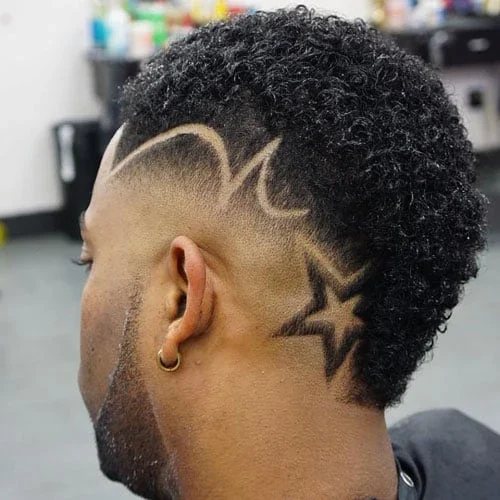
Star Detail Beside a Curved Border
A star-shaped detail sits near the back of a closely cut side. A curved border connects it with the longer coily center, making the design visible beyond the temple.
- Shape
- Star-shaped side detail
- Detail
- Coily raised center
The darker star contrasts with the pale surrounding area. The taller textured center creates a separate outline above the linework rather than blending into a plain short crop.
Wearability note: Choose this if you want a recognizable motif near the rear side. Keep that angle in your reference so the star placement is clear.
Idea 02
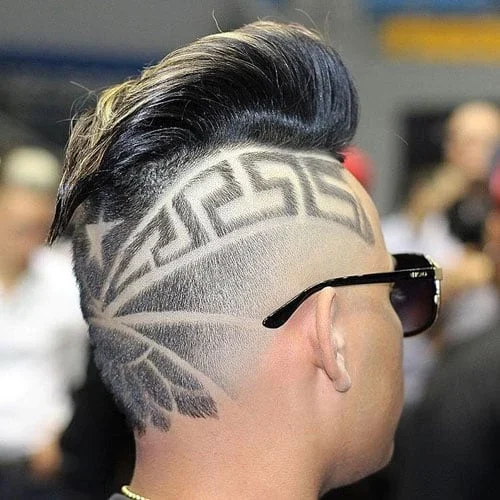
Squared Border With Radiating Rear Lines
A squared border runs along the upper side beneath a raised sweep. Radiating lines spread across the lower rear area, giving the design two distinct types of geometry.
- Shape
- Squared side pattern
- Detail
- Radiating rear lines
The longer top stays separate from the closely cut patterned area. The side and rear angle shows how much space the design occupies around the head.
Wearability note: Choose this for a larger layout rather than one small line. Bring more than a front portrait so the rear section and upper border remain visible.
Idea 03
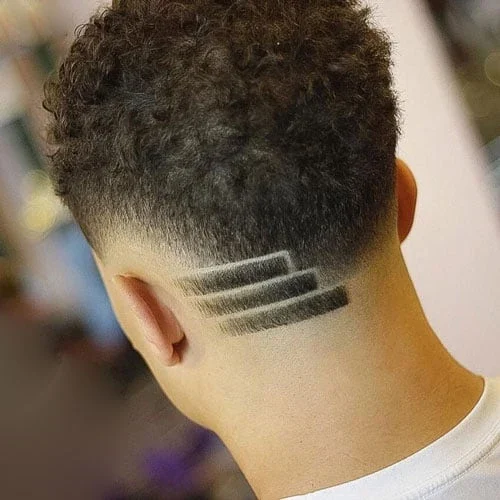
Three Dark Bars at the Nape
Three dark bars create a compact design at the nape beneath a curly top. The surrounding close cut makes the bars stand out without using the entire side of the head.
- Shape
- Three nape bars
- Detail
- Curly top
The rear view keeps their spacing and length clear. The upper texture is fuller, but the design itself stays low and narrow near the bottom edge.
Wearability note: Choose this if you want detail mostly visible from behind. Discuss the nape placement separately from the top length when comparing this with larger side patterns.
Choose your direction
Choose a location
Compare temple, side and nape placement.
Choose the scale
Look at small lines beside full rear patterns.
Check the top shape
Decide which upper outline you like beneath the extra detail.
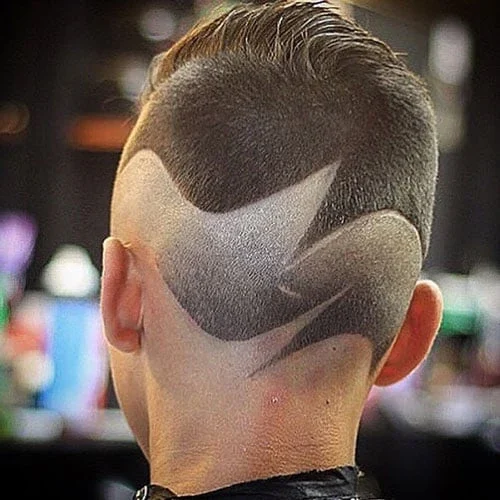
Idea 04
Large Curves Across the Back
Broad curved panels sweep across the back of the head above a close nape. The shaded areas create a larger design than a few thin carved lines.
- Shape
- Broad curved panels
- Detail
- Close nape
The pattern changes direction from side to side, with pointed ends breaking up the rounded shapes. The upper hair stays longer but does not cover the main rear detail.
Wearability note: Choose this if you want the back to be the focal point. Use a complete rear view to discuss the scale rather than copying a cropped section of the design.
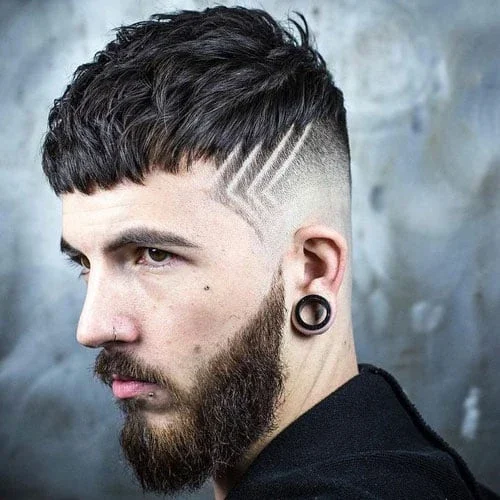
Idea 05
Three Diagonal Lines Above the Ear
Three diagonal lines sit above the ear beneath a short textured top. Their repeated angle creates a clear side detail without spreading across the entire back.
- Shape
- Three diagonal lines
- Detail
- Short textured fringe
The closely cut side gives the pale lines contrast. The fringe remains short and forward, so the top outline stays compact beside the graphic pattern.
Wearability note: Choose this for a smaller design that sits near the temple. Compare the number and spacing of the lines before deciding how bold you want the detail to look.
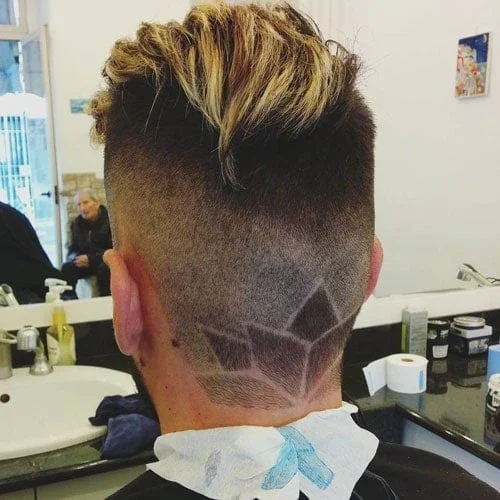
Idea 06
Angular Panels Low on the Back
Angular dark panels sit low on the back, leaving a larger plain area between the design and the longer top. The placement makes the nape the main point of interest.
- Shape
- Angular rear panels
- Detail
- Low nape placement
The design uses broad filled shapes rather than only thin outlines. The rear angle shows how the edges relate to the neck and lower hairline.
Wearability note: Choose this if you like detail concentrated at the bottom of the cut. Compare the height of the design before deciding how much of the back should remain plain.
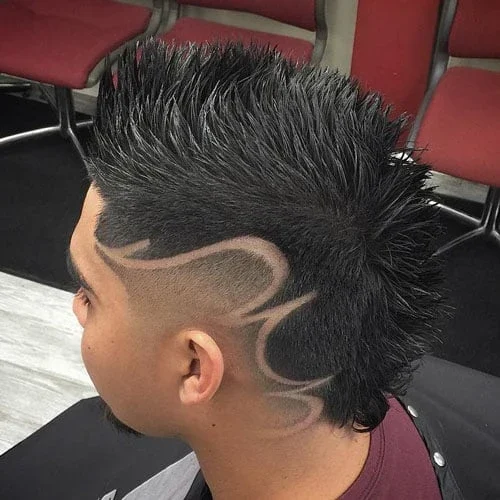
Idea 07
Long Curves Along a Spiky Crest
Long curves run along the side beneath a spiky center crest. The lines bend in opposite directions, creating a flowing pattern beside the pointed upper texture.
- Shape
- Long curved side lines
- Detail
- Spiky center crest
The longer center continues toward the nape, leaving the design framed between the crest and the close area around the ear. The contrast remains strong from the side.
Wearability note: Choose this if you want the linework to follow a longer silhouette. Discuss the crest length and the curved pattern separately so neither detail gets lost.
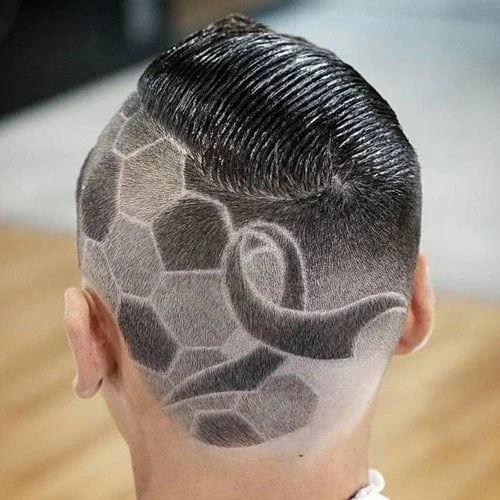
Idea 08
Hexagonal Panels With a Curved Tail
Hexagonal panels cover much of the back, with a broad curved detail crossing the lower area. The design relies on different dark and pale sections rather than a single narrow line.
- Shape
- Hexagonal rear sections
- Detail
- Curved lower detail
The longer top is swept away from the pattern, leaving the rear layout visible. The close nape creates a clean boundary beneath the lowest shapes.
Wearability note: Choose this for a large geometric focal point. A full rear photograph is essential if you want to compare how the pattern fits the shape of your head.
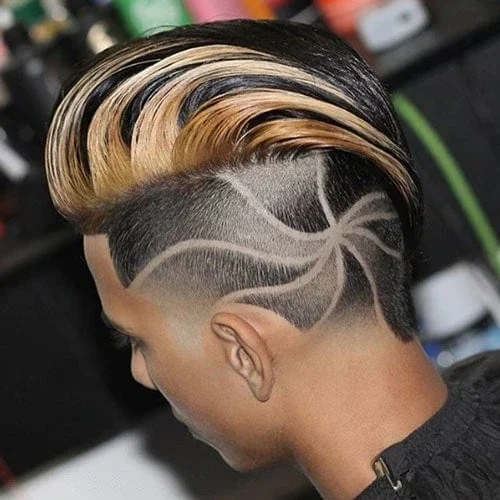
Idea 09
Radiating Curves Beneath a Light Sweep
Radiating curves spread across the side beneath a light-streaked sweep. The lines meet near the upper rear area and fan outward toward the temple and nape.
- Shape
- Radiating side curves
- Detail
- Light-streaked top
The longer top adds another strong directional feature above the pattern. The side remains close enough for the curved lines to stay clearly separated from that upper sweep.
Wearability note: Choose the pattern for its direction before considering the color. The radiating design and the lighter top sections are separate choices that can be discussed independently.
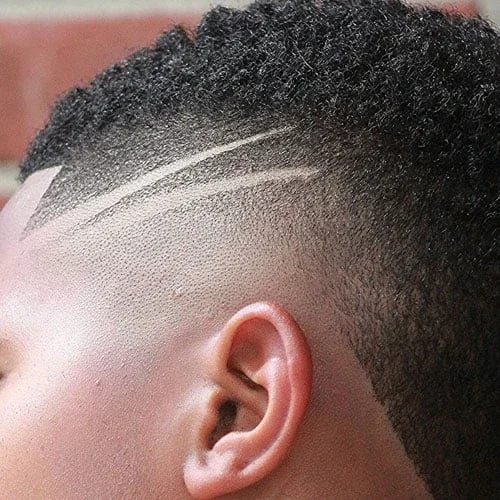
Idea 10
Two Narrow Lines Near the Temple
Two narrow lines add a small diagonal detail near the temple. The tight crop shows their spacing against the closely cut side and the darker textured hair above.
- Shape
- Two narrow lines
- Detail
- Short textured top
The rest of the visible design stays restrained, without a large rear motif. This makes it a useful comparison with the broad panels and multi-line layouts in the gallery.
Wearability note: Choose this if you want a small detail rather than a full side design. Bring a wider reference too when deciding the overall haircut shape.
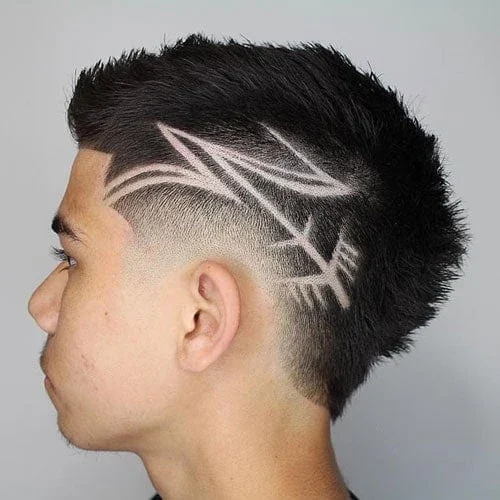
Idea 11
Intersecting Angles Along the Side
Intersecting angled lines create a pointed geometric pattern along the side. The short dark center gives the pale linework a contrasting border above it.
- Shape
- Intersecting pale lines
- Detail
- Short central texture
The design stretches from the temple toward the back rather than staying in one small spot. The shorter area around the ear keeps the lower edge open.
Wearability note: Choose this if you prefer sharp turns to rounded curves. Discuss the overall length of the pattern as well as the individual angles when showing the reference.
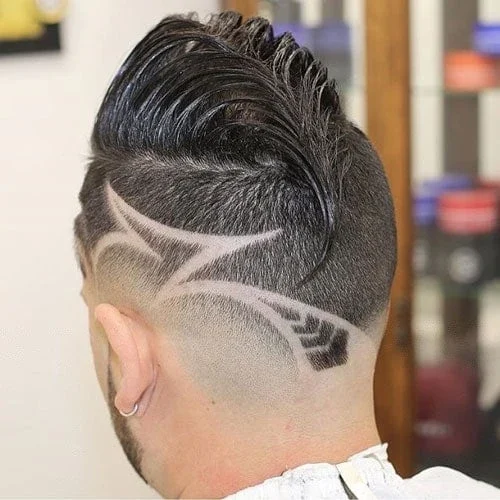
Idea 12
Curved Rear Lines With a Pointed Center
Curved lines meet a pointed central shape across the rear side. The design combines narrow pale borders with wider dark sections, creating variation through the back.
- Shape
- Curved rear linework
- Detail
- Pointed central shape
The upper hair sweeps away from the patterned area. The lower nape stays close, leaving the graphic detail visible even though the top retains more length.
Wearability note: Choose this for a design that wraps toward the back. Keep both rear and side angles when discussing how far you want the lines to extend.
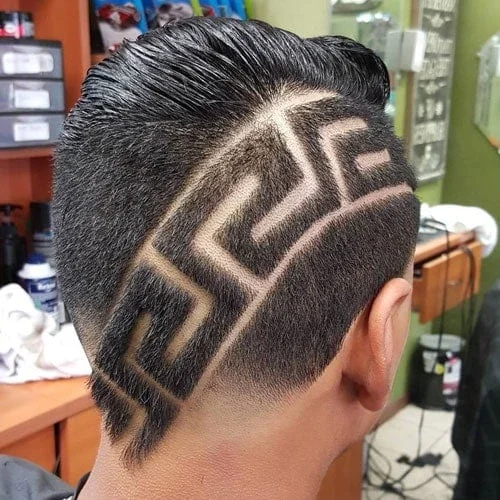
Idea 13
Squared Maze Beneath a Dark Sweep
Squared paths form a maze-like pattern beneath a dark swept top. The lines turn sharply around the rear side, with larger dark panels separating the pale channels.
- Shape
- Squared geometric paths
- Detail
- Swept dark top
The layout occupies more space than a small temple mark. Its lower edge reaches toward the nape while the longer upper hair stays out of the way.
Wearability note: Choose this if you enjoy a larger angular pattern. A clear rear side reference helps explain its scale and how the upper boundary meets the longer top.
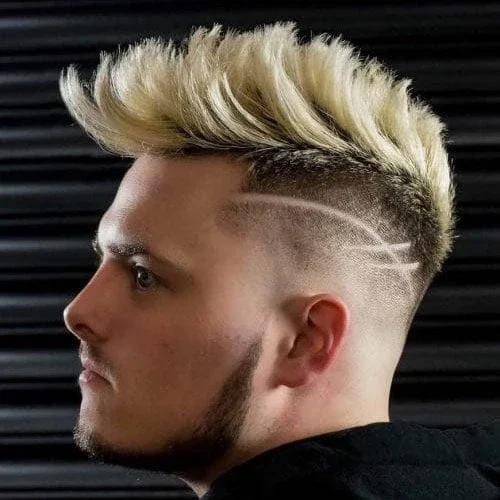
Idea 14
Fine Side Curves With a Pale Crest
A pale pointed crest rises above fine curved side lines. The design stays lighter and narrower than the broad dark panels used in several other examples.
- Shape
- Fine curved side lines
- Detail
- Pale pointed top
The closely cut side makes the curves visible near the temple. The top color creates a separate contrast above the linework, adding height as well as surface detail.
Wearability note: Choose the thin curved pattern if you prefer less filled-in shading. Compare the crest height separately, since the same side design could frame a lower top.
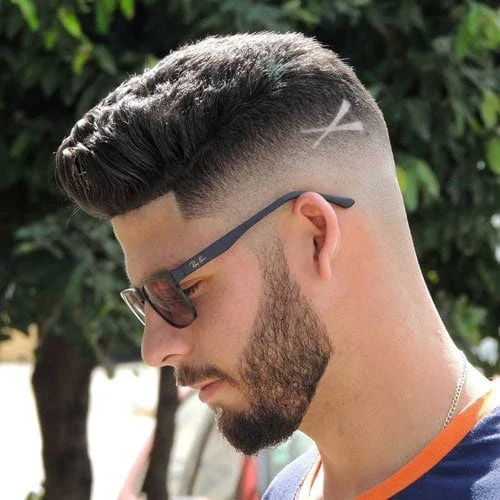
Idea 15
Small Crossed Lines Above a Fade
A small pair of crossed lines sits above the fade beneath a raised dark front. The limited design area leaves much of the side plain.
- Shape
- Small crossed lines
- Detail
- Raised dark front
The glasses and beard are separate from the haircut. The linework remains visible just behind the temple, making placement more important than the size of the overall motif.
Wearability note: Choose this if you want one small focal point beside a fuller top. Check its position relative to your glasses before deciding where a similar detail should sit.
Idea 16
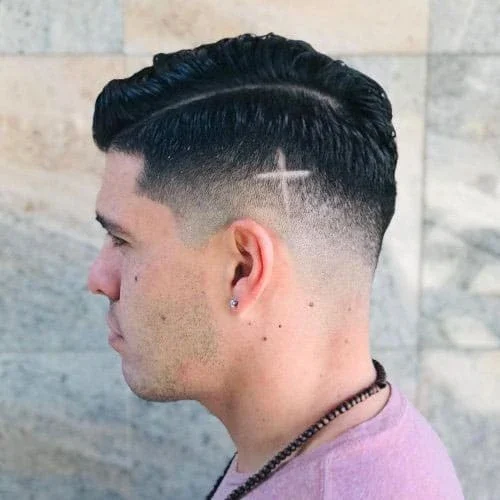
Cross Detail Beneath a Side Part
A small cross-shaped detail sits beneath a defined side part. The dark top sweeps across above a closely cut area around the ear, creating a clear frame for the mark.
- Shape
- Cross-shaped side detail
- Detail
- Defined side part
The design occupies a small section of the side rather than wrapping around the nape. The profile shows its distance below the longer upper hair.
Wearability note: Choose this if the symbol and its placement are both meaningful to you. Compare the haircut independently so the side part and length remain clear without the decorative detail.
Idea 17
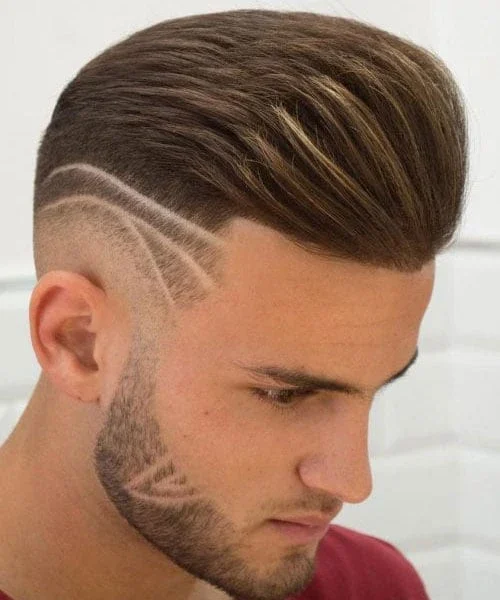
Fine Curves With a Matching Beard Detail
Fine curved lines sit beneath a smooth brown sweep, with a small related detail visible in the beard. The haircut pattern stays close to the temple rather than filling the whole side.
- Shape
- Fine curved side lines
- Detail
- Small beard linework
The longer top is directed back, leaving the curves exposed. The beard detail is optional and does not need to accompany the side design.
Wearability note: Choose this for its narrow curved linework. Discuss the hair and beard areas separately, especially if you prefer to keep the pattern limited to the haircut.
Idea 18
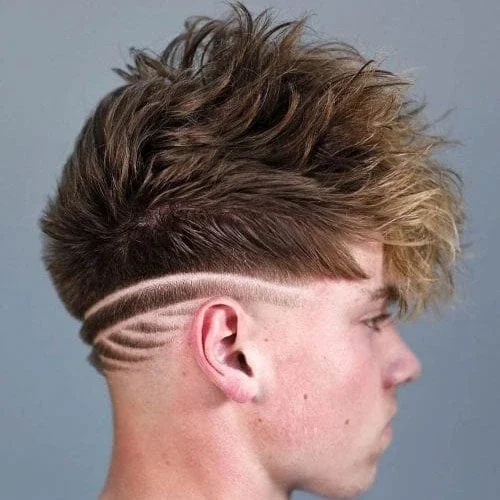
Layered Curves Behind the Ear
Layered curves wrap behind the ear beneath a long textured top. The design follows the lower side toward the nape, making the rear profile especially useful.
- Shape
- Layered rear curves
- Detail
- Long textured top
The upper hair has more movement than the closely combed examples. The pale linework creates a defined lower boundary beneath that looser, irregular texture.
Wearability note: Choose this if you want detail visible from the side and back. Keep the ear area in your reference so the spacing between the curves and the longer top is clear.
Bring the angle that explains the pattern
A front photograph can hide a design behind the ear or at the nape. Save the angle that shows the full layout, then use another view to explain the haircut around it.
Ask your barber about keeping the edges defined as the cut grows. The photograph records a fresh finished moment and cannot establish exactly how long the same contrast will remain visible on your hair.

About the author
Bella Ross
Bella Ross is the hairstyle editor behind Latest Easy Hairstyles. She curates practical haircut, braid, color, and styling ideas with a focus on looks that are easy to browse, realistic to recreate, and useful for everyday hair decisions.