
Before you choose
Choose the direction of the fade
Decide whether blue belongs near your face, mainly through the ends or across most of the length. Show the whole gradient to a colorist, together with your current color history; a reference photo cannot determine the safe lightening process for your hair.
The hairstyle gallery
Follow the blue transition
Blue can be the lower color or the starting point of a fade. The notes distinguish those directions and name visible purple, green and icy sections.
Idea 01
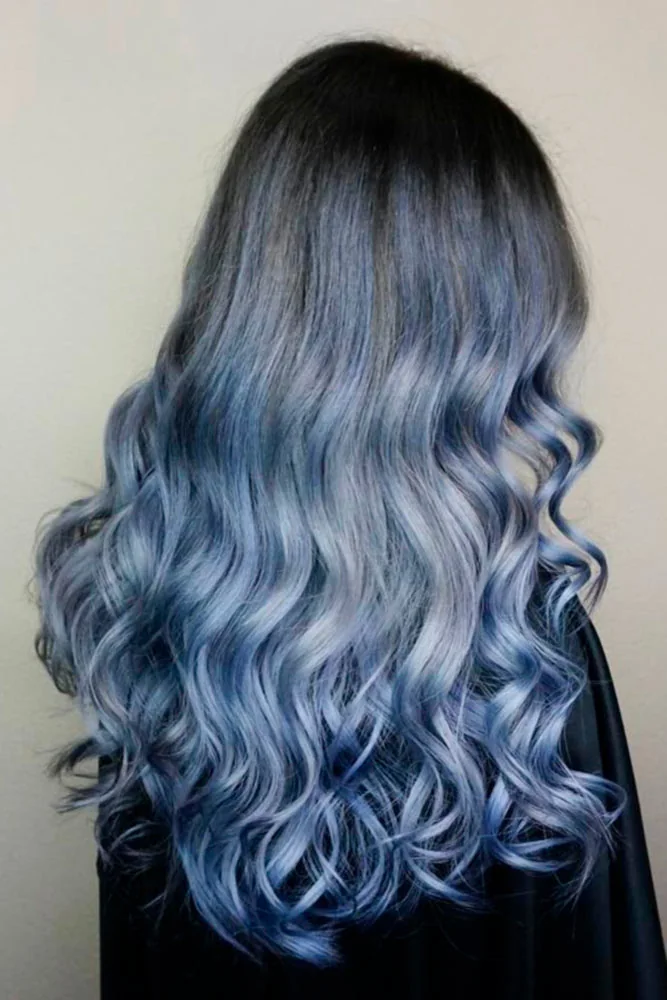
Dark Crown Into Denim Curls
The crown stays dark before muted denim-blue becomes visible through the long curls. This is a lower-color placement rather than a bright blue scalp, with the deeper upper area providing the main contrast against the softer cool ends.
- Roots
- Dark crown
- Ends
- Muted denim blue
Large curls overlap through the lower back and expose lighter blue on their outer curves. The transition is gradual, and darker strips remain inside the waves, preventing the pale lower section from appearing as one solid horizontal block.
Wearability note: Save where the denim begins as well as its muted tone. If you wear your hair straighter, ask to compare the blend without curls; the repeated bends can make a gradual transition look more broken into ribbons than it is.
Idea 02
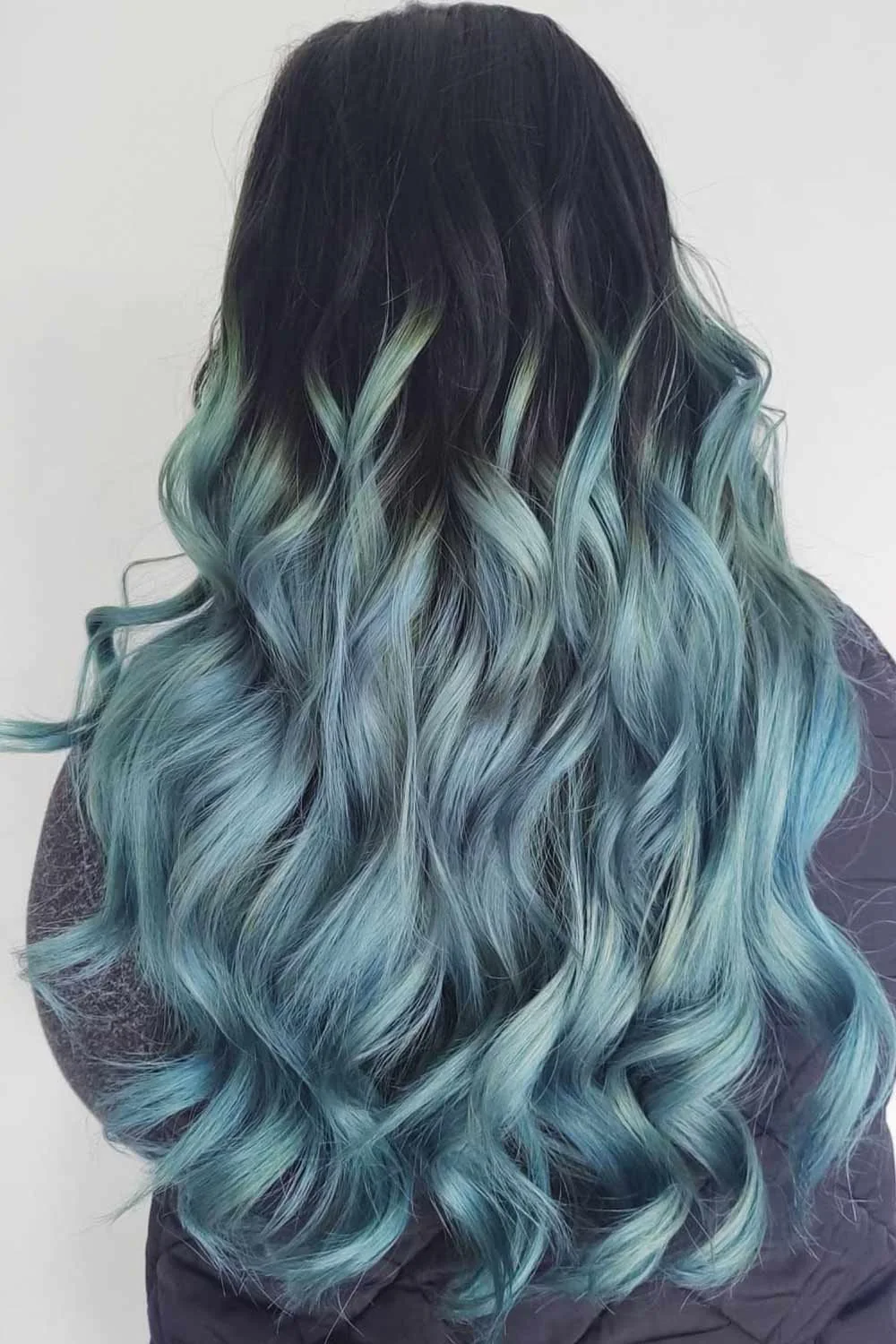
Dark Roots With Smoky Blue Waves
The darker upper hair shifts into smoky blue-gray through most of the lower length. The palette is muted rather than electric, making this a useful comparison if bright cobalt would feel too strong near your face or ends.
- Roots
- Dark depth
- Lower
- Smoky blue gray
Broad waves spread across the back and reveal blue on the curved surfaces. The shaded folds stay gray and deeper, while the lightest lower sections have a soft icy cast instead of a saturated neon impression.
Wearability note: Choose this for a subdued cool fade with clear root depth. Discuss the tone in ordinary light as well as bright salon lighting, and show the shaded portions to your colorist so the plan does not become much brighter than the reference you like.
Idea 03
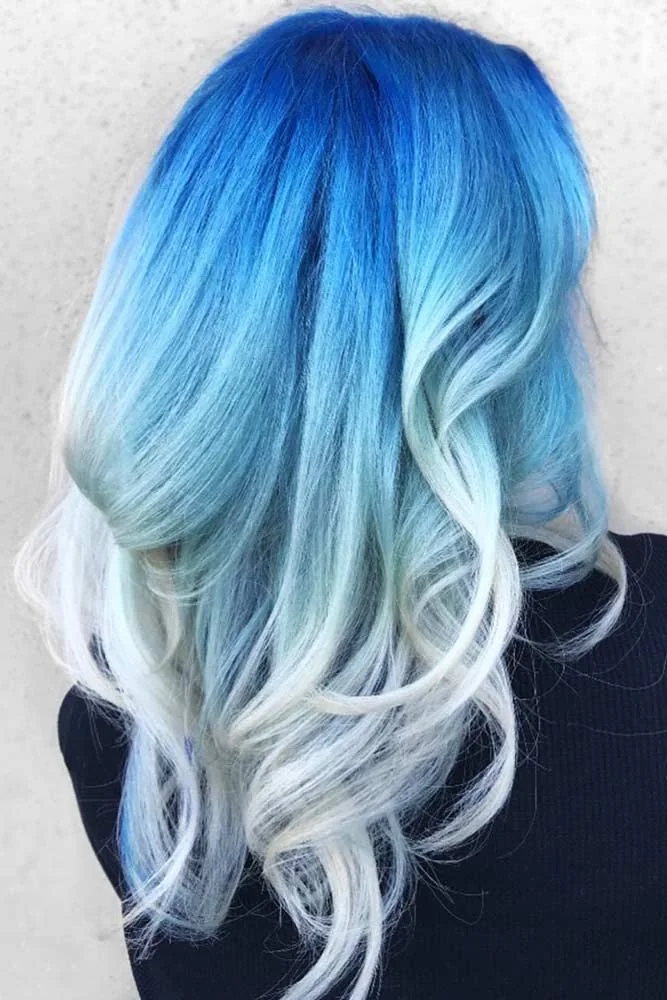
Bright Blue Fading Into Ice
Bright blue starts high and becomes much paler toward the ends. This reverses the dark-root-to-blue arrangement: the saturated hue is the upper feature, and the lower length moves toward an icy, almost silver-looking finish.
- Upper
- Bright blue
- Ends
- Pale icy fade
The side-back view shows broad blue curves above lighter waves. The transition stretches through several bends instead of ending at one sharp line, and the palest sections continue into a softly separated lower outline.
Wearability note: Save this when you want blue close to the upper head with a light bottom. Tell your colorist how pale the ends should look, and discuss your starting color and hair condition rather than assuming the photographed brightness is achievable in one service.
Choose your direction
Want a darker upper area?
Start with the denim, rooted teal-blue and dark-to-cobalt examples.
Prefer a pale bottom?
Compare blue-to-ice waves and the blue-to-pale braided reference.
Like another vivid hue?
The green and purple-ended examples show blue as part of a multi-color transition rather than a single-color fade.
Idea 04
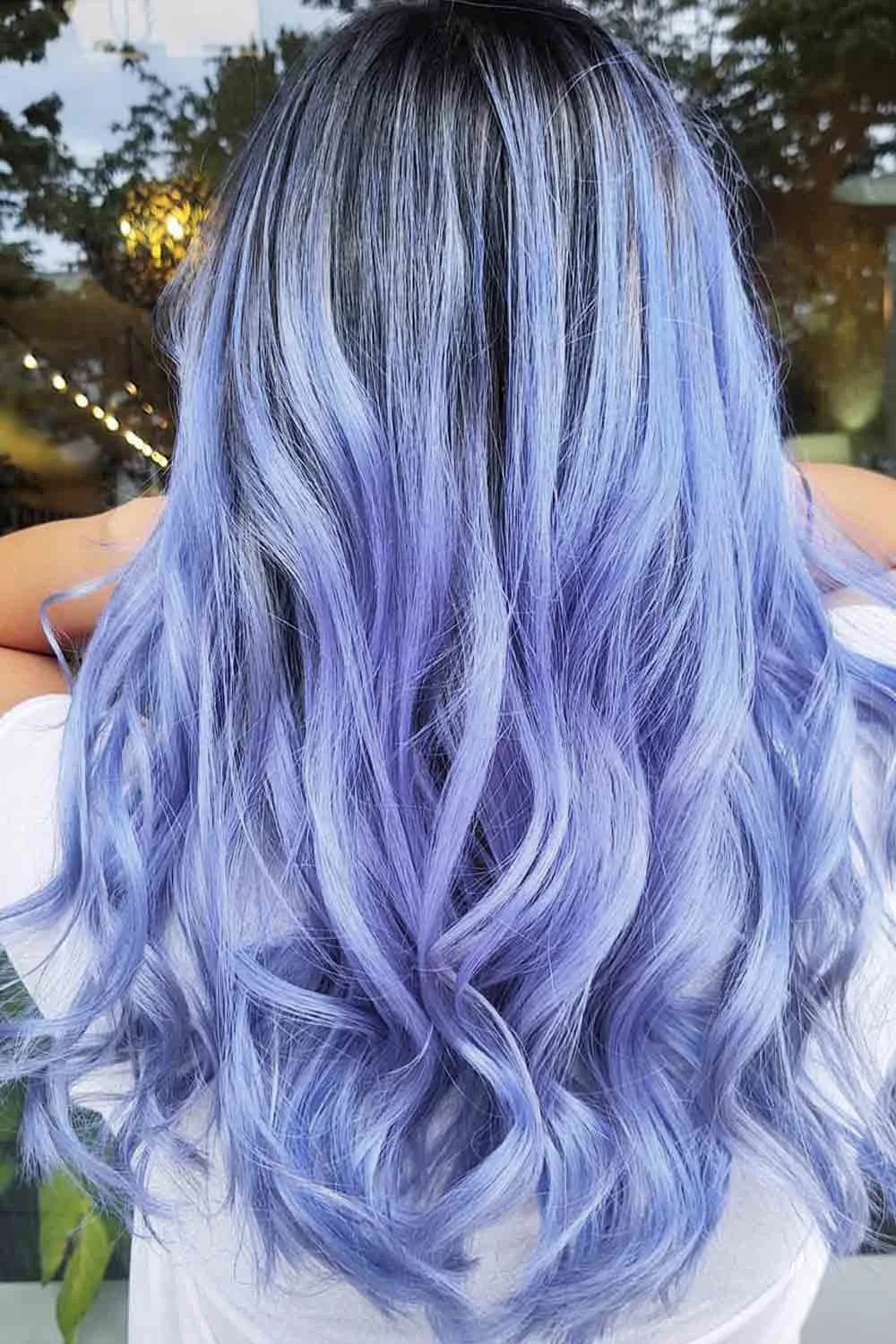
Smoky Roots Into Pastel Blue
A smoky darker root transitions into pale blue-lavender through the length. The lower color is softer than cobalt, with a lavender influence that makes the palette different from the greener smoky-blue reference elsewhere in the gallery.
- Roots
- Smoky depth
- Lower
- Pastel blue lavender
Large loose waves expose bright pale panels beside darker folds. The color change begins above the lower curls, keeping the upper depth visible while allowing much of the flowing length to carry the pastel impression.
Wearability note: Choose this if the pale cool blend appeals more than a vivid blue block. Name the lavender influence during a consultation, and bring the full photo; cropping to one bright end could make the reference look like a very different icy blonde.
Idea 05
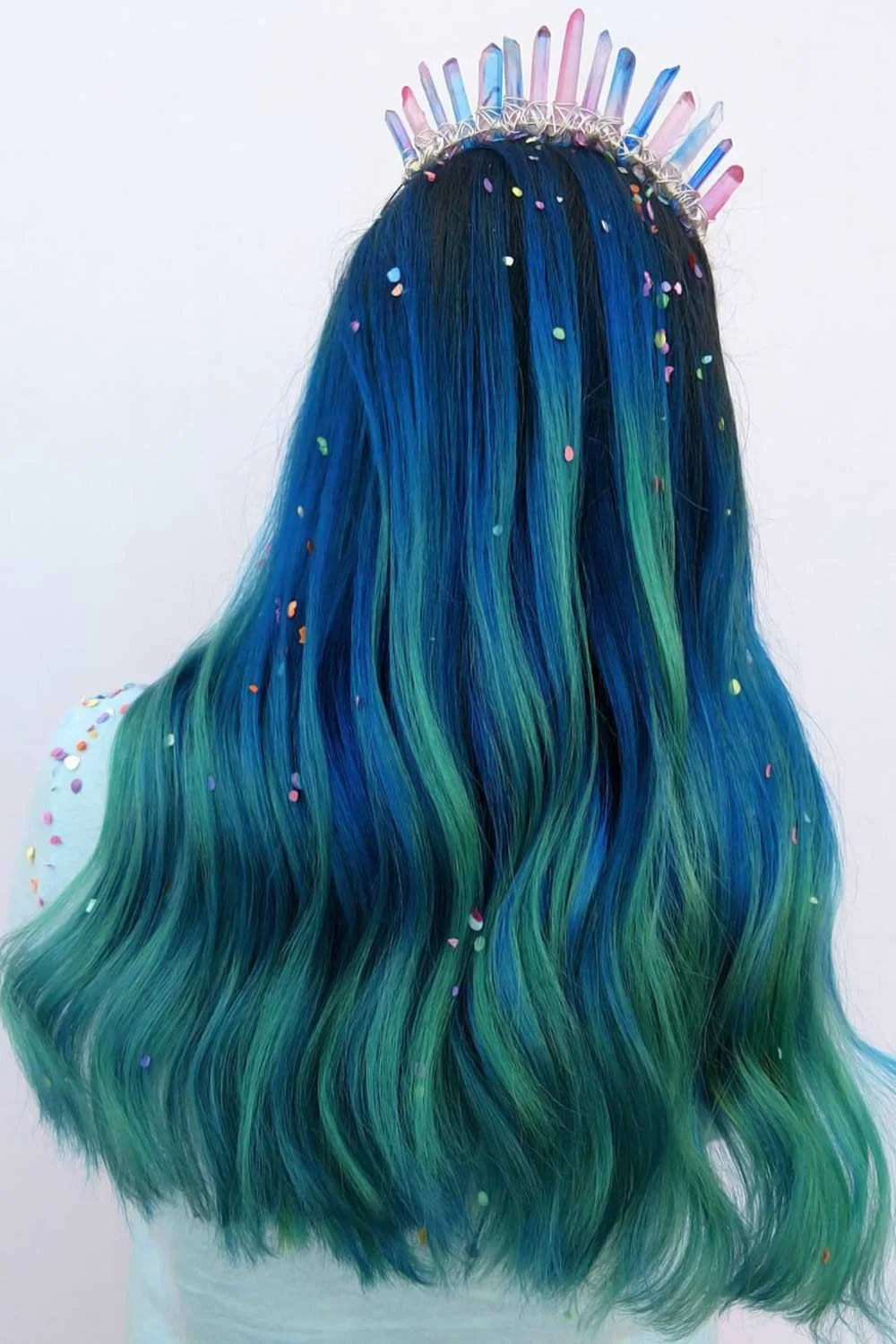
Blue Lengths Into Green Ends
Blue covers much of the length before green becomes stronger toward the bottom. The decorative headpiece is separate from that color route, so this is a blue-to-green transition reference rather than a requirement to copy the photographed styling.
- Upper
- Blue
- Ends
- Green transition
The back view shows long loose waves with blue through the upper curves and greener shaded ends. Small reflective details sit near the crown, but the color change remains visible across the lower width of the hairstyle.
Wearability note: Save this if you want blue to lead into green instead of pale ice or purple. Discuss the proportion of each hue independently of the headpiece, and ask how the blend should look when the hair is worn smoothly or gathered in your usual way.
Idea 06
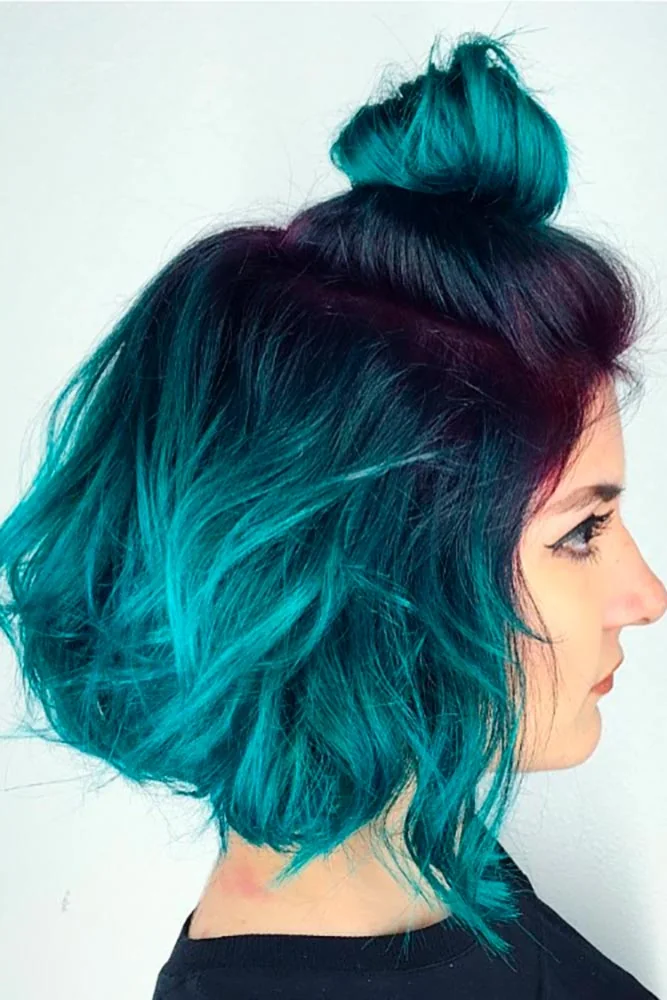
Dark Bob With Turquoise Ends
The dark upper bob contrasts with turquoise-blue through the lower sides and ends. A small half-up knot exposes the deeper root region, making the placement more obvious than it might appear with every section worn down.
- Shape
- Short wavy bob
- Lower
- Turquoise blue
Loose bends give the compact bottom a lightly separated outline. The knot contains bright turquoise at its top, showing how gathering the hair can reveal lower color in a different position without changing the underlying placement.
Wearability note: Choose this if you want a short dark-to-blue blend. Save a down-styled view too when discussing the cut, because the knot changes the silhouette and color reveal; the ombre placement does not require wearing half-up hair every day.
Idea 07
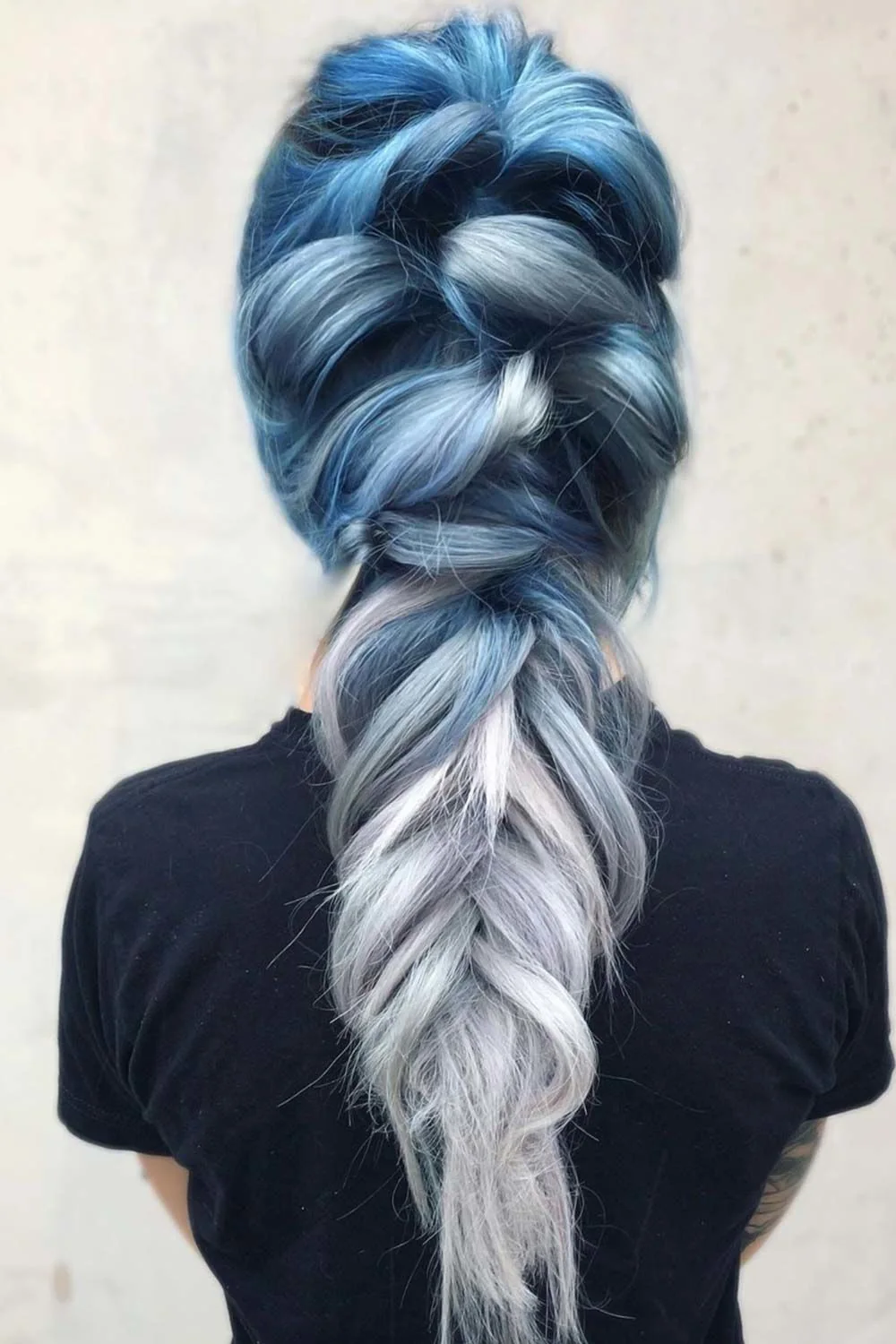
Blue Braid Into Pale Ends
A broad braid shows blue near the upper length and much paler sections below. The gradient remains visible inside the overlaps, making this a useful color reference even if the braid itself is not a style you plan to wear.
- Upper
- Deeper blue
- Ends
- Pale icy sections
The upper braid is deeper and cooler, while the lower loops become silver-blue and nearly white in the brightest areas. Fine loose strands at the edges keep the woven shape natural-looking rather than perfectly sealed or graphic.
Wearability note: Save the top-to-bottom color relationship separately from the braid width. The photograph cannot establish natural density or whether extra hair was used, so discuss your own achievable lightness and ask how the fade would look with the hair loose.
Idea 08
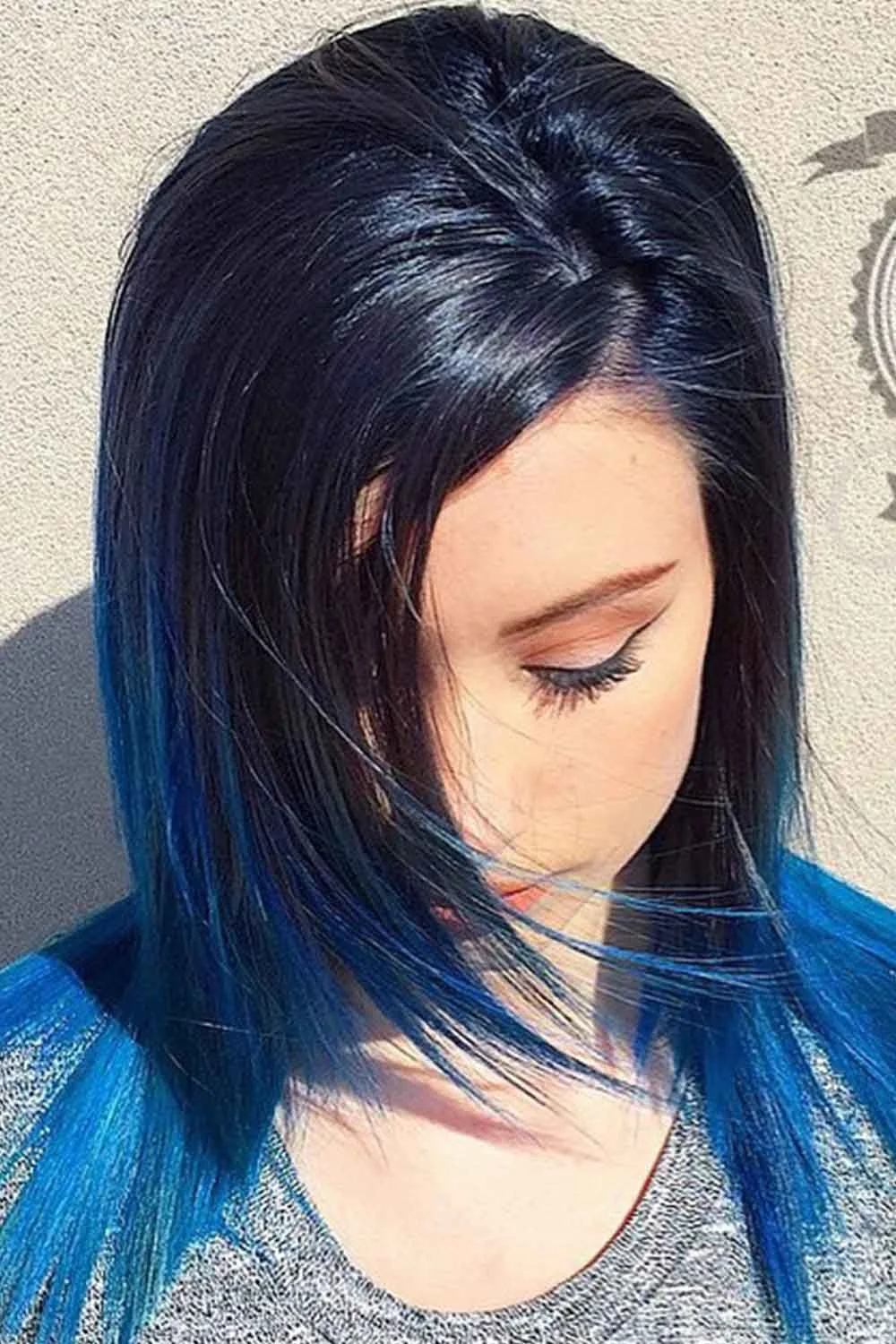
Dark Smooth Bob With Blue Tips
Blue appears mainly through the lower sections of a dark smooth bob. The upper hair stays deep, giving this a more restrained placement than the all-over vivid blue examples while keeping the cool accent close to the face-side ends.
- Roots
- Dark upper hair
- Placement
- Blue lower sections
The front panel falls past the cheek and separates lightly at the bottom. Bright light makes some upper strands reflective, but the clearer blue sits lower, where it contrasts with the darker top and simple uncurled outline.
Wearability note: Choose this if you want a subtle blue fade in a compact cut. Ask where the lower color should begin when your hair is worn straight, and confirm the front length separately; even a small trim could remove some of the visible blue section.
Idea 09
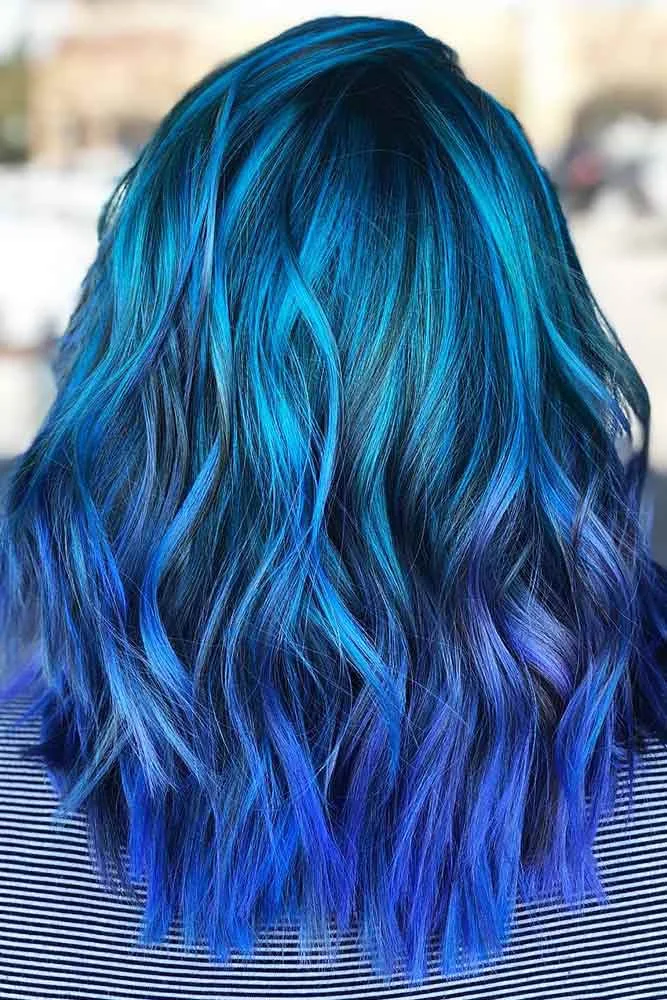
Deep Blue Waves Into Brighter Ends
The palette stays blue, but the lower section is brighter than the shaded upper area. That creates a same-family fade rather than a switch into pink, green or pale silver, with darker depth still visible near the crown.
- Upper
- Deep blue
- Lower
- Brighter cobalt
Broad waves expose cobalt on their outer curves while deeper navy remains between them. The lower outline is softly separated, and the blue becomes more conspicuous through the ends instead of appearing equally bright across every upper strand.
Wearability note: Save this if you want one blue family with changing depth. Show the whole upper-to-lower relationship, and ask to judge the shade under normal lighting; strong reflections on the curves can exaggerate how bright a blue result will look away from the salon.
Idea 10
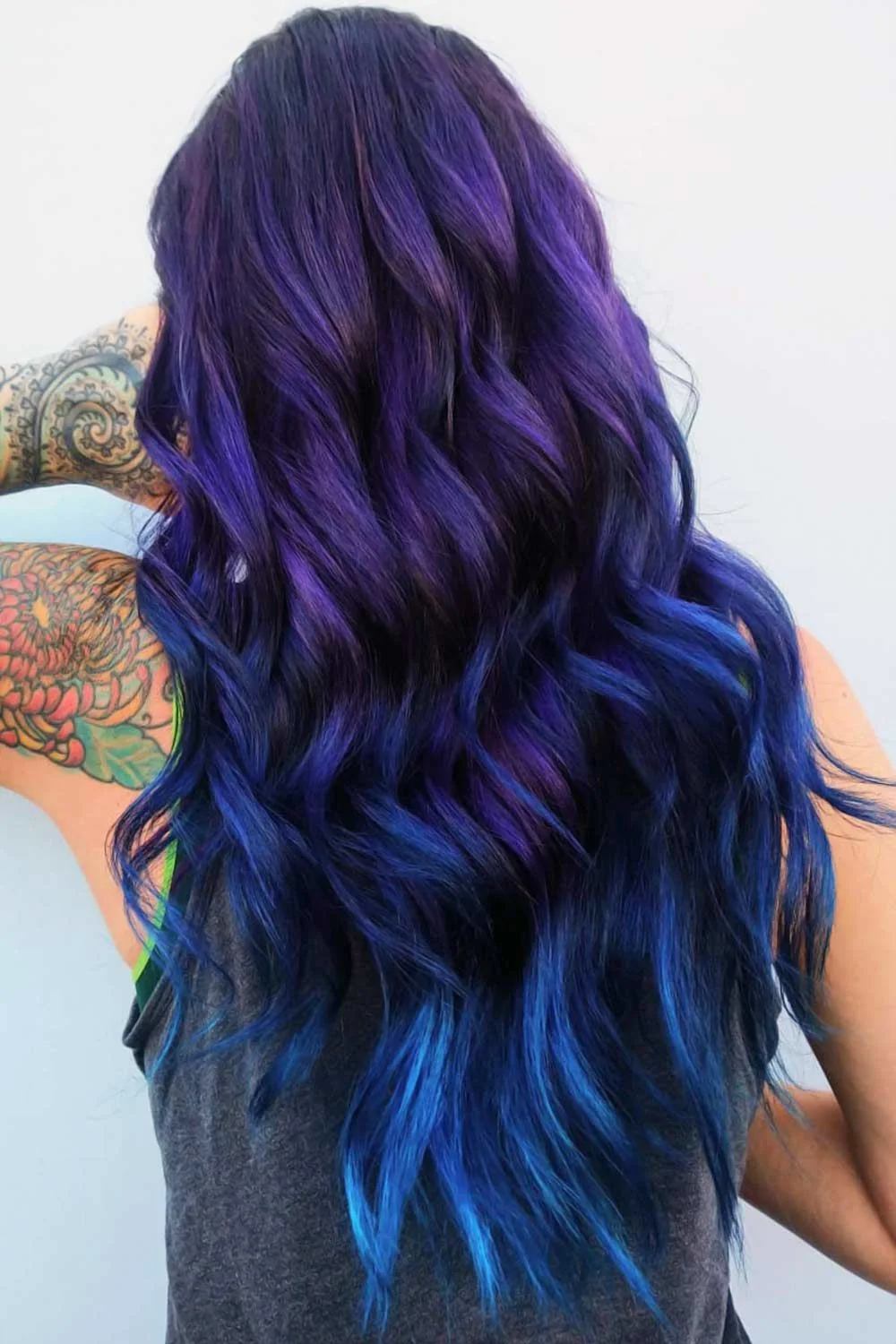
Deep Violet Into Cobalt Ends
Deep violet begins high while cobalt-blue becomes stronger at the bottom. Blue is the destination of the fade here rather than the root color, giving the long hairstyle a different route from the blue-to-purple reference elsewhere.
- Upper
- Deep violet
- Ends
- Cobalt blue
Large loose waves carry darker folds between the bright lower ribbons. The upper depth remains substantial, and the color change is gradual rather than a rigid line across the back, keeping the palette vivid without making the whole head equally bright.
Wearability note: Choose this when you want a deeper upper section with noticeable blue ends. Explain whether the violet belongs in the final plan, and discuss how much length should remain below the transition so the cobalt is still visible after a future trim.
Idea 11
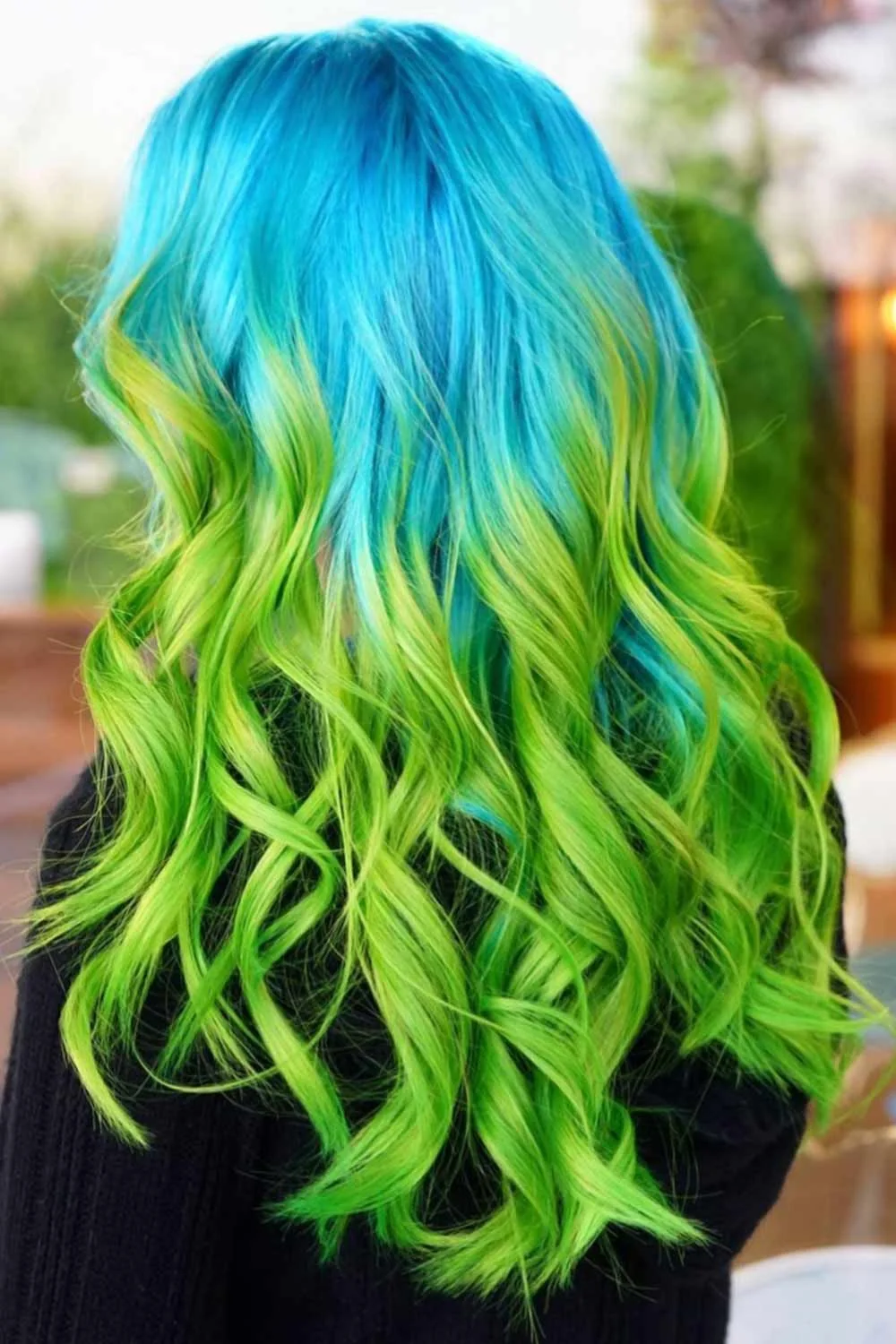
Turquoise Blue Into Lime Waves
Turquoise blue begins near the top before the lower waves turn lime green. The bright green is a substantial part of the result, so this is a vivid two-hue transition rather than a subtle blue-only ombre.
- Upper
- Turquoise blue
- Ends
- Lime green
Long curls mix a few teal sections among the greener ends, softening the change instead of forming a single clean boundary. The back view makes both color regions clear while leaving the front placement and hairline mostly unseen.
Wearability note: Save this if you want a deliberately bright blue-to-green route. Be specific about how much lime should remain at the bottom, and bring a front reference too if you need to decide which hue should sit nearest your face.
Idea 12
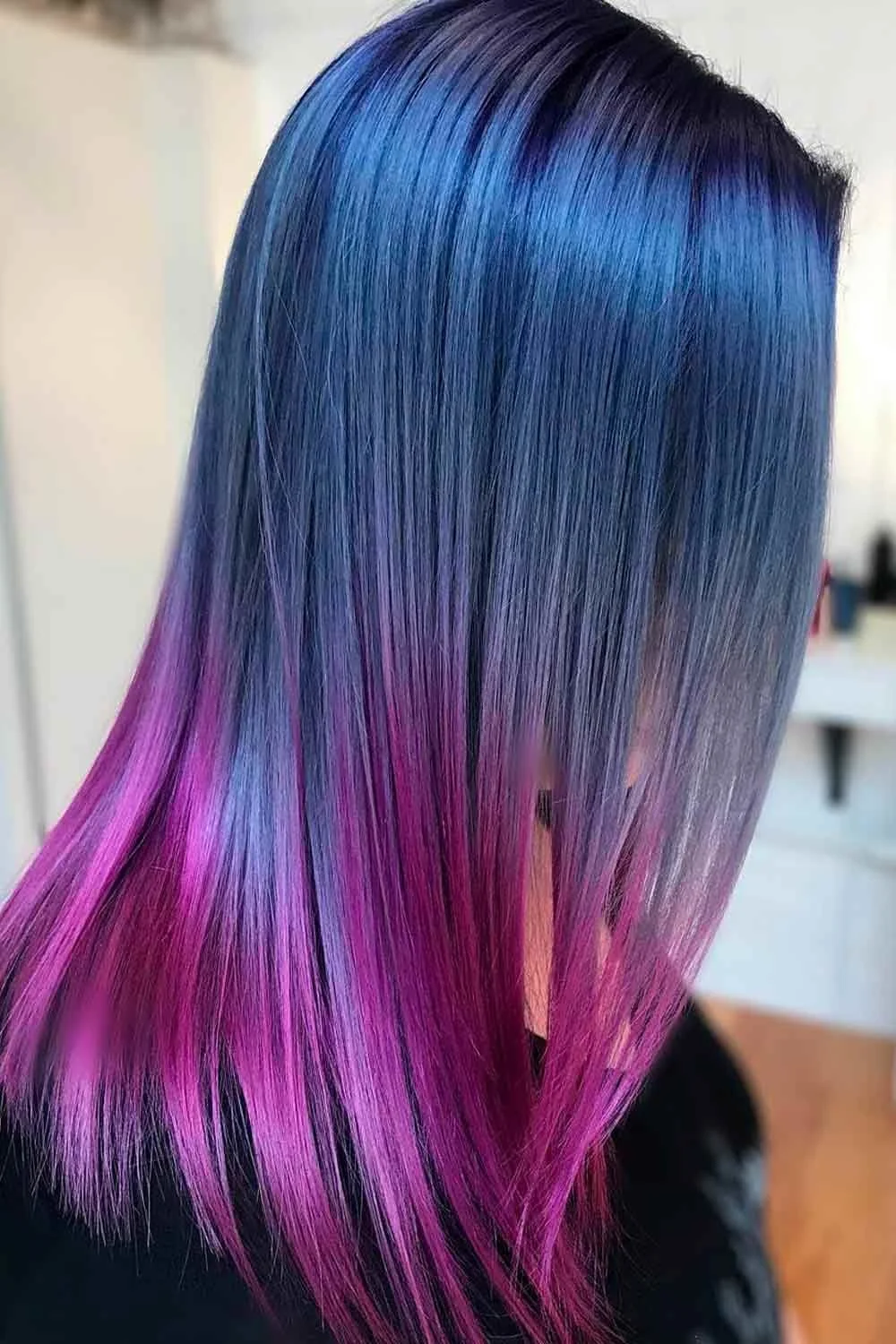
Blue Upper Hair Into Magenta Ends
Blue occupies the upper length before magenta-purple takes over near the bottom. The smooth finish shows a relatively clear transition, with the warmer lower color creating more contrast than the same-family denim or cobalt fades.
- Upper
- Blue
- Ends
- Magenta purple
The side view displays broad panels with only a small curve near the ends. Fine vertical differences remain through the blue, while the purple-pink section extends across the lower edge rather than appearing as one narrow isolated highlight.
Wearability note: Choose this if the warmer ends are a feature you want to keep. Discuss where the transition should begin on your own length, and ask to see the color with your usual part; the side photograph does not show the full front or opposite side.
Idea 13
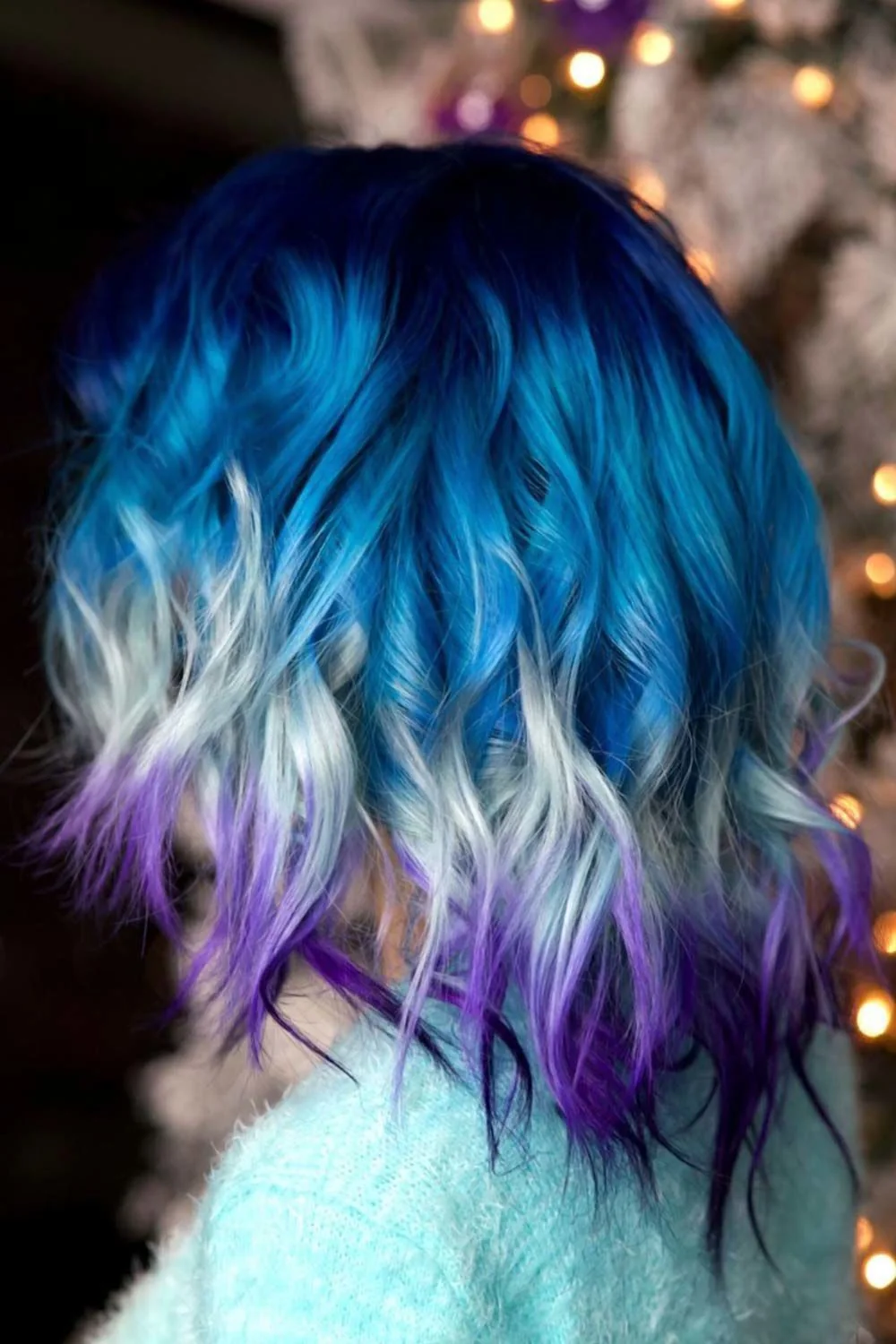
Blue Bob With Ice and Violet
Deep blue leads into pale icy sections before violet appears at the lowest ends. This is a three-stage color route, with the pale middle acting as a strong contrast between the darker upper hair and warmer purple bottom.
- Placement
- Three-stage fade
- Shape
- Wavy bob
Small irregular waves spread the colors across a compact bob. The bright icy panels are most visible on the outer bends, while violet gathers around the lower edge, giving the short shape more than one simple top-to-bottom boundary.
Wearability note: Save all three regions if you like this palette. Tell your colorist that the pale middle matters, since omitting it would create a different blue-to-purple blend; confirm the bob length too so there is enough room for the planned transitions.
Idea 14
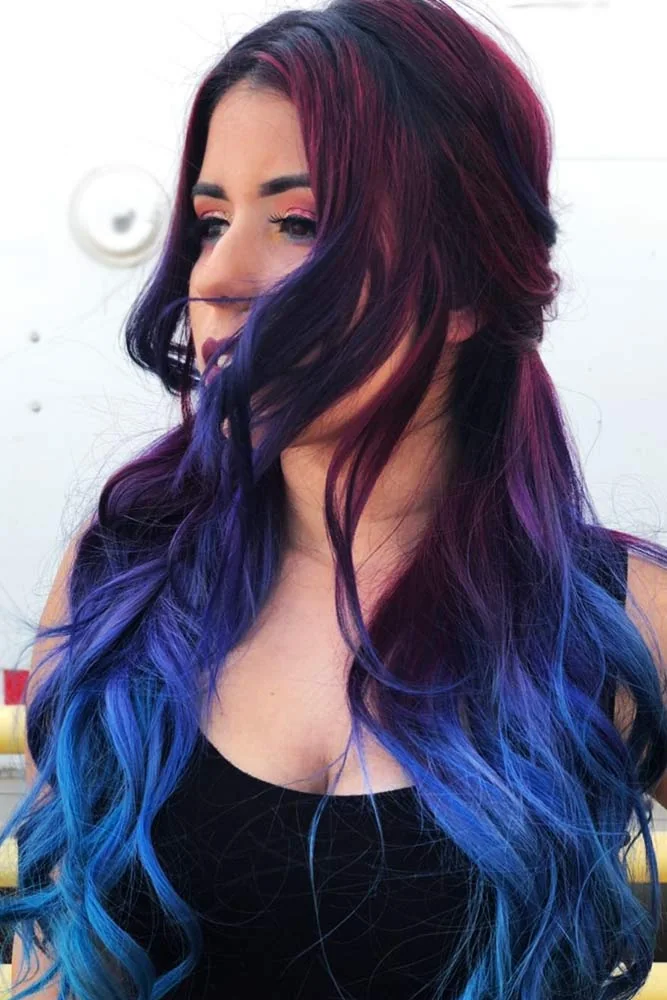
Dark Berry Into Blue Curls
Dark berry-purple stays near the upper hair while blue becomes clear through the lower curls. The deeper front frame is part of the look, making this a lower-blue placement rather than an equally bright blue surface from root to tip.
- Upper
- Dark berry purple
- Ends
- Vivid blue
Loose long curls expose saturated blue around the chest-level lengths. Several dark sections remain between them, and the warmer upper hair contrasts with the cooler bottom instead of blending into a uniformly violet result.
Wearability note: Choose this if you want vivid ends beneath a darker face frame. Save where the blue begins and how much dark length remains above it, and discuss the palette in ordinary light; the strong salon illumination makes the lower color particularly conspicuous.
Idea 15
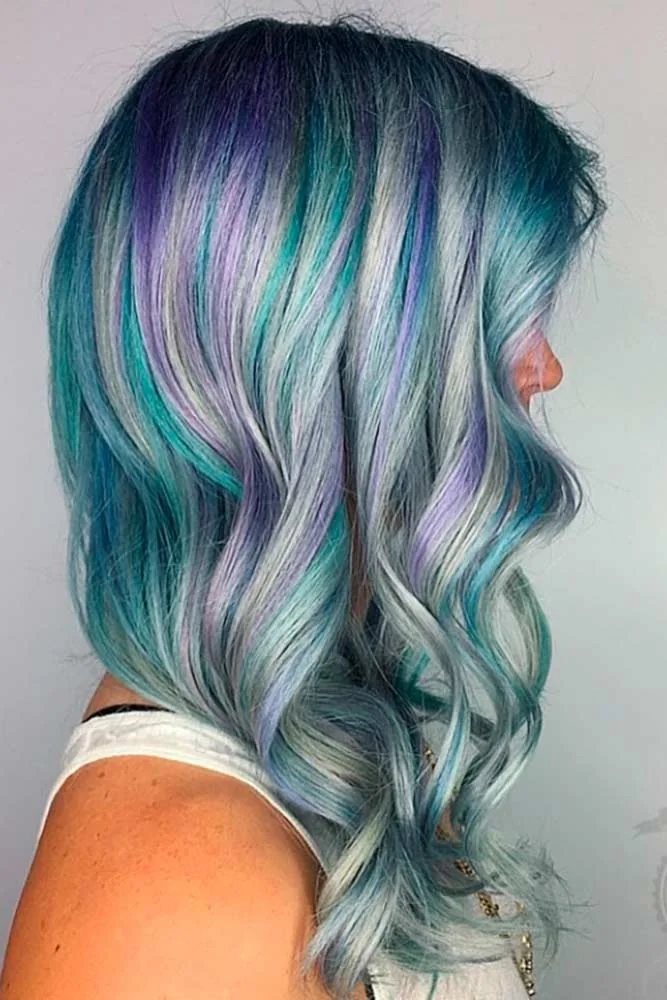
Dark Teal Into Icy Pastel Waves
A dark teal upper area gives way to pale icy blue-lavender sections through the lower waves. The palette is softer than a saturated cobalt fade, with green-teal depth still visible between some of the lighter curves.
- Upper
- Dark teal
- Lower
- Icy blue lavender
The side view shows broad bends and separated ends around the shoulders. Pale reflective panels alternate with cooler shaded strips, so the lower color is mixed rather than a completely uniform white or blue block.
Wearability note: Save this as a muted multi-tone fade reference, not a precise shade formula. Discuss how much teal you want preserved and compare the shaded portions with your colorist; a crop of only the brightest strands would miss the darker structure that makes the blend distinctive.
Specify where the transition starts
A fade beginning near the cheek creates a different impression from blue confined to the lowest ends. Mark that placement in your reference so a vivid shade name does not replace the more important proportion decision.
Read the shaded sections
Bright salon lighting can make pale blue look nearly silver. Compare the darker folds and upper hair as well as the brightest curl, and discuss the desired palette under normal indoor light.

About the author
Bella Ross
Bella Ross is the hairstyle editor behind Latest Easy Hairstyles. She curates practical haircut, braid, color, and styling ideas with a focus on looks that are easy to browse, realistic to recreate, and useful for everyday hair decisions.