
Before you choose
Decide how much brown to keep
Caramel is a useful description of warm golden-brown lightness, not a fixed shade number. The references here range from a few warm accents on deep brown hair to a much brighter lower half.
Choose the amount of contrast before choosing an exact tone. For overall brown color rather than highlight placement, compare our light brown hair color ideas.
The hairstyle gallery
15 ways to place warm highlights
Look at where the lighter strands begin, how wide they are and how much brown remains between them. These photographs show the result, not the exact coloring method or formula.
Idea 01
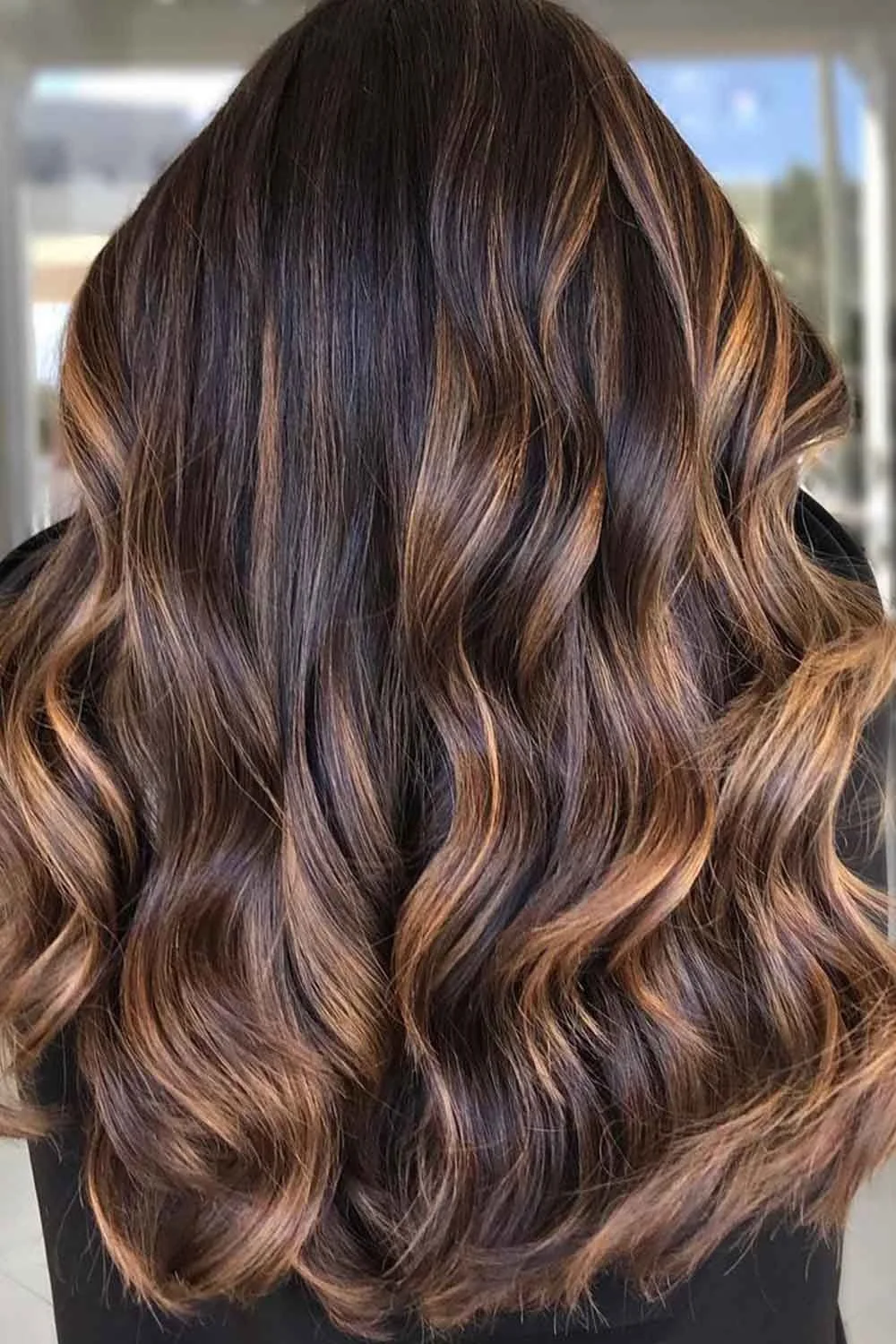
Warm Ribbons Through Deep Brown Waves
The dark background remains visible between the lighter curves, keeping the overall effect brunette.
- Base
- Deep brown
- Detail
- Warm ribbons
- Finish
- Broad waves
Long hair falls into broad waves with small separated ends. The warm strands appear most clearly on the outward curves and through the lower lengths, rather than forming one pale block. Brown remains across the upper surface and between the highlight ribbons, so the lightness has a distinct rhythm.
Wearability note: Choose this for dimension without an overwhelmingly blonde result. Point out the dark spaces as well as the highlights; adding more pale strands would change the balance even if the requested warm tone stayed the same.
Idea 02
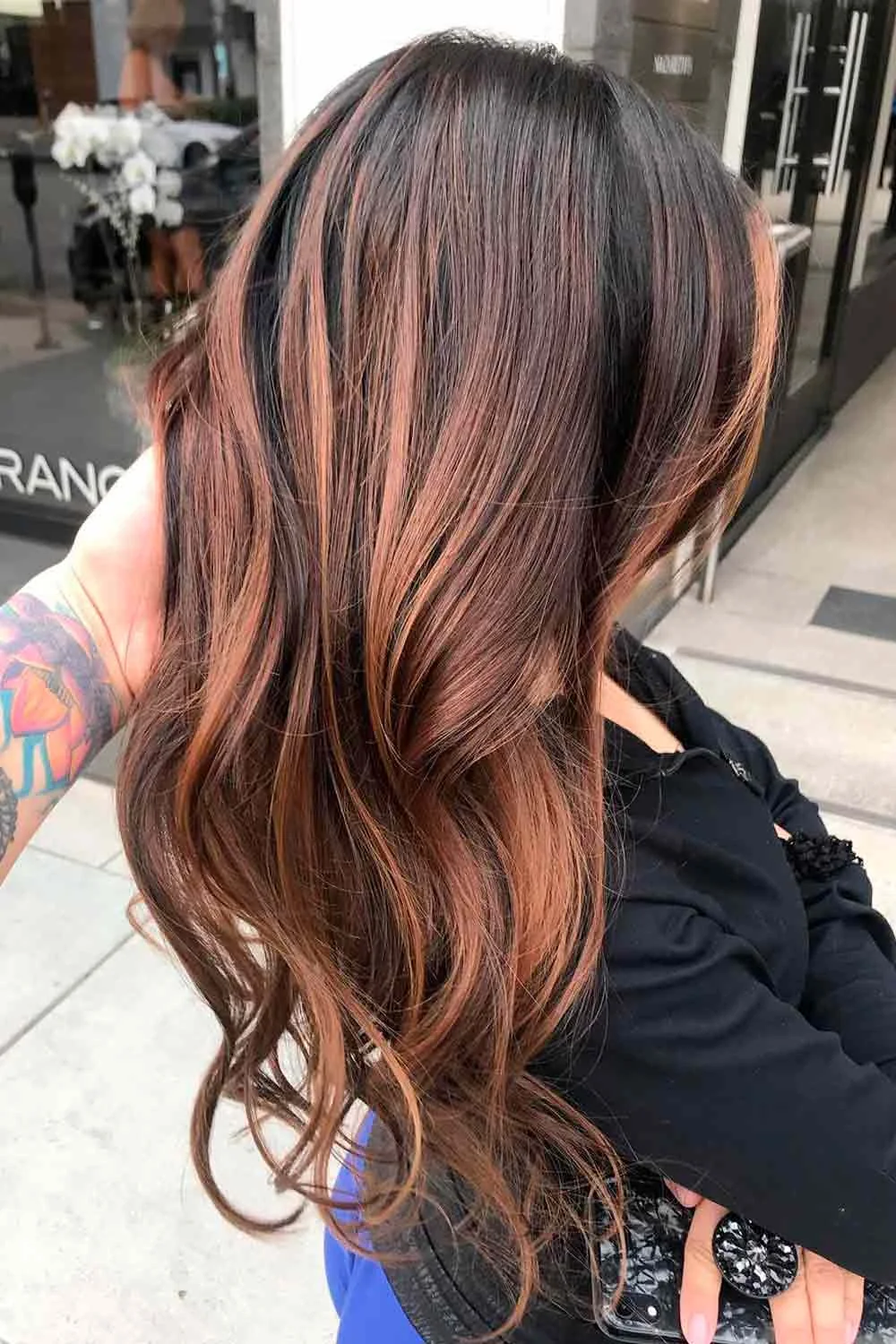
Copper-Warm Strands on Long Brown Hair
Fine warm lines travel high through the brown hair while the most obvious curl sits near the ends.
- Length
- Long
- Tone
- Copper warm
- Pattern
- Slim ribbons
The crown stays dark, with slimmer peach-copper strands visible down the upper lengths. Near the bottom, the hair bends into larger loops that expose more warmth on their outer surfaces. The lighter pieces are not evenly distributed into one bright lower band, leaving considerable brown depth throughout.
Wearability note: Use this if you prefer a warmer, copper-leaning interpretation of caramel. Bring the upper detail into the color discussion so the result is not reduced to light tips alone, and compare the tone in neutral light.
Idea 03
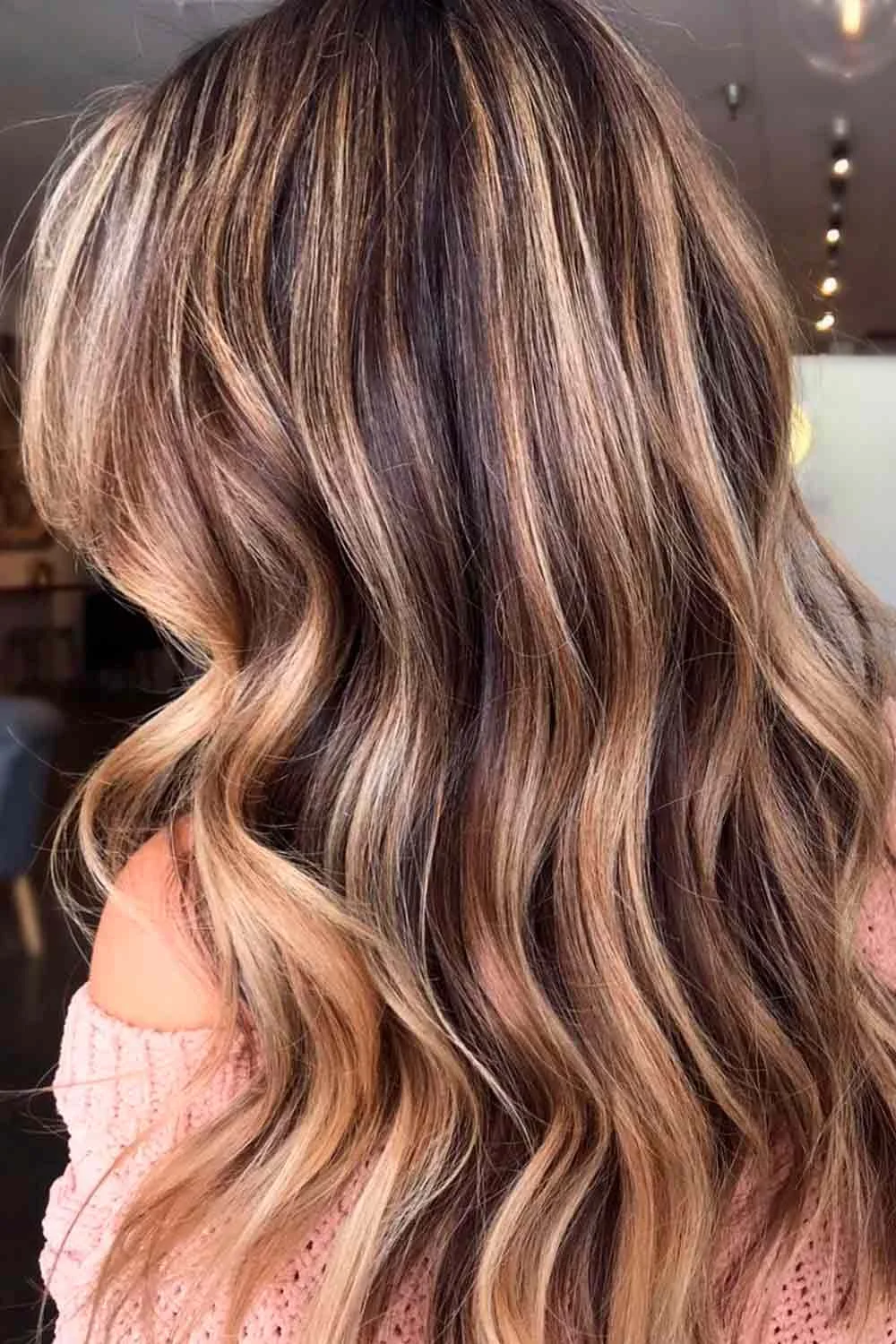
Pale Warm Ribbons on Soft Brown Waves
Lighter strands are spread through the waves rather than confined to one front piece or the tips.
- Base
- Medium brown
- Detail
- Pale ribbons
- Finish
- Soft waves
The upper hair has a medium-brown appearance with narrow pale strands passing through it. Farther down, larger bends reveal more lightness along their curves. A few deeper sections remain beneath the surface, giving the shoulder-and-longer outline variation instead of one uniform light shade.
Wearability note: Save this for a lighter brown-led blend. Ask how much brown will remain visible after the brighter sections are added. The soft pink surroundings can influence the photographed warmth, so use this mainly for placement and contrast.
Choose your direction
Subtle
Keep a broad brown background and a smaller number of warm strands.
Brighter
Compare how much of the lower half is light before requesting more highlights.
Front
Use a side view to show the width of any face-framing panel.
Idea 04
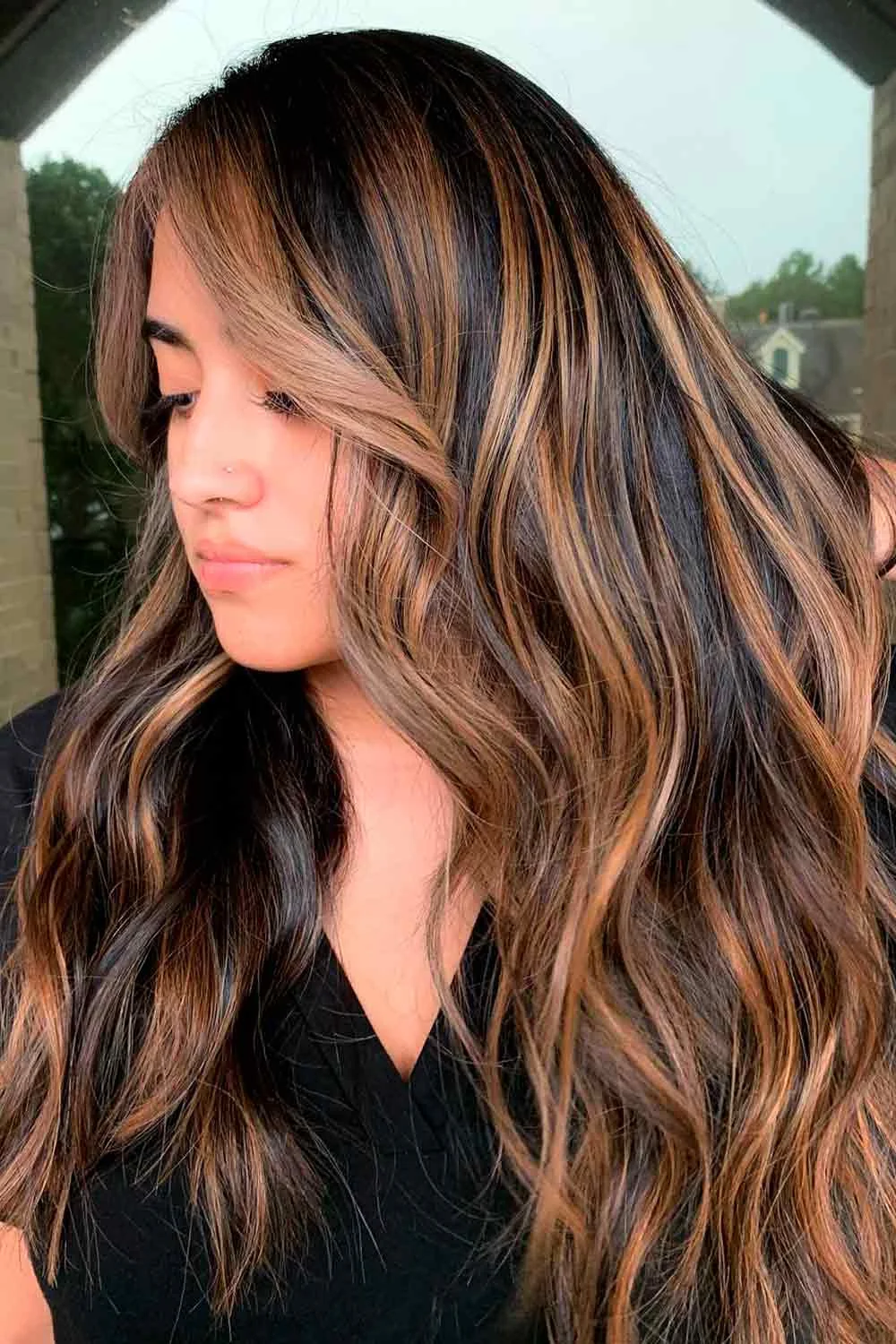
Warm Front Panels on Long Dark Waves
The brighter front pieces create the strongest contrast while dark brown remains behind them.
- Placement
- Bright front
- Base
- Dark brown
- Length
- Long
The hair opens near the center and falls in long, separated waves. Warm tan strands begin high beside the forehead and follow the bends toward the chest. Deeper brown is visible around the part and through the inner lengths, making the front panels stand out from the surrounding hair.
Wearability note: Choose this when face-framing brightness matters more than an evenly highlighted back. Show the width of the front pieces and ask how they will fall with your usual part; changing the opening moves the lightest area.
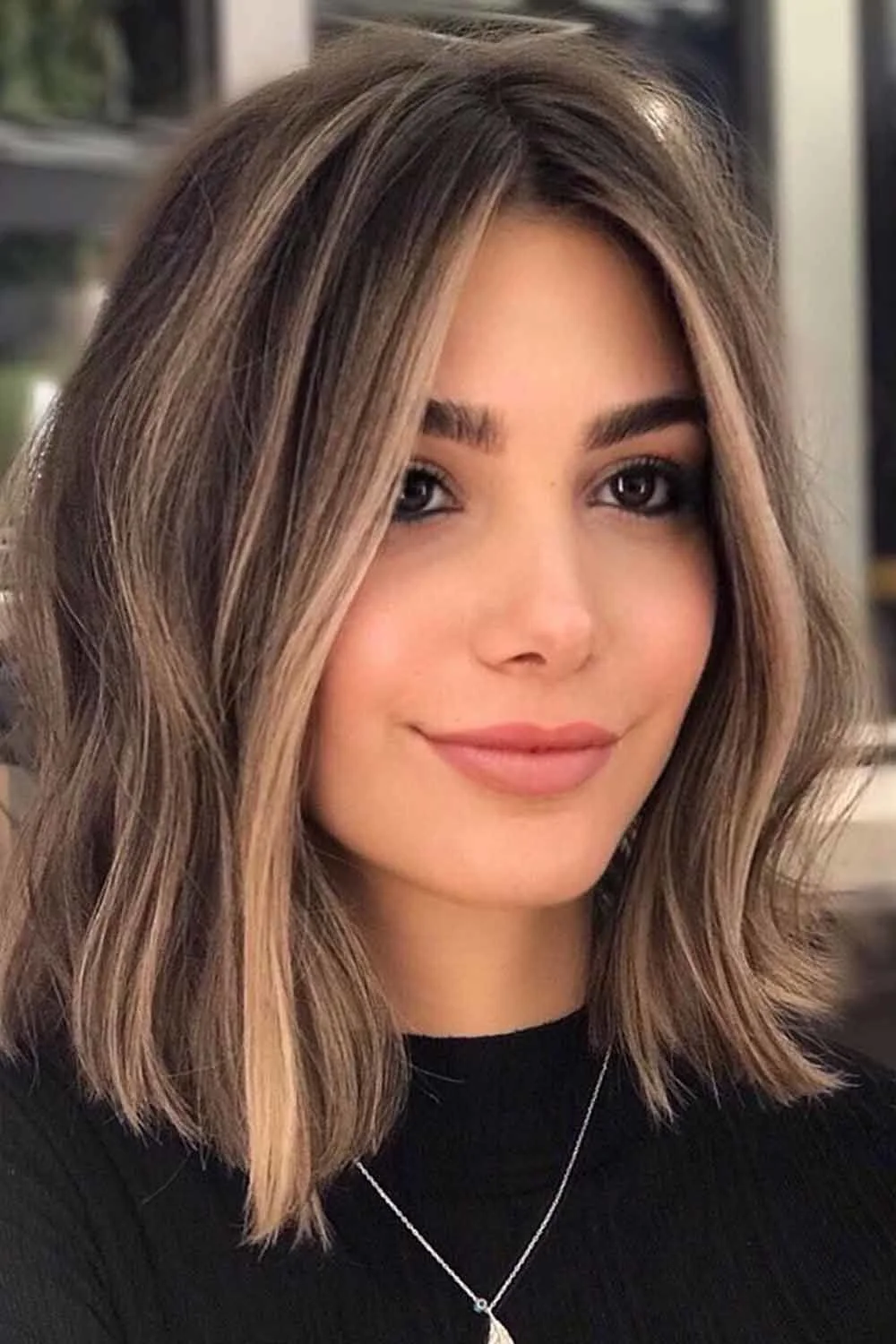
Idea 05
Warm Highlights on a Side-Opened Bob
The short outline makes the bright front area a larger proportion of the whole hairstyle.
- Length
- Bob
- Front
- Side opening
- Color
- Warm highlights
A side opening directs one longer panel across the forehead. Warm lighter strands follow that panel and continue through the sides, while the area near the crown stays deeper brown. The ends turn slightly inward around the jaw and neck, giving the color a compact, smoothly shaped setting.
Wearability note: Use this to compare warm contrast at bob length. Save another photograph if you want the color but not the side opening, and ask where the light pieces would sit on your own shorter front sections.
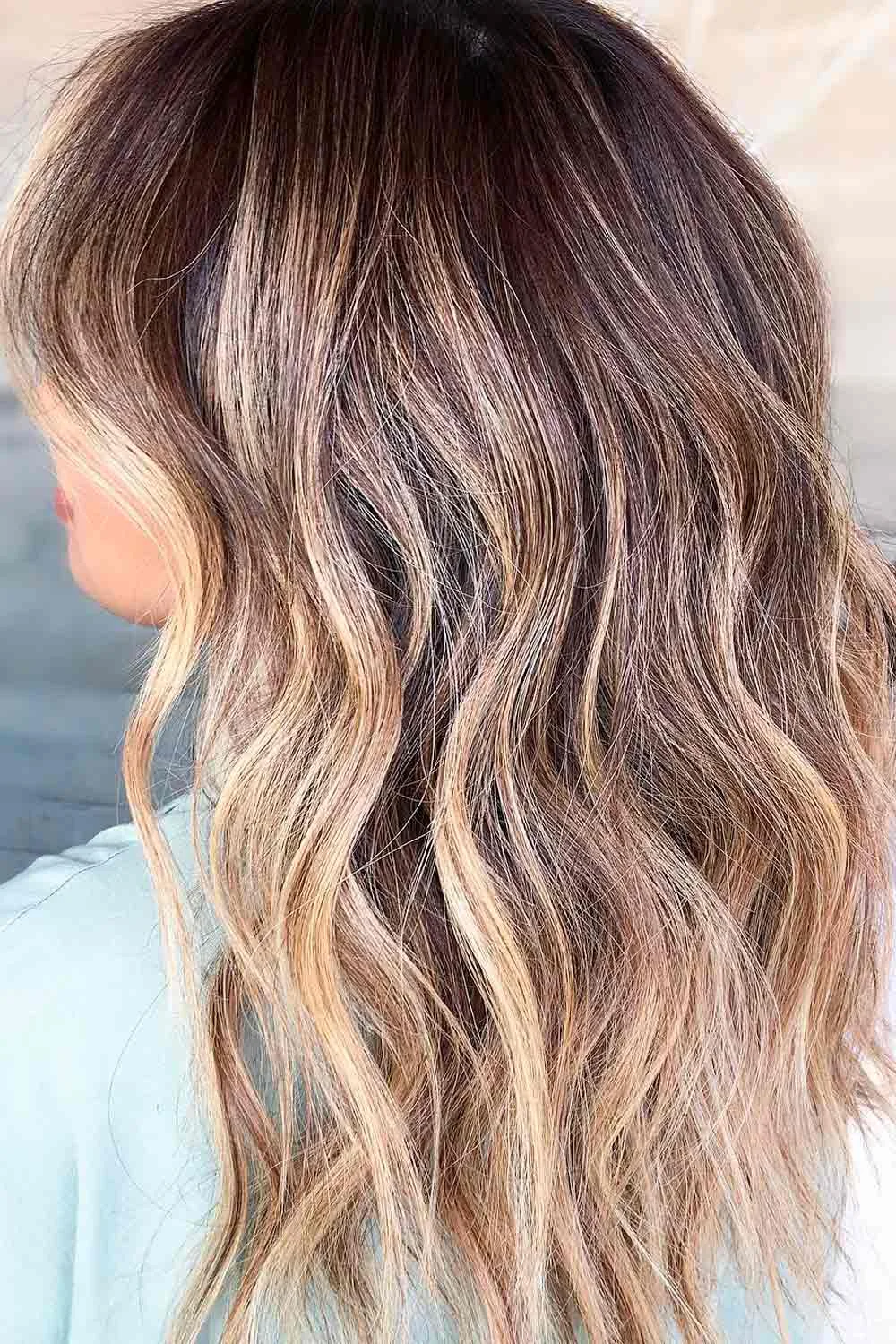
Idea 06
Brown Crown With a Brighter Lower Half
The lower lengths read noticeably brighter than the crown while brown strands continue between them.
- Top
- Brown
- Ends
- Lighter warm
- Transition
- Blended
The hair is deeper at the top and gradually shows more pale warm ribbons through the middle. Broad waves spread the lighter pieces across the lower surface, with separated ends keeping the edge irregular. The transition is mixed rather than a straight horizontal line from dark to light.
Wearability note: Choose this when you want an obvious lighter finish but a brown upper area. Discuss where the main transition should begin at your length; moving it higher would make substantially more of the hairstyle appear light.
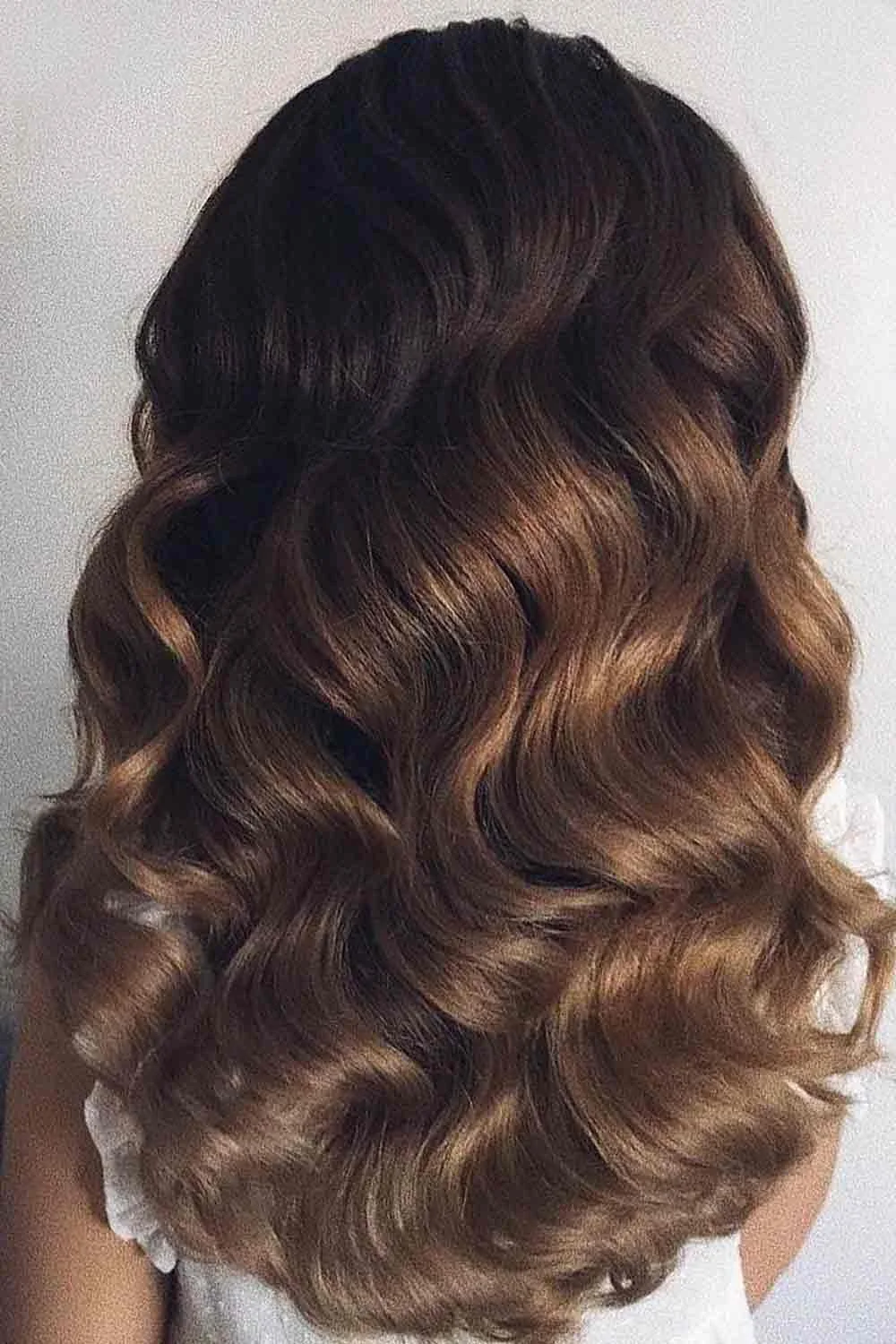
Idea 07
Quiet Golden Detail in Polished Brown Waves
The arranged waves make the subtle lighter sections visible without a strong blonde contrast.
- Base
- Brown
- Contrast
- Subtle
- Finish
- Polished waves
The upper surface looks mostly deep brown. Farther down, restrained warm lines follow the broad curves and become easier to see where the hair catches the light. The lower edge is curled inward, producing a rounded silhouette rather than a loose, straighter textured end.
Wearability note: Use this for low visual contrast, not as evidence of low upkeep. Show a daylight reference too if exact warmth matters; a glossy surface can emphasize reflection, and color alone will not reproduce these carefully arranged waves.
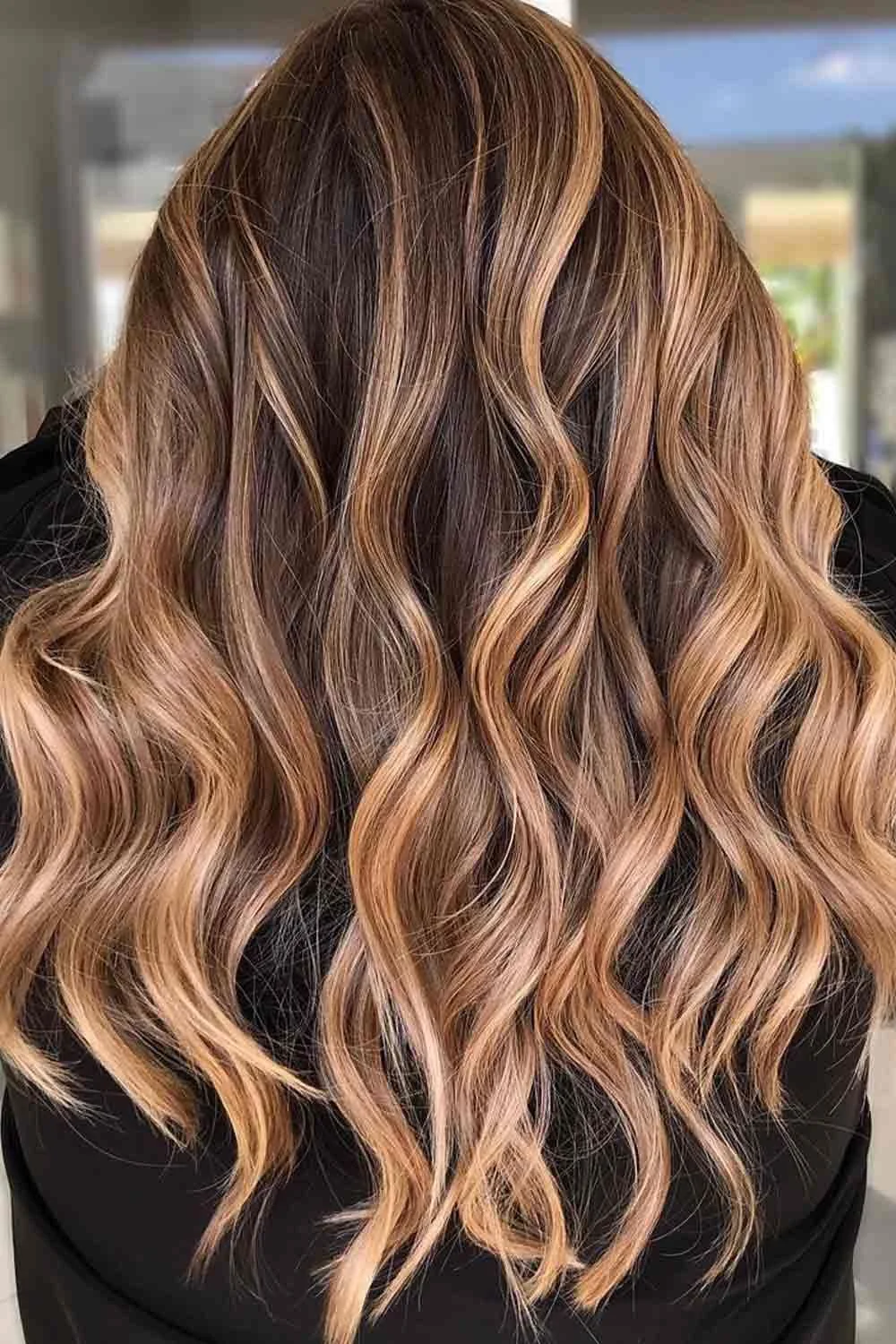
Idea 08
Golden Ribbons on Long Brunette Waves
The lightness appears as repeated curved ribbons, with a deeper brown crown above them.
- Length
- Long
- Tone
- Golden warm
- Top
- Deeper brown
Large waves open the long lower lengths into alternating light and dark sections. Golden strands are visible through the middle, becoming broader and more numerous toward the bottom. The ends are separated rather than forming a flat line, so the brighter area looks airy despite the substantial length.
Wearability note: Save this if you want clearly visible golden dimension. Compare the breadth of the ribbons with finer-highlight references, and show how much darker you want the top to stay rather than relying on the word blended alone.
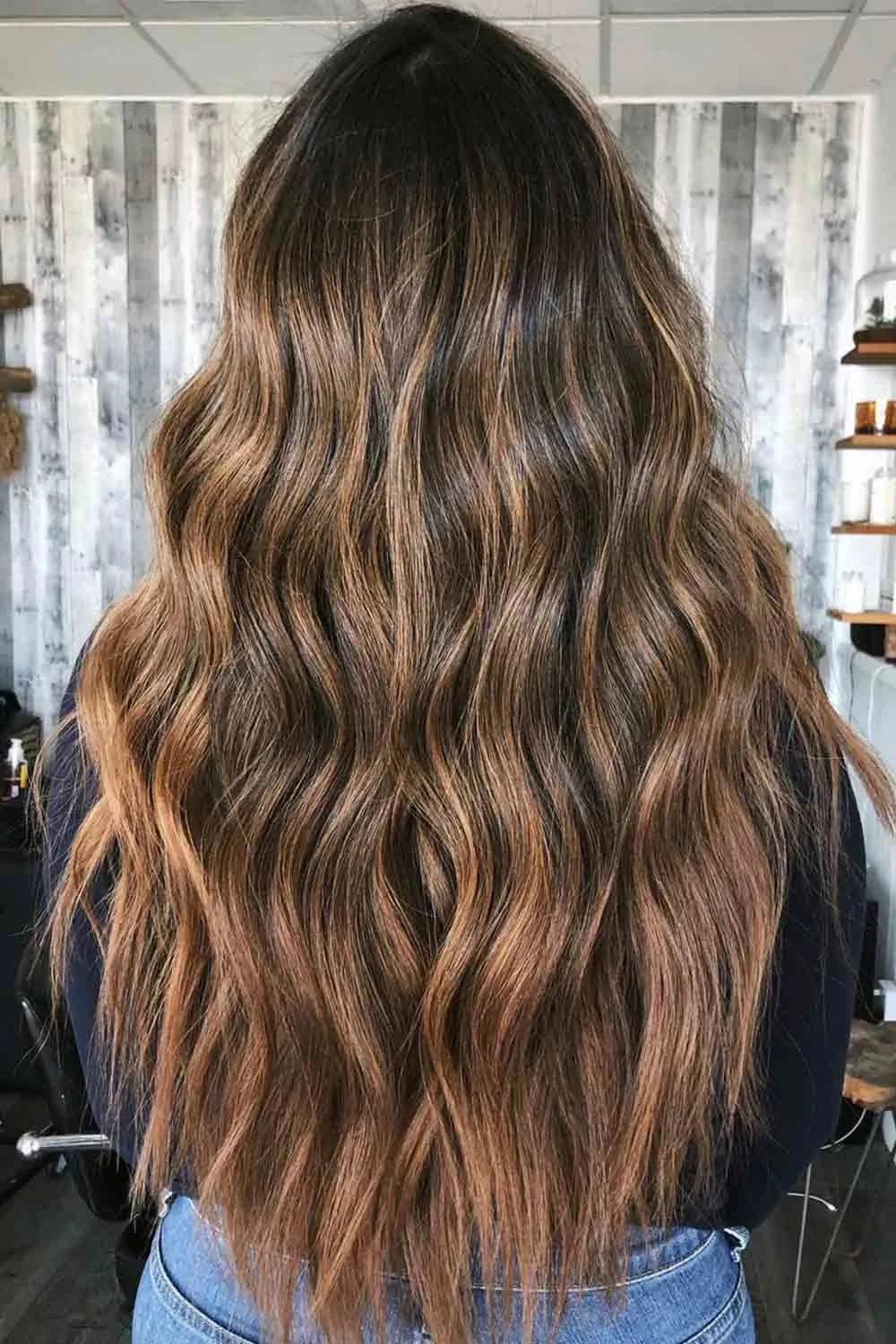
Idea 09
Fine Warm Highlights on Dark Brown Lengths
Many narrow lighter strands create a more distributed effect than a few wide highlight panels.
- Base
- Dark brown
- Pattern
- Fine highlights
- Length
- Long
The crown and upper background remain brown. Slim warm strands run down the surface and become more apparent around the loose bends in the lower half. The lightness is spread across a broad area without turning the entire lower section pale, preserving a dark outline around several waves.
Wearability note: Choose this for a finely broken-up highlight pattern. Show the size of the strands as well as their tone, and ask how the pattern will look in your everyday texture when the waves are less evenly arranged.
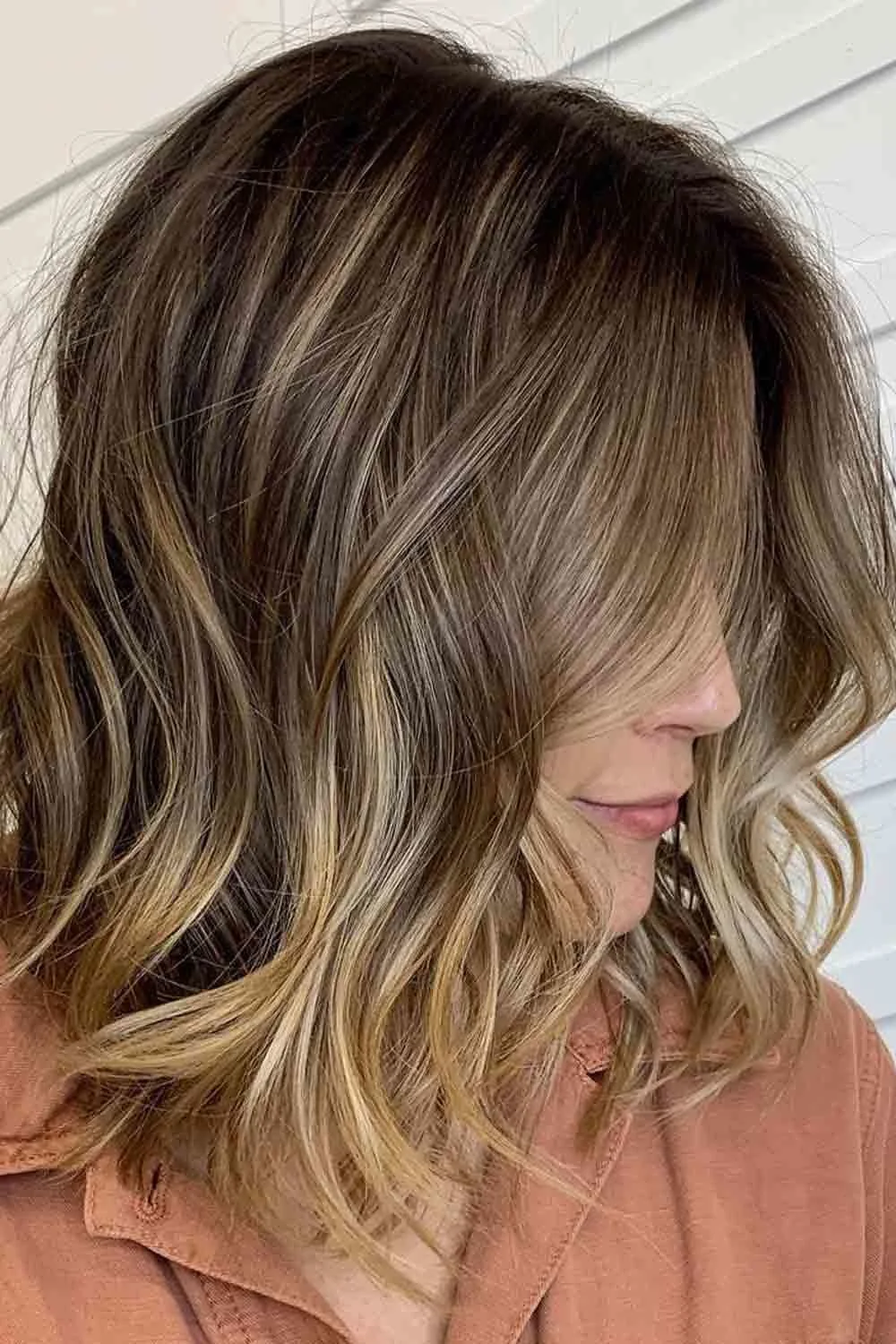
Idea 10
Warm Ends on a Soft Wavy Bob
The pale lower curves brighten the bob while the crown retains a deeper brown area.
- Length
- Bob
- Top
- Brown
- Finish
- Loose waves
Hair opens to one side and rests around the neck and shoulders. The upper lengths are darker, with lighter strands widening along the bends below the cheek. The tips remain separated and slightly irregular, so the warm color follows a loose outline rather than a rigid, straight bob perimeter.
Wearability note: Use this for a short color transition with visible movement. Bring a straighter version of your desired cut if you need to clarify length; these arranged bends shorten the apparent outline and expose the lighter sections differently.
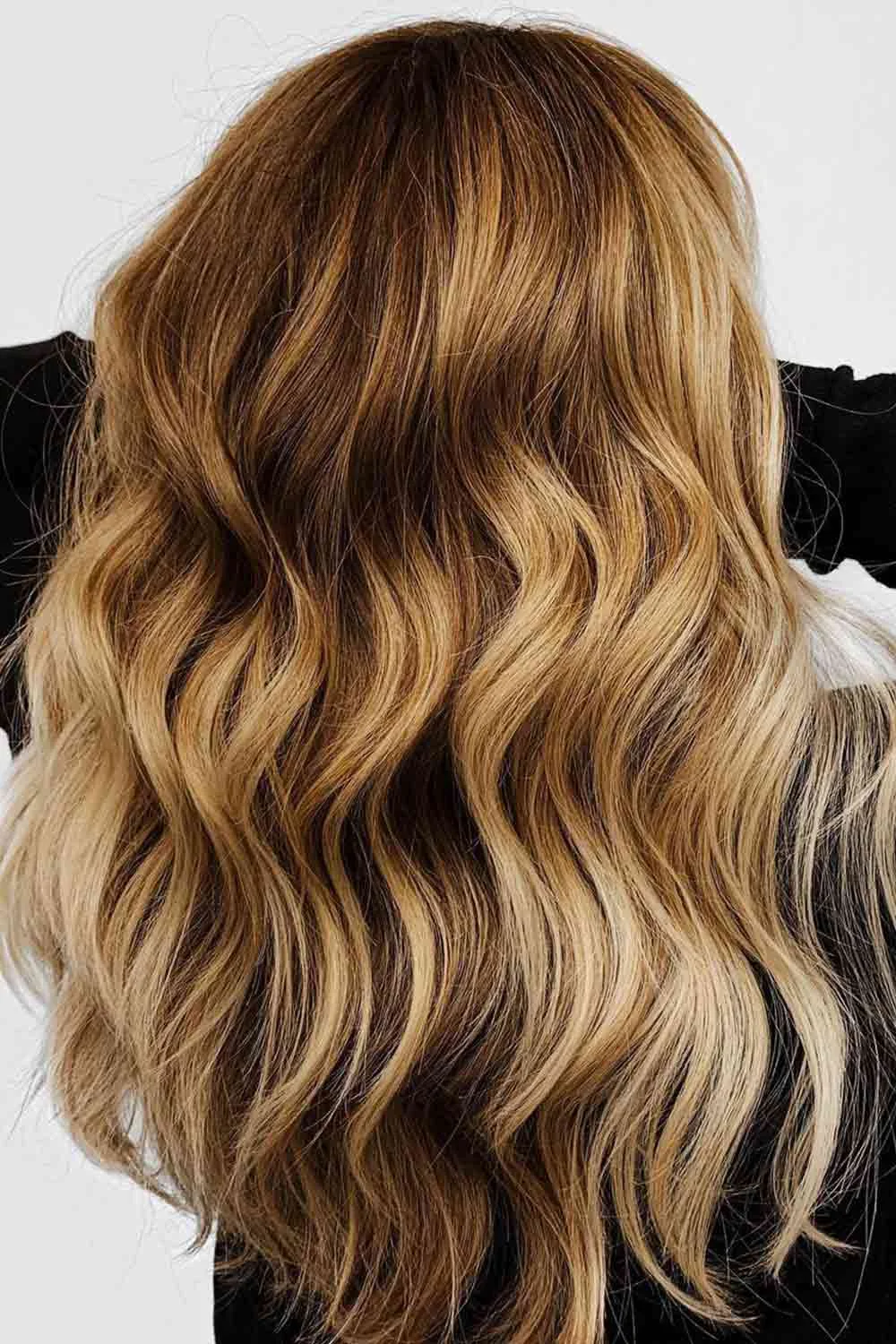
Idea 11
Golden Ends Beneath a Brown Crown
A relatively deep upper area gives way to a much warmer and brighter lower section.
- Top
- Brown
- Ends
- Golden
- Pattern
- Graduated lightness
The crown has brown depth with a few lighter strands passing through it. Lower down, broad golden curves dominate the surface, although dark strands remain inside the waves. The bottom is visibly lighter than the top, making the overall placement more graduated than the subtler brown-led examples.
Wearability note: Choose this when brighter ends are central to your goal. Mark the point where you want the lightness to become dominant, and discuss that separately from the warmth so the result is not brighter all the way to the roots.
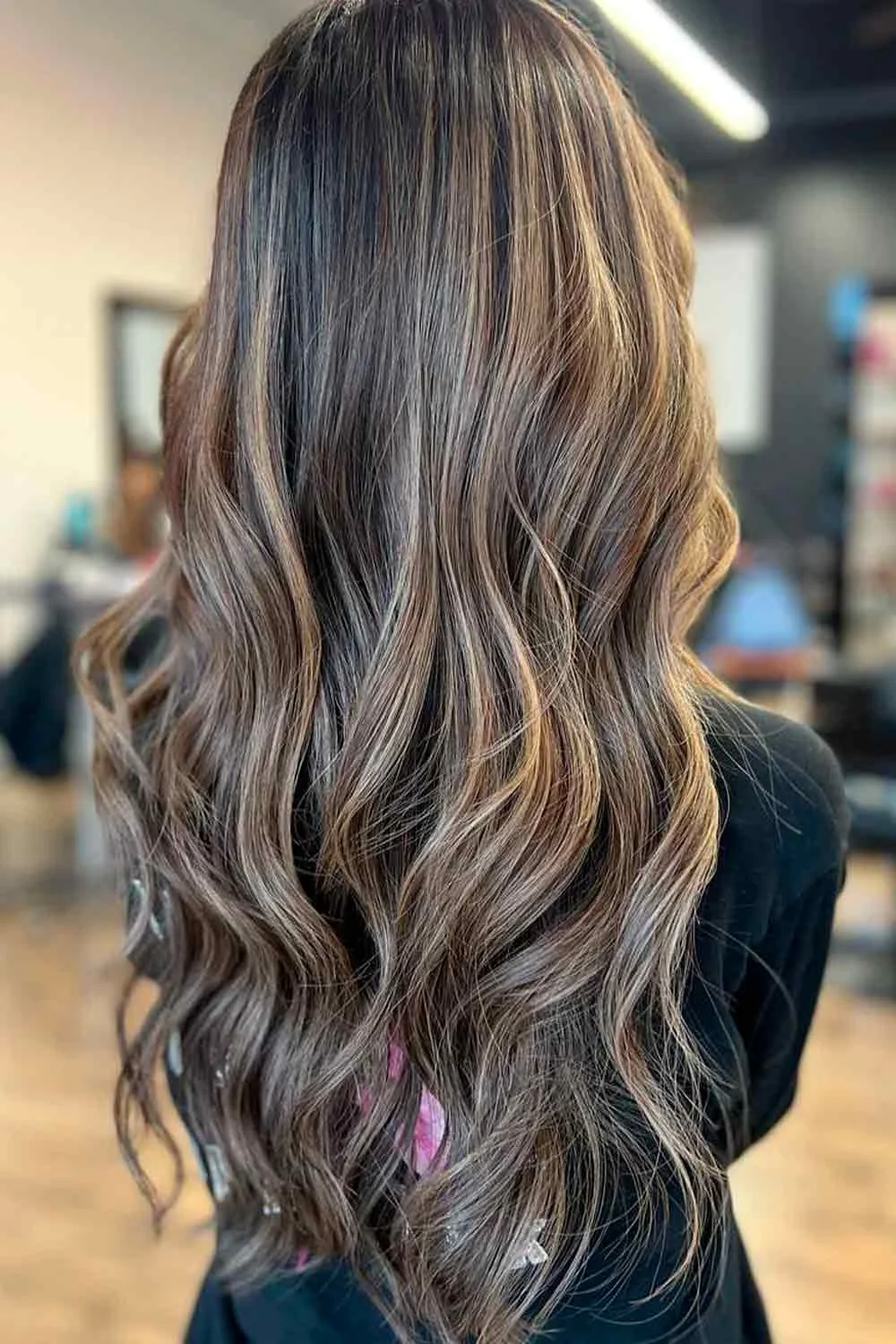
Idea 12
Slim Light Ribbons in Very Dark Waves
Narrow pale lines stand apart from the dark base without covering most of its surface.
- Base
- Very dark brown
- Detail
- Slim ribbons
- Contrast
- Defined
The upper section remains very dark, with light strands beginning at different heights down the back. Loose waves reveal warm-to-neutral pale edges through the middle and tips. Much of the interior remains brown, so the contrast comes from individual streaks rather than a fully lightened lower block.
Wearability note: Save this for high contrast in a small amount of hair. Ask for a neutral-light comparison if you specifically want caramel warmth; this photo shows placement more clearly than it establishes one exact tone across every pale strand.
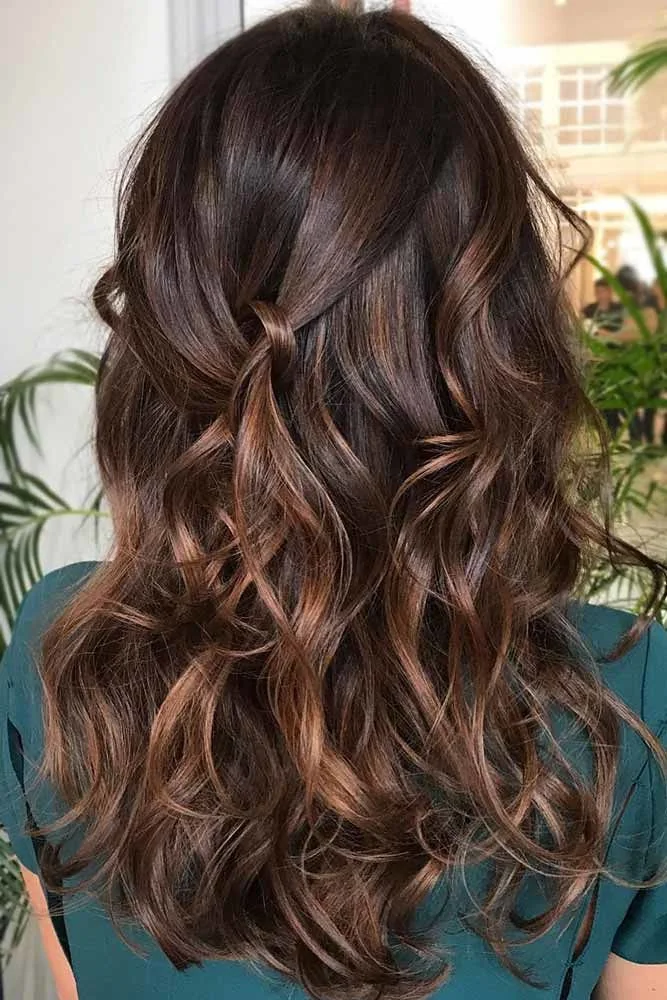
Idea 13
Small Warm Accents on Brown Curls
The lightest strands punctuate individual curls while the overall background stays deep brown.
- Base
- Brown
- Placement
- Selected curves
- Finish
- Separated curls
The upper hair is smooth and dark before opening into separated curls lower down. Warm pieces appear on selected outer bends and near some tips, leaving wide areas of brown between them. The highlighted strands emphasize the curled sections without creating a uniformly golden lower silhouette.
Wearability note: Use this for selective accents rather than all-over brightness. Show which curls carry the lightness, and compare it with your usual texture; a straighter finish may reveal the same strands as narrower lines instead of broad curved flashes.
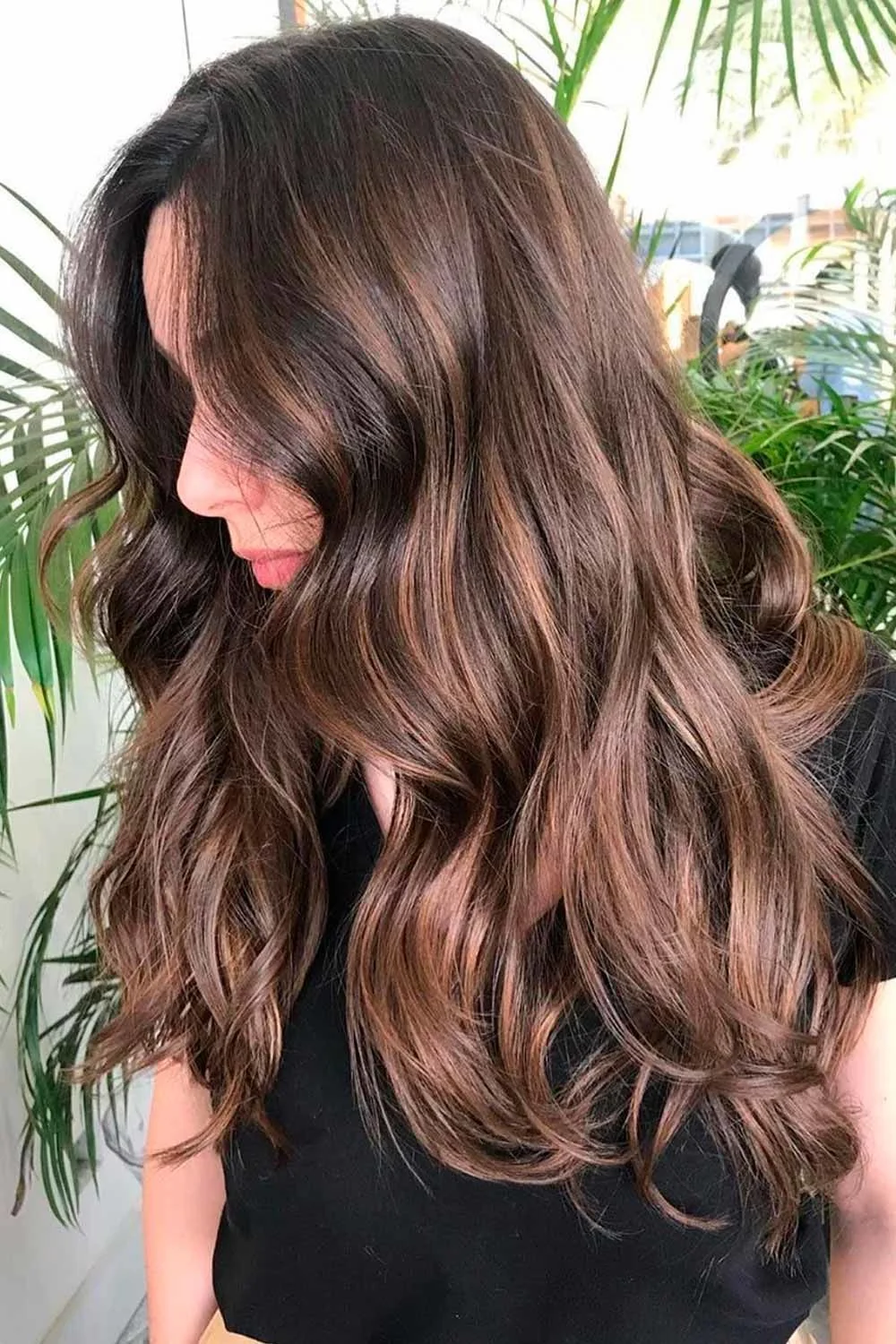
Idea 14
Warm Brown Dimension Beside the Face
The warmer strands stay close in depth to the brown base, giving the front a softer contrast.
- Base
- Deep brown
- Contrast
- Soft
- Front
- Side opening
The upper surface looks deep brown and the front opens to one side. Slim warmer pieces become more visible through the long bends around the shoulders and chest. The overall silhouette remains brunette, with no large pale panel competing with the face-framing shape or the darker crown.
Wearability note: Choose this if you want warmth without a pronounced blonde front stripe. Use the side angle to explain how subtle the difference should be, and ask to compare the proposed tone with your current brown in similar lighting.
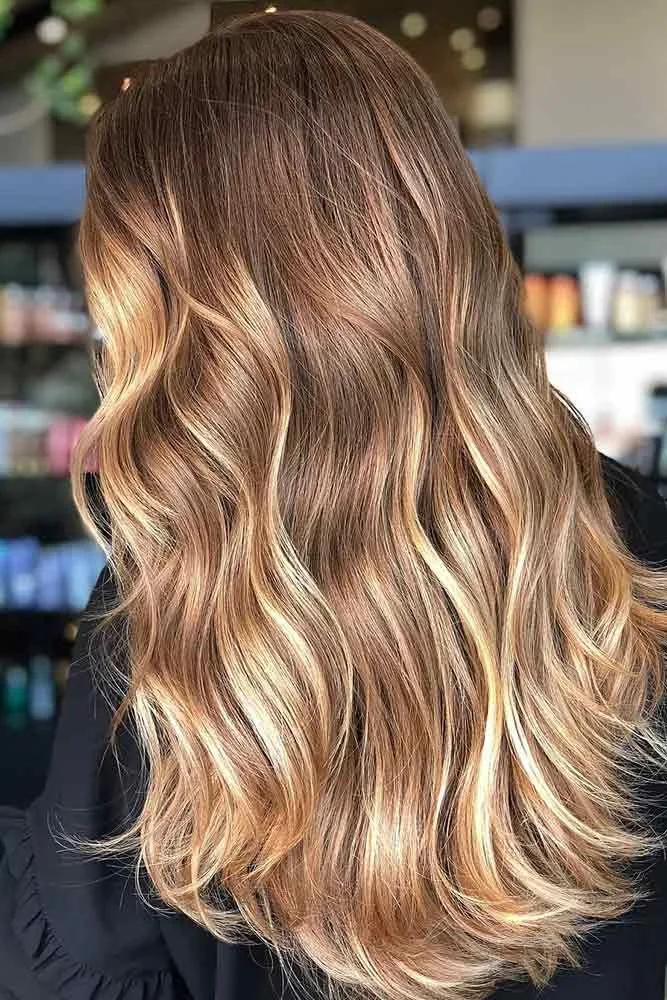
Idea 15
Warm Lower Waves With Brown Depth
The middle and ends are brighter while a brown area remains near the crown and inside the waves.
- Top
- Brown depth
- Tone
- Golden warm
- Finish
- Broad bends
The hair falls into long, broad bends with tapered ends. Golden strands run through the lower surface and frame the outward curves, while darker sections remain in the wave valleys. The upper area is less bright, creating a gradual change rather than one equally highlighted shade from top to bottom.
Wearability note: Save this for a warm, visibly lighter lower half. Point out the brown sections you want to preserve; increasing the number of highlights would flatten some of the light-dark variation that makes this back view useful.
Follow the lighter strands
A brighter front panel draws attention near the face. Ribbons concentrated lower down leave a deeper crown, while lighter strands beginning higher make the whole head read brighter. Use the photograph to show that distribution, not simply to request caramel.
Ask to see how the proposed placement will appear when your hair is straight or in its usual texture. Arranged curls can expose light sections that sit underneath when the hair falls flat.
Keep the cut a separate decision
A short bob and long waves can share a similar color contrast without sharing the same silhouette. Save a cut reference separately if you like the color but do not want the pictured length.
Your starting color, previous coloring and hair condition affect what is achievable. Discuss those details with your colorist; the photographs do not establish how many appointments or touch-ups you would need.
About the author
Bella Ross
Bella Ross is the hairstyle editor behind Latest Easy Hairstyles. She curates practical haircut, braid, color, and styling ideas with a focus on looks that are easy to browse, realistic to recreate, and useful for everyday hair decisions.