
Before you choose
Choose tone and placement separately
Compare the average lightness first, then decide whether you prefer warmer blonde, white-silver or a cooler cast. Look at darker roots, sides and inner sections too. A photograph cannot confirm whether a shade is natural, lightened or toned; discuss suitability for your starting hair and color history in a consultation.
The hairstyle gallery
19 bleached hair ideas for men ideas to compare
Compare the visible length, shape, texture, and finish before choosing a salon reference.
Idea 01
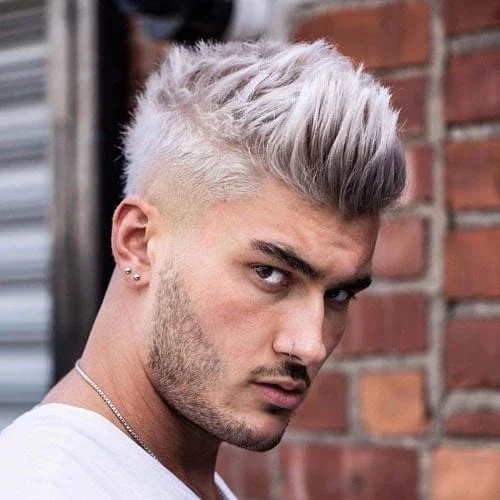
Silver-Lilac Quiff With Close Sides
A pale silver-lilac appearance gives this raised quiff a cooler cast than the creamier blonde examples. The sides stay short, leaving the longer top as the main area of color.
- Shape
- Silver-lilac appearance
- Detail
- Raised quiff
The front rises in separated pieces with slightly darker shadows between them. Those shadows help show the shape without making the whole upper section look flatly white.
Wearability note: Use this to explain a cool-toned preference alongside the haircut shape. A photograph cannot confirm the lightening process, and your starting color and hair history need a separate color consultation.
Idea 02
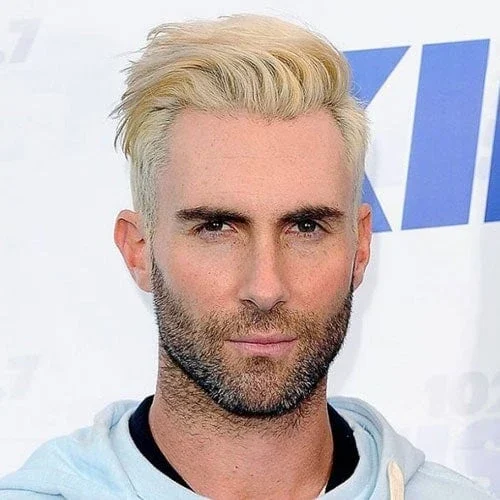
Creamy Blonde With a Soft Sweep
Creamy blonde covers the short swept top, with a little warmth visible in the lighter sections. The front lifts gently instead of forming a tall pointed quiff.
- Shape
- Creamy blonde appearance
- Detail
- Soft front sweep
The sides remain short and fairly pale, creating a more continuous light appearance than a dark-sided undercut. The open forehead keeps the front shape clear.
Wearability note: Compare this creamier direction with the white-silver examples before choosing a reference. Save the overall brightness you like, while discussing what is suitable for your existing color rather than assuming the photo proves a particular process.
Idea 03
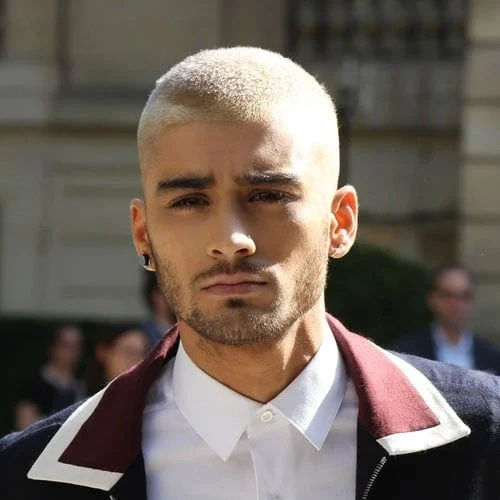
Pale Blonde Buzz Cut
A pale-blonde buzz leaves a fine light surface across the top. The very short length creates a different appearance from the longer platinum sweeps, where individual strands are easier to see.
- Shape
- Pale short buzz
- Detail
- Even upper coverage
The forehead is open and the sides stay close. Most of the visual interest comes from the contrast between the light hair and the surrounding darker features.
Wearability note: Compare the shortness and color as two separate choices. If both appeal, discuss the desired coverage and shade together; a photo alone cannot establish how the blonde was achieved or how it would look on your starting hair.
Choose your direction
Prefer warmer lightness
Compare creamy crops and golden curls.
Prefer a cooler appearance
Look at white, silver and silver-lilac references.
Keep some depth
Compare dark undercuts, darker roots and light loc ends.
Idea 04
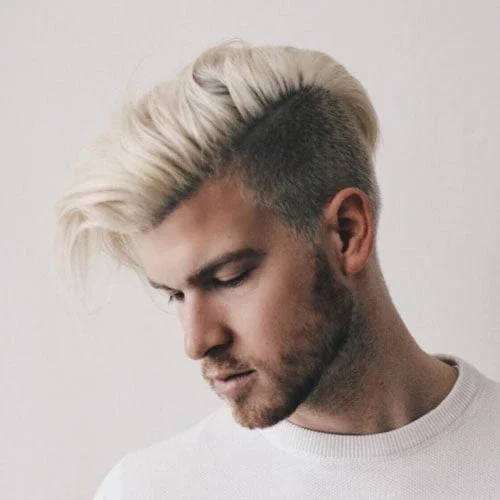
Pale Sweep Above a Dark Undercut
A pale diagonal sweep sits above a clearly darker undercut. The longer upper hair bends forward at the front, creating a soft curve over the forehead.
- Shape
- Pale long top
- Detail
- Dark undercut
The dark side remains visible beneath the light top rather than blending into an all-over pale finish. This makes placement and contrast as important as the blonde shade itself.
Wearability note: Choose whether you want the strong dark side or mainly the light upper length. Bring both details into a color consultation so the reference explains the balance you prefer, not just the palest strand.
Idea 05
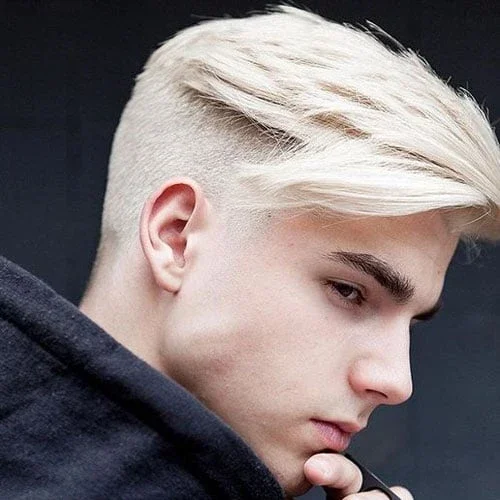
White-Blonde Side Fringe
A white-blonde fringe falls diagonally across the front, with finer ends separated near the forehead. The side is short and light, giving the cut a mostly pale outline.
- Shape
- White-blonde fringe
- Detail
- Short light side
The front remains lower than a quiff, and the upper pieces lie in a broad sideways sweep. Small shadows between strands keep the texture visible despite the very light appearance.
Wearability note: Compare eye clearance with the more raised styles before choosing this direction. Use the image for the lightness and fringe shape, while treating the route to that color as an individual consultation question.

Idea 06
Icy High Top With Glasses
An icy pale top rises high above the forehead. The sides stay shorter, creating a narrow lower outline beneath the larger brushed upper section.
- Shape
- Icy pale top
- Detail
- High brushed shape
The glasses and dark beard add contrast around the face, making the very light hair more prominent. Those accessories and facial-hair choices are separate from the cut and shade.
Wearability note: If you wear frames, compare the temple clearance as well as the height. This reference shows a finished cool-toned appearance, but it does not establish a formula or a suitable lightening plan for another person.
Idea 07
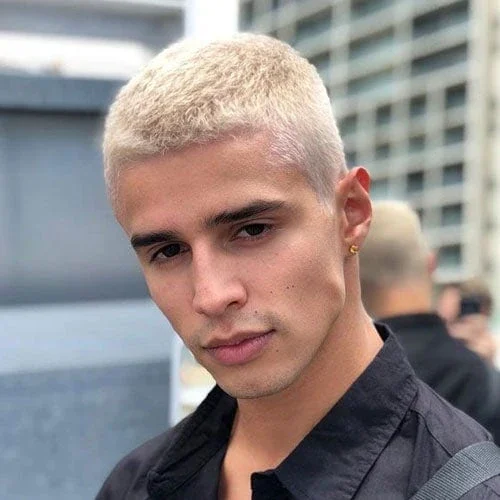
Creamy Close Crop
A creamy pale crop keeps the length compact while leaving a little texture on top. The side stays short, with no long fringe or high raised section.
- Shape
- Creamy close crop
- Detail
- Short upper texture
The light surface looks slightly warmer than the white-silver examples. The front view also shows how a short color change can be visible without requiring a large styled silhouette.
Wearability note: Compare this level of warmth with your preferred shade reference. Keep the short cut and the light color as separate requests, since the photograph cannot show the starting color or the process behind the result.
Idea 08
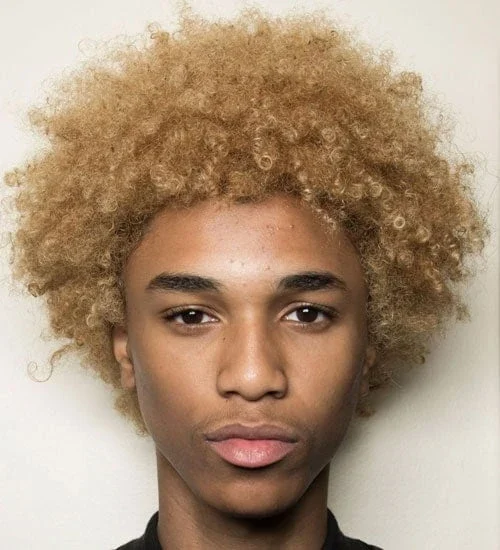
Golden Curls With a Rounded Outline
Golden curls create a full rounded outline, offering a warmer direction within this light-hair gallery. The small curls keep the surface detailed rather than smooth and continuous.
- Shape
- Golden curly appearance
- Detail
- Rounded fullness
The sides retain plenty of volume, with no close undercut visible from the front. Color appears deeper in the shadows between curls and lighter around the outer edges.
Wearability note: Choose this for the combination of warm light color and curly fullness. The photograph cannot prove whether the shade is natural or lightened, so use it as an appearance reference rather than evidence of a treatment.
Idea 09
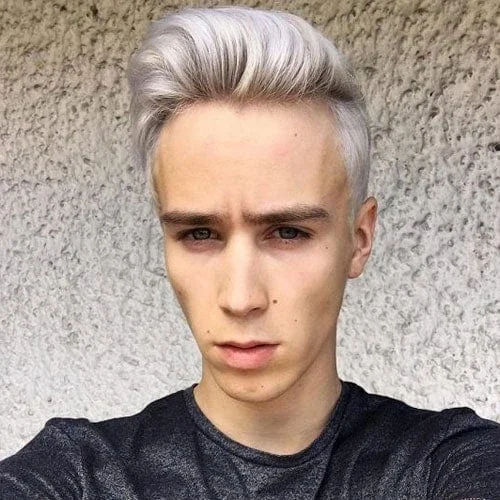
Silver Sweep With a Rounded Front
A rounded front gives this silver-toned style a smooth raised shape. The side remains shorter and light, supporting a mostly pale appearance from the temple to the top.
- Shape
- Silver appearance
- Detail
- Rounded raised front
The upper strands curve backward in broad lines rather than pointed spikes. A little shadow at the root and between sections adds depth to the very light surface.
Wearability note: Compare the smooth curve with the more textured crops if you want a light shade without a spiky finish. Discuss the visible silver direction separately from the haircut and your own color history.
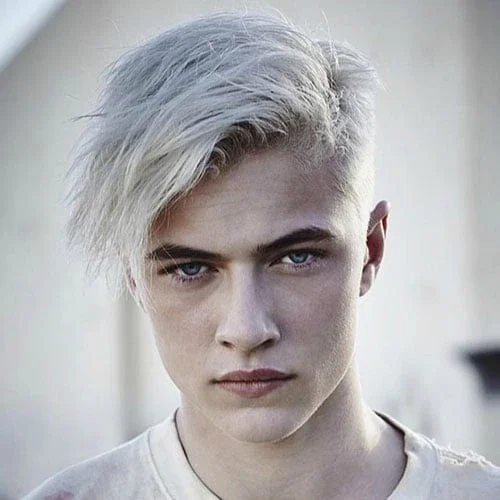
Idea 10
Long Pale Fringe With a Darker Root
A long pale fringe moves diagonally across the forehead, with darker root detail visible beneath it. The short side keeps the lower outline narrow.
- Shape
- Long pale fringe
- Detail
- Darker root detail
The upper hair lies flatter than the quiff examples and extends farther toward the eye. The fine separated ends make the difference between the light surface and deeper base easy to see.
Wearability note: Choose this if a longer front is part of the appeal. Compare the eye clearance and root contrast separately, then use the photograph to explain the finished appearance you prefer during a consultation.
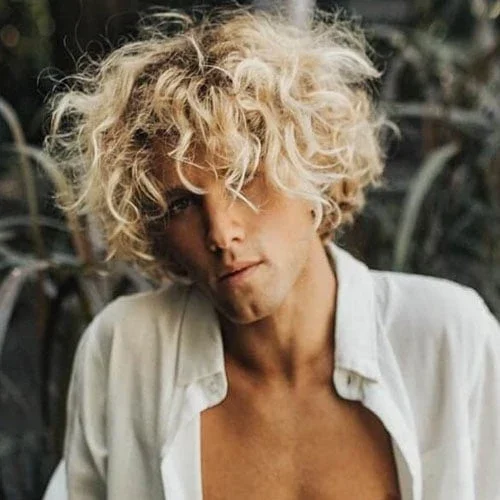
Idea 11
Loose Pale Curls With Darker Roots
Loose pale curls fall forward in uneven lengths, with darker sections visible underneath. The front creates a soft irregular fringe rather than a straight cropped edge.
- Shape
- Loose pale curls
- Detail
- Darker inner sections
The curl bends make the color look lighter on some edges and deeper in the gaps. This gives a more dimensional appearance than a uniformly pale buzz or smooth top.
Wearability note: Compare the amount of dark hair you want to keep as well as the blonde. The photo explains the balance and movement, while a consultation is needed to assess a suitable approach for your own curls.
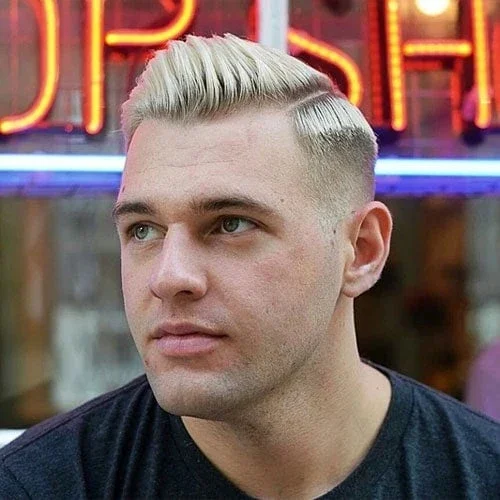
Idea 12
Pale Side Sweep With a Defined Part
A defined part divides the pale top from the shorter side. The upper hair moves sideways in a compact sweep, keeping the forehead mostly open.
- Shape
- Pale side sweep
- Detail
- Defined part
The lightness continues into the short side instead of leaving a broad dark panel. The neat direction creates a more controlled finish than the loose fringes and curls.
Wearability note: Use this if you prefer a tidy part alongside a very light color. Compare both the placement of the part and the overall brightness, without treating the photographed shade as a formula for your own starting hair.
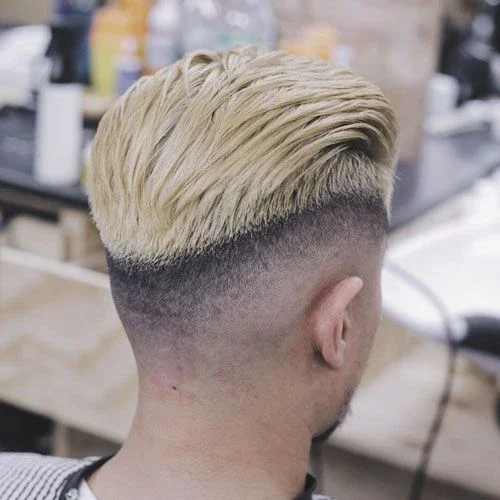
Idea 13
Light Top Over a Dark Fade
A light upper layer sits above a clearly darker fade in this rear view. The longer hair sweeps backward, creating a visible pale cap over the short side.
- Shape
- Light upper layer
- Detail
- Dark faded side
The dark band and narrowed nape make the placement easy to understand. This angle reveals a color contrast that a front portrait could partly hide.
Wearability note: Save this if retaining darker sides is part of the goal. Pair it with a front view to explain the fringe, and discuss the light-dark boundary separately from how pale the top should become.
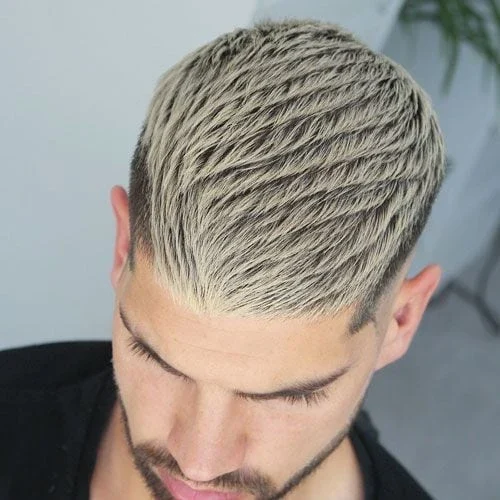
Idea 14
Short Pale Waves From Above
Short pale waves run diagonally across the top in this overhead view. Darker separation between the pieces gives the light surface a fine patterned appearance.
- Shape
- Short pale waves
- Detail
- Darker root separation
The hairline stays compact, without a long fringe dropping forward. The angle emphasizes the distribution of the light strands more than the side or nape shape.
Wearability note: Use this to compare coverage and contrast through the upper hair. A front or side photograph would still help explain the cut, while the color consultation should account for your starting shade and existing color.
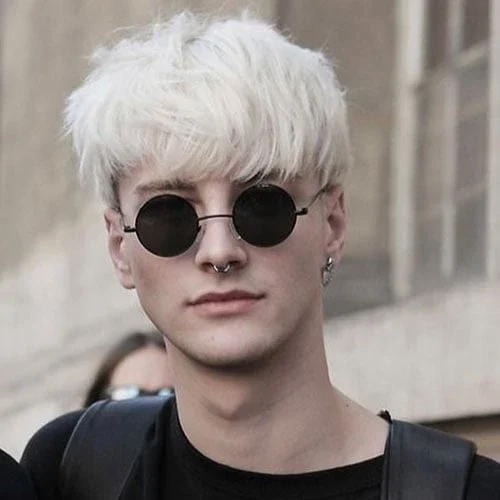
Idea 15
White Fringe With a Soft Edge
A white-blonde fringe falls forward in fine soft pieces. The front edge is irregular and rounded, sitting near the top of the sunglasses rather than lifting into a quiff.
- Shape
- White-blonde fringe
- Detail
- Soft rounded front
The upper hair has a light fluffy appearance, with small ends projecting at the crown. The photograph mainly shows the front and leaves much of the lower side hidden.
Wearability note: Compare the fringe clearance with your everyday frames if you wear glasses. Choose the white appearance and forward shape as separate details, and avoid inferring an exact lightening method from the finished photo.
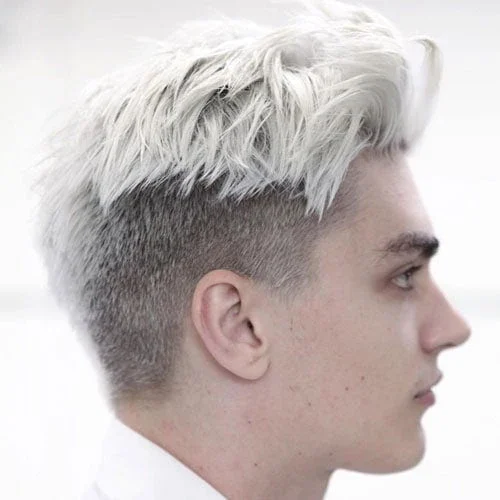
Idea 16
Loose White Top With a Dark Side
A loose white top separates into fine ends above a darker close side. The upper hair moves mostly backward, with a few pieces lifting away from the main outline.
- Shape
- Loose white top
- Detail
- Dark close side
The pale section extends behind the crown, while the ear area remains darker and short. This profile clearly shows both the cut contrast and the placement of the light hair.
Wearability note: Compare the loose texture with the smoother side sweeps before choosing. If the two-tone effect appeals, explain how much darker side you want to retain alongside your preferred level of pale blonde.
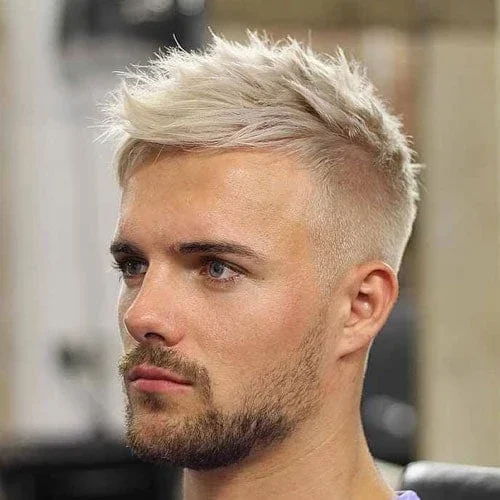
Idea 17
Short Blonde Texture With a Raised Front
Short pale-blonde pieces lift at the front without forming a very high quiff. The sides are softly shortened, creating a compact outline with visible texture on top.
- Shape
- Short light texture
- Detail
- Small raised front
The shade appears creamy rather than strongly silver in this lighting. Small changes in brightness across the strands keep the upper surface from looking completely uniform.
Wearability note: This is useful if you want a lighter appearance with a modest short shape. Compare the tone in neutral light too, and bring the cut and color references separately if you prefer to change only one.
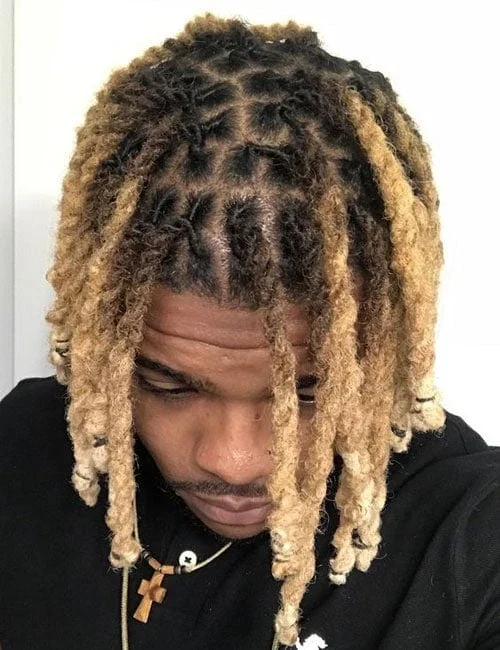
Idea 18
Locs With Light Ends
Dark roots contrast with golden-blonde ends through these locs. The lightness is concentrated lower down rather than covering the whole head in a pale shade.
- Shape
- Dark roots
- Detail
- Light loc ends
The overhead view makes the sectioning and transition easy to see. Individual locs hang in different lengths, so the lighter ends create several separate lines around the face.
Wearability note: Choose this if end placement matters more to you than an all-over blonde look. A photograph cannot establish the lightening history, so discuss suitability for your existing locs before choosing a color direction.
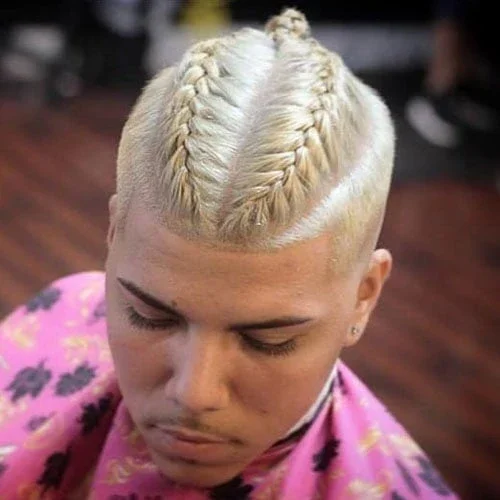
Idea 19
Pale Twin Braids With Close Sides
Two pale braids run along the top on either side of a center part. The close sides are also light, creating a mostly pale appearance around the exposed scalp pattern.
- Shape
- Pale twin braids
- Detail
- Close light sides
The upper angle makes the paired layout and direction clear. A small gather sits toward the back, keeping the longer upper section contained rather than loose.
Wearability note: Compare the braided arrangement with the same color worn loose if you are choosing the shade. The photo combines two decisions: a light appearance and a detailed gathered style, each with its own upkeep considerations.
Bring appearance references to a consultation
Point out both the light areas and the darker sections you want to keep. An all-over pale buzz and a light top above dark sides have very different placement even when their palest strands look similar.
Keep haircut and color choices distinct. You can like a silver tone on a quiff while preferring a crop, or choose the shape of a pale fringe without asking for the same shade.

About the author
Bella Ross
Bella Ross is the hairstyle editor behind Latest Easy Hairstyles. She curates practical haircut, braid, color, and styling ideas with a focus on looks that are easy to browse, realistic to recreate, and useful for everyday hair decisions.