
Product reviews / Round brushes
Best Round Brushes for a Controlled Blowout
A round brush needs the right barrel diameter and bristle contact. These six non-electric models suit different lengths and wrapping routines.

As an Amazon Associate I earn from qualifying purchases, at no extra cost to you. Affiliate disclosure

Mixed-bristle blowout contact
THE SHORTLIST
The products worth considering
A round brush needs the right barrel diameter and bristle contact. These six non-electric models suit different lengths and wrapping routines.
Conair Quick Dry Copper Round Brush
Mixed-bristle blowout contact

AIMIKE 2.1-Inch Thermal Round Brush
Large long-hair bends

Osensia Two-Inch Ceramic Round Brush
A large nylon-contact barrel

Sndyi 1.7-Inch Thermal Round Brush
Medium-to-long section control

Conair Grip & Style Metal Round Brush
Shorter blow-dry sections
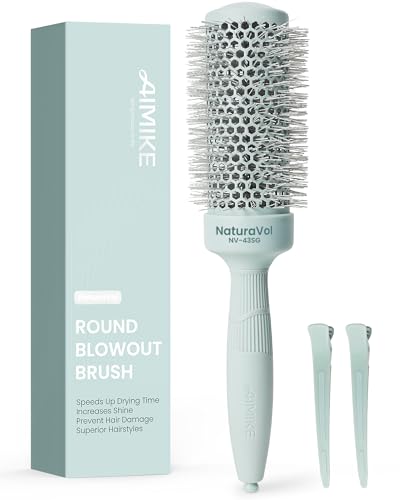
AIMIKE NaturaVol 1.7-Inch Round Brush
Nylon grip with a sectioning pin
THE EDITOR'S TAKE
What matters in your routine
Compare the actual barrel diameter with the overall width including bristles. They are different measurements and affect different parts of the routine.
Prepare the hair before wrapping it around a brush. A small releasable panel is more practical than winding a tangled long section onto the barrel.
A CLOSER LOOK
The full product reviews
Conair Quick Dry Copper Round Brush
A mixed-bristle choice when you want both section grip and surface contact during a separate-dryer blowout.
Copper and mixed bristles
The copper coating is on a metal barrel, so this is a non-electric brush used with a separate dryer. Its boar bristles sit alongside ball-tipped nylon pins, giving the head two contact types. The longer pins reach into a prepared section while the shorter bristles contact the surface. Choose that mix deliberately rather than treating every round brush as an identical barrel with a different finish.
Keep the wrap releasable
The wrap should remain small enough to release without unwinding several tangled layers. Guide the prepared ends onto the barrel, turn only as much as the intended bend needs and keep the dryer moving according to its own directions. A metal barrel can become warm during the routine; the handle is the place for the guiding hand, and pressing the hot barrel against skin is not part of root lifting.
Cleaning the shorter fibers
Mixed bristles retain shed hair and styling residue differently from an open nylon-only head. Remove the hair carefully without pulling out the shorter fibers, then clean by the maker’s method. Choose Conair for a controlled mixed-bristle blowout. If animal-derived boar bristles are unsuitable, a clearly identified nylon-only model offers a different purchase.
What stands out
- The longer nylon pins and boar bristles provide different contact.
- A metal barrel suits a brush-and-dryer routine.
The trade-offs
- The mixed bristles need cleaning between the shorter fibers.
Our verdict A mixed-bristle choice when you want both section grip and surface contact during a separate-dryer blowout.
Using it in your routine
Detangle first, arrange the ends and keep each section small enough to release without repeated unwinding. Follow the brush and dryer instructions.
Consider another option if: Choose a smaller barrel if the shortest layer cannot make a controlled wrap.
AIMIKE 2.1-Inch Thermal Round Brush
A long-hair large-barrel choice, provided you compare barrel diameter and full bristle width separately.
Large barrel versus full head width
AIMIKE identifies a 2.1-inch barrel and a 3.3-inch overall diameter including the bristles. Those measurements solve an easily missed buying problem: the number on the brush can refer to the working barrel or the entire head. The larger format needs enough hair length for a meaningful wrap. A short fringe may touch the bristles without completing the desired bend around the barrel.
Arrange a long panel
The vented ceramic-coated barrel works with airflow from a separate dryer. Keep the prepared panel within the brush’s useful width and arrange the ends before turning. On long hair, avoid winding the entire section repeatedly onto the barrel, which makes release more complicated. The included clips can hold neighboring sections away while the working panel is guided.
Length and bristle preferences
The boar-bristle format and rubberized handle are the useful handling details, rather than claims of a fixed drying-time reduction. Choose this size for long prepared lengths and broad shapes. A smaller barrel is more manageable near short face-framing layers, and a nylon-only format is preferable when animal-derived bristles are not wanted.
What stands out
- The large barrel supports broad bends in long prepared sections.
- The rubberized handle gives a defined gripping surface.
The trade-offs
- The 3.3-inch overall size crowds short root pieces.
Our verdict A long-hair large-barrel choice, provided you compare barrel diameter and full bristle width separately.
Using it in your routine
Detangle first, arrange the ends and keep each section small enough to release without repeated unwinding. Follow the brush and dryer instructions.
Consider another option if: Choose a smaller barrel if the shortest layer cannot make a controlled wrap.
Osensia Two-Inch Ceramic Round Brush
A useful large-barrel alternative for someone who wants a separate-dryer brush without the mixed boar-bristle layer.
A non-electric large thermal head
Osensia lists a two-inch ceramic thermal barrel and an approximately 2.9-inch bristle diameter. The ceramic description does not mean the brush heats itself; the tool is explicitly non-electric. The separate dryer supplies the airflow and heat. This is therefore a two-hand blowout routine, with one hand guiding a large prepared section and the other managing the dryer.
Control the handle joint
The maker emphasizes a seamless head arrangement. Inspect the joint and bristles before use, especially if a long section passes near the handle. Arrange the ends and use a controlled turn rather than repeatedly winding the entire length. The large diameter works toward a broad bend; if the shortest piece cannot wrap usefully, choose a smaller brush for that area.
A realistic separate-dryer role
A lightweight handle can make repeated repositioning easier, but it does not determine how much tension a particular section needs. Keep the tool’s role focused on prepared blowout sections and use a detangler earlier when knots remain. Select this model for the large diameter and nylon contact, rather than a guarantee of no snagging or a particular speed improvement.
What stands out
- The large barrel fits broad-shape blowouts.
- The nylon-contact format differs from mixed boar brushes.
The trade-offs
- A two-inch barrel is too broad for many short wrap lengths.
Our verdict A useful large-barrel alternative for someone who wants a separate-dryer brush without the mixed boar-bristle layer.
Using it in your routine
Detangle first, arrange the ends and keep each section small enough to release without repeated unwinding. Follow the brush and dryer instructions.
Consider another option if: Choose a smaller barrel if the shortest layer cannot make a controlled wrap.
Sndyi 1.7-Inch Thermal Round Brush
The medium-barrel mixed-bristle option when a 2.1-inch barrel feels too broad for the intended section.
Two different diameter measurements
Sndyi states a 1.7-inch barrel and a 2.9-inch overall diameter. That is an important distinction for a medium-length layer that can wrap around the barrel but still needs clearance around the bristles. Compare it with the larger 2.1-inch AIMIKE by the barrel measurement, rather than comparing two overall numbers as though they describe the same surface.
Sectioning before rotation
The mixed boar-bristle format adds shorter surface contact alongside the pins. Begin with a detangled panel and keep the ends arranged before rotating the head. The supplied sectioning clips can hold other hair away, which is more useful than loading an extra-wide panel to reduce the number of passes. Keep the dryer’s inlet clear and follow both tools’ instructions for the working distance.
Cool before mixed-bristle cleaning
The anti-slip handle helps identify where the guiding hand belongs. It does not make the thermal barrel cool to touch during the session. Allow the head to cool before cleaning trapped hair from the mixed fibers. Choose Sndyi for a medium-diameter wrap and mixed contact; a smaller barrel or nylon-only head answers a different length or bristle preference.
What stands out
- The medium barrel offers a smaller wrap than the largest AIMIKE.
- An anti-slip handle provides a defined grip.
The trade-offs
- The full bristle width still needs room near short layers.
Our verdict The medium-barrel mixed-bristle option when a 2.1-inch barrel feels too broad for the intended section.
Using it in your routine
Detangle first, arrange the ends and keep each section small enough to release without repeated unwinding. Follow the brush and dryer instructions.
Consider another option if: Choose a smaller barrel if the shortest layer cannot make a controlled wrap.
Conair Grip & Style Metal Round Brush
The more focused short-length option here, with a grip intended for deliberate barrel positioning.
A shorter-length metal barrel
Conair positions the Grip & Style model for shorter hair and supplies ball-tipped nylon bristles around a metal barrel. That makes it a distinct choice from the large two-inch thermal brushes. Check the shortest layer against the useful wrap rather than assuming a short-hair label fits every cropped piece. Hair too short to arrange around the head may need a different technique.
Guide a short bend
The grooved nonslip handle is useful when the guiding hand turns a small section under. Keep that movement visible in the mirror and release the ends before deciding whether another turn is needed. A brush is not a clamp: holding tension too firmly can make a prepared section feel resistant even when no knot is present. Support the intended bend without pulling the roots tight.
Warm metal needs clearance
The metal head belongs in a separate-dryer routine and can retain warmth. Keep fingers on the handle and avoid resting the barrel against the scalp. Clean only after cooling. Choose this Conair when shorter sections need a controlled round format, while reserving the larger heads for long panels that can actually complete a broad wrap.
What stands out
- The shorter-length format gives a clearer role than an oversized head.
- A grooved handle supports controlled turning.
The trade-offs
- Its metal barrel can become warm during blow-drying.
Our verdict The more focused short-length option here, with a grip intended for deliberate barrel positioning.
Using it in your routine
Detangle first, arrange the ends and keep each section small enough to release without repeated unwinding. Follow the brush and dryer instructions.
Consider another option if: Choose a smaller barrel if the shortest layer cannot make a controlled wrap.
AIMIKE NaturaVol 1.7-Inch Round Brush
The most distinctive nylon-only medium head here, particularly when a built-in sectioning aid is useful.
Straight and wavy nylon contact
NaturaVol uses straight and wavy nylon bristles around a 1.7-inch barrel, with an overall diameter of about 2.5 inches. That separates it from AIMIKE’s larger mixed-boar model and the Sndyi brush with the same barrel diameter but a larger overall width. The nylon shapes are described as serving glide and grip, so the actual contact should be evaluated on a small prepared panel.
Use and store the sectioning pin
The built-in sectioning pin is a useful accessory only when it is used deliberately. Divide prepared hair with the pin, then return it securely before the brush-and-dryer movement begins. Leaving a pointed accessory loose while turning the barrel near the face adds an unnecessary handling complication. Neighboring panels can be held with the supplied clips rather than caught in the brush.
A medium nylon workflow
The rubberized handle gives the guiding hand a defined grip, while the vented ceramic-coated aluminum head belongs to the dryer-led part of the routine. Do not treat its heat-conducting description as permission to keep the barrel against the scalp. Choose NaturaVol for a medium nylon format and integrated sectioning aid when those details fit the actual workflow.
What stands out
- Two nylon shapes give different section contact.
- A built-in pin keeps a sectioning aid with the brush.
The trade-offs
- The pin must be stored and handled carefully near the face.
Our verdict The most distinctive nylon-only medium head here, particularly when a built-in sectioning aid is useful.
Using it in your routine
Detangle first, arrange the ends and keep each section small enough to release without repeated unwinding. Follow the brush and dryer instructions.
Consider another option if: Choose a smaller barrel if the shortest layer cannot make a controlled wrap.
EVERYDAY DETAILS
What matters in everyday use
Barrel diameter and minimum wrap length
Nylon-only versus mixed boar contact
Grip, sectioning aids and controlled release
Product photographs: Amazon. Certain content that appears on this site comes from Amazon. This content is provided “as is” and is subject to change or removal at any time.
GOOD TO KNOW
Questions before you choose
Is a thermal round brush an electric brush?
Not these models. Their barrels work with heat and airflow from a separate dryer. An electric dryer brush is a different tool.
Why are there two diameter measurements?
The barrel diameter describes the surface hair wraps around; the overall diameter also includes the bristles. Compare the same measurement between models.
Does a larger brush make tighter curls?
A larger barrel generally supports a broader bend when the section can wrap around it. Smaller diameters give a different shape and can suit shorter lengths.
Bella Ross curates practical hairstyle ideas for everyday cuts, braids, color inspiration, and simple styling routines.
Our editorial policySTYLE IT YOUR WAY
A little styling inspiration
 Style inspiration
28+ Wavy Bob Ideas
A photo-first guide to wavy bob ideas, with concise image-specific notes and practical comparison points.
 Style inspiration
15 Long Hair Trends
A photo-first guide to long hair trends, with concise image-specific notes and practical comparison points.
 Haircut guide
29+ Pixie Cuts With Bangs for Fresh Short Hair
A photo-first guide to pixie cuts with bangs, from soft side fringe and wispy bangs to curly pixies, micro fringe, tapered crops, and glossy short cuts.