
Product reviews / Straightening tools
6 Flat Irons for Black Hair: Detailed Reviews
Black hair encompasses many strand textures, densities and styling preferences. For a stretched or silk-press routine, the distinction is how the tool handles long prepared sections versus small details.

As an Amazon Associate I earn from qualifying purchases, at no extra cost to you. Affiliate disclosure

Wide-section straightening
THE SHORTLIST
Our six picks at a glance
Build the routine around section control and heat adjustment, with detail tools used only where needed.
Wide-section straightening
VANESSA PRO 2-inch Flat Iron
Wide plates for prepared lengths.
Medium-wide precision

BaBylissPRO Ultra Sleek 1.5-inch
A middle width between coverage and access.
Broad ceramic coverage
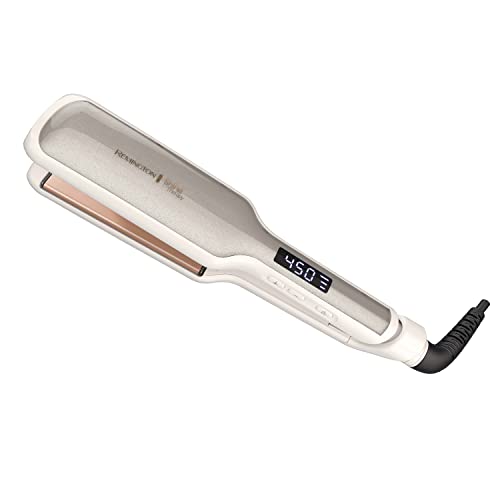
Remington Shine Therapy 2-inch
Broad ceramic-coated coverage after stretching.
Comb-guided smoothing

TYMO Straightener Brush & Hot Comb
Comb-guided smoothing with different tension.
Short-section detailing

Red by Kiss Pencil Iron 0.3-inch
Pencil-width access for small prepared sections.
Alternative smoothing tool

QUICO Flat Iron
Four presets with a remembered starting point.
THE EDITOR'S TAKE
Build the routine around section control and heat adjustment, with detail tools used only where needed
Black hair encompasses many strand textures, densities and styling preferences. For a stretched or silk-press routine, the distinction is how the tool handles long prepared sections versus small details. A two-inch iron, heated comb and pencil iron have different jobs; none should be sold as universally right for every natural texture.
Choose from your actual strand condition, retained length and styling task. This broader review includes wide plates and detail tools for different routines; the natural-hair flat-iron review focuses specifically on preparing and straightening untreated curls and coils.
A CLOSER LOOK
The full product reviews
Wide-section straightening
VANESSA PRO 2-inch Flat Iron
Wide plates for prepared lengths.
The wide VANESSA PRO plates prioritize coverage through long or dense lengths. Their width can reduce the number of separate ribbons you place, but every ribbon still needs to be thin enough for even contact. The low end of the listed range is more useful to assess than the one-pass wording in the title.
Controls and section placement
The two-inch plates need a thin ribbon despite their width. Start within the listed 265–450°F range at a suitable low setting, then guide a moving pass through dry prepared lengths. Keep short edge pieces for a narrower tool; closing wide plates near the hairline sacrifices the placement control that detail sections need.
What this version suits
VANESSA’s two-inch face is a coverage choice for a stretched section that can lie flat between both plates. The 265–450°F range gives room to choose a lower working temperature, although its breadth does not suit every strand condition. Short edges are a separate job: the broad plates make it harder to isolate them without catching nearby hair or approaching the scalp too closely.
What stands out
- 2-inch titanium plates
- 265–450°F
The trade-offs
- Two-inch plates are bulky for edges, short roots and rounded fringe work.
Our verdict Two-inch plates are bulky for edges, short roots and rounded fringe work.
Using it in your routine
The two-inch plates need a thin ribbon despite their width.
Consider another option if: Two-inch plates are bulky for edges, short roots and rounded fringe work.
Medium-wide precision
BaBylissPRO Ultra Sleek 1.5-inch
A middle width between coverage and access.
This is the Ultra Sleek 1.5-inch model, not an older Nano Titanium iron with a similar name. The wider floating plates suit lengths while leaving more maneuverability than a two-inch tool. Titanium is a surface and heat-response choice; it does not justify applying the maximum setting to every tightly textured section.
Controls and section placement
The Ultra Sleek 1.5-inch floating plates cover more width than a one-inch iron while leaving more maneuverability than a two-inch face. Place a thin dry section centrally, keep the pass moving and let the ends release before changing the wrist angle. Check the BNT131T-N model rather than borrowing older Nano Titanium control details.
What this version suits
The Ultra Sleek’s 1.5-inch plates are narrower than the two-inch options but still cover more ribbon than a one-inch iron. That balance suits shoulder-length or longer prepared hair when you want some room to maneuver around layers. Confirm the Ultra Sleek model rather than borrowing controls from another BaBylissPRO iron. For tightly cropped sections, even this middle width can be more plate than you need.
What stands out
- 1.5-inch titanium plates
- Adjustable heat up to 450°F
The trade-offs
- Wider plates sacrifice precision compared with a one-inch or pencil iron.
Our verdict Wider plates sacrifice precision compared with a one-inch or pencil iron.
Using it in your routine
The Ultra Sleek 1.5-inch floating plates cover more width than a one-inch iron while leaving more maneuverability than a two-inch face.
Consider another option if: Wider plates sacrifice precision compared with a one-inch or pencil iron.
Broad ceramic coverage
Remington Shine Therapy 2-inch
Broad ceramic-coated coverage after stretching.
The two-inch Shine Therapy focuses on broad length coverage. Its coating includes the manufacturer’s argan-oil and keratin infusion, but that is not equivalent to applying a conditioning treatment or repairing damaged hair. The broad face is useful after a controlled stretching stage, while a narrow iron remains easier for short face-framing pieces.
Controls and section placement
Choose among the nine temperature settings before placing the prepared ribbon inside the two-inch plates. The broad ceramic-coated face favors lengths, so use separate smaller detail tools if a short fringe cannot sit neatly within it. The infusion remains part of the coating rather than a treatment you should try to activate with extra passes.
What this version suits
The two-inch Shine Therapy suits the length stage of a press rather than small edge details. Nine settings make the heat choice more adaptable than a fixed-temperature iron. Its broad face works best on a thin, orderly ribbon, where both plates can meet without enclosing a bulky bundle. The infused coating does not replace the separate preparation and conditioning steps your hair requires.
What stands out
- 2-inch ceramic-coated plates
- Nine temperature settings
The trade-offs
- Large plates are less versatile for curls and fine detail.
Our verdict Large plates are less versatile for curls and fine detail.
Using it in your routine
Choose among the nine temperature settings before placing the prepared ribbon inside the two-inch plates.
Consider another option if: Large plates are less versatile for curls and fine detail.
Comb-guided smoothing
TYMO Straightener Brush & Hot Comb
Comb-guided smoothing with different tension.
TYMO’s hybrid combines comb-guided straightening with a heated styling format. The teeth help organize a prepared section as it passes through the hot area, rather than squeezing it between broad flat plates. That makes the handling quite different from a classic silk-press iron, and it needs careful clearance from the scalp.
Controls and section placement
Let the comb teeth organize a detangled section as it moves through the heated area. Keep the comb away from the scalp and do not lever it through a resistant knot. The brushing motion differs from squeezing flat plates, so choose it for a comb-led smoothing stage rather than assuming it creates the same pressed finish.
What this version suits
The heated TYMO comb organizes a detangled section through its teeth instead of compressing it between two plates. That changes both the hand position and the amount of contact. It can suit a comb-led smoothing routine, but should not be expected to duplicate every flat-iron finish. Dense roots need patient sectioning; pressing the teeth into the scalp is not a way to gain more reach.
What stands out
- Comb-style straightening tool
- Ceramic heated comb design
The trade-offs
- Comb-led styling does not guarantee a flat-iron finish and needs detangled hair.
Our verdict Comb-led styling does not guarantee a flat-iron finish and needs detangled hair.
Using it in your routine
Let the comb teeth organize a detangled section as it moves through the heated area.
Consider another option if: Comb-led styling does not guarantee a flat-iron finish and needs detangled hair.
Short-section detailing
Red by Kiss Pencil Iron 0.3-inch
Pencil-width access for small prepared sections.
The pencil-width Red by Kiss reaches short pieces that broad plates cannot hold neatly. It is a detailing choice for a cropped cut or a small area, rather than a full-head tool for long dense hair. The slim shape allows precise placement but also puts heat close to the hairline, so moving carefully matters more than chasing a quick finish.
Controls and section placement
The 0.3-inch plates are for a tiny prepared piece that can sit inside them without pulling surrounding hair. Place them below the scalp line and keep the motion controlled through the short length. Use a broader iron for long sections; trying to cover the full head with the pencil face creates many more placements.
What this version suits
Red by Kiss’s 0.3-inch plates are useful when a broad iron cannot hold a short piece without catching its neighbors. This is a detail tool for cropped areas or selected front pieces. Its small surface makes full-head long-hair straightening unnecessarily repetitive. Work with a visible, isolated section and keep the narrow tips below the scalp line rather than using their size to approach skin more closely.
What stands out
- 0.3-inch narrow plates
- Ceramic tourmaline surface
The trade-offs
- The tiny surface is inefficient for full lengths and must stay clear of skin.
Our verdict The tiny surface is inefficient for full lengths and must stay clear of skin.
Using it in your routine
The 0.3-inch plates are for a tiny prepared piece that can sit inside them without pulling surrounding hair.
Consider another option if: The tiny surface is inefficient for full lengths and must stay clear of skin.
Alternative smoothing tool
QUICO Flat Iron
- Format
- Conventional straightening iron
- Controls / design
- Four presets and temperature memory
Four presets with a remembered starting point.
QUICO offers four presets at 320°F, 360°F, 390°F and 450°F, with temperature memory and a rounded body for shaping. That keeps setup simple, but the remembered setting deserves a check before the next session. Its dual-voltage listing also requires the appropriate plug adapter when used outside the US.
Controls and section placement
The four listed presets are 320°F, 360°F, 390°F and 450°F, so check whether the lower choice fits your routine. Temperature memory means the next session may recall a previous setting rather than begin low. Confirm the display before placing the first dry section, and use its rounded shape deliberately if making an end bend.
What this version suits
QUICO simplifies temperature selection to four presets. The memory feature is convenient after you establish a suitable setting, but means the next session may recall a hotter choice used elsewhere. Check the display before working on shorter or finer front pieces. Its rounded body gives room for an end bend after smoothing; that is a different use from trying to detail edges with a narrow pencil iron.
What stands out
- Conventional straightening iron
- Four presets and temperature memory
The trade-offs
- The four presets leave temperature gaps, and memory may recall a hotter previous choice.
Our verdict The four presets leave temperature gaps, and memory may recall a hotter previous choice.
Using it in your routine
The four listed presets are 320°F, 360°F, 390°F and 450°F, so check whether the lower choice fits your routine.
Consider another option if: The four presets leave temperature gaps, and memory may recall a hotter previous choice.
EVERYDAY DETAILS
What matters in everyday use
VANESSA PRO 2-inch Flat Iron
Wide plates for prepared lengths. Two-inch plates are bulky for edges, short roots and rounded fringe work.
BaBylissPRO Ultra Sleek 1.5-inch
A middle width between coverage and access. Wider plates sacrifice precision compared with a one-inch or pencil iron.
Remington Shine Therapy 2-inch
Broad ceramic-coated coverage after stretching. Large plates are less versatile for curls and fine detail.
Product photographs: Amazon. Certain content that appears on this site comes from Amazon. This content is provided “as is” and is subject to change or removal at any time.
Putting the tools into your routine
Detangle and complete the drying or stretching stage before flat ironing. Work through thin sections with a controlled moving pass, keeping the tool clear of the scalp. Treat edges separately and gently; avoid repeated touch-ups simply because humidity changes the finish after styling.
Cleaning and storage
Clean cooled plates only as the maker directs, without abrasive scraping. Keep hairs and residue out of the closing path. Store narrow detail irons where their plate edges cannot be knocked, and give broad irons enough space to protect their faces and cord.
GOOD TO KNOW
Your practical questions
Should I choose wide or narrow plates?
Wide plates favor coverage through longer prepared sections. Narrow plates give more placement control on short layers and ends. Neither replaces thin sectioning or an appropriate heat setting.
What makes VANESSA PRO 2-inch Flat Iron the first pick?
Its 2-inch titanium plates and 265–450°f suit the main routine covered here. Build the routine around section control and heat adjustment, with detail tools used only where needed.
What should I check before ordering?
Confirm the exact product version, included parts and operating instructions on the selected listing. Do not assume similarly named versions have identical controls or dimensions.
Bella Ross curates practical hairstyle ideas for everyday cuts, braids, color inspiration, and simple styling routines.
Our editorial policySTYLE IT YOUR WAY
A little styling inspiration
 Product reviews
Best Flat Irons for Natural Hair: 6 Detailed Reviews
Six flat irons for occasional natural-hair straightening, reviewed for section contact, adjustable controls, root access and shaping the ends.
 Style inspiration
28+ Blunt Bob Ideas
A photo-first guide to blunt bob ideas, with concise image-specific notes and practical comparison points.
 Style inspiration
29+ Hairstyles for Bob Haircuts
A photo-first guide to hairstyles for bob haircuts, with concise image-specific notes and practical comparison points.