
Before you choose
Compare the back curve before the front
Ask for the back view as well as the front when choosing a stacked bob. A small change in nape length or the position of the rounded fullness can make a larger difference than the color in the photograph.
Our short layered bobs show other short layered outlines. This selection concentrates on the relationship between the shorter back and the hair beside the face.
The hairstyle gallery
15 backs and side profiles to compare
Follow the curve from the fullest part of the back to the nape, then compare the front length. These are silhouette references; a photograph does not reveal the exact sectioning or cutting technique.
Idea 01
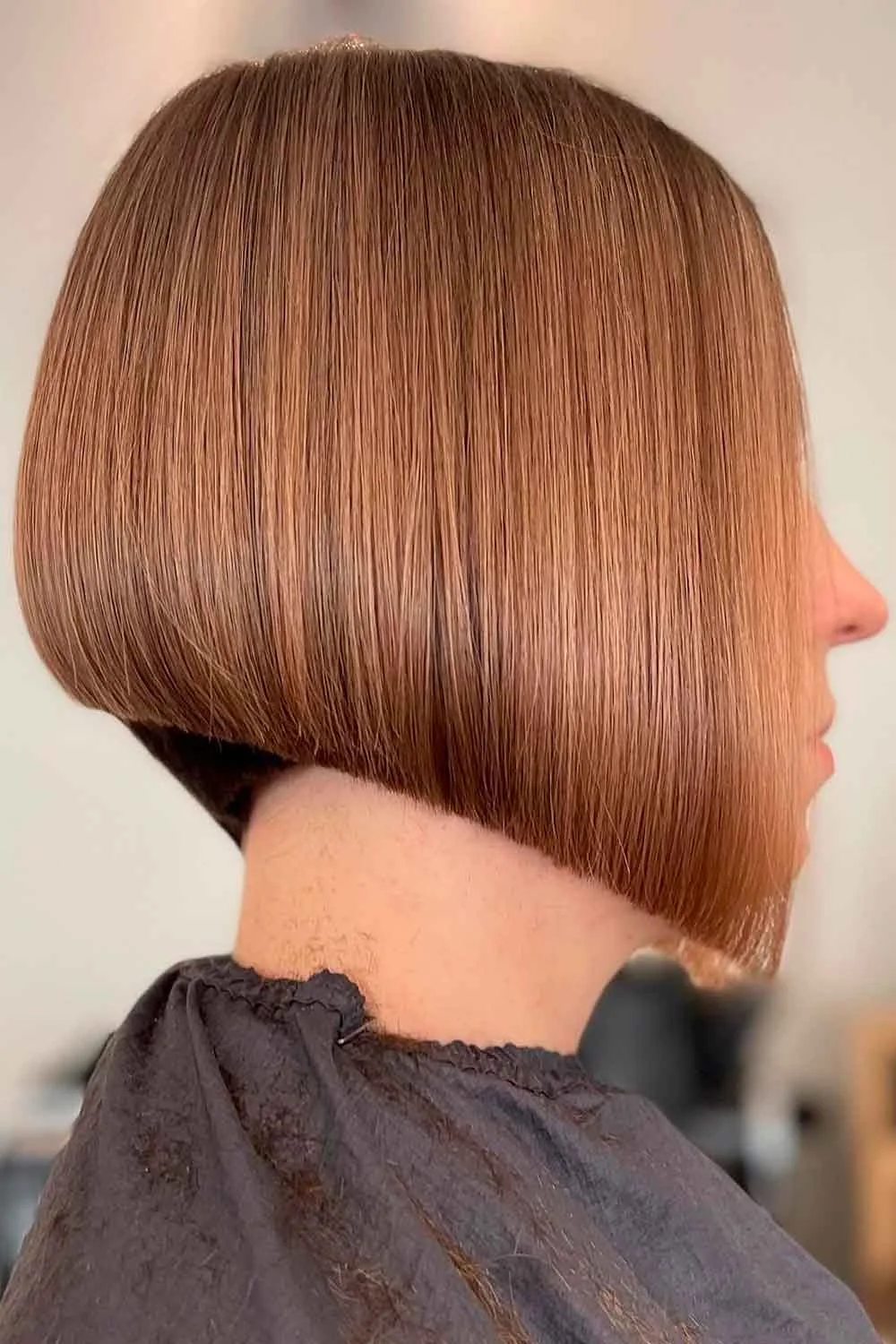
Smooth Copper Bob With a Short Nape
A rounded back ends above the nape while the front continues down beside the jaw.
- Length
- Short bob
- Back
- Rounded
- Front
- Longer edge
The copper surface is straight and continuous, making the lower diagonal easy to follow. Fullness sits behind the middle of the head, then narrows sharply toward the exposed neck. The front is longer and flatter, creating a clean transition from the back curve to the face.
Wearability note: Choose this for a compact graduated silhouette with a defined edge. Bring the side view to discuss both the nape clearance and the front endpoint, since copying only the copper shade or longer front would not reproduce the same back proportion.
Idea 02
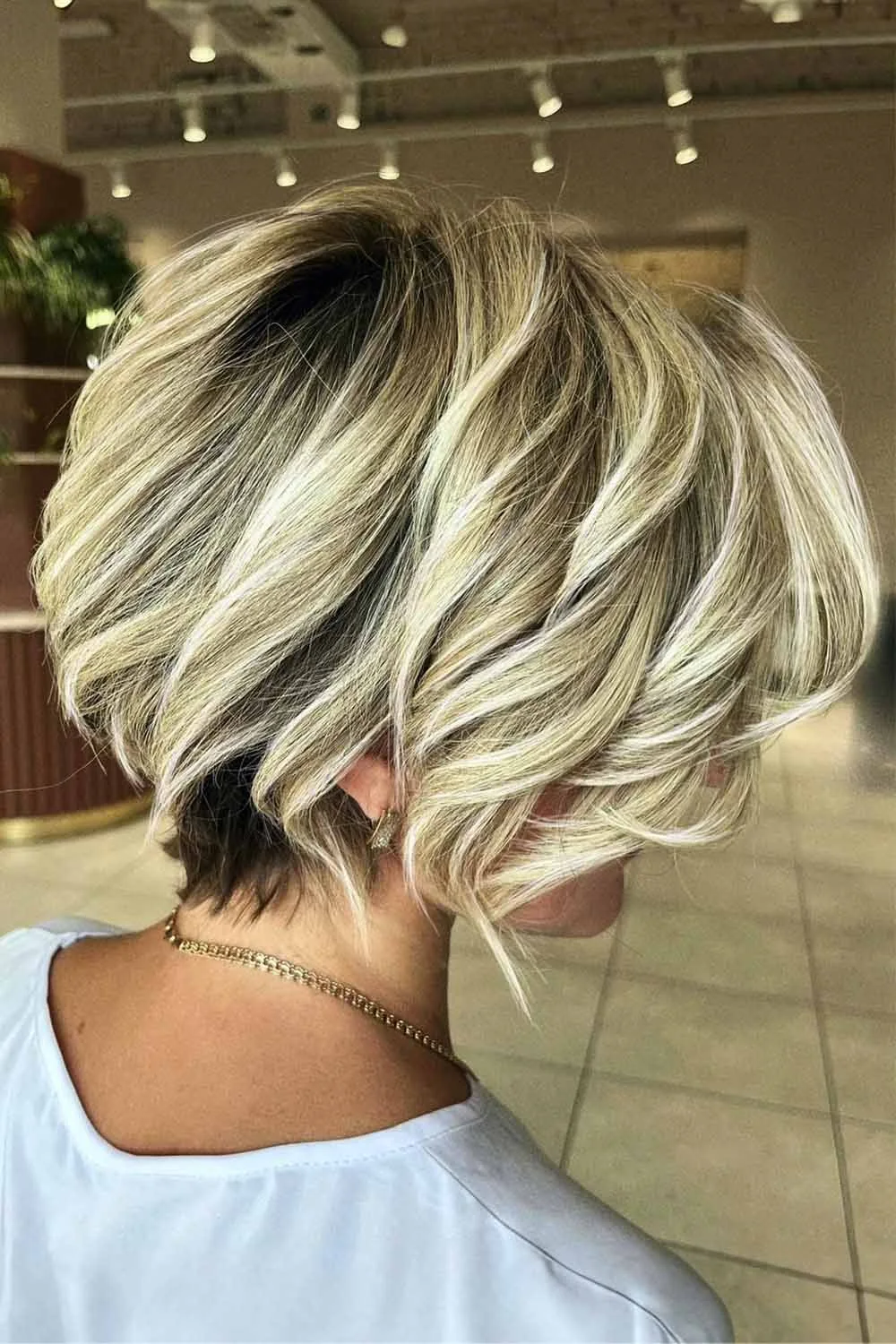
Wavy Blonde Bob Above the Nape
Loose waves add texture over the rounded back without hiding the short lower outline.
- Length
- Bob
- Finish
- Loose waves
- Back
- Short nape
The upper strands separate into pale bends, with darker roots visible beneath them. The back lifts outward before narrowing near the neck, while a longer front section drops beside the cheek. Individual tips soften the lower edge instead of forming one straight horizontal line.
Wearability note: Save this for a textured version of a short-back bob. Show how much neck remains exposed and where the longest front piece ends, then compare the photographed waves with the movement you normally wear so the back curve stays realistic.
Idea 03
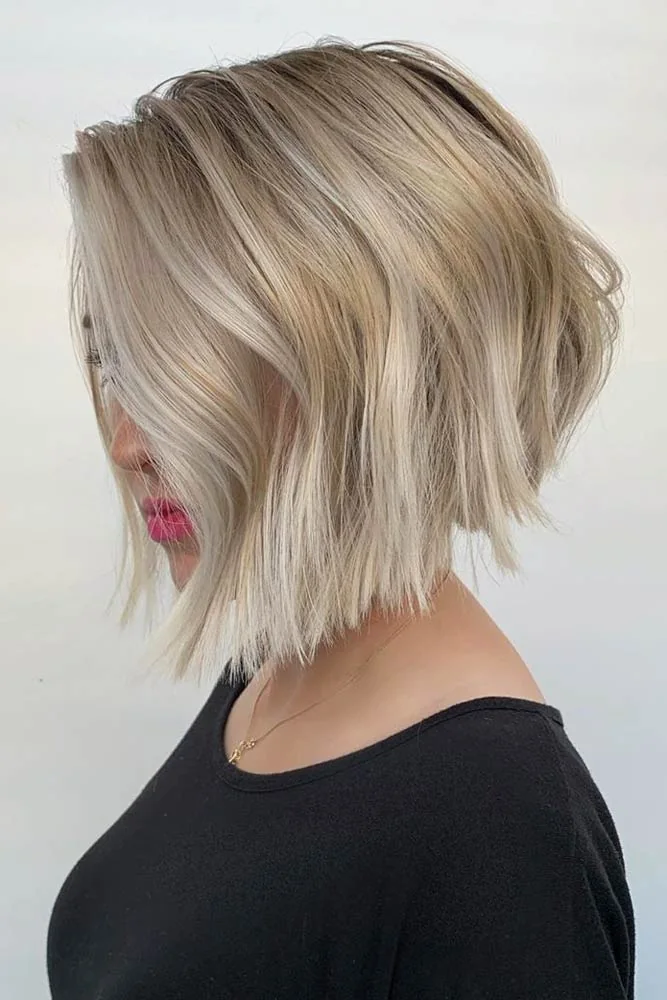
Textured Blonde Bob With a Longer Front
The front falls below the shorter wavy back, creating a visible angle without a rigid smooth edge.
- Length
- Angled bob
- Finish
- Soft waves
- Front
- Pointed ends
The crown rounds outward behind the head. Pale strands bend through the sides and separate into fine points, with the shortest lower hair finishing above the neck. Longer front pieces continue beside the jaw, so the wave texture sits over a clearly unequal front-to-back length.
Wearability note: Use this if you want an angled shape with a relaxed perimeter. Discuss how pointed the front should be and how much nape clearance you prefer, rather than assuming the open waves alone will create the graduated outline.
Choose your direction
Compact
A rounded back with a short nape and moderate front length.
Angled
A much longer front beside a shorter back.
Textured
Waves or curls over the graduated outline.
Idea 04
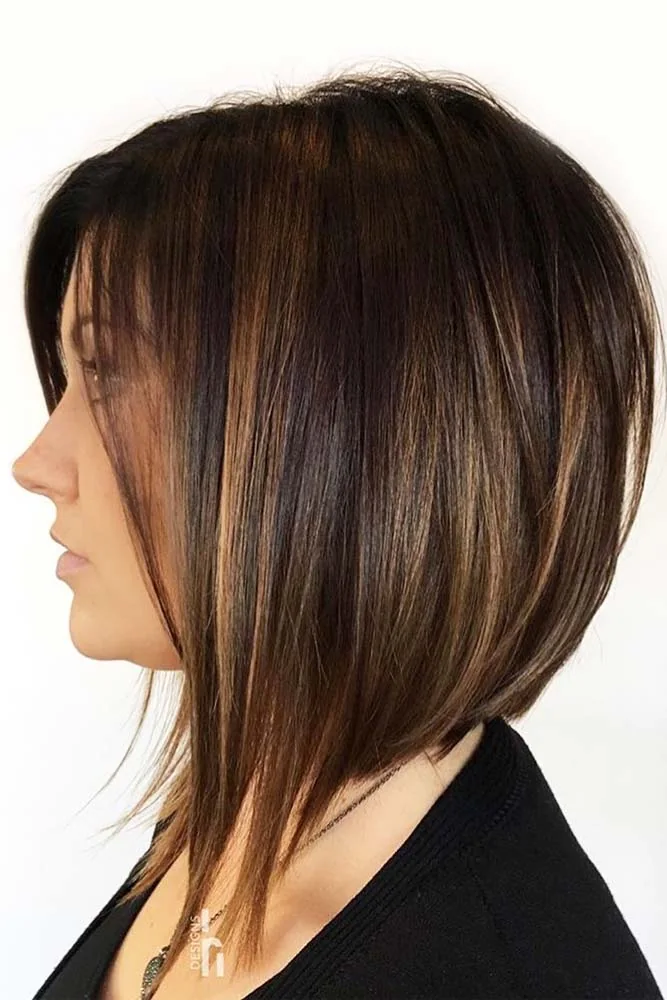
Brown Bob With a Deep Front Angle
The difference between the short back and long front is the main feature of this smooth profile.
- Length
- Angled bob
- Back
- Compact curve
- Front
- Long points
The brown surface follows a rounded curve behind the head before narrowing toward the nape. Fine lighter lines extend forward through the side panel, ending in narrow points below the jaw. The smooth finish makes the steep lower diagonal more obvious than a wavy arrangement would.
Wearability note: Choose this when you want a pronounced front extension. Ask how the front length will sit against your neck and clothing, and bring the full side view so the short rounded back is not replaced by a generally longer angled bob.
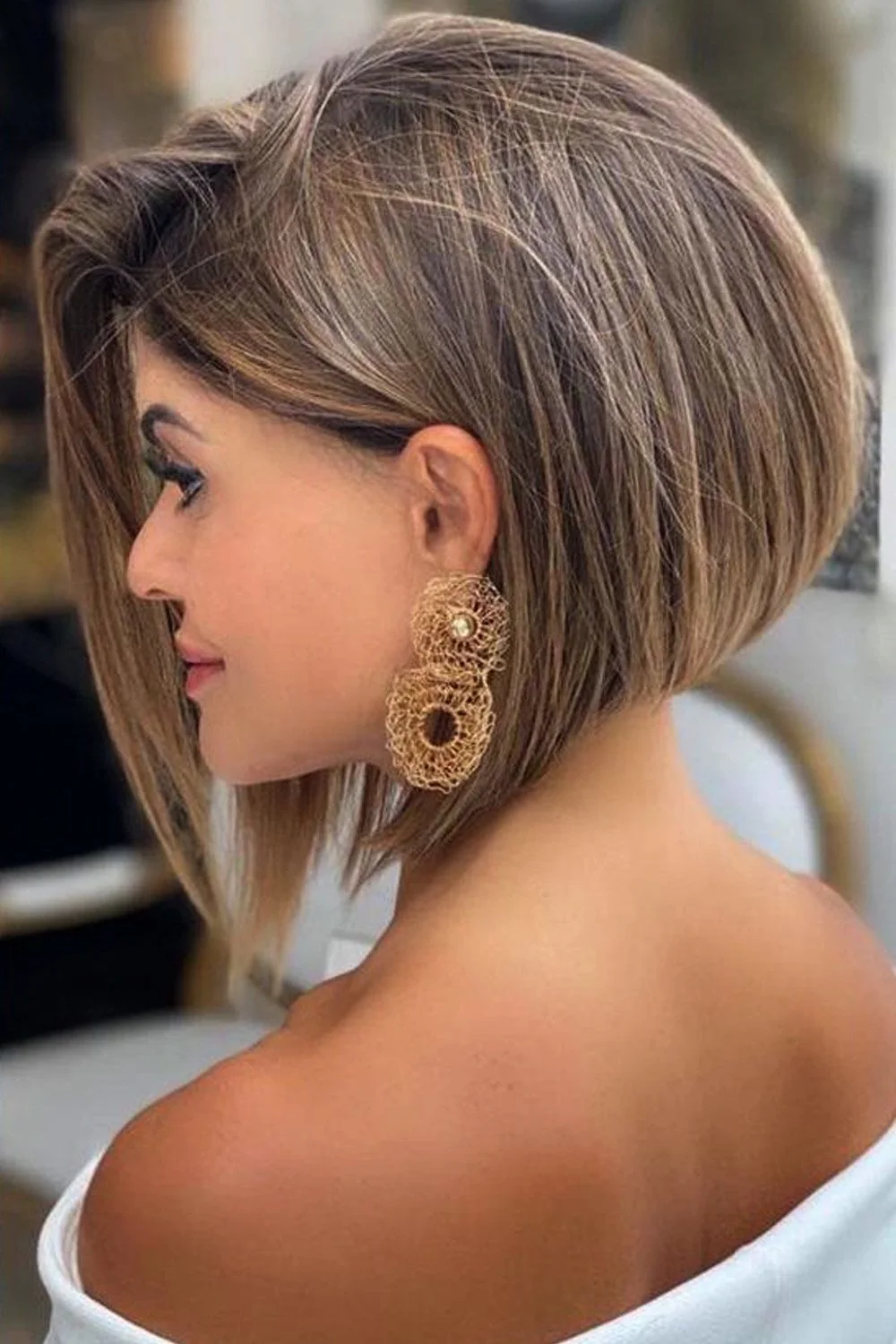
Idea 05
Short Brown Back With a Tucked Side
The tucked side reveals how the rounded back sits above the neck.
- Length
- Short bob
- Side
- Tucked
- Back
- Rounded
The upper brown layers follow a smooth curve from crown to lower back. A longer front panel drops beside the jaw, while hair behind the ear narrows to a short nape. Fine light ribbons show the direction of the layers without obscuring the overall rounded shape.
Wearability note: Save this for the relationship between ear coverage and back length. Compare it with an untucked reference too, because tucking the side exposes more of the ear and makes the short back look more compact than it might when worn loose.
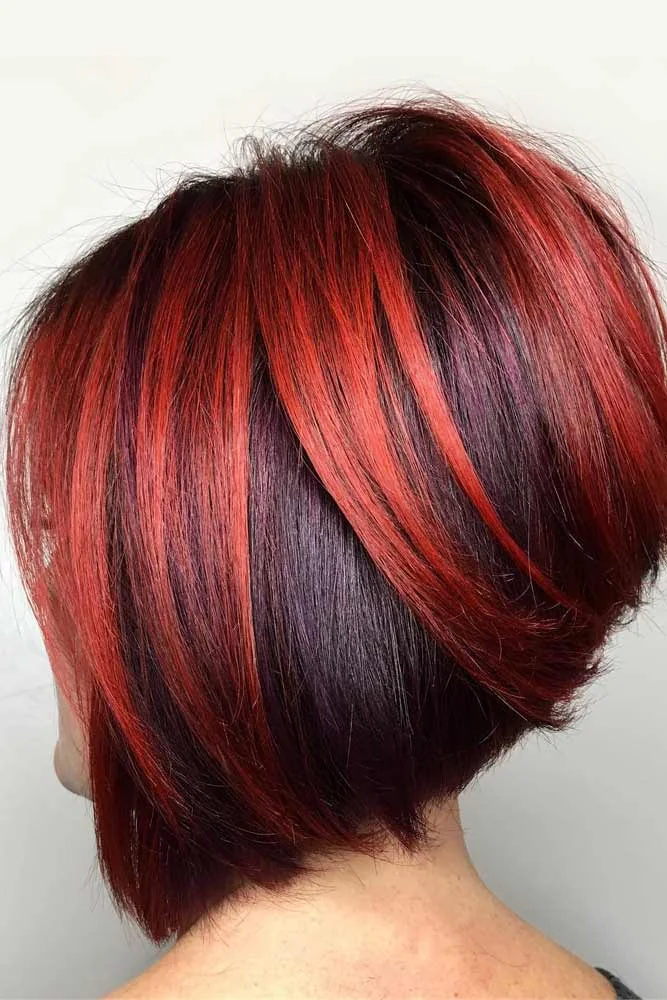
Idea 06
Red-Ribbon Bob With a Rounded Back
Long red ribbons trace the rounded back and make the shorter nape easy to see.
- Length
- Bob
- Back
- Rounded layers
- Color
- Red ribbons
The upper hair forms a smooth outward curve, with several layered ends turning toward the neck. Deep dark sections remain between the red surface pieces. The front extends farther downward than the lower back, creating a clear diagonal while the nape stays exposed.
Wearability note: Choose this for the back shape even if the red contrast is not your goal. Ask where the rounded fullness should sit and how soft the nape edge should be, since a flatter back would change the silhouette more than using a different color.
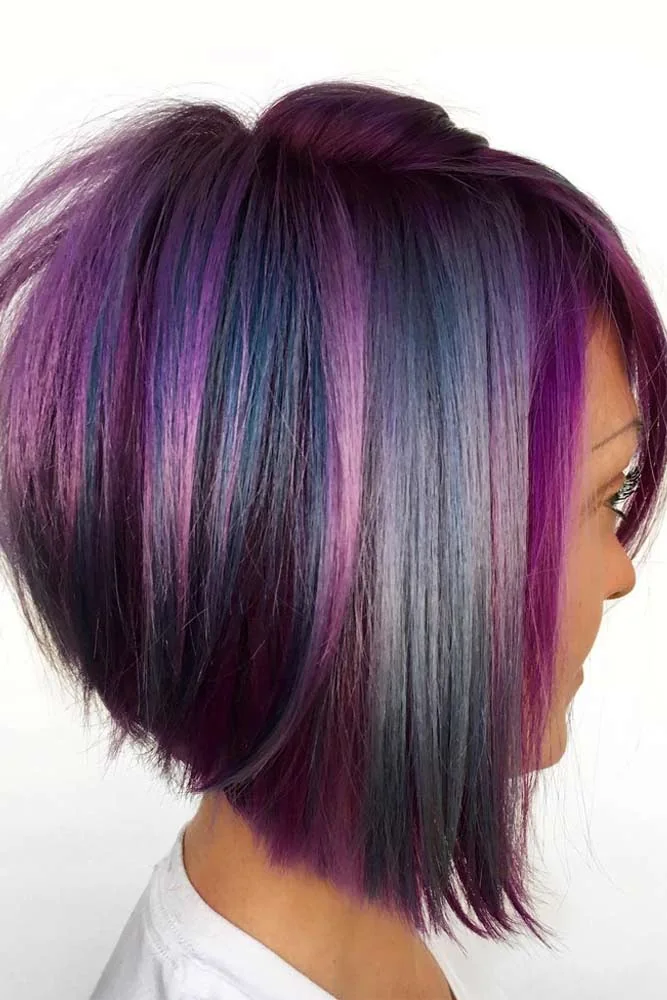
Idea 07
Purple Bob With a Long Front Panel
The long front panel gives a strong diagonal against the compact purple back.
- Length
- Angled bob
- Back
- Short
- Front
- Long panel
Dark violet and lighter purple lines run vertically through a smooth surface. The back rounds above the neck and finishes relatively high, while the front descends in a narrow panel beside the face. Several shorter ends are visible beneath the rounded upper layers at the nape.
Wearability note: Use this when front length and back exposure are equally important. Decide whether you want that much difference between the two ends of the cut, and show the nape area separately if you prefer a softer transition than the photographed profile.
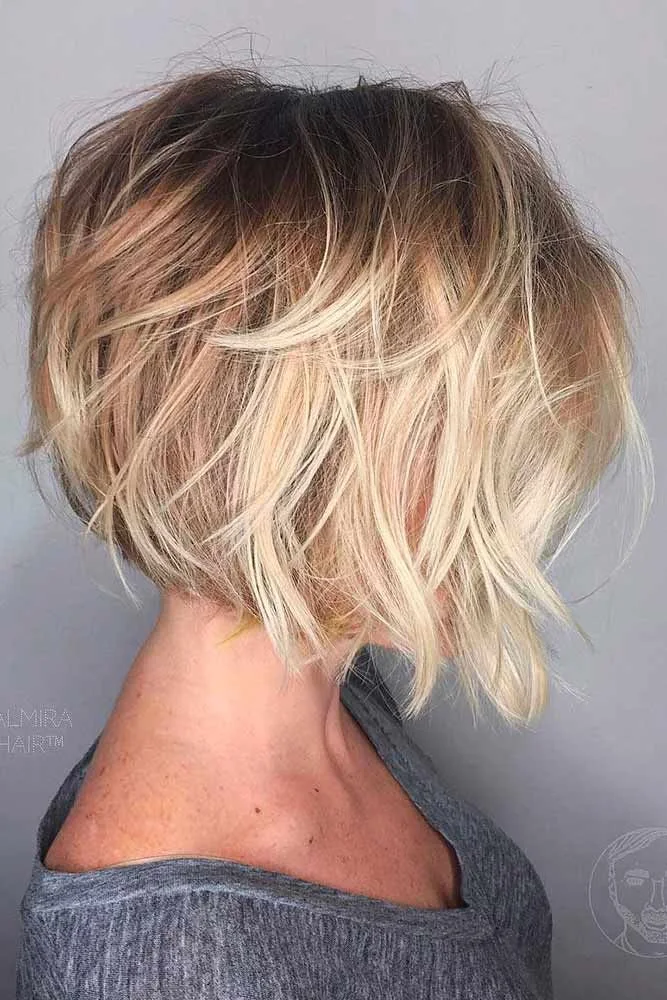
Idea 08
Loose Blonde Waves Over a Short Back
Separated waves add fullness above the short neck edge rather than extending the entire back downward.
- Length
- Short bob
- Finish
- Separated waves
- Back
- Tapered nape
The crown appears rounded, with pale irregular bends spreading through the upper sides. Darker strands recede beneath the blonde surface, and the lower ends narrow quickly near the neck. Longer pieces remain at the front, keeping the wavy bob from becoming an evenly short crop.
Wearability note: Save this for a lighter textured perimeter around a graduated shape. Ask how the cut looks with smaller waves or a straighter finish, because the photographed separation contributes to the apparent fullness above the nape.
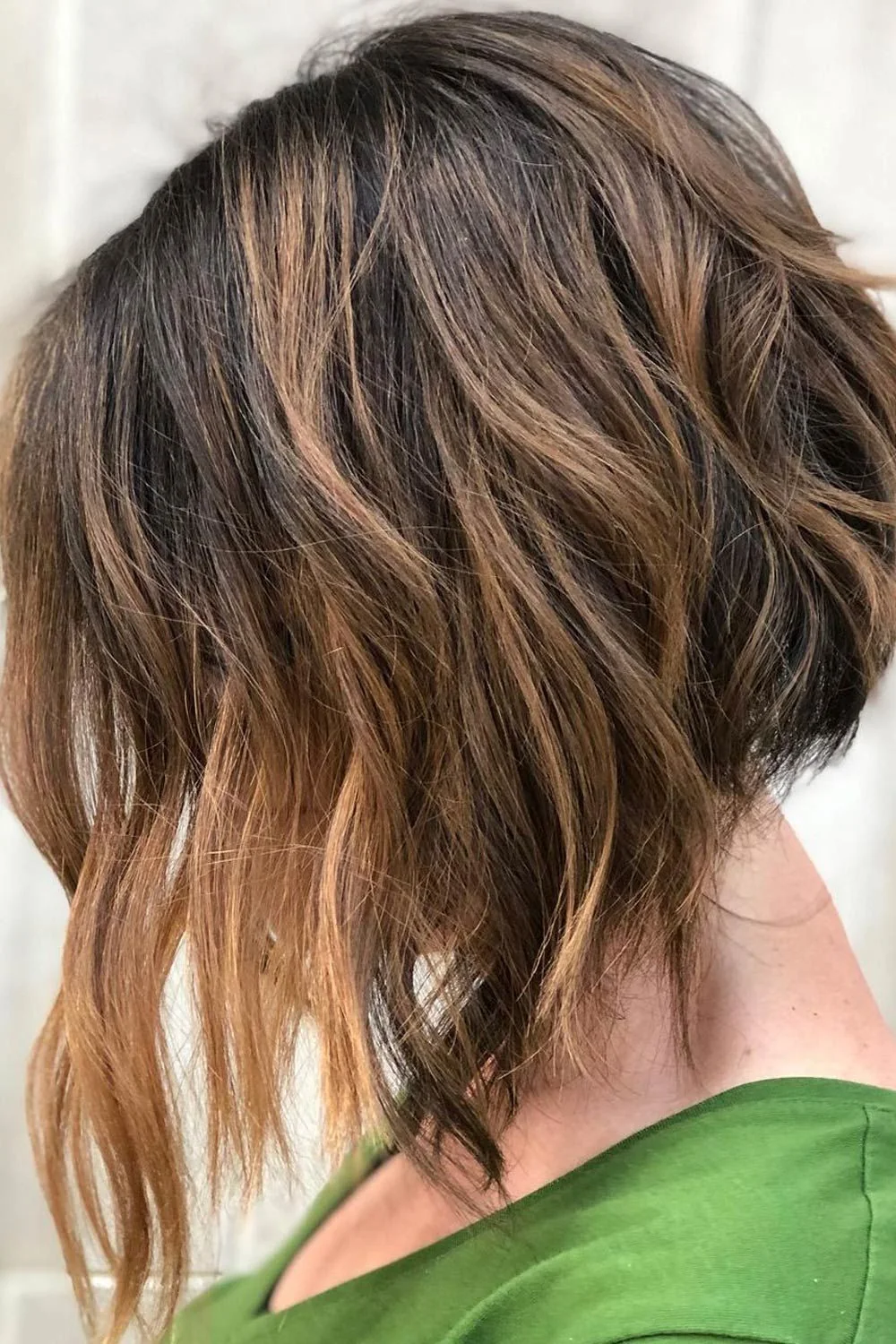
Idea 09
Brown Wavy Bob With Longer Tips
Longer pale tips emphasize the front while the back remains shorter and rounded.
- Length
- Angled bob
- Finish
- Wavy
- Front
- Longer tips
The upper brown hair forms loose bends, with light ribbons tracing their outer edges. The rear shape expands behind the head before ending above the neck. Several fine front pieces descend farther, producing an uneven textured diagonal rather than a sharp smooth perimeter.
Wearability note: Choose this for an angled bob that keeps visible movement and separation. Discuss the front-tip length and back curve together, and avoid using the highlighted ends alone as a length guide if you intend to wear a darker or more uniform color.
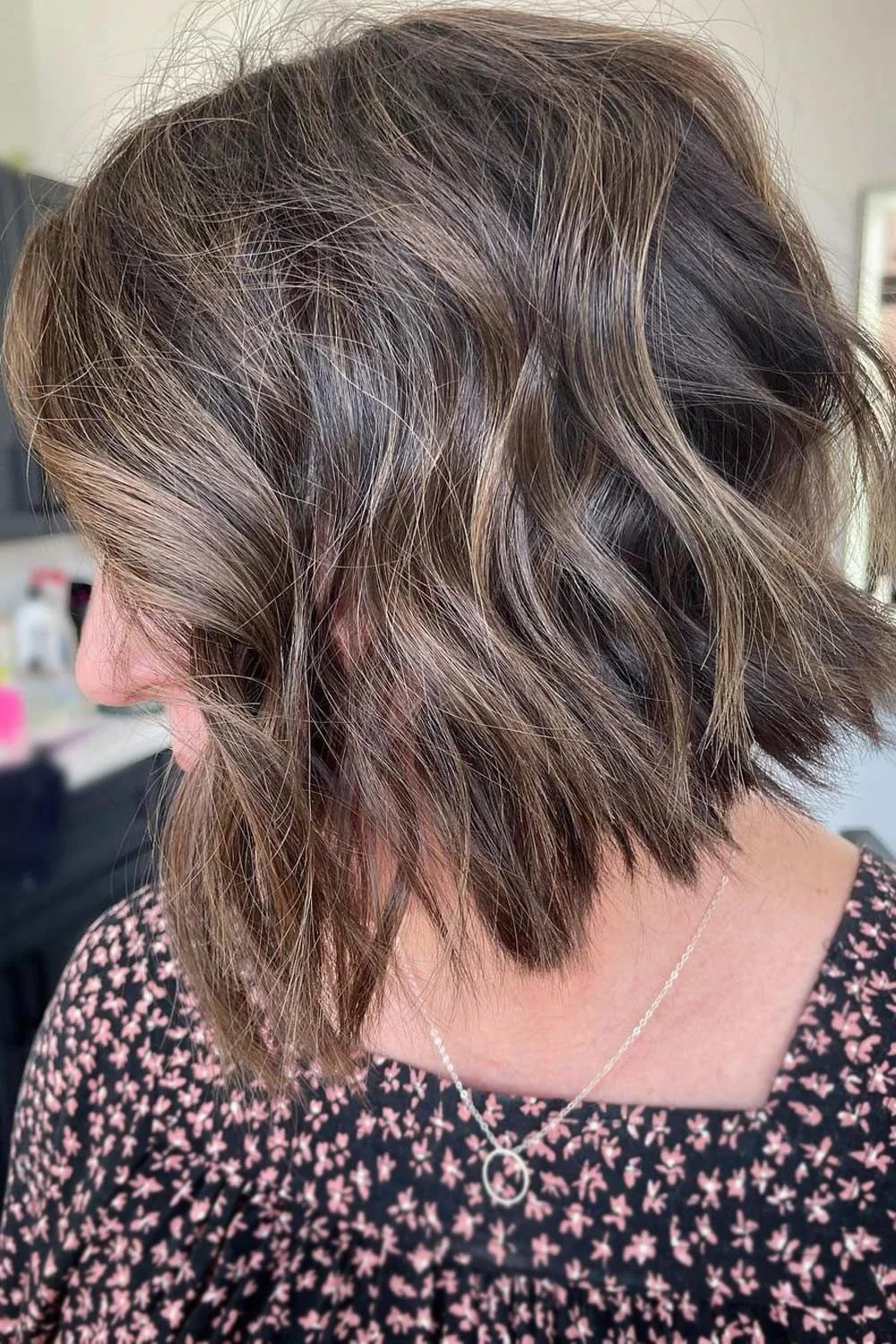
Idea 10
Soft Brown Waves With a Rounded Nape
Soft waves give the back a fuller surface while the lower edge remains close to the neck.
- Length
- Bob
- Finish
- Soft waves
- Back
- Rounded nape
Several broad brown bends overlap behind the head, with lighter strands showing through their outside curves. The lower hair ends in narrow separated pieces rather than one blunt line. A longer front section stays visible beside the cheek, balancing the compact rear outline.
Wearability note: Use this for a less sharply polished graduated bob. Bring the nape edge and wave size as separate details, and ask how much back fullness comes from the arranged finish rather than expecting the same rounded surface with every drying routine.
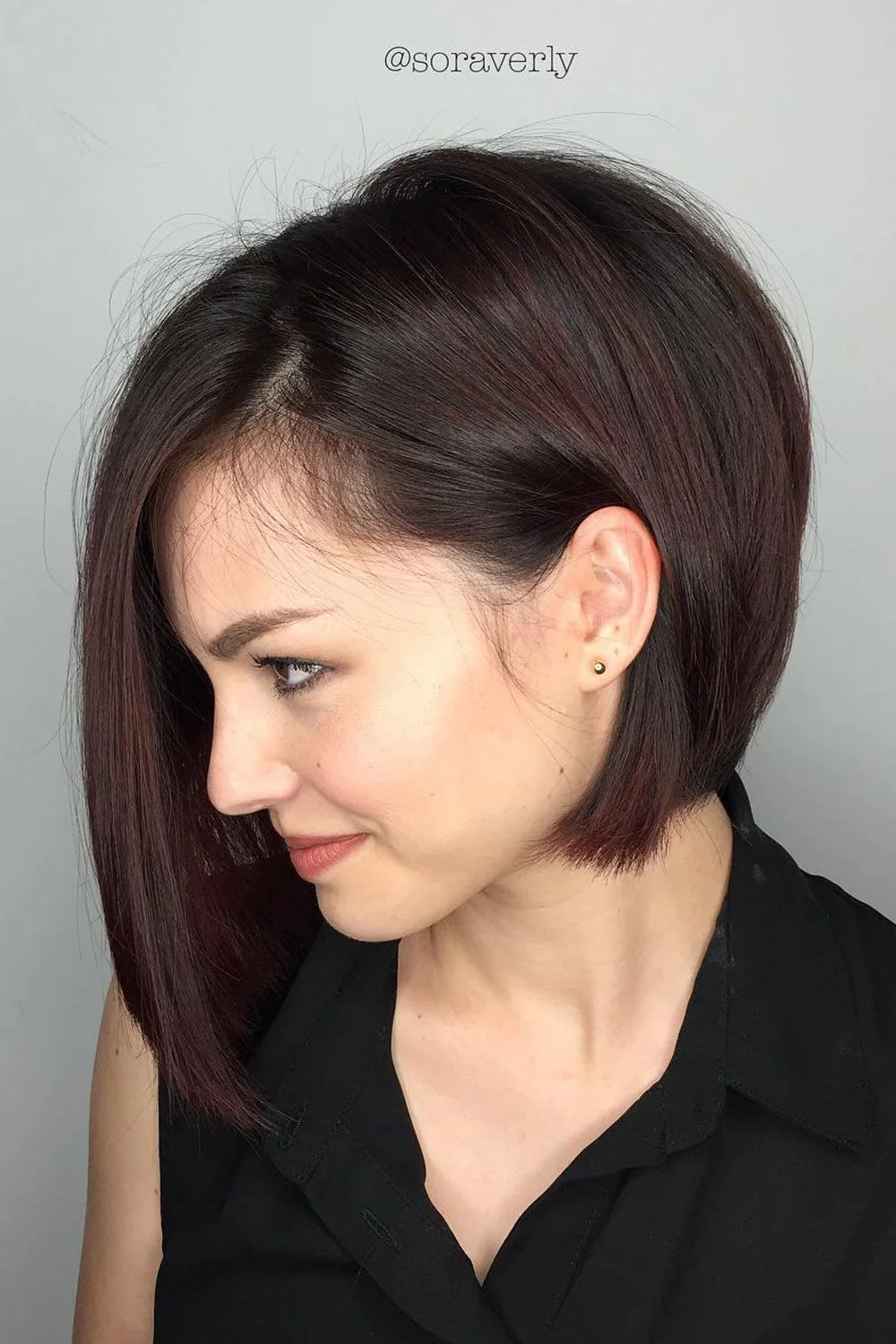
Idea 11
Deep Brown Bob With a Tucked Ear
The exposed ear makes the compact back easy to compare with the longer sweeping front.
- Length
- Short bob
- Side
- Tucked
- Front
- Long sweep
The dark surface rounds behind the crown and narrows to a short neck edge. One side is tucked away, while the heavier front panel falls diagonally across the forehead and cheek. The front extends lower than the back without forming an equally long panel on both visible sides.
Wearability note: Choose this if you enjoy an asymmetric way of wearing a rounded bob. Ask how it looks untucked and with the opening on the other side, since the photographed ear exposure is a styling choice rather than proof that the side is shaved.
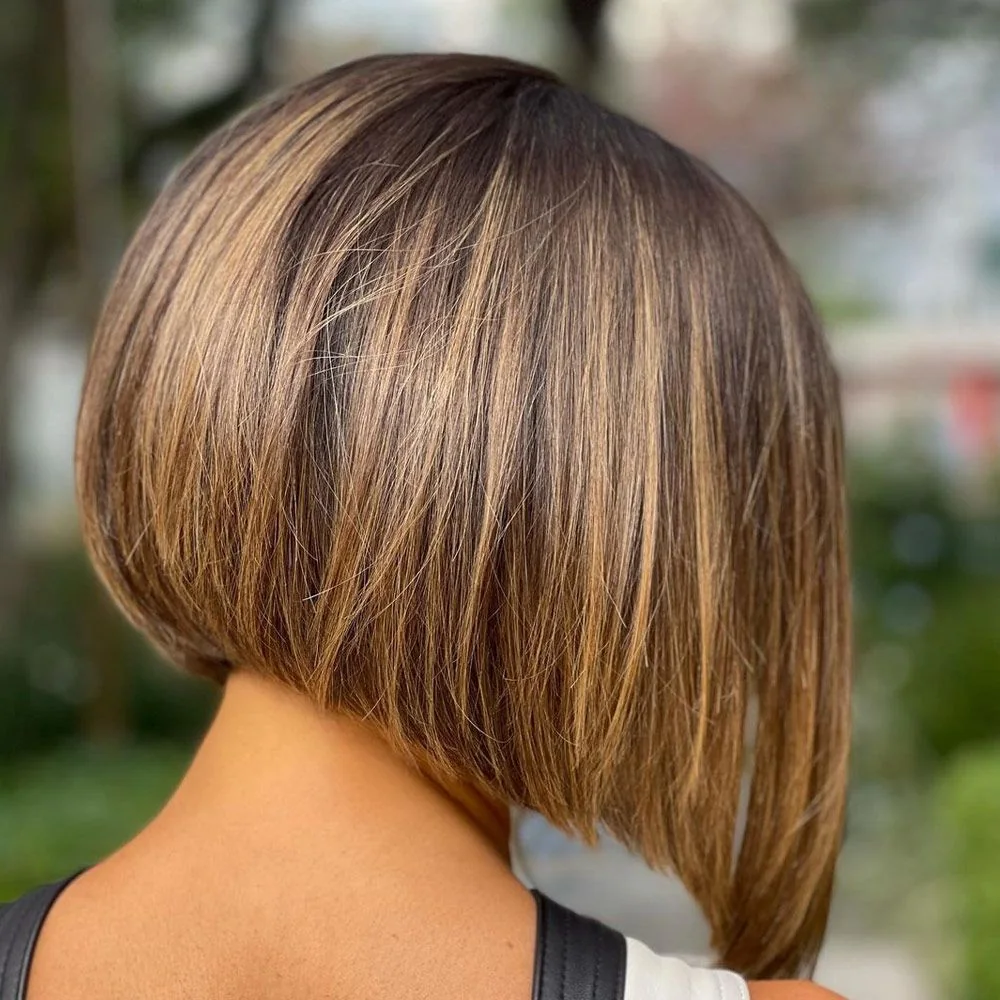
Idea 12
Smooth Brown Bob With a Compact Back
A shallow rounded back gives this bob a softer angle than the longest-front examples.
- Length
- Compact bob
- Finish
- Smooth
- Back
- Rounded
The brown layers lie close together, with fine golden strands showing across the surface. The rear hair curves above the nape and meets a lower side edge near the jaw. There are no large waves or exaggerated front points to distract from the compact continuous outline.
Wearability note: Save this for a restrained graduated shape. Explain how much roundness you want above the neck and how long the side should remain, since increasing either dimension would change the balance even if the surface stayed equally smooth.
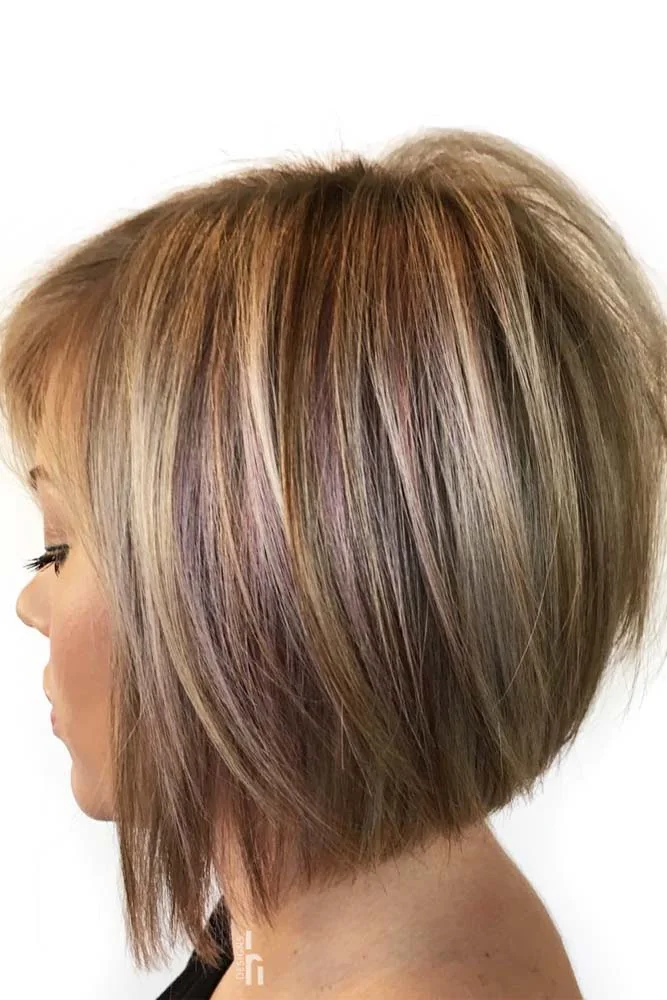
Idea 13
Fine Highlights on a Short Rounded Bob
Fine highlights reveal the layer direction while the short rounded back stays the main shape.
- Length
- Short bob
- Back
- Rounded
- Color
- Fine highlights
The crown lifts into a smooth curve before tapering toward the neck. Narrow pale lines travel down the side, with a few longer strands finishing beside the cheek and jaw. The lower back sits higher than the front, but the transition is relatively gentle rather than dramatically steep.
Wearability note: Use this when you want a moderate front-to-back difference. Ask about the nape length in a plain side view as well as the highlight placement, because the light strands can make the layering more visible without being essential to the cut.
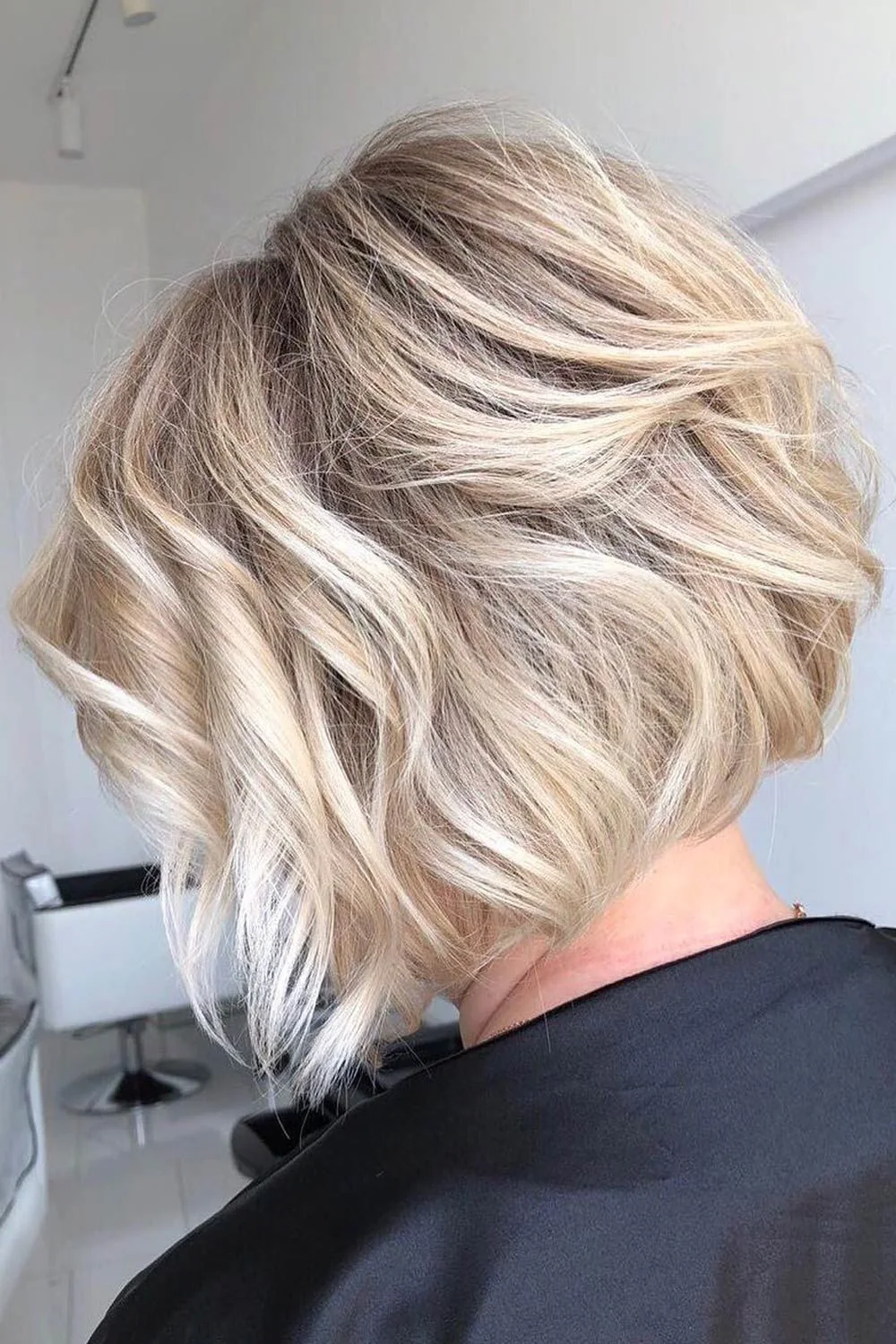
Idea 14
Blonde Waves on a Rounded Back
Broad waves soften the graduated back while preserving visible neck clearance.
- Length
- Bob
- Finish
- Broad waves
- Back
- Short nape
Pale strands curve outward behind the head and turn inward closer to the lower edge. Darker depth appears beneath the upper surface, and several separated tips finish near the nape. A longer front area remains visible to one side, showing that the cut is not equally short all around.
Wearability note: Choose this for fullness with a softer lower line. Discuss the unstyled outline during a consultation, since the large arranged waves contribute to the rounded appearance and may not reflect how your own hair rests in its everyday texture.
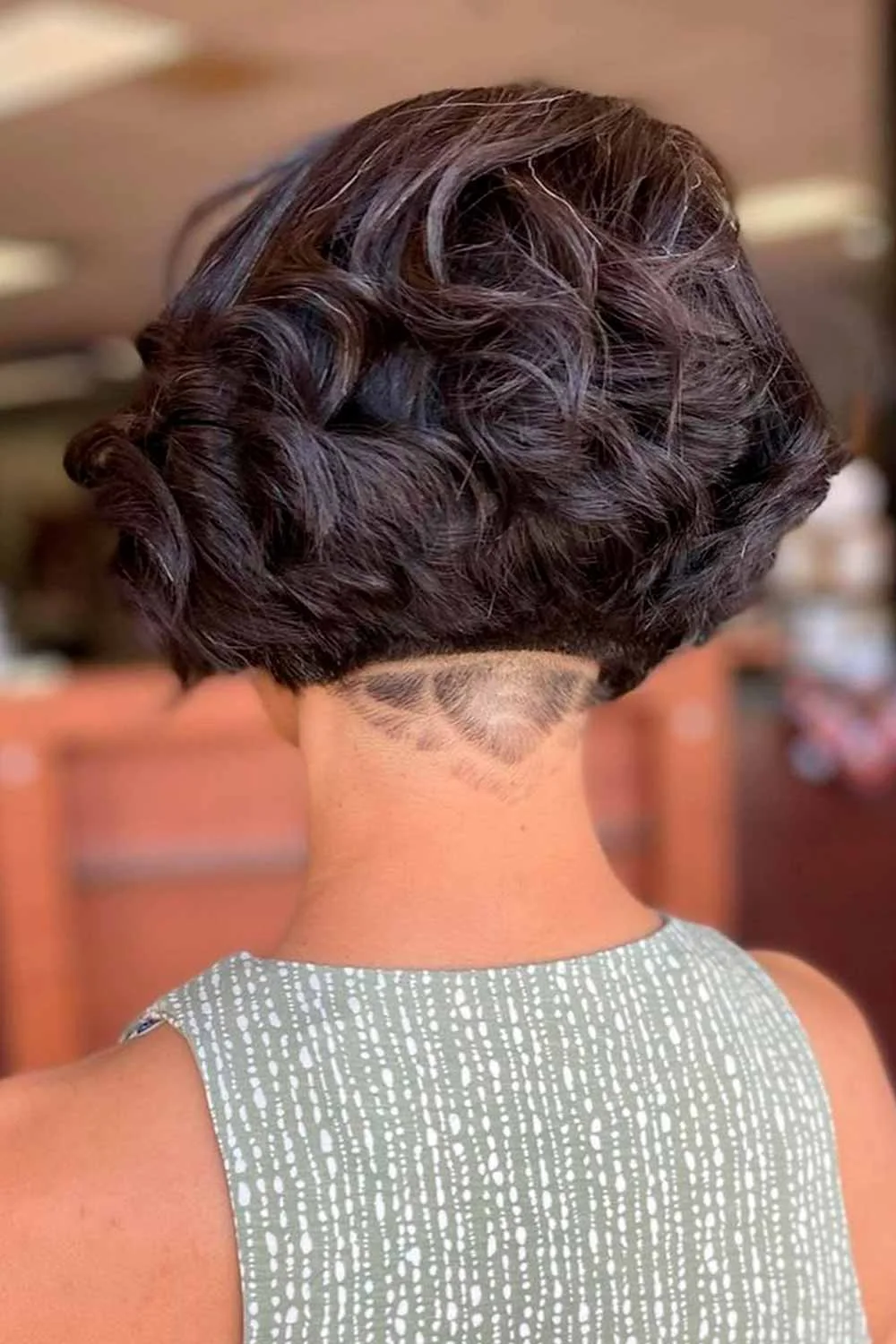
Idea 15
Curled Bob Above a Shaved Nape
The exposed shaved nape creates a strong contrast beneath the rounded curled upper shape.
- Length
- Short bob
- Finish
- Curled
- Nape
- Shaved design
Loose dark curls overlap across the back, forming a compact rounded outline above the neck. Below that edge, a close-cut section carries a small symmetrical shaved pattern. The upper curls remain separate from the design, so the haircut presents two clearly different textures from behind.
Wearability note: Save this only if you want the additional nape exposure as well as the curled shape. Ask about the design separately from the upper cut, and consider how visible it will remain as the close section grows rather than assuming the pattern is part of every stacked bob.
Compact curve or a stronger angle?
A compact bob rounds above the neck and keeps the front near the jaw. A stronger angle extends the front farther down while keeping the back short. Compare both lengths together rather than requesting only a dramatic front point.
Describe where you want the fullest back area to sit. A side reference makes that curve easier to discuss.
Smooth, wavy or closely cut beneath?
A smooth surface exposes the perimeter clearly. Waves soften it and make individual layer ends more noticeable. A close undercut reveals the neck beneath the fuller upper shape, but that extra exposure is not necessary for every graduated bob.
Ask how the outline behaves in your usual texture. The exact cutting method and maintenance cannot be determined from a styled photograph alone.

About the author
Bella Ross
Bella Ross is the hairstyle editor behind Latest Easy Hairstyles. She curates practical haircut, braid, color, and styling ideas with a focus on looks that are easy to browse, realistic to recreate, and useful for everyday hair decisions.