Before you choose
Decide where the long hair should fall
Long prom hairstyles can leave the back flowing or collect the length into a ponytail. This gallery keeps the hanging length visible so you can compare those options directly. Look at the endpoint, the upper gathering and the amount of dress coverage together. These are formal hairstyle references; the photographs do not establish starting density, added hair or which event each person attended.
The hairstyle gallery
17 prom hairstyles for long hair ideas to compare
Compare the visible length, shape, texture, and finish before choosing a salon reference.
Idea 01
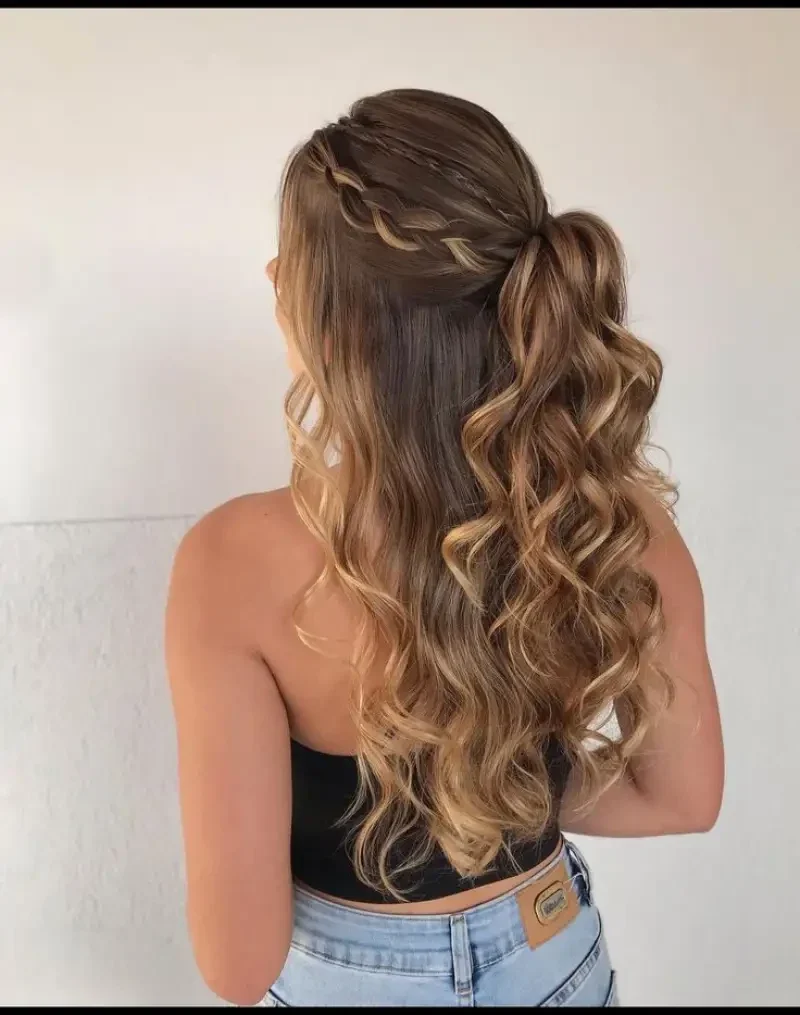
Fine Side Braids Into Long Half-Up Curls
Fine side braids lead toward a half-up ponytail over long brown curls. The gathered upper section sits above a separate layer of loose hair, keeping the full back length visible.
- Shape
- Fine side braids
- Detail
- Long lower curls
Lighter strands trace the narrow braids and the curls below. Most of the width comes from the loose lengths rather than the small upper detail.
Wearability note: Compare where the ponytail begins with where the loose ends stop. Those two points help describe the long silhouette more accurately than requesting a half-up braid alone.
Idea 02
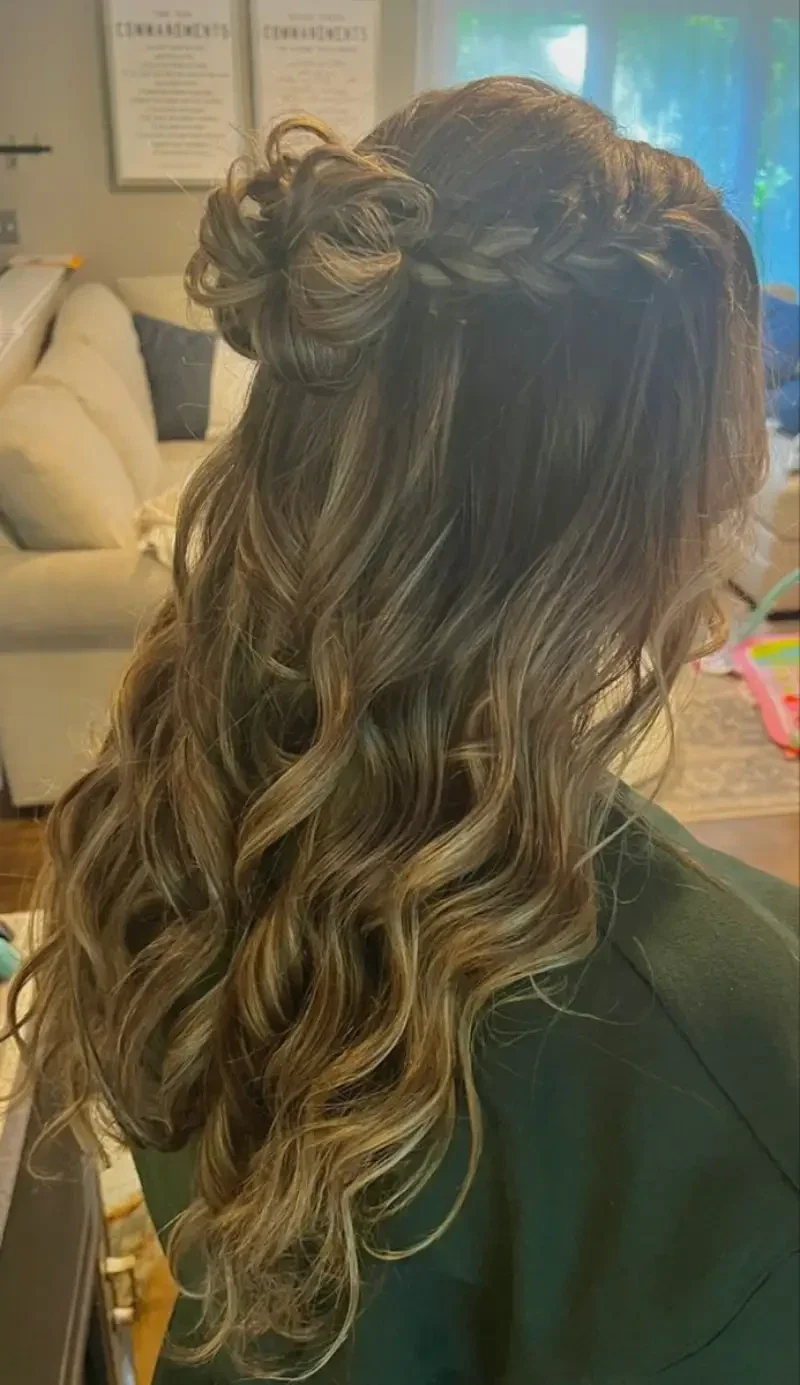
Small Half-Up Knot Over Long Ringlets
A small knot gathers braided upper sections over long ringlets. The upper detail remains compact while the loose hair extends much further down the back, preserving a strong sense of length.
- Shape
- Small upper knot
- Detail
- Long loose ringlets
The lower curls are separated rather than brushed into one continuous wave. Lighter ends make their individual outlines particularly clear against the darker top.
Wearability note: Choose this for the contrast between a small gathering and a long curled back. If you prefer broader waves, keep another reference so the lower finish is not mistaken for a required part of the knot.
Idea 03
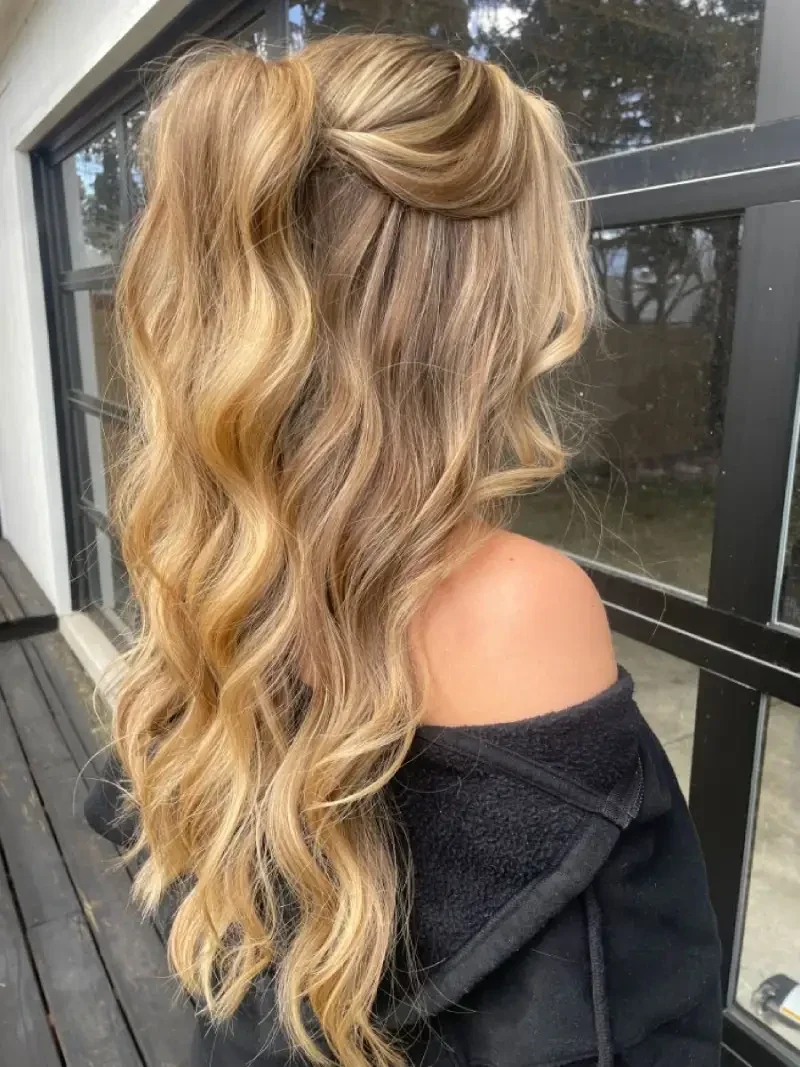
Raised Blonde Half Ponytail With Broad Waves
A raised blonde half ponytail curves outward above long broad waves. The upper sides sweep backward smoothly, leaving the hanging hair to create most of the movement across the back.
- Shape
- Raised half ponytail
- Detail
- Broad blonde waves
The ponytail and lower loose section overlap through the center. Their combined outline is fuller than a flat half-up tie, especially where the upper section first bends outward.
Wearability note: Compare the height behind the crown with a lower gathering before choosing. This photograph is also useful for showing how much loose hair remains over the back of an outfit.
Choose your direction
Compare coverage
Look at how much of the outfit is covered by the loose lengths.
Choose the gathering
Compare a high ponytail, low ponytail and small half-up crossing.
Set the detail level
Choose narrow braids, large loops or decorative accents according to your preference.
Idea 04
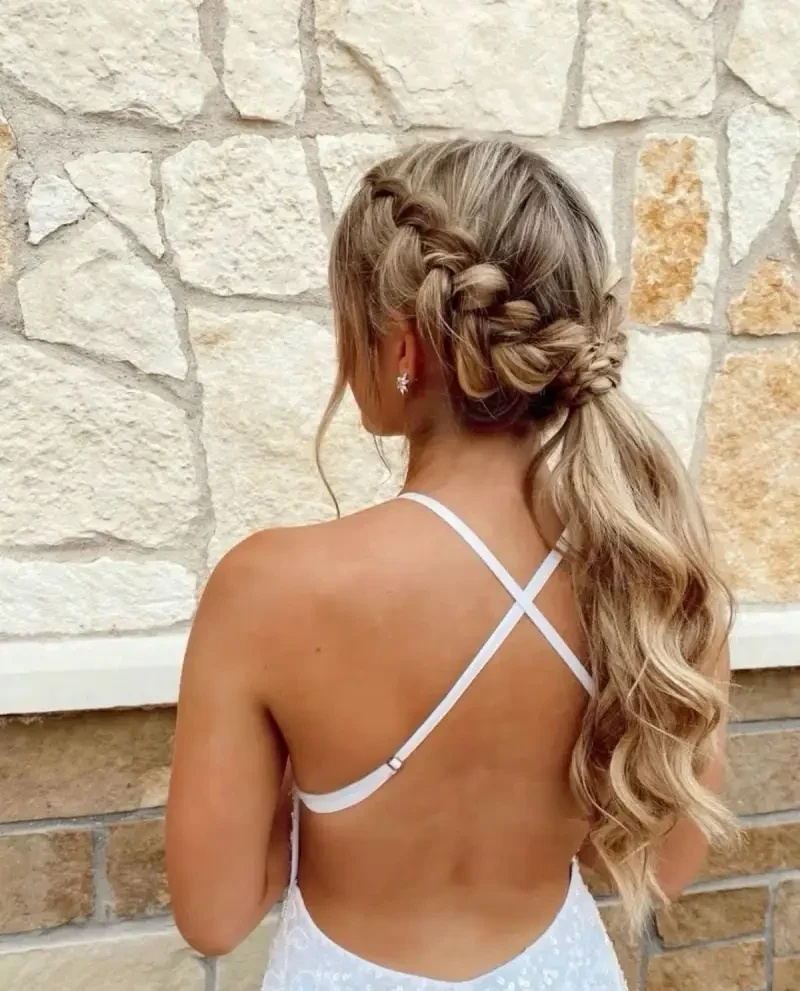
Broad Side Braid Into a Low Wavy Ponytail
A broad blonde side braid travels toward a long low ponytail. The hanging length falls below the gathering in loose waves, while the upper back remains more exposed than in a fully loose style.
- Shape
- Broad side braid
- Detail
- Low long ponytail
A wrap of hair marks the ponytail base. The braid creates most of the upper detail, with a finer free strand remaining beside the face.
Wearability note: Choose this if you want the length collected into one hanging section. Compare the braid’s width and the ponytail’s low placement separately, since either could be reduced without removing the long outline.
Idea 05
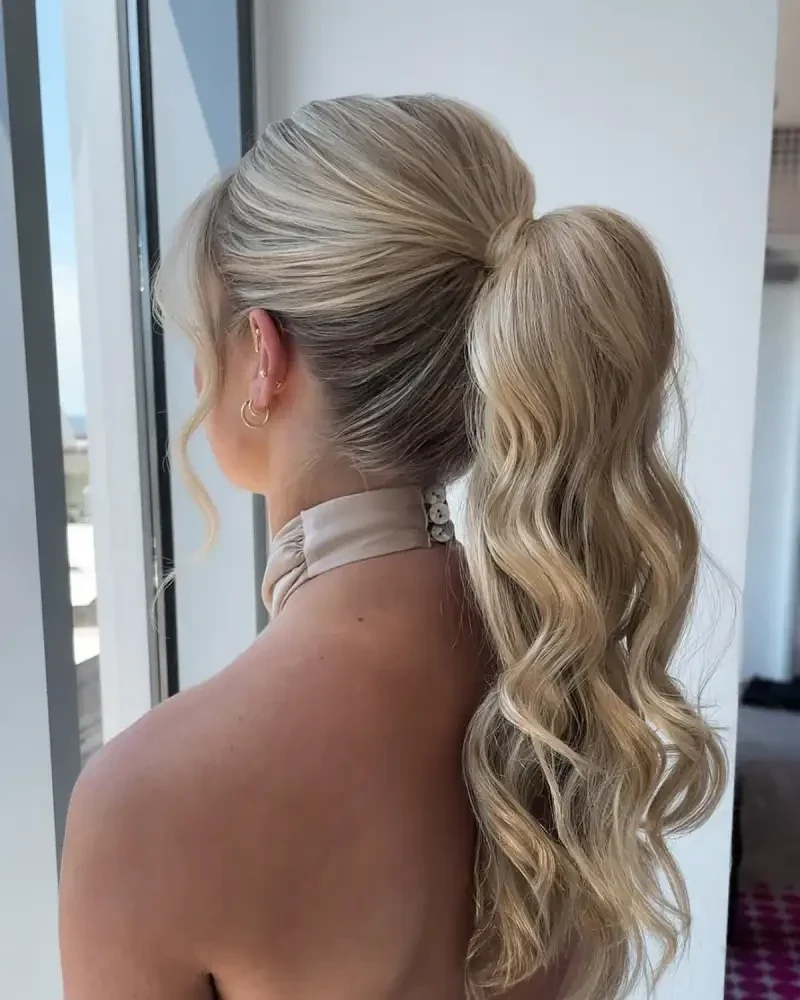
High Wrapped Ponytail With Long Waves
A high wrapped ponytail lifts long blonde waves away from the lower head. The smooth upper sides lead to a rounded base, then the loose ponytail curves down over the back.
- Shape
- High wrapped base
- Detail
- Long waved ponytail
One fine tendril remains near the face. The raised placement distinguishes this from the low ponytail, even though both keep the long hair together in a single hanging section.
Wearability note: Compare the ponytail base with your neckline and preferred crown height. The photograph shows the finished volume, but it does not establish starting density or whether additional support was used.
Idea 06
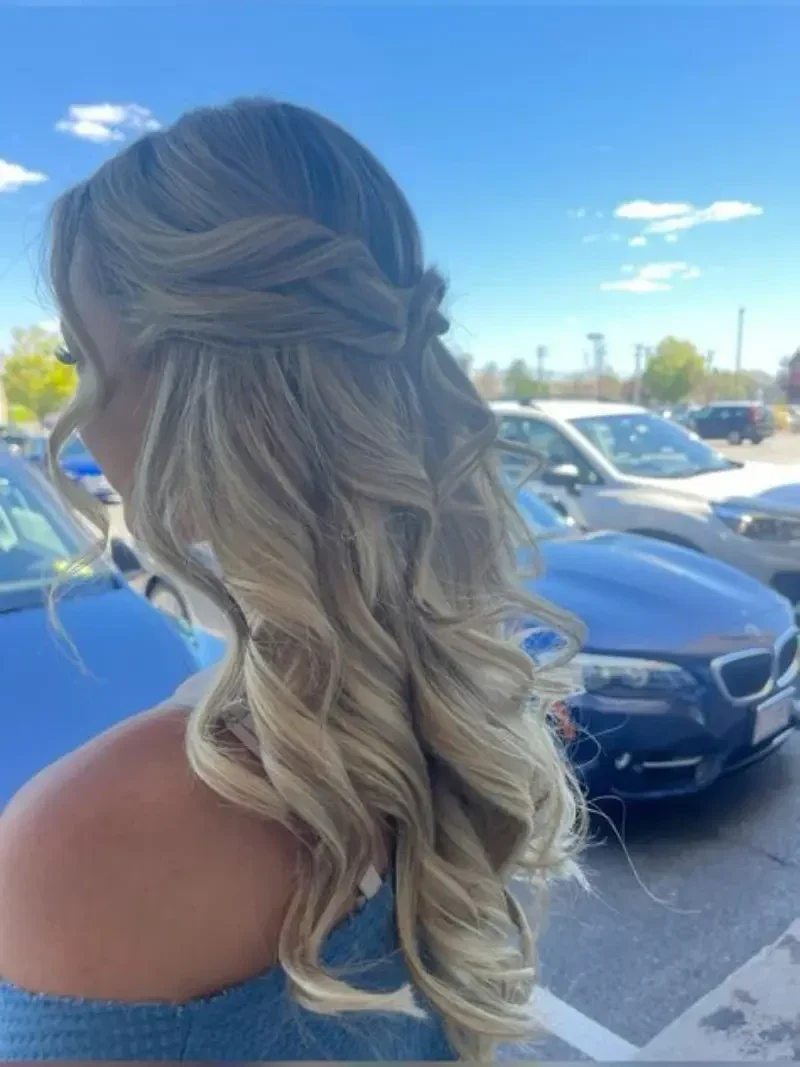
Low Half-Up Twists With Long Separated Curls
Low blonde twists meet across the back above long separated curls. The crown stays rounded and comparatively quiet, making the lower curls the dominant part of the silhouette.
- Shape
- Low upper twists
- Detail
- Separated long curls
The ends spread over the upper back rather than forming one narrow ponytail. The side angle shows some upper hair directed away from the face while most length stays loose.
Wearability note: Choose this for a low gathering with a flowing back. If your outfit has a back detail you want visible, compare the coverage here with a ponytail or fully gathered alternative.
Idea 07
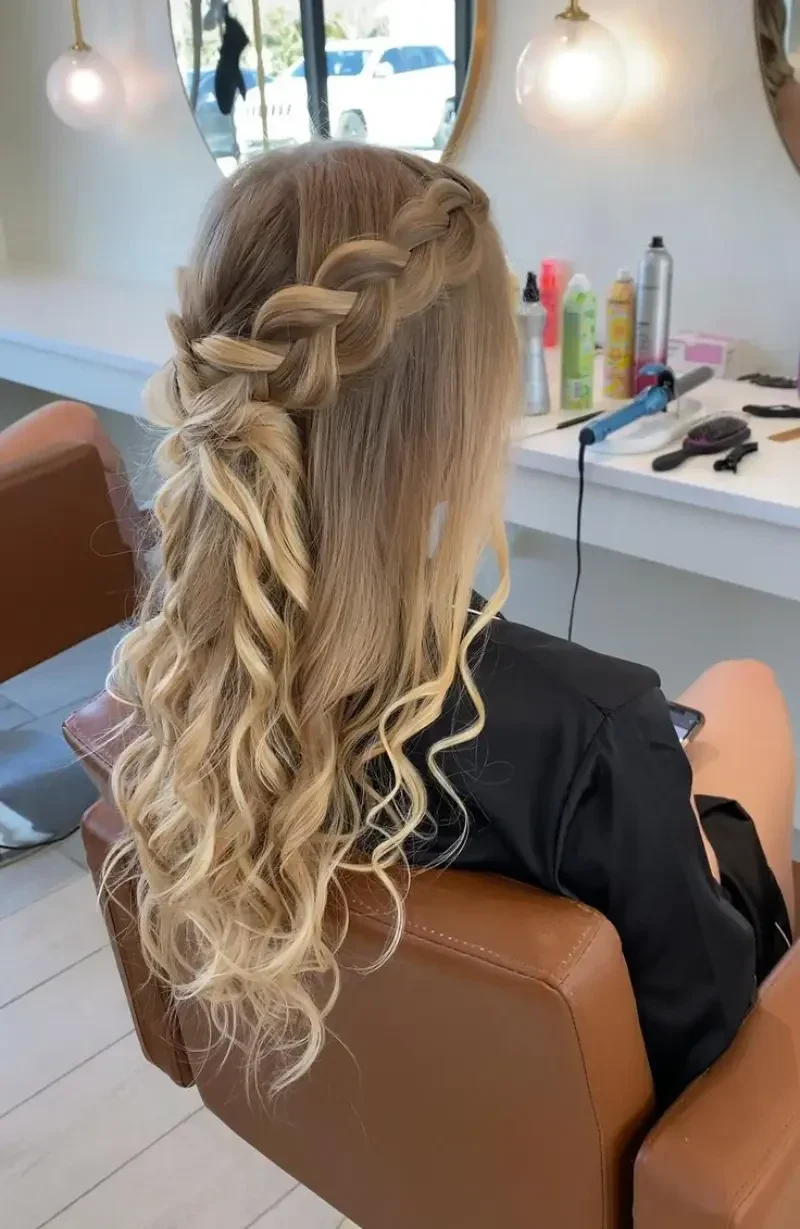
Wide Side Braids Above a Curled Half Ponytail
Wide blonde braids join above a long curled half ponytail. The side view makes the upper braid’s width clear, while the lower hair extends in several separated curls.
- Shape
- Wide joined braids
- Detail
- Long curled half ponytail
Some hair stays loose beneath the gathered section. This layered back arrangement gives more coverage than a single fully collected ponytail, even though the upper sides look similarly contained.
Wearability note: Compare the braid width with your own front and side layers. If a narrower detail is your preference, point that out separately while retaining the long loose lower section as the main reference.
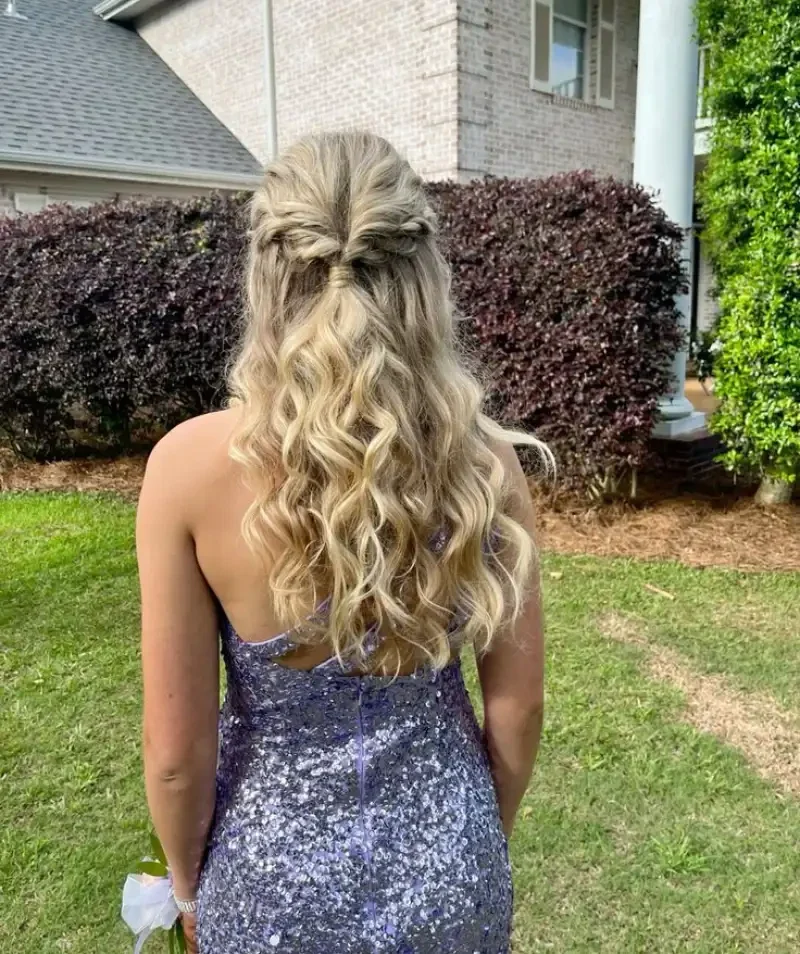
Idea 08
Long Half-Up Curls With a Small Center Tie
A small center tie joins blonde upper sections over long loose curls. The hair falls well down the back of the blue dress, making length more prominent than the restrained gathering.
- Shape
- Small central tie
- Detail
- Long loose curls
The top has a gentle rounded rise rather than a high ponytail. Below the tie, the curls form separate narrow curves with a slightly uneven lower edge.
Wearability note: Use this rear view when comparing back coverage with your own dress. A small gathering can still leave a large amount of hair loose, so choose that coverage deliberately rather than focusing only on the tie.
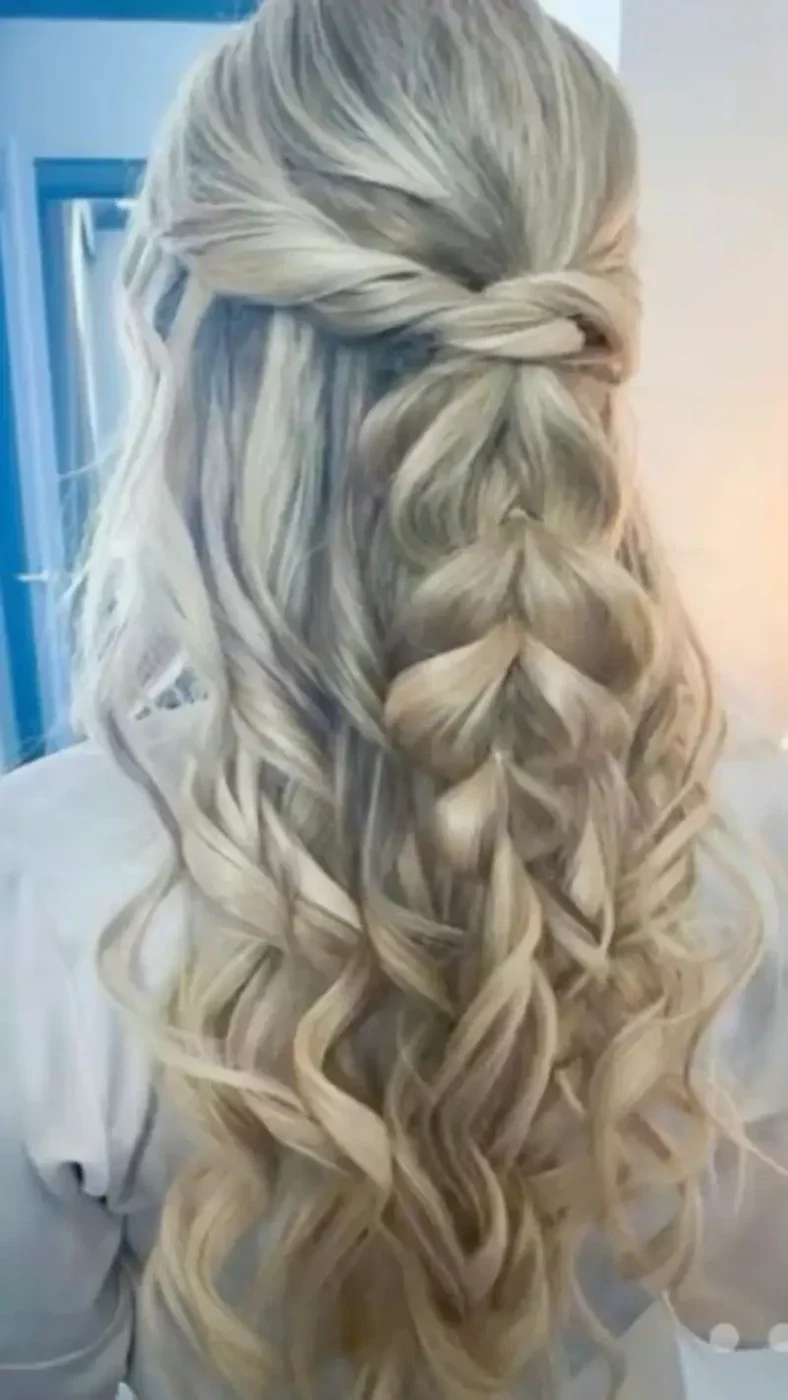
Idea 09
Central Braid Beneath Crossed Blonde Twists
Crossed blonde twists sit above a central hanging braid. Loose curled lengths remain beside it, giving the back both a defined vertical pattern and a softer flowing outline.
- Shape
- Crossed upper twists
- Detail
- Central hanging braid
The braid occupies only part of the lower width. Its larger linked sections are distinct from the smaller loose curls, so the center looks more structured than the sides.
Wearability note: Choose this if a visible long braid is part of what you want. Compare its thickness with the amount of hair left loose, because a broader center would change the balance across the entire back.
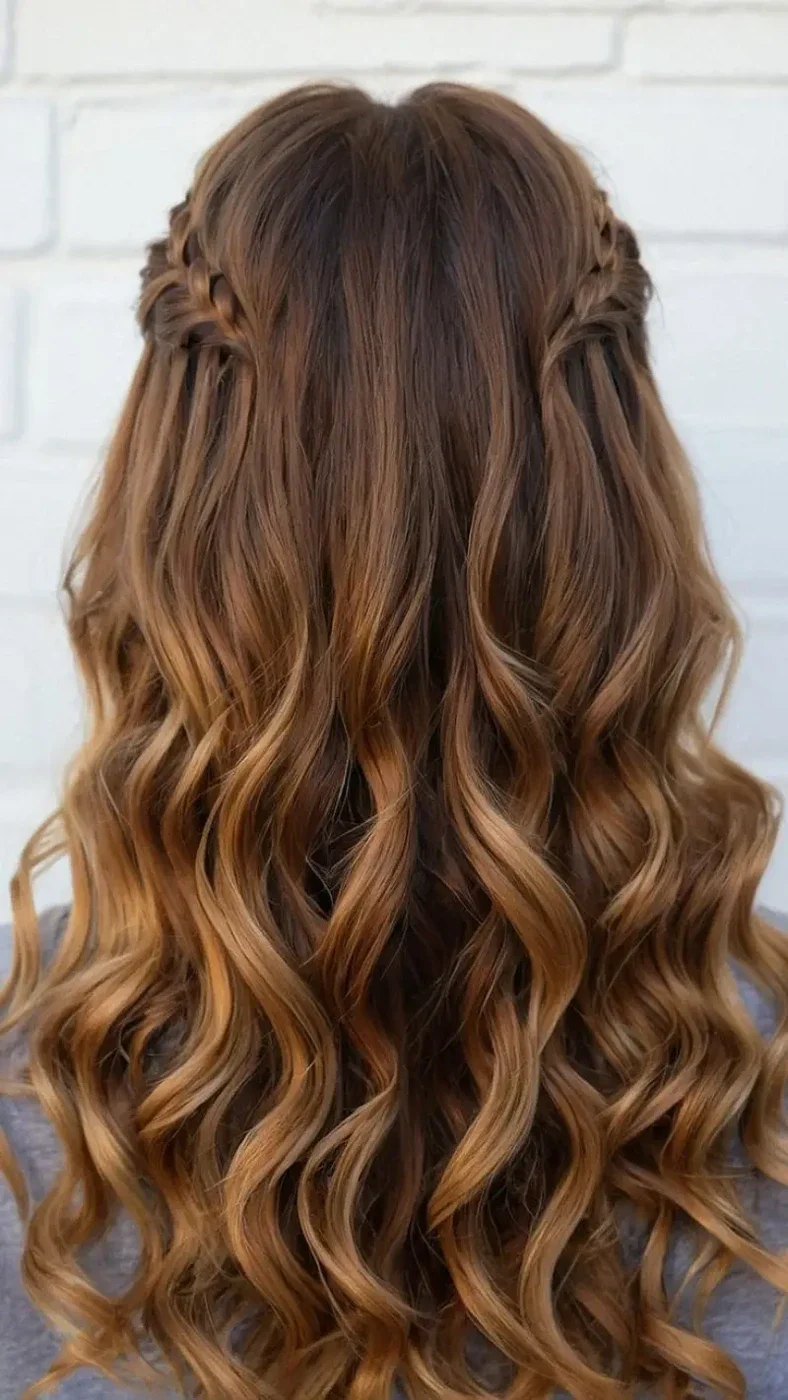
Idea 10
Small Side Braids Over Long Brown Waves
Small side braids frame the upper back above long brown waves. Most of the hair stays down, making the lower curves and lighter ends more prominent than the narrow braided detail.
- Shape
- Small side braids
- Detail
- Long brown waves
The rear view shows a wide fall of loose hair. The upper center remains comparatively open instead of holding a large bow, bun or raised ponytail.
Wearability note: Compare this amount of loose hair with a more collected ponytail if back coverage matters. It is a useful long-hair reference when you want the braids to remain secondary to the flowing lengths.
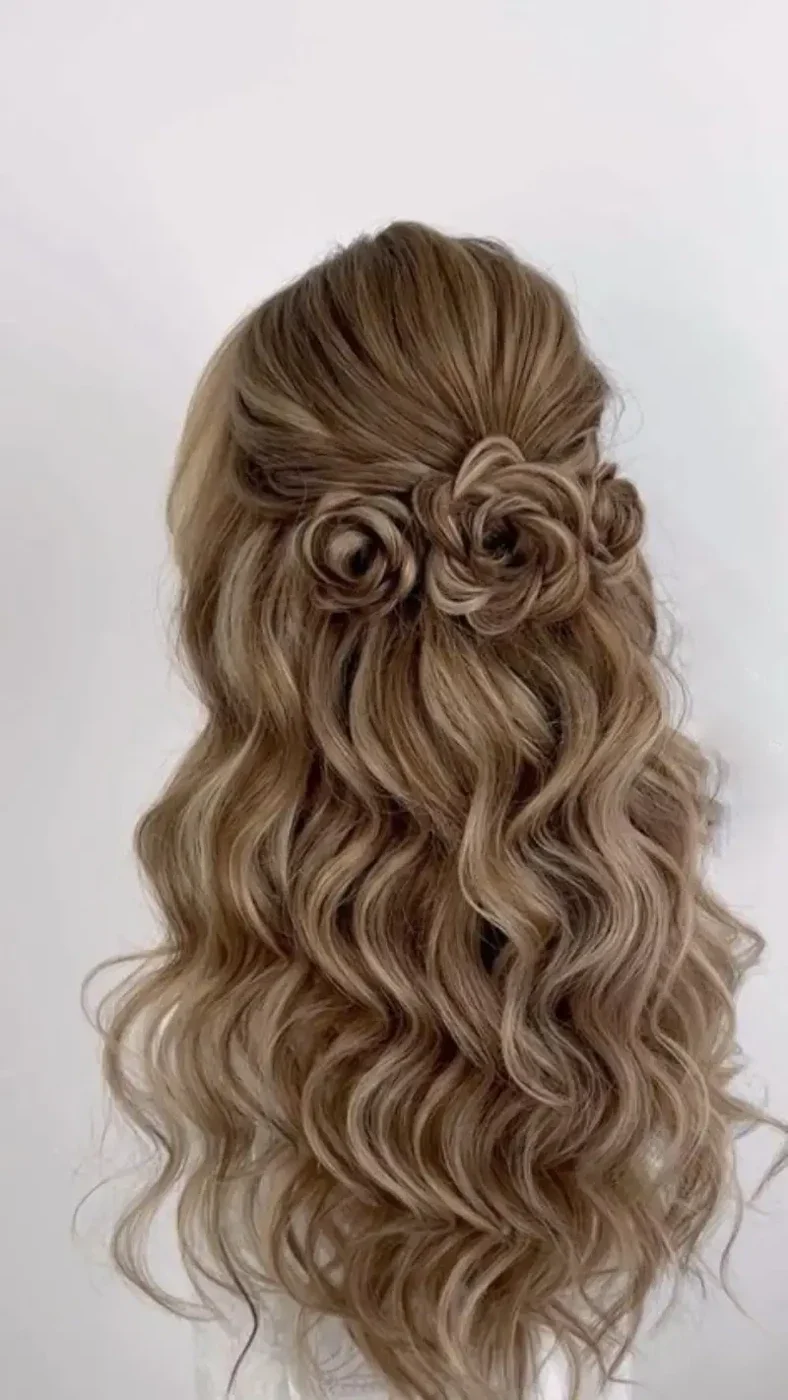
Idea 11
Three Rose-Shaped Loops Above Long Waves
Three rose-shaped loops sit across the back above long blonde waves. The decorative shapes are made prominent by their compact circular outlines against the looser hair underneath.
- Shape
- Three looped rosettes
- Detail
- Long lower waves
The center loop appears larger than the flanking loops. Their horizontal arrangement adds width near the gathering, while the long lower waves carry the outline downward.
Wearability note: Choose this for the looped detail as well as the length. If a quieter upper back appeals to you, compare one smaller loop or a plain crossing rather than assuming every element must be retained.
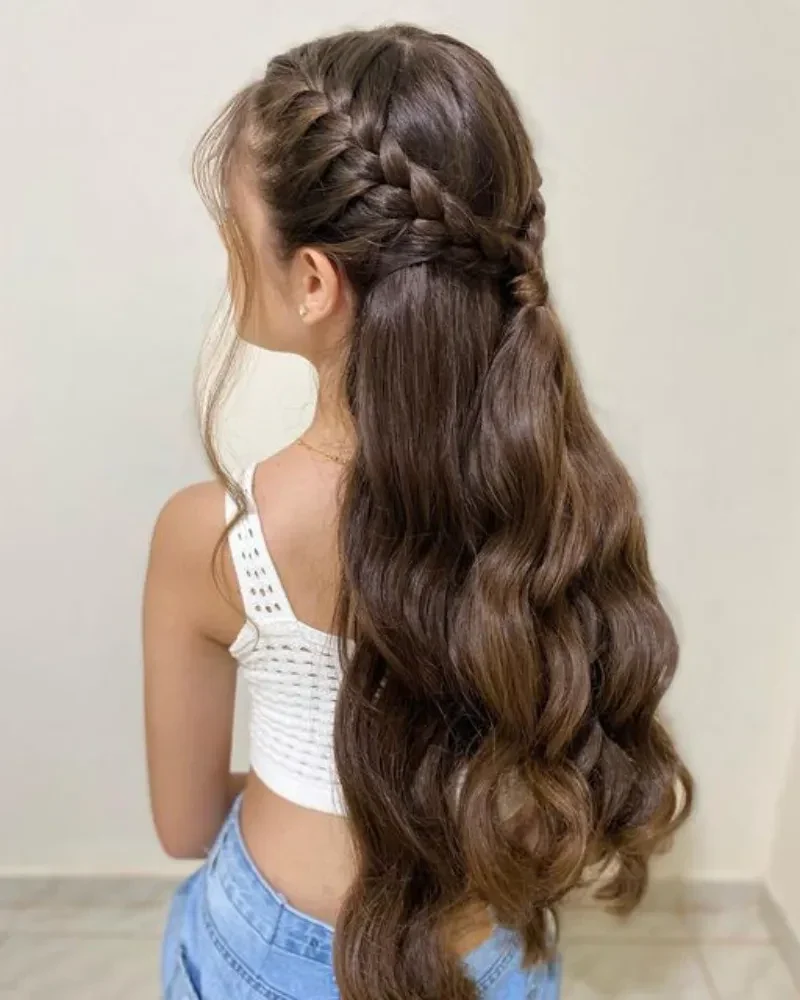
Idea 12
Joined Side Braids Over Long Dark Waves
Brown side braids meet above long dark waves. A wrapped center separates the upper braided area from the broad loose lengths, creating a clear transition across the back.
- Shape
- Joined side braids
- Detail
- Long dark waves
The lower waves form larger curves than the narrow braid sections. Lighter ends make the long perimeter stand out, while a free front strand softens the side of the face.
Wearability note: Compare the braid placement with your own side layers before choosing. The rear view is especially useful for describing the width of the loose back rather than only the small joining detail.
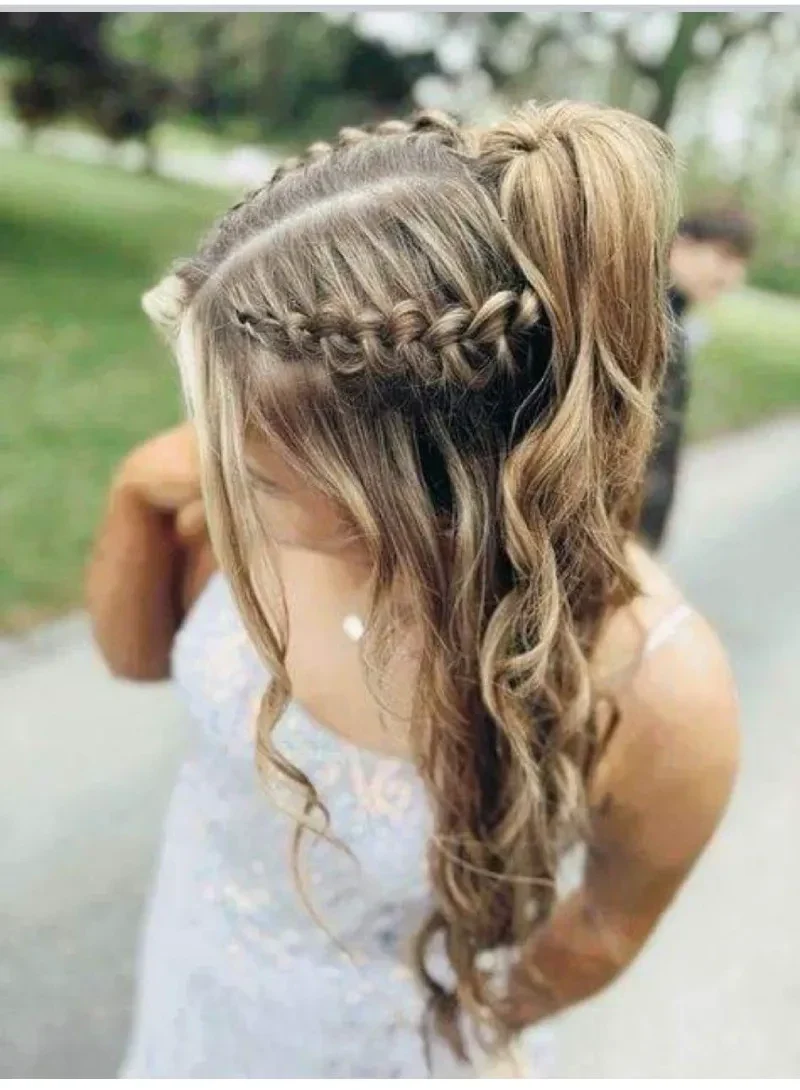
Idea 13
Side Braid Into a High Half Ponytail
A defined side braid leads into a high half ponytail. The loose lower hair remains long, while the raised upper section adds an outward arc behind the crown.
- Shape
- Defined side braid
- Detail
- High half ponytail
A visible parting separates the braid from the hair above. That line gives the side a more structured appearance than the softly swept half-up styles elsewhere in the gallery.
Wearability note: Choose this if the side pattern is as important as the hanging length. Compare the parting visibility and ponytail height separately; lowering the gathering would change the profile even with a similar braid.
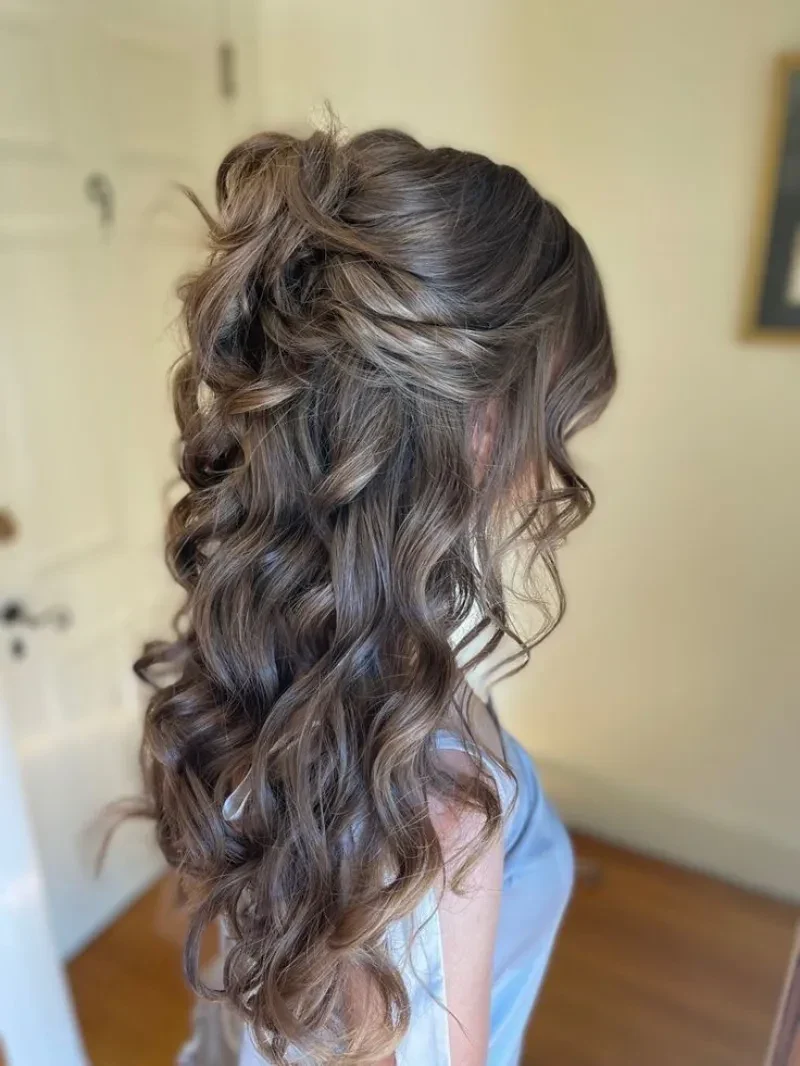
Idea 14
Loose Upper Twists Over Long Dark Curls
Loose upper twists join over long dark curls. The side sections keep visible separation rather than forming a completely smooth surface, creating a softer transition into the loose back.
- Shape
- Loose upper twists
- Detail
- Long dark curls
A curled tendril remains beside the face. The long lower hair forms several narrow curves, while the crown has a small amount of lift behind the top.
Wearability note: Compare the loose upper texture with a smoother gathered option if you prefer a more contained finish. Point out how much hair should remain near the face as well as how far the lower curls should fall.
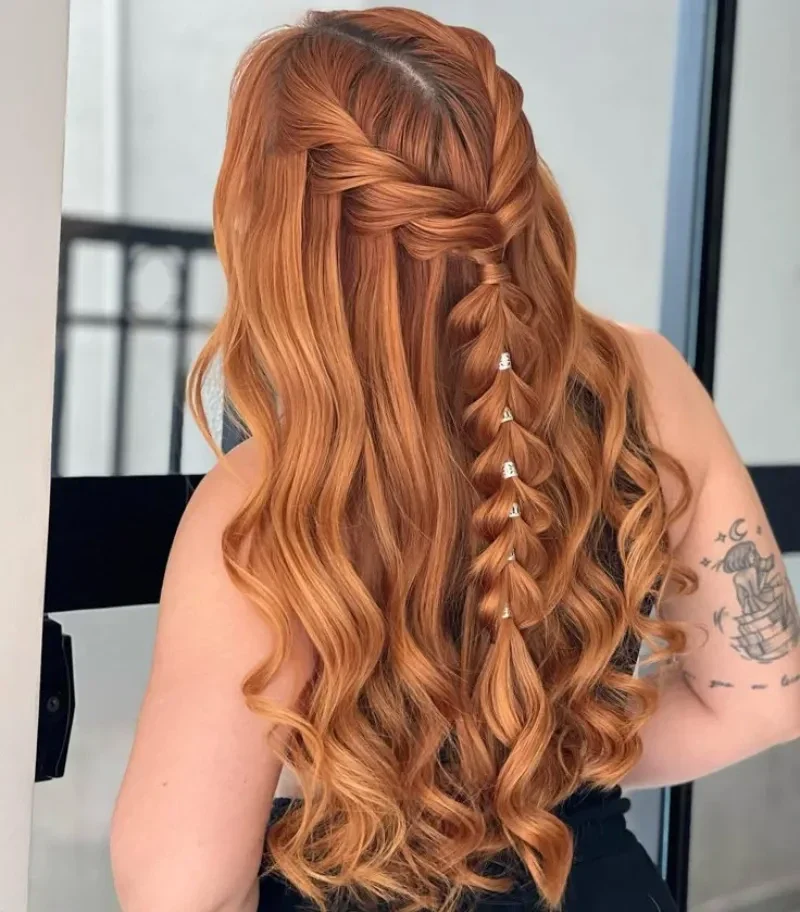
Idea 15
Copper Half-Up Braid With Small Bright Accents
Copper upper sections join into a central long braid over loose waves. Small bright accents mark points along the braid, adding detail down the back rather than only at its base.
- Shape
- Central long braid
- Detail
- Small bright accents
The hair left down spreads to either side of the braided center. Its larger waves make the defined links stand out without gathering the whole length into one plait.
Wearability note: Choose the center braid and accent spacing independently. If your dress has a patterned back, compare whether you want this additional vertical detail or prefer a simpler crossing above the loose lengths.
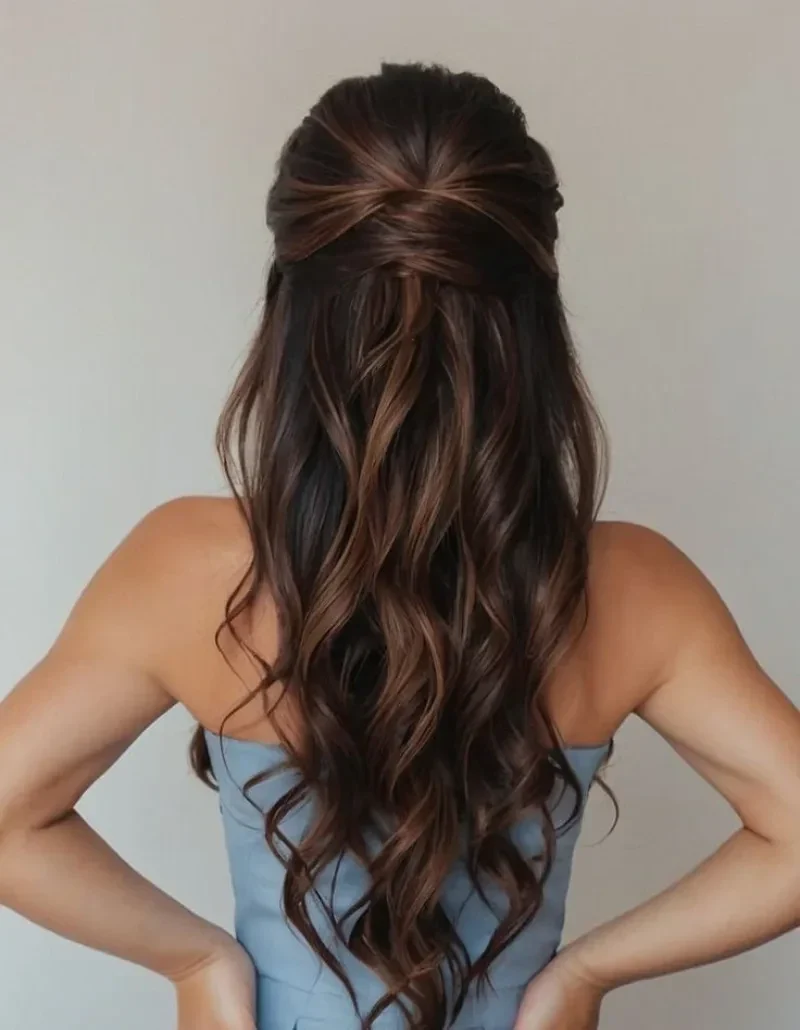
Idea 16
Crossed Brown Half-Up Hair With Long Curls
Crossed brown side sections gather over long loose curls. The upper detail is compact, leaving the extended lower hair to cover much of the back of the light blue dress.
- Shape
- Crossed side sections
- Detail
- Long loose curls
The crown has a gently rounded outline. The lower ends narrow through the center, creating a long tapered fall rather than an even blunt edge across the shoulders.
Wearability note: Compare the tapered endpoint with a fuller lower outline before choosing. If showing the back of your dress matters, the amount of loose length here is more important than the small upper crossing.
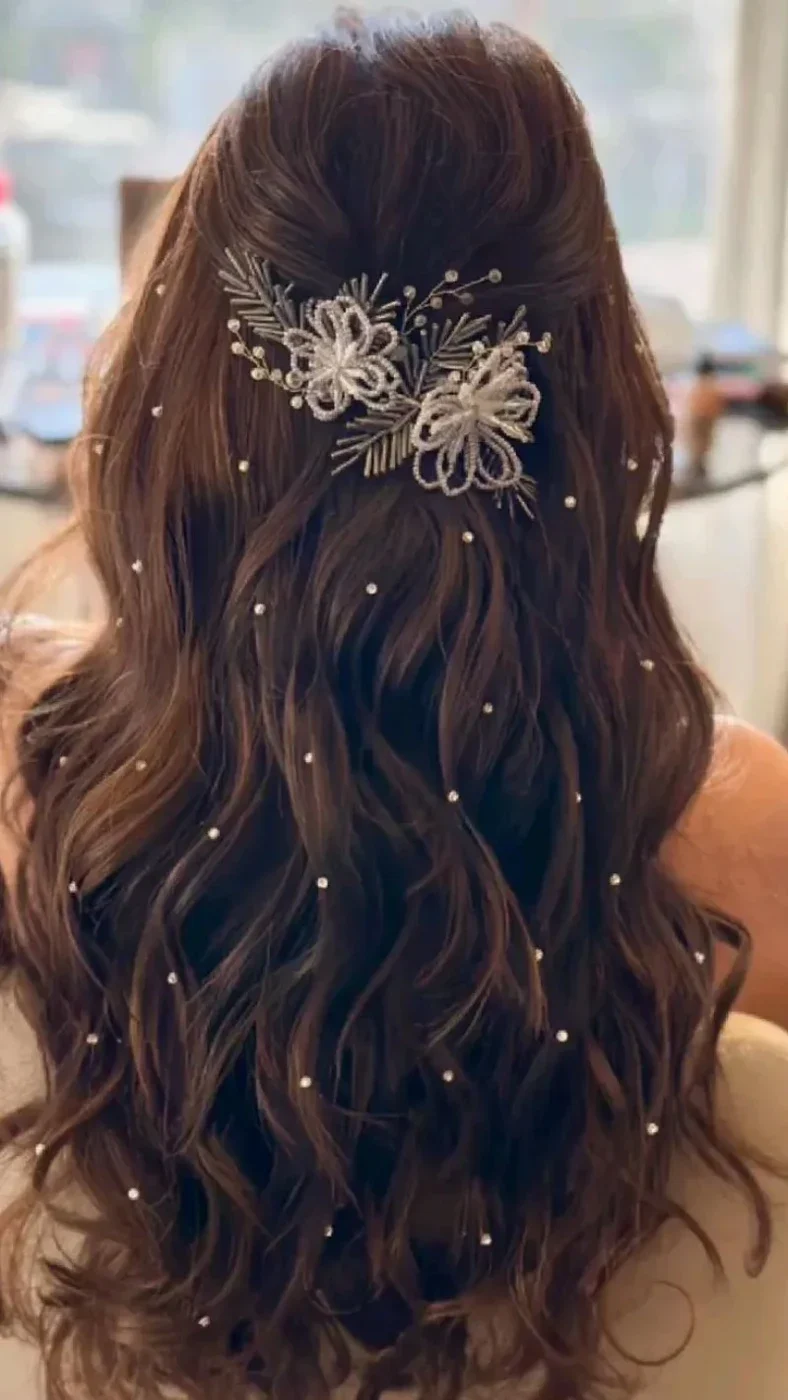
Idea 17
Long Waves With a Broad Beaded Ornament
A broad beaded ornament sits across long dark half-up waves. Smaller bright accents continue through the loose lengths, making decoration a visible part of the whole back rather than one small fastening.
- Shape
- Broad beaded ornament
- Detail
- Long loose waves
The upper crown rises gently above the ornament. Below it, long separated waves provide a dark background that makes each small bright detail easier to distinguish.
Wearability note: Choose this if a decorated long back is the intended focal point. Compare the ornament’s width with your neckline and earrings, and consider fewer accents if you prefer the waves themselves to remain more prominent.
Keep length and volume separate
Point out both the endpoint and the width of the loose hair when discussing a reference. A long narrow ponytail and broad half-up waves can cover different parts of the same outfit.
The photograph does not show every preparation choice. Discuss your own starting length and density rather than assuming the visible volume establishes what can be achieved without additional support.
About the author
Bella Ross
Bella Ross is the hairstyle editor behind Latest Easy Hairstyles. She curates practical haircut, braid, color, and styling ideas with a focus on looks that are easy to browse, realistic to recreate, and useful for everyday hair decisions.