
Before you choose
Choose where the braid goes
Start with the route of the braid, then decide what should happen to the remaining length. A broad side braid with a loose ponytail feels different from two narrow braids continued all the way to the ends.
The hairstyle gallery
Raised braids, different finishes
The raised braid is the shared detail; the remaining hair may be loose, gathered into a ponytail, continued into tails or tucked up.
Idea 01
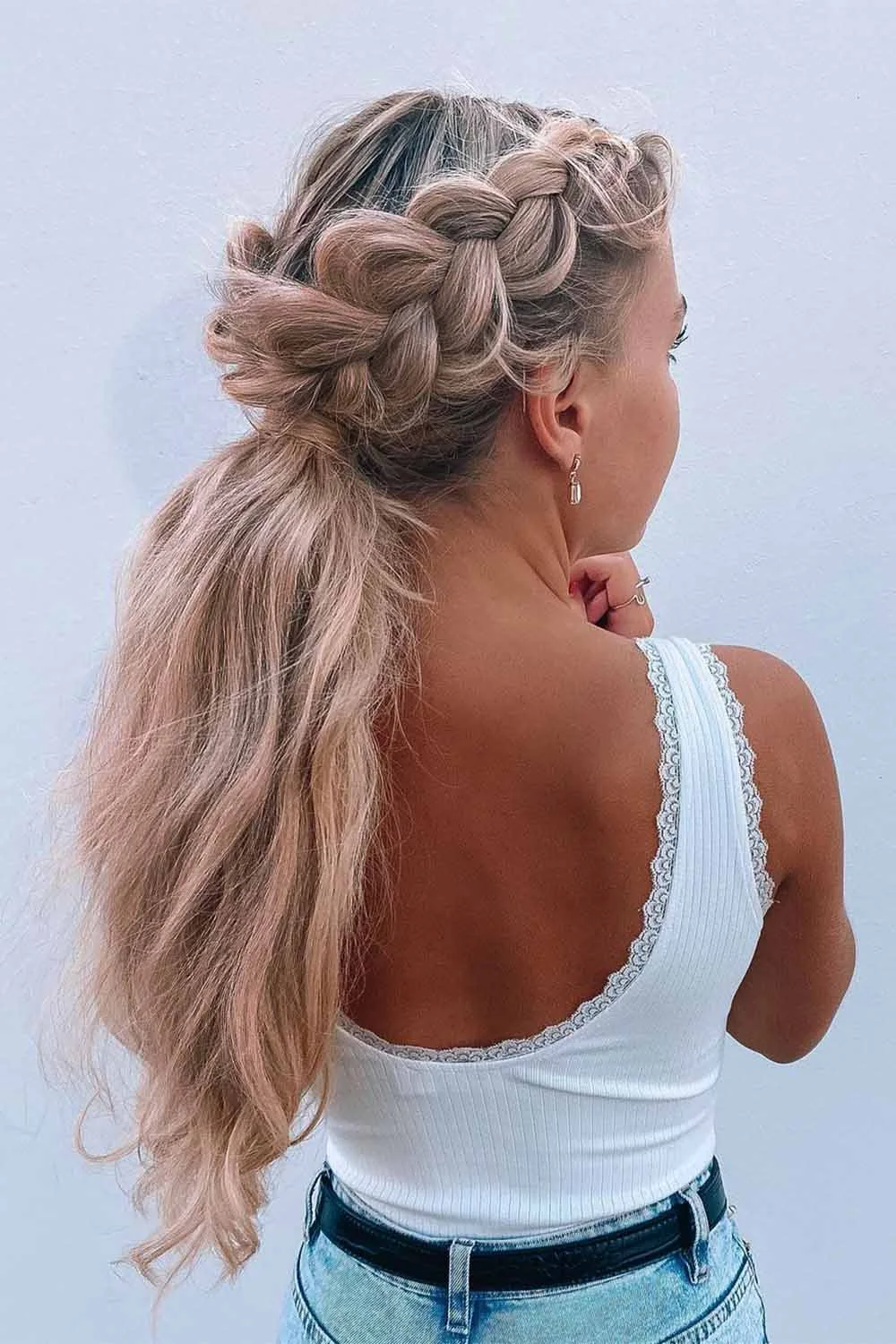
Wide Side Braid Into a Ponytail
A broad raised braid travels along the side before joining a loose ponytail. The braid is the main upper detail, while the unbraided tail keeps movement below the join instead of continuing as one long plait.
- Detail
- Raised side braid
- Finish
- Loose ponytail
Large overlapping sections sit visibly above the smoother hair beside them. The ponytail falls in loosely separated waves, and the back-side view makes the contrast between the structured upper braid and softer remaining length clear.
Wearability note: Save this if you want braid detail without braiding every end. Agree on the braid width and ponytail position together, and check how the sides feel while styling; a broad appearance should not require uncomfortable pulling at the hairline.
Idea 02
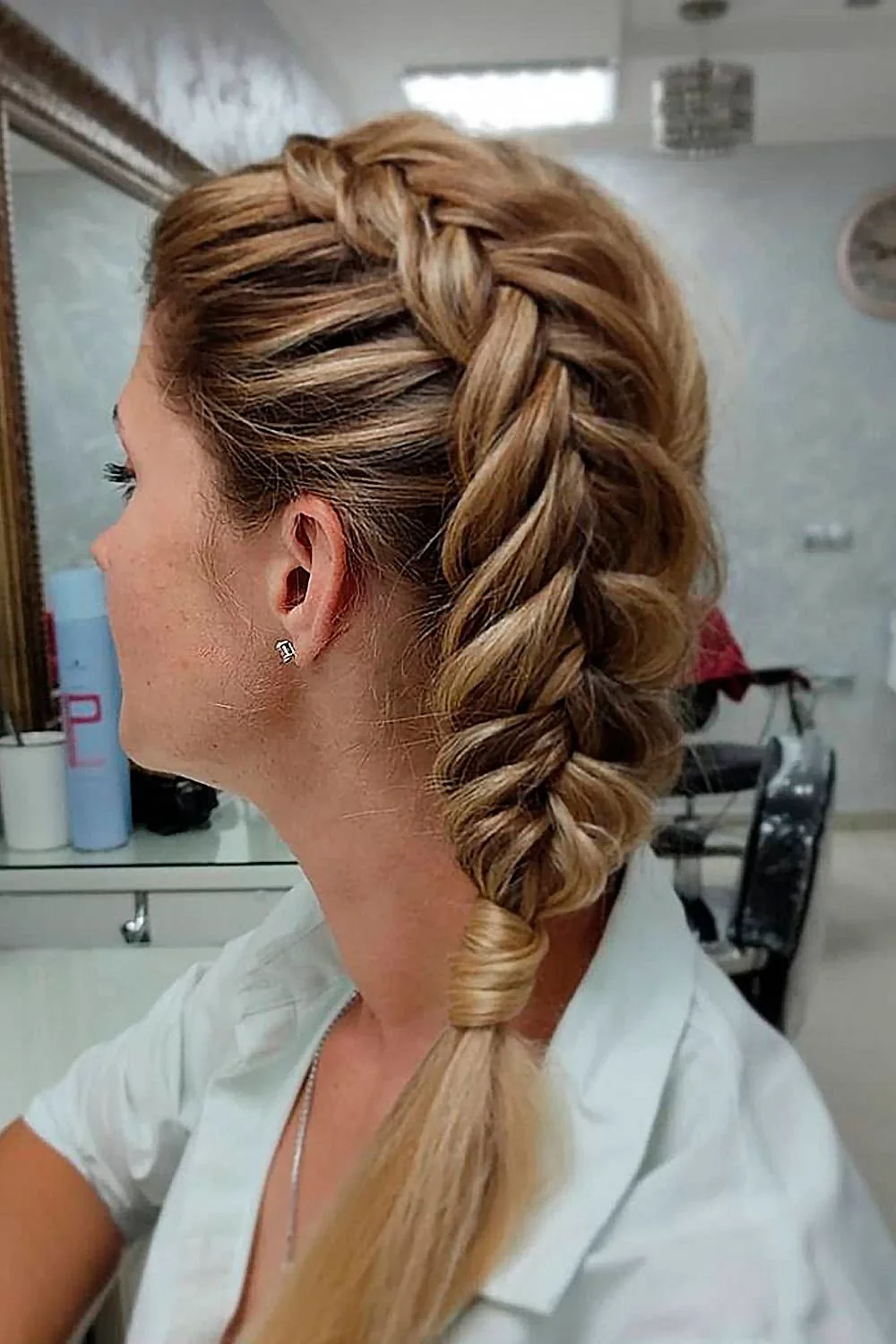
Raised Side Braid With a Tail
The raised braid follows one side of the head and continues into a tail near the shoulder. It creates an off-center silhouette rather than the balanced paired look of two classic Dutch braids down the back.
- Placement
- One side
- Finish
- Braided tail
The upper overlaps are broad and clearly separated, with lighter strands tracing their outer edges. The braid narrows below the head, and the visible side hair is swept toward it without a large loose ponytail beneath the join.
Wearability note: Choose this when you prefer one braid instead of two. Discuss which side should carry the tail and check the face opening in a mirror; your usual part and preferred shoulder placement can change how balanced the finished hairstyle feels.
Idea 03
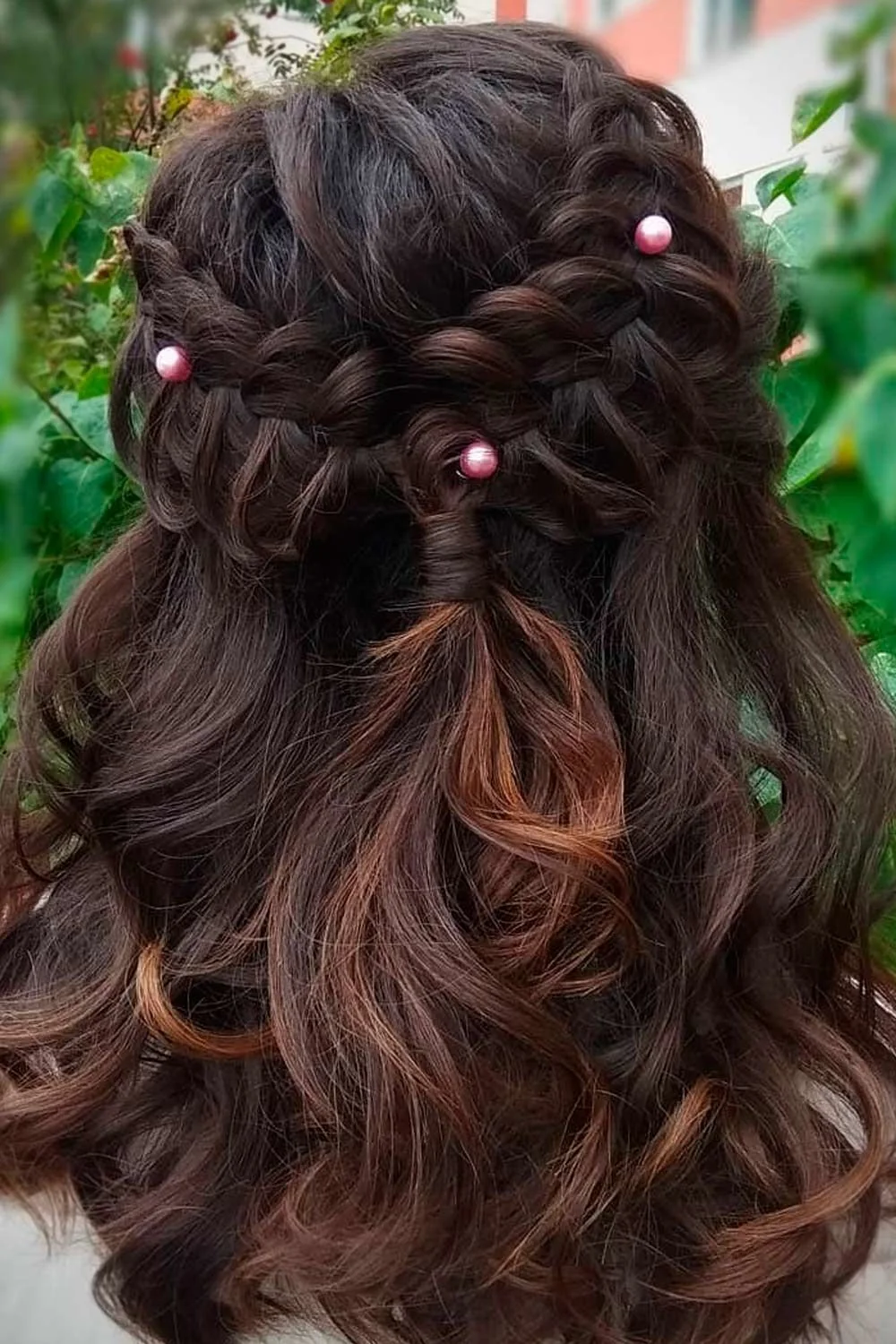
Paired Braids With Loose Curls
Two raised side braids meet above loose curls, giving the upper hair definition without gathering all of the lower length. Small colored bead-like details sit near the joins, adding an accent to the braided sections.
- Styling
- Half-up
- Detail
- Paired side braids
The back retains a soft upper lift, while the braids curve inward from either side. Brown and lighter ribbons show through the loose lower curls, so the finish stays flowing rather than becoming a pair of fully braided tails.
Wearability note: Save this if you want a half-up result with raised braid detail. Choose the small accents separately from the structure, and discuss how much lower hair should remain loose; that division determines the silhouette more than the decoration does.
Choose your direction
Want loose movement?
Compare the braided ponytails and half-up example rather than fully braided tails.
Prefer a gathered finish?
The bun and raised gathered references keep the ends off the neckline.
Like color contrast?
Discuss the colored tail as its own choice; the photograph does not establish the material or color method.
Idea 04
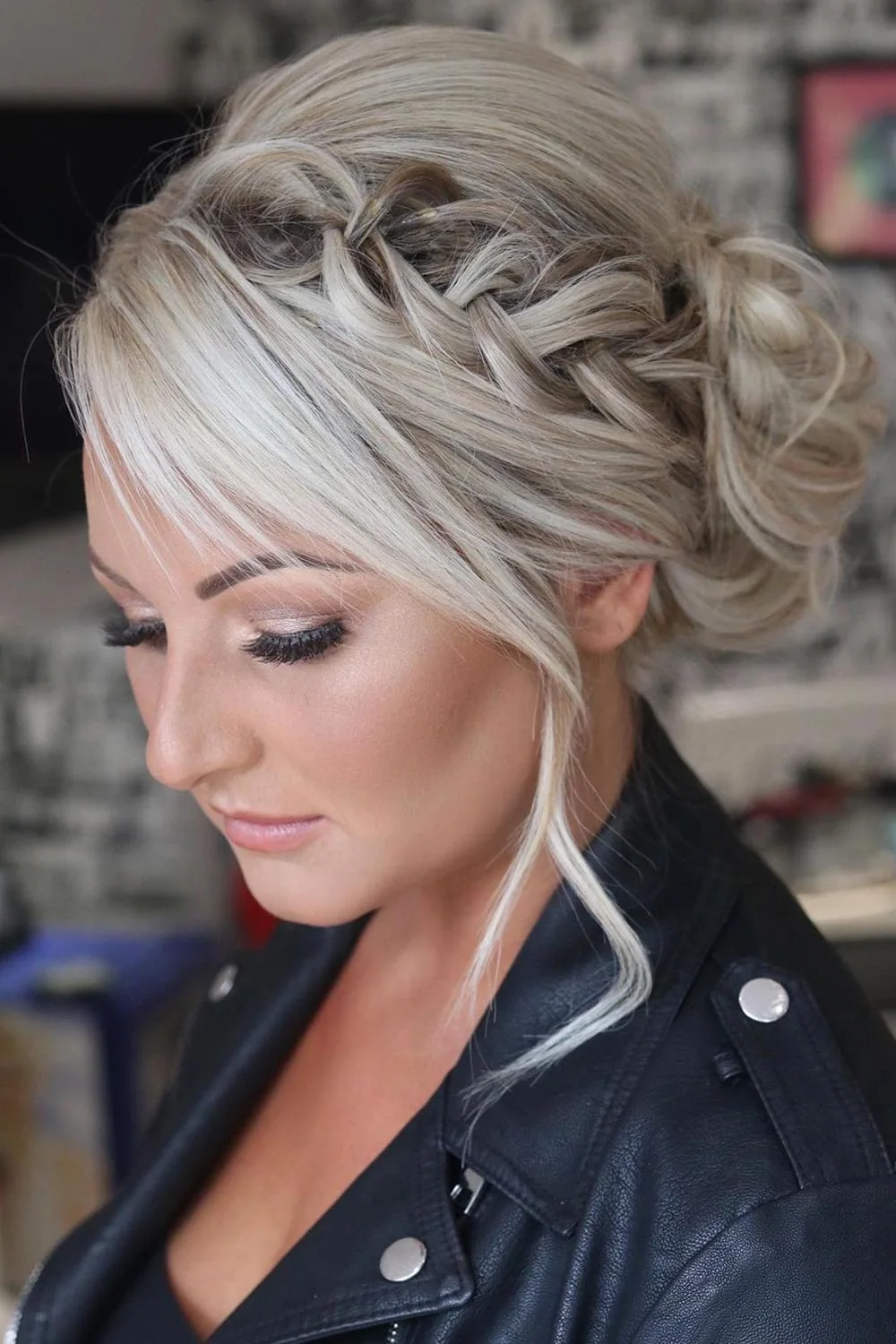
Raised Braid in a Gathered Updo
A raised braid adds texture along the side while the remaining hair is gathered behind it. The result keeps the neckline clearer than a braided ponytail, with the braid acting as one part of an updo rather than the whole finish.
- Detail
- Raised side braid
- Finish
- Gathered back
Long front pieces remain loose beside the face. Pale sections make the side overlaps visible, while the back contains softer curved pieces that are less precisely shown in this front-side angle of the photograph.
Wearability note: Choose this for the visible side detail and face frame, not as a complete map of the hidden back. Ask for a rear reference or mirror view when discussing the style, and confirm how much hair you want loose near your cheeks.
Idea 05
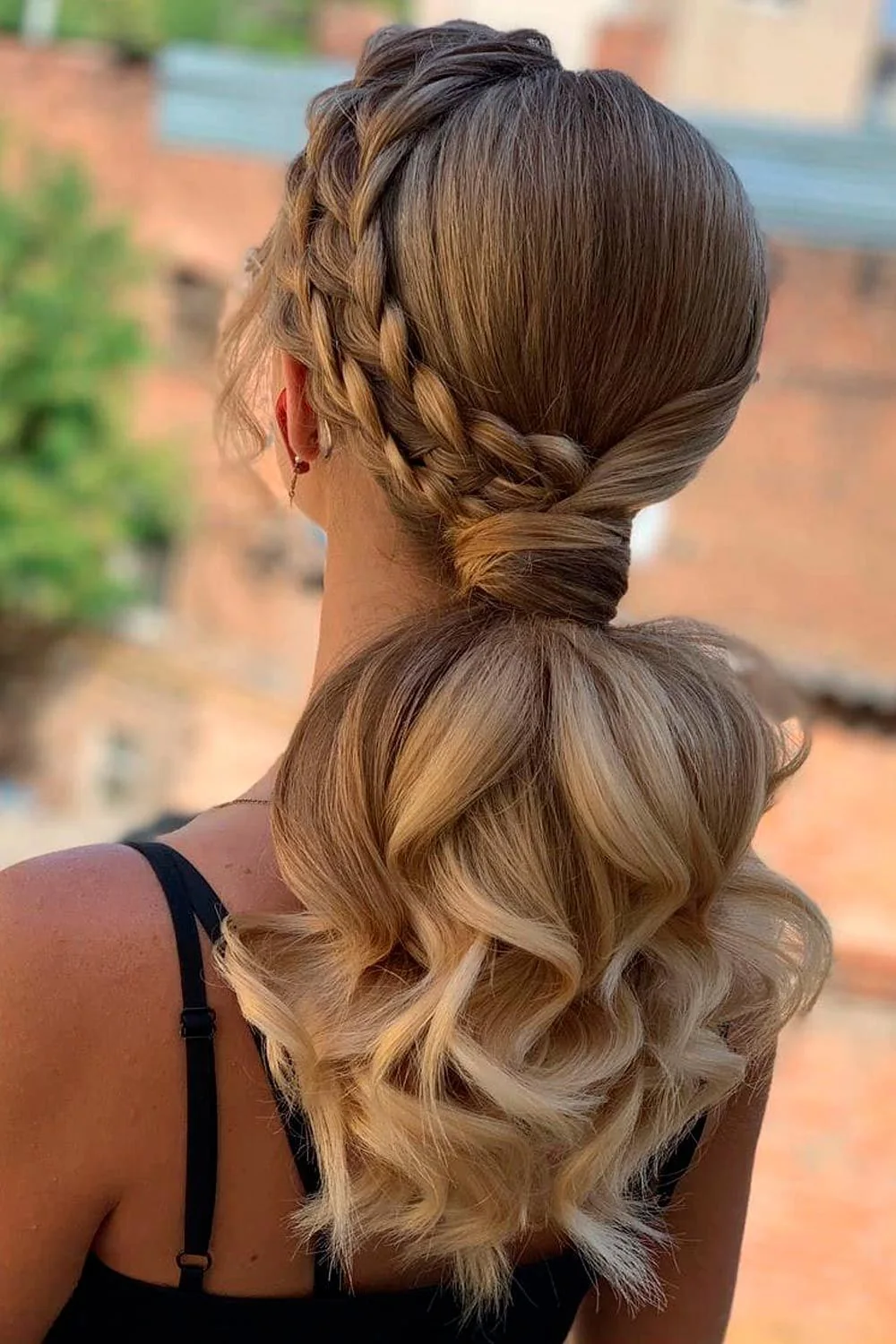
Side Braid With a Wrapped Ponytail
A raised side braid leads into a ponytail with a wrapped-looking join. The loose tail keeps the lower shape soft, while the braid provides a clear textured route along one side of the upper head.
- Detail
- Raised side braid
- Finish
- Wrapped ponytail join
The crown remains smoother than the braid, and the ponytail contains large curls through its lower section. Lighter strands outline the side overlaps without changing the overall brown-blonde impression of the gathered upper hair.
Wearability note: Save the join height as well as the braid route if this appeals. Check how the ponytail falls against your collar or neckline, and decide whether you want the lower curls strongly defined or looser than those shown in the photograph.
Idea 06
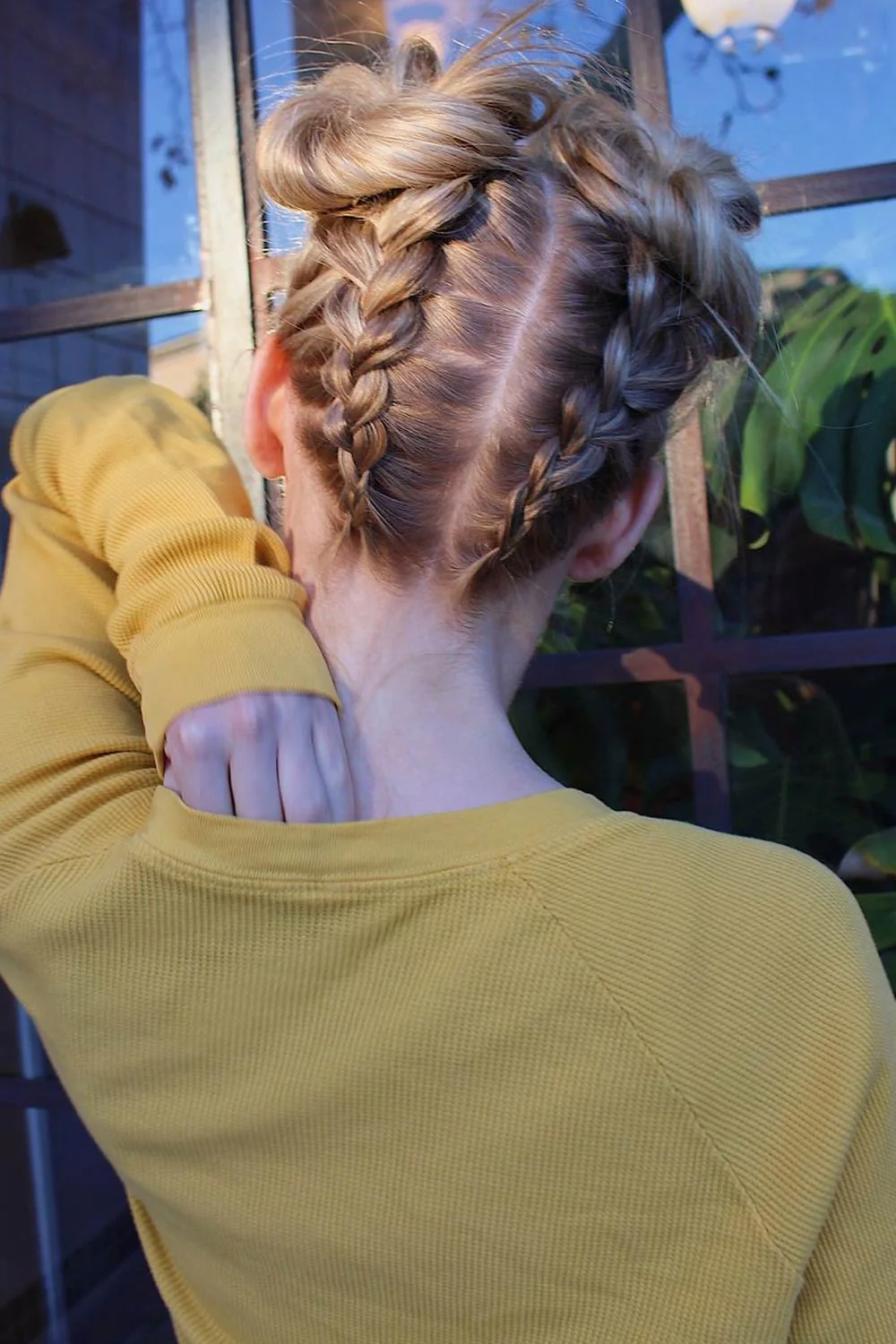
Paired Back Braids Into Knots
The braids travel up the back toward gathered upper knots, reversing the direction of classic downward pigtails. A center division keeps the paired structure visible, while the ends are tucked instead of falling as long braided tails.
- Direction
- Upward back braids
- Finish
- Gathered knots
The view exposes the nape and shows the raised overlaps against smoother side hair. The knots create small upper shapes above the braids, so the hairstyle is gathered and compact even though the back contains substantial woven detail.
Wearability note: Choose this if keeping the ends up matters more than a long tail. Ask to see the front and top as well, and check comfort at the nape while styling; the rear direction is distinctive but the photograph cannot verify tension or hold.
Idea 07
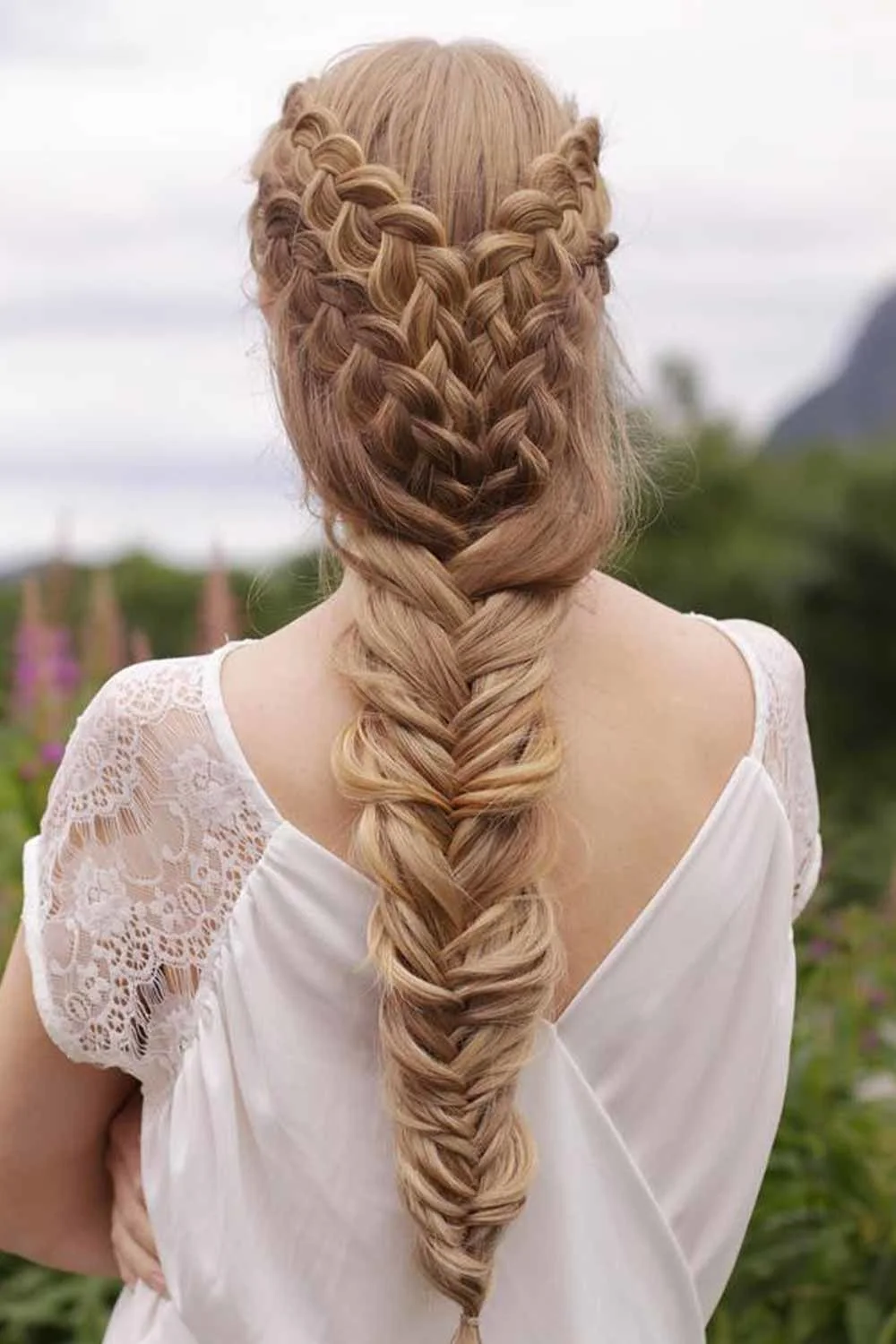
Two Raised Braids Into a Fishtail
Two raised upper braids come together before continuing into one fishtail tail. The change in pattern is the important detail: the lower braid has finer overlaps rather than simply repeating the same broad upper construction.
- Upper
- Paired raised braids
- Tail
- Fishtail
The braids frame a smooth central upper section and widen near the join. Below that point, the single tail stays centered down the back, keeping the silhouette narrower than a pair of separate long braid ends.
Wearability note: Save the transition between the upper braids and lower tail if you like this combination. Discuss the width of each section separately, and do not describe the entire arrangement as one technique when a stylist needs to understand the change at the join.
Idea 08
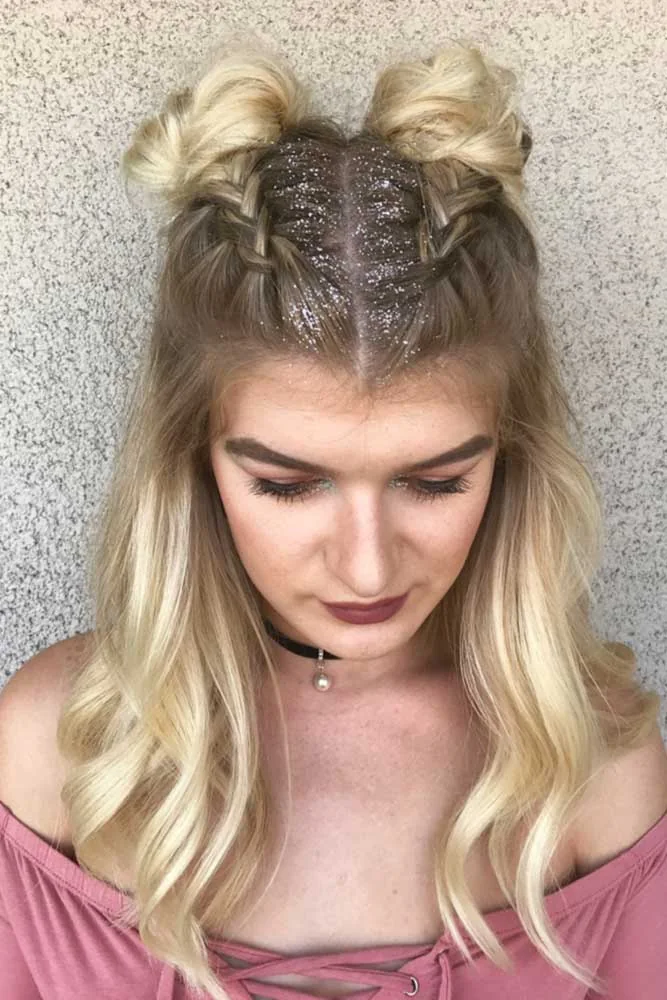
Front Braids With Two Topknots
Short raised braid sections travel from the front toward two topknots. Much of the lower hair stays loose, so this creates a half-up silhouette rather than gathering the entire head into fully braided pigtails or an updo.
- Styling
- Half-up topknots
- Detail
- Raised front braids
A center division is decorated with glitter-like sparkle, making the front separation more noticeable. The small knots sit high and close to each other, while the lower waves soften the outline beneath the structured upper detail.
Wearability note: Choose the braid-and-knot arrangement separately from the sparkle if you prefer less decoration. Check the front height and scalp comfort while styling, and decide how much lower hair to leave loose before comparing the result with a fully gathered paired-bun reference.
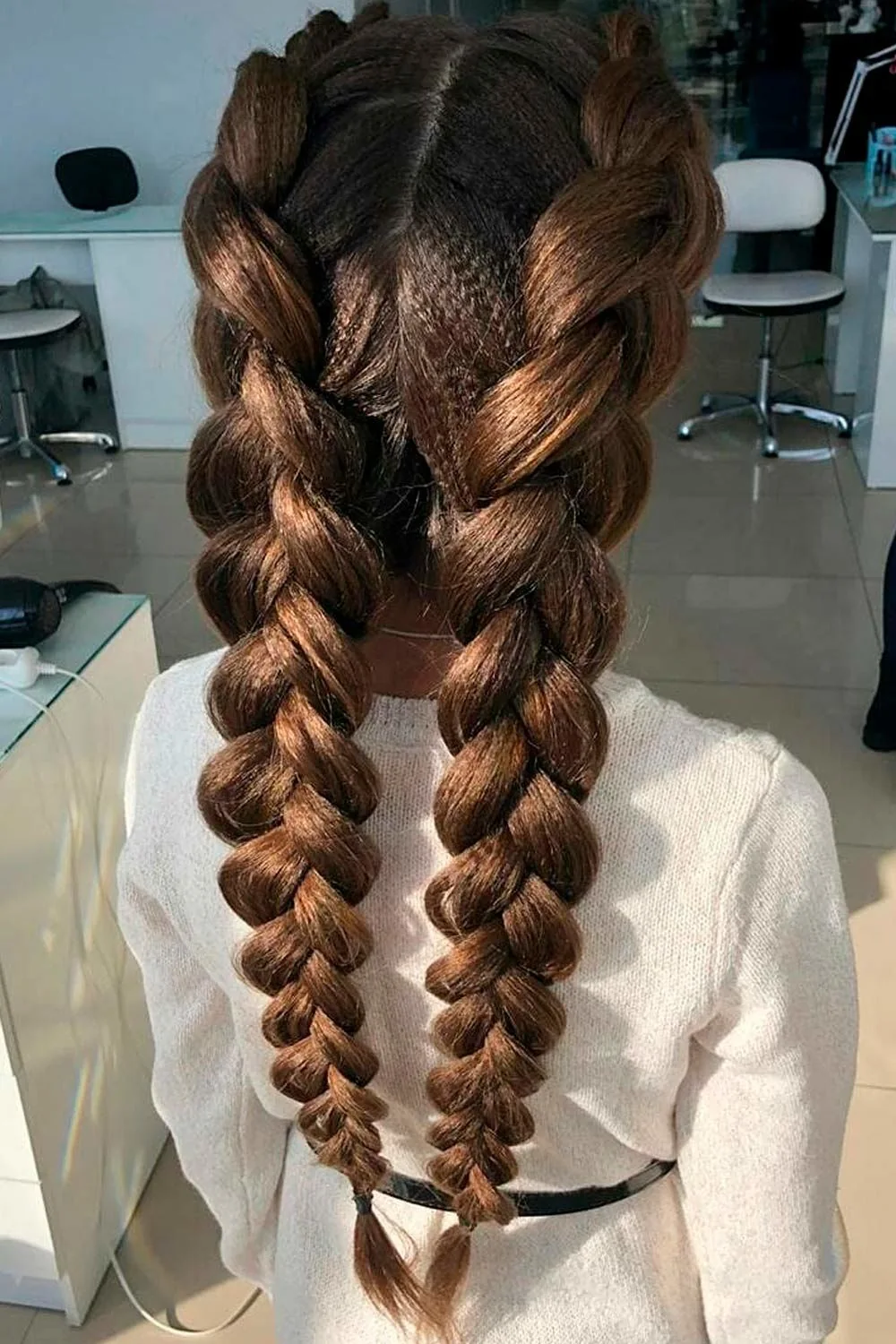
Idea 09
Broad Brown Paired Braids
Two broad raised braids follow a clear center division and continue into tapered tails. The back-view photograph makes the paired pattern easy to compare without extra color, an accessory or loose curls distracting from the braid shape.
- Arrangement
- Two raised braids
- Finish
- Tapered tails
The overlaps remain wide through much of the upper length before narrowing toward the ends. Brown highlights define the outer curves against deeper interior strands, and both sides are gathered rather than left partly loose beneath the braids.
Wearability note: Save this when you want substantial paired braids. Discuss an achievable width with your stylist rather than assuming the photographed density, and check the scalp and hairline for comfort; a neat center part should not come at the expense of painful tension.
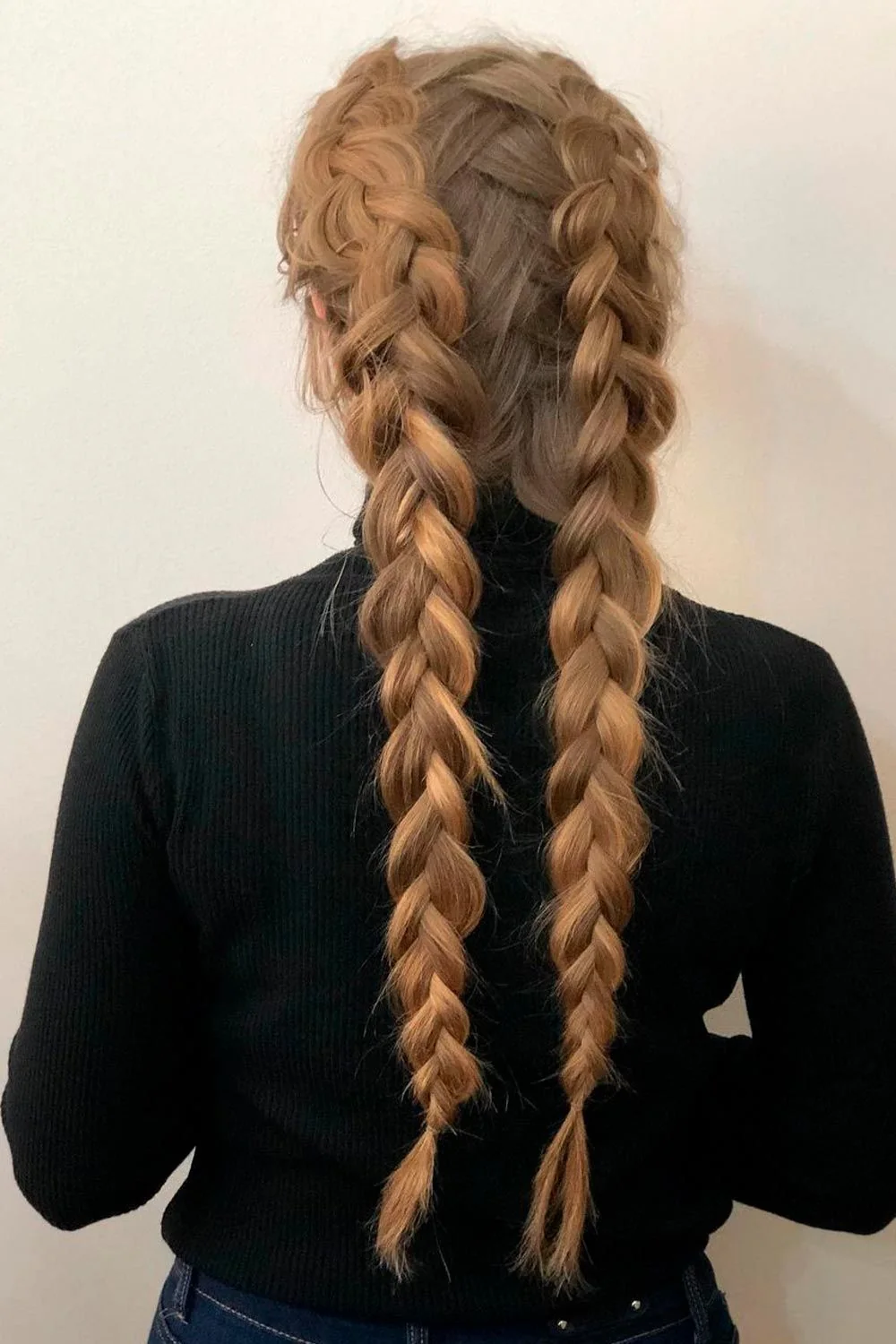
Idea 10
Golden Paired Braids With Long Tails
The paired braids stay distinct from the crown down through the long tails. This is the classic downward silhouette in the collection, with all of the visible lower hair braided rather than released into a ponytail or loose waves.
- Arrangement
- Paired raised braids
- Finish
- Long braid tails
Golden outer strands and darker inner sections make the overlaps readable. The braid width decreases gradually below the nape, and the center division remains clear through the upper back without added beads, ribbon or decorative clips.
Wearability note: Choose this if you want a straightforward paired finish. Compare tail length and braid width together, and check comfort as the hair is gathered; the photograph shows the arrangement clearly but cannot tell you how tightly it was styled or how it felt.
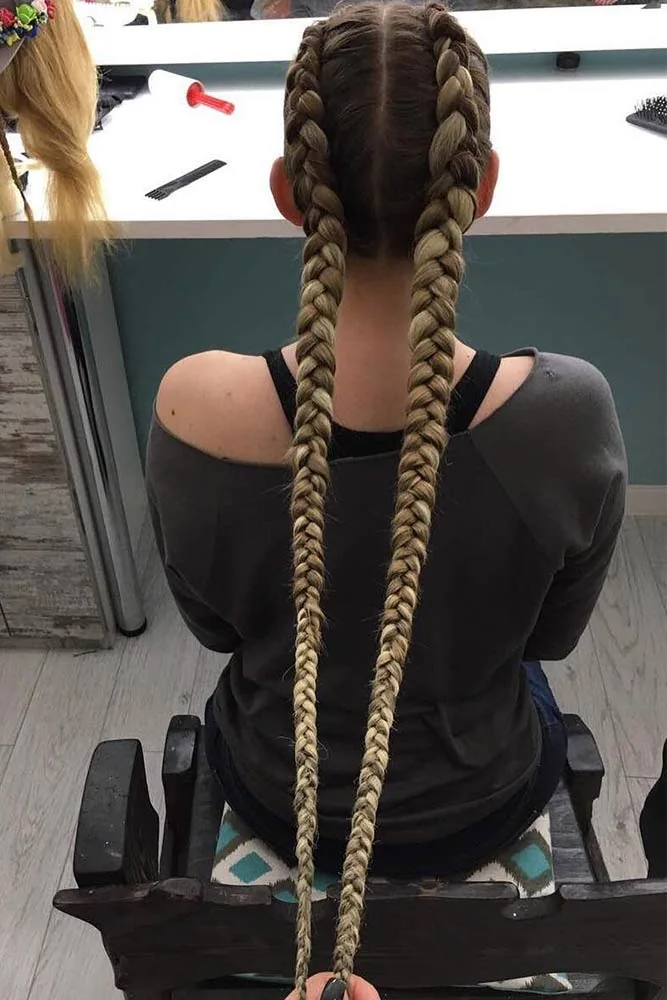
Idea 11
Slim Paired Braids With Long Ends
These paired braids are slimmer than the broad brown example. They follow the center division closely and continue far below the shoulders, making length rather than braid width the dominant feature of the finished silhouette.
- Width
- Slim paired braids
- Finish
- Very long tails
The upper sections sit neatly against the head, with light strands tracing each overlap. The tails keep a fairly narrow profile through much of their length, while the side hair is fully gathered and the neck remains open.
Wearability note: Save this when you prefer a narrow, tidy braid outline. The photo does not establish whether the long tails contain added hair, so discuss length realistically and keep the hairline comfortable rather than trying to match every centimeter or pull the sides tighter.
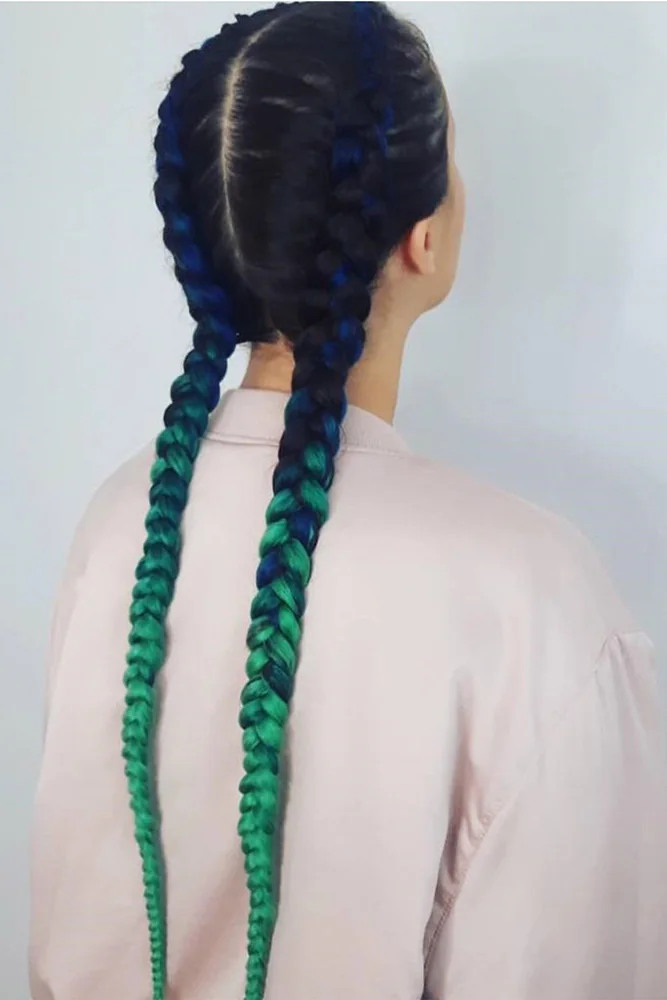
Idea 12
Dark Braids With Teal Ends
Dark upper braids continue into teal-colored tails, adding contrast below the head. The raised paired structure remains clear near the crown, while the color change becomes the main feature farther down the loose-hanging braid ends.
- Arrangement
- Paired raised braids
- Accent
- Teal tails
A straight center division separates the two sides. The upper hair stays deep blue-black in appearance, and the teal becomes brighter along the lower tails rather than spreading as an all-over vivid color across the scalp.
Wearability note: Choose the braid shape and color placement as separate decisions. A photograph cannot establish whether the teal comes from dyed or added hair, so discuss the method with your stylist instead of assuming the image describes a particular material or color service.
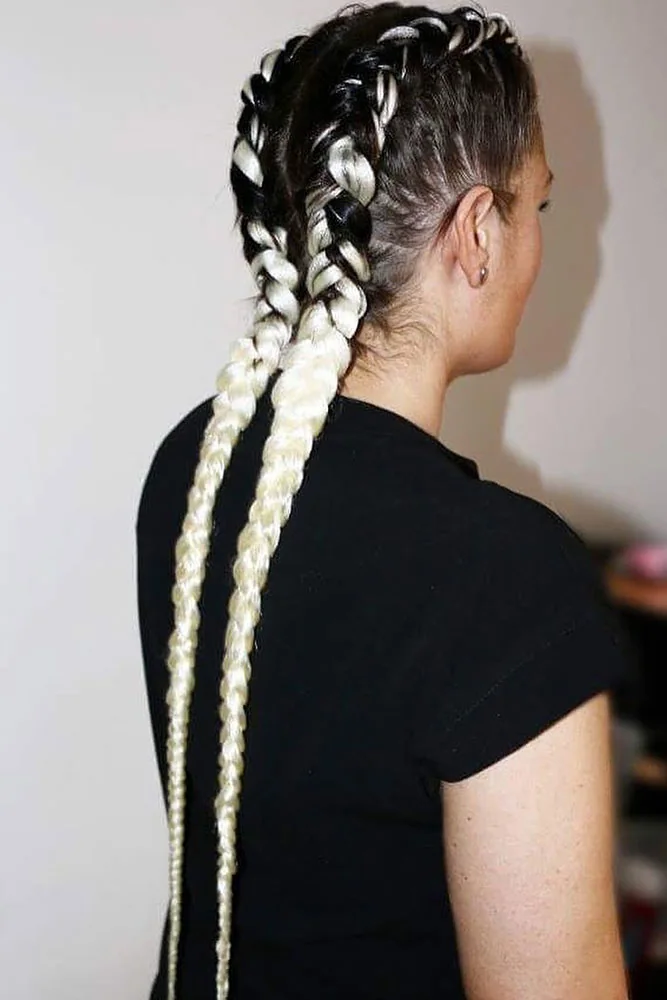
Idea 13
Dark Roots With Pale Braid Tails
The upper hair is dark while the long tails become pale blonde, giving the paired braids strong contrast. The color change emphasizes the lower length without hiding the raised structure along the back and side of the head.
- Contrast
- Dark and pale
- Finish
- Long braid tails
The visible overlaps mix darker and lighter strands near the transition. Both tails remain braided rather than releasing into curls, and the side-back angle keeps the ear area and nape more visible than a straight rear photograph would.
Wearability note: Save this if you want contrast within the braids, but ask about the color method separately. The image cannot confirm natural density or added hair, and the final length should be chosen for comfort and practicality rather than copied from the photo alone.
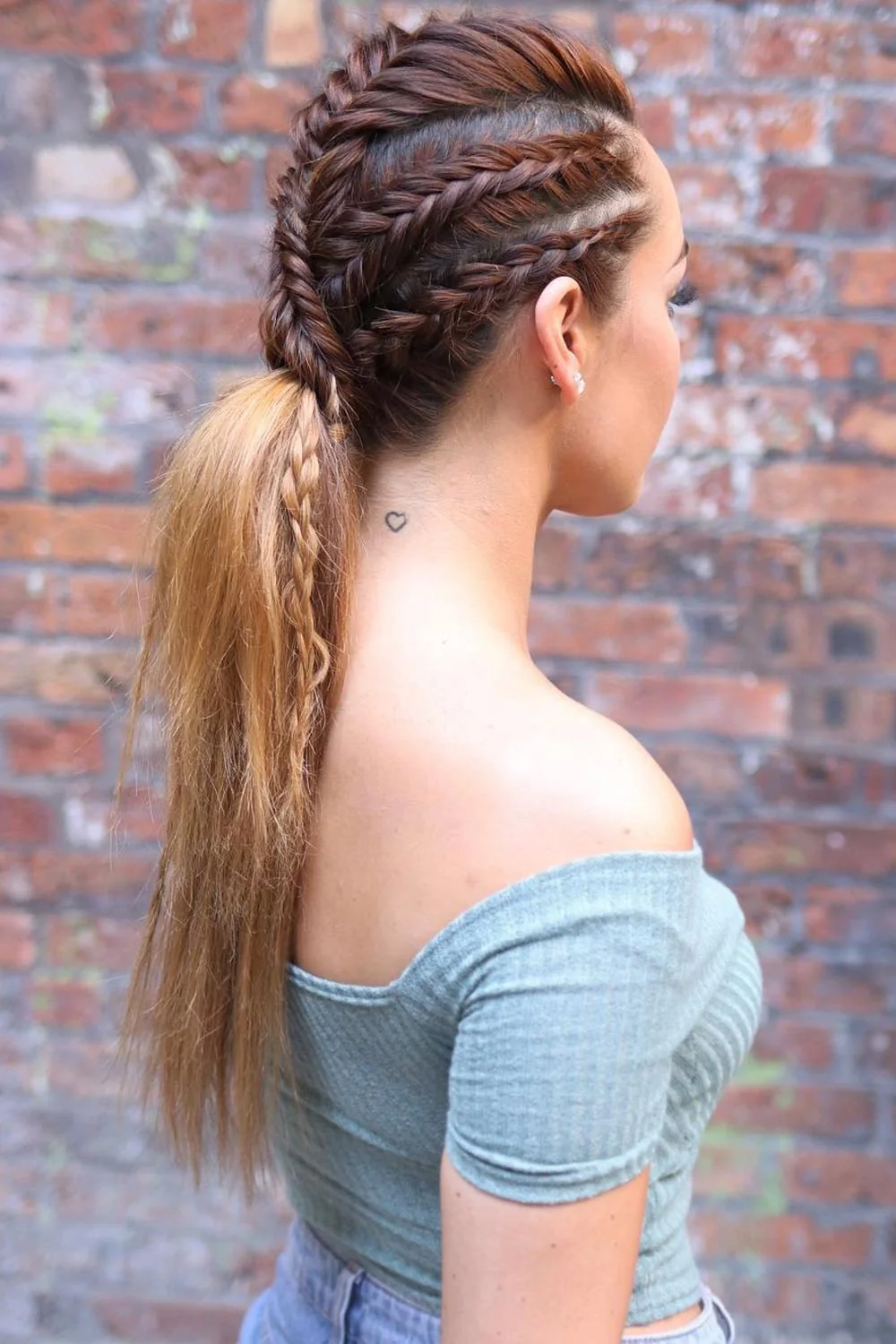
Idea 14
Several Side Braids Into a Ponytail
Several raised side braids travel toward a loose ponytail, creating more upper detail than a single broad braid. The remaining length is not fully braided, so the finish keeps movement below a structured, directional side pattern.
- Detail
- Several side braids
- Finish
- Loose ponytail
The side profile shows parallel braid routes and small sections of scalp between them. A smoother upper panel leads into the ponytail, whose lower hair falls in a softer, less woven outline than the paired braid tails nearby.
Wearability note: Choose this if you want multiple side details with an unbraided finish. Agree on the number and width of the sections before styling, and check the hairline for comfort; a sharper pattern in a photograph is not a reason to accept painful pulling.
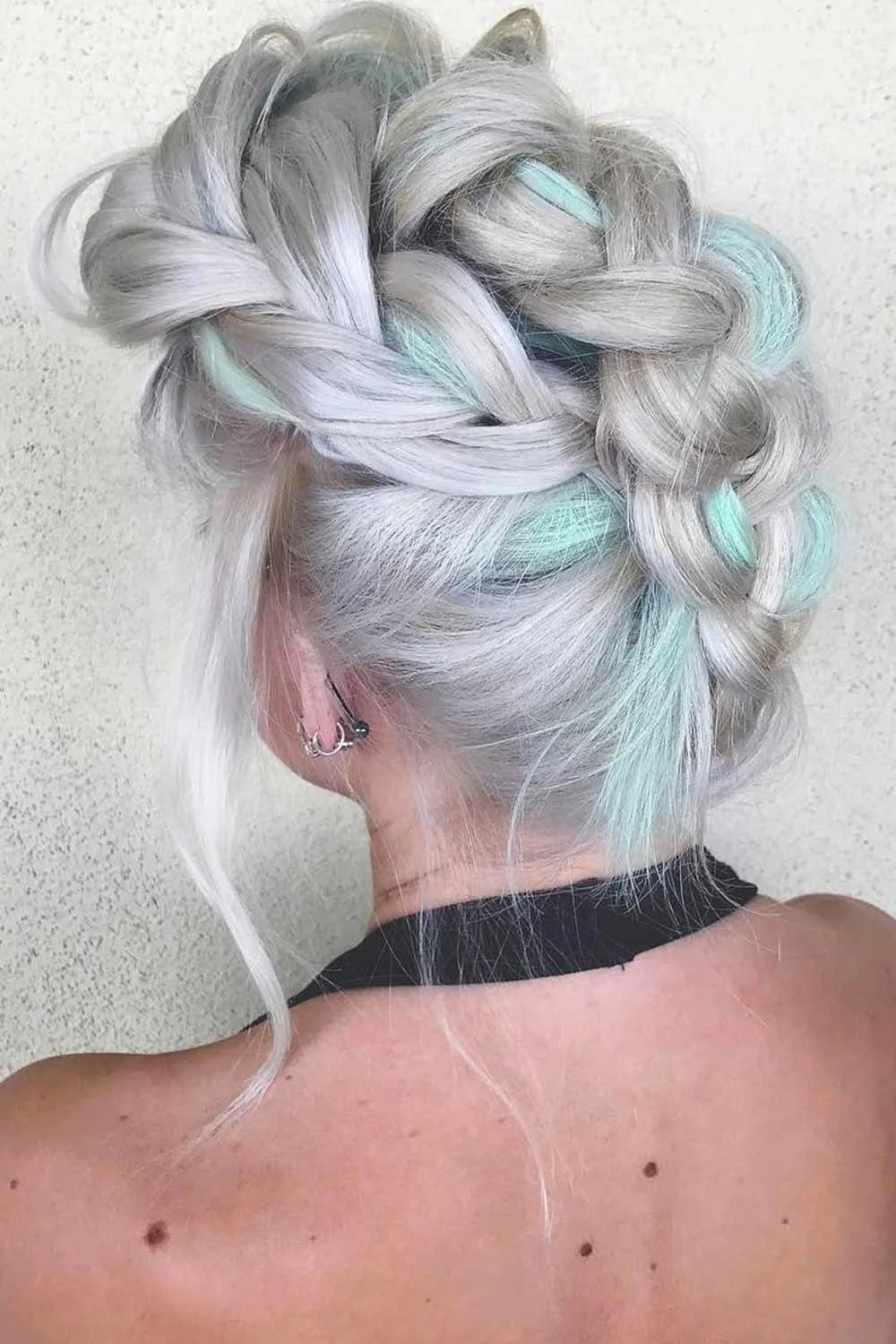
Idea 15
Large Raised Braid in an Updo
A large raised braid creates a sculptural line through the upper gathered hair. Pale mint sections sit among silver strands, helping the broad overlaps stand out while the ends remain tucked rather than continuing as a long tail.
- Shape
- Large raised braid
- Finish
- Gathered updo
The braid expands into rounded sections above the back of the head. The nape is exposed, and the surrounding hair is gathered into the same compact silhouette, making this a statement updo rather than a standard pair of downward braids.
Wearability note: Save the raised shape independently of the pastel shade. Discuss the size your own hair can support and ask to see the front during a trial, since the side-back view does not establish the desired forehead opening or the complete upper outline.
Read width realistically
Expanded sections make a braid look wider. A photograph cannot establish the natural density or whether extra hair was used, so agree on a realistic scale rather than treating the picture as a promise.
Check comfort, not just neatness
A braid should not feel painfully tight. Check the hairline and scalp while styling, and choose a looser arrangement if the pulling feels uncomfortable; a crisp part in a photograph is not a reason to accept discomfort.

About the author
Bella Ross
Bella Ross is the hairstyle editor behind Latest Easy Hairstyles. She curates practical haircut, braid, color, and styling ideas with a focus on looks that are easy to browse, realistic to recreate, and useful for everyday hair decisions.