
Before you choose
Compare the top and sides separately
The front can lie softly to one side, stand up a little or stay very close. The sides can retain short coverage or fade nearly to skin. Those choices change the haircut more than the name alone, so use the photographs to choose the amount of texture and contrast you want.
The hairstyle gallery
18 crew cut haircuts ideas to compare
Compare the visible length, shape, texture, and finish before choosing a salon reference.
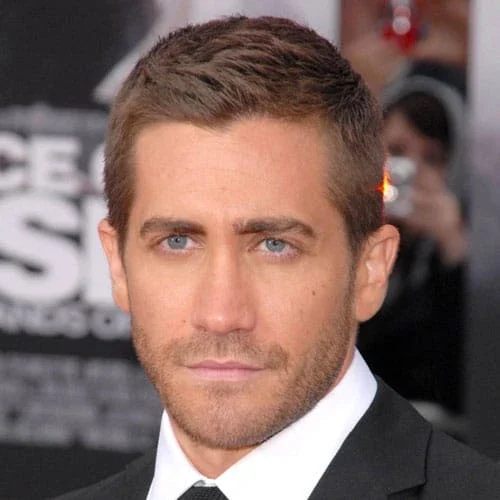
Idea 01
Classic Short Crew Cut
A short, slightly raised front gives this crew cut shape without creating a tall quiff. The sides stay close, but they are not reduced to the nearly bare finish of the skin-fade examples.
- Shape
- Short top
- Detail
- Tapered sides
The top has enough length for small changes in direction, while the outline remains compact around the ears. The softer hairline makes the finish less geometric than a sharply edged crop.
Wearability note: Compare this if you want a short cut with a little front movement. Ask how the top will sit with your growth pattern before deciding on a clipper length from a photograph alone.
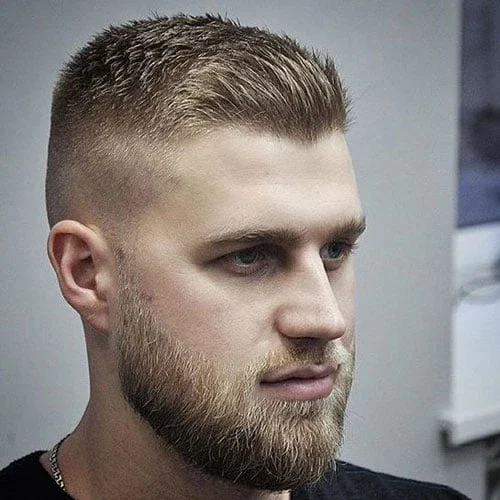
Idea 02
Brushed-Up Crew With a Beard
A brushed-up front gives this short crew cut a little height above the forehead. The sides fade closely around the temple, making the top stand apart from the fuller beard.
- Shape
- Short raised top
- Detail
- Faded sides
The upper hair is short enough to stay compact rather than falling into a fringe. Small separated pieces provide texture across the top without turning the outline into long spikes.
Wearability note: Use this reference for the balance between top height and side contrast. The beard is a separate choice, so discuss the haircut outline on its own if you prefer a clean-shaven face.
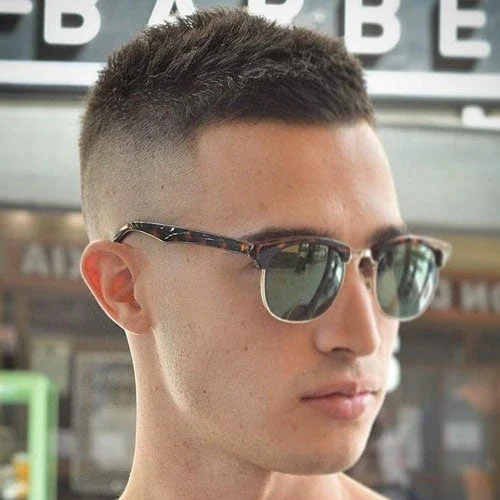
Idea 03
Textured Crew With a High Fade
A textured upper strip gives this crew cut a slightly rougher finish. The high fade removes much of the side weight, making the compact top the strongest part of the silhouette.
- Shape
- Textured top
- Detail
- High fade
The front stands up only a little, with small uneven points across the surface. The close sides also leave clear space around the sunglasses arms.
Wearability note: Compare this with the softer tapered crew cuts before choosing the fade height. A high close fade creates a more obvious contrast and will look different as the short sides begin to grow.
Choose your direction
Keep a softer outline
Compare the natural-edged cuts with some short hair remaining at the temples.
Add stronger contrast
Look at close skin fades if you want the top to stand apart clearly from the sides.
Choose front direction
Compare short upright texture with the gentler forward-side sweeps.
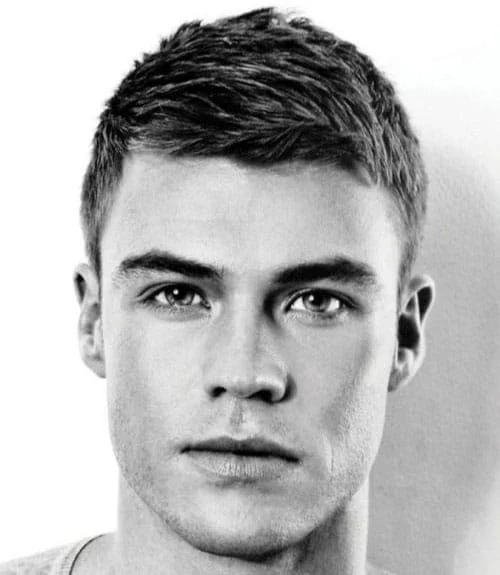
Idea 04
Softly Separated Crew Cut
Soft separation gives this short haircut movement without a hard front edge. The top stays compact, with the front directed slightly upward and across rather than lying as a dense fringe.
- Shape
- Short texture
- Detail
- Soft hairline
The sides taper toward the ears but retain a little visible hair. That softer transition makes the overall shape less stark than the nearly bare fades elsewhere in the gallery.
Wearability note: Choose this reference if you want a crew cut with a less geometric finish. Point out the soft hairline and side coverage, since a much sharper outline would change the feel even at a similar length.
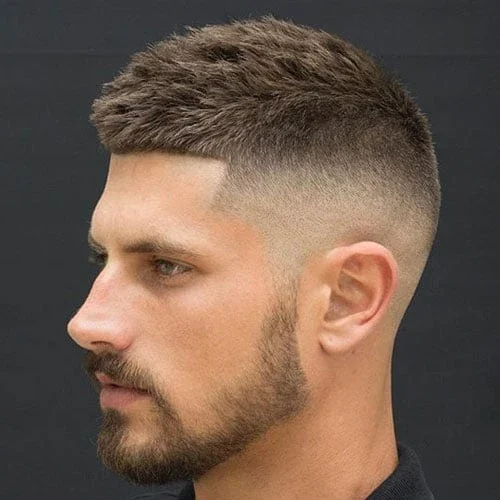
Idea 05
Short Crew With a Skin Fade
A compact top and clean side fade give this crew cut a defined profile. The front is slightly higher than the crown, keeping the shape recognizably short without making it completely flat.
- Shape
- Compact top
- Detail
- Skin fade
Small textured pieces sit above a pale faded band at the temple. The beard adds another dark area below, but the haircut’s main contrast remains between the top and the nearly bare side.
Wearability note: Use the side view to discuss the fade placement. Decide whether you want the same strong exposure around the ear or a softer version that retains more short hair through the lower side.
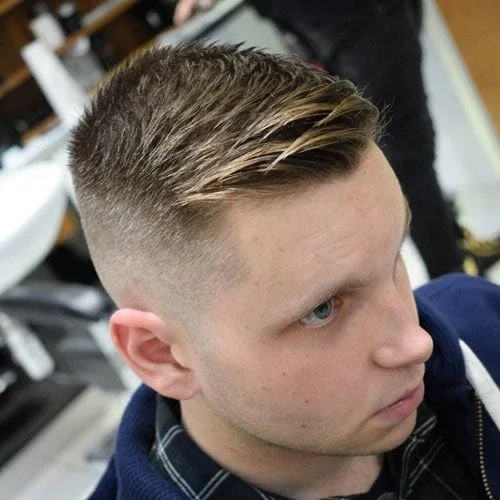
Idea 06
Highlighted Side-Swept Crew
Lighter front pieces make the side sweep easy to see in this short crew cut. The top has enough length to change direction while the close fade keeps the lower outline narrow.
- Shape
- Short side sweep
- Detail
- Close fade
The front lies in separated diagonal sections rather than a tall vertical shape. The crown stays shorter and less raised, which helps the haircut remain compact from front to back.
Wearability note: Compare the swept direction with the way your own front naturally grows. The highlights are optional; the useful haircut detail is the small amount of length kept above a closely blended side.
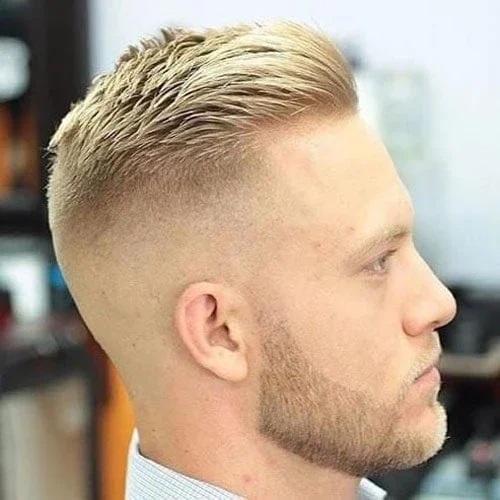
Idea 07
Blonde Crew With a Swept Front
A swept-up front gives this blonde crew cut a little height while keeping the overall shape short. The close sides emphasize the direction of the top without leaving a heavy edge above the ear.
- Shape
- Short blonde top
- Detail
- Close sides
The longer front blends into shorter hair toward the crown. Fine separations across the surface make the texture visible even though the light color creates a softer contrast with the fade.
Wearability note: Use this profile to compare top length with side exposure. Ask how much front length is needed for your hair to lift comfortably, especially if it tends to lie straight forward.
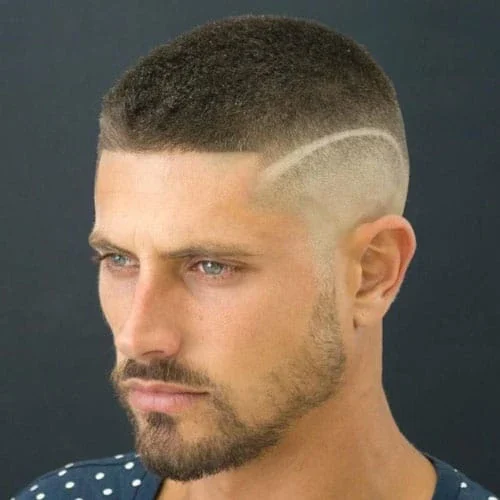
Idea 08
Close Crew With a Curved Line
A curved shaved line adds a graphic detail to this very short crew cut. The top stays close and even-looking, so the line becomes the main feature on the side.
- Shape
- Very short top
- Detail
- Shaved line
The fade exposes more skin below the darker upper section. The curved detail follows the upper side rather than cutting across the whole head as a long part would.
Wearability note: Choose this if you want a small design element in a compact haircut. Discuss how the line will grow out and whether you want it maintained, since it is a separate detail from the basic crew shape.
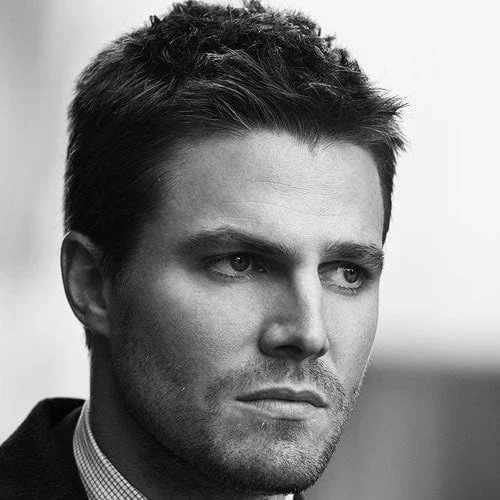
Idea 09
Natural-Edged Textured Crew
A softly raised front and irregular surface keep this crew cut from looking rigid. The hairline stays natural-looking, with no sharply cut horizontal fringe across the forehead.
- Shape
- Short textured top
- Detail
- Tapered sides
The sides are shorter than the top but retain enough hair to avoid a severe bare-skin contrast. That balance gives the haircut a softer outline around the temples.
Wearability note: Compare this if you prefer texture over crisp edges. Ask how the short crown will sit after washing, because the way the hair changes direction at the back can affect a compact cut more than expected.
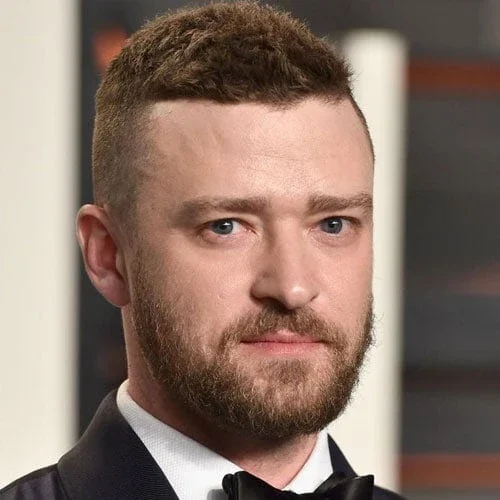
Idea 10
Short Curly Crew Cut
Compact curls give this crew cut a different surface from the straight brushed-up versions. The upper hair stays short, with the texture concentrated close to the head.
- Shape
- Short curls
- Detail
- Close sides
The sides are closely clipped, leaving the small curls visible above the temples. The front does not hang down as a separate fringe, so the forehead remains largely open.
Wearability note: Use this as a reference for a short curly outline rather than an exact length. Your own curl pattern will affect how much height remains, so compare the cut with the hair in its usual dry state.
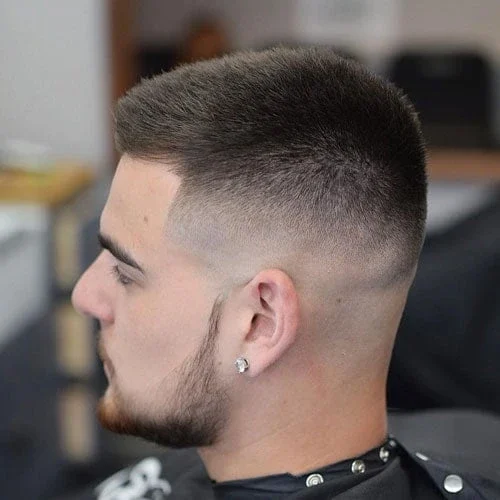
Idea 11
Dense Crew With a Clean Fade
A dense short top gives this crew cut a solid profile. The front has a small amount of height, while the close fade keeps the lower side and area around the ear exposed.
- Shape
- Dense short top
- Detail
- Close fade
The transition from the dark upper hair to the pale side is clear in this view. The top stays compact rather than forming a long sweep or hanging fringe.
Wearability note: Show the profile if you like the amount of upper weight. Ask whether a softer or lower fade would work better with your preferred upkeep, since the side contrast is a major part of this particular finish.

Idea 12
Short Crew With a Light Lift
A light lift at the front adds shape to this compact crew cut. The remaining top is short and textured, with a less dramatic side contrast than the closest skin fades.
- Shape
- Compact top
- Detail
- Small front lift
The front pieces point upward in small sections rather than forming a smooth, tall quiff. The sides follow the head closely while keeping some visible hair at the temples.
Wearability note: This is useful if you want a short cut that can look lightly arranged. Ask how much of that front lift your growth pattern supplies naturally and how the shape looks when it settles flatter.
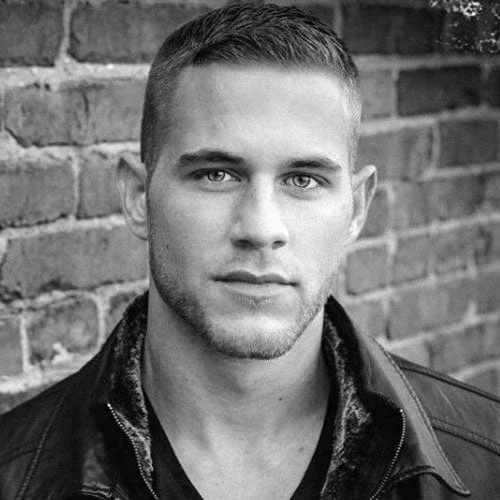
Idea 13
Neat Crew With a Side Direction
A subtle side direction makes this crew cut look neat without creating a strong comb-over. The top stays close, and the forehead remains open above a softly shaped front edge.
- Shape
- Short top
- Detail
- Soft side direction
The sides taper toward the ears while retaining some coverage. There is less visible separation through the upper hair than in the rougher, more textured crew-cut examples.
Wearability note: Compare this if you prefer a quieter outline. The photo is most useful for the overall length balance; the exact clipper settings should be chosen around your hair’s density and how closely you want the sides to sit.
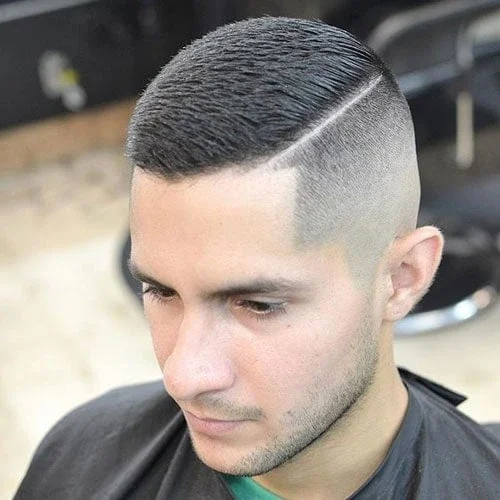
Idea 14
Close Crew With a Sharp Part
A sharply shaved part gives this close crew cut a more defined edge. The top lies short and compact, with a small amount of direction beside the straight diagonal line.
- Shape
- Short top
- Detail
- Shaved part
The fade below the part is very close, making the line stand out clearly. Compared with softer tapered versions, this haircut relies more heavily on precise borders for its finished appearance.
Wearability note: Choose this if you like a graphic detail rather than a loose natural edge. Ask how often the line needs refreshing to stay visible, since it will soften differently from the surrounding short hair.
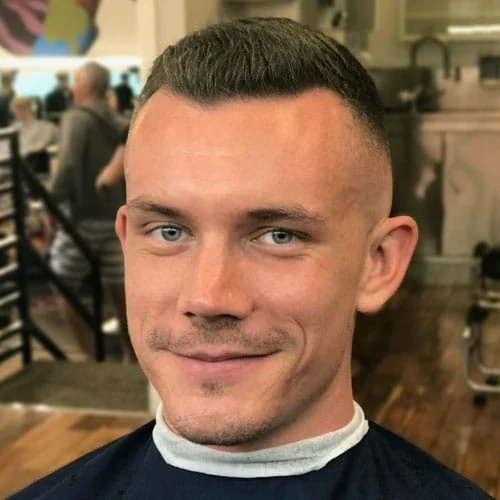
Idea 15
Compact Crew With a Close Side
A compact raised front gives this very short crew cut a little shape. The sides stay close to the head, leaving most of the visual weight above the forehead and crown.
- Shape
- Very short top
- Detail
- Close sides
The top is much shorter than a long quiff and does not fall across the face. Its slight upright direction is enough to distinguish it from an entirely even buzz cut.
Wearability note: Use this photo when discussing how short you want to go while keeping some front shape. Ask to compare a slightly longer top first if you are unsure how your hair behaves at this length.

Idea 16
Pale Blonde Close Crew
Pale blonde hair gives this close crew cut a softer visual contrast. The top remains short, with just enough front lift to keep the outline from looking completely uniform.
- Shape
- Very short blonde top
- Detail
- Soft taper
The sides follow the head closely without a large dark band above the ear. Small separated pieces across the top make the short texture visible in the front view.
Wearability note: Compare this with the darker crew cuts without assuming the same scalp contrast. Hair color and lighting affect how short sections appear, so use the silhouette rather than the apparent darkness to explain your preferred length.
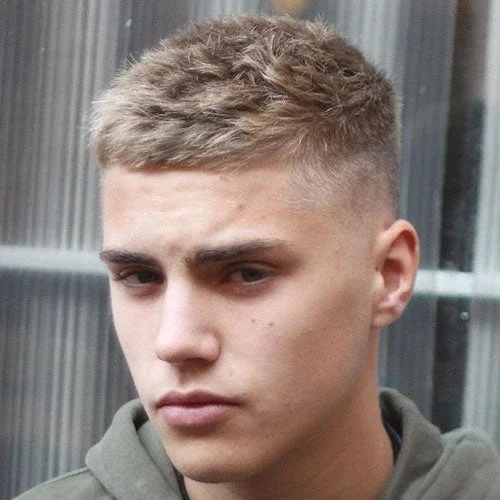
Idea 17
Tousled Short Crew
Tousled pieces give this short crew cut a loose, uneven surface. The sides stay compact, so the texture adds interest without leaving the whole haircut long.
- Shape
- Tousled texture
- Detail
- Short sides
The front points in several small directions rather than forming one smooth lift. The crown is similarly short, keeping the upper outline low and easy to distinguish from a longer messy quiff.
Wearability note: Save this if the broken-up texture is what you like. Ask how much separation your hair can show at a short length, because a very straight or very dense top may settle differently from the photograph.
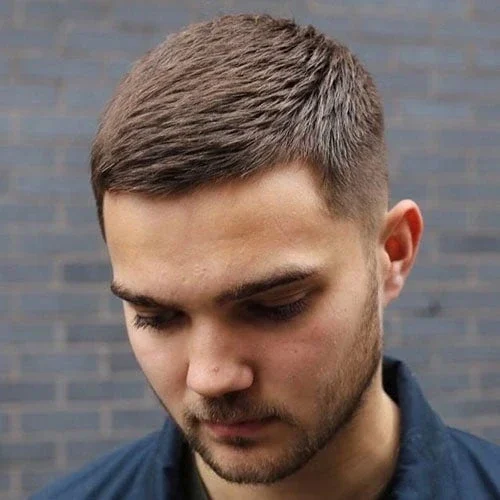
Idea 18
Soft Crew With a Forward Sweep
A gentle forward-side sweep gives this crew cut a softer front than the upright versions. The top is still short, but the hair lies together in broader sections.
- Shape
- Short side sweep
- Detail
- Soft taper
The sides are close without a highly exposed bare band. From this angle, the small diagonal direction at the front provides most of the shape, while the crown stays compact.
Wearability note: Compare this if you prefer the top to lie down rather than stand up. Discuss the front growth direction before choosing the length, especially if your hair naturally pushes back or separates at one corner.
What to specify at the barber
Show the preferred front direction, how much side exposure you want and whether the hairline should look soft or sharply defined. Exact clipper lengths cannot be reliably read from a photo, so let the barber adapt those measurements to your density and growth pattern.
Discuss how the crown behaves and how much arranging you want to do. A short textured top may still need attention where the hair changes direction, while a sharply faded side will look different as it grows out.

About the author
Bella Ross
Bella Ross is the hairstyle editor behind Latest Easy Hairstyles. She curates practical haircut, braid, color, and styling ideas with a focus on looks that are easy to browse, realistic to recreate, and useful for everyday hair decisions.