
Product reviews / Wide-Plate Flat Irons: Coverage Without Bulk
Best Wide-Plate Flat Irons: Coverage Without Bulk
Six wide-plate flat irons reviewed for lateral contact, heat menus, root clearance, coating differences and vented operating modes.

As an Amazon Associate I earn from qualifying purchases, at no extra cost to you. Affiliate disclosure

Extended broad contact on long panels
THE SHORTLIST
Find the right fit
BaBylissPRO 2-inch suits broad extended contact; Remington gives a ceramic alternative and Terviiix offers dial-led setup.
BaBylissPRO Ultra-Sleek 2-inch
Extended broad contact on long panels

VANESSA PRO 2-inch
A wide titanium face with eleven levels

Terviiix 2-inch Ceramic-Tourmaline Iron
Broad contact with a tactile dial
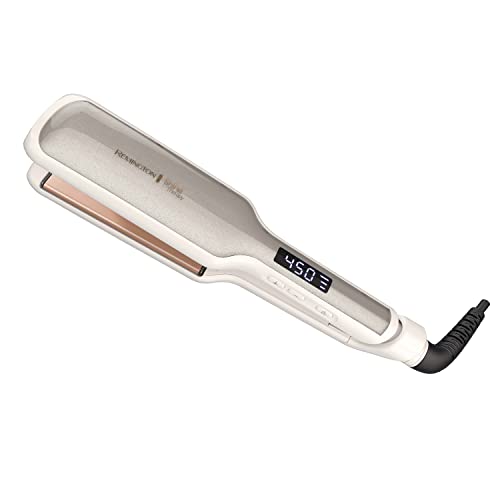
Remington Shine Therapy 2-inch
A wide ceramic option with nine settings

Wavytalk Vent Sesh 1.75-inch
A vented format with a separate operating routine

Revlon Ceramic Coated 2-inch
A straightforward broad dry-hair tool
THE EDITOR'S TAKE
The details that matter
BaBylissPRO 2-inch suits broad extended contact; Remington gives a ceramic alternative and Terviiix offers dial-led setup.
Width adds room across a flat ribbon. It does not make a thick bundled panel receive even contact.
Short roots, ears and tight end turns need more clearance planning with a broad body.
A CLOSER LOOK
The full product reviews
BaBylissPRO Ultra-Sleek 2-inch
The two-inch Ultra-Sleek combines width and extended plate length for a ribbon spread flat along the whole working face.
Use the length of the face as well as its width
The two-inch Ultra-Sleek combines broad width with extended plate length. Spread the hair along that face so the whole panel remains flat. Do not twist the ribbon into a rope before closing: a large outer surface cannot reach the inner layers of that rope. Its main advantage is room for an organized long section.
Clearance matters at the first inch
The broad body asks for more space around ears and skin. Start where you can hold the face clear, and keep tiny regrowth separate. The five-setting menu gives a simple control choice, while the nine-foot cord requires a clear counter path. Choose this model for long-panel work, not because two-inch plates are inherently better for every part of the head.
Leave detail to a deliberate decision
A broad iron can turn long ends gently using a permitted technique, but a short fringe has much less maneuvering room. If both jobs matter equally, a middle-width iron may be a better single-tool purchase. The BaBylissPRO is most convincing when the main routine is broad straightening and you accept its precision limits.
What stands out
- Extended plates support a long flat ribbon.
- Five visible settings simplify selection.
The trade-offs
- The broad body is awkward beside short hairline pieces.
Our verdict The strongest wide-format starting point when long prepared lengths need broad contact and a visible preset menu.
Using it in your routine
Spread long dry ribbons flat and keep the broad body clear of skin.
Consider another option if: Choose narrower plates for mainly short detail.
VANESSA PRO 2-inch
VANESSA offers eleven heat choices across a broad titanium face, allowing the weakest part of the section to guide selection.
More choices help only when read
VANESSA supplies eleven heat levels. Confirm the selected value before starting each zone, particularly when weathered ends differ from stronger roots. A broad plate can make it tempting to include both in a thick section; choose for the weakest part of the active length instead.
Wide does not mean deep
Lay a thin layer across the two-inch face. If the inside remains disorganized, reduce the panel rather than close harder or chase a one-pass advertisement. The useful width advantage is lateral coverage. Hair stacked in several layers does not receive the same contact merely because the plate is wide.
Use it for the main lengths
The large face is easiest to handle away from short roots and ears. Give the tool a stable resting surface and let it cool before cleaning. VANESSA suits a broad dry-length routine with more control choices; a narrow model makes more sense if your usual finish depends on precise curls and short face-framing turns.
For a curved finish, check how much room the body needs before working beside the cheek. A broad face may make a gentle long-end turn practical while remaining awkward on a short fringe.
What stands out
- Eleven levels give a wider adjustment menu.
- The two-inch face accommodates broad ribbons.
The trade-offs
- A one-pass claim should not dictate thickness or heat.
Our verdict A broad adjustable option for someone who wants more heat choices than a small preset menu.
Using it in your routine
Select one of the eleven levels for strand condition and spread the panel laterally.
Consider another option if: Avoid oversized sections intended to match a one-pass claim.
Terviiix 2-inch Ceramic-Tourmaline Iron
Terviiix uses a five-position dial beside its two-inch coated plate, with the position checked before the styling grip begins.
A dial should be checked at rest
Choose the position while the tool is away from the hair and confirm it before gripping. A tactile dial can be convenient if you dislike scrolling through many numbers, but the space between presets may matter when you need a small heat change. Compare that control need before buying.
The coated face still needs preparation
Detangle and dry completely, then lay a panel flat between the broad faces. The ceramic-tourmaline description is a construction detail rather than evidence that any preset is harmless. The floating faces can accommodate closure; they do not untangle a bundled length.
Packing follows cooling
The supplied pouch and dual-voltage description may be useful, but inspect the rating and exact instructions before travel. Let the tool cool before packing instead of assuming a pouch permits every hot storage method. Terviiix is strongest when a broad face and dial fit a regular long-hair routine.
The control position should stay visible when you rest the tool between panels. Check that your normal grip does not turn the dial while you change from the front to the back of the head.
What stands out
- A dial provides a distinct setup motion.
- The two-inch face suits long ribbons.
The trade-offs
- Five choices offer less fine adjustment than a longer digital range.
Our verdict The dial-led alternative when you prefer a physical position to repeated digital button presses.
Using it in your routine
Check the dial, use flat dry sections and cool before packing.
Consider another option if: Choose finer digital increments if adjacent presets are too far apart.
Remington Shine Therapy 2-inch
Shine Therapy pairs a broad ceramic face with nine settings, while its infused plate description remains separate from conditioning the hair.
The plate treatment stays in the tool
Remington describes argan-oil and keratin-infused ceramic plates. That is not a measured conditioner dose placed onto the section. Keep the ordinary care routine separate and do not add oil before pressing merely to match the plate description. The meaningful decision is a broad ceramic face with adjustable controls.
Plan the roots separately
The two-inch shape is most useful on prepared lengths. Around the temple or a short layered fringe, the body may occupy more room than the hair provides. Separate those pieces and keep safe clearance rather than pressing the face closer to skin.
Nine settings need one appropriate selection
Read the display and choose for the weakest length in the panel. Do not use an extra boost as the automatic answer to an uneven section. First inspect whether the panel is flat and fully dry. This Remington is a sensible wide ceramic choice when the long lengths dominate the session.
Keep the shorter layer tips from folding into the broad face alongside the longest strands. Separate those ends first, then choose whether each needs straightening or only a soft curve.
What stands out
- Nine settings support planned adjustment.
- Broad faces accommodate a flat length.
The trade-offs
- Infused plates do not replace conditioning.
Our verdict The ceramic alternative for broad dry lengths when a manageable menu matters more than a titanium label.
Using it in your routine
Keep the care routine separate from the infused-plate description and press thin dry ribbons.
Consider another option if: Choose a narrow model for extensive short root detail.
Wavytalk Vent Sesh 1.75-inch
Vent Sesh adds moisture vents to a broad plate format, requiring the correct damp or dry instructions for the chosen stage.
The vents identify a different job
Vent Sesh is designed with openings for moisture to escape. If using its permitted damp-hair mode, follow the exact preparation and orientation directions rather than copy a standard dry straightener technique. For a dry finish, use the corresponding instructions. The visible holes alone are not a universal wet-styling permission.
The broad ribbon still needs control
Arrange the section flat so the faces contact an even layer. Keep the vent path and hot body away from skin. A panel crowded with overlapping hair can make the handling harder regardless of whether it begins damp or dry. Section organization remains part of the routine.
Choose the mechanism consciously
This tool is relevant if moisture handling is a real part of your purchase decision. If you want only broad dry straightening, a simpler wide iron may fit better. Vent Sesh earns its place as a distinct operating format, with its supplied directions central to everyday use.
Arrange the drying or styling area so the vent side points away from exposed skin during the permitted operation. A mirror should let you see that orientation before you begin the first section.
What stands out
- Broad faces support an organized panel.
- Vents belong to a purpose-built moisture-handling design.
The trade-offs
- The vented routine must not be transferred to an ordinary dry iron.
Our verdict The distinct vented alternative when you want the exact appliance’s wet-to-straight routine rather than assume all wide irons share one preparation method.
Using it in your routine
Follow the exact wet-or-dry mode directions and keep the vent path clear of skin.
Consider another option if: Choose a conventional dry iron if you do not need the vented routine.
Revlon Ceramic Coated 2-inch
Revlon’s two-inch ceramic-coated face suits a flat organized length rather than the small inward curve of a narrow shaping iron.
Keep the job simple
Revlon’s two-inch coated format is most relevant to straightforward broad-panel straightening. Separate a ribbon that lies flat across the face and keep the ends untwisted. A large iron is less convenient when the desired finish is a tight inward curl beside the cheek, so decide whether that shaping job matters before buying.
Read the control before the first section
Multiple heat choices mean the selected level must still be checked. The available maximum is not the default requirement for a wide plate. Select for strand condition and maintain continuous movement through a prepared dry section.
Store the working face carefully
Allow the iron to cool, then clean according to its directions and protect the faces from hard objects in storage. A coated surface should not be scraped with an improvised cleaning tool. Revlon fits the person who wants a familiar broad iron and a simple session, with precision work accepted as a different handling need.
At the hinge, keep the ribbon clear rather than letting the longer section collect behind the plates. If the grip feels cramped beside the head, reposition the section rather than twist the body toward the ear.
What stands out
- A broad face supports lateral coverage.
- Multiple settings allow a considered selection.
The trade-offs
- The broad shape is less versatile for tight end curls.
Our verdict The uncomplicated coated-plate choice for a broad straight length when advanced control behavior is not the main requirement.
Using it in your routine
Confirm the setting and keep a dry ribbon flat across the coated faces.
Consider another option if: Choose a narrower iron for small curled ends.
EVERYDAY DETAILS
What matters in everyday use
Lateral coverage
Spread a panel across the face instead of adding depth.
Root clearance
Keep the body away from skin and isolate short pieces.
Operating mode
A vented wet-to-straight model has different directions from a dry iron.
Product photographs: Amazon. Certain content that appears on this site comes from Amazon. This content is provided “as is” and is subject to change or removal at any time.
GOOD TO KNOW
Questions before choosing
Should I take thicker sections with wide plates?
Take broader flat ribbons where appropriate, while keeping the layer thin enough for even contact.
Can I curl short ends with a two-inch iron?
The broad body needs more turning room. A narrow plate is easier for short precise bends.
Are all wide irons wet-to-dry?
No. Only use moisture-handling modes when the exact appliance directions permit them.
Bella Ross curates practical hairstyle ideas for everyday cuts, braids, color inspiration, and simple styling routines.
Our editorial policySTYLE IT YOUR WAY
A little styling inspiration
 Product reviews
Flat Irons for Long Hair: 6 Detailed Reviews
Long hair makes plate length and cord movement noticeable. The tool should accommodate a flat section while letting you finish the ends without stopping or sharply folding the wrist.
 Product reviews
Best Titanium Flat Irons: Width and Control Matter
Six titanium flat irons reviewed for plate width, coating differences, heat controls, curved ends and practical handling.
 Product reviews
Thick-Hair Flat Irons: 6 Detailed Reviews
For thick hair, useful coverage means a broader flat ribbon of hair, not a denser bundle. Two-inch plates can accommodate that ribbon while narrower irons remain easier for detailed areas.