
Product reviews / Thick-hair brushing
6 Brushes for Thick Hair: Detailed Reviews
Conair suits broad finishing on prepared thick hair; Lily England handles textured preparation, while Kitsch adds animal-free surface polish.

As an Amazon Associate I earn from qualifying purchases, at no extra cost to you. Affiliate disclosure

Broad finishing after knot removal
THE SHORTLIST
The shortlist, reviewed below
Conair suits broad finishing on prepared thick hair; Lily England handles textured preparation, while Kitsch adds animal-free surface polish.
Broad finishing after knot removal
Conair Ultra Wide Paddle
Broad finishing after knot removal
Animal-free finishing with deeper reach

Kitsch Smooth & Polish
Animal-free finishing with deeper reach
Regular-flex preparation on straighter dense hair
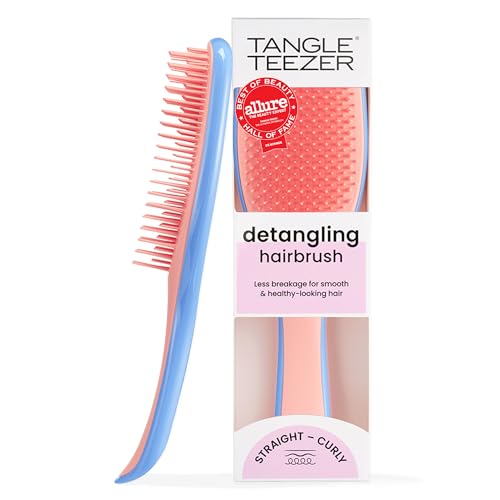
Tangle Teezer Ultimate Detangler Apricot Blaze
Regular-flex preparation on straighter dense hair
Three-tier preparation for textured density

Lily England Curly Detangler
Three-tier preparation for textured density
Flexible pins for local resistance

Wet Brush Original Black Frost
Flexible pins for local resistance
Natural-fiber polishing with nylon reach

BESTOOL Oval Mixed-Bristle Brush
Natural-fiber polishing with nylon reach
THE EDITOR'S TAKE
Our first choice and the alternatives
Conair suits broad finishing on prepared thick hair; Lily England handles textured preparation, while Kitsch adds animal-free surface polish.
This shortlist separates knot preparation from arranging thick lengths. Head coverage is useful only after the interior is clear; the outside looking smooth does not establish that the whole bundle is detangled.
A CLOSER LOOK
The full product reviews
Broad finishing after knot removal
Conair Ultra Wide Paddle
Our first choice for broad finishing on thick hair once knots are clear.
A finishing choice for substantial lengths
Conair takes first place here for arranging thick hair after the difficult knots have been cleared. The wide face contacts a substantial area, useful when bringing long layers into a ponytail or brushing out a deliberately styled wave. It is not our first choice for forcing through a dense wet knot. The distinction matters: a shiny outer layer can conceal resistance underneath, and a broad face makes that interior harder to inspect during one long stroke.
Use the width horizontally and the thickness sparingly
Lift the hair into shallow layers before passing the paddle through. The ball-tipped pins and cushioned base have room to move against that smaller section, rather than being buried in the whole mass. At the nape, turn the brush only as far as the head can fit comfortably; a wide paddle is bulky behind an ear. A narrower tool may be easier for those short pieces even when the large paddle handles the main lengths.
The practical compromise
Its soft-touch handle gives a clear grip while you change position at the back, but head size remains the trade-off. Choose this model if the finishing workload is a large amount of already-prepared hair. Keep knot release separate and stop when the surface has the arrangement you want. Repeated strokes through natural curls can expand the pattern, so this is more convincing for smooth gathered styles and intentionally brushed-out lengths than untouched curl definition.
What stands out
- Wide face suits arranging substantial prepared lengths.
- Cushioned base lets the pin face move with the section.
The trade-offs
- Large head is awkward on short details and can conceal unresolved interior knots.
Our verdict Our first choice for broad finishing on thick hair once knots are clear.
Using it in your routine
Lift shallow layers and arrange them separately before gathering the finished style.
Consider another option if: You need only wet-knot removal or want natural curl clumps untouched.
Animal-free finishing with deeper reach
Kitsch Smooth & Polish
The animal-free hybrid for arranging a prepared thick-hair surface.
Two fiber lengths for a dense surface
Kitsch offers a hybrid finishing face: nylon reaches through a prepared section while shorter vegan fibers contact its surface. That combination makes sense when a pure soft brush barely touches thick hair and a sparse detangler leaves the outside less arranged than you want. The nylon should reach without strong pressure. If it catches underneath, lift the layer and deal with that area separately rather than using the short fibers to conceal the problem.
Choose the finished texture first
For a smooth ponytail or brushed-out blowout, use shallow strokes toward the gathering point. On dense natural curls, that same movement separates clumps and can increase the apparent volume. The product has a different role depending on whether you want that expanded finish. It is not a substitute for the wet preparation and curl-setting step simply because the description includes curly hair among the possible uses.
A material preference with extra upkeep
The animal-free fibers provide a real reason to choose this model over a natural-boar hybrid. The cushioned base also needs cleaning appropriate to the assembly. Dense shorter fibers retain oil and styling residue, so remove trapped hair and clear accumulation before finishing a freshly prepared crown. It earns its place for animal-free polish with nylon reach, with a flexible detangler kept for stubborn knots.
What stands out
- Nylon adds reach through a shallow thick section.
- Vegan fibers offer a clear animal-free finishing option.
The trade-offs
- Dense fibers collect residue and brushing changes natural curl clumps.
Our verdict The animal-free hybrid for arranging a prepared thick-hair surface.
Using it in your routine
Work in shallow sections and keep the shorter fiber bed clear of residue.
Consider another option if: You need to preserve set clumps or prefer a sparse knot-removal tool.
Regular-flex preparation on straighter dense hair
Tangle Teezer Ultimate Detangler Apricot Blaze
A preparation option for dense straight-to-wavy hair with careful section depth.
The named variant limits the recommendation
This Apricot Blaze Ultimate Detangler is the straight-to-wavy regular-flex version. The color does not make it a special thick-hair model. It suits dense hair when the individual strands and intended straight-to-wavy routine work with the tooth flexibility; a more specialized coily-hair design may make better sense for another pattern. The long teeth reach into a small section while shorter teeth arrange the surface, provided the section is not packed too densely for the head.
Section depth is the useful adjustment
Hold the hair above the resistant area and reduce the depth of the bundle so the teeth can actually pass through its interior. Working only over the top can give the false impression that the thick section is clear. The maker permits conditioner distribution, making this an option during preparation when the product provides suitable slip. Afterward, decide how to dry and style the pattern instead of continuing repeated brushing as it sets.
A rinse-friendly molded arrangement
The all-plastic teeth are straightforward to inspect without a dense natural-fiber bed hiding trapped hair. Check for damaged or bent teeth rather than forcing them harder into the next section. This pick is useful for a dense straight-to-wavy preparation routine, but does not supply a round-brush bend or the dry surface contact of a mixed-bristle finishing paddle. The variant and the actual brushing task are more informative than a general all-hair claim.
What stands out
- Two tooth lengths suit preparation of shallow supported sections.
- Molded teeth are easy to inspect and rinse.
The trade-offs
- This regular-flex straight-to-wavy variant is not a dedicated coily-hair model.
Our verdict A preparation option for dense straight-to-wavy hair with careful section depth.
Using it in your routine
Support the knot and divide thick areas horizontally before distributing conditioner.
Consider another option if: You require a specialist coily-hair variant or firm heated shaping tension.
Three-tier preparation for textured density
Lily England Curly Detangler
The textured-hair preparation choice within this thick-hair shortlist.
A textured-hair recommendation with a defined format
Lily England identifies the brush for 2C through 4C hair and uses three tiers of flexible teeth. That makes it a more directly relevant preparation choice than a regular-flex straight-to-wavy variant when dense hair also has a strong natural pattern. The tooth tiers contact different depths, but they still need a separated section rather than the whole crown at once. Flexibility changes how the brush yields; it does not settle how much resistance a particular knot contains.
Use the handle to control one small area
The handled shape leaves the opposite hand free to hold the section above a knot. Start at the tips and work locally, widening the stroke after each cleared area. Use an appropriate conditioner or leave-in as directed rather than brushing a dry dense knot with increasing pressure. Once preparation is finished, change to the setting technique your curls need. Detangling and deliberate clump shaping are related steps, not identical outcomes from the same stroke.
Where it belongs beside a finishing brush
Choose Lily England for textured wash-day preparation, with a paddle or smoothing hybrid only if you later want an arranged dry surface. The description’s curl-definition promise should not replace your own product and section plan. Clean between the tooth tiers so accumulation does not bridge the spaces and alter the working contact. This is the textured-preparation pick here, particularly when the interior of a section needs more attention than its polished outside.
What stands out
- Explicit 2C-to-4C role suits textured preparation.
- Three tooth tiers and a handle support controlled small-section work.
The trade-offs
- Detangling alone does not establish a finished defined-curl result.
Our verdict The textured-hair preparation choice within this thick-hair shortlist.
Using it in your routine
Work from supported tips through small conditioned sections before setting the curl pattern.
Consider another option if: You need dry surface polish or a brush that supplies heated blowout tension.
Flexible pins for local resistance
Wet Brush Original Black Frost
The flexible-pin preparation alternative for deliberately divided thick hair.
A flexible alternative before finishing
Black Frost is an Original Wet Brush variant, not a dedicated thick-hair brush. Its flexible pins suit local knot release on wet or dry hair when the section is kept manageable. In thick lengths, the pins may bend before reaching the center of a large bundle. Take that as a cue to divide the section rather than press the brush harder against the scalp. The useful purchase is flexibility for preparation, not a claim that one face can cut through the entire hair mass.
Check the underside as well as the surface
Lift the outer layer and work the lower tips first, with the hand supporting above the resistance. The brush can then move through the cleared path instead of trying to open several unrelated knots at once. Around a shorter side layer, a smaller section also keeps loose strands away from neighboring finished areas. This approach is particularly useful when the outside feels smooth but a comb still catches underneath.
Original remains a specific construction
Do not transfer HeatFlex or drying claims from other Wet Brush versions to this Original. Use an independently suitable heat-styling brush for direct dryer tension. The Original is easy to keep as a dedicated preparation tool while a wide paddle finishes the longer lengths. Remove accumulated hair so the pins can flex separately and inspect damaged tips. Choose it when a flexible pin face is your preference, with realistic limits on penetration through dense hair.
What stands out
- Flexible pins suit local preparation with supported sections.
- Handled shape helps reach underneath longer layers.
The trade-offs
- Original pins bend in overly thick sections and have no assumed Speed Dry heat rating.
Our verdict The flexible-pin preparation alternative for deliberately divided thick hair.
Using it in your routine
Lift the outer layer, support the lower section and clear the ends in short strokes.
Consider another option if: You want one large forceful pass or direct heated brush shaping.
Natural-fiber polishing with nylon reach
BESTOOL Oval Mixed-Bristle Brush
A natural-fiber hybrid for finishing prepared thick lengths.
Why the nylon matters on thick hair
BESTOOL combines natural boar fibers with longer nylon on a cushioned oval paddle. On a shallow prepared section, the nylon adds reach that a very soft pure-boar face can lack, while the shorter fibers arrange the outside. That is useful for thick lengths being gathered into a smooth style. It does not make a resistant wet knot a suitable target for the whole dense face. The blend is the construction reason to consider it, rather than the product’s broad health promises.
Control the amount of oil you spread
A finishing stroke can move existing oil and styling residue along the lengths. That may suit dry ends but can be unwelcome on a crown that already looks coated. Keep the brush clean and stop at the arranged surface instead of making repeated full-length passes out of habit. For natural curls, assess whether a brushed-out expanded shape is actually wanted; otherwise keep this tool for a different finishing day.
Accessories support a dense brush face
The included cleaner is useful for lifting trapped hair out from between the two bristle lengths. Follow the bamboo and cushion care directions rather than soaking the whole brush by default. The cover bag keeps the tool together for storage, but let a cleaned brush dry first. Choose BESTOOL if natural animal fibers fit your preference and you want hybrid finishing reach, with a flexible preparation brush for deeper knots.
What stands out
- Longer nylon adds reach beyond the boar-fiber surface.
- Cleaner helps maintain the dense mixed bristle face.
The trade-offs
- Natural fibers are not vegan and can spread unwanted oil through the style.
Our verdict A natural-fiber hybrid for finishing prepared thick lengths.
Using it in your routine
Use shallow sections after detangling and clear trapped hair with the included cleaner.
Consider another option if: You avoid animal fibers or want a knot-removal brush for a dense wet section.
EVERYDAY DETAILS
What matters in everyday use
This shortlist separates knot preparation from arranging thick lengths. Head coverage is useful only after the interior is clear; the outside looking smooth does not establish that the whole bundle is detangled.
Section depth
Lift layers so teeth or pins reach the interior.
Finishing role
Broad paddles and hybrid fibers arrange prepared lengths.
Variant fit
Choose the tooth flexibility for both density and natural pattern.
Product photographs: Amazon. Certain content that appears on this site comes from Amazon. This content is provided “as is” and is subject to change or removal at any time.
Treat dense hair as several accessible layers
Horizontal separation can reveal knots beneath a smooth outer layer. Clear each shallow section before using a wide finishing stroke across the gathered lengths.
Decide whether expansion is wanted
Dry brushing changes natural clumps. A large finishing paddle makes sense for a smooth ponytail or brushed-out style; a curl-preserving routine calls for less disturbance after setting.
GOOD TO KNOW
The questions that change the choice
Does a bigger brush detangle thick hair better?
It covers more area, but can conceal resistance. Interior access within a shallow section matters more than width during knot removal.
Is thick hair always a coily-brush task?
No. Density and natural pattern are different attributes. Check whether the named tooth variant fits your straight, wavy or coily preparation routine.
Should I press harder when the pins bend?
Divide the section and identify the resistant area. More pressure through the entire bundle is not a substitute for clear access.
Bella Ross curates practical hairstyle ideas for everyday cuts, braids, color inspiration, and simple styling routines.
Our editorial policySTYLE IT YOUR WAY
A little styling inspiration
 Style inspiration
24+ Ideas for Long Hair
A photo-first guide to ideas for long hair, with concise image-specific notes and practical comparison points.
 Style inspiration
29+ Curly Hairstyles for Various Occasions
A photo-first guide to curly hairstyles for various occasions, with concise image-specific notes and practical comparison points.
 Style inspiration
28+ Curly Bob Ideas
A photo-first guide to curly bob ideas, with concise image-specific notes and practical comparison points.