
Product reviews / Styling tools
Flat Irons: 6 Detailed Everyday Reviews
The most useful flat iron is the one that fits your sections and temperature needs. Wide plates, a narrow all-rounder, steam and airflow straightening create substantially different routines.

As an Amazon Associate I earn from qualifying purchases, at no extra cost to you. Affiliate disclosure

Straightening and shaping ends with one-inch plates
THE SHORTLIST
The six products at a glance
Different working designs for choosing a straightener by the way you style.
Our first pick
Remington Shine Therapy 1-inch
Straightening and shaping ends with one-inch plates
Pick 2

BaBylissPRO Ultra Sleek 1.5-inch
Medium-width coverage with a digital readout
Pick 3

Dyson Airstrait
Airflow straightening instead of plate clamping
Pick 4

ANNLARY 1-inch Titanium-Ceramic Iron
A one-inch tool with eight displayed settings
Pick 5
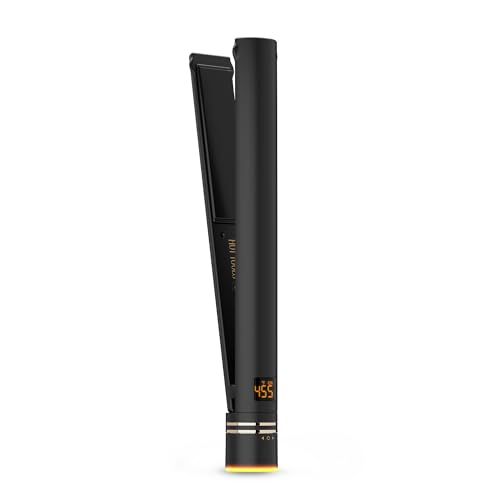
Hot Tools Black Gold 1.25-inch
Mid-width plates and many digital settings
Pick 6
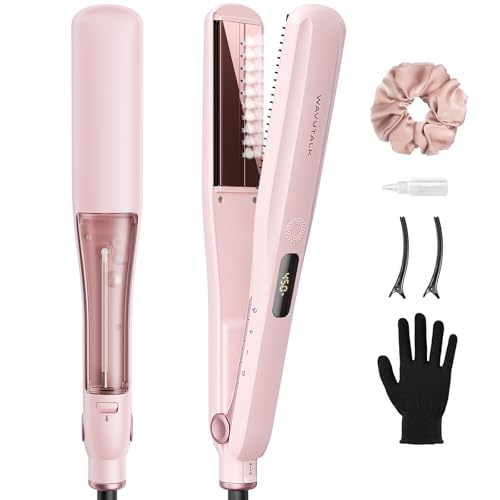
Wavytalk Steam Sesh
Steam-assisted styling with a removable comb
THE EDITOR'S TAKE
The details that matter in daily use
The most useful flat iron is the one that fits your sections and temperature needs. Wide plates, a narrow all-rounder, steam and airflow straightening create substantially different routines.
This review compares tools for a household straightening routine. A stylist choosing equipment for repeated client appointments also needs to check the exact commercial-use, care and service terms; the professional straightener review addresses that purchase.
A CLOSER LOOK
The full product reviews
Our first pick
Remington Shine Therapy 1-inch
Its starting temperature is higher than some adjustable alternatives; fragile hair deserves a lower-starting option.
Plate shape and placement
The one-inch plates are a manageable middle ground for smoothing lengths and turning the ends. The digital heat choice is more useful than the oil-and-keratin coating story: infused plates do not replace conditioner or a heat protectant.
The controls that matter
Nine temperature choices make the Shine Therapy more adjustable than a two-setting basic iron. Confirm the digital setting before starting the next panel; Turbo is a separate high-heat option, not a normal stage of every pass. The one-inch width leaves room to straighten a ribbon of hair and then turn the wrist for a shaped end. Remington lists a nine-foot cord and a one-hour automatic shutoff. Those are useful handling and session details, while the coating is not a replacement for your usual preparation products.
Where this model fits
The one-inch Shine Therapy is the most straightforward choice here when the same session includes straight lengths and a gentle turn at the ends. Its width lets you isolate a front piece without switching to a detail iron. The practical compromise is coverage: a long, dense back panel still needs more divisions than with a wider head, and its coating story should not decide how much heat you apply.
What stands out
- 1-inch ceramic plates
- Nine heat settings
The trade-offs
- Its starting temperature is higher than some adjustable alternatives; fragile hair deserves a lower-starting option.
Our verdict The one-inch Shine Therapy is the most straightforward choice here when the same session includes straight lengths and a gentle turn at the ends.
Using it in your routine
Use fully dry, detangled sections. Check the nine heat settings before a continuous pass and keep the working head away from skin.
Consider another option if: Its starting temperature is higher than some adjustable alternatives; fragile hair deserves a lower-starting option.
Pick 2
BaBylissPRO Ultra Sleek 1.5-inch
- Working format
- 1.5-inch Nano Titanium plates
- Controls
- Digital temperature selection
Titanium and a wider plate do not establish a safe temperature for every strand or guarantee one-pass styling.
Plate shape and placement
This Ultra Sleek variant sits between a standard one-inch iron and a two-inch plate. It suits broader sections while retaining more maneuverability than the widest model; check the exact width when ordering because the range contains multiple variants.
The controls that matter
Five digital settings and an LED display give the Ultra Sleek a relatively short menu rather than dozens of increments. The catalog lists a ceiling of 450°F, floating plates and a nine-foot swivel cord. The 1.5-inch working face is the actual reason to consider this variant: it occupies less width than the two-inch model while covering more than a standard one-inch iron. Arrange the panel across that face before closing. The floating design is intended to maintain contact; it is not a reason to clamp harder over a knot.
Where this model fits
This 1.5-inch Ultra Sleek makes sense when a standard one-inch head feels narrow across the back but a two-inch tool feels cumbersome around the face. Divide those areas differently rather than trying to use one section size everywhere. The broad contact suits smoothing; a very tight end turn or tiny fringe remains less convenient than it would be with a slimmer working face.
What stands out
- 1.5-inch Nano Titanium plates
- Digital temperature selection
The trade-offs
- Titanium and a wider plate do not establish a safe temperature for every strand or guarantee one-pass styling.
Our verdict This 1.5-inch Ultra Sleek makes sense when a standard one-inch head feels narrow across the back but a two-inch tool feels cumbersome around the face.
Using it in your routine
Use fully dry, detangled sections. Check the digital temperature selection before a continuous pass and keep the working head away from skin.
Consider another option if: Titanium and a wider plate do not establish a safe temperature for every strand or guarantee one-pass styling.
Pick 3
Dyson Airstrait
It is not a conventional curling iron, and voltage compatibility must be checked for the purchased regional model.
Plate shape and placement
The Airstrait uses directed airflow rather than hot clamping plates. That changes preparation and handling: follow its wet-mode instructions for towel-dried hair and its dry mode for refinement, instead of applying an ordinary flat-iron routine to it.
Airflow modes
Airstrait changes the order of the session. Its wet mode belongs to the drying-and-straightening process described in Dyson’s directions, while dry mode is a different operating choice for refinement. Airflow through the arms replaces the ordinary hot-plate clamp, so a conventional dry flat-iron movement cannot explain the whole tool. Keep the selected mode and the section’s condition aligned before you begin. This is not an interchangeable substitute for a rounded plate iron when you want to turn the ends into curls, and the purchased regional version needs its own voltage check.
Where this model fits
Choose Airstrait when drying and straightening together is the routine you want to simplify, rather than when you want one heated plate tool for several curl shapes. The airflow format brings a different appliance and grip to the mirror. Its value depends on replacing that particular drying sequence; someone who normally air-dries and only turns two front pieces would be buying a much larger change of routine.
What stands out
- Airflow straightening arms
- Wet and dry operating modes
The trade-offs
- It is not a conventional curling iron, and voltage compatibility must be checked for the purchased regional model.
Our verdict Choose Airstrait when drying and straightening together is the routine you want to simplify, rather than when you want one heated plate tool for several curl shapes.
Using it in your routine
Follow the Airstrait preparation and mode instructions. Keep wet-mode drying and dry-mode refinement separate, and follow the filter-care directions.
Consider another option if: It is not a conventional curling iron, and voltage compatibility must be checked for the purchased regional model.
Pick 4
ANNLARY 1-inch Titanium-Ceramic Iron
- Working format
- 1-inch coated titanium plates
- Controls
- Eight settings from 320–450°F with LED
The 320°F minimum limits low-temperature choice for especially fine or fragile hair.
Plate shape and placement
The one-inch working width is adaptable for smoothing and a gentle turn at the ends. A ceramic coating over titanium is a construction detail, while the floating-plate design is intended to maintain contact as the section passes through.
The controls that matter
ANNLARY S3207 has eight displayed settings from 320 to 450°F. That range is the important qualification: it is adjustable, but it cannot offer the low starting temperatures available on some other one-inch irons. The titanium plate has a ceramic coating, with floating contact and a silicone protection area on the body. Identify the grip and the working surface while the tool is cool, then check the LED setting before the first pass. The stated 100–240V compatibility and 60-minute shutoff are separate conveniences, not changes to its 320°F minimum.
Where this model fits
ANNLARY is a conventional one-inch choice with a short, readable eight-step heat menu. That helps when you prefer clear presets to dozens of increments. The 320°F start is the central qualification: it should be judged before the floating plates, ionic wording or travel rating. For a mixed household with fragile strands as well as robust lengths, a lower-starting adjustable iron is the more flexible shared format.
What stands out
- 1-inch coated titanium plates
- Eight settings from 320–450°F with LED
The trade-offs
- The 320°F minimum limits low-temperature choice for especially fine or fragile hair.
Our verdict ANNLARY is a conventional one-inch choice with a short, readable eight-step heat menu.
Using it in your routine
Use fully dry, detangled sections. Check the eight settings from 320–450°f with led before a continuous pass and keep the working head away from skin.
Consider another option if: The 320°F minimum limits low-temperature choice for especially fine or fragile hair.
Pick 5
Hot Tools Black Gold 1.25-inch
Its styling versatility depends on controlled sectioning; the coating does not guarantee a snag-free pass.
Plate shape and placement
The working width sits between a detail iron and a broad two-inch tool. Rounded edges make it plausible for a wrist turn at the ends, while a digital display helps keep the chosen setting consistent across the session.
The controls that matter
Hot Tools gives this Black Gold model 27 digital heat levels and a ceiling of 455°F. Its 1.25-inch floating plates sit between the familiar one-inch width and a broad coverage iron, with rounded edges for turning the ends as well as smoothing them. Choose the displayed setting before that turn: the wrist movement should change the shape, not become an opportunity to hold the heated head in one spot. Universal dual voltage and a two-hour shutoff are listed features. The longer shutoff interval should not be mistaken for permission to leave a session unattended.
Where this model fits
Black Gold is the middle-width option for someone who likes a straight finish one day and a soft end bend the next. Its 1.25-inch face creates more coverage than a detail iron without moving to a very broad head. The extensive digital menu is useful if you want a chosen setting to remain obvious while changing section placement; it also asks for more selection than a basic preset model.
What stands out
- 1.25-inch floating plates
- 27 digital heat levels
The trade-offs
- Its styling versatility depends on controlled sectioning; the coating does not guarantee a snag-free pass.
Our verdict Black Gold is the middle-width option for someone who likes a straight finish one day and a soft end bend the next.
Using it in your routine
Use fully dry, detangled sections. Check the 27 digital heat levels before a continuous pass and keep the working head away from skin.
Consider another option if: Its styling versatility depends on controlled sectioning; the coating does not guarantee a snag-free pass.
Pick 6
Wavytalk Steam Sesh
The reservoir adds upkeep and weight, and the 300°F minimum is not especially low.
Plate shape and placement
A water reservoir and removable comb change the workflow. The maker specifies distilled or purified water and a comb-down orientation; those details matter more in daily use than a promise of a salon-equivalent result. Steam is emitted when the plates close.
Steam and comb controls
Steam Sesh has five specific choices: 300, 340, 370, 410 and 450°F. The 1.38-inch titanium plates work with a reservoir and a removable comb, so the preparation includes filling with distilled or purified water and checking comb orientation. Wavytalk says the comb should face down; turning it the other way can change how hair enters the teeth. Steam is emitted when the plates close. This is a dry-hair plate routine with an added steam function, not permission to clamp ordinary wet hair or add oils to the reservoir.
Where this model fits
Steam Sesh belongs to a routine that can accommodate refilling and a comb attachment, not just switching on and clamping. Its removable teeth help organize entry only when the section is already detangled. If you prefer a simple dry straightening session with no additional water or attachment checks, the steam mechanism is extra work. Its five presets also give less low-end adjustment than some ordinary plate irons.
What stands out
- 1.38-inch titanium plates
- Five settings from 300–450°F
The trade-offs
- The reservoir adds upkeep and weight, and the 300°F minimum is not especially low.
Our verdict Steam Sesh belongs to a routine that can accommodate refilling and a comb attachment, not just switching on and clamping.
Using it in your routine
Use on fully dry, detangled sections. Fill with the specified water, keep the comb facing down and select the setting before closing the plates.
Consider another option if: The reservoir adds upkeep and weight, and the 300°F minimum is not especially low.
EVERYDAY DETAILS
What matters in everyday use
For this review, we prioritized choosing a straightener by the way you style. Manufacturer performance promises are treated as claims; the purchase judgments focus on the documented design and how it fits the routine.
Working format
Coverage, heat selection and maintenance required
Control and placement
A working head you can place deliberately, with controls that are clear during the session.
Care and storage
The practical work required to clean, cool when needed, and keep the tool ready for its next session.
Product photographs: Amazon. Certain content that appears on this site comes from Amazon. This content is provided “as is” and is subject to change or removal at any time.
A workable section comes first
Choose the mechanism first: conventional plates on dry hair, a refillable steam tool or an airflow appliance with specific wet and dry modes. Do not transfer one tool’s instructions to another.
Before styling and after the session
Follow each appliance’s own preparation instructions. Ordinary hot-plate irons require fully dry, detangled sections; Airstrait has separate wet/dry modes. Check the selected control before bringing a working head near the hair, and keep heated surfaces clear of skin.
Unplug after styling and allow the working head to cool. Remove residue using the maker’s cleaning method, without immersing an electrical tool or scraping its coating. Keep the cord loosely stored. For Steam Sesh, follow the specified water, comb and reservoir instructions rather than improvising a refill mixture.
GOOD TO KNOW
Questions about this styling routine
What is different about Dyson Airstrait?
It straightens using directed airflow rather than ordinary hot clamping plates. Its wet and dry modes have their own preparation instructions, and it is not a conventional curling tool.
Which pick changes the routine most?
Dyson Airstrait uses directed airflow and separate wet/dry modes. Steam Sesh adds a reservoir and removable comb. The conventional irons are simpler plate tools, so decide which operating format you actually want before comparing width.
Bella Ross curates practical hairstyle ideas for everyday cuts, braids, color inspiration, and simple styling routines.
Our editorial policySTYLE IT YOUR WAY
A little styling inspiration
 Product reviews
Best Professional Hair Straighteners for Salon Work
Six salon straighteners reviewed for client-by-client settings, plate geometry, memory controls, station handling and manufacturer service support.
 Haircut guide
24+ Choppy Bob Hairstyles for Fine Hair That Add Texture
A photo-first guide to choppy bob hairstyles for fine hair, from textured chin bobs and stacked bobs to wispy bangs, shaggy layers, and piecey ends.
 Style inspiration
15 Bob Haircut Ideas with Bangs
A photo-first guide to bob haircut ideas with bangs, with concise image-specific notes and practical comparison points.