
Product reviews / Straightening wavy hair
6 Flat Irons for Wavy Hair: Detailed Reviews
Hot Tools Black Gold suits wavy layers and shaped ends; Terviiix favors broad straightening, while Steam Sesh adds a water-preparation step.

As an Amazon Associate I earn from qualifying purchases, at no extra cost to you. Affiliate disclosure

Straightening with room to shape ends
THE SHORTLIST
The shortlist, reviewed below
Hot Tools Black Gold suits wavy layers and shaped ends; Terviiix favors broad straightening, while Steam Sesh adds a water-preparation step.
Straightening with room to shape ends
Hot Tools Black Gold 1-Inch
Straightening with room to shape ends
Small sections and curved tips

Remington Shine Therapy 1-Inch
Small sections and curved tips
Steam-assisted straight styling
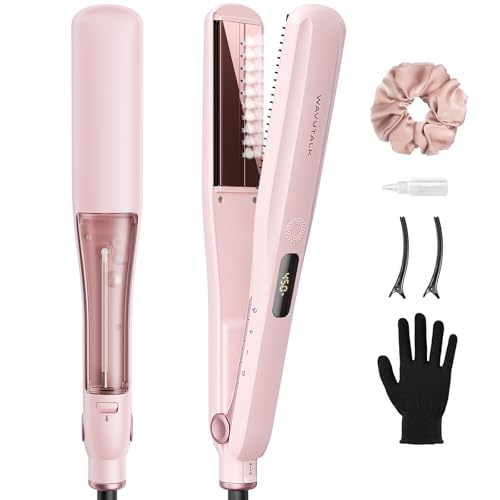
Wavytalk Steam Sesh
Steam-assisted straight styling
Travel and visible temperature control

ANNLARY S3207 1-Inch
Travel and visible temperature control
Broad long-length straightening

Terviiix TXB015O 2-Inch
Broad long-length straightening
Simple broad-plate straightening

Revlon Ceramic Coated 2-Inch
Simple broad-plate straightening
THE EDITOR'S TAKE
Our first choice and the alternatives
Hot Tools Black Gold suits wavy layers and shaped ends; Terviiix favors broad straightening, while Steam Sesh adds a water-preparation step.
Choose whether you want selective smoothing, a full straight finish or newly shaped bends. Passing plates through natural waves changes their pattern; preserving wave clumps calls for a different routine.
A CLOSER LOOK
The full product reviews
Straightening with room to shape ends
Hot Tools Black Gold 1-Inch
Our first choice for wavy layers when you want a straight finish with shaped ends.
A narrower route through wavy layers
The Black Gold format is useful when the styling job is selective: flatten an awkward front section, smooth the underside and give the ends a deliberate turn. Its one-inch floating plates and rounded body offer more placement control than a wide iron on a layered wave pattern. That does not mean passing it over every natural wave is necessary. Decide which areas you want straight before dividing the hair, so a small correction does not become an unplanned full-head restyle.
The dial changes the control sequence
A rotating temperature dial, visible display and ready tone give you separate setup cues. Set the heat before placing the plates near the roots and wait for the indicated readiness instead of repeatedly closing them on the same section while the setting changes. The listed upper limit is 455°F, an available ceiling rather than a target for wavy hair. Strand fineness and condition still matter even when the natural pattern is only a loose wave.
The right reason to choose it
The rounded edges make this the most versatile first choice here for a straight finish that still has movement at the ends. A broad two-inch model is more attractive if the only job is smoothing long, dense lengths with minimal wrist shaping. Universal dual voltage is useful for travel, but verify the destination plug adapter and never assume a familiar brand makes every electrical accessory compatible. The practical advantage is control, not the manufacturer promise of a particular shine level.
What stands out
- One-inch plates and rounded edges suit selective smoothing and end shaping.
- Dial, display and ready tone make the setup visible.
The trade-offs
- The narrow format covers less length at once than a two-inch iron.
Our verdict Our first choice for wavy layers when you want a straight finish with shaped ends.
Using it in your routine
Set the dial first, isolate the wave you intend to change and use thin dry sections that fit within the plates.
Consider another option if: Your sole priority is broad coverage across long dense lengths.
Small sections and curved tips
Remington Shine Therapy 1-Inch
A sensible everyday alternative for selective straightening and a softly turned finish.
A familiar one-inch shaping format
Shine Therapy is a conventional one-inch flat iron rather than a brush or a steam reservoir tool. That makes the route from root to tip easy to see when you are flattening an uneven wave near the face. The smaller plate width also leaves room to give the last few inches a gentle bend. For a shoulder-length cut, that is more useful than treating a large flat section as a rigid sheet all the way to the ends.
Do not confuse the coating with a hair treatment
The ceramic surface is described as infused with argan oil, keratin and a micro-conditioner. Those are construction and marketing details, not a reason to expect the iron to repair brittle ends or replace the styling products your hair needs. Choose a setting for the strand condition and use fully dry hair as instructed. The nine settings offer choice, while Turbo reaches the upper 450°F option; neither the natural wave pattern nor the shine claim makes that boost necessary.
Where it earns its place
The nine-foot cord gives room to change stance while handling the back, and the one-hour automatic shutoff is a backup to switching off and unplugging after use. Its one-inch surface fits a controlled routine with small sections. It is less compelling when dense waist-length waves make coverage the bottleneck. Confirm the operating voltage on the supplied unit rather than assuming a compact tool is ready for every destination.
What stands out
- One-inch format suits curved tips and short face-framing pieces.
- Nine heat settings and a long cord support deliberate setup.
The trade-offs
- The infusion claims do not make it a repair treatment for damaged lengths.
Our verdict A sensible everyday alternative for selective straightening and a softly turned finish.
Using it in your routine
Use only dry hair, choose the suitable setting before styling and avoid automatically enabling Turbo.
Consider another option if: You need a wide iron for coverage or expect the coating to restore damaged hair.
Steam-assisted straight styling
Wavytalk Steam Sesh
Choose it when steam preparation is an intentional part of straight styling.
Steam adds a setup step
Steam Sesh has a water reservoir and a steam function that can be switched off. The manufacturer specifies distilled or purified water, so this is a tool you prepare before styling rather than simply plug in and go. Its 1.38-inch titanium plates occupy a middle ground between a one-inch shaping iron and a full two-inch coverage tool. That scale makes sense for straightening longer wavy sections, with less fine placement room around a short fringe.
The detachable comb has an orientation
The included comb is not a substitute for detangling before heat. Its specified teeth-down orientation matters: reversing it can pull or snag according to the product directions. Check how the comb meets the isolated strand before closing the plates, and remove it if the instructions and desired finish call for the plain-plate arrangement. Steam is released when the plates close, so the loading sequence should be clear before the first pass near the face.
A conditional choice for the routine
The reservoir adds bulk and weight compared with a simple flat iron. Buy this format because you want to manage a steam-assisted routine, not because the listing promises one-pass performance or humidity-proof hold. Those outcomes depend on hair and technique and are not established by the features alone. Five settings begin at 300°F, so someone needing a lower available starting point should consider another model. It reshapes waves toward a straighter finish; it is not a way to leave the natural clumps untouched.
What stands out
- Optional steam and a removable comb give two distinct setup choices.
- Intermediate plate width offers more coverage than a one-inch model.
The trade-offs
- Water preparation, added bulk and a 300°F minimum may not suit a quick or delicate-hair routine.
Our verdict Choose it when steam preparation is an intentional part of straight styling.
Using it in your routine
Fill as directed before use, detangle separately and keep the comb teeth facing down when attached.
Consider another option if: You want the lightest setup, a very low starting temperature or untouched natural wave clumps.
Travel and visible temperature control
ANNLARY S3207 1-Inch
A useful one-inch travel option when its starting temperature fits your hair.
A mixed construction with a specific minimum
ANNLARY identifies titanium plates with a ceramic coating, not solid ceramic plates. That distinction helps you compare the actual tool rather than the broad material label. The one-inch format and floating plates suit smaller wavy sections when the desired finish is straighter with a slight turn at the ends. Its eight heat settings begin at 320°F, which is a meaningful constraint if your hair is fine, highly processed or needs a lower available starting point.
The display is useful before the pass
The LED display lets you confirm the selected temperature without trying to remember a dial position. Set it while the tool is away from hair, then keep the fingers clear of controls as you rotate through an end bend. A floating plate arrangement can follow the section thickness, but it does not permit packing a thick knot or folded strand between the surfaces. Thin, already-detangled sections remain the workable approach.
What the travel specification contributes
The 100–240V specification and swivel cord make this a practical travel candidate where the plug arrangement is addressed separately. The one-hour shutoff adds a backup, not permission to leave the hot tool unattended. Silicone protection on the body should not be confused with cool working plates or complete burn protection. This pick is for someone who values a compact plate width, visible settings and stated voltage flexibility; another model is preferable if low heat flexibility is the overriding need.
What stands out
- Visible temperature display and eight selectable settings simplify setup.
- Listed 100–240V operation suits compatible travel arrangements.
The trade-offs
- The 320°F starting point offers limited flexibility for particularly delicate strands.
Our verdict A useful one-inch travel option when its starting temperature fits your hair.
Using it in your routine
Confirm voltage and plug requirements, choose the setting and keep the dry section thin enough for even closure.
Consider another option if: You need heat settings below 320°F or assume silicone makes the heated plates safe to touch.
Broad long-length straightening
Terviiix TXB015O 2-Inch
A coverage-focused option for longer waves being restyled fully straight.
Coverage for a different kind of wavy routine
The Terviiix two-inch plates suit a full straightening session across longer wavy hair more than selective detailing. A broader surface gives the section more lateral room, useful when length and density are the main workload. It should still be a flat ribbon, not a thick bundle that keeps the plates apart. Around a short fringe, the larger head takes up more space and gives less room to change wrist angle without approaching the skin.
Five choices instead of fine increments
This TXB015O version lists five settings from 300 to 450°F with an adjustable dial. That is enough to change the routine in steps, but less precise than a model with smaller increments. Pick the setting for the individual strand condition and resist using the upper limit just because the plate is marketed for thick hair. Floating plates and a cool-touch tip are handling features; keep fingers on the designated point and clear of the heated edges.
When width is the correct compromise
The 6.5-foot swivel cord, hanging loop and storage pouch fit a straightforward home-to-travel setup, with cooling before packing. Listed 100–240V operation requires the correct plug arrangement. Choose this model for straightening substantial lengths, with a narrower tool if you frequently shape short pieces or alternate direction to create waves. The broad iron is not a way to preserve a natural wave pattern while flattening only invisible frizz.
What stands out
- Two-inch width suits deliberate long-length coverage.
- Five settings and stated dual voltage keep the setup straightforward.
The trade-offs
- Broad plates reduce precision on fringes and short layered pieces.
Our verdict A coverage-focused option for longer waves being restyled fully straight.
Using it in your routine
Keep each broad section thin, select the appropriate dial setting and use smaller pieces near the face.
Consider another option if: Your routine depends on precise fringe work or frequent small end curls.
Simple broad-plate straightening
Revlon Ceramic Coated 2-Inch
A straightforward wide-plate alternative when low-temperature precision is not the deciding requirement.
A wide surface without extra accessories
The Revlon RVST2182 gives you two-inch ceramic-coated plates and a swivel cord in a simple straightening format. It is an option when you want to flatten longer waves without a reservoir, detachable comb or interchangeable head. The broad surface is the useful feature here; the ceramic coating is not proof that this model creates less damage than another iron under every condition. Use the controls and instructions for this exact unit.
Keep the broad section shallow
A wide plate tempts you to take more hair, but the thickness matters as much as the width. Spread the section into a shallow ribbon and guide it so that the lower layers do not fold underneath. Near the face, divide the strand more narrowly even though the tool can hold a wider piece. This avoids treating the short front layer and the much longer underside as if they were one equal-length section.
A modestly specified choice
The current specification describes multiple heat settings with an upper 400°F level, but does not establish an exact low-temperature floor. That uncertainty makes it less attractive if choosing a particularly low setting is essential. It is also a broad straightening shape, so a one-inch rounded model better serves someone who wants frequent curls and delicate end turns. Choose Revlon for a simple wide-plate task with instructions you can confirm, rather than for an undefined promise of quick styling.
What stands out
- Two-inch plates suit simple length-focused straightening.
- Swivel cord supports changing position at the back.
The trade-offs
- Exact lower heat settings are less clearly documented in the published description.
Our verdict A straightforward wide-plate alternative when low-temperature precision is not the deciding requirement.
Using it in your routine
Follow the supplied setting guidance and separate short front pieces from broad longer sections.
Consider another option if: You need a verified low starting temperature or precise small curls at the ends.
EVERYDAY DETAILS
What matters in everyday use
Choose whether you want selective smoothing, a full straight finish or newly shaped bends. Passing plates through natural waves changes their pattern; preserving wave clumps calls for a different routine.
Placement
One-inch tools favor shorter pieces and turned ends.
Coverage
Wide plates suit longer lengths but still require thin sections.
Controls
Check the available starting heat, not only the upper limit.
Product photographs: Amazon. Certain content that appears on this site comes from Amazon. This content is provided “as is” and is subject to change or removal at any time.
Separate a correction from a complete restyle
If only the front piece bends awkwardly, isolate that piece instead of repeatedly treating every wave. For a full straight finish, plan layers so the underside is accessible and the roots are not reheated whenever you change grip.
A wave pattern is not a heat setting
Loose waves can sit on fine, coarse or processed strands. Choose heat around the strand condition and the exact instructions. Assess the cooled section before adding another pass, and avoid using straightening as an assumed repair treatment.
GOOD TO KNOW
The questions that change the choice
Can a flat iron reduce frizz without changing my waves?
Plates reshape the strands they close over. You can selectively restyle a small area, but full-length passes usually change the natural wave arrangement.
Are two-inch plates better for all wavy hair?
They offer broad coverage on longer lengths. A one-inch iron gives more room for short layers, facial clearance and turned ends.
Does steam mean one pass will always be enough?
No. Steam is a tool feature, not a verified result for every strand. Follow the water and comb instructions and judge the cooled section before repeating heat.
Bella Ross curates practical hairstyle ideas for everyday cuts, braids, color inspiration, and simple styling routines.
Our editorial policySTYLE IT YOUR WAY
A little styling inspiration
 Style inspiration
28+ Wavy Bob Ideas
A photo-first guide to wavy bob ideas, with concise image-specific notes and practical comparison points.
 Style inspiration
28+ Curly Bob Ideas
A photo-first guide to curly bob ideas, with concise image-specific notes and practical comparison points.
 Style inspiration
24+ Ideas for Long Hair
A photo-first guide to ideas for long hair, with concise image-specific notes and practical comparison points.