
Product reviews / Styling tools
Flat Irons for 4B Hair: 6 Detailed Reviews
For a 4B straightening routine, plate access and flat, detangled sections matter more than a one-pass claim. Curl pattern alone does not identify the right heat setting for an individual head of hair.

As an Amazon Associate I earn from qualifying purchases, at no extra cost to you. Affiliate disclosure

Wide contact across flat dense panels
THE SHORTLIST
The six products at a glance
Different working designs for a prepared 4B straightening routine.
Our first pick
VANESSA PRO 2-inch Titanium Iron
Wide contact across flat dense panels
Pick 2

BaBylissPRO Ultra Sleek 1.5-inch
Medium-width coverage with a digital readout
Pick 3

TYMO Sway Champagne
Precise adjustment from a low starting setting
Pick 4
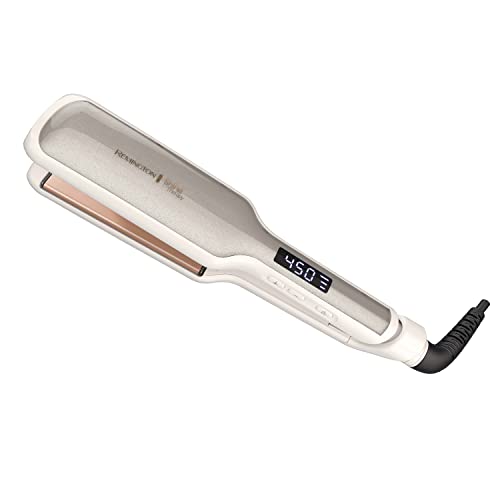
Remington Shine Therapy 2-inch
Broader coverage through longer lengths
Pick 5

Red by Kiss Pencil Iron
Pencil-width detail work
Pick 6

DORISILK High-Temperature Iron
Adjustable styling where the high ceiling is unnecessary
THE EDITOR'S TAKE
The details that matter in daily use
For a 4B straightening routine, plate access and flat, detangled sections matter more than a one-pass claim. Curl pattern alone does not identify the right heat setting for an individual head of hair.
A CLOSER LOOK
The full product reviews
Our first pick
VANESSA PRO 2-inch Titanium Iron
Broad coverage sacrifices precision around a short fringe and smaller root sections.
Plate shape and placement
The broad plate face is the reason to consider this version for fuller lengths. The appropriate section is wider and flat, not a thick clump; a two-inch iron cannot make the inner hairs of an overfilled section contact the plates evenly.
The controls that matter
VANESSA’s two-inch model provides eleven LED heat choices from 265 to 450°F. That lower starting point is more informative than its one-pass advertising: you have room to make a cautious selection without giving up the broader working width. The two-inch face should receive a spread-out panel, and the listed 100–240V compatibility makes travel a separate check from styling heat. A 60-minute shutoff is included. Keep the model distinct from VANESSA’s one-inch iron, which changes the placement even though the temperature range is similar.
On prepared coily sections
For a long or dense 4B panel that has already been stretched and dried, VANESSA’s two-inch face can accommodate a broader ribbon. Keep that ribbon shallow: packing the coils into a thick bundle defeats the plate geometry. The eleven-setting menu lets you select the starting level separately from section width. A short hairline or nape piece still needs a smaller placement than this coverage-oriented head naturally supplies.
What stands out
- 2-inch titanium plates
- Adjustable heat
The trade-offs
- Broad coverage sacrifices precision around a short fringe and smaller root sections.
Our verdict For a long or dense 4B panel that has already been stretched and dried, VANESSA’s two-inch face can accommodate a broader ribbon.
Using it in your routine
Use fully dry, detangled sections. Check the adjustable heat before a continuous pass and keep the working head away from skin.
Consider another option if: Broad coverage sacrifices precision around a short fringe and smaller root sections.
Pick 2
BaBylissPRO Ultra Sleek 1.5-inch
- Working format
- 1.5-inch Nano Titanium plates
- Controls
- Digital temperature selection
Titanium and a wider plate do not establish a safe temperature for every strand or guarantee one-pass styling.
Plate shape and placement
This Ultra Sleek variant sits between a standard one-inch iron and a two-inch plate. It suits broader sections while retaining more maneuverability than the widest model; check the exact width when ordering because the range contains multiple variants.
The controls that matter
Five digital settings and an LED display give the Ultra Sleek a relatively short menu rather than dozens of increments. The catalog lists a ceiling of 450°F, floating plates and a nine-foot swivel cord. The 1.5-inch working face is the actual reason to consider this variant: it occupies less width than the two-inch model while covering more than a standard one-inch iron. Arrange the panel across that face before closing. The floating design is intended to maintain contact; it is not a reason to clamp harder over a knot.
On prepared coily sections
The 1.5-inch BaByliss is useful when your 4B routine needs back-panel coverage but also includes medium-length front sections. It provides a less broad placement than a two-inch iron, which can matter near a part or side section. Work from the interior of the prepared panel outward; the top layer looking smooth does not show whether the underside is ready to enter the floating plates.
What stands out
- 1.5-inch Nano Titanium plates
- Digital temperature selection
The trade-offs
- Titanium and a wider plate do not establish a safe temperature for every strand or guarantee one-pass styling.
Our verdict The 1.5-inch BaByliss is useful when your 4B routine needs back-panel coverage but also includes medium-length front sections.
Using it in your routine
Use fully dry, detangled sections. Check the digital temperature selection before a continuous pass and keep the working head away from skin.
Consider another option if: Titanium and a wider plate do not establish a safe temperature for every strand or guarantee one-pass styling.
Pick 3
TYMO Sway Champagne
Many settings require a deliberate choice; the hottest setting is not the default for thick or textured hair.
Plate shape and placement
The unusually broad temperature menu makes the Sway an adjustable choice rather than a maximum-heat purchase. Its one-inch shape works for straightening and a wrist turn at the ends, provided the section stays flat and the movement stays continuous.
The controls that matter
The Champagne Sway has 32 temperature levels spanning 140–450°F. A wide menu is useful when you want to begin well below the minimum of many basic irons, but the selected level still needs confirming before each differently conditioned area. Its one-inch titanium width supports a flat pass and a wrist turn without the broad head of a two-inch tool. Practise the closing pressure while cool so the small panel remains a ribbon instead of folding against itself. The low starting level is the main attraction here, not the advertised fast heat-up.
On prepared coily sections
Sway’s low 140°F starting level is its meaningful advantage in this group, especially if the 4B hair has different conditions at the roots and ends. Its one-inch head also keeps a narrow panel visible. The trade-off is more sectioning through a long, dense back area. Curl pattern alone does not justify bypassing the low part of the menu, and the Champagne color does not change the plate width.
What stands out
- 1-inch titanium plates
- 32 settings from 140–450°F
The trade-offs
- Many settings require a deliberate choice; the hottest setting is not the default for thick or textured hair.
Our verdict Sway’s low 140°F starting level is its meaningful advantage in this group, especially if the 4B hair has different conditions at the roots and ends.
Using it in your routine
Use fully dry, detangled sections. Check the 32 settings from 140–450°f before a continuous pass and keep the working head away from skin.
Consider another option if: Many settings require a deliberate choice; the hottest setting is not the default for thick or textured hair.
Pick 4
Remington Shine Therapy 2-inch
The wide plates are cumbersome around short layers and narrow face-framing pieces.
Plate shape and placement
The wider Shine Therapy format concentrates on coverage. It makes sense for a long, prepared section, but the two-inch face is less convenient when the same routine includes a short fringe or a precise bend at the roots.
The controls that matter
The two-inch Shine Therapy retains nine heat settings, Turbo mode and a nine-foot cord, but its larger working face changes how you position the section. Spread the ribbon across the plates before closing them instead of squeezing a compact clump. It is a coverage-oriented iron with digital adjustment, not a narrow root tool. The current catalog specifies US/Canada 110V operation, which is an important difference from genuinely dual-voltage alternatives. Its plate infusion claims do not establish a repair effect on hair.
On prepared coily sections
The two-inch Remington is most practical for the longer, fully prepared portion of a 4B style. Spread that area into a flat panel before the wider plates close. The front layers may need a smaller iron or a different grip rather than a broad head brought close to the scalp. Remember its US/Canada voltage limitation if the same tool is meant to travel; the styling width and electrical rating are separate decisions.
What stands out
- 2-inch ceramic plates
- Adjustable digital heat
The trade-offs
- The wide plates are cumbersome around short layers and narrow face-framing pieces.
Our verdict The two-inch Remington is most practical for the longer, fully prepared portion of a 4B style.
Using it in your routine
Use fully dry, detangled sections. Check the adjustable digital heat before a continuous pass and keep the working head away from skin.
Consider another option if: The wide plates are cumbersome around short layers and narrow face-framing pieces.
Pick 5
Red by Kiss Pencil Iron
Limited broad coverage and close-root placement make this a specialist tool rather than a full-head default.
Plate shape and placement
The pencil-width plates are a detail format for short sections that wider irons cannot easily hold. They are useful for positioning a small piece, but the listed high ceiling is not a reason to use high heat near the scalp.
The controls that matter
The Red by Kiss pencil iron uses 0.3-inch ceramic-tourmaline plates and lists heat up to 450°F. That width changes the grip on a small section much more than the coating name does: there is less hair in the working area and less broad coverage through the lengths. Its swivel cord lets you reposition without deliberately wrapping the cable around the hand. The high ceiling does not establish a low adjustable minimum. If low-temperature selection is essential, verify that feature before buying rather than treating every pencil iron as the same control format.
On prepared coily sections
Red by Kiss is a specialist addition for short pieces that a broader plate cannot hold neatly. It should not become the default for straightening all of a dense 4B length: the 0.3-inch face would multiply the number of sections. The advertised 450°F ceiling is not the important feature near the hairline. The relevant question is whether you can place that small piece clearly and verify an appropriate setting.
What stands out
- 0.3-inch ceramic-tourmaline plates
- Heat up to 450°F
The trade-offs
- Limited broad coverage and close-root placement make this a specialist tool rather than a full-head default.
Our verdict Red by Kiss is a specialist addition for short pieces that a broader plate cannot hold neatly.
Using it in your routine
Use fully dry, detangled sections. Check the heat up to 450°f before a continuous pass and keep the working head away from skin.
Consider another option if: Limited broad coverage and close-root placement make this a specialist tool rather than a full-head default.
Pick 6
DORISILK High-Temperature Iron
A 500°F ceiling is an unnecessary purchase incentive for ordinary styling; it should not be treated as a target.
Plate shape and placement
The unusually high advertised temperature ceiling is the defining feature, but it is not the reason to choose an iron for everyday hair. Evaluate the controls and section access first, and keep heat as low as your routine permits.
The controls that matter
DORISILK lists a one-inch floating plate, temperature adjustment and a 500°F ceiling. The useful part for everyday styling is the narrower placement and the ability to adjust; the unusually high maximum is not a target for a routine pass. The swivel cord and automatic power-off assist operation, while plasma branding does not settle how a particular strand will respond. Confirm the chosen level before the plates close and make the end shape with movement rather than a prolonged hold. Its specifications support a conventional adjustable iron, not a guaranteed salon result.
On prepared coily sections
DORISILK is the less compelling choice if the attraction is simply its 500°F ceiling. A 4B curl pattern does not make that maximum necessary. Its useful role is conventional one-inch handling with adjustment and a rounded movement for the ends. Judge whether the actual control range answers the strand condition before considering the plasma branding; a narrow format may be convenient, but the headline high temperature supplies no extra placement advantage.
What stands out
- Ceramic straightening plates
- High-temperature adjustment
The trade-offs
- A 500°F ceiling is an unnecessary purchase incentive for ordinary styling; it should not be treated as a target.
Our verdict DORISILK is the less compelling choice if the attraction is simply its 500°F ceiling.
Using it in your routine
Use fully dry, detangled sections. Check the high-temperature adjustment before a continuous pass and keep the working head away from skin.
Consider another option if: A 500°F ceiling is an unnecessary purchase incentive for ordinary styling; it should not be treated as a target.
EVERYDAY DETAILS
What matters in everyday use
For this review, we prioritized a prepared 4B straightening routine. Manufacturer performance promises are treated as claims; the purchase judgments focus on the documented design and how it fits the routine.
Section contact
Useful width without overfilling the plates
Control and placement
A working head you can place deliberately, with controls that are clear during the session.
Care and storage
The practical work required to clean, cool when needed, and keep the tool ready for its next session.
Product photographs: Amazon. Certain content that appears on this site comes from Amazon. This content is provided “as is” and is subject to change or removal at any time.
A workable section comes first
Finish drying the whole section before using ordinary heated plates. A stretched outer layer can still conceal damp or tangled hair inside a dense panel.
Before styling and after the session
Use ordinary plate irons on fully dry, detangled hair. Select the setting before the section enters the head and leave room around skin. Open a resistant knot by hand instead of pressing the plates harder or reheating the same patch.
Unplug after styling and allow the working head to cool. Remove residue using the maker’s cleaning method, without immersing an electrical tool or scraping its coating. Keep the cord loosely stored.
GOOD TO KNOW
Questions about this styling routine
Does 4B texture identify the right temperature?
No. Curl pattern alone does not determine heat tolerance. Consider strand condition, dryness and the exact tool’s control range, then keep the prepared panel flat and manageable.
Is the pencil iron a full-head alternative?
Its 0.3-inch plates are meant for small pieces. They offer placement precision but take many more sections across longer hair than the broader irons in this review.
Bella Ross curates practical hairstyle ideas for everyday cuts, braids, color inspiration, and simple styling routines.
Our editorial policySTYLE IT YOUR WAY
A little styling inspiration
 Style inspiration
29+ Curly Hairstyle Ideas for Every Curl Pattern
A photo-first guide to curly hairstyles, from short coily crops and curly bobs to shoulder-length fringe cuts, long defined curls, blonde curls, and red curls.
 Style inspiration
28+ Curly Bob Ideas
A photo-first guide to curly bob ideas, with concise image-specific notes and practical comparison points.
 Style inspiration
24+ Afro Textured Hairstyles
A photo-first guide to afro textured hairstyles, with concise image-specific notes and practical comparison points.