
Product reviews / Brushes & combs
Fine-Hair Detangling Brushes: 6 Detailed Reviews
Fine strands need a brush that allows controlled pressure. Soft tooth flex, the weight of the head and access to a small section matter more than a promise of instant knot removal.

As an Amazon Associate I earn from qualifying purchases, at no extra cost to you. Affiliate disclosure

Softer tooth flex for fine strands
THE SHORTLIST
The six products at a glance
Different working designs for light pressure on fine strands.
Our first pick
Tangle Teezer Ultimate Detangler Fine & Fragile
Softer-flex teeth for fine hair
Pick 2

Wet Brush Original Detangler Sky
Flexible IntelliFlex bristles
Pick 3

Fiora Naturals Vented Detangling Brush
Vented contoured head
Pick 4

Soft-Bristle Detangler Hairbrush
Soft detangling bristles
Pick 5
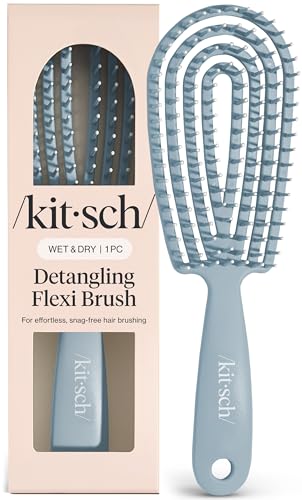
Kitsch Flexi Flow Haze Blue
Bendable brush frame
Pick 6

Lynnieëlle Boar-and-Nylon Brush
Mixed boar and nylon bristles
THE EDITOR'S TAKE
The details that matter in daily use
Fine strands need a brush that allows controlled pressure. Soft tooth flex, the weight of the head and access to a small section matter more than a promise of instant knot removal.
A CLOSER LOOK
The full product reviews
Our first pick
Tangle Teezer Ultimate Detangler Fine & Fragile
The softer tooth flex is the reason to choose Fine & Fragile. Support a small panel and check whether the head reaches underneath without pulling.
Fine & Fragile is the lower-tension version of this brush family. The reason to choose it is its intended tooth flexibility, not a claim that fine hair needs more strokes or a stronger tug to look smooth.
Handling the working head
The softer-flex teeth need light handling rather than extra strokes to compensate for their yield. Hold the section above the knot and begin with the ends; if the teeth bend around a compact spot, open it by hand before returning. In dense hair, a smaller panel helps the softer head reach the underside. Rinse residue from between the teeth as directed and inspect for damaged working edges before the next session.
Light pressure on fine strands
The softer tooth flex is the reason to choose Fine & Fragile. Support a small panel and check whether the head reaches underneath without pulling. A compact knot that the teeth bend around needs finger separation, not extra strokes to make softness behave like rigidity.
The limitation to weigh
Very dense hair may need especially small sections for softer teeth to reach the underside. The lower-tension head should be judged on whether the supported fine section is actually open underneath. A soft stroke across the crown alone cannot confirm that a tiny knot has been removed.
What stands out
- Softer-flex teeth for fine hair
- Handled detangler
The trade-offs
- Very dense hair may need especially small sections for softer teeth to reach the underside.
Our verdict Fine & Fragile is the lower-tension version of this brush family.
Using it in your routine
The softer-flex teeth need light handling rather than extra strokes to compensate for their yield. Hold the section above the knot and begin with the ends; if the teeth bend around a compact spot, open it by hand before returning.
Consider another option if: Very dense hair may need especially small sections for softer teeth to reach the underside.
Pick 2
Wet Brush Original Detangler Sky
The long handle keeps the gripping hand away from a slippery fine section. Use the flexible Original bristles after the largest knots have opened.
The long handle keeps the grip separate from the working head, useful when brushing conditioner through a section. Its everyday role is loosening small tangles rather than applying the strong tension associated with a styling brush.
Handling the working head
Keep the long handle in the dry gripping hand while the other supports the conditioned section above the tangle. Begin with the loose ends, then increase stroke length only after the next region opens. Inspect the cushion for a mat of shed hairs before calling cleaning finished. The flexible Original bristles are a detangling choice; use the exact model’s instructions rather than carrying the Speed Dry heat rating over to this head.
Light pressure on fine strands
The long handle keeps the gripping hand away from a slippery fine section. Use the flexible Original bristles after the largest knots have opened. Keep pressure light and stop when the section is ready, rather than brushing repeatedly for a progressively smoother-feeling stroke.
The limitation to weigh
The Original model should not be assumed to share the heat-resistant bristles of Speed Dry. Keep the cushion clean after wet use and allow the brush to dry before closed storage. A long handle improves grip separation, but does not prevent conditioner residue from collecting under shed hair.
What stands out
- Flexible IntelliFlex bristles
- Cushioned handled brush
The trade-offs
- The Original model should not be assumed to share the heat-resistant bristles of Speed Dry.
Our verdict The long handle keeps the grip separate from the working head, useful when brushing conditioner through a section.
Using it in your routine
Keep the long handle in the dry gripping hand while the other supports the conditioned section above the tangle. Begin with the loose ends, then increase stroke length only after the next region opens.
Consider another option if: The Original model should not be assumed to share the heat-resistant bristles of Speed Dry.
Pick 3
Fiora Naturals Vented Detangling Brush
The contoured vents make collected hair visible during fine-hair cleanup. Use the nylon bristles on a supported small panel and inspect underneath.
The contoured, vented head lets you see where hairs have collected between the bristles. It is a practical format for a damp-hair detangle followed by cleaning; the vents do not prove the maker’s advertised drying-time reductions.
Handling the working head
Turn the contoured head so the flexible nylon bristles reach the supported section rather than pressing only over its outer surface. Work from the ends upward and pause at compact knots. The vents give a clear view of trapped hairs and make that part of cleanup easier to inspect. Remove residue around the bristle bases as directed. A visible opening through the frame should not be mistaken for proof of the advertised drying-time reduction.
Light pressure on fine strands
The contoured vents make collected hair visible during fine-hair cleanup. Use the nylon bristles on a supported small panel and inspect underneath. Visible airflow paths are useful structural details, but advertised faster drying is not the reason to increase heat or brushing force.
The limitation to weigh
A vented design does not guarantee a smooth blowout or establish an unrestricted heat rating. Inspect the contoured vents from the back after clearing the visible bristles. A trapped layer of shed hairs can bridge across an opening even when the top of the head looks tidy.
What stands out
- Vented contoured head
- Flexible nylon bristles
The trade-offs
- A vented design does not guarantee a smooth blowout or establish an unrestricted heat rating.
Our verdict The contoured, vented head lets you see where hairs have collected between the bristles.
Using it in your routine
Turn the contoured head so the flexible nylon bristles reach the supported section rather than pressing only over its outer surface. Work from the ends upward and pause at compact knots.
Consider another option if: A vented design does not guarantee a smooth blowout or establish an unrestricted heat rating.
Pick 4
Soft-Bristle Detangler Hairbrush
A simple soft head can suit small careful sections when the goal is low-pressure detangling. The limited model documentation deserves checking before purchase.
The useful part of this simple design is the soft-bristle format rather than a complicated mechanism. It belongs in a careful routine where the section is held securely and the smallest tangles are worked out before a longer stroke.
Handling the working head
Use the soft bristles on a small supported section where the ends have first been loosened. Increase stroke length gradually, keeping pressure low enough that the scalp does not move with the brush. Softness cannot tell you whether a tiny knot has opened, so check the underside and separate resistant spots manually. Follow the delivered tool’s cleaning directions because model and maintenance documentation in the listing is limited compared with established brush ranges.
Light pressure on fine strands
A simple soft head can suit small careful sections when the goal is low-pressure detangling. The limited model documentation deserves checking before purchase. Try a visible supported piece first instead of assuming the soft label guarantees that every knot will release.
The limitation to weigh
The listing offers less identifiable model and maintenance information than the established alternatives. Limited model identity matters when replacement or cleaning instructions are needed later. Keep the original product information available rather than assuming another similar-looking soft head shares the same maintenance guidance.
What stands out
- Soft detangling bristles
- Handled design
The trade-offs
- The listing offers less identifiable model and maintenance information than the established alternatives.
Our verdict The useful part of this simple design is the soft-bristle format rather than a complicated mechanism.
Using it in your routine
Use the soft bristles on a small supported section where the ends have first been loosened. Increase stroke length gradually, keeping pressure low enough that the scalp does not move with the brush.
Consider another option if: The listing offers less identifiable model and maintenance information than the established alternatives.
Pick 5
Kitsch Flexi Flow Haze Blue
The yielding frame adds flexibility beyond the bristles themselves. That can suit light detangling, while dense fine hair still needs small panels for underside access.
A bendable frame gives this brush a yielding feel by design. It is better assessed as a detangling tool than as a brush for putting strong tension into a smooth ponytail or blowout.
Handling the working head
Both the bendable frame and its flexible bristles contribute to the yielding movement. Keep the section securely supported and start at the ends, watching where the head bends instead of simply counting strokes. A compact knot that stays behind needs finger separation, not stronger pressure. Clear shed hair from the flexible spaces after use. For a sleek ponytail that needs firm styling tension, choose that finishing task separately from this detangling stage.
Light pressure on fine strands
The yielding frame adds flexibility beyond the bristles themselves. That can suit light detangling, while dense fine hair still needs small panels for underside access. A head that bends around a compact knot needs a change in preparation, not stronger pulling.
The limitation to weigh
A yielding frame is not a substitute for strong section control with very dense tangles. In a dense panel, the supporting hand controls root pull more directly than the flexible body. Move that support upward as the ends loosen instead of asking the yielding head to take a full-length stroke immediately.
What stands out
- Bendable brush frame
- Flexible bristles
The trade-offs
- A yielding frame is not a substitute for strong section control with very dense tangles.
Our verdict A bendable frame gives this brush a yielding feel by design.
Using it in your routine
Both the bendable frame and its flexible bristles contribute to the yielding movement. Keep the section securely supported and start at the ends, watching where the head bends instead of simply counting strokes.
Consider another option if: A yielding frame is not a substitute for strong section control with very dense tangles.
Pick 6
Lynnieëlle Boar-and-Nylon Brush
Use the mixed boar-and-nylon paddle after obvious tangles are open. The nylon reaches while the denser surface layer finishes; it is not the first tool for a compact fine-hair knot.
The nylon bristles reach into a section while the boar bristles work nearer its surface. This is better suited to brushing a largely detangled section into a smoother finish than to forcing the densely packed bristles through a knot.
Handling the working head
Begin after the obvious knots have been loosened, so the nylon pins can reach while the denser boar layer works over the surface. The curved vented paddle belongs in a finishing routine more readily than the first pass through a tightly tangled panel. Keep the stroke light and inspect trapped hair within the mixed bristles after use; the denser surface layer can hide strands that a glance at the pin tips misses.
Light pressure on fine strands
Use the mixed boar-and-nylon paddle after obvious tangles are open. The nylon reaches while the denser surface layer finishes; it is not the first tool for a compact fine-hair knot. Keep the finishing stage separate from repeated attempts to detangle with dense bristles.
The limitation to weigh
Dense mixed bristles are not the first tool for a heavily tangled section; do not interpret brushing as a hair-growth treatment. The denser boar layer is a surface-finishing element. It can collect residue closer to the paddle, so cleanup needs attention below the longer nylon tips rather than only a quick pull of visible strands.
What stands out
- Mixed boar and nylon bristles
- Curved vented paddle
The trade-offs
- Dense mixed bristles are not the first tool for a heavily tangled section; do not interpret brushing as a hair-growth treatment.
Our verdict The nylon bristles reach into a section while the boar bristles work nearer its surface.
Using it in your routine
Begin after the obvious knots have been loosened, so the nylon pins can reach while the denser boar layer works over the surface. The curved vented paddle belongs in a finishing routine more readily than the first pass through a tightly tangled panel.
Consider another option if: Dense mixed bristles are not the first tool for a heavily tangled section; do not interpret brushing as a hair-growth treatment.
EVERYDAY DETAILS
What matters in everyday use
For this review, we prioritized light pressure on fine strands. Manufacturer performance promises are treated as claims; the purchase judgments focus on the documented design and how it fits the routine.
Tooth flexibility
Lower-tension designs and manageable head size
Preparation
Keep one hand above the working area so brushing does not pull directly at the roots. Where a small knot resists, fingers are more useful than switching to a stronger stroke.
Product photographs: Amazon. Certain content that appears on this site comes from Amazon. This content is provided “as is” and is subject to change or removal at any time.
A workable section comes first
Keep one hand above the working area so brushing does not pull directly at the roots. Where a small knot resists, fingers are more useful than switching to a stronger stroke.
GOOD TO KNOW
Questions about this styling routine
Can softer teeth miss a small knot?
Yes. They can bend around it. Support and inspect the section, open the spot manually, then return to a smaller panel instead of increasing force.
Bella Ross curates practical hairstyle ideas for everyday cuts, braids, color inspiration, and simple styling routines.
Our editorial policySTYLE IT YOUR WAY
A little styling inspiration
 Haircut guide
24+ Choppy Bob Hairstyles for Fine Hair That Add Texture
A photo-first guide to choppy bob hairstyles for fine hair, from textured chin bobs and stacked bobs to wispy bangs, shaggy layers, and piecey ends.
 Style inspiration
15 Bob Haircut Ideas with Bangs
A photo-first guide to bob haircut ideas with bangs, with concise image-specific notes and practical comparison points.
 Style inspiration
29+ Asymmetrical Bob Haircuts
A photo-first guide to asymmetrical bob haircuts, with concise image-specific notes and practical comparison points.