
Product reviews / Brushes & combs
Curly-Hair Detangling Brushes: 6 Detailed Reviews
Removing knots and arranging curls are related but different tasks. Some brushes emphasize yielding teeth; a Denman-style brush adds deliberate tension for shaping a prepared section.

As an Amazon Associate I earn from qualifying purchases, at no extra cost to you. Affiliate disclosure
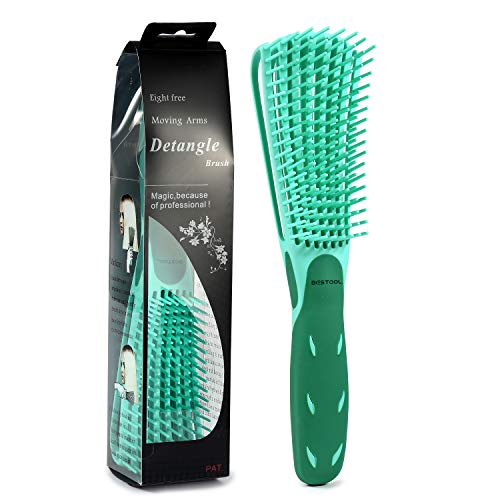
Coily sections with adjustable row movement
THE SHORTLIST
The six products at a glance
Different working designs for detangling while keeping the styling step separate.
Our first pick
BESTOOL Flexible Detangling Brush
Eight separate flexible comb arms
Pick 2

Lily England Curly Hair Detangler
Three tiers of flexible teeth
Pick 3

Kitsch Flexi Flow Soft Violet
Bendable brush frame
Pick 4

Denman D3 Original Styler
Seven staggered rows
Pick 5

Tangle Teezer Ultimate Detangler Straight to Wavy
Long and short regular-flex teeth
Pick 6

BRUSHZOO Detangling Brush Set
Brush, comb and spray-bottle set
THE EDITOR'S TAKE
The details that matter in daily use
Removing knots and arranging curls are related but different tasks. Some brushes emphasize yielding teeth; a Denman-style brush adds deliberate tension for shaping a prepared section.
A CLOSER LOOK
The full product reviews
Our first pick
BESTOOL Flexible Detangling Brush
Use the yielding arms to open loose tangles before deciding whether a separate shaping brush is needed. Begin vertically as directed, then inspect the section before horizontal strokes.
The control bar changes how freely the arms spread. Beginning with a vertical approach follows the maker’s directions; horizontal brushing belongs after the major tangles have loosened. That two-stage movement is more useful than simply pulling harder.
Handling the working head
Set the removable bar before beginning so the arm movement is deliberate. Approach a conditioned piece vertically to loosen the larger tangles, then use the horizontal stage only after those have opened. The eight arms can spread around hair without resolving a compact knot, so stop where movement changes and separate that spot by hand. Remove trapped strands from between the arms and around the bar after use rather than cleaning only their visible tips.
Detangling while keeping the styling step separate
Use the yielding arms to open loose tangles before deciding whether a separate shaping brush is needed. Begin vertically as directed, then inspect the section before horizontal strokes. Detangling prepares the curl; the repeated finishing movement should not disturb an already set pattern.
The limitation to weigh
The moving arms and bar need cleaning individually, and a flexible frame does not remove the need to separate dense hair. Check that the bar is seated before the first section. If its position shifts while the arms move, stop and reset the cool brush rather than changing pressure to compensate.
What stands out
- Eight separate flexible comb arms
- Removable control bar
The trade-offs
- The moving arms and bar need cleaning individually, and a flexible frame does not remove the need to separate dense hair.
Our verdict The control bar changes how freely the arms spread.
Using it in your routine
Set the removable bar before beginning so the arm movement is deliberate. Approach a conditioned piece vertically to loosen the larger tangles, then use the horizontal stage only after those have opened.
Consider another option if: The moving arms and bar need cleaning individually, and a flexible frame does not remove the need to separate dense hair.
Pick 2
Lily England Curly Hair Detangler
The three tooth tiers help separate the conditioned curl section before clumps are arranged. Stop when it is ready for product and shaping instead of brushing through the drying pattern.
Different tooth heights give this brush a different job from a dense smoothing brush: separating a conditioned section before it is arranged into curls. The handle matters when the other hand is holding a slippery section above the knot.
Handling the working head
Support the section above the tangle with one hand and keep the handled brush in the other. The three tooth tiers reach different depths, so turn the section enough to check the underside instead of only smoothing its top. Work from the ends upward, reducing the amount of hair if the tiers catch. Clean between the different tooth heights after conditioner use, where an apparently clear outer row can hide residue lower down.
Detangling while keeping the styling step separate
The three tooth tiers help separate the conditioned curl section before clumps are arranged. Stop when it is ready for product and shaping instead of brushing through the drying pattern. The handle is useful while the supporting hand holds above a remaining loose knot.
The limitation to weigh
Do not expect a few broad strokes to reach every layer in a densely packed section. Around shorter front pieces, use a narrow panel so all three tooth tiers do not collect neighboring hairs. The supporting hand should keep those loose surrounding strands outside the pass.
What stands out
- Three tiers of flexible teeth
- Handled brush
The trade-offs
- Do not expect a few broad strokes to reach every layer in a densely packed section.
Our verdict Different tooth heights give this brush a different job from a dense smoothing brush: separating a conditioned section before it is arranged into curls.
Using it in your routine
Support the section above the tangle with one hand and keep the handled brush in the other. The three tooth tiers reach different depths, so turn the section enough to check the underside instead of only smoothing its top.
Consider another option if: Do not expect a few broad strokes to reach every layer in a densely packed section.
Pick 3
Kitsch Flexi Flow Soft Violet
The flexible frame can yield alongside the bristles during curl preparation. That movement suits separation, but it is less deliberate than a firm styling pad for shaping tension.
The frame as well as the bristles can flex. That is a meaningful distinction from a solid paddle: the head can adapt as the section is brushed, while the person using it still controls pressure and section size.
Handling the working head
The bendable frame yields alongside its bristles, so hold a section where the head can enter without the scalp being pulled along. Begin at the ends and watch the underside when the frame bends around a knot. Open that spot by hand before brushing upward. Rinse hair and conditioner from the flexible structure as directed, then let it dry. The yielding movement suits detangling more than deliberately firm tension for a finished sleek style.
Detangling while keeping the styling step separate
The flexible frame can yield alongside the bristles during curl preparation. That movement suits separation, but it is less deliberate than a firm styling pad for shaping tension. Choose the brushing stage first and release the section once knots are open.
The limitation to weigh
Frame flexibility can feel less controlled when you prefer a firm brush for arranging a finished style. For a finished curl clump, stop detangling once preparation is complete. Continuing with the yielding head through the drying section can separate the arranged pattern instead of improving its definition.
What stands out
- Bendable brush frame
- Flexible bristles
The trade-offs
- Frame flexibility can feel less controlled when you prefer a firm brush for arranging a finished style.
Our verdict The frame as well as the bristles can flex.
Using it in your routine
The bendable frame yields alongside its bristles, so hold a section where the head can enter without the scalp being pulled along. Begin at the ends and watch the underside when the frame bends around a knot.
Consider another option if: Frame flexibility can feel less controlled when you prefer a firm brush for arranging a finished style.
Pick 4
Denman D3 Original Styler
The seven-row pad belongs after major knots are removed. Guide the prepared curl across the curve, turn the ends deliberately and scrunch after release.
The seven-row D3 is a styling brush whose pad and pin arrangement help organize a prepared section. Use it to shape curl clumps after major tangles have been removed; brush tension and the turn at the ends influence the arrangement.
Handling the working head
Use the seven rows after the larger knots have been opened. Guide a product-prepared curl section across the half-round pad and make a deliberate turn at the ends before release and scrunching. The styling tension is the point of this step, so it should not become the force used to drag a compact tangle through the pins. Remove hair and styling residue around the pad as directed, allowing it to dry before closed storage.
Detangling while keeping the styling step separate
The seven-row pad belongs after major knots are removed. Guide the prepared curl across the curve, turn the ends deliberately and scrunch after release. That styling tension should not become the force used to open a tightly caught knot.
The limitation to weigh
The styling tension can be excessive if you treat a compact knot as something to pull through. Choose the seven-row working width for the section in hand. A larger nine-row Denman is a different head size; changing row count should follow the styling task rather than a color preference.
What stands out
- Seven staggered rows
- Half-round rubber pad
The trade-offs
- The styling tension can be excessive if you treat a compact knot as something to pull through.
Our verdict The seven-row D3 is a styling brush whose pad and pin arrangement help organize a prepared section.
Using it in your routine
Use the seven rows after the larger knots have been opened. Guide a product-prepared curl section across the half-round pad and make a deliberate turn at the ends before release and scrunching.
Consider another option if: The styling tension can be excessive if you treat a compact knot as something to pull through.
Pick 5
Tangle Teezer Ultimate Detangler Straight to Wavy
The regular-flex Straight to Wavy head suits looser curl preparation where long teeth separate and shorter teeth smooth. Identify the actual model rather than its finish color.
The regular-flex Straight to Wavy version uses longer teeth for separation and shorter teeth for smoothing. It is a different choice from the firmer Naturally Curly version, so the model name matters more than the pink finish.
Handling the working head
The longer teeth separate while the shorter teeth smooth hair that is already loosening. Support the section above the working point and begin at the tips, watching the underside before increasing stroke length. This regular-flex Straight to Wavy head should be distinguished from both Naturally Curly and Fine & Fragile. Clean the bases of the two tooth lengths after conditioner use rather than assuming the shorter row is clean because its tips look clear.
Detangling while keeping the styling step separate
The regular-flex Straight to Wavy head suits looser curl preparation where long teeth separate and shorter teeth smooth. Identify the actual model rather than its finish color. Tightly coiled sections may need the texture-focused alternative and more careful panel preparation.
The limitation to weigh
For tightly coiled hair, the texture-specific Naturally Curly option deserves consideration before this regular-flex version. The regular-flex model is a starting choice for straight-to-wavy preparation, not a claim that every curl needs that firmness. Texture and scalp comfort remain separate from the two-length tooth design.
What stands out
- Long and short regular-flex teeth
- Handled detangler
The trade-offs
- For tightly coiled hair, the texture-specific Naturally Curly option deserves consideration before this regular-flex version.
Our verdict The regular-flex Straight to Wavy version uses longer teeth for separation and shorter teeth for smoothing.
Using it in your routine
The longer teeth separate while the shorter teeth smooth hair that is already loosening. Support the section above the working point and begin at the tips, watching the underside before increasing stroke length.
Consider another option if: For tightly coiled hair, the texture-specific Naturally Curly option deserves consideration before this regular-flex version.
Pick 6
BRUSHZOO Detangling Brush Set
The bottle and comb give separate preparation stages before the brush arranges remaining loose tangles. Use moisture where the section needs it, then stop brushing once the curl is ready to shape.
A spray bottle and wide-tooth comb make this a staged routine rather than a single-brush purchase. The comb can loosen obvious tangles, the bottle can maintain moisture, and the brush can work through smaller remaining sections.
Handling the working head
Set out the comb, bottle and brush in the order they will be used. The comb can open an obvious knot before the brush reaches smaller loose tangles; the spray bottle can refresh a section where the routine needs moisture. Keep finished sections clipped away from the remaining work. Clean and dry each piece separately afterward, especially the bottle nozzle and comb gaps, so the extra tools do not simply multiply residue and storage clutter.
Detangling while keeping the styling step separate
The bottle and comb give separate preparation stages before the brush arranges remaining loose tangles. Use moisture where the section needs it, then stop brushing once the curl is ready to shape. More tools should clarify that sequence rather than multiply repeat strokes.
The limitation to weigh
More pieces create more cleaning and storage work; they are unnecessary if you already own an effective comb and spray bottle. The spray bottle should hold only the liquid appropriate to the routine and its directions. Clean the nozzle rather than spraying through dried residue into a freshly prepared section.
What stands out
- Brush, comb and spray-bottle set
- Multiple tools
The trade-offs
- More pieces create more cleaning and storage work; they are unnecessary if you already own an effective comb and spray bottle.
Our verdict A spray bottle and wide-tooth comb make this a staged routine rather than a single-brush purchase.
Using it in your routine
Set out the comb, bottle and brush in the order they will be used. The comb can open an obvious knot before the brush reaches smaller loose tangles; the spray bottle can refresh a section where the routine needs moisture.
Consider another option if: More pieces create more cleaning and storage work; they are unnecessary if you already own an effective comb and spray bottle.
EVERYDAY DETAILS
What matters in everyday use
For this review, we prioritized detangling while keeping the styling step separate. Manufacturer performance promises are treated as claims; the purchase judgments focus on the documented design and how it fits the routine.
Detangle versus define
Whether the design yields through knots or shapes a prepared section
Preparation
Once a section is detangled, stop repeatedly brushing it just to prove it is smooth. Move into your preferred clump arrangement before the styling product begins to set.
Product photographs: Amazon. Certain content that appears on this site comes from Amazon. This content is provided “as is” and is subject to change or removal at any time.
A workable section comes first
Once a section is detangled, stop repeatedly brushing it just to prove it is smooth. Move into your preferred clump arrangement before the styling product begins to set.
GOOD TO KNOW
Questions about this styling routine
When should a styling brush enter the curl routine?
After major tangles are open. Its deliberate tension and end turn can arrange curl clumps, but should not be the force used to pull through a compact knot.
Bella Ross curates practical hairstyle ideas for everyday cuts, braids, color inspiration, and simple styling routines.
Our editorial policySTYLE IT YOUR WAY
A little styling inspiration
 Style inspiration
29+ Curly Hairstyle Ideas for Every Curl Pattern
A photo-first guide to curly hairstyles, from short coily crops and curly bobs to shoulder-length fringe cuts, long defined curls, blonde curls, and red curls.
 Style inspiration
28+ Curly Bob Ideas
A photo-first guide to curly bob ideas, with concise image-specific notes and practical comparison points.
 Style inspiration
24+ Afro Textured Hairstyles
A photo-first guide to afro textured hairstyles, with concise image-specific notes and practical comparison points.