
Product reviews / Brushes & combs
Detangling Brushes for Black Hair: 6 Reviews
Black hair is not one texture or density. Match the brush to the actual strand size, curl pattern and style preparation rather than treating the label as a universal prescription.

As an Amazon Associate I earn from qualifying purchases, at no extra cost to you. Affiliate disclosure
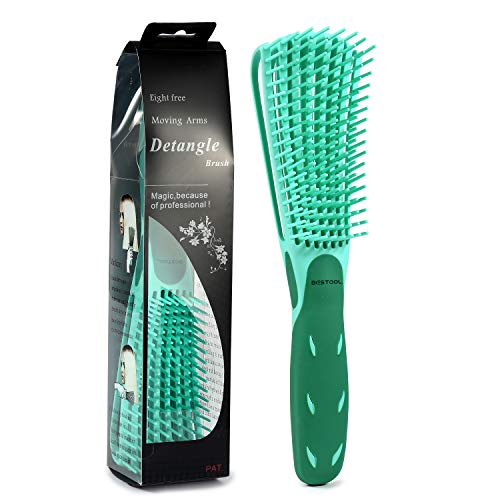
Coily sections with adjustable row movement
THE SHORTLIST
The six products at a glance
Different working designs for a flexible tool choice across textured routines.
Our first pick
BESTOOL Flexible Detangling Brush
Eight separate flexible comb arms
Pick 2

Lily England Curly Hair Detangler
Three tiers of flexible teeth
Pick 3

Three-Pack Textured Hair Detangling Brushes
Three detangling brushes
Pick 4

FHI Heat UNbrush
105 mixed-length DuoFlex bristles
Pick 5

Wet Brush Original Detangler Black Frost
Flexible IntelliFlex bristles
Pick 6

Crave Naturals Glide Thru
Plastic detangling bristles
THE EDITOR'S TAKE
The details that matter in daily use
Black hair is not one texture or density. Match the brush to the actual strand size, curl pattern and style preparation rather than treating the label as a universal prescription.
A CLOSER LOOK
The full product reviews
Our first pick
BESTOOL Flexible Detangling Brush
The arm-and-bar layout suits a textured routine that benefits from controlled yielding movement. Prepare the actual curl pattern and density rather than selecting force by a Black-hair label.
The control bar changes how freely the arms spread. Beginning with a vertical approach follows the maker’s directions; horizontal brushing belongs after the major tangles have loosened. That two-stage movement is more useful than simply pulling harder.
Handling the working head
Set the removable bar before beginning so the arm movement is deliberate. Approach a conditioned piece vertically to loosen the larger tangles, then use the horizontal stage only after those have opened. The eight arms can spread around hair without resolving a compact knot, so stop where movement changes and separate that spot by hand. Remove trapped strands from between the arms and around the bar after use rather than cleaning only their visible tips.
A flexible tool choice across textured routines
The arm-and-bar layout suits a textured routine that benefits from controlled yielding movement. Prepare the actual curl pattern and density rather than selecting force by a Black-hair label. A stretched style and tightly coiled wash day can require different section preparation.
The limitation to weigh
The moving arms and bar need cleaning individually, and a flexible frame does not remove the need to separate dense hair. Check that the bar is seated before the first section. If its position shifts while the arms move, stop and reset the cool brush rather than changing pressure to compensate.
What stands out
- Eight separate flexible comb arms
- Removable control bar
The trade-offs
- The moving arms and bar need cleaning individually, and a flexible frame does not remove the need to separate dense hair.
Our verdict The control bar changes how freely the arms spread.
Using it in your routine
Set the removable bar before beginning so the arm movement is deliberate. Approach a conditioned piece vertically to loosen the larger tangles, then use the horizontal stage only after those have opened.
Consider another option if: The moving arms and bar need cleaning individually, and a flexible frame does not remove the need to separate dense hair.
Pick 2
Lily England Curly Hair Detangler
The three tiers help reach a prepared section at different depths. Match the panel to its actual density and support it above the knot.
Different tooth heights give this brush a different job from a dense smoothing brush: separating a conditioned section before it is arranged into curls. The handle matters when the other hand is holding a slippery section above the knot.
Handling the working head
Support the section above the tangle with one hand and keep the handled brush in the other. The three tooth tiers reach different depths, so turn the section enough to check the underside instead of only smoothing its top. Work from the ends upward, reducing the amount of hair if the tiers catch. Clean between the different tooth heights after conditioner use, where an apparently clear outer row can hide residue lower down.
A flexible tool choice across textured routines
The three tiers help reach a prepared section at different depths. Match the panel to its actual density and support it above the knot. Loose curls do not need the same repeated handling as a compact coil simply because both appear within this category.
The limitation to weigh
Do not expect a few broad strokes to reach every layer in a densely packed section. Around shorter front pieces, use a narrow panel so all three tooth tiers do not collect neighboring hairs. The supporting hand should keep those loose surrounding strands outside the pass.
What stands out
- Three tiers of flexible teeth
- Handled brush
The trade-offs
- Do not expect a few broad strokes to reach every layer in a densely packed section.
Our verdict Different tooth heights give this brush a different job from a dense smoothing brush: separating a conditioned section before it is arranged into curls.
Using it in your routine
Support the section above the tangle with one hand and keep the handled brush in the other. The three tooth tiers reach different depths, so turn the section enough to check the underside instead of only smoothing its top.
Consider another option if: Do not expect a few broad strokes to reach every layer in a densely packed section.
Pick 3
Three-Pack Textured Hair Detangling Brushes
Separate brushes can stay at the shower and styling area when the shape already suits the household. Keep each cleaned and identified instead of treating spare copies as proof of improved detangling.
The practical argument for a multipack is keeping separate tools where they are used: one near the shower and another at the styling area. It makes less sense to buy spare copies when you are still deciding which brush shape suits your routine.
Handling the working head
Keep the three brushes in the places where each will be used rather than repeatedly passing a damp tool between the shower and styling counter. Inspect each head before sharing or rotating it, removing hair and residue according to its directions. Spare copies are useful only when the brush shape already suits the routine. A multipack does not supply evidence that the teeth handle a compact knot differently, so small supported sections remain necessary.
A flexible tool choice across textured routines
Separate brushes can stay at the shower and styling area when the shape already suits the household. Keep each cleaned and identified instead of treating spare copies as proof of improved detangling. A multipack is an organizational choice, not a texture prescription.
The limitation to weigh
A multipack is not evidence of better detangling, and the listing supplies limited model-specific documentation. Assigning a separate brush to each station can reduce moving a wet tool around the room. It does not replace cleaning each head or establish that three identical brushes serve three different styling mechanisms.
What stands out
- Three detangling brushes
- Separate brushes
The trade-offs
- A multipack is not evidence of better detangling, and the listing supplies limited model-specific documentation.
Our verdict The practical argument for a multipack is keeping separate tools where they are used: one near the shower and another at the styling area.
Using it in your routine
Keep the three brushes in the places where each will be used rather than repeatedly passing a damp tool between the shower and styling counter. Inspect each head before sharing or rotating it, removing hair and residue according to its directions.
Consider another option if: A multipack is not evidence of better detangling, and the listing supplies limited model-specific documentation.
Pick 4
FHI Heat UNbrush
The 58-long-and 47-short bristle arrangement works across separation and surface smoothing. Use the open back to inspect shed hair, keeping detangling distinct from the finished style.
The open-backed head combines 58 longer bristles with 47 shorter ones. That mixture gives it a detangling role plus surface smoothing, with a frame that makes trapped hair visible from both sides.
Handling the working head
The 58 longer and 47 shorter bristles share the detangling and surface-smoothing work. Keep the panel supported so the long bristles can enter from the ends while the shorter ones follow across already-loosened hair. The open rear makes a trapped mat easier to see and remove. Do not keep brushing a compact knot because the outside looks smooth; separate that spot first and inspect the underside before moving on.
A flexible tool choice across textured routines
The 58-long-and 47-short bristle arrangement works across separation and surface smoothing. Use the open back to inspect shed hair, keeping detangling distinct from the finished style. A compact knot still needs finger work regardless of the advertised broad texture range.
The limitation to weigh
Its brushing surface cannot replace finger separation when several shed hairs have gathered into one tight knot. Keep its 58 longer and 47 shorter bristles visible during cleanup. Hair packed behind the shorter row can change surface contact before a glance at the longer tips shows any obvious obstruction.
What stands out
- 105 mixed-length DuoFlex bristles
- Open back
The trade-offs
- Its brushing surface cannot replace finger separation when several shed hairs have gathered into one tight knot.
Our verdict The open-backed head combines 58 longer bristles with 47 shorter ones.
Using it in your routine
The 58 longer and 47 shorter bristles share the detangling and surface-smoothing work. Keep the panel supported so the long bristles can enter from the ends while the shorter ones follow across already-loosened hair.
Consider another option if: Its brushing surface cannot replace finger separation when several shed hairs have gathered into one tight knot.
Pick 5
Wet Brush Original Detangler Black Frost
The Original’s flexible cushion head suits an ends-first finish after larger knots have been opened. Keep a protective-style preparation separate from a firm slicked surface finish.
The Original Detangler uses flexible bristles rather than a rigid comb head. That suits a finishing detangle after larger knots have been opened by hand, with the handle keeping fingers away from a conditioned section.
Handling the working head
The flexible IntelliFlex bristles enter a small conditioned section differently from a firm styling pad. Hold above the knot, begin at the ends and check that the cushion is not hiding a layer of trapped hair. Stop and separate a resistant spot by hand instead of increasing pressure. Clean the tooth bases and cushion as directed afterward. This Original head should not inherit the Speed Dry model’s heat-use instructions merely because both carry the Wet Brush name.
A flexible tool choice across textured routines
The Original’s flexible cushion head suits an ends-first finish after larger knots have been opened. Keep a protective-style preparation separate from a firm slicked surface finish. Do not carry the Speed Dry heat rating over to this Original model.
The limitation to weigh
Choose the Speed Dry model instead when confirmed blow-dryer-compatible bristles are the main requirement. At the end of a conditioner-led routine, check the cushion as well as the bristle tips. Trapped shed hair can remain against the base even after the visible head appears rinsed.
What stands out
- Flexible IntelliFlex bristles
- Cushioned handled brush
The trade-offs
- Choose the Speed Dry model instead when confirmed blow-dryer-compatible bristles are the main requirement.
Our verdict The Original Detangler uses flexible bristles rather than a rigid comb head.
Using it in your routine
The flexible IntelliFlex bristles enter a small conditioned section differently from a firm styling pad. Hold above the knot, begin at the ends and check that the cushion is not hiding a layer of trapped hair.
Consider another option if: Choose the Speed Dry model instead when confirmed blow-dryer-compatible bristles are the main requirement.
Pick 6
Crave Naturals Glide Thru
The compact curved grip puts the hand close to the head for a small conditioned panel. Use the maker’s small-section approach instead of stronger pressure.
The compact shape keeps the head close to the working hand. That can be useful around a small section, although it changes the grip compared with a long-handled shower brush. The maker itself recommends small sections and conditioner for stubborn tangles.
Handling the working head
The compact curved body keeps the grip near the brushing surface rather than at the end of a long handle. Use that position to control a small section, starting at the ends with the hair supported above the knot. The maker recommends conditioner and small sections for stubborn tangles; follow that preparation before attempting longer strokes. A tender scalp is a reason to reduce handling and stop, not to press the plastic bristles more firmly.
A flexible tool choice across textured routines
The compact curved grip puts the hand close to the head for a small conditioned panel. Use the maker’s small-section approach instead of stronger pressure. Scalp discomfort matters more than assuming firm plastic teeth are compulsory for a particular textured-hair identity.
The limitation to weigh
Firm plastic bristles require a light touch; scalp discomfort is a reason to stop, not increase pressure. The close compact grip can help local control, but keep fingers on the intended body. Near a small ear section, separate surrounding hair before a stroke collects more than the supported piece.
What stands out
- Plastic detangling bristles
- Compact curved brush
The trade-offs
- Firm plastic bristles require a light touch; scalp discomfort is a reason to stop, not increase pressure.
Our verdict The compact shape keeps the head close to the working hand.
Using it in your routine
The compact curved body keeps the grip near the brushing surface rather than at the end of a long handle. Use that position to control a small section, starting at the ends with the hair supported above the knot.
Consider another option if: Firm plastic bristles require a light touch; scalp discomfort is a reason to stop, not increase pressure.
EVERYDAY DETAILS
What matters in everyday use
For this review, we prioritized a flexible tool choice across textured routines. Manufacturer performance promises are treated as claims; the purchase judgments focus on the documented design and how it fits the routine.
Texture fit
Useful designs for different densities and finishing goals
Preparation
A stretched style, a wash-and-go and preparation for a protective style call for different tension. Start with the least force needed and separate the finishing step from knot removal.
Product photographs: Amazon. Certain content that appears on this site comes from Amazon. This content is provided “as is” and is subject to change or removal at any time.
A workable section comes first
A stretched style, a wash-and-go and preparation for a protective style call for different tension. Start with the least force needed and separate the finishing step from knot removal.
GOOD TO KNOW
Questions about this styling routine
Does every Black-hair routine need the same brush firmness?
No. Choose by the actual texture, density, strand condition and styling stage. Knot removal and firm surface finishing are different tasks.
Bella Ross curates practical hairstyle ideas for everyday cuts, braids, color inspiration, and simple styling routines.
Our editorial policySTYLE IT YOUR WAY
A little styling inspiration
 Style inspiration
29+ Curly Hairstyle Ideas for Every Curl Pattern
A photo-first guide to curly hairstyles, from short coily crops and curly bobs to shoulder-length fringe cuts, long defined curls, blonde curls, and red curls.
 Style inspiration
28+ Curly Bob Ideas
A photo-first guide to curly bob ideas, with concise image-specific notes and practical comparison points.
 Style inspiration
24+ Afro Textured Hairstyles
A photo-first guide to afro textured hairstyles, with concise image-specific notes and practical comparison points.