
Product reviews / HAIR WAVER REVIEWS
6 Beach-Wave Crimpers: Our Detailed Reviews
Wavytalk Power Wave leads for its adjustable heat and timer controls. L’ANGE SculptWaver suits larger texture, while Conair’s smaller triple-barrel pattern provides a tighter repeated wave.

As an Amazon Associate I earn from qualifying purchases, at no extra cost to you. Affiliate disclosure

Heat and timer adjustment
THE SHORTLIST
Six options, reviewed in detail
Creating an even repeating wave without a wand wrap
Our first pick
Wavytalk Power Wave
Heat and timer adjustment
Pick 2

L’ANGE SculptWaver Large
Larger repeated waves
Pick 3

TYMO ROVY Hair Waver
An enclosed clamping head
Pick 4

SHEGLAM Beach Babe Waver
Medium-to-long sections
Pick 5
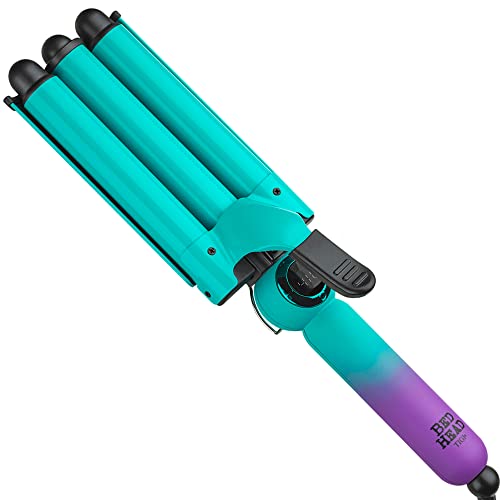
Bed Head Wave Affair
A visible triple-barrel pattern
Pick 6

Conair Double Ceramic Triple Waver
A smaller repeated wave
THE EDITOR'S TAKE
Our verdict
Wavytalk Power Wave leads for its adjustable heat and timer controls. L’ANGE SculptWaver suits larger texture, while Conair’s smaller triple-barrel pattern provides a tighter repeated wave.
Keep each dry section flat across the head. After releasing a clamp, align the next position with the last wave so the pattern continues; overlapping the same ridge repeatedly adds exposure without making the rhythm clearer.
A CLOSER LOOK
The full product reviews
Our first pick
Wavytalk Power Wave
The plates create a repeating wave pattern with a clamp rather than requiring each section to be wrapped around a wand. Power Wave’s eight settings and adjustable timer let you choose the heat and timing separately.
Power Wave has 35mm deep V-shaped plates, eight settings from 280°F to 420°F and an adjustable audible timer. The plates create a repeating wave pattern with a clamp rather than requiring each section to be wrapped around a wand.
Handling and application
A repeating wave needs a repeating section layout. Keep the section flat and choose a starting position that leaves the hot head clear of skin. Release the first clamp, locate the last ridge and use it as the guide for the next position rather than overlapping every bend. With Wavytalk Power Wave, clamp a flat dry section at a conservative setting, release and align the next position with the previous wave.
Creating an even repeating wave without a wand wrap
Power Wave’s eight settings and adjustable timer let you choose the heat and timing separately. The 35mm V-shaped plate gives a deep repeated pattern. Use a flat section and align each new clamp with the last ridge, rather than repeatedly pressing the same bend to make it sharper.
The trade-off
The deep pattern is more uniform than a hand-wrapped beach wave. The timer is a prompt, not proof every section needs the longest hold.
What stands out
- Power Wave has 35mm deep V-shaped plates, eight settings from 280°F to 420°F and an adjustable audible timer.
- The plates create a repeating wave pattern with a clamp rather than requiring each section to be wrapped around a wand.
The trade-offs
- The deep pattern is more uniform than a hand-wrapped beach wave. The timer is a prompt, not proof every section needs the longest hold.
Our verdict The plates create a repeating wave pattern with a clamp rather than requiring each section to be wrapped around a wand. The deep pattern is more uniform than a hand-wrapped beach wave.
Using it in your routine
Clamp a flat dry section at a conservative setting, release and align the next position with the previous wave.
Consider another option if: The deep pattern is more uniform than a hand-wrapped beach wave. The timer is a prompt, not proof every section needs the longest hold.
Pick 2
L’ANGE SculptWaver Large
A larger repeated wave shape suits medium-to-long lengths when you want consistent dimensional texture. The large SculptWaver gives a broader repeated texture through enough length.
The large SculptWaver uses 1.3-inch titanium barrels, five levels from 280°F to 430°F and four audible timer choices. A larger repeated wave shape suits medium-to-long lengths when you want consistent dimensional texture.
Handling and application
A large wave head works best when it has room to sit evenly across the section. Keep the front pieces separate from the longer back lengths and do not force a broad barrel against a short fringe. Adjust placement first; raising the temperature will not make a short section longer. With L’ANGE SculptWaver Large, use a flat dry section, start at a conservative setting and align the next clamp with the previous bend.
Creating an even repeating wave without a wand wrap
The large SculptWaver gives a broader repeated texture through enough length. Its five heat levels and timer menu support a consistent sequence, but the head needs space around the face. A short fringe is not a suitable place to force all three barrels against the scalp.
The trade-off
A broad three-barrel head is less convenient beside a short fringe and gives a patterned finish rather than random waves. Leave enough space beside the jaw for the larger clamping head to open. A broad repeated pattern is less convenient where short face-framing pieces cannot lie flat.
What stands out
- The large SculptWaver uses 1.3-inch titanium barrels, five levels from 280°F to 430°F and four audible timer choices.
- A larger repeated wave shape suits medium-to-long lengths when you want consistent dimensional texture.
The trade-offs
- A broad three-barrel head is less convenient beside a short fringe and gives a patterned finish rather than random waves.
Our verdict A larger repeated wave shape suits medium-to-long lengths when you want consistent dimensional texture. A broad three-barrel head is less convenient beside a short fringe and gives a patterned finish rather than random waves.
Using it in your routine
Use a flat dry section, start at a conservative setting and align the next clamp with the previous bend.
Consider another option if: A broad three-barrel head is less convenient beside a short fringe and gives a patterned finish rather than random waves.
Pick 3
TYMO ROVY Hair Waver
The shell changes hand placement and can make the wave-clamping workflow easier to organize than exposed barrels. ROVY’s enclosed head changes where the hands go during clamping.
ROVY uses an enclosed clamp-and-wave design with a surrounding insulating shell and one-inch rollers. The shell changes hand placement and can make the wave-clamping workflow easier to organize than exposed barrels.
Handling and application
An enclosed head changes where you can hold and see the hair. Use only the intended grip area and follow the loading direction from the manual. The shell does not mean the contact surfaces are cool, so preserve clearance from the face while working down each section. With TYMO ROVY Hair Waver, use small dry sections, follow the marked grip areas and step down the length without repeatedly pressing the same ridge.
Creating an even repeating wave without a wand wrap
ROVY’s enclosed head changes where the hands go during clamping. Follow the designated grip areas and keep the section visible at the entrance. The shell is a handling feature, not permission to touch every part or to reload a tangled section without releasing it first.
The trade-off
An enclosed design still contains hot surfaces and cannot make every position safe to touch. Keep neighboring strands outside the enclosing head before clamping. The shell helps organize loading, but the heated region still needs a small prepared section.
What stands out
- ROVY uses an enclosed clamp-and-wave design with a surrounding insulating shell and one-inch rollers.
- The shell changes hand placement and can make the wave-clamping workflow easier to organize than exposed barrels.
The trade-offs
- An enclosed design still contains hot surfaces and cannot make every position safe to touch.
Our verdict The shell changes hand placement and can make the wave-clamping workflow easier to organize than exposed barrels. An enclosed design still contains hot surfaces and cannot make every position safe to touch.
Using it in your routine
Use small dry sections, follow the marked grip areas and step down the length without repeatedly pressing the same ridge.
Consider another option if: An enclosed design still contains hot surfaces and cannot make every position safe to touch.
Pick 4
SHEGLAM Beach Babe Waver
Two-barrel clamping offers an alternative shape and hand position to an exposed triple-barrel waver. Beach Babe’s two-barrel head and timer suit medium-to-long sections as the manufacturer specifies.
Beach Babe uses a two-barrel clamping design, five temperature settings and a seven-second timer. Two-barrel clamping offers an alternative shape and hand position to an exposed triple-barrel waver.
Handling and application
Treat an audible timer as a workflow cue, not a requirement to hold every section until its longest option ends. Fine or previously processed pieces may need a more conservative approach than the dense back lengths. Work consistently and release promptly rather than repeatedly clamping an already-shaped ridge. With SHEGLAM Beach Babe Waver, use dry sections long enough for the head, follow the grip instructions and release promptly at a suitable setting.
Creating an even repeating wave without a wand wrap
Beach Babe’s two-barrel head and timer suit medium-to-long sections as the manufacturer specifies. Keep short layers separate rather than trying to include them in a full-width clamp. The two-barrel shape is a different pattern choice, so compare the wave you want before treating it as a smaller triple waver.
The trade-off
The manufacturer specifies medium-to-long hair and excludes short hair; the timer is not a universal hold recommendation. Use the same flat orientation when continuing down a medium or long section. Rotating the head between clamps changes the alignment of the repeating pattern.
What stands out
- Beach Babe uses a two-barrel clamping design, five temperature settings and a seven-second timer.
- Two-barrel clamping offers an alternative shape and hand position to an exposed triple-barrel waver.
The trade-offs
- The manufacturer specifies medium-to-long hair and excludes short hair; the timer is not a universal hold recommendation.
Our verdict Two-barrel clamping offers an alternative shape and hand position to an exposed triple-barrel waver. The manufacturer specifies medium-to-long hair and excludes short hair; the timer is not a universal hold recommendation.
Using it in your routine
Use dry sections long enough for the head, follow the grip instructions and release promptly at a suitable setting.
Consider another option if: The manufacturer specifies medium-to-long hair and excludes short hair; the timer is not a universal hold recommendation.
Pick 5
Bed Head Wave Affair
The open three-barrel shape gives a clear view of how each new clamp aligns with the existing wave. Wave Affair’s jumbo triple barrels make the existing ridge easy to see when placing the next clamp.
Wave Affair is a jumbo three-barrel tourmaline-ceramic waver with ten digital settings up to 410°F. The open three-barrel shape gives a clear view of how each new clamp aligns with the existing wave.
Handling and application
Open triple barrels let you see the existing pattern, but they need a clear resting space between sections. Use the intended stand on a heat-resistant surface and keep the cord outside the next section. Organizing the station matters when the tool head is broader than a wand. With Bed Head Wave Affair, clamp a small flat dry section lightly and match the outer wave when moving farther down the length.
Creating an even repeating wave without a wand wrap
Wave Affair’s jumbo triple barrels make the existing ridge easy to see when placing the next clamp. Set the tool on its intended rest between sections and keep the cord outside the working area. The broader open head is a storage and face-clearance consideration as well as a pattern choice.
The trade-off
The jumbo head needs space around the face and more room in storage than a slim wand. The visible triple-barrel shape needs a clear resting area between sections. Keep cords and clips outside that area rather than balancing the head among accessories.
What stands out
- Wave Affair is a jumbo three-barrel tourmaline-ceramic waver with ten digital settings up to 410°F.
- The open three-barrel shape gives a clear view of how each new clamp aligns with the existing wave.
The trade-offs
- The jumbo head needs space around the face and more room in storage than a slim wand.
Our verdict The open three-barrel shape gives a clear view of how each new clamp aligns with the existing wave. The jumbo head needs space around the face and more room in storage than a slim wand.
Using it in your routine
Clamp a small flat dry section lightly and match the outer wave when moving farther down the length.
Consider another option if: The jumbo head needs space around the face and more room in storage than a slim wand.
Pick 6
Conair Double Ceramic Triple Waver
Its smaller barrel pattern gives a tighter repeated texture than the jumbo wavers in the shortlist. Conair’s smaller outer and center barrels form a more closely spaced texture.
The tool uses two outer 5/8-inch barrels and a half-inch center barrel, with 30 numbered heat settings. Its smaller barrel pattern gives a tighter repeated texture than the jumbo wavers in the shortlist.
Handling and application
A smaller barrel pattern produces more closely spaced bends along the same length. Align each step carefully if uniform texture is the goal, and keep the section thin enough to lie flat. The finished pattern should be judged after cooling rather than combed apart immediately after the last clamp. With Conair Double Ceramic Triple Waver, select a low setting, clamp a dry section and align each new position rather than overlapping every ridge.
Creating an even repeating wave without a wand wrap
Conair’s smaller outer and center barrels form a more closely spaced texture. Choose it when that tighter rhythm is the goal, then align the next step carefully. Its listed single-voltage operation is a meaningful limitation for travel; a plug-shape adapter cannot change the tool’s rated voltage.
The trade-off
This listed model is single voltage; a plug adapter does not make it a worldwide-voltage tool. The smaller repeated pattern is a deliberate shape choice. Match section placement to the previous ridge instead of increasing overlap to imitate a broader wave.
What stands out
- The tool uses two outer 5/8-inch barrels and a half-inch center barrel, with 30 numbered heat settings.
- Its smaller barrel pattern gives a tighter repeated texture than the jumbo wavers in the shortlist.
The trade-offs
- This listed model is single voltage; a plug adapter does not make it a worldwide-voltage tool.
Our verdict Its smaller barrel pattern gives a tighter repeated texture than the jumbo wavers in the shortlist. This listed model is single voltage; a plug adapter does not make it a worldwide-voltage tool.
Using it in your routine
Select a low setting, clamp a dry section and align each new position rather than overlapping every ridge.
Consider another option if: This listed model is single voltage; a plug adapter does not make it a worldwide-voltage tool.
EVERYDAY DETAILS
What matters in everyday use
Fit for the job
Creating an even repeating wave without a wand wrap
The actual workflow
Keep each dry section flat across the head. After releasing a clamp, align the next position with the last wave so the pattern continues; overlapping the same ridge repeatedly adds exposure without making the rhythm clearer.
Meaningful limits
A deep waver creates a deliberate repeating pattern, rather than irregular hand-wrapped beach waves. Head size matters around a fringe and jaw-length layers, where a broad clamping surface may be awkward.
Product photographs: Amazon. Certain content that appears on this site comes from Amazon. This content is provided “as is” and is subject to change or removal at any time.
Make the routine the deciding factor
Keep each dry section flat across the head. After releasing a clamp, align the next position with the last wave so the pattern continues; overlapping the same ridge repeatedly adds exposure without making the rhythm clearer.
A deep waver creates a deliberate repeating pattern, rather than irregular hand-wrapped beach waves. Head size matters around a fringe and jaw-length layers, where a broad clamping surface may be awkward.
Our final take
Wavytalk Power Wave leads for its adjustable heat and timer controls. L’ANGE SculptWaver suits larger texture, while Conair’s smaller triple-barrel pattern provides a tighter repeated wave.
Choose the wave pattern and head size first, then work consistently along flat prepared sections.
GOOD TO KNOW
Questions before you choose
How do I keep the repeated wave pattern aligned?
Keep each dry section flat across the head. After releasing a clamp, align the next position with the last wave so the pattern continues; overlapping the same ridge repeatedly adds exposure without making the rhythm clearer.
Does a deep waver make the same shape as a wand?
A deep waver creates a deliberate repeating pattern, rather than irregular hand-wrapped beach waves. Head size matters around a fringe and jaw-length layers, where a broad clamping surface may be awkward.
Bella Ross curates practical hairstyle ideas for everyday cuts, braids, color inspiration, and simple styling routines.
Our editorial policySTYLE IT YOUR WAY
A little styling inspiration
 Style inspiration
29+ Curly Hairstyles for Various Occasions
A photo-first guide to curly hairstyles for various occasions, with concise image-specific notes and practical comparison points.
 Style inspiration
29+ Curly Hairstyle Ideas for Every Curl Pattern
A photo-first guide to curly hairstyles, from short coily crops and curly bobs to shoulder-length fringe cuts, long defined curls, blonde curls, and red curls.
 Style inspiration
28+ Curly Bob Ideas
A photo-first guide to curly bob ideas, with concise image-specific notes and practical comparison points.