
Product reviews / Wave styling
6 Beach Wavers for Short Hair: Detailed Reviews
On a short bob, a large barrel can leave one dent instead of a recognizable wave. The working head has to fit the strand between roots and ends while leaving scalp clearance.

As an Amazon Associate I earn from qualifying purchases, at no extra cost to you. Affiliate disclosure

Short-wave detail
THE SHORTLIST
Our six picks at a glance
Choose a compact head for placement, and reserve broad tools for genuinely longer bob sections.
Short-wave detail
Farery Mini Triple Waver
Small bends that fit a bob.
Compact timed waves

SHEGLAM 0.75-inch Deep Waver
A narrow timed head for defined short waves.
Compact wave placement

TYMO ROVY Compact
A one-inch compact head for bob-length placement.
Adjustable wave depth
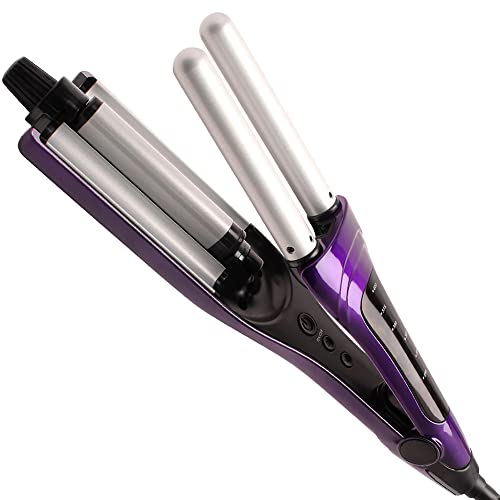
Bed Head A Wave We Go
Depth adjustment for texture or a stronger bend.
Heat-dial control

Conair Double Ceramic Triple Waver
A fuller triple wave for the longer bob layers.
Timer-assisted waves

Wavytalk Power Wave
A strong deep-wave accent rather than an all-over default.
THE EDITOR'S TAKE
Choose a compact head for placement, and reserve broad tools for genuinely longer bob sections
On a short bob, a large barrel can leave one dent instead of a recognizable wave. The working head has to fit the strand between roots and ends while leaving scalp clearance. Compact tools are strongest for placement; a larger option is only appropriate when the top layers have enough length.
A CLOSER LOOK
The full product reviews
Short-wave detail
Farery Mini Triple Waver
Small bends that fit a bob.
Farery shrinks the pattern into half-inch barrels. On a bob or short shag, more than one bend can fit into a short section rather than leaving a single large dent. The small head suits targeted texture, but covering a long dense hairstyle requires more placements.
Controls and section placement
Half-inch barrels fit a smaller repeating pattern into a bob-length strand. Position the first bend below the hairline and work through only the length that can sit safely in the mini head. For a softer finish, shape selected upper layers and separate them after cooling instead of clamping every short piece repeatedly.
What this version suits
Farery’s half-inch barrels can fit more than one change of direction into a short strand. That is the attraction on a bob or shag whose length barely accommodates a jumbo waver. The resulting rhythm is tighter and can look crimped when used across every layer. Try the top and side sections first; a close nape may be better left to its natural shape.
What stands out
- 1/2-inch mini barrels
- Three temperature settings
The trade-offs
- The tight pattern can look crimped; full-head work on long hair takes more placements.
Our verdict The tight pattern can look crimped; full-head work on long hair takes more placements.
Using it in your routine
Half-inch barrels fit a smaller repeating pattern into a bob-length strand.
Consider another option if: The tight pattern can look crimped; full-head work on long hair takes more placements.
Compact timed waves
SHEGLAM 0.75-inch Deep Waver
- Format
- 0.75-inch double-barrel head
- Controls / design
- Five settings and timing cue
A narrow timed head for defined short waves.
SHEGLAM uses a narrow double-barrel arrangement for short-hair placement. Its covered shape and timing cue clarify the clamp-and-release sequence when a side section leaves little room for fingers. The scale favors smaller defined waves; brushing them out will not make them identical to wide-barrel waves.
Controls and section placement
The double-barrel 0.75-inch head uses a timing cue with five listed settings. Place a narrow short section flat rather than bunching it inside the covered shape. The cue helps keep the sequence consistent, but leave scalp clearance and stop when the strand no longer has enough length for another clean bend.
What this version suits
SHEGLAM’s double-barrel head occupies less of a short strand than a wide triple arrangement. The 0.75-inch scale makes a defined bend, and the timing cue gives a clear point to release. It remains too large for hair that cannot lie within the working surface. On a layered bob, choose the pieces that reach comfortably rather than forcing every shorter section to match.
What stands out
- 0.75-inch double-barrel head
- Five settings and timing cue
The trade-offs
- Very short strands may not form a complete curve.
Our verdict Very short strands may not form a complete curve.
Using it in your routine
The double-barrel 0.75-inch head uses a timing cue with five listed settings.
Consider another option if: Very short strands may not form a complete curve.
Compact wave placement
TYMO ROVY Compact
A one-inch compact head for bob-length placement.
The Compact ROVY uses a one-inch clamp-style wave surface. Its smaller head is easier to orient on bob-length pieces and around the sides, where a large triple barrel can occupy most of the available strand. It creates the wave through placement and closing pressure rather than rotating a strand around a barrel. Keep the shortest pieces separate so their tips lie flat within the working area.
Controls and section placement
The compact ROVY lists a one-inch roller scale, which gives short pieces more usable placement room than the larger 1.25-inch version. Keep the first bend away from the scalp and watch where the shorter layer ends meet the clamp. A compact head helps access, but does not make a strand that is shorter than the working pattern suddenly suitable.
What this version suits
The Compact ROVY trades the full-size model’s broader pattern for a one-inch working size. That is useful around the sides of a bob where the strand has limited room between root and tip. It still needs enough hair for a complete placement. A single partially caught end can become a dent rather than a wave, so keep the tips flat before closing the head.
What stands out
- 1-inch compact clamp waver
- Ceramic-coated wave surfaces
The trade-offs
- Short pieces still need enough length for a wave; this is not a root-straightening comb.
Our verdict Short pieces still need enough length for a wave; this is not a root-straightening comb.
Using it in your routine
The compact ROVY lists a one-inch roller scale, which gives short pieces more usable placement room than the larger 1.25-inch version.
Consider another option if: Short pieces still need enough length for a wave; this is not a root-straightening comb.
Adjustable wave depth
Bed Head A Wave We Go
Depth adjustment for texture or a stronger bend.
A Wave We Go changes wave depth mechanically as well as changing heat. A shallow setting creates texture; a deeper setting makes a more obvious undulation. Set the shape before starting so both sides have a consistent pattern, then vary selected pieces only if you want intentionally mixed texture.
Controls and section placement
Choose the adjustable wave depth before starting the section. A shallow setting adds closer texture while a deeper setting creates a stronger curve; keeping the same depth across the sides is easier than changing it mid-ribbon. Combine that shape decision with an appropriate digital heat setting instead of trying to alter the pattern by holding the tool longer.
What this version suits
A Wave We Go lets you alter the wave depth instead of buying a different barrel size. A shallow setting can add texture to the longer layers of a short cut, while deeper placement produces a more pronounced shape. Set that depth before heating and keep it consistent for matching sides. This is less convenient when the main requirement is the smallest possible head at a cropped nape.
What stands out
- Adjustable-depth waver
- Digital settings up to 400°F
The trade-offs
- Extra shape adjustment adds a setup decision and cannot fix misaligned sections.
Our verdict Extra shape adjustment adds a setup decision and cannot fix misaligned sections.
Using it in your routine
Choose the adjustable wave depth before starting the section.
Consider another option if: Extra shape adjustment adds a setup decision and cannot fix misaligned sections.
Heat-dial control
Conair Double Ceramic Triple Waver
A fuller triple wave for the longer bob layers.
Conair combines a conventional triple-barrel shape with a stepped heat dial. The many settings allow smaller adjustments than a three-preset tool, while exposed barrels make alignment visible. Each new clamp should start at the end of the previous curve, rather than doubling back over a completed wave.
Controls and section placement
The stepped heat dial lets you make small adjustments while retaining a conventional triple-barrel pattern. Begin with a manageable ribbon and observe how its width fits the open head. For later placements, line up the lower barrel with the last completed bend rather than treating each clamp as a separate random wave.
What this version suits
Conair is the broader option here for a bob with enough length on top and at the sides. Its exposed barrels make the alignment visible, and the 30 heat settings allow smaller changes than a few presets. It is not the most precise way to reach a close-cut nape. Use it where a complete wave fits and reserve very short pieces for another finishing method.
What stands out
- Triple-barrel wave tool
- 30 heat settings
The trade-offs
- The exposed head needs particular care around ears and the forehead.
Our verdict The exposed head needs particular care around ears and the forehead.
Using it in your routine
The stepped heat dial lets you make small adjustments while retaining a conventional triple-barrel pattern.
Consider another option if: The exposed head needs particular care around ears and the forehead.
Timer-assisted waves
Wavytalk Power Wave
A strong deep-wave accent rather than an all-over default.
Power Wave uses deep V-shaped plates and a selectable timer. Its 35mm pattern favors a structured wave rather than a gentle round-brush bend. The timer helps repeat the sequence at the back of the head; it is not a reason to choose the longest interval for every section.
Controls and section placement
The deep V-shaped plates create a bold pattern, with eight listed temperatures from 280°F to 420°F and a selectable timer. Start with a suitable lower setting and a shorter interval allowed by the directions. A timer helps repeat placement, but a thin face-framing piece should not automatically receive the same sequence as a dense back section.
What this version suits
Power Wave’s 35mm V-shaped pattern can be attractive on the longer top of a short hairstyle, but it takes up substantial strand length. Its timer helps repeat those selected placements. On chin-length hair, begin below the hairline and leave enough room for the tips to release. If you want several small bends through each section, the mini-barrel choices are more suitable.
What stands out
- 35mm deep-wave plates
- Eight settings, 280–420°F
The trade-offs
- A deep pattern can feel too styled if you only want a slight bend.
Our verdict A deep pattern can feel too styled if you only want a slight bend.
Using it in your routine
The deep V-shaped plates create a bold pattern, with eight listed temperatures from 280°F to 420°F and a selectable timer.
Consider another option if: A deep pattern can feel too styled if you only want a slight bend.
EVERYDAY DETAILS
What matters in everyday use
Farery Mini Triple Waver
Small bends that fit a bob. The tight pattern can look crimped; full-head work on long hair takes more placements.
SHEGLAM 0.75-inch Deep Waver
A narrow timed head for defined short waves. Very short strands may not form a complete curve.
TYMO ROVY Compact
A one-inch compact head for bob-length placement. Short pieces still need enough length for a wave; this is not a root-straightening comb.
Product photographs: Amazon. Certain content that appears on this site comes from Amazon. This content is provided “as is” and is subject to change or removal at any time.
Putting the tools into your routine
Start on a side piece you can see clearly, keeping the first bend below the hairline. Use narrow sections at the nape and stop rather than forcing hair that is too short into the head. A few shaped top layers may be enough; the underside does not need identical treatment.
Cleaning and storage
Let the waver cool before clearing residue around the plates or barrels. Check the closing lever and keep stored objects from pressing against the head. A cool tip is a handling aid during placement, not a reason to pack a warm waver away.
GOOD TO KNOW
Your practical questions
Will a waver make the same waves as a rotating curler?
No. A clamp waver imprints a repeated pattern, while a rotating barrel creates a round curl that you can soften after cooling. Pick the format for the shape you want rather than treating them as identical.
What makes Farery Mini Triple Waver the first pick?
Its 1/2-inch mini barrels and three temperature settings suit the main routine covered here. Choose a compact head for placement, and reserve broad tools for genuinely longer bob sections.
What should I check before ordering?
Confirm the exact product version, included parts and operating instructions on the selected listing. Do not assume similarly named versions have identical controls or dimensions.
Bella Ross curates practical hairstyle ideas for everyday cuts, braids, color inspiration, and simple styling routines.
Our editorial policySTYLE IT YOUR WAY
A little styling inspiration
 Style inspiration
28+ Blunt Bob Ideas
A photo-first guide to blunt bob ideas, with concise image-specific notes and practical comparison points.
 Style inspiration
29+ Hairstyles for Bob Haircuts
A photo-first guide to hairstyles for bob haircuts, with concise image-specific notes and practical comparison points.
 Style inspiration
15 Ways to Style Bangs in Summer Heat
A photo-first guide to ways to style bangs in summer heat, with concise image-specific notes and practical comparison points.