
Product reviews / Styling tools
6 Best Affordable Hair Straighteners: Our Reviews
A smoother routine, without the premium price. Six affordable flat irons, reviewed for the details that matter when you actually style your hair.

As an Amazon Associate I earn from qualifying purchases, at no extra cost to you. Affiliate disclosure

More room to shape
THE SHORTLIST
Six irons. Six reasons to choose one.
Find your priority, then read the full review.
Our first pick
Remington Shine Therapy 1-inch
Straightening and shaping the ends with one tool.
Lower starting heat

Conair Double Ceramic 1-inch
Fine hair and routines that need a lower starting setting.
Everyday essentials

Remington Anti-Static 1-inch
A basic digital iron with longer plates and a temperature lock.
Straight styles & bends
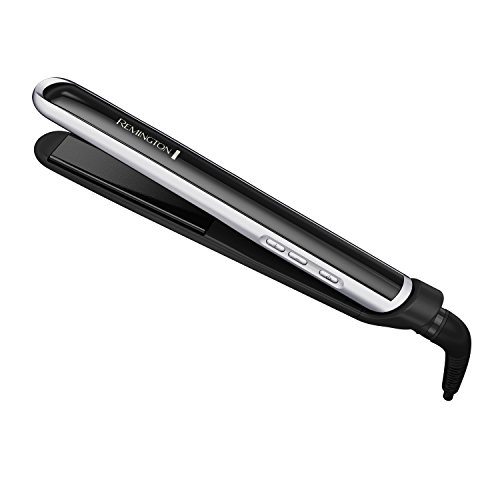
Remington Pearl Pro 1-inch
Straightening smaller sections and curving the ends.
Clear digital controls

INFINITIPRO Conair Digital 1-inch
A readable display and a simple set of temperature presets.
Wider plate coverage

Revlon Smooth Brilliance XL 1.5-inch
Longer lengths where wider coverage is the priority.
THE EDITOR'S TAKE
Our verdict: spend on control, not just heat
The Remington Shine Therapy 1-inch gets our first recommendation because its adjustable heat and slim plates suit both straight styles and bent-under ends. For fine hair, the Conair Double Ceramic's lower starting setting deserves a closer look. For longer hair, Revlon's wider plates change the equation.
The strongest budget straightener is the one that fits the sections you actually style. A high maximum temperature is easy to advertise; manageable plates, clear controls, and an appropriate low setting are more useful day to day.
A CLOSER LOOK
The full product reviews
Our first pick
Remington Shine Therapy 1-inch
The controls and 1-inch plate width make a stronger case for this iron than its oil-and-keratin marketing.
Shine Therapy makes sense for a routine that moves between a smooth finish and gently curved ends. Its 1-inch plates leave room to work with smaller sections, while the adjustable settings give it more flexibility than a fixed-temperature iron. That combination is why it leads our list.
Working through roots, lengths, and bent-under ends
The useful way to approach the S9511 is as a section-by-section styling tool. On a bob, separate the lower layer from the crown so you can straighten the underside without repeatedly pressing the already-styled top. Its 1-inch width is a practical fit for that work: you can take a smaller front section without trying to balance it across a broad plate. Leave clearance from the scalp and keep the iron moving rather than holding it at the roots.
For bent-under ends, the movement changes near the bottom of the section. Guide the lengths through first, then use a small wrist turn as the ends exit. A strong turn halfway down can create an unintended bend through the body of the style. This width makes the straight-to-curved transition more manageable than a wide head, although it does not establish whether your hair will straighten in one pass.
The temperature lock is the feature to use
Select an appropriate setting before starting and use the temperature lock according to the supplied instructions. That matters when you rotate your grip to shape the ends: a locked setting removes one avoidable variable while your attention is on the section. The range begins at 300°F, so this is not our recommendation for someone specifically replacing an iron because they need a setting below that point.
The argan-oil and keratin language describes the plate coating. It does not tell you how much shine you will see, how the tool will glide through your particular hair, or whether damaged ends will look healthier. Treat those outcomes separately from the verifiable control features. If the section catches, stop and check detangling, section size, and plate cleanliness instead of assuming more heat will fix it.
Where its everyday versatility runs out
For long, dense hair, the compromise is the number of sections you need to manage. A slim iron gives you precision, but it does not turn a thick bundle into an evenly heated section. Revlon's wider format deserves consideration if most of your session is spent on long lengths; Shine Therapy makes more sense when you also need smaller front pieces and a softly shaped finish.
Switch off and unplug after the session, and allow the plates to cool before following the cleaning instructions. The automatic shutoff is useful backup, while the temperature lock is useful during styling. Keep the cooling surface clear and avoid winding the cord tightly around the body; storage should protect the hinge and cable as well as the plates.
What stands out
- Versatile 1-inch plates
- Adjustable temperature with a lock
- Automatic shutoff
The trade-offs
- Less coverage than a wide-plate iron
- 300°F starting setting may be higher than you want
Our verdict Our strongest all-round recommendation for versatile plates and adjustable heat.
Using it in your routine
Use on dry, detangled hair in small sections. Pick the lowest suitable setting and turn your wrist slightly at the ends if you want a curved finish.
Consider another option if: You need a setting below 300°F or want wide plates for longer sections.
Lower starting heat
Conair Double Ceramic 1-inch
The useful difference is its 266°F starting setting, not the word 'double' on the ceramic coating.
The Double Ceramic is the option to examine first when other budget irons start hotter than you want. The CS221 instructions list five settings, beginning at 266°F and ending at 410°F. That gives you a lower starting point than the Remington Shine Therapy, although suitability still depends on your hair's condition.
A lower starting point for the front and finer sections
The CS221's five documented presets run from 266°F to 410°F. That lower starting point changes how you can approach a fringe or finer face-framing piece: you have an option below the Shine Therapy's minimum rather than immediately stepping into its range. It remains a setting to assess against the supplied instructions and your hair's condition, not a guarantee that any temperature is harmless.
Take the front sections separately from the back. A lower setting selected for those smaller pieces may not be the one you choose for the rest of the style. The benefit here is having a lower option available; the limitation is that five presets leave gaps between choices. If your current iron feels too hot at one preset and ineffective at the next, a model with finer adjustment may address that frustration better.
Long plates still need a shallow section
Conair's extra-long, 1-inch floating plates give the section more length to sit across while keeping a slim styling head. In practice, the useful distinction is between the width of a section spread across the plates and its thickness. Spreading hair out does not justify clamping a deep bundle. Keep the hair in a shallow, detangled layer so the inner strands are not hidden behind the outer ones.
The floating design allows plate movement; it is not evidence that this iron never snags. For a curved bob finish, use a slight turn near the ends and keep an even motion through the section. For short front pieces, the same 1-inch format is easier to position than the Revlon's broader head. We would not infer better glide or fewer passes solely from the 'double ceramic' name.
Simple presets, with a real adjustment trade-off
Five choices can suit a repeatable routine: select the appropriate preset, style the separated layers, and check that setting before moving to a different area. The trade-off appears when you want small changes rather than the next preset. This is a stronger fit for someone who values a lower starting point and straightforward controls than for someone who wants to fine-tune temperature throughout a session.
Our preference for this model on lower-heat grounds comes from its documented range, not a recorded damage comparison. Stop if a section catches at the edge, check the hair placement, and adjust your grip before moving through the next piece. Its lower maximum also does not establish whether it will be sufficient for every dense or tightly curled texture.
What stands out
- 266°F lowest documented setting
- Five simple heat presets
- Extra-long floating plates
The trade-offs
- Only five temperature choices
- Narrower coverage than the Revlon XL
Our verdict A straightforward choice when lower heat matters more than a higher ceiling.
Using it in your routine
Read the supplied CS221 manual and begin with an appropriate low setting. Work with clean, fully dry sections and avoid repeatedly ironing the same area.
Consider another option if: You need precise temperature increments between the five presets or a wider plate.
Everyday essentials
Remington Anti-Static 1-inch
- Model
- S5502 / S5505P listing
- Plates
- 1 inch
- Heat
- Up to 450°F
- Finish
- Ceramic with titanium-protection coating
Longer plates and a temperature lock are the practical reasons to consider this budget staple.
The Anti-Static offers the basics many inexpensive straighteners omit: digital controls, a temperature lock, and automatic shutoff. Its longer 1-inch plates are useful when you want more contact length without moving to a wide head. That gives it a sensible place in a routine that includes both lengths and face-framing sections.
Longer plates without a wider styling head
The Anti-Static's longer 1-inch plates have a useful middle-ground role. They offer more contact length for a section while retaining the narrower head used for front pieces and shaped ends. Imagine a shoulder-length style where the back needs straightening but the front needs a slight inward curve: the same tool format can address both, provided you separate those areas and change the movement at the ends.
Extra plate length should not become an excuse to fill the iron with a thicker section. Keep strands spread and detangled, and let any applied product dry fully before using the iron. If hair escapes from the edges or folds over itself, reduce the section. The longer format affects how you place hair; it does not prove a shorter styling session or a lower pass count.
Controls are useful; model identification comes first
Digital controls and a temperature lock are the features we would prioritize here. Establish the correct setting, engage the lock as instructed, and recheck the display when you move from the back to more delicate front pieces. A locked temperature is particularly relevant when changing hand position to put a bend into the ends.
The important complication is the listing identity. Amazon identifies S5502 as the model and S5505P as the part number, while Remington's matching page contains conflicting temperature information. Use the manual supplied with the actual item to confirm its controls and range. We have not filled in an assumed minimum setting or treated instructions for a similarly named version as definitive for this listing.
What the anti-static coating can tell you
Ceramic with a titanium-protection coating describes the surface construction and the manufacturer's intended glide. It does not settle whether this model will catch a strand at the edge, flatten a fluffy section cleanly, or keep flyaways down through a humid afternoon. Those outcomes depend on conditions that the specification sheet does not capture.
For an ordinary routine, its case is the combination of longer plates, digital controls, and a lock. Its weaker point is the need to verify the exact version before relying on temperature details. The 60-minute automatic shutoff remains a backup; switch off, unplug, and leave it to cool after styling. Keep your fingers clear of the controls as you change hand position, and recheck the display before shaping a different area.
What stands out
- Longer 1-inch plates
- Digital controls and temperature lock
- 60-minute automatic shutoff
The trade-offs
- Model and temperature descriptions vary
- Less width for long, dense sections
Our verdict A sensible essentials-first option, with model details worth checking carefully.
Using it in your routine
Match the manual to the model in the box. Use only on dry hair, select the lowest suitable setting, and engage the temperature lock after adjusting.
Consider another option if: You want a product listing with a completely unambiguous model and heat range.
Straight styles & bends
Remington Pearl Pro 1-inch
Floating plates and a temperature lock give Pearl Pro a practical styling role beyond its coating story.
Pearl Pro is worth considering when you want a slim tool for both straight lengths and a little shape at the ends. Its 1-inch floating plates are designed to maintain contact as the section moves through the iron. The width also makes it easier to divide shorter hair into manageable sections than the Revlon XL.
Straightening first, then putting shape back in
Pearl Pro's 1-inch floating plates make the most sense for a routine that includes both straight lengths and shaped ends. Clip the upper layer away and work on the underside first. When the section reaches the ends, a gentle change in wrist angle can create a tucked-under finish; pulling straight through preserves a flatter line. You are changing the styling movement rather than selecting a different temperature to create the curve.
The narrow head is also useful when the front pieces need attention separately from the rest of a bob. It still requires clearance from the scalp and careful positioning. A 1-inch label does not mean every very short nape section will fit comfortably, and a floating plate does not prove that unevenly loaded hair will glide without catching.
A visible setting that stays selected
The digital display and temperature lock give this model a concrete advantage over an unmarked fixed-temperature tool. Choose the setting before starting and use the lock as described in its manual. When you rotate the handle for a curved finish, a locked setting helps prevent accidental changes becoming part of the routine. Recheck the display if you intentionally change settings between areas.
Its 450°F maximum is a ceiling rather than a target. Remington's product page gives inconsistent heat-up timings, so there is no defensible speed advantage in our ranking. Nor should a ready indication be mistaken for evidence about heat recovery after several sections. That repeated-use behavior needs direct observation before we can say this is the better rushed-morning iron.
Pearl branding versus the practical purchase decision
Pearl Pro has pearl-infused ceramic plates. Choose Pearl Pro because its plate format and locked digital setting fit the work you do. Choosing it only for a promised silky result leaves the important questions unanswered: how comfortably you can rotate it, whether the edges catch, and how evenly a section contacts the plates.
It overlaps with Shine Therapy, so there is little reason to own both for the same job. The relevant decision is the exact control layout and model instructions, alongside the current offer. For long lengths where width is the main frustration, the Revlon offers a clearer format change. Pearl Pro remains the slimmer alternative for straightening with a little shaping at the ends.
What stands out
- 1-inch floating plates
- Digital display and temperature lock
- 60-minute automatic shutoff
The trade-offs
- Published heat-up timing is inconsistent
- Limited wide-section coverage
Our verdict A versatile digital iron whose useful controls matter more than the pearl branding.
Using it in your routine
Select a setting using the supplied manual, work on fully dry hair, and release pressure before the ends leave the plates. Allow the tool to cool before cleaning.
Consider another option if: You need a verified fast heat-up time or wider plates for long sections.
Clear digital controls
INFINITIPRO Conair Digital 1-inch
- Model
- CS1000L
- Plates
- 1 inch
- Heat
- 5 settings; up to 455°F
- Finish
- Tourmaline ceramic coating
The digital display is its everyday advantage; the high maximum is a feature to use selectively.
The INFINITIPRO Digital keeps the temperature visible instead of relying on an unmarked dial. Its five presets suit someone who wants a simple choice of settings, while the 1-inch head remains practical for shorter sections and shaped ends. We are reviewing the CS1000L listing, not the older CS710 family.
Keeping the selected temperature visible
The CS1000L's readable digital display is useful in a routine that switches between the back of the head and the front. You can check the selected preset before treating a finer piece rather than relying on the position of an unmarked dial. That visibility helps you keep track of the setting; it does not establish the exact temperature reached at every point on the plates.
Five presets make the choice straightforward, but they also set the limits of adjustment. If you want a small step between two preset values, this control system cannot offer the same flexibility as a more finely adjustable iron. We would choose it for a visible, repeatable setting rather than for the largest number on the display.
A slim plate for shorter sections and shaped ends
Its 1-inch format suits dividing a bob or shoulder-length style into smaller layers. Straighten the lower layer first, release the upper layer, and treat the front independently if it needs a different approach. To avoid flattening every bit of shape, guide the lengths first and add only a small turn as the ends leave the plates.
Conair describes tourmaline ceramic and a floating plate. Keep the section flat and watch the plate edge as you rotate the iron to shape the ends. If a section pulls, stop and check it instead of repeatedly dragging the iron through. Choose it for the plate format and visible temperature display.
Which INFINITIPRO you are actually getting
This review covers the CS1000L listing linked above. Older CS710 models also appear under the INFINITIPRO name, so a brand-family match alone is not enough when checking features or instructions. Confirm the model on the item and use its own manual. The listing's 455°F maximum should not be carried across to a different version simply because the packaging looks related.
This is a sensible replacement for someone whose current tool makes the selected setting hard to read. It is a less compelling change if your main complaint is narrow coverage or widely spaced presets. Automatic shutoff is useful backup after a session, while unplugging and cooling the iron remain part of the routine. Check that the display remains visible when you rotate your grip, and recheck the selected preset when moving to finer front sections.
What stands out
- Readable digital display
- Versatile 1-inch floating plate
- Automatic shutoff
The trade-offs
- Only five temperature presets
- High maximum is unnecessary for many routines
Our verdict A practical choice for visible controls, with fewer settings than some Remington options.
Using it in your routine
Follow the CS1000-series instructions, select a suitable low preset, and allow the display to indicate readiness. Use on dry, detangled sections.
Consider another option if: You want fine adjustments between presets or wide plates for longer lengths.
Wider plate coverage
Revlon Smooth Brilliance XL 1.5-inch
Choose this for its wider head, especially if tiny sections are not the main part of your routine.
Smooth Brilliance XL is the clear change of format in this shortlist. Its 1.5-inch plates offer more width than the five 1-inch irons, which makes it a sensible candidate for longer lengths. It is less suited to the close, precise work around short bangs or a small nape section.
The wider head changes how you divide the hair
The RVST2184's 1.5-inch plates make it the length-focused option in this group. With longer hair, you can spread a section across a wider plate instead of placing it on a slim 1-inch surface. The useful distinction is width, not thickness: a wide head still needs a shallow, detangled section rather than a bulky handful of hair.
Clip away the upper layers and work through the lower lengths first. If the section is escaping or folding over at the edges, divide it before continuing. Wider coverage is a reason to consider the XL; it is not evidence that it will halve the number of passes or the time needed. Those are separate performance questions that depend on texture and the actual plate contact.
Where coverage becomes awkward precision
The format becomes less attractive when the session is mostly short bangs, a close nape, or small face-framing pieces. A wider head gives you less room to position those sections precisely while keeping the hot surfaces away from the skin. If that is most of your styling work, the 1-inch models are the more practical starting point.
Shaping the ends of longer hair is still a different motion from pulling the section straight down. Keep the movement controlled rather than making an abrupt twist in the middle of the length. We would not choose this as the most versatile option for someone who changes between a short bob and detailed fringe styling; its clear reason to exist is wider length coverage.
Evaluate the width before the shine claims
Revlon lists ceramic-tourmaline technology and a 455°F maximum. Neither establishes how shiny the finished style will look or how well it will last through humidity. The advertised lab multiplier lacks enough detail on the product page to support a fair performance ranking against the other five irons, so it does not drive our verdict.
Choose this if narrow plates are the specific limitation in your current routine. Choose a slimmer model if close positioning and curved ends matter more. Switch off and unplug after styling rather than waiting for automatic shutoff. Keep the longer section spread across the plate surface, and reduce it if hair bunches toward one edge. The broader format is useful only when you can place and release that section comfortably.
What stands out
- Wider 1.5-inch plate format
- Designed for longer lengths
- Automatic shutoff
The trade-offs
- Less precise around short sections
- Limited detail behind the advertised lab claim
Our verdict The wide-plate alternative for length-focused styling, with a precision trade-off.
Using it in your routine
Use the exact model's instructions and work through fully dry, detangled lengths. Keep sections manageable rather than loading the entire width with a thick bundle.
Consider another option if: Your main styling task is short bangs, a close-cropped nape, or small detail work.
EVERYDAY DETAILS
What matters in everyday use
Heat you can control
A suitable starting setting and controls you can read are more useful than the highest number on the box.
Plates that fit the job
Slim plates for shorter sections and shaping; wider plates when longer lengths are the priority.
Practical details
Temperature locks, displays, floating plates, and shutoff features assessed for everyday convenience.
Meaningful value
A distinct reason to choose each model, rather than six versions of the same recommendation.
Product photographs: Amazon. Certain content that appears on this site comes from Amazon. This content is provided “as is” and is subject to change or removal at any time.
A 1-inch plate is the practical starting point
For a bob, shoulder-length hair, or straightening around the front, a 1-inch iron offers a useful balance of coverage and control. It also leaves room to turn your wrist and curve the ends instead of pressing the whole style completely flat.
The Revlon's 1.5-inch plates make more sense when your priority is working through longer sections. The trade-off is precision: the wider head is less convenient around short bangs or a close-cropped nape. Plate width helps decide how you work; it does not prove how many passes your particular hair will need.
What matters during an ordinary styling session
Detangling and sectioning matter before the iron even heats up. Keep the section thin enough to sit comfortably between the plates. If a wide section keeps escaping at the edges, divide it rather than squeezing harder or repeatedly increasing the temperature.
Use these tools on fully dry hair and follow the instructions supplied with the exact model. Let any applied product dry before ironing. Start at the lowest suitable setting; a 450°F or 455°F maximum is a capability, not a recommendation. Pause if the tool pulls or catches instead of forcing it through the section.
After styling, switch off and unplug the iron and leave it on a heat-resistant surface to cool. Automatic shutoff is a backup. Once cool, follow the manufacturer's cleaning instructions so residue does not build up on the plates.
Our final take
Choose Shine Therapy if you want one affordable iron for straightening and shaping the ends. Choose Double Ceramic if a lower starting temperature matters more than a high maximum. Choose Smooth Brilliance XL if wider coverage is the reason you are replacing your old iron.
Anti-Static, Pearl Pro, and INFINITIPRO Digital each have a sensible place in the shortlist. The deciding feature should be something you will use: longer plates, a temperature lock, or clearly displayed settings. Paying for another shine-related label alone is a weaker reason to switch.
GOOD TO KNOW
Your straightener questions
Which affordable straightener would you choose first?
Remington Shine Therapy 1-inch is our first pick for versatile plates and adjustable heat. Conair Double Ceramic deserves priority if a lower starting temperature is your main requirement.
Is a hotter flat iron always better?
No. A higher maximum does not establish better styling or less damage. Choose a suitable low setting using your model's instructions and your hair's condition; avoid repeated passes simply because the iron can go hotter.
Should I choose 1-inch or 1.5-inch plates?
A 1-inch plate is the more versatile choice for shorter sections and shaping the ends. A 1.5-inch plate gives more width for longer sections, with less precision around short bangs and the nape.
Can I use these straighteners on wet hair?
Use these selected models on fully dry hair and follow the instructions in the box. They are not being recommended as wet-to-dry tools.
Do the prices stay the same?
No. Offers, sellers, and variants change. Check the current Amazon product page for the price and exact model before purchasing.
Bella Ross curates practical hairstyle ideas for everyday cuts, braids, color inspiration, and simple styling routines.
Our editorial policySTYLE IT YOUR WAY
A little styling inspiration
 Style inspiration
28+ Blunt Bob Ideas
A photo-first guide to blunt bob ideas, with concise image-specific notes and practical comparison points.
 Style inspiration
29+ Hairstyles for Bob Haircuts
A photo-first guide to hairstyles for bob haircuts, with concise image-specific notes and practical comparison points.
 Style inspiration
15 Ways to Style Bangs in Summer Heat
A photo-first guide to ways to style bangs in summer heat, with concise image-specific notes and practical comparison points.